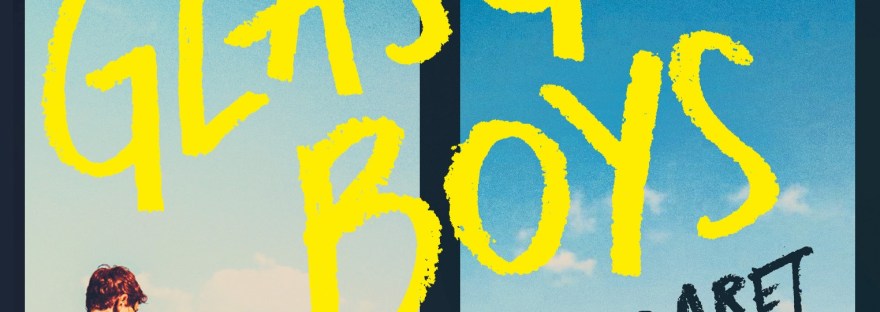
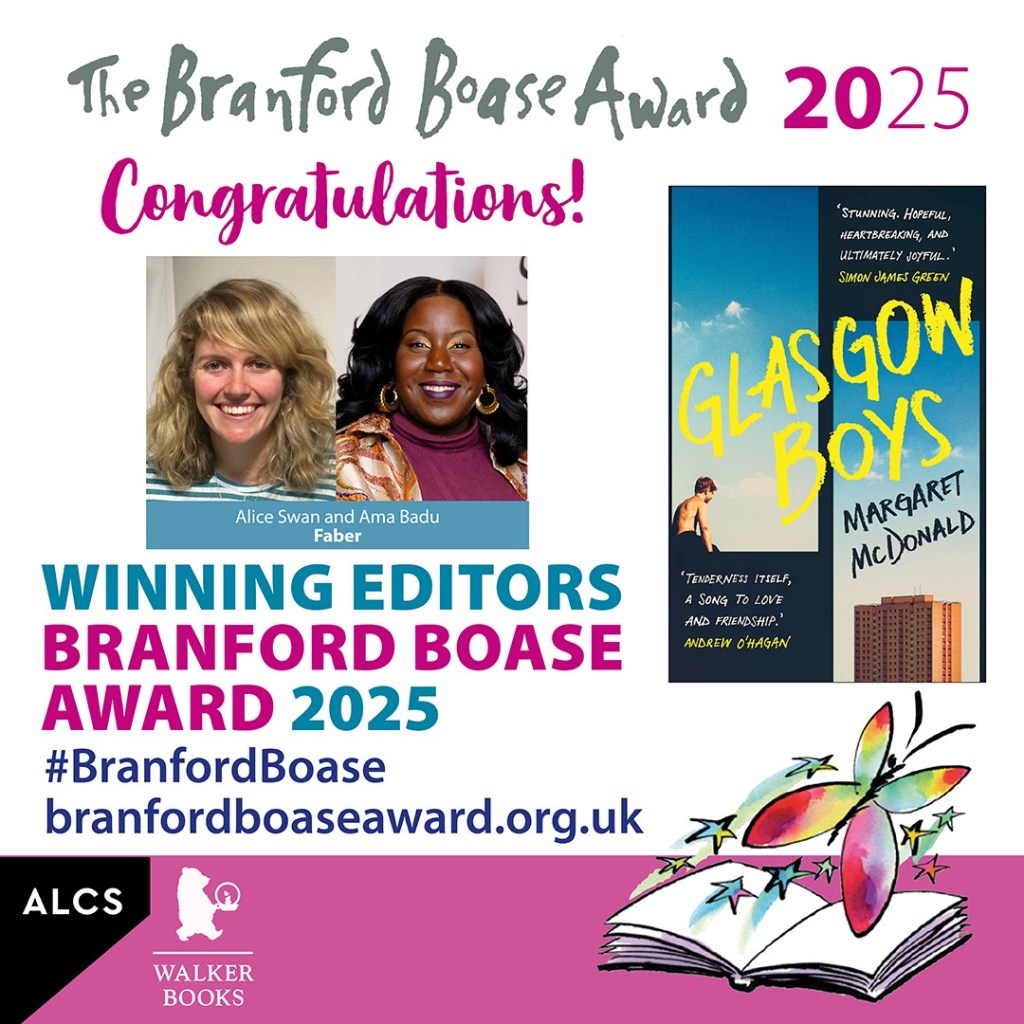
Ama Badu is one of the two award-winning editors for Glasgow Boys, published by Faber & Faber, and written by Margaret McDonald.
Take a glimpse into Ama’s role as editor, and what it was like working on Glasgow Boys with fellow editor Alice Swan, which won the Branford Boase Award 2025.
By Ama Badu
As an editor, you work intimately with a manuscript. The very first time other departments in the publishing process will hear about a book is from you. You are its first champion in-house, carrying the book from loose pages of a manuscript to a finished product. You consider every detail of the project, from the cover and package to the text font and prelims, ensuring that the finished book matches the vision that you and the author had for it. But before you can do any of that, you sit in solitude and read.
By the time it comes to the very first edit of any story, I’ve already read the manuscript a number of times. I’ve been on a journey with the characters and their world. For me, those first reads are the most precious because I learn something new about them every time. It’s a little like meeting a soon-to-be friend for the first time, and then again, and then again. You see something different on every encounter and they become dearer to you.
What I also observe with each read are my own emotions. How do I feel in this chapter and is this the way the author intends for me to feel? In a book like Glasgow Boys, this is especially important. The emotional experience is a core part of the reading experience and so I’d note down the moments that made my heart stop or tears build up. These observations followed me throughout the editing process.

I enjoyed working collaboratively with Alice on Glasgow Boys. Editing can be a solitary process. It requires concentrated time and deep thought. Once those thoughts are in place, it then requires conversation. Usually, this is with the author, but in this case, Alice and I had each other to bounce ideas from.
We’d discuss every detail together, the moments that lingered with us the most, which chapters had the most punch, how the structure could be reworked to deliver more of the needed emotional pull. Many questions came out of those meetings. How do we get Banjo and Finlay from this point to that? Is this section working as strongly as it could here, or would it be more impactful there? Do we need to see this or that on the page more?
Raising these questions between ourselves first was such a useful exercise. In those conversations, we could see the parts of the story that resonated with each of us personally and where they differed. There is such an alchemy to editing and when two combine ideas, such magic happens. Alice and I often talk about this process as placing puzzle pieces together. We could see from the very start what image we were working on, we then had to figure out where each piece would fit. We passed ideas back and forth to each other and in doing so, we clarified our vision.

As a junior editor at the time, working alongside Alice and her wealth of experience taught me a great deal. There is much to be said about the training newer editors receive. Editing is a skill, one that is best harnessed through practice. Seeing other experienced editors at work is such a crucial part of the process and cannot be overlooked. There’s a proverb that talks about iron sharpening iron, just as one person sharpens another. Those editorial conversations and observing Alice at work certainly sharpened my skills and made me a more confident editor.
Once we had our thoughts together, we then shared them with (the author) Margaret. This requires such trust, as it does with every author. Their manuscripts are a labour of love and as editors, our role is to polish them, to make them as strong as they can be for the readers.
Once again, a beautiful alchemy happened here with Margaret. We were working from such a rich tapestry and the three of us had a clear understanding of who Banjo and Finlay were and how they would develop from when we first met them to the last page of the novel. And so we worked, turned over every detail and questioned every word on the page. It was such a harmonious process.

A book like Glasgow Boys emphasised the place of grace and care at every point. Not just because of the experiences of our beloved characters but also because of our responsibility to our readers. We had them in mind at every point, being sure to leave them the hope that we all desperately need to see. It was such a joy to see Margaret at work here too. With every draft I marvelled at how far she pushed her story.
The glowing reception Glasgow Boys has received is a testament to that.

Guest post with Faber & Faber editor Alice Swan to follow.
.
Glasgow Boys is out now and published by Faber & Faber
The Branford Boase Award
Set up in memory of author Henrietta Branford and her editor Wendy Boase, the Branford Boase Award is the only award to recognise the editor as well as the author. Find out more about this year’s award on the website.

 PaperBound Magazine