article, Blog, Blog series, Bookshelf

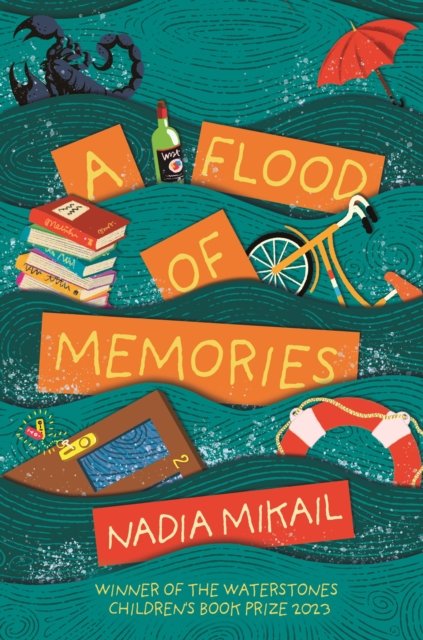
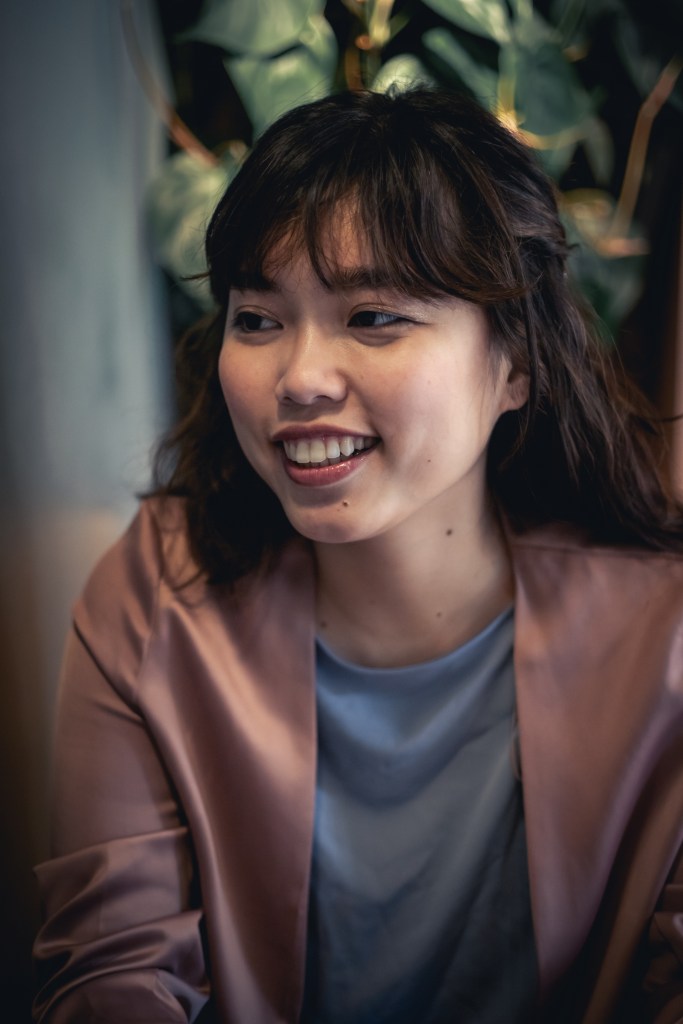
Nadia Mikail on her new YA novel, A Flood of Memories

My first book, The Cats We Meet Along the Way, contained detailed musings of a character who longed to return to her childhood home by the Sarawak river, even at the end of the world.

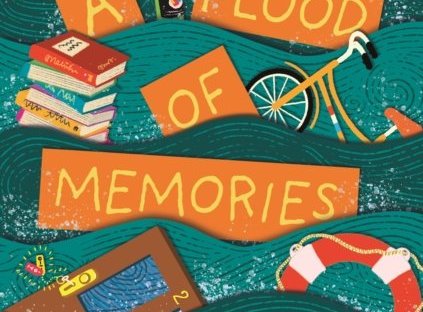
My second book, A Flood of Memories, contains an even more precise description of a two-storey kampung house flooding with memories and river water during monsoon season, when the river bursts its banks.
Clearly, at this point, everyone’s got a pretty good idea of my childhood home. I’m never going to get away from that house! I’m never going to really move out. Part of me is always going to be on that makeshift bench on our balcony, two planks of wood and a rusty metal frame – it was once a swing, maybe, a long time ago.
Part of me is always going to be seven and barefoot in the tall wild grass in the back, picking fruits off the branches. I write this now in London half a world away but part of me is sitting right there on the cool white tiles, scribbling complicated storylines on the walls in crayon until my grandmother comes to carry me away.

The house housed me through pain and grief; it always kept me safe from ever-reaching danger.

Every flat I rent now can’t really compare. I used to know all the sounds of that house, which floorboards creaked, which footsteps were whose. It used to smell like gorgeously tangy asam pedas or of the biscuits baking in the oven. When it smelled strongly of oil, we’d throw open the windows in the kitchen and the breeze would rush in and I’d sneak a fresh fried fish away to munch on before my cat got to it first. The house housed me through pain and grief; it always kept me safe from ever-reaching danger.

My mother grew up in it and my baby sister did too, scribbling over all of my drawings. It was my grandparents’ last home. I’d give a lot to hear my grandfather’s old radio again, to hear Tony Orlando and Dawn croon Tie a yellow ribbon round the old oak tree!

What am I writing about, really? The house, or the experience of childhood that I’m never getting back? The house, or a time when everything felt more certain? The house, or the beauty of having all my family under one roof, alive and well and loving me?

To be honest, I don’t know if I write about this house as much as I am currently in the midst of being haunted by it. It shows up in most of my stories, even though I’ve lived in many places since then. I haunt it too, in dreams and memories and in those same stories.

My experience of writing about home is ongoing and always evolving, and to those who want to do the same, I would say Good luck and Be honest, because the house will know if you aren’t being authentic in your writing of it, and your characters will suffer and your plotlines will all fall slightly flat. I very much believe readers know too: many of them remember a similar place in their childhood, one that similarly shows up in their dreams.

Young adults are especially sensitive to this: they are just coming of age and moving out and the memories still cling to them stickily, and they will simply know. That’s why it’s especially important to be truthful when writing about these places and these memories.

If helpful, for inspiration, while not necessarily about a specific house, The Raven Boys by Maggie Stiefvater is one of my favourite YA novels about the idea of home as a haunting place: the town of Henrietta very much wraps the experiences of coming of age in magic and history and friendship.

Black Water Sister, while not YA, is another remarkable fantastical tale, specifically about coming back home to Malaysia after being away for years. I always admire how some authors can make a tale about home, describe a completely different place in a whole other part of the world, and make you think I remember that.

I used to know all the sounds of that house, which floorboards creaked, which footsteps were whose.

I haven’t seen my childhood home in a long time. We don’t own it anymore. I wonder if it even looks like how I describe it over and over again in my stories. I love that it haunts me. There used to be a large tree out back overrun with fire ants, and it bore a particular unique hybridisation of two varieties of mango that was the most delicious thing I’ll ever bite into. I’ll never taste it again, which seems very fitting.

A beguiling novel which explores the fine line between care and control, between love and abuse in families, and shows that it is possible to move on to a brighter future.

It’s raining in Sarawak, Malaysia – a lot – and Leila, now living in Kuala Lumpar, must go home to help her Mak before the floods become serious. But she hasn’t been home since the death of her father – and she’s not quite ready to confront what’s waiting for her there. Life with Pak was complicated.


But Arthur is in Sarawak, the boy she’s thought about ever since they first met at school – Arthur, who offers her support, care and love, but at a cost perhaps too great for Leila. As the floodwaters rise and her family and home become threatened, can Leila confront the enormity of her own past in order to move forwards properly in her present?

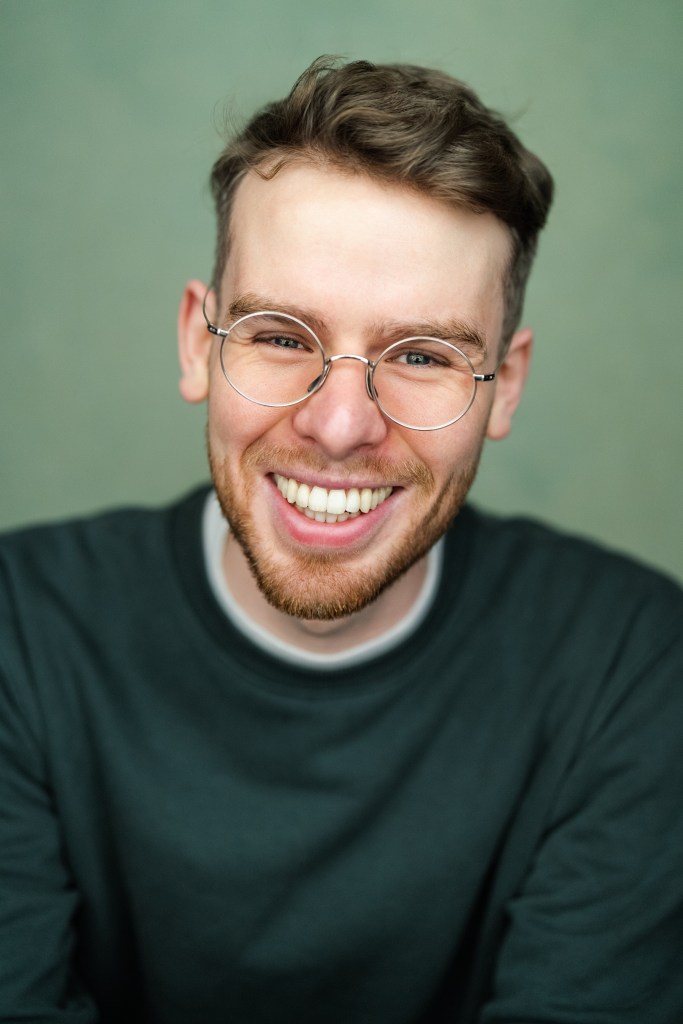
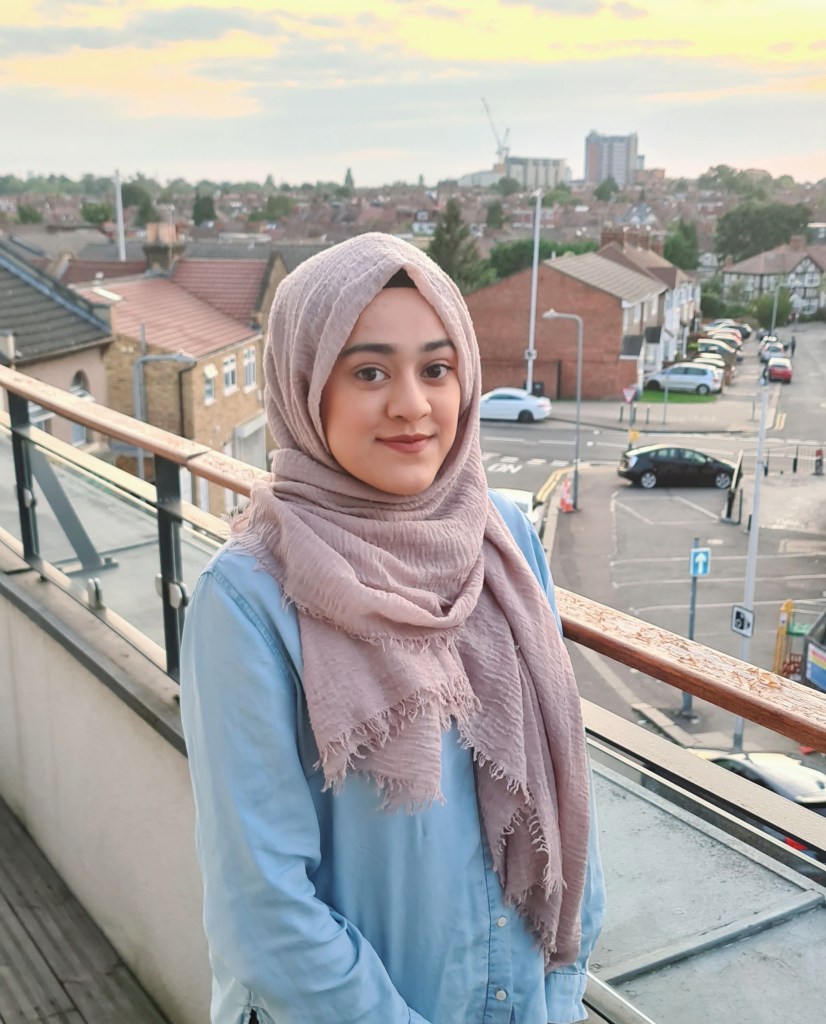
Nadia is a lawyer in London, a full-time houseplant owner and a parttime investigative journalist into what London’s pigeons are planning when they flock together like that. She is mostly unsuccessful at (but still hopeful about) both these occupations. Her first novel for young adults, The Cats We Meet Along the Way, won the Waterstones Children’s Book Prize in 2023 and was shortlisted for the Branford Boase Award and the YA Book Prize. She is from Sarawak in Malaysia, where the air is always sweeter, the food is always tastier, and the pigeons are considerably less bold.

PaperBound Magazine is an online magazine for the young, and the young at heart. We are dedicated to showcasing authors and illustrators for children’s and young adult fiction and we strive to deliver inspiring content, uplifting stories, and top tips for young and aspiring writers yet to burst on to the literary scene.

All our issues are completely free and run by volunteers, however if you would like to support PaperBound and the work we do, you can help us out by buying us a virtual book. We appreciate any support you can give us!

Don’t forget you can read with the latest issues of PaperBound Magazine – completely free – here.

article, Blog, Blog series, Bookshelf, Interview, Interviews

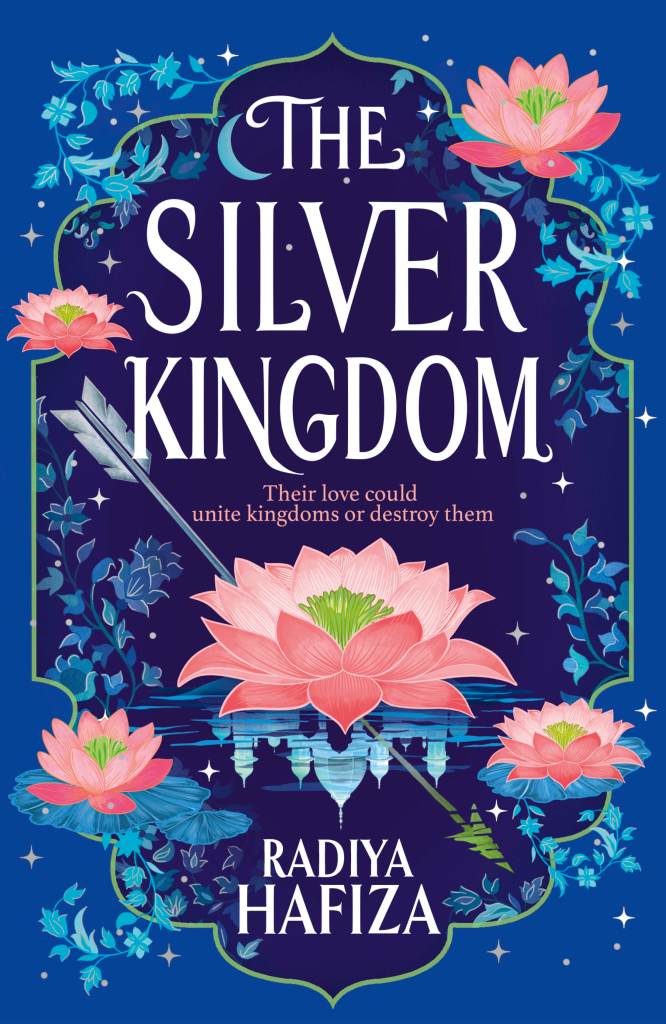
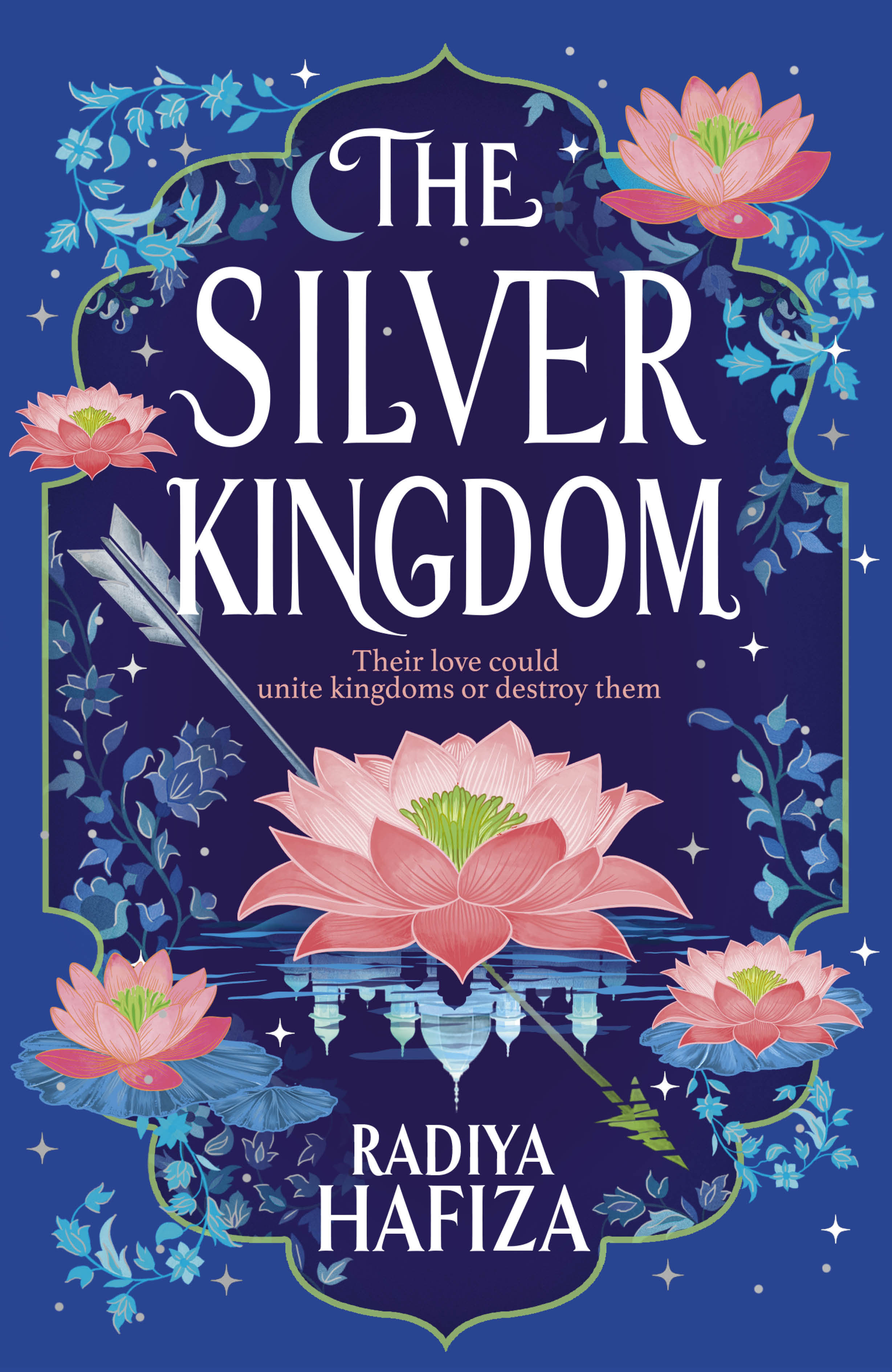
Interview: The Silver Kingdom by Radiya Hafiza

I’ve aways wanted to write an epic love story. Two star-crossed lovers, soulmates kept apart by their circumstances, a love so deep it’s ineffable. The hope for The Silver Kingdom had always lived in my head.

Romance is one of my favourite genres to read as I am a sucker for a happy ending but the joy of also seeing two people fall in love and getting to experience that alongside them is such a treat as a reader. I wanted to write a book that made people feel that kind of love, but it wasn’t until a few years ago that I found the right framing for the story.

It was summer 2023 and I was speaking to my parents during South Asian history month about their experiences of the Bangladesh Liberation War in 1971. It had always been quite a taboo topic to speak about the war because of the genocidal crimes committed against Bengali people by the Pakistani army. My dad told me about his family experiences of the war: seeing bombs fall on his city, communities ripped apart, having to flee from persecution. And as he spoke, I knew I wanted to commemorate this part of our family history the best way I knew how: writing a story.

The Silver Kingdom is inspired by the events that transpired under British colonialism and the partition of India. But instead of writing a direct retelling, I wanted to use fantasy as a way to explore these difficult themes – like colonialism and racism – and set about creating a world inspired by these events, with a particular focus on Bangladesh which Dakaria is modelled loosely after. Fantasy gave me a way to explore these themes from a distance without having to live it directly, making it easier to write such challenging and traumatic moments that occur in the book.

As a Bengali myself, I’ve never seen much representation of people like me in the books I read growing up. I still adored the stories I read regardless of who it was about with favourites like Jacqueline Wilson, Malorie Blackman and Tahereh Mafi on my shelves. Their books explored important subjects from family drama to bullying and racism, challenging stereotypes and more.

As a teenager, I naturally leant towards YA books, particularly in the fantasy and dystopian space because it created a whole new layer of adventure when the world is entirely new and limitless. Even though authors from the global majority weren’t many in my teens, the authors that I did find gave me the courage and hope to one day become an author myself.

When we talk about representation, there are so many layers to it: visual representation, cultural nuances, interpersonal relationships, traditions and practices, thoughts and beliefs – there are so many ways people express themselves and share their identities. For The Silver Kingdom, I wanted to create a world shaped by all of these elements but in such a way that the representation was part of the story, and not the point of the story.

I want readers to pick up The Silver Kingdom and see a swoony romance, devastating secrets, magic and political intrigue. And I also want them to pick it up and find unapologetically South Asian inspired characters. Representation in YA books in particular is so important because we need to give all young people a chance to see their stories, their hopes, their dreams mirrored in the literature they consume so they know that the world, their futures, their possibilities are infinite.

Radiya Hafiza is the acclaimed author of the Rumaysa duology and Aya and the Star Chaser. Her debut, Rumaysa, was the first Waterstones Children’s Book of the Month after lockdown in 2021 and has garnered critical acclaim. Her works focus on putting brown characters at the centre of her stories.
The Silver Kingdom is her debut young adult fantasy, exploring empires, history, and forbidden love. Radiya lives just outside of London with her family and works in communications.

PaperBound Magazine  is an online magazine and blog for the young, and the young at heart. We are dedicated to showcasing authors and illustrators for children’s and young adult fiction and we strive to deliver inspiring content, uplifting stories, and top tips for young and aspiring writers yet to burst on to the literary scene.

All our issues are completely free and run by volunteers, however if you would like to support PaperBound and the work we do, you can help us out by  buying us a virtual book.  We appreciate any support you can give us!

Don’t forget you can read with the latest issues of PaperBound Magazine – completely free –  here.

article, Blog, Blog series, Bookshelf, on writing, Writing craft

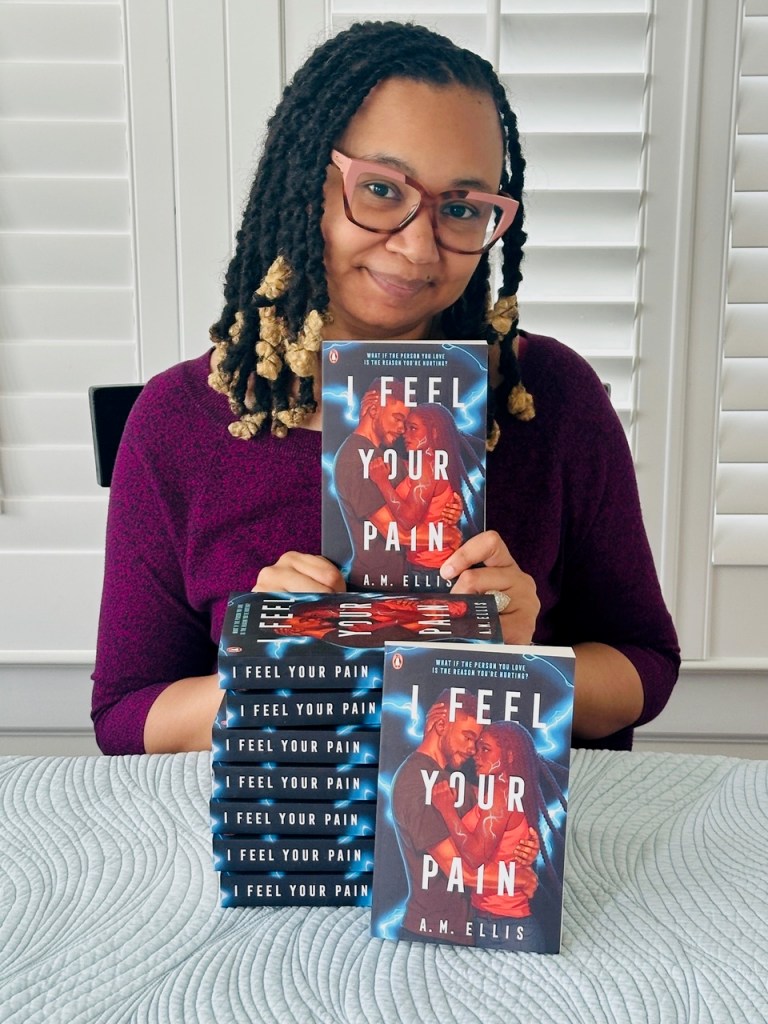
A.M. Ellis on Dystopian Literature as a Form of Conversation

By A.M. Ellis

For some, reading Parable of the Sower by Octavia Butler feels like she glimpsed our future and left a warning. Handmaid’s Tale by Margaret Atwood could be a world one law away from our own with the present-day fight for body autonomy. And the increase of protests against broken governments could bring us to a brink where one cruel tyrant can have us living in The Hunger Games by Suzanne Collins.

These are fictional worlds thankfully. But there are lessons to be taken away, conversations to be had, all with the hope that young readers learn from them and hold on tight.

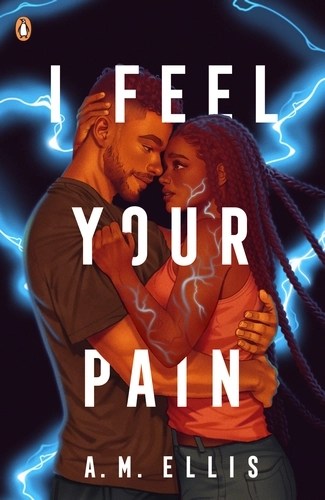
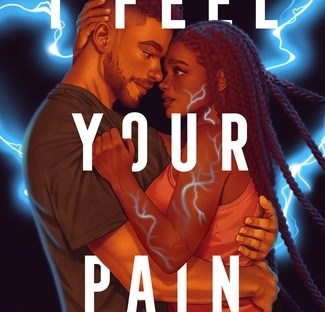
I Feel Your Pain is no different. It tackles themes still present today; classism, race, and systemic issues that dig themselves into the earth with thorny roots that twist and turn and refuse to let go. But before I dive deeper, let me set up a definition.

Systemic racism can begin as a rule or belief meant to openly oppress. Then over time as tides shift and society attempts to change and forget its roots, that rule or belief is rewritten to hide its intentions. Years pass and the original authors are gone, but this rule still exists because it serves as one function or another to a large majority. It’s part of our foundation. There’s no real need to correct it (sarcasm). It’s never truly evaluated (not sarcasm). And it comes with excuses –

Will it though?

No. But it might crumble a few billion-dollar empires.

In I Feel Your Pain, I’m opening the door to have a conversation with readers. It’s a setting so close to our own – minus a cataclysmic solar flare. That solar flare brought with it a painful disease found in the majority of white people. But don’t worry, because scientists have found a way to help the affected through the Freedom System.

With the Freedom System, those with this disease can give away their pain to Pain Carriers, individuals with high pain tolerances who barely feel the ache of it. Of course, those Freedom System scientists have the research to back it up. Those Pain Carriers just happen to be made up of a majority of Black and Brown people.

This is where the conversation begins – the topic of discussion: pain and the stereotypes around tolerances in the Black community. This conversation didn’t come from thin air or a random thought of what-if. It has roots that have refused to dry up.

Did you know that the “father of modern gynecology” achieved his success by – and I’m sugarcoating my words here – perfecting his technique on Black women in a way that ignored their pain? Those women, Lucy, Betsey, and Anarcha, were enslaved and used as variables in a science experiment, their humanity discarded.

I want everyone to know their story.

There’s a nod to them in I Feel Your Pain and I encourage you to look them up. Their survival and endurance are part of medical history. Let me repeat that one word: history. You would think that the disregard of Black pain and the belief of a mythical high tolerance ended here, but it doesn’t.

There are studies within the last ten years that show there are still non-Black medical professionals who believe there is a difference in how various races experience pain. You can find evidence of these beliefs when looking at labor and delivery mortality rates; Black mothers’ accounts of pain being ignored to the point of severe and fatal consequence.

I’ve heard too many accounts of Black voices ignored in the doctor’s office, and have personally experienced it. It left me in shock. It’s 2026. What Lucy, Betsey, and Anarcha endured – that was the 1840s.

The past shows us where these harmful stereotypes began and how they festered, the excuses that continue to be made. So when I wrote of a world with a painful disease and a society believing there are people and communities that can carry that pain with ease – there’s a history behind it. A history and a present I don’t want to see repeated in the next generation’s future.

These are the types of heavy topics dystopian literature allows authors to approach and address within the safe space of fiction. Readers can engage and draw parallels, open their eyes to things that should never happen, never be possible or believed.

Black people don’t have higher pain tolerances. The myth of thicker skin is, at most, likely rooted in a survival tactic required to navigate spaces built against a community that has done nothing to deserve this stereotype other than thrive against the odds. A quick nod to this – the Harlem Renaissance and the Great Depression happened at the same time. We feel, we hurt, we’re human. I need everyone to know and believe the truth.

So let’s have a conversation, and let dystopian literature once again do its thing. I can only hope for readers to take away the lessons to be learned, and hold onto them for as long as they can.

.


They were never meant to share a future – only the pain that connects them. 

 
Ever since a cataclysmic solar flare struck 150 years ago, Helical Disease has plagued the city of Alta Bay. Those infected endure excruciating pain and a blue light that crackles beneath their skin. There is no cure.

However, Dominion Pharmaceuticals has created a revolutionary treatment that transfers the disease to people with unusually high pain thresholds. These Pain Carriers feel little to no pain, and they’re paid generously for their sacrifice.

Nova Williams is too focused on surviving to question the system. Castor Fox, heir to the Dominion empire, is proud of his family’s legacy.

When a chance road accident throws them together, the pair form an unlikely connection. But as they begin to fall for each other, a devastating truth comes to light: Nova is Castor’s Pain Carrier.

As darker secrets about the procedure emerge, Nova and Castor must decide whether to accept a broken world . . . or risk everything to change it.

A.M. Ellis is a speculative fiction author and lover of everything steeped in myth and mystery. Her stories often lean into diverse voices, not only in her identity as a Black woman, but in exploring neurodivergence and mental health. A proud introvert and nostalgic gamer, she lives in Maryland, USA, with her husband and three children.

PaperBound Magazine is an online magazine for the young, and the young at heart. We are dedicated to showcasing authors and illustrators for children’s and young adult fiction and we strive to deliver inspiring content, uplifting stories, and top tips for young and aspiring writers yet to burst on to the literary scene.

All our issues are completely free and run by volunteers, however if you would like to support PaperBound and the work we do, you can help us out by buying us a virtual book. We appreciate any support you can give us!

Don’t forget you can read with the latest issues of PaperBound Magazine – completely free – here.

article, Blog, Blog series, Bookshelf, Interview, Interviews, on writing, Writing craft

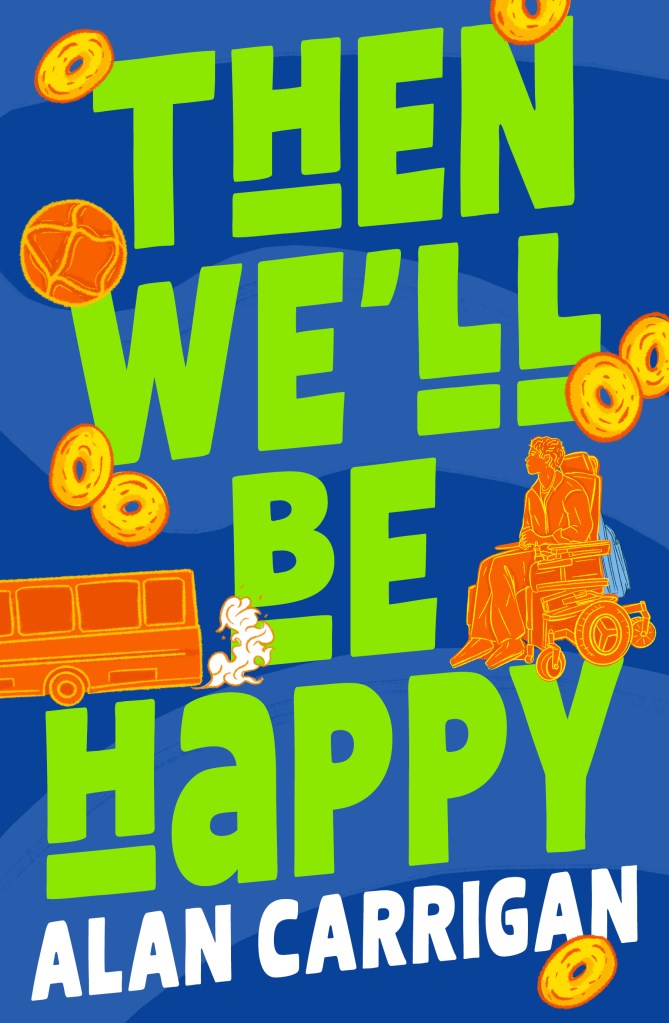
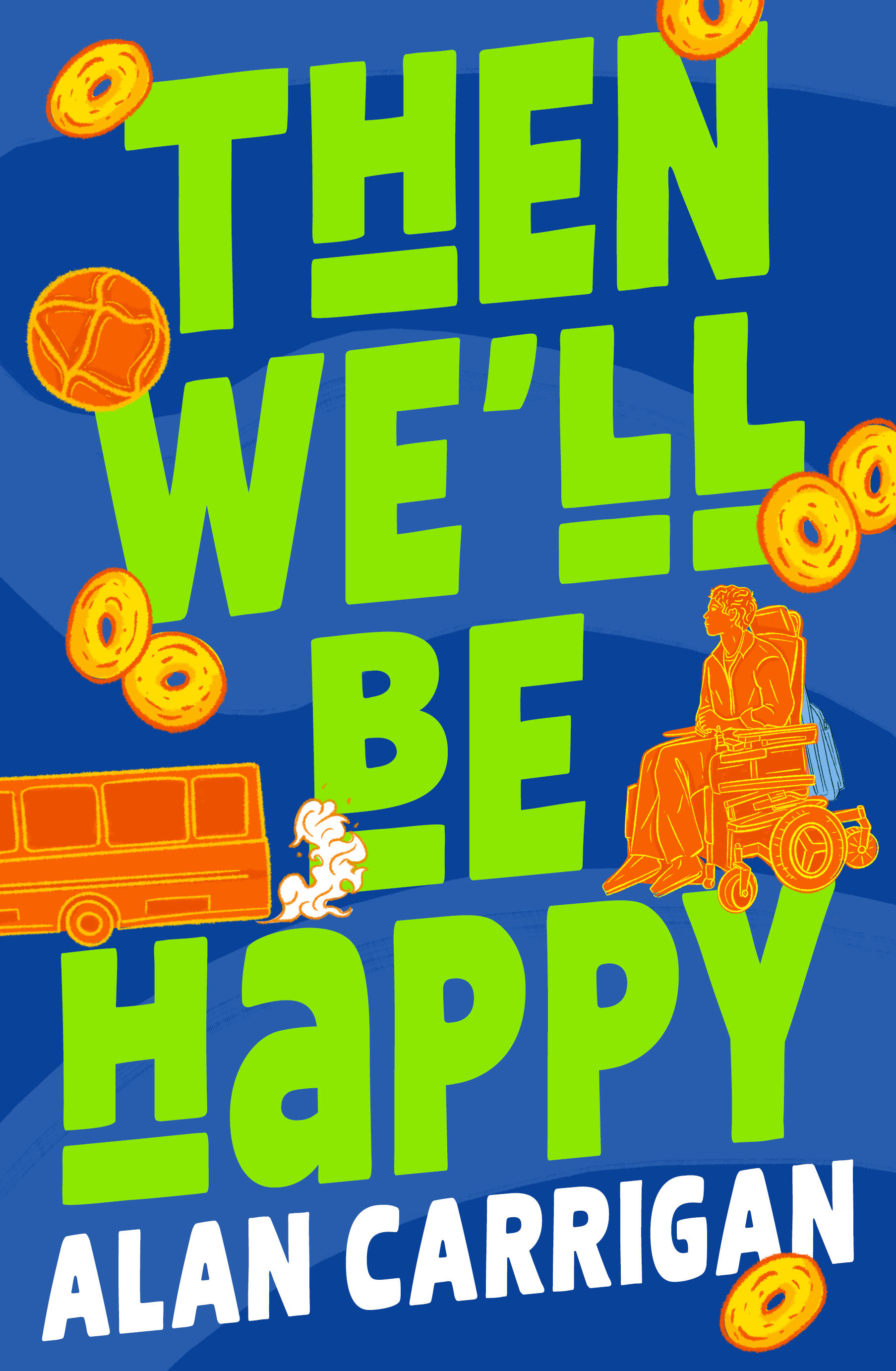
Interview: Alan Carrigan on writing and debut YA novel Then We’ll Be Happy #DisabilityPrideMonth

Sure! The novel follows seventeen-year-old Sam, who has cerebral palsy. When he is excluded from yet another school tour, he has to spend the day with Patrick, somebody who previously bullied him but is now himself also in a wheelchair. This drives Sam to create a campaign for an accessible bus but in doing so Sam gets more than he bargained for.

At its heart, it’s a story about finding your team in many senses of the word. But to find out what I mean by that, you’ll have to read the book.

I would say I have always been creative, but writing has been a fairly new development for me. I was the only wheelchair user in my school growing up, and I used to always talk to my friends about the lack of disability representation, so when I got out of the school system and had a bit more free time on my hands, I decided to write.

Truthfully, I’m more of a theatre person than a book person, but I didn’t know anybody in the theatre industry, and although getting a novel onto the shelf of bookstores takes a village, the initial writing phase is just you, the author, so it seemed like a good place to start.

That’s very kind of you to say. I am a person who is very grateful to have been given the opportunities that I have. When I was growing up, the representation of disability in media were often depressed, medical stereotypes, so I wanted to write something more grounded. The point of this novel is not to increase positive representation but to increase nuanced disability representation.

Just like any character, disabled characters can have a full range of emotions: happy, sad, or sometimes not knowing what to feel. The fact that the people of Chicken House saw what I was trying to do with this book and helped me turn it into reality means the world. And while it is impossible to know what readers may take from it, I know that teenage Alan would’ve loved this type of story when he was in school!

I think my favourite thing about Sam is his imperfections. He doesn’t have everything figured out, but he keeps going. For this reason, the pub scene was very interesting to write, but that’s all I can say without spoilers!

I don’t think it’s for me to say what readers get out of stories, but I hope readers can use this book as a springboard for starting conversation. I know the plot focuses a lot around finding community, but I think that is something that story in general is also good for. Conversation and maybe a few laughs along the way.

I think Elle McNicoll is just fantastic in both her YA and adult novels, the latter of which is one of my current reads.

Nathanael Lessore is genuinely laugh out loud funny, anytime I listen to one of his stories on audiobook. I know it’s going to be a good time.

There are also lots of great Irish writers: Allison Weatherby, Stephen Daly, Jenny Ireland, Sue Divin, and Dave Rudden, to name but a few – all phenomenal writers and lovely people as well.

My favourite author, when I was a teenager, was John Green; he has a new book coming out later this year, which is an adult book, and I’m very excited to read it. I know he is quite well-known. But if you haven’t read John Green’s YA books, I would highly recommend them. 

Writing doesn’t actually have to mean physically writing.

If that is a barrier for you, you can create stories in another way that is more accessible to your needs. Technically, when I write, I dictate; most computers or writing software now have some way of speaking to the computer. You can even do it on a mobile device.

Now I will say that you will need to go back and correct it manually, as in my experience it only picks up part of what you say. Dictation does eliminate the fear of the blank page, and in a way, for every draft you’re writing, you’re actually writing two because when you go back and correct it, you might start to add things, but the important thing is that you’ve got started!

When my novel was picked up to be published my grammar wasn’t the best, but over time I learned publishers, for the most part, aren’t looking for perfection, they’re looking for a good story, so don’t let your tools get in the way!

I’ve got nothing contracted as of me writing this, but I do have lots of ideas, so hopefully I’ll get to publish another book at some point. My ideas range from contemporary to fantastical, so I’m not sure which direction I’m going next, but I’m excited to find out!

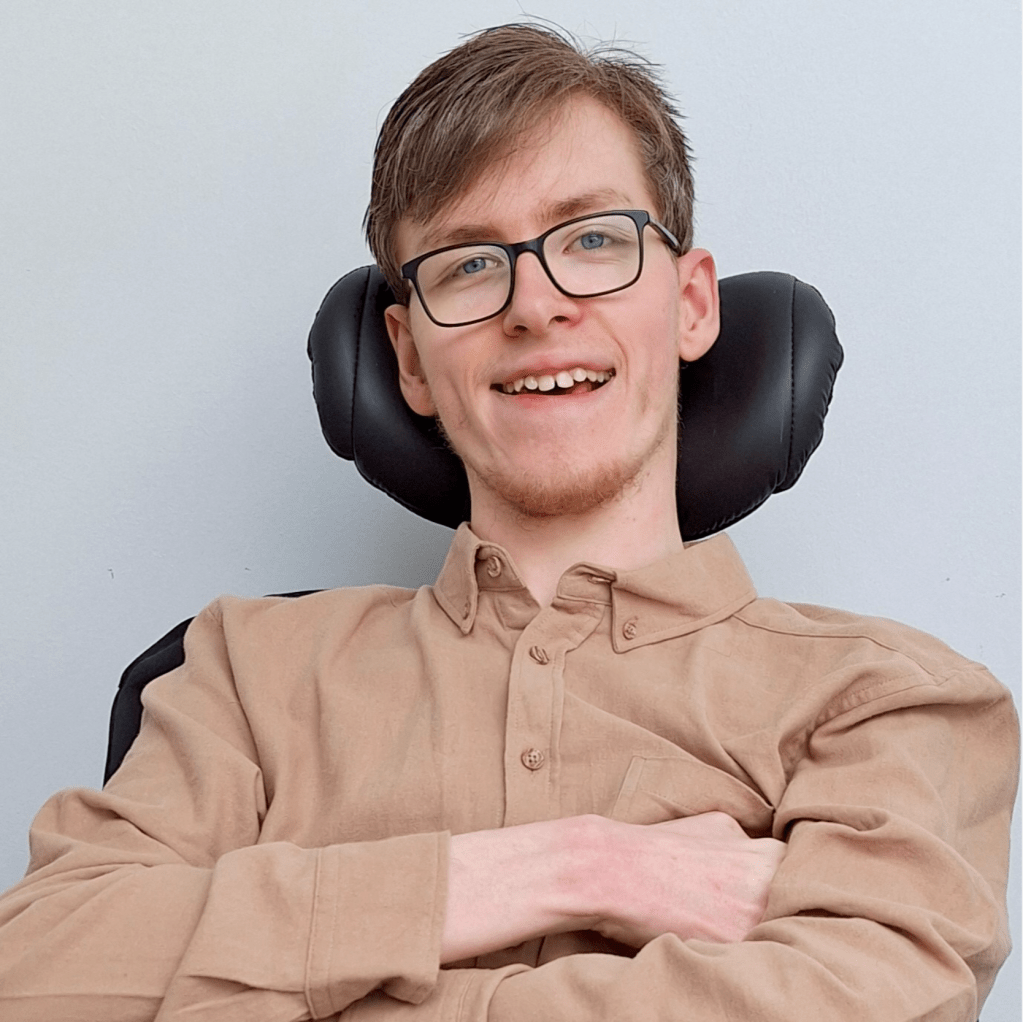
Alan Carrigan is an Irish novelist and screenwriter with quadriplegic cerebral palsy who has worked as a script editor for Ink and Light Films and D11 Stories, and was one of the writers selected for Screen Stories 2025 with Tilting the Lens and Screen Ireland. 

His own work focuses on character-driven, witty, and nuanced stories, most of which feature the types of authentically disabled characters he needed but rarely saw growing up.

While his words can be found on the page, his eyes are often glued to a stage, as he is a big fan of musical theatre.

PaperBound Magazine is an online magazine and blog for the young, and the young at heart. We are dedicated to showcasing authors and illustrators for children’s and young adult fiction and we strive to deliver inspiring content, uplifting stories, and top tips for young and aspiring writers yet to burst on to the literary scene.

All our issues are completely free and run by volunteers, however if you would like to support PaperBound and the work we do, you can help us out by buying us a virtual book. We appreciate any support you can give us!

Don’t forget you can read with the latest issues of PaperBound Magazine – completely free – here.

Blog, Blog series, Bookshelf, Interview, Interviews, on writing, Writing craft

Katherine Woodfine on judging the Branford Boase Award 2026

Katherine Woodfine with her fellow judges (left to right, Anjali Patel, Katherine, Margaret McDonald 2025 winner, and Stephen Dilley)

You probably already know that the Branford Boase is an annual award for debut children’s fiction. You might also know that it is unique, in that it celebrates both the author and the editor of the winning book. What you may not, perhaps, know is that the Award is named in tribute to two talented women in publishing — writer Henrietta Branford and editorial director Wendy Boase, who both died of cancer in 1999 — and aims to encourage the development of new writers in their memory.

It’s a wonderful prize, which has recognised authors including Marcus Sedgwick, Meg Rosoff, Siobhan Dowd and Mal Peet. A decade on, I still feel immensely proud to have been longlisted for my own debut, The Clockwork Sparrow — especially as it was an honour I shared with my editors, Ali Dougal and Hannah Sandford.

I was also very proud to be invited to be a judge this year. As a children’s author and a book reviewer, I flattered myself that I had a good overview of new titles, but the judging process proved to be full of all kinds of delightful surprises. Reading my way through this year’s longlist, I made rich discoveries across young fiction, middle grade, teen and YA.

It was no easy task for my fellow judges and I to choose just seven of these excellent debuts for our shortlist, but I think the books we settled on truly showcase that richness. There is so much variety to enjoy, from tender-hearted and thoughtful teen romance (Tart by Becki Jayne Crossley) to gripping and challenging science-fiction (Augmented by Kenechi Udogu).

There are books that will scare the life out of you (Jack McKay’s Gloam), books that will make you snort-laugh out loud (Harry Trevaldwyn’s The Romantic Tragedies of a Drama King) and books that will lift your spirits (Ella Dove’s How to Roller-Skate On One Leg).

There are books that shine a light on important moments from the past (like Janeen Hyatt’s Evie and Maryam’s Family Tree) and books which feel absolutely rooted in the here and now — like Love on Sight by Asli Jensen, set in a brilliantly authentic present-day multicultural London.

There are books that pay tribute to literary traditions — Patch, the narrator of Romantic Tragedies of a Drama King is absolutely the successor to Georgia Nicholson and Adrian Mole, while Gloam has hints of Coraline, A Monster Calls and every horror story that ever made you scared to turn off the light — and yet they also feel distinctive and fresh. To say there’s something for everyone is a horrible cliché — and yet I do think that so many readers will be able to discover aspects of themselves, their lives and their interests in these pages.

In the statements from the editors that accompany each book, the judges also had the unique opportunity to reflect on something that is very often invisible — the unique creative collaboration that exists between author and editor. We witnessed the editors’ enthusiasm and dedication, as well as their skill, sensitivity and intelligence in helping to shape the stories and steer their authors in the first steps of their publishing careers.

Three of our shortlisted books were originally submitted for writing competitions: Love on Sight was entered for The Times/Chicken House competition and won the Lime Prize; Augmented won the inaugural Imagined Futures Prize for YA science fiction; and Evie and Maryam won the Guppy Open Submission Competition. If we ever needed proof of the power of these kinds of initiatives to bring compelling new voices into publishing, this is surely it.

Each of these books is well-written, well-crafted and compelling, but there the similarities end. In her 1932 essay ‘How Should One Read a Book?’ Virginia Woolf observed that ‘people are always behaving as if all books were of the same species—as if there were only tortoises or nothing but tigers’. The real joy of this process was witnessing the way that children’s books continue to thrive in all their wondrous variety.

This is a landscape of vitality, gloriously populated by tortoises, tigers and a whole variety of other creatures — impossible, possible and everything in between. It is a whole ecosystem of rich life, which makes clear that, in spite of all, what Frances Hardinge (herself a Branford Boase winner) so memorably described as ‘the beautiful jungle of children’s literature’ continues to thrive. If you, too, need to discover some ‘glad things’, then the Branford Boase is the perfect place to start looking.

Tart by Becki Jayne Crossley, edited by Cathy Liney (Bloomsbury)

How to Roller Skate with One Leg by Ella Dove, illustrated by Jennifer Jamieson, edited by Anne Marie Ryan (Orchard Books)

Evie and Maryam’s Family Tree by Janeen Hayat, edited by Bella Pearson (Guppy Books)

Love on Sight by Asli Jensen, edited by Shalini Vallepur (Chicken House)

Gloam by Jack Mackay, edited by Katie Jennings (Rock the Boat)

The Romantic Tragedies of a Drama King by Harry Trevaldwyn, edited by Emma Jones and Charlie Castelletti (First Ink)

Augmented by Kenechi Udogu, edited by Natasha Brown and Jenny Glencross (Faber).

.

Katherine Woodfine is the author of more than 15 books for children, including the Sinclair’s Mysteries and Taylor & Rose Secret Agents series. Her first published novel, The Clockwork Sparrow, was a Sunday Times bestseller and was nominated for numerous awards. A champion of children’s literature, she has previously worked on projects including the Children’s Laureate, YALC (the UK’s first young adult literature convention) and podcast Down the Rabbit Hole, and is now the book reviewer for The Week Junior magazine.

Set up in memory of author Henrietta Branford and her editor Wendy Boase, the Branford Boase Award is the only award to recognise the editor as well as the author. Find out more about this year’s shortlisted books on the website. The winner will be announced on Wednesday 8 July.

PaperBound Magazine is an online magazine for the young, and the young at heart. We are dedicated to showcasing authors and illustrators for children’s and young adult fiction and we strive to deliver inspiring content, uplifting stories, and top tips for young and aspiring writers yet to burst on to the literary scene.

All our issues are completely free and run by volunteers, however if you would like to support PaperBound and the work we do, you can help us out by buying us a virtual book. We appreciate any support you can give us!

Don’t forget you can read with the latest issues of PaperBound Magazine – completely free – here.

article, Blog, Blog series, Bookshelf, on writing, Writing craft

The Art of Questioning by Camille Chong

I wanted to question what superheroes would look like in my ordinary life.

When we question why some stories are so exciting, we can similarly extract its strengths and apply it to a different genre to create something new.

.


Harper and Tia are roommates, and interns at the same tech company. They clash, they fight, they flirt. And, under cover of night, the two of them adopt secret identities and head out on missions across the city for their respective magical clans. Tia is the beautiful descendant of the Moon Goddess, and Harper is secretly Raven, the leader-in-waiting of the feared and villainous Foxes.
When each is tasked by their clan to kill the other, a deceitful game of cat-and-mouse begins. And Harper and Tia will start to understand that the concepts of right and wrong can be just as complicated – and dangerous – as falling in love.

Camille Chong is a Singapore-raised writer of queer Asian stories. When not reading and writing fantasy rom-coms, she’s watching B-grade movies, making a mess of her kitchen or battling demons at her local bouldering wall. Love, Gods and Sinners is her debut novel and a love letter to Asian daughters and fans of punchy rom-coms and secret identity shenanigans. She works on her novels while pursuing a Law degree at University College London.

PaperBound Magazine is an online magazine for the young, and the young at heart. We are dedicated to showcasing authors and illustrators for children’s and young adult fiction and we strive to deliver inspiring content, uplifting stories, and top tips for young and aspiring writers yet to burst on to the literary scene.

All our issues are completely free and run by volunteers, however if you would like to support PaperBound and the work we do, you can help us out by buying us a virtual book. We appreciate any support you can give us!

Don’t forget you can read with the latest issues of PaperBound Magazine – completely free – here.

article, Blog, Blog series, Bookshelf, Interview, Interviews, on writing, Writing craft

Interview: Kamizen: Fortress of Lost Memories by William Yamaguchi Dobson

It’s a middle-grade fantasy about a boy called Jonty who meets a mystical bonobo in Yorkshire and is offered the chance to enter through The Gate of Memory so that he can recover lost memories belonging to his beloved grandfather and help him finish his memoir about life as a primatologist.

Inspiration, I find, is a mystical thing in itself – if I could pinpoint the exact source, I would drop a GPS pin and camp there for the rest of my writing life. Thinking back now, I would say there were several whispers in my ear. I wanted to write a story about the relationship between a child and grandparent. One of my all-time favourite stories is Tove Jansson’s The Summer Book. I then wondered if I could combine that with my interest in primatology and jazz, as one does on a quiet afternoon. And because of the experience I had with my father’s dementia for over a decade, I had been reading widely about the science of memory. Everything slowly fell into place.

The book is aimed at children eight and over. My children witnessed my father’s cognitive and physical decline from a very young age. They had never known him other than “Grandad is poorly”. Many families I imagined were in the same boat. So I wanted to write a story for my children and fellow passengers about preserving the memory of a person before the anarchy of dementia changed them – a time before grandad became poorly. I don’t think I necessarily planned it this way at the outset, but the message I wanted to convey gently is that memories are what make us human and it’s through stories that we remember those who no longer remember us.

I didn’t find it too difficult carrying out the balancing exercise between telling the fantastical story and handling the topic of dementia. The reality of end stage dementia is that it’s relentlessly grim, but you can’t write a children’s story (or an adult one) with relentless grimness. Nobody would read that and nobody should. You sow enough hints about the reality and let your readers water it with their imagination, because the primary duty you have to the reader is that your book is there to entertain them.

A few characters were borrowed from folklore and myth. The kappa is one of the best known yōkai, alongside the tengu. The earth spider is also from a legendary tale. The talking bonobo, however, is entirely my invention, although there is a yōkai known as a satori, which has monkey-like features.

Lafcadio, the Irish kappa, wrote himself. Once I figured out his voice, he was telling me how he would say things and crossing out what I’d written. And to give PaperBound an exclusive, did you know the paintbrush yōkai, Kaita Zanko has several layers of hidden meaning? Kaita is the past tense of “to write” in Japanese. Kaita Zanko is an anagram of Takai Kozan, patron of the Edo period artist Hokusai and himself a painter of nightmarish yōkai.

Zanko is a one-armed yōkai in tribute to Shigeru Mizuki, one of Japan’s most treasured manga artists and folklorists who repopularised yōkai among postwar audiences.

Audible acquired the book first and Scholastic bought the print rights shortly after. I had simultaneous edits and a smooth journey through production on both counts. The team Audible assembled was out of this world and you can tell from the quality of the production. There are so many highlights from the time, but two that stand out are: (1) when I was sent the audition clip for Tomoya Errington, who went on to be cast in the lead role. He stars in every single scene and is brilliant in every way; (2) when I first heard Timothy Spall playing Gramps I was walking along Tottenham Court Road and burst into tears as he sounded so much like my father (it happened opposite Waterstones, where I ended up holding my book launch!).

Working with Polly Lyall Grant and Karen Ball, my editors at Scholastic, and the wider team there has been a joy and painless experience. I wish I could find something to quibble about to give a juicy answer, but I’ll have to disappoint you! Best publishing experience? I received my first copy of Kamizen on my mother’s birthday when she happened to be staying with us, so I let her open the parcel without telling her what was inside. That was a lovely shared moment, entirely coincidental. 

I am reverting to writing longhand for a new project that may result in a highly illustrated middle-grade novel about a boy, a forest spirit and an unforgettable summer in the mountains of Japan.

Know your audience. If you have children, watch what they’re watching – see what makes them laugh and holds their attention: you can translate some of this to print fiction. You should already know what they’re reading and be familiar with the latest titles. Most importantly, in the words of Inspector Harold Francis Callahan, “you’ve got to ask yourself one question.” Why would a [insert age] child want to read the book I’m thinking of writing?

William Yamaguchi Dobson worked as a barrister before turning his hand to writing fiction. His childhood in Japan and love of manga influence his stories. When not looking after his children, he can be found reading or writing and likes to start the day with a cup of matcha and a smile.

PaperBound Magazine is an online magazine and blog for the young, and the young at heart. We are dedicated to showcasing authors and illustrators for children’s and young adult fiction and we strive to deliver inspiring content, uplifting stories, and top tips for young and aspiring writers yet to burst on to the literary scene.

All our issues are completely free and run by volunteers, however if you would like to support PaperBound and the work we do, you can help us out by buying us a virtual book. We appreciate any support you can give us!

Don’t forget you can read with the latest issues of PaperBound Magazine – completely free – here.

article, Blog, Blog series, Bookshelf, Interview, Interviews, on writing, Writing craft

Interview: Tig Wallace on whirlwind YA debut Storm Bringer

Absolutely, and thank you for having me. Storm Bringer is a YA fantasy novel, set in a world besieged by big magical storms. The protagonist, Amelio, has lived in relative shelter for the past ten years, but has to, quite literally, venture into the storm when his mother goes missing. He encounters a world he never really knew and has to come to terms with a power he didn’t know he had, as the biggest storm ever threatens to destroy everything. It’s a bit like the movie Twisters but with tons of magic and a younger – and more rebellious – cast.  

It’s wonderful, if a little strange, to be on the other side of the table – I feel very lucky to get to do both. What’s surprised me the most is how brand new everything feels as an author. I went into it thinking I’d be able to anticipate some of how I’d feel, having a bit of inside scoop on the process, but that hasn’t been the case at all. I feel just as excited, nervous, and caught up in a whole range of emotions as every other author. People are kind and gerenous and I’ve been very well supported by everyone. I do sometimes have to turn my editor brain off though! 

I read an article years ago about a woman who chased eclipses – catching flights west during lunar events to see them as many times as she could, or for as long as possible. It stuck with me and morphed into an idea about chasing storms instead and eventually into an image in my mind of a teenager facing down an apocalyptic tornado. That was the seed of it all. I put it on the back burner initially to try writing other things, but kept coming back to it, and finally decided to write it. 

I knew I wanted to write fantasy that was action-packed and pacy, and hopefully also funny amidst all the peril. I always loved fantasy, whether classic or modern in feel, from Ursula Le Guin to Garth Nix to Leigh Bardugo, but also books that feel like blockbusters, like Matthew Reilly’s and Anthony Horowitz’s Alex Rider. I also love a disaster movie. So I thought, what if I bring all those things I love together…and the result is Storm Bringer. 

I’m glad they are terrifying! Yes, that was always the vision, and I knew I wanted to open with something big and startling to set the tone for what’s to come. There’s of course a great tradition of weather magic in fantasy novels, but I didn’t feel like I’d read anything where storms themselves are so innately magical and destructive. When I landed on that as an idea, it just seemed like something that made this world unique…and that it would be fun to write. I love a big set piece and I had a great time working out what would feel most dramatic on the page. But I also loved the idea that we might learn a lot about the characters by throwing them into massive storms. In Storm Bringer, life and death scenarios bring true feelings to the surface in the most intense moments. 

From the first iteration of the book I had ‘the Fault’ – the abyss that separates the two sides – but the rest took a long time to craft and work out. The magic vs no magic distinction wasn’t enough, so I spent time thinking about the history of the two places, their geographies, their mythologies, their beliefs, and tried to bring that through in the text. It’s funny, there’s actually loads more I wrote about Amrigo that didn’t make it into the final version of the book, for good reason. The thrust of the action takes place in Nimira and the book would have been much too long if we spent longer in Amrigo, but I was sad to leave Dex behind so soon in the story. Watch this space though! 

In The Hunger Games I love that Panem is a fantasy world based in reality, set on the North American continent. I drew inspiration from that a little for Storm Bringer – although it’s a pure fantasy world, I wanted it to feel like it could be ours with a big twist. A bit like the alternate Oxford we see in Northern Lights. I’m a huge sci-fi fan as well and I guess when I pictured Amrigo – at least where Amelio lives – I imagined something like the dusty, solitary peripheral towns in Blade Runner or the industrial off-world settlements in the Alien franchise. A place that’s gritty and unforgiving, geared towards function. 

Ooh, what a great question. I would have to say magic: I think however you define it, there is an exciting, unknown about it that represents something distinct from our own world. 

When it comes to Storm Bringer I’m most interested in how both magic and science are changing. As the book starts, we see magic has been declining, science on the rise, and the different attitudes and beliefs towards both, depending where you are in the world. These beliefs stem from history that has become mythology, and I’ve enjoyed exploring this through Amelio’s eyes. We see that both originate from the same source and I think there’s lots to explore in the grey area where the two meet. 

I am busy working away on the sequel to Storm Bringer, which is the first of three of books. Book two picks up pretty soon after the events of book one and readers can expect lots more from our three main characters, each of them dealing with something pretty major after the conclusion of the previous story. Book two roves further across the map, deepens the mythology of the world, showcases bigger magic and, of course, features lots of massive storms.  

I’m going to start by telling you my worst habit – as both an author and editor – which is that my default is to think I need a big chunk of time to start writing or editing. It’s not true. Big chunks of time are great of course, but don’t always present themselves. So, my first piece of advice is to sit down and write, even if you only have half an hour. 

The second tip is also about the writing itself: help tomorrow’s you by where you leave your writing today. I feel much less daunted, and much better equipped, to start writing when I’ve left myself in a good spot in the previous session. I leave myself scrappy notes in the document to remind myself what I have to do next, and I often pause writing before I’ve finished a scene or chapter, because I find it’s easier to get back into the flow that way, rather than starting a brand new scene from cold. 

My final tip is a classic with a twist I guess. Write the book you really want to write, not the one you think you should write – I can vouch for that first hand. That said, I think it’s really smart to equip yourself with as much market knowledge as you can. Go to book shops, trawl online, look at publisher catalogues to get a sense of what else is out there and working well. Think about which books you’d love to see yours sitting alongside in a shop. When it comes to approaching an agent, a publisher, or self-publishing, it will make your book feel more commercial and help it find its audience. 

Tig Wallace grew up in a town between London and Oxford, reading as much fantasy as possible. After work as a runner on movies, and a brief, eye-opening experience working in magazines, Tig started a career in book publishing as an editor. Tig is a keen tennis fan, as both spectator and player, a cat enthusiast, and has never been known to say no to karaoke. He lives in London. Storm Bringer is his first book. 

PaperBound Magazine is an online magazine and blog for the young, and the young at heart. We are dedicated to showcasing authors and illustrators for children’s and young adult fiction and we strive to deliver inspiring content, uplifting stories, and top tips for young and aspiring writers yet to burst on to the literary scene.

All our issues are completely free and run by volunteers, however if you would like to support PaperBound and the work we do, you can help us out by buying us a virtual book. We appreciate any support you can give us!

Don’t forget you can read with the latest issues of PaperBound Magazine – completely free – here.

article, Blog, Blog series, Bookshelf, on writing, Writing craft

Andy Darcy Theo on Top Five YA Books for Mental Health Awareness Week

My debut YA fantasy, The Light That Blinds Us, is a deeply personal story that seeks to authentically and poignantly represent mental health with care and consideration. It pulls on some of the most loved tropes in fantasy, such as the found-family trope, slow-burn romance, and the hero’s journey, while exploring the condition of psychosis, as shown through the main character, Alexis Michaels.

This was inspired by my own family history and also by my time working as a clinical psychology assistant, where I worked closely with patients with schizophrenia, personality disorders, and bipolar, amongst others. Working intimately with patients provided me with a critical insight to help develop my story and write Alexis in a nuanced and powerful way, closely reflecting the real experiences of real people.

Of the utmost importance in my books is to portray Alexis as a whole and complete person, where his mental health doesn’t define him, but neither is this aspect of his character ignored or dismissed either.  

The Perks of Being A Wallflower by Stephen Chbosky 

A comfort read of mine when I was a teenager and also now as a 27 year old. Charlie’s story handles complex-PTSD with care, delicacy and love. This coming-of-age tale feels like a warm hug and a reminder that you are more than what happened to you. It’s also one of the first times where I’ve seen mental health considered in detail in young men which is extremely important in helping to reduce the stigma that boys must be stoic and that to feel is something to be ashamed of.    

The Definition of Us by Sarah Harris  

A criminally underrated gem that deserves so much more hype. Various mental health conditions are explored in a nuanced way between the four main characters who are a mission to find their missing therapist. The story is an uplifting, heartwarming story of self-acceptance, which I think is really refreshing in the YA book space.  

Songlight by Moira Buffini 

Buffini does an incredible job at intertwining raw human emotion with mental health exploration, while allowing the magical and page-turning plot to take centre stage. This is a great read for those who want to read a complex, action-packed novel with mental health representation carefully threaded through.  

The Vulpine by Polly Crosby 

A beautiful, dystopian story that features not just mental health representation, but explores society’s stigma and mistreatment of a range of disabilities. We go on an internal and external journey with this one and its message has stuck with me long after finishing the book.  

Legendborn by Tracy Deonn 

For a long time, I struggled to find a YA book that explored grief in a way that was adequately heart-breaking yet also tender. Bree’s journey with her grief was the most poignant element of this Arthurian fantasy tale and has me coming back to see how she gets on in each instalment in the series.  

.


Alexis, Blaise, Caeli and Demi return to the Haven, carrying scars both on the surface and beneath. Shadows whisper to Alexis, destabilising his grasp on reality as he works to reveal his parents’ secret, while his friends wrestle with fractured trust and forbidden feelings. As the autumn equinox approaches, distrust mounts, forcing them to confront the true nature of their destiny, before it’s too late and they are lost to the shadows forever.

Andy Darcy Theo is the author of the bestselling TikTok sensation, The Light That Blinds Us, the first epic YA romantasy book in the Descent into Darkness series.
He is a British Greek Cypriot with an educational and occupational background in clinical psychology and teaching. When he is not teaching, learning, or reading, he is developing his compulsive, character-driven fantasy series he began writing at age thirteen.
He is also a prominent presence on BookTok and Bookstagram (where he posts as @AndyDarcyTheo) and has been documenting his author journey online and posting viral bookish content. He has millions of views and likes, which is nearly as many books as he has in his TBR pile.

PaperBound Magazine is an online magazine for the young, and the young at heart. We are dedicated to showcasing authors and illustrators for children’s and young adult fiction and we strive to deliver inspiring content, uplifting stories, and top tips for young and aspiring writers yet to burst on to the literary scene.

All our issues are completely free and run by volunteers, however if you would like to support PaperBound and the work we do, you can help us out by buying us a virtual book. We appreciate any support you can give us!

Don’t forget you can read with the latest issues of PaperBound Magazine – completely free – here.

Dead Straight Line book cover, by Malcolm Duffy
article, Blog, Blog series, Bookshelf, on writing, Writing craft

Malcolm Duffy on Dead Straight Line: The Story Behind the Story

Dead Straight Line book cover by author Malcolm Duffy

My stories are fiction, but they’re all rooted in fact. I like to base them on things that happen in the real world, like domestic abuse (Me Mam. Me Dad. Me), homelessness (Sofa Surfer) dyslexia (Read Between the Lies) and the Ukraine war (Seven Million Sunflowers). I decided to write my latest book about something we all do – take risks. Unlike my other stories, the inspiration came from someone very close to home – me. I turned the clock back to when I was a teenager and thought about my own risky behaviour.

Like a lot of young men, I was a risk taker. Not, incredibly scary stuff, like climbing Mount Everest or swimming with great white sharks, but stupid things, that didn’t seem dangerous at the time. The idea for Dead Straight Line came from a game I played as a teenager. I’ll never forget the queasy feeling in my stomach when my friend, Andrew, said we were going to head back to his house, not by following paths or roads, but in a dead straight line.

We ran through front and back gardens, climbed over fences and dived over hedges. It was exhilarating, scary and, looking back on it, quite stupid. Luckily neither of us got hurt.

The idea for Dead Straight Line came from a game I played as a teenager.

Another time I took a risk, things didn’t play out so well. In my early twenties I got into a car with some friends. We’d all been drinking. I didn’t put on my seatbelt. My friend who was driving crashed into a parked car, and I went through the windscreen.

I had cuts on my eyes, and over a hundred stitches in my head. I was off work for three months. My forehead is still numb to this day. Thankfully no-one was killed, but I still bear the scars from what happened on that sunny day in Newcastle all those years ago.

It seems I’m not alone in my risk-taking. Studies have shown young men are far more likely to indulge in risky behaviour than young women across all areas – driving, drinking, drugs, gambling. But I didn’t simply want to focus on risk, I wanted to look at what happens next, and what it means for a young guy like Rory who takes a risk and then has to deal with the fall-out when an innocent game takes a terrible turn.

Because when a bad thing happens, it doesn’t just affect one person, there’s a ripple effect. Rory’s actions impact his family, his girlfriend, his mates, his teachers. Who will support him? Who will hate him? Who will seek revenge? These questions are at the heart of the story.

As I know from my car accident, things can go horribly wrong in a split second. And this is what happens to Rory’s reluctant game player, Eliot, paralysed after a fall while taking part in the game. Eliot’s story was born from the experiences of my own family, helping our mum, who was confined to a wheelchair for the last few years of her life.

For someone who’d been incredibly active she found herself needing a wheelchair to get around. It came as both a shock and an eye-opener to our family, as the simplest things proved to be an obstacle. But, like Eliot, she showed how positivity can shine through, even in the most difficult circumstances.

The story isn’t only about risk, it’s about trust, something that can be so hard to gain, yet so easy to lose. As a result of what he’s done, Rory loses the trust of his close family and friends. Both he and Eliot suffer in different ways and need to rebuild their lives.

They discover that life is never a dead straight line.

.

Dead Straight Line book cover, by Malcolm Duffy

Sixteen-year-old Rory is a rule-breaker, a risk taker, a maverick. As a kick he comes up with a game called Dead Straight Line. The idea is simple – wherever you happen to be, you’ve got to get home in a dead straight line. Across the back gardens of stranger’s houses, locked parks, trespassing on private property – whatever it takes.
One day, Rory pressures his friend Eliot into playing, resulting in a serious accident. Shunned by friends and facing pressure from his furious parents, Rory becomes even more angry and disruptive. When his school suggests helping out a care home, he’s unimpressed. But paired up with Tanker, an eighty-year-old Geordie military veteran, who fought in the Falklands War, things slowly begin to change.
From seeking thrills to finding friends, choosing the right path in life is never a dead straight line. But there is always a way.

Malcolm was born and bred in Newcastle upon Tyne and now lives in Surrey. After a typical Geordie childhood, his parents moved south and deposited him in South East England. Having acquired a Law degree at Warwick University he worked his way through a host of London advertising agencies, picking up numerous awards for copy, press, TV and radio.
Having left ad-land he worked as Creative Director of Comic Relief, creating campaigns for Red Nose Day and Sport Relief. It was at Comic Relief that he was inspired to swap copywriting for writing and wrote his first novel, Me Mam. Me Dad. Me. His books have all been issue based, with much of the information gleaned from his work for different charities – Comic Relief (domestic violence), Shelter (homelessness), Nessy (dyslexia) and Combat Stress (PTSD).
His debut, Me Mam. Me Dad. Me. was shortlisted for the Waterstones Children’s Book Prize, and alongside Sofa Surfer, Read Between the Lies, and Seven Million Sunflowers has won and been shortlisted for multiple regional awards. All four of his books have been Sunday Times Children’s Books of the Week.

He’s supported in his efforts by his New Zealand wife Jann, and daughters Tallulah and Tabitha, who, under the threat of withholding pocket money, seem to like what he writes.

PaperBound Magazine is an online magazine for the young, and the young at heart. We are dedicated to showcasing authors and illustrators for children’s and young adult fiction and we strive to deliver inspiring content, uplifting stories, and top tips for young and aspiring writers yet to burst on to the literary scene.

All our issues are completely free and run by volunteers, however if you would like to support PaperBound and the work we do, you can help us out by buying us a virtual book. We appreciate any support you can give us!

Don’t forget you can read with the latest issues of PaperBound Magazine – completely free – here.