
Interview by Laura Jones
Join author Polly Crosby as she chats to our regular contributor, Laura Jones, on what it was like to write her new dystopian release The Vulpine following the success of previous YA novel This Tale is Forbidden.

Please introduce The Vulpine to our readers.
The Vulpine is a dystopian novel set in a world where disability and chronic illness have been outlawed. Children born with any sign of illness are labelled as ‘Imperfect’ and sent to the ‘Hospital for the Imperfect’. If parents refuse to give them up, then they risk them being snatched away by The Vulpine – hooded, cloaked monsters who live underground and feast on Imperfect children!
Ora is fifteen years old, and as far as she knows, she is perfectly healthy. But then one day she learns that her parents have been secretly giving her black-market medication, and that she too is Imperfect. Forced to confront a very different and frightening future, Ora sets out to confront the Vulpine, and in doing so, begins to unravel a web of dangerous secrets.
I find writing for teens more challenging than writing for adults, because I remember the books I read as a teenager, and they meant so much to me.
How was the process of writing The Vulpine, and your debut YA novel This Tale is Forbidden, different to your previously published work such as Vita and the Birds and The Illustrated Child. What are the biggest differences in writing for YA as opposed to an adult audience?
I love the freedom of writing dystopian fairytales, and the world building it allows, which is very different to writing my historical novels. I wrote This Tale during the Covid pandemic, when I was classed as extremely clinically vulnerable, and it was a wonderful world to escape to when my own world had shrunk to the size of my house.
I find writing for teens more challenging than writing for adults, because I remember the books I read as a teenager, and they meant so much to me. They helped shape who I am, and I feel I have a duty to be honest with and mindful of my readers – but this only means writing YA is even more rewarding!
Ora’s world has many parallels with the world in which we live and you have highlighted that your own experience with Cystic Fibrosis shaped the themes and ideas within the book. Why did you feel it was important to tell this story and what message are you hoping readers will take away with them long after the last page has been turned?
I didn’t realise quite how much I was writing about my own chronic illness until I was deep into writing this story. In past years, I have shied away from writing about my own health, but the pandemic really made me analyse just what it’s like to be seen as different.
I hope The Vulpine will make readers a little more aware of diversity and difference in our own world, because every person has much to give to society, in spite of their differences – and quite often, because of them.
The Vulpine successfully blends realism with mythical beings, fear with love and separation with community. How important was it for you to entwine all of these factors into Ora’s story?
I have always loved folklore and fairy stories, and even in my earlier books for adults I use magical realism to heighten the feeling of ethereality in my novels. I really enjoy the play between reality and fantasy – the thought of a ghostly world that we can’t quite see. To me, it feels so much more enticing than full on horror (oh, and also, I’m a wimp!)
As someone who sits alone for hours writing, I crave time with other people to balance out those times alone. Life is never black and white, is it? No one person is all good or all evil, and I like the idea that we can be fearful and anxious but still have hope and love.
If you had to sum up The Vulpine in only three words, what would you choose?
“Crikey, that’s hard!” – is that good enough?! OK, umm …
Fear…hope…and claws!
What top tips would you give to readers looking to pursue their dream of becoming a published author? What are your biggest challenges?
Never give up. It took me twenty years – and four complete manuscripts – to finally get published. But writing is not just a job. It’s a passion. To me, it’s like breathing – it’s something I have to do. My top tip is to write every day. Set aside half an hour. Use your phone to make notes, write snippets of dialogue, ideas, settings. A successful story for me comes from the amalgamation of three different things.
With The Vulpine, those were a world where disability is banned, a monster hidden beneath the ground, and a girl who thinks she is healthy, and whose world is turned upside down when she finds out she is not.
Some authors comment that their characters appear to them during activities in their everyday lives and they become friends, getting to know everything about the character before they appear in a story. How do you develop your character’s identities and which of your characters inspires you the most?
I often find dialogue really helps me get into what a character’s like. It’s not until they start talking to people – arguing, joking, crying, laughing, that I realise exactly who they’re going to be. Also, writing in first person is great because it gives you a real idea of a person’s internal thoughts.
As to which character inspires me the most, I would have loved to have read Ora’s story when I was a teen, as she is far more fearless than me – I’m not sure I’d set out underground in search of monsters that crunch children’s bones!
Can you tell us what else you are currently working on and the adventures we can look forward to reading about soon?
I’ve just finished writing a new novel for adults, a witchy, folkloric book set 250 years ago. YA-wise, I’m currently planning my next teen novel. I can’t say too much about it at the moment, but it’s going to have a huge, sweeping romance, and I’ll be doing some strange things with time…
The Vulpine is out now and published by Scholastic

Polly Crosby
Polly Crosby grew up on the Suffolk coast, and now lives with her husband and son in the heart of Norfolk.
Polly writes dystopian fairytales for teens and gothic historical mysteries for adults, her latest of which, The House of Fever, came out last August.
Huge thanks to Laura Jones for preparing the interview questions. Laura is one of our regular contributors and her reviews feature in issues of PaperBound Magazine. Read her review of The Vulpine in our forthcoming spring/summer issue, out later this year.
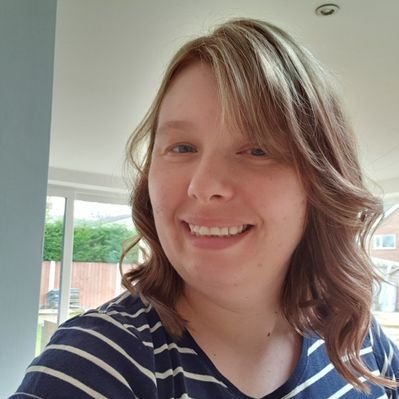
Laura Jones
Laura Jones is a secondary school teacher in Cornwall. She teaches English and Media and recently completed an MA in Publishing. Laura is part of a local writing group and hopes to eventually complete one of the many book ideas she has saved on her laptop, some of which are inspired by the Cornish landscape.

 PaperBound Magazine