article, Blog, Blog series, Bookshelf, Interview, Interviews, on writing, Writing craft

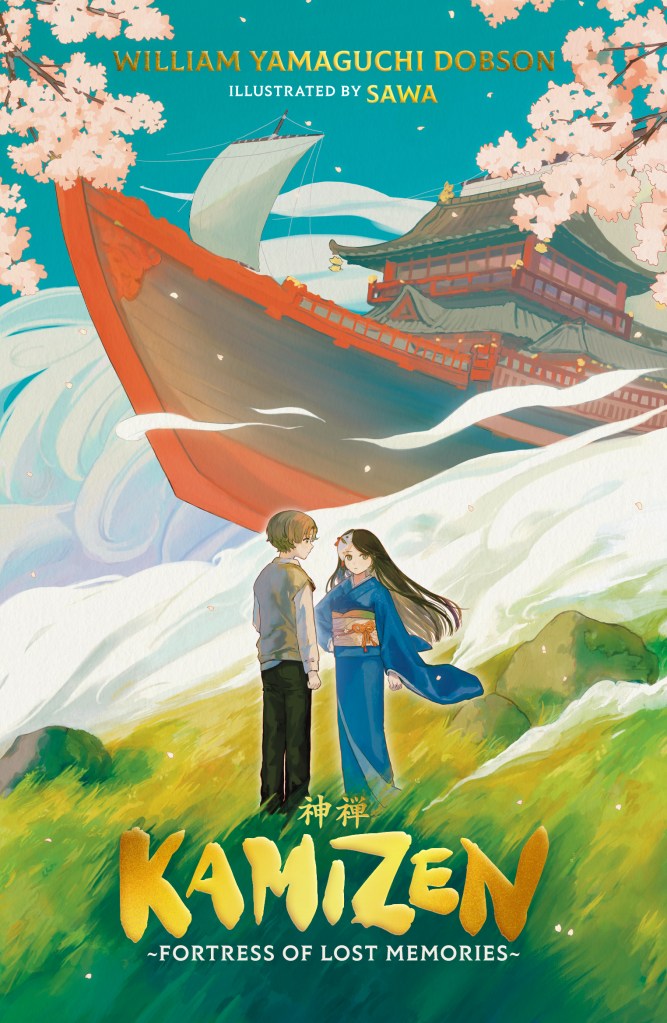
Interview: Kamizen: Fortress of Lost Memories by William Yamaguchi Dobson

It’s a middle-grade fantasy about a boy called Jonty who meets a mystical bonobo in Yorkshire and is offered the chance to enter through The Gate of Memory so that he can recover lost memories belonging to his beloved grandfather and help him finish his memoir about life as a primatologist.

Inspiration, I find, is a mystical thing in itself – if I could pinpoint the exact source, I would drop a GPS pin and camp there for the rest of my writing life. Thinking back now, I would say there were several whispers in my ear. I wanted to write a story about the relationship between a child and grandparent. One of my all-time favourite stories is Tove Jansson’s The Summer Book. I then wondered if I could combine that with my interest in primatology and jazz, as one does on a quiet afternoon. And because of the experience I had with my father’s dementia for over a decade, I had been reading widely about the science of memory. Everything slowly fell into place.

The book is aimed at children eight and over. My children witnessed my father’s cognitive and physical decline from a very young age. They had never known him other than “Grandad is poorly”. Many families I imagined were in the same boat. So I wanted to write a story for my children and fellow passengers about preserving the memory of a person before the anarchy of dementia changed them – a time before grandad became poorly. I don’t think I necessarily planned it this way at the outset, but the message I wanted to convey gently is that memories are what make us human and it’s through stories that we remember those who no longer remember us.

I didn’t find it too difficult carrying out the balancing exercise between telling the fantastical story and handling the topic of dementia. The reality of end stage dementia is that it’s relentlessly grim, but you can’t write a children’s story (or an adult one) with relentless grimness. Nobody would read that and nobody should. You sow enough hints about the reality and let your readers water it with their imagination, because the primary duty you have to the reader is that your book is there to entertain them.

A few characters were borrowed from folklore and myth. The kappa is one of the best known yōkai, alongside the tengu. The earth spider is also from a legendary tale. The talking bonobo, however, is entirely my invention, although there is a yōkai known as a satori, which has monkey-like features.

Lafcadio, the Irish kappa, wrote himself. Once I figured out his voice, he was telling me how he would say things and crossing out what I’d written. And to give PaperBound an exclusive, did you know the paintbrush yōkai, Kaita Zanko has several layers of hidden meaning? Kaita is the past tense of “to write” in Japanese. Kaita Zanko is an anagram of Takai Kozan, patron of the Edo period artist Hokusai and himself a painter of nightmarish yōkai.

Zanko is a one-armed yōkai in tribute to Shigeru Mizuki, one of Japan’s most treasured manga artists and folklorists who repopularised yōkai among postwar audiences.

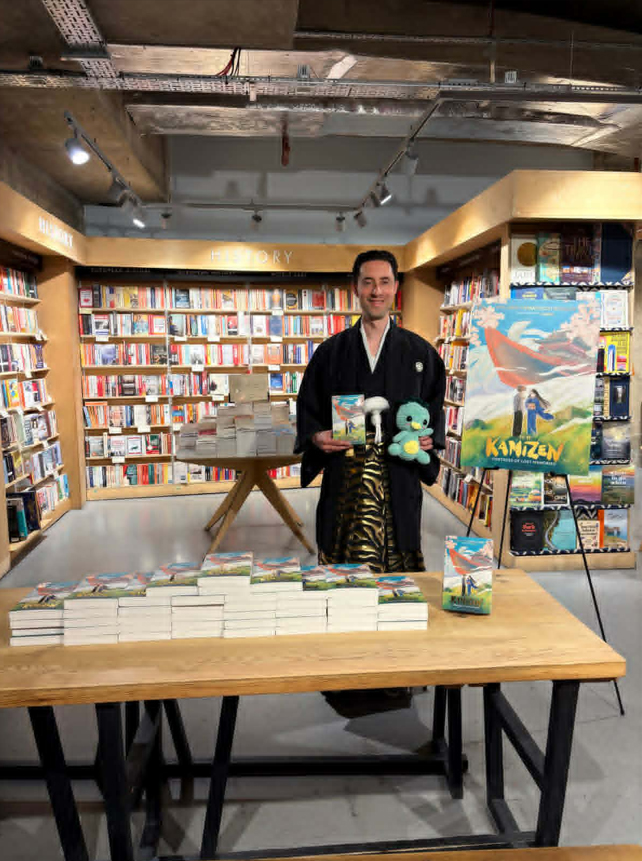
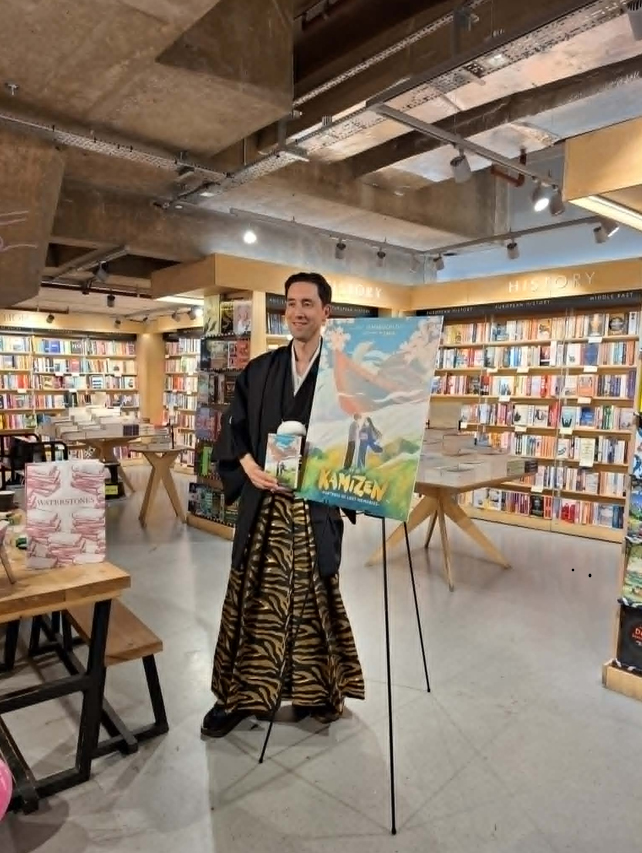
Audible acquired the book first and Scholastic bought the print rights shortly after. I had simultaneous edits and a smooth journey through production on both counts. The team Audible assembled was out of this world and you can tell from the quality of the production. There are so many highlights from the time, but two that stand out are: (1) when I was sent the audition clip for Tomoya Errington, who went on to be cast in the lead role. He stars in every single scene and is brilliant in every way; (2) when I first heard Timothy Spall playing Gramps I was walking along Tottenham Court Road and burst into tears as he sounded so much like my father (it happened opposite Waterstones, where I ended up holding my book launch!).

Working with Polly Lyall Grant and Karen Ball, my editors at Scholastic, and the wider team there has been a joy and painless experience. I wish I could find something to quibble about to give a juicy answer, but I’ll have to disappoint you! Best publishing experience? I received my first copy of Kamizen on my mother’s birthday when she happened to be staying with us, so I let her open the parcel without telling her what was inside. That was a lovely shared moment, entirely coincidental. 

I am reverting to writing longhand for a new project that may result in a highly illustrated middle-grade novel about a boy, a forest spirit and an unforgettable summer in the mountains of Japan.

Know your audience. If you have children, watch what they’re watching – see what makes them laugh and holds their attention: you can translate some of this to print fiction. You should already know what they’re reading and be familiar with the latest titles. Most importantly, in the words of Inspector Harold Francis Callahan, “you’ve got to ask yourself one question.” Why would a [insert age] child want to read the book I’m thinking of writing?

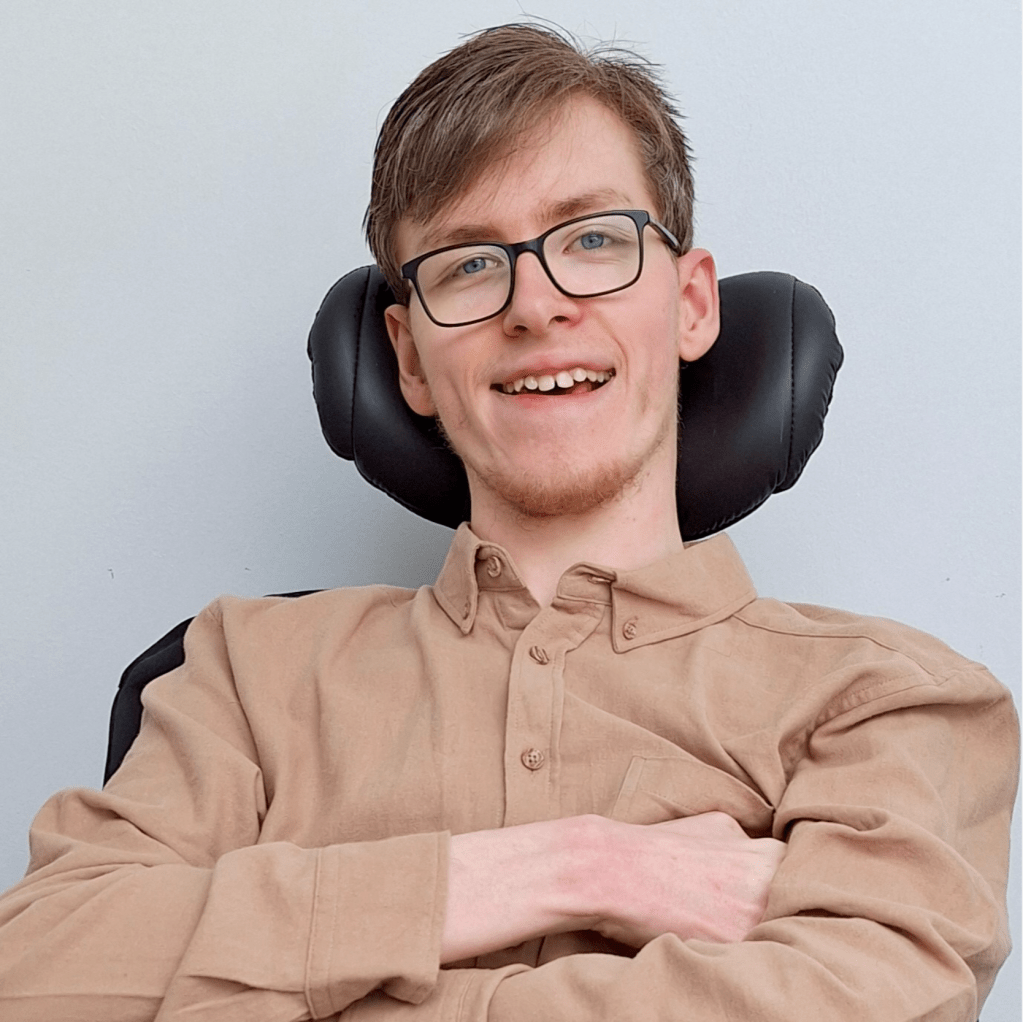
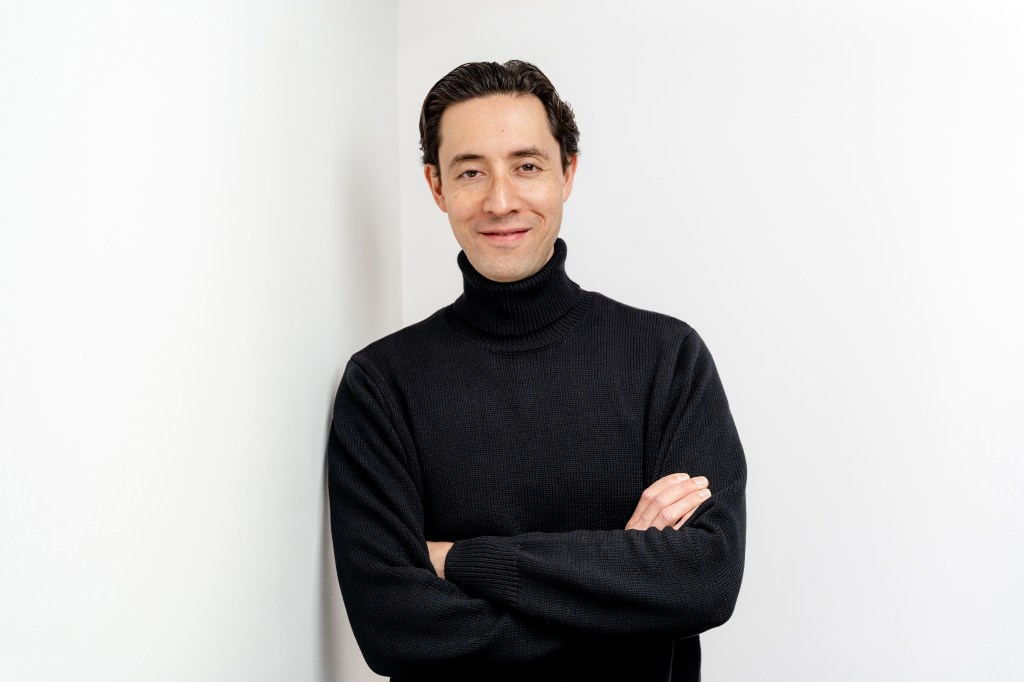
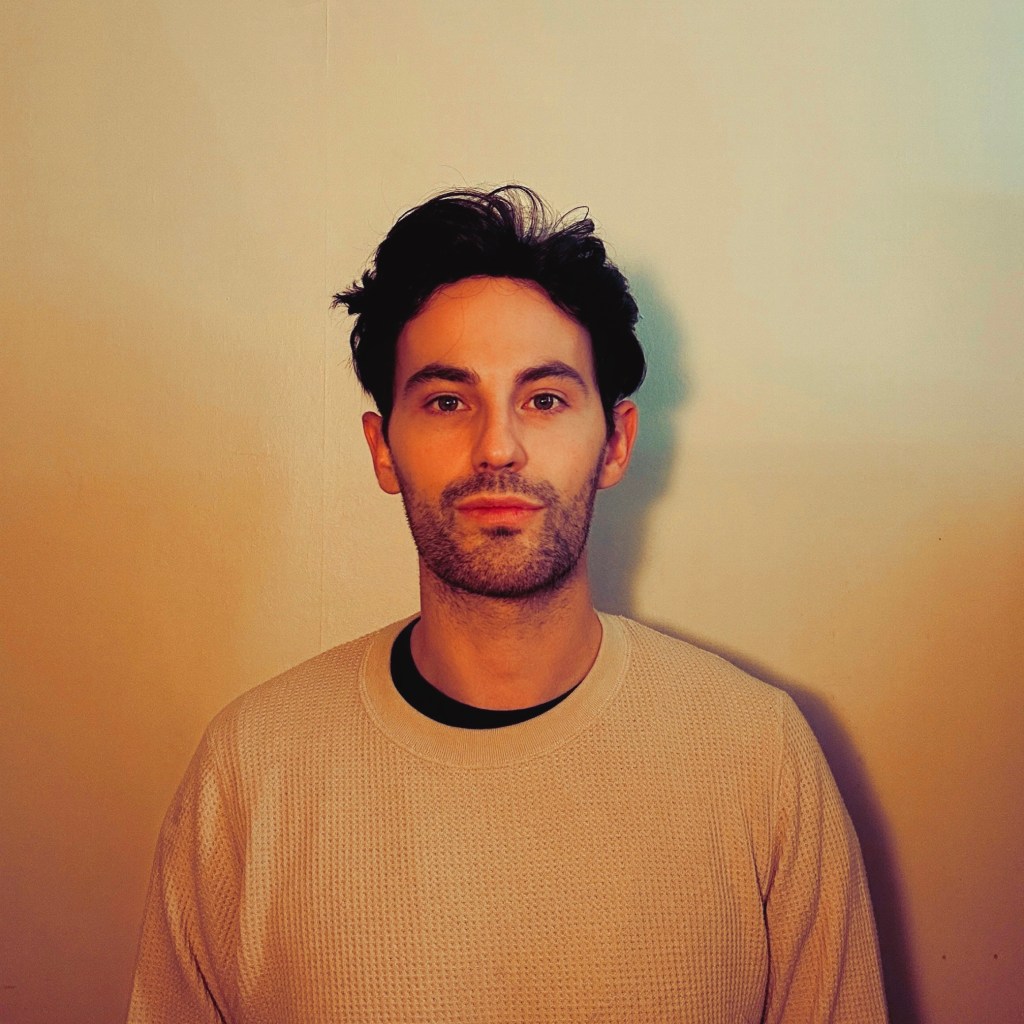
William Yamaguchi Dobson worked as a barrister before turning his hand to writing fiction. His childhood in Japan and love of manga influence his stories. When not looking after his children, he can be found reading or writing and likes to start the day with a cup of matcha and a smile.

PaperBound Magazine is an online magazine and blog for the young, and the young at heart. We are dedicated to showcasing authors and illustrators for children’s and young adult fiction and we strive to deliver inspiring content, uplifting stories, and top tips for young and aspiring writers yet to burst on to the literary scene.

All our issues are completely free and run by volunteers, however if you would like to support PaperBound and the work we do, you can help us out by buying us a virtual book. We appreciate any support you can give us!

Don’t forget you can read with the latest issues of PaperBound Magazine – completely free – here.

article, Blog, Blog series, Bookshelf, Interview, Interviews, on writing, Writing craft

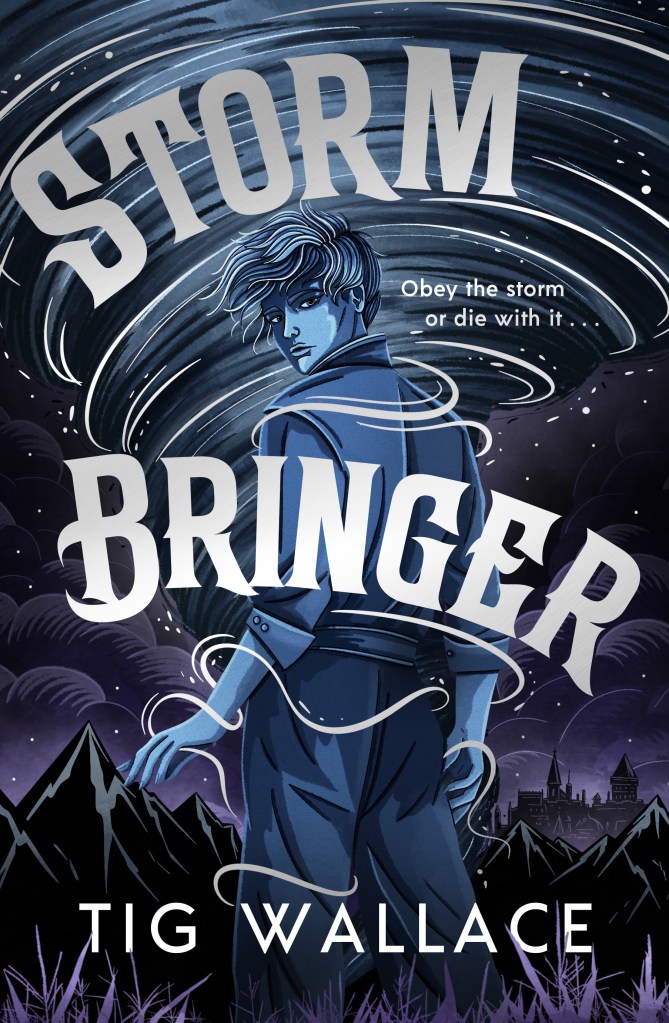
Interview: Tig Wallace on whirlwind YA debut Storm Bringer

Absolutely, and thank you for having me. Storm Bringer is a YA fantasy novel, set in a world besieged by big magical storms. The protagonist, Amelio, has lived in relative shelter for the past ten years, but has to, quite literally, venture into the storm when his mother goes missing. He encounters a world he never really knew and has to come to terms with a power he didn’t know he had, as the biggest storm ever threatens to destroy everything. It’s a bit like the movie Twisters but with tons of magic and a younger – and more rebellious – cast.  

It’s wonderful, if a little strange, to be on the other side of the table – I feel very lucky to get to do both. What’s surprised me the most is how brand new everything feels as an author. I went into it thinking I’d be able to anticipate some of how I’d feel, having a bit of inside scoop on the process, but that hasn’t been the case at all. I feel just as excited, nervous, and caught up in a whole range of emotions as every other author. People are kind and gerenous and I’ve been very well supported by everyone. I do sometimes have to turn my editor brain off though! 

I read an article years ago about a woman who chased eclipses – catching flights west during lunar events to see them as many times as she could, or for as long as possible. It stuck with me and morphed into an idea about chasing storms instead and eventually into an image in my mind of a teenager facing down an apocalyptic tornado. That was the seed of it all. I put it on the back burner initially to try writing other things, but kept coming back to it, and finally decided to write it. 

I knew I wanted to write fantasy that was action-packed and pacy, and hopefully also funny amidst all the peril. I always loved fantasy, whether classic or modern in feel, from Ursula Le Guin to Garth Nix to Leigh Bardugo, but also books that feel like blockbusters, like Matthew Reilly’s and Anthony Horowitz’s Alex Rider. I also love a disaster movie. So I thought, what if I bring all those things I love together…and the result is Storm Bringer. 

I’m glad they are terrifying! Yes, that was always the vision, and I knew I wanted to open with something big and startling to set the tone for what’s to come. There’s of course a great tradition of weather magic in fantasy novels, but I didn’t feel like I’d read anything where storms themselves are so innately magical and destructive. When I landed on that as an idea, it just seemed like something that made this world unique…and that it would be fun to write. I love a big set piece and I had a great time working out what would feel most dramatic on the page. But I also loved the idea that we might learn a lot about the characters by throwing them into massive storms. In Storm Bringer, life and death scenarios bring true feelings to the surface in the most intense moments. 

From the first iteration of the book I had ‘the Fault’ – the abyss that separates the two sides – but the rest took a long time to craft and work out. The magic vs no magic distinction wasn’t enough, so I spent time thinking about the history of the two places, their geographies, their mythologies, their beliefs, and tried to bring that through in the text. It’s funny, there’s actually loads more I wrote about Amrigo that didn’t make it into the final version of the book, for good reason. The thrust of the action takes place in Nimira and the book would have been much too long if we spent longer in Amrigo, but I was sad to leave Dex behind so soon in the story. Watch this space though! 

In The Hunger Games I love that Panem is a fantasy world based in reality, set on the North American continent. I drew inspiration from that a little for Storm Bringer – although it’s a pure fantasy world, I wanted it to feel like it could be ours with a big twist. A bit like the alternate Oxford we see in Northern Lights. I’m a huge sci-fi fan as well and I guess when I pictured Amrigo – at least where Amelio lives – I imagined something like the dusty, solitary peripheral towns in Blade Runner or the industrial off-world settlements in the Alien franchise. A place that’s gritty and unforgiving, geared towards function. 

Ooh, what a great question. I would have to say magic: I think however you define it, there is an exciting, unknown about it that represents something distinct from our own world. 

When it comes to Storm Bringer I’m most interested in how both magic and science are changing. As the book starts, we see magic has been declining, science on the rise, and the different attitudes and beliefs towards both, depending where you are in the world. These beliefs stem from history that has become mythology, and I’ve enjoyed exploring this through Amelio’s eyes. We see that both originate from the same source and I think there’s lots to explore in the grey area where the two meet. 

I am busy working away on the sequel to Storm Bringer, which is the first of three of books. Book two picks up pretty soon after the events of book one and readers can expect lots more from our three main characters, each of them dealing with something pretty major after the conclusion of the previous story. Book two roves further across the map, deepens the mythology of the world, showcases bigger magic and, of course, features lots of massive storms.  

I’m going to start by telling you my worst habit – as both an author and editor – which is that my default is to think I need a big chunk of time to start writing or editing. It’s not true. Big chunks of time are great of course, but don’t always present themselves. So, my first piece of advice is to sit down and write, even if you only have half an hour. 

The second tip is also about the writing itself: help tomorrow’s you by where you leave your writing today. I feel much less daunted, and much better equipped, to start writing when I’ve left myself in a good spot in the previous session. I leave myself scrappy notes in the document to remind myself what I have to do next, and I often pause writing before I’ve finished a scene or chapter, because I find it’s easier to get back into the flow that way, rather than starting a brand new scene from cold. 

My final tip is a classic with a twist I guess. Write the book you really want to write, not the one you think you should write – I can vouch for that first hand. That said, I think it’s really smart to equip yourself with as much market knowledge as you can. Go to book shops, trawl online, look at publisher catalogues to get a sense of what else is out there and working well. Think about which books you’d love to see yours sitting alongside in a shop. When it comes to approaching an agent, a publisher, or self-publishing, it will make your book feel more commercial and help it find its audience. 

Tig Wallace grew up in a town between London and Oxford, reading as much fantasy as possible. After work as a runner on movies, and a brief, eye-opening experience working in magazines, Tig started a career in book publishing as an editor. Tig is a keen tennis fan, as both spectator and player, a cat enthusiast, and has never been known to say no to karaoke. He lives in London. Storm Bringer is his first book. 

PaperBound Magazine is an online magazine and blog for the young, and the young at heart. We are dedicated to showcasing authors and illustrators for children’s and young adult fiction and we strive to deliver inspiring content, uplifting stories, and top tips for young and aspiring writers yet to burst on to the literary scene.

All our issues are completely free and run by volunteers, however if you would like to support PaperBound and the work we do, you can help us out by buying us a virtual book. We appreciate any support you can give us!

Don’t forget you can read with the latest issues of PaperBound Magazine – completely free – here.

article, Blog, Blog series, Bookshelf, Interview, Interviews, on writing, Writing craft

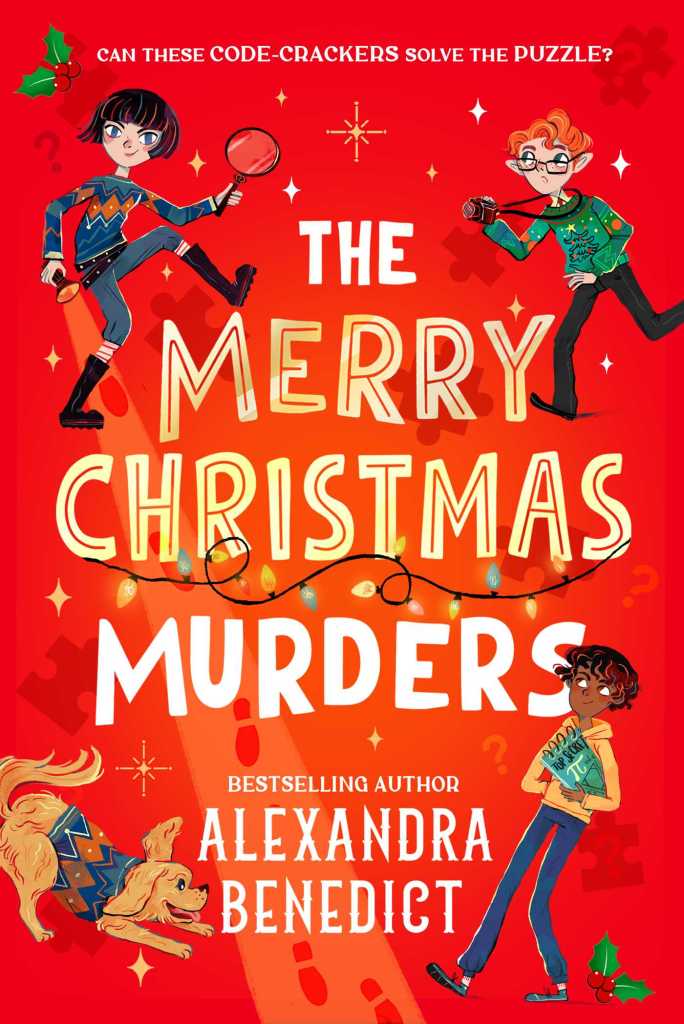
Alexandra Benedict on middle grade debut The Merry Christmas Murders

Brooke Parkin not expecting it to be a very merry Christmas. She is an anxious autistic ADHDer whose only friend is her loyal support dog, Buoy, and the headmaster of her new school has died in mysterious circumstances.

And then she meets the other members of the Neurokind Club, an after-school group for neurodivergent kids. Together, Brooke and the rest of the club must embrace their strengths and their growing friendship to solve the murders and make Christmas merry after all.

I was really surprised that, for me, the process of writing for kids was really similar to that of for adults, aside from getting the tone right for middle grade (not too dark, not too light) and making motives for the murders age appropriate.

I loved the spooky atmospheres, the plots, and how they all used different skills to solve the mystery, something I hope also appears in The Merry Christmas Murders. Most of all, I absolutely adored George – she was so strong and clever.

I was really inspired by how she rejected expectations of what it is to be female. And who didn’t love Timmy the dog? Buoy, Brooke’s support animal, is directly inspired by Timmy.

I am really driven by writing fully rounded neurodivergent characters. Looking back, all of my main characters have been ND, even if at the time I didn’t know it! I love Brooke’s bravery – she is so anxious, all of the time, and it takes her real courage to not hide it. She inspires me to get outside when I otherwise would stay in for days.

In the run up to Christmas, I revel in festive activities such as Christmas markets, wreath making, going on the Polar Express, seeing friends, making decorations, etc. From Christmas Eve on, I relish being at home with my little family, eating lots, watching lots, playing lots and laughing even more. I love Christmas SO MUCH!

Fun, kind, inclusive.

The Neurokind Club will be back next year in The Jingle Bell Murders! I’m writing it at the moment, alongside my next adult Christmas mystery, The Advent of Death.

Read and write as much as you can, in different genres and styles! A classic piece of advice in creative writing circles is to ‘write what you know’, but I advise writing about what you’d like to know.

What fascinates you? What story has gripped you so much that you have to tell it?

Finding purpose in your writing is really important as it’s a very difficult industry to get into, and even harder to stay in, so believing in yourself and your words is essential. I’d also advise finding other writer friends to celebrate with when you have success and commiserate with at all other times!

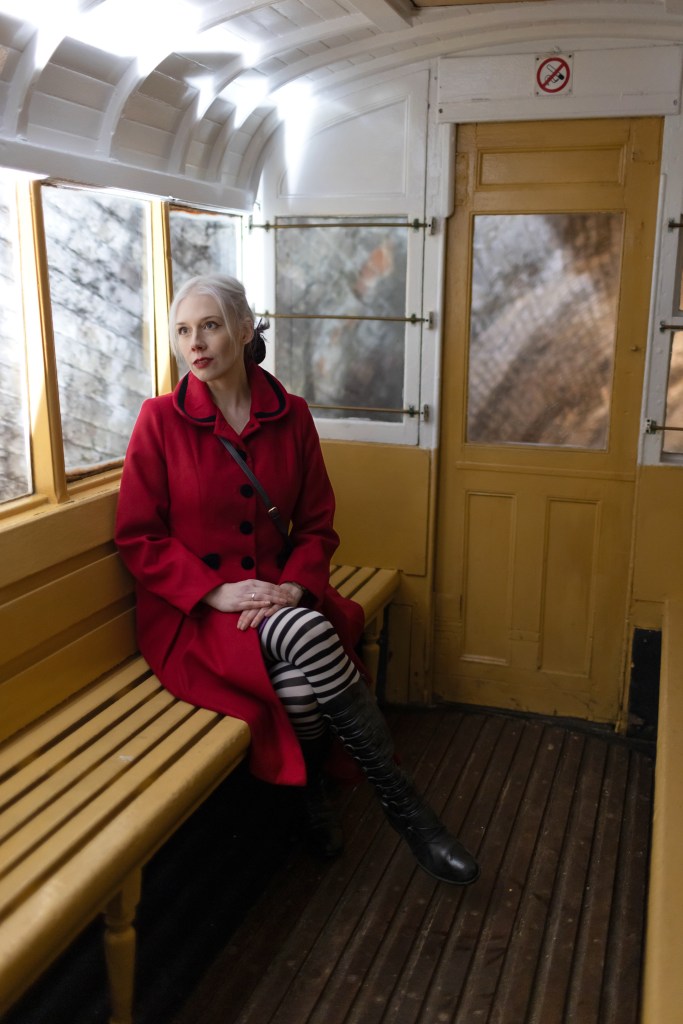
Alexandra Benedict is a USA Today bestselling and award-winning writer for children and adults. Her novels, including the Gold Dagger shortlisted The Christmas Murder Game and Little Red Death are published in twenty territories.

Huge thanks to Laura Jones for preparing the interview questions. Laura is one of our regular contributors and her reviews feature in issues of PaperBound Magazine. Read her review of The Merry Christmas Murders in our autumn/winter issue by checking out our issues page.

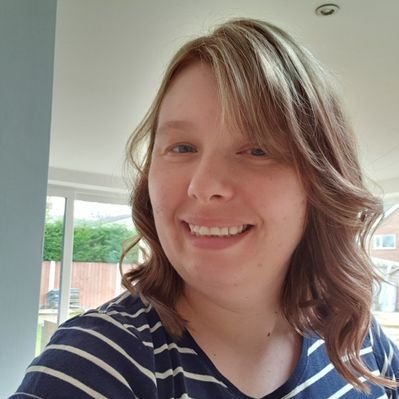
Laura Jones is a secondary school teacher in Cornwall. She teaches English and Media and recently completed an MA in Publishing. Laura is part of a local writing group and hopes to eventually complete one of the many book ideas she has saved on her laptop, some of which are inspired by the Cornish landscape.

PaperBound Magazine is an online magazine for the young, and the young at heart. We are dedicated to showcasing authors and illustrators for children’s and young adult fiction and we strive to deliver inspiring content, uplifting stories, and top tips for young and aspiring writers yet to burst on to the literary scene.

All our issues are completely free and run by volunteers, however if you would like to support PaperBound and the work we do, you can help us out by buying us a virtual book. We appreciate any support you can give us!

Don’t forget you can read with the latest issues of PaperBound Magazine – completely free – here.

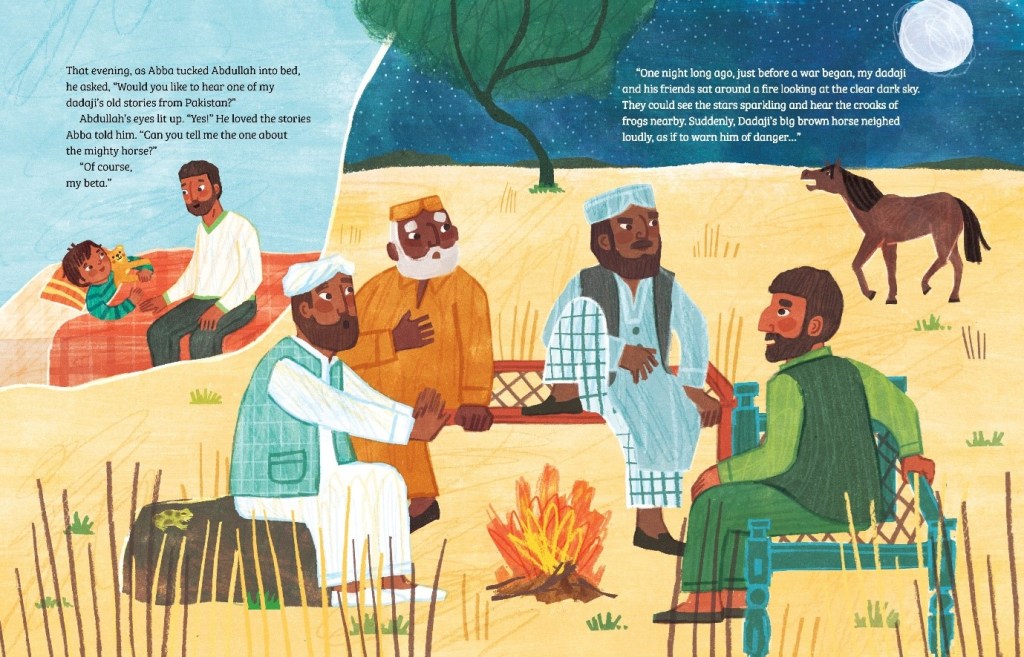
Abdullah's Bear Needs A Name! Illustration 1 by Sophie Benmouyal
article, Blog, Blog series, Bookshelf, Interview, Interviews, on writing, Writing craft

Guest post: Shirley-Anne Brightman and Yasmin Hanif on The Power of Storytelling and Using Your Own Name

By Shirley-Anne Brightman and Yasmin Hanif

© Floris

Storytelling has long been a tradition in many cultures around the world. In older generations in South Asian Pakistani culture, oral storytelling is often the only way stories were shared and passed down.

When I began working with a charming, little school in Glasgow on their ‘We Can Be Heroes’ project helping primary school children to see themselves in the stories they read, I had no idea how central the story of how the project began would be to the project itself, and indeed my unwritten book at that point. In fact, my few years with the schools, saw an ocean of stories; from fiction, non-fiction, memoir to something in between fill the school.

Shirley-Anne Brightman, the pioneer of the project and the Principal Teacher explains how our collaboration came about…

Shirley-Anne’s Story

When I was on playground duty, some of the older pupils came up to me asking for help: “Mrs Brightman, we don’t know enough names, can you help us?” Totally confused, I asked them to explain. They were preparing a Guess the Name of the Teddy fundraising activity and needed 30 names to be chosen by players; so far they had James, Emily and Belinda.

“I don’t understand, what about your name, Zainab? Or yours, Anum? There’s Eesa over there, Mohammed, Zeenat … we have 300 children in the school, what’s wrong with their names?” I asked with slight concern. I feared I knew what their reasons might be.

“You can’t call a teddy those names!” they said in complete sincerity.

“Why not?” I replied, matching their tone as nearly as I could.

It wasn’t the first time we had observed a disregard in our pupils for their own identity. We had seen primary 1 children drawing self-portraits showing themselves with white skin when their own was brown.

Some of the ways we were trying to address the representation was in the reading schemes and class library books we were buying but the books we wanted to buy were hard to find, if not non-existent.

I went to our Headteacher. “We have to do something!” I told her. “It’s not right.”

So, we did.

We worked with the Scottish Black People, People of Colour Writers Network (SBPOC) to find writers who would work with our pupils to write our own stories. That’s when we met Yasmin.

Yasmin’s experience

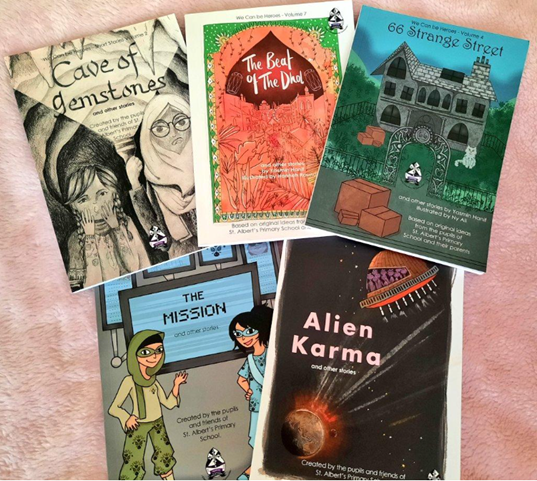
During phase 1 of the project the children came up with various ideas such as superheroes and secret laboratories (‘The Zedriz’), a shipwreck and being stranded on a remote island (‘Home is Where the Heart Is’) to two sisters being trapped in a cave (‘Cave of Gemstones’). By this stage in our project, the stories the children came up with still reflected what they read themselves or watched on TV or YouTube.

It was during phase 3 of the project that I felt the storytelling and imagination of both the school and the community were really captured.

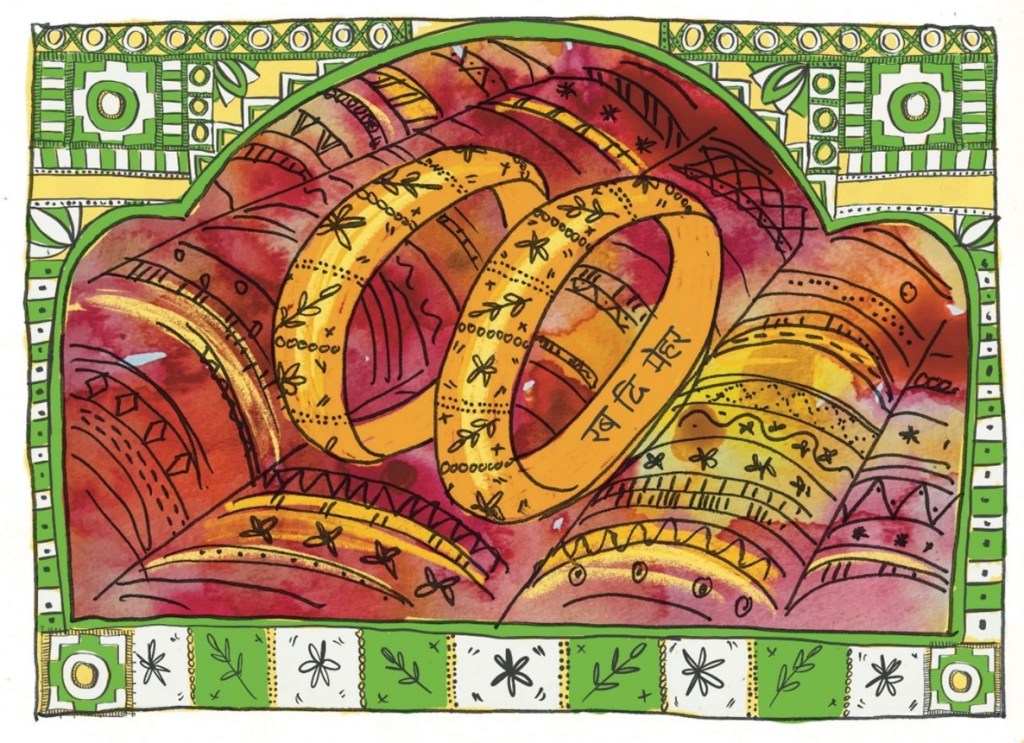
One of the parents of the pupils I was working with told me a real-life story based on her grandparents falling in love in India, and a golden bangle that had been passed down through the generations. She still wore those bangles to this day. This became one of the published stories from the project.

Beat of the Dhol, ‘We Can Be Heroes’, St Albert’s.
Illustration by Hannah Rounding.

I found that storytelling leaves a legacy, not just a physical one like those bangles but a legacy of confidence, and of empowerment for those pupils that I worked with at the school, and they would be taking that legacy with them into later life.

In the same way, Abdullah gets a teddy bear passed down through the generations from his Abba (or dad) in my debut picture book, Abdullah’s Bear Needs A Name! which was inspired by events from the school. Just the like kids at the school, Abdullah struggles to name his bear, until he hears an old story from his heritage.

The message on both accounts is a powerful one; that your name matters, that your stories matter, that you matter.

© Floris

Yasmin is a Scottish writer and educator. She was shortlisted for the Kavya Arts Prize in 2023 for her story which became her debut picture book, Abdullah’s Bear Needs A Name! (Floris, 2025). She was a writer in residence at a primary school and worked on their project to promote diversity and inclusion within children’s writing and publishing, which won the SAMEE Aspiring Writers Award and the Scottish Education Curriculum Innovation Award 2022.

Shirley-Anne Brightman studied languages at the University of Cambridge and holds an MSc in Social Policy from London School of Economics. She has taught in primary schools and English as a Second Language contexts in four countries. She is currently a Leader of Learning at Glasgow City Council’s Improvement Challenge which aims to close the poverty-related attainment gap.

PaperBound Magazine is an online magazine and blog for the young, and the young at heart. We are dedicated to showcasing authors and illustrators for children’s and young adult fiction and we strive to deliver inspiring content, uplifting stories, and top tips for young and aspiring writers yet to burst on to the literary scene.

All our issues are completely free and run by volunteers, however if you would like to support PaperBound and the work we do, you can help us out by buying us a virtual book. We appreciate any support you can give us!

Don’t forget you can read with the latest issues of PaperBound Magazine – completely free – here.

article, Blog, Blog series, Bookshelf, Interview, Interviews, on writing, Writing craft

Interview: A Grave Inheritance by Felicity Epps

A Grave Inheritance is a gothic murder mystery, delving into seances and spiritualism in Victorian London. My main character Dolores Rain is grieving the loss of her parents and older sister, but when ghostly occurrences point to dark secrets within her house, she teams up with her friends to unveil the truth…and solve a murder!

I had so much fun writing this novel, because I was able to indulge all my favourite themes, from spirits and haunted houses to mysterious apothecaries and mourning fashion. It is very much a reflection of the kind of novels that I like to read, so the inspiration for the novel came from cosy nights reading ghost stories!

Dolores appeared as a fully-fledged character from the start – I think because I indulged her quirks and worries, it all seemed to come naturally! The first scene in the novel was also the first vision that I had for the story: Dolores anxiously declaring that she must be on her “deathbed”, while also mourning how many novels she still has to read.

It felt like such an engaging start for a murder mystery, because Dolores is not set up to be a particularly good investigator – she is overly fearful and really just wants to retreat to her bed. As the novel progresses though, I really enjoyed having her confidence grow, especially once she learns to trust her friends and realises that she can confront the things that frighten her.

The theme of power was always such a key element, because women in the Victorian era lacked independence and the freedom to govern a lot of their own decisions. Dolores finds herself in a unique position being granted her family’s inheritance, but it still comes with the expectations of London society, as she is pressured to get married.

This theme of power then evolved for me, as I quickly realised that ghosts were not the only danger in the novel – from Dolores’ nerves being dismissed as hysteria to the looming threat of being sent to an asylum, Dolores and her friends, Ada and Violet, struggle to be taken seriously. Eventually, the girls form The Society of Free Spirits, hoping that by embracing seances and spiritualism, they will finally be able to make their voices heard.

A symptom of Dolores’ grief is that it has made her world feel claustrophobic. This element definitely strengthened the supernatural aspect of the novel, allowing the haunted house to feel restrictive as well.

I think Dolores would have struggled to overcome her fears if she hadn’t had the outside encouragement of the other characters – Ada does an amazing job of dragging Dolores into society and helping her rediscover the pleasures of life that have been lost in her grief. Meanwhile, the spiritual medium, Violet, helps Dolores find her voice, asking questions that have been ignored by many of the male characters in the book.

I do like to imagine that Dolores always had this resilience within her; she just had to remember it! In the novel, she often feels overwhelmed in social situations, but then finds her strength again in quiet moments. Through all her ghostly experiences, she doesn’t want to give up – and this desire to look for answers pushes her through, even when she wants to shut her front door and ignore the outside world!

When I used to imagine being published, I’d fantasise about finding my novel on a shelf in a bookshop. So now, to have A Grave Inheritance popping up in Waterstones windows has been absolutely beyond my hopes as a debut author!

I have loved seeing the apothecary bottles, candles and skulls that have appeared in such creative displays across the stores. I’m so grateful to all the amazing booksellers that have championed the novel, and I like to think that A Grave Inheritance has ushered in spooky season early this year!

I’m currently working on a sequel to A Grave Inheritance, which will be Book 2 in The Society of Free Spirits series. I’m so excited to share more about Dolores, Ada and Violet, as they embark on further ghostly investigations!

While Dolores’ house can feel gloomy and oppressive, I’m keen to delve more into the world of her friend Ada – exploring the glittering ballrooms of Victorian high society, where dark secrets are kept closely hidden.

My main advice would be to finish a first draft without worrying about it being perfect. When I first started writing, I wanted each chapter to be just right, before moving onto the next. But now, I focus on letting the characters lead me to the end of the novel and save worrying about plot holes for future revisions.

I find this gives me a better perspective on the project overall, and it’s such an uplifting feeling to have a manuscript in your hands – even a messy first draft!

Felicity Epps studied a degree in English Literature before completing a Masters in Eighteenth-Century Studies, where her research focused on female murderers in true crime writing! Felicity finds inspiration in history; researching strange and spooky subjects. She enjoys exploring cemeteries, collecting old books and hunting for ghostly Victorian photographs in antique shops.

Felicity currently lives in Broadstairs, Kent, UK, with her partner, Josh, and their baby daughter, Madeline. When she isn’t writing, Felicity loves going to the beach, knitting colourful jumpers and drinking far too many cups of hot chocolate. A Grave Inheritance is her debut novel.

PaperBound Magazine is an online magazine and blog for the young, and the young at heart. We are dedicated to showcasing authors and illustrators for children’s and young adult fiction and we strive to deliver inspiring content, uplifting stories, and top tips for young and aspiring writers yet to burst on to the literary scene.

All our issues are completely free and run by volunteers, however if you would like to support PaperBound and the work we do, you can help us out by buying us a virtual book. We appreciate any support you can give us!

Don’t forget you can read with the latest issues of PaperBound Magazine – completely free – here.

article, Blog, Blog series, Bookshelf, Interview, Interviews, on writing, Writing craft

Interview: SF Said on The Children’s Bookshow

As a children’s author, I visit schools up and down the country every week, talking to children about reading and writing and books.  The Children’s Bookshow organises brilliant large-scale events, where children from many schools come together in a fantastic venue to see an author, and then we do follow-up workshops in their classrooms.  Last year, I did this in Coventry, and it was one of the most exciting and rewarding events I’ve ever done, so this year, I’m delighted to be doing it again in Peterborough!

The Children’s Bookshow gives every single child who participates a free copy of a book written by the author they’re seeing.  I think this is beyond wonderful!  Normally when you do events, some kids get a book and some don’t.  But with The Children’s Bookshow, access to books is equal for everyone.  For some children, this will be the first book they’ve ever owned.  And we know from the research that reading for pleasure has the biggest positive impact of any factor on children’s life chances, so you can’t put a price on that – it really is life-changing!

I write the books that I want to read myself!  My first book, Varjak Paw, was about a cat who dreams of being a great warrior, and learns a secret martial art known only to cats.  My newest book, Tyger, is about a boy, a girl and a tyger who change the world.  With each book I write, I want it to be the very best book it can be, so I do everything I can to make it as good as I can.  That takes me many years, and many drafts.  The thing I enjoy most is hearing responses from readers – it makes all the hard work of writing feel more than worthwhile! 

I was very lucky, because everyone in my family loves books and stories, so I grew up surrounded by them.  Reading always seemed like fun to me, and I think that’s the best tip I can give you: never make reading seem like hard work, or a punishment!  Let it be fun.  Give children access to the widest possible range of books, let them choose freely for themselves, and then let them read for pure pleasure, with no strings attached.  If you do this, even the most reluctant readers might just surprise you – I’ve seen it happen many times!

There are several great ways to get involved with The Children’s Bookshow this year. Firstly, I’d encourage everyone to check the website to see if the 2025 tour is coming to a venue near you. If it is, why not tell your teacher or school librarian? They might be able to organise a school trip.

Even if you can’t make it to a live event, you can still be part of the experience by exploring The Children’s Bookshow website. There are fantastic photos and write-ups of all the events, so you can see what happens at the shows and discover new books and authors.

The website is also packed with great resources and activities around the featured books – for example, there are some Tyger resources on there now. At the end of the tour there will be a creative competition that is open to everyone to enter too. Last year’s winner got to meet Michael Rosen!

Like all writers, I’m really just a reader who took one more step.  I wanted to pass on the excitement I felt when I read my favourite books, like Watership Down, or saw my favourite films, like Star Wars.  My current project is very much connected to Tyger.  It’s not a sequel, or a prequel – it’s a parallel story set in another alternate world.  I feel sure it’s going to be my best book yet when it’s done, but it’s not there yet – it takes as long as it takes to make a book as good as you can make it!

First, forget about writing! Just think of yourself as a reader, and ask yourself, as a reader, if you could have any story to read, what would it be?  Whatever the answer (and there are no wrong answers), I think you should then write that story yourself.  And finally, keep working on it, draft after draft, until it’s as good as you’d want a story to be, as a reader.  That’s really all I do, as a writer – and young readers can do it too, at any age!

SF Said’s first book, Varjak Paw, won the Nestlé Smarties Prize for Children’s Literature, and was listed by BookTrust as one of the 100 best children’s books of the past 100 years.  The Outlaw Varjak Paw won the BBC Blue Peter Book Of The Year; Phoenix represented the UK on the IBBY International Honour Book List; while his most recent book Tyger won Children’s Book Of The Year at the British Book Awards, Children’s Book Of The Year at The Week Junior Book Awards, and the Foyles Children’s Book Of The Year.

Keep up to date with SF Said on his website.

PaperBound Magazine is an online magazine and blog for the young, and the young at heart. We are dedicated to showcasing authors and illustrators for children’s and young adult fiction and we strive to deliver inspiring content, uplifting stories, and top tips for young and aspiring writers yet to burst on to the literary scene.

All our issues are completely free and run by volunteers, however if you would like to support PaperBound and the work we do, you can help us out by buying us a virtual book. We appreciate any support you can give us!

Don’t forget you can read with the latest issues of PaperBound Magazine – completely free – here.

article, Blog, Blog series, Bookshelf, Interview, Interviews, on writing, Writing craft

Interview: Best of All Worlds by Kenneth Oppel

It’s a survival thriller in which Xavier, my teenaged hero, wakes one morning to find that his family’s lakeside cottage has been moved somewhere completely different. When he, his father, and heavily pregnant stepmother go to explore, they find themselves on a farm – hens, two Nubian goats, thriving crops! When they wander further, they realize they’re trapped inside a dome.

I wondered how people would react to finding themselves in an inexplicable situation – what kind of story you’d need to tell yourself to make sense of it, what your plan of action would be. I also wrote the novel because I was fed up with conspiracy theorists, science deniers (especially deniers of climate change), and people who mangled the concept of freedom to justify hate, racism, and blatant self-interest. The world is hard enough for adults to navigate; for kids it must be even more bewildering, being deluged with misinformation.

Oh yes! I learned a lot about sustainable farming, the best kind of milk goats to get (also how to breed, castrate and butcher them). I read about the best time to plant certain crops and harvest them. I went down way to manner research rabbit holes. I also, sadly, had to research various conspiracy theories and the people who perpetrated them.

I am a big plotter and planner, and spend a lot of time “daydreaming” the world of the story before I start chapter one. But during the writing there are always delightful surprises. The biggest was probably the decision to introduce another family into the dome, one that had vastly different values than the first.

Usually the concept or setting. Best of All Worlds was definitely concept; books like Airborn and The Boundless were the settings.

Don’t expect it to be perfect the first time. If you get stuck somewhere in the story, jump to another place. Get as much feedback as possible from trusted readers.

Having a book in outer space. Airborn went to the ISS for six months with Canadian astronaut Robert Thirsk, and I got to meet him afterwards, and see my space book – though sadly they didn’t let me keep it!

I have a couple novels vying for attention at the moment. One involves U-Boats, the other a young rock band behaving badly.

Kenneth Oppel is the bestselling author of many books, including Airborn, which won the Governor General’s Award for children’s literature and a Michael L Printz Honor Book Award, and the Silverwing trilogy, which has sold over a million copies worldwide. Some of his other books include Ghostlight, The Boundless, Every Hidden Thing, and Inkling. The Nest and Half Brother both won the Canadian Library Association’s Book of the Year for Children Award. Kenneth lives in Toronto with his family.

PaperBound Magazine is an online magazine and blog for the young, and the young at heart. We are dedicated to showcasing authors and illustrators for children’s and young adult fiction and we strive to deliver inspiring content, uplifting stories, and top tips for young and aspiring writers yet to burst on to the literary scene.

All our issues are completely free and run by volunteers, however if you would like to support PaperBound and the work we do, you can help us out by buying us a virtual book. We appreciate any support you can give us!

Don’t forget you can read with the latest issues of PaperBound Magazine – completely free – here.

Aphrodite by Bryony Pearce book cover. Bright pink background against a single yellow eye with long lashes
article, Blog, Blog series, Bookshelf, Interview, Interviews, on writing, Writing craft

Interview: Aphrodite by Bryony Pearce

Aphrodite is a retelling of the life of the Greek goddess of love and beauty, a story that contains themes of power, love, betrayal and family.  

I have always loved myths from around the world and characters from mythology have appeared in many of my other novels: Angels Fury contains Nephilim; The Weight of Souls, Anubis; in Savage Island Carmen is a modern day Maenad; Hannah Messenger and the Gods of Hockwold contains many of the Greek gods.  

I have a particular fascination with Greek mythology and have been wanting to construct a complete Greek myth retelling for some time. Aphrodite struck me as the perfect vehicle for a modern rewrite, with the confusion about her birth, the possibilities of her power and the way she is a catalyst in so many stories.

I am so glad you saw the power in Aphrodite, as I was keen to give her that strength. In many ways she represents womanhood as a whole, and her story highlights the dangers for powerful women when they threaten the status quo.  

I loved writing the scenes where her power emerges, where she literally battles for her life. I also loved writing the scenes where she uses her cunning, hidden behind the mask of her pretty face.

What I found most difficult was remembering to make sure that she retained her innocence and didn’t have more knowledge than she should. It is easy to allow authorial voice to creep in, for example, in naming plants, animals and so on, so I had to keep checking myself – does she know this yet? How would she react to this thing that is so strange to her? What would she do here? How would she learn? Who will teach her?

I am one of the strictest plotters you’ll ever meet. I do character work, world-building research (I researched an awful lot about Ancient Greece from food to clothes to geography, politics, marriage customs and religious observations). Then I plan every beat of the story in advance. Following this, I write a chapter outline. And only then do I start to write.  

Some writers feel that writing like this removes the freshness from their work and cannot bring themselves to do it, but I feel that it allows me to focus on the language rather than worrying about what is going to happen next, to construct beautiful scenes, to ensure that everything fits together, that every action has consequences, that every scene moves the story on and every word has a role to play, and I can seed, early on, themes and elements that will be important much later.

I have always been a fan of world mythology. From a pre-teen I I had books about various myths, Egyptian tombs, the lives of the Mayans and Aztecs and explorations of religions and how they developed.  

My favourite stories have always been folklore and myths, from Havelock the Dane to King Arthur. Pantheons and heroes fascinate me and have so much to say about the values of a culture and how, ultimately, we are all so similar.

This is the thirteenth full length novel I have had published (and I’m hoping it isn’t unlucky number thirteen). I started to write in 2004, with the aim of seeing if it was possible for me to write a novel. I had no intention of trying for publication. However, once it was ‘finished’, I realised that I had a lot of love for it, and approached agents, who sent me to Cornerstones Literary Consultancy for feedback. After a rewrite following their advice, I entered the SCBWI Undiscovered Voices Competition 2008 and was one of the winners. From there I got my first agent and, in 2009, my first book deal.  

I also write short stories for adults which have appeared in various anthologies and magazines.  

In terms of tips for other writers, I would recommend that you read widely within your genre, and that once you have taken your first draft as far as you can alone, seek constructive feedback before approaching agents, whether that be through paid support such as literary consultancies, or through writing groups, mentors, or critique centres such as Wattpad.

I also recommend entering competitions, which are usually run by industry professionals, who might remember you and which often have great prizes from free feedback to book deals. Be polite, persistent, resilient and keep your love of writing – that is the most important thing, that you keep loving what you do

I am hoping to see my third adult thriller on the shelves, which is doing the rounds with publishers at the moment. This is set in London, and involves a woman who ends up entangled in a children’s game, gone terribly wrong. The current title is Simon Says.  

I am hoping also to write a sequel to Aphrodite, which goes into her role in the Trojan War (which in my version she starts deliberately, as a gift to her lover, Ares).  

I will be able to write the sequel if Aphrodite does well, so … hint, hint …

Imagine that you wake, full grown, in a strange world, naked and alone, with no memory and no skills. Where are you? Why and how did you end up there? Do you have the ability to survive, or are you helpless? What are your priorities (shelter, clothing, food, exploration, weapons etc.)? Do you receive help and support from the locals, or are you in great danger? What do you find when you explore? What do you become?

Bryony Pearce is a multi-award-winning novelist and short story writer. She has written a mixture of thrillers, paranormal adventures, science fiction and horror, for Mid-grade, Young Adult and Adult readers. Her most recent novels are based on Greek mythology: Hannah Messenger and the Gods of Hockwold, for readers aged 9-12, and Aphrodite, for young adults.

In addition to writing her own novels, Bryony teaches creative writing at City University (London) and works as a consultant and mentor, in order to help aspiring authors achieve their dreams.

She lives in Gloucestershire and has two teenagers. Consequently she spends a lot of time at the side of sports fields, listening to concerts and being creative in car-parks.

PaperBound Magazine is an online magazine for the young, and the young at heart. We are dedicated to showcasing authors and illustrators for children’s and young adult fiction and we strive to deliver inspiring content, uplifting stories, and top tips for young and aspiring writers yet to burst on to the literary scene.

All our issues are completely free and run by volunteers, however if you would like to support PaperBound and the work we do, you can help us out by buying us a virtual book. We appreciate any support you can give us!

Don’t forget you can read with the latest issues of PaperBound Magazine – completely free – here.

article, Blog, Blog series, Bookshelf, Interview, Interviews, on writing, Writing craft

Interview: The Notorious Virtues by Alwyn Hamilton

The Notorious Virtues is 1920’s New York meets Grimm Fairytales. A group of heiresses compete to win their family’s money and magic in a tournament of virtues.

There are so many pieces that came together to make this story. It’s partly inspired by all the folktales of “The King had 3 sons and he sent them on a quest for a McGuffin to decide the heir”.

It’s also inspired by my friend who is a social worker and once pointed out that there is a recurring narrative in fantasy of glorifying a young person’s lost birth parent at the expense of the adoptive parents. It’s very you were raised by peasants but secretly you’re royalty, which is a terrible narrative for adoptive kids or kids in the foster system. She wished that fantasy would include more positive adoption stories. Apparently what I heard was write a story that subverts the narrative of the glorious perfect birth family that makes you special.

Well since you bring up world, one of the number one mistakes I see aspiring fantasy writers make is feeling like they need to have the whole world built before they start writing the story. Yes, of course you need to know some things, but the world will grow as you write it. No matter how prepared you are, you will inevitably hit something you have to invent on the fly. Don’t let building the world stop you from telling the story. Most of the time it’s an excuse.

This book was a built over such a long period of time that I would struggle to tell you what originally was in there and what came in the writing. The character of August is probably the biggest component that came in after I had pitched it. I realized quickly that Nora needed someone to talk to and be her mystery investigator sidekick (August would say she is the sidekick). And I think with him the mystery became a more active part of the book.

A lot of the charms were born from necessity in the world. I think it got cut in editing, but there was a charm that kept high heels from sinking into the grass at garden parties. I have been to enough outdoor weddings that I would gladly take a charmed shoe!

Authors aren’t supposed to have favourites… but my favourite is Nora, also known as Honora Holtzfall, the once heiress apparent trying to win back her place in the family, while also solving her mother’s murder. Nora is such a mix of brains, sass and reckless self-confidence. Writing her, and especially her banter with August, was the most fun.

I’ve heard the saying that you never learn to write a book, you only learn how to write the book you’re currently writing (and the next one is a whole new beast). I think that’s true to an extent, but I have always written better in a café than in my house, so I try to have a rhythm of leaving the house.

I feel like if I reveal anything about book 2 a sniper will appear pointed at my head. I am currently writing it, the fairy tale aspect is way bigger than in book 1, lots of fun creatures to see. And after that I have an idea I am so so so excited by. But we’ll just have to wait to see if I sell it!

New York Times bestselling author Alwyn Hamilton was born in Toronto and spent her early years bouncing between Europe and Canada until her parents settled in France. She moved to the UK when she was 18 and has been here ever since as an author/bookseller. Her first novel Rebel of the Sands was sold in 14 territories and won the Goodreads Choice Award for best debut. Her fourth book The Notorious Virtues will release in 2025. Follow @alwynhamilton on TikTok.

https://www.alwynhamilton.com/

PaperBound Magazine is an online magazine for the young, and the young at heart. We are dedicated to showcasing authors and illustrators for children’s and young adult fiction and we strive to deliver inspiring content, uplifting stories, and top tips for young and aspiring writers yet to burst on to the literary scene.

All our issues are completely free and run by volunteers, however if you would like to support PaperBound and the work we do, you can help us out by buying us a virtual book. We appreciate any support you can give us!

Don’t forget you can read with the latest issues of PaperBound Magazine – completely free – here.

Island of Influencers by Monique Turner
article, Blog, Blog series, Bookshelf, Interview, Interviews, on writing, Writing craft

Interview: Island of Influencers by Monique Turner

I’m a curious person by nature, and the concept of influence is something I’ve studied in depth. What makes this person’s message so hard to ignore? Why have the masses flocked to this ideology? I can’t rest until I find an answer, and this research is what led me to helping create informative videos on YouTube. The realms of social media are the perfect place to observe human behaviour, especially in regards to influence.

I started working behind the scenes of YouTube channels as both a personal assistant and a scriptwriter, and I was lucky enough to witness influence from inside the fishbowl. Suddenly, I had access to the private aspects of human behaviour through direct messages and emails, and it was fascinating to learn how many people wanted to live the influencer lifestyle and, in contrast, how many people had absolute disdain for anyone who did.

I began writing Island of Influencers as a way of responding to the desires of the masses on the outside looking in, and to process everything I was part of. Harper, my protagonist, is a reflection of all the people wanting to be inside the influencer world – yearning, desperate and naive. Belle, her famous cousin, is the antithesis of that fairytale – she’s the harsh reality that Harper refuses to see until it’s too late for both of them.

Island of Influencers is the result of years of social media observation and study of human behaviour, broken down into a fun, bite-sized concept that can be consumed by anyone who is remotely interested in internet culture.

Thank you! I had so much fun creating my characters, including their usernames, Tubeify channel niches, and even their channel logos.

Readathorien is my personal favourite! Obviously, I’m a huge book nerd, and I often consume booktube, booktok, and bookstagram content, so her username had to reflect her online niche. The username Readathorien is based off the viral fantasy series A Thorien of Witchers (a fictional book I created for my world), and her channel on Tubeify was started based around this series, so her fanbase is the same fanbase for the book series. Her username was birthed from the concept that art breeds more art, and I live for art that transcends its original format, when the work takes on a life of its own and the fans create new space for it all over the web to theorise about and build upon the lore.

Sssiguard has a reactions channel on Tubeify. His username is based off the Scandinavian name Sigurd, derived from the Old Norse name Sigurðr which means “victory” and “guardian”. From the get-go, Sssiguard sees himself as the victor, even before the competition has begun, and the triple ‘S’ comes from the sound made by a snake. Sssiguard’s actions in the book can be very sssnake-like. I changed ‘gurd’ to ‘guard’ because I wanted to emphasis that he sees himself as the guardian of his internet niche. In his eyes, reactions are his territory (proven in the Cancelled Club challenge).

Unlike Readathorien’s username, which is based off her niche, I wanted Sssiguard’s to be based off his personality.

Kottage Kay’s username is interesting, because how lucky is it that she has a name (Kay) that, when paired with a slightly altered spelling of cottage, so perfectly fits with her cottagecore channel niche! It’s almost like it was given to her by the gods, manufactured in some way, like she’s an industry plant destined to succeed in whatever she does. Who knows!

Absolutely! The Hunger Games is a series that captivated me when it was first released. I couldn’t help but compare it to my own world. I can see the parallels even clearer now as I grow older, and for me, the internet is a very dystopian place, so merging the two concepts together just worked.

Obviously, my main inspiration was YouTube, specifically large-scale competition games with huge stakes and disgusting sums of money to be won. That’s the foundation of the novel.

But this book was also inspired by George Orwell’s Nineteen-Eighty-Four, Joseph Heller’s Catch-22, and Ray Bradbury’s Fahrenheit 451. All of these books deal with censorship, how easy it is to influence a society, control through media, getting stuck in systems that benefit only the rich and powerful, and how certain tools and technologies can be used to distract the masses from the realities of the world.

Music has also inspired many of the stories I’ve written, Island of Influencers included. This one is hard to explain, but sometimes I just stumble upon a song and something about the musical composition or the lyrics just invokes this whirlwind of activity in my brain. In the duration of that three minute song, I can create an entire world and storyline based on the vibe, and then magic just happens.

While writing the beginning of Island, I listened to loads of songs where the lyrics focused heavily on success, status and money, but I then switched to cinematic, epic instrumental pieces as I transitioned into act three, which really helped to unfurl the humour of the novel and reveal the darkness hidden beneath.

It’s already changing, without a doubt! Technology has advanced so rapidly within the span of my own lifetime, and today the changes are almost daily. Trends come and go quicker than you can jump on the bandwagon, the algorithms switch-up before you can even figure them out, and the days of old-Hollywood celebrity have been replaced by overnight successes who fade from relevance just as quickly as they appeared on our screens.

The internet has become an uncontrollable beast and people are tired. We’re overwhelmed with content now and it’s getting harder to discern what is genuine, relatable content, and what is actually marketing and promotion disguised as genuine, relatable content. There’s been a radical change in how people engage online, there’s less connection between creator and consumer and we’re seeing a rise in passive lurking and low conversion rates from views to shares, comments and likes on all forms of content.

People looking to become content creators or influencers are trying to go too big too soon these days, everyone wants their first video/ book/ song/ post to be a viral hit, and to gain millions of followers and subscribers overnight. That isn’t sustainable, and we’ve seen evidence of that through those who have gone viral overnight and then fallen short because they have no catalogue behind them to be able to keep the momentum going.

Personally, I think we need to go back to the drawing board and remember what made the early days of social media so great. The audience doesn’t want to be mindlessly sold to, they don’t want to feel like a number on a page, or like they’re the product of a strangers empire. People want to feel seen and valued by the creators they follow. There’s no better feeling than watching your favourite content creator rise from nothing into the stratosphere, to feel like you’re part of something that others on the outside don’t understand. 

My best advice to anyone who wants to become a content creator is this: don’t aim to grow a fanbase, aim to create a community of like-minded people. That might mean that you start with two of your mates engaging with your stuff, and then a third and fourth person might find you organically, and then soon you’ll have ten people engaging with your content, and then fifty. It’s the snowball effect. It’s slow and frustrating, and the outer shell might flake away and change, but the core is solid.

I’m looking forward to the days of social media where creators are focusing on community again, and not just spewing out content for the sake of making a profit.  

The ending was my favourite part to write, simply because I knew it would throw people for a loop. To me, the whole novel is obscure, but the darkness in the first three-quarters is blanketed by humour and absurdity which puts the reader at ease, and when that blanket is lifted toward the end, it’s unsettling. It comes across as quite jarring, but the darkness was always there.

I mentioned in a previous answer that I was inspired by Joseph Heller’s Catch-22. I love how Heller used satire to draw attention to and criticise certain aspects of society and human behaviour. It’s the same tactic a magician uses, a slight-of-hand trick. 

In Island of Influencers, I said, “Look over here at this ridiculous, entertaining thing while I do something underhand in the shadows,” and then by the time the reader and the characters notice, it’s already too late. The seeds were sown from the first page and, in the end, we all must reap what we sow. 

Funnily enough, this is also a tactic used by those in power in our real world. What’s the best way to assert control over the masses without anyone noticing or putting up a fight? Distract the people elsewhere.

And as for Harper, does she regret becoming an influencer in the end? I think that’s open for interpretation. She got everything she ever wanted, her dream came true after years of trying to make it happen, but it came at a cost. Only the one who pays the price can decide whether it was worth it.

Personally, I would never want for myself what she now has. 

Some readers might feel cheated by the end, because of how obscure it is. But my intention was never to make the reader feel comfortable, but to show how easy it is to be deceived, even when you have all the clues laid out before you.  

I have just handed in book two of the Influencer series to my editor, and I’m super excited to dive into edits for this one. It follows different characters in the same world, trying to navigate social media in the days following book one. We do also get to see what happens to some of the characters from Island of Influencers, and you may be surprised by where they’ve ended up.

For now, that’s all I can say, but I will leave you with this little snippet that I think captures the vibe of book two perfectly: “Are you entertained yet?”

Monique was born and raised in the cold north of England on a diet of strong brews and thick gravy. Whilst growing up, she struggled to find her place in the world, so she vowed to create stories where those who don’t fit in can finally feel like they belong. When T.M. Turner isn’t writing, she can be found roaming the southern coast.

PaperBound Magazine is an online magazine for the young, and the young at heart. We are dedicated to showcasing authors and illustrators for children’s and young adult fiction and we strive to deliver inspiring content, uplifting stories, and top tips for young and aspiring writers yet to burst on to the literary scene.

All our issues are completely free and run by volunteers, however if you would like to support PaperBound and the work we do, you can help us out by buying us a virtual book. We appreciate any support you can give us!

Don’t forget you can read with the latest issues of PaperBound Magazine – completely free – here.