

Interview by Lauren Marples
Monique Turner chatted to our contributor, Lauren Marples, about her topical YA thriller debut, Island of Influencers, a book that deftly tackles the dark side of social media with an addictive storyline.

Your novel, Island of Influencers, is centred around influencers and social media. Could you tell us a little about the inspiration behind what made you decide to write it?
I’m a curious person by nature, and the concept of influence is something I’ve studied in depth. What makes this person’s message so hard to ignore? Why have the masses flocked to this ideology? I can’t rest until I find an answer, and this research is what led me to helping create informative videos on YouTube. The realms of social media are the perfect place to observe human behaviour, especially in regards to influence.
I started working behind the scenes of YouTube channels as both a personal assistant and a scriptwriter, and I was lucky enough to witness influence from inside the fishbowl. Suddenly, I had access to the private aspects of human behaviour through direct messages and emails, and it was fascinating to learn how many people wanted to live the influencer lifestyle and, in contrast, how many people had absolute disdain for anyone who did.
I began writing Island of Influencers as a way of responding to the desires of the masses on the outside looking in, and to process everything I was part of. Harper, my protagonist, is a reflection of all the people wanting to be inside the influencer world – yearning, desperate and naive. Belle, her famous cousin, is the antithesis of that fairytale – she’s the harsh reality that Harper refuses to see until it’s too late for both of them.
Island of Influencers is the result of years of social media observation and study of human behaviour, broken down into a fun, bite-sized concept that can be consumed by anyone who is remotely interested in internet culture.
We love the different influencer usernames: ‘Readathorien’, ‘Kottage Kay’, ‘Sssiguard’! What was your process like in creating these influencers in particular?
Thank you! I had so much fun creating my characters, including their usernames, Tubeify channel niches, and even their channel logos.
Readathorien is my personal favourite! Obviously, I’m a huge book nerd, and I often consume booktube, booktok, and bookstagram content, so her username had to reflect her online niche. The username Readathorien is based off the viral fantasy series A Thorien of Witchers (a fictional book I created for my world), and her channel on Tubeify was started based around this series, so her fanbase is the same fanbase for the book series. Her username was birthed from the concept that art breeds more art, and I live for art that transcends its original format, when the work takes on a life of its own and the fans create new space for it all over the web to theorise about and build upon the lore.
Sssiguard has a reactions channel on Tubeify. His username is based off the Scandinavian name Sigurd, derived from the Old Norse name Sigurðr which means “victory” and “guardian”. From the get-go, Sssiguard sees himself as the victor, even before the competition has begun, and the triple ‘S’ comes from the sound made by a snake. Sssiguard’s actions in the book can be very sssnake-like. I changed ‘gurd’ to ‘guard’ because I wanted to emphasis that he sees himself as the guardian of his internet niche. In his eyes, reactions are his territory (proven in the Cancelled Club challenge).
Unlike Readathorien’s username, which is based off her niche, I wanted Sssiguard’s to be based off his personality.
Kottage Kay’s username is interesting, because how lucky is it that she has a name (Kay) that, when paired with a slightly altered spelling of cottage, so perfectly fits with her cottagecore channel niche! It’s almost like it was given to her by the gods, manufactured in some way, like she’s an industry plant destined to succeed in whatever she does. Who knows!
You mention The Hunger Games in the novel, and the competition is very similar to the arena, yet with a modern twist. What else were you inspired by when writing Island of Influencers?
Absolutely! The Hunger Games is a series that captivated me when it was first released. I couldn’t help but compare it to my own world. I can see the parallels even clearer now as I grow older, and for me, the internet is a very dystopian place, so merging the two concepts together just worked.
Obviously, my main inspiration was YouTube, specifically large-scale competition games with huge stakes and disgusting sums of money to be won. That’s the foundation of the novel.
But this book was also inspired by George Orwell’s Nineteen-Eighty-Four, Joseph Heller’s Catch-22, and Ray Bradbury’s Fahrenheit 451. All of these books deal with censorship, how easy it is to influence a society, control through media, getting stuck in systems that benefit only the rich and powerful, and how certain tools and technologies can be used to distract the masses from the realities of the world.
Music has also inspired many of the stories I’ve written, Island of Influencers included. This one is hard to explain, but sometimes I just stumble upon a song and something about the musical composition or the lyrics just invokes this whirlwind of activity in my brain. In the duration of that three minute song, I can create an entire world and storyline based on the vibe, and then magic just happens.
While writing the beginning of Island, I listened to loads of songs where the lyrics focused heavily on success, status and money, but I then switched to cinematic, epic instrumental pieces as I transitioned into act three, which really helped to unfurl the humour of the novel and reveal the darkness hidden beneath.
The innovation of technology is hinted at towards the end of the novel. Do you think that the way people create content will change in the future?
It’s already changing, without a doubt! Technology has advanced so rapidly within the span of my own lifetime, and today the changes are almost daily. Trends come and go quicker than you can jump on the bandwagon, the algorithms switch-up before you can even figure them out, and the days of old-Hollywood celebrity have been replaced by overnight successes who fade from relevance just as quickly as they appeared on our screens.
The internet has become an uncontrollable beast and people are tired. We’re overwhelmed with content now and it’s getting harder to discern what is genuine, relatable content, and what is actually marketing and promotion disguised as genuine, relatable content. There’s been a radical change in how people engage online, there’s less connection between creator and consumer and we’re seeing a rise in passive lurking and low conversion rates from views to shares, comments and likes on all forms of content.
People looking to become content creators or influencers are trying to go too big too soon these days, everyone wants their first video/ book/ song/ post to be a viral hit, and to gain millions of followers and subscribers overnight. That isn’t sustainable, and we’ve seen evidence of that through those who have gone viral overnight and then fallen short because they have no catalogue behind them to be able to keep the momentum going.
Personally, I think we need to go back to the drawing board and remember what made the early days of social media so great. The audience doesn’t want to be mindlessly sold to, they don’t want to feel like a number on a page, or like they’re the product of a strangers empire. People want to feel seen and valued by the creators they follow. There’s no better feeling than watching your favourite content creator rise from nothing into the stratosphere, to feel like you’re part of something that others on the outside don’t understand.
My best advice to anyone who wants to become a content creator is this: don’t aim to grow a fanbase, aim to create a community of like-minded people. That might mean that you start with two of your mates engaging with your stuff, and then a third and fourth person might find you organically, and then soon you’ll have ten people engaging with your content, and then fifty. It’s the snowball effect. It’s slow and frustrating, and the outer shell might flake away and change, but the core is solid.
I’m looking forward to the days of social media where creators are focusing on community again, and not just spewing out content for the sake of making a profit.
The ending of the novel is quite obscure (no spoilers!). Do you think that Harper regrets becoming an influencer?
The ending was my favourite part to write, simply because I knew it would throw people for a loop. To me, the whole novel is obscure, but the darkness in the first three-quarters is blanketed by humour and absurdity which puts the reader at ease, and when that blanket is lifted toward the end, it’s unsettling. It comes across as quite jarring, but the darkness was always there.
I mentioned in a previous answer that I was inspired by Joseph Heller’s Catch-22. I love how Heller used satire to draw attention to and criticise certain aspects of society and human behaviour. It’s the same tactic a magician uses, a slight-of-hand trick.
In Island of Influencers, I said, “Look over here at this ridiculous, entertaining thing while I do something underhand in the shadows,” and then by the time the reader and the characters notice, it’s already too late. The seeds were sown from the first page and, in the end, we all must reap what we sow.
Funnily enough, this is also a tactic used by those in power in our real world. What’s the best way to assert control over the masses without anyone noticing or putting up a fight? Distract the people elsewhere.
And as for Harper, does she regret becoming an influencer in the end? I think that’s open for interpretation. She got everything she ever wanted, her dream came true after years of trying to make it happen, but it came at a cost. Only the one who pays the price can decide whether it was worth it.
Personally, I would never want for myself what she now has.
Some readers might feel cheated by the end, because of how obscure it is. But my intention was never to make the reader feel comfortable, but to show how easy it is to be deceived, even when you have all the clues laid out before you.
Can you tell us about anything else you are working on?
I have just handed in book two of the Influencer series to my editor, and I’m super excited to dive into edits for this one. It follows different characters in the same world, trying to navigate social media in the days following book one. We do also get to see what happens to some of the characters from Island of Influencers, and you may be surprised by where they’ve ended up.
For now, that’s all I can say, but I will leave you with this little snippet that I think captures the vibe of book two perfectly: “Are you entertained yet?”
Island of Influencers is out now in the UK, and soon to be out in Poland, published by Chicken House.
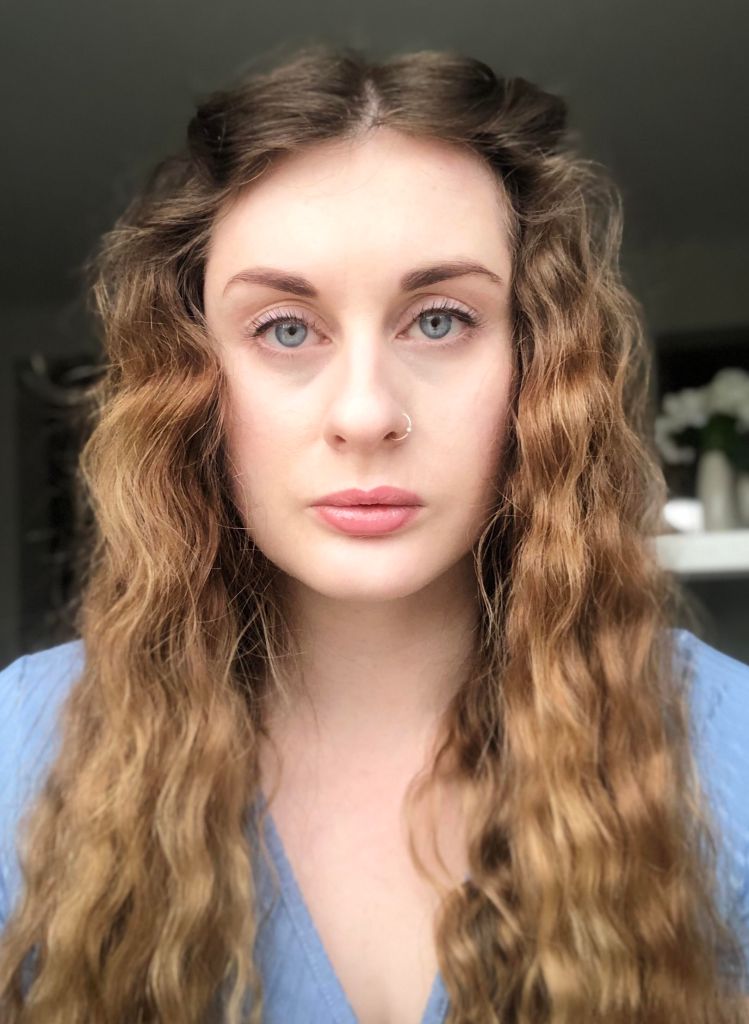
Monique Turner
Monique was born and raised in the cold north of England on a diet of strong brews and thick gravy. Whilst growing up, she struggled to find her place in the world, so she vowed to create stories where those who don’t fit in can finally feel like they belong. When T.M. Turner isn’t writing, she can be found roaming the southern coast.

 PaperBound Magazine