Blog, Blog series, Interview, Interviews, Writing craft

Interview: Children’s Author Fiona Spence-Arnold on debut book ‘Rhamni Finds Her Wings’

It’s an illustrated chapter book for 8 -10s about a butterfly and moth’s adventure in The National Forest.  

When Rhamni, a Brimstone butterfly pupates on Midsummer’s Eve, she finds herself alone, no brothers or sisters to be found. Thinking they’ve gone in search of the elusive Ghost Orchid, she teams up with new-found friend, Max, a timid Mint moth and the pair set off on a perilous adventure following messages on bramble leaves through the forest. 

When I found out Honey Craft, an independent publishers based in Leicester, were seeking a children’s writer with a connection to The National Forest, I jumped at the opportunity. Living nearby, and with a love of forests and nature, I applied and was excited to win the commission to write a short book for children as part of their MiniBEAST series.

I didn’t know that much about butterflies or moths before starting, but I certainly know more now! The research was fascinating. The characteristics of the insects and their habitats inspired the story and the characters themselves. I was fortunate to be guided by Entomologist, Graham Smith, who was also working on the project. He told us about a group of butterflies who used to be known as the Aristocratic butterflies. These include the Red Admiral and Purple Emperor. It inspired me to imagine a hierarchy in the forest led by the antagonist, Emperor Ethelbert, a Purple emperor butterfly who tries to wield power over all the butterflies and moths.

Graham also told us about the tiny Golden Pygmy moth whose caterpillars eat ‘patterns’ in bramble leaves before they pupate into moths. It inspired me to wonder, what if these caterpillars were trying to send messages through the forest on the leaves? Could they undermine the aristocratic butterflies? What could their messages lead to? It needed to be something scarce and precious. When I read about the rare Ghost Orchid flower, it seemed a perfect fit. Coupled with Rhamni’s worry about her family of Brimstone butterflies, my main character’s quest was set.

Reading a book like mine, where the characters are all minibeasts having an adventure can be a great way to encourage empathy for species other than our own, so seek out books that encourage children to think of insects and animals as integral to the eco-system and important characters in their own right. They’re more likely to want to protect them. Research has also found that when we engage with nature in a positive way, we boost our sense of wellbeing and happiness. 

Of course, you don’t have to live in the countryside to engage children with nature, especially minibeasts, they’re found everywhere! Keep an eye out under rocks, between paving stones and in quiet places in your house.  

In the summer months you’re more likely to see butterflies and moths. You can attract them by growing brightly coloured flowers in gardens or containers. Purple flowers will attract them the most as they see different colour temperatures than we do, including UV, and the colour purple stands out the best for them. Once you’ve found your bugs, you can use books or the internet to identify them. That’s where you start finding out about their characteristics and where the creative ideas can start to take root. Have fun thinking up different situations for them and make them your main characters, that way you really get to see life from their point of view. 

In my book, Rhamni and Max follow the messages on bramble leaves. These patterns on leaves are easily spotted during Autumn and winter and would make a great treasure hunt activity with children. 

We held the book launch at the Timber Festival in July and we also ran guided butterfly and moth walks, and craft activities for children. The Timber Festival is a great way of engaging children with nature as it’s held in the heart of the National Forest and has brilliant sessions and activities on different aspects of nature aimed at both children and adults. 

It was exciting working with Keith Turner, the wonderful illustrator of Rhamni Finds Her Wings, seeing how he interacted with and interpreted my story and characters. We had several meetings to share ideas, and to ask questions of the Entomologist, about characteristics and behaviours of butterflies and moths. Once I’d shared the first draft of the story with him, he started to develop his ideas about what the characters looked like.

As I redrafted, Keith asked me to think about a key feature or accessory for each character. Running this by my editor, Jess Green, I thought of big stompy boots for the intrepid explorer, Rhamni the Brimstone butterfly and a backpack for sensible Max, the Mint moth. The top hat and monocle for the villain, Emperor Ethelbert, were Keith’s ideas and made me laugh when I saw them in the final illustrations. I didn’t give an accessory to Tig, the Golden Pygmy moth caterpillar, but Keith brilliantly had him painting a ‘Mona Lisa’ with a leaf. Keith uses collage in his illustrations, and he told me if you look closely at the moon in one of the pictures, it’s actually an image of grated cheese!  

I would say tip No. 1 is read children’s books. Lots and lots of them, then some more! I read books for children of all ages, first as a reader, then as a writer, making notes, studying style, characterisation, use of voice, pacing – everything. When I was first writing for children, I would pick a book and use it as a mentor text, to really hone in on what the author was doing, how they were doing it and how I could learn from it. I’d make copious notes in the book and copy sections out to ‘feel’ and hear how it worked.

Tip no. 2  – write! You won’t get a book written if you don’t sit down and write. I often say to myself, I’ll just make twenty minutes to write, and when I’ve sat down to do that, I invariably write for longer. It’s amazing how quickly a story will emerge.

Tip No. 3 – have fun. Experiment – this is particularly good if you’re stuck with an idea. Try out new forms, styles, tenses, voice. Plus, if you’re enjoying writing your reader is more likely to enjoy reading it and when you experiment your ideas will flow.

Lastly, find your writing buddies and hold them close. They get it, they’ll be your readers, your champions, your support and you will be theirs. The more you read each other’s work and give constructive criticism, the more you learn about the craft and what kind of writer you are. 

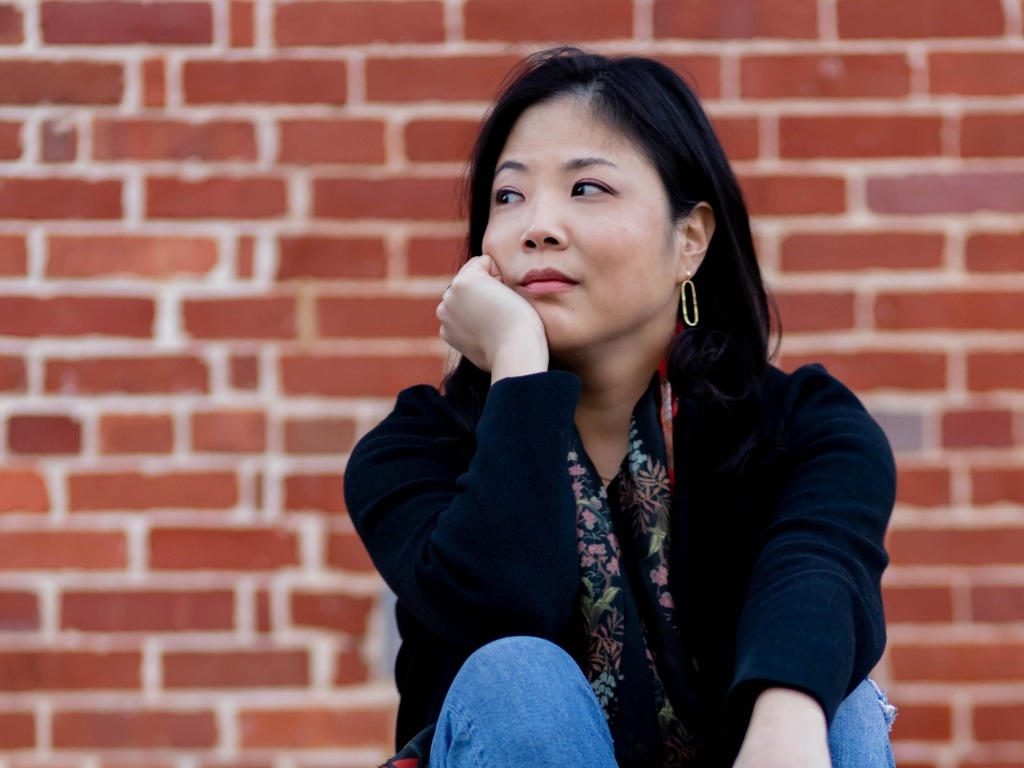
Fiona Spence-Arnold lives in deepest, darkest Leicestershire with her family and bouncy dog.  She writes funny chapter books and exciting adventures for children. When she’s not writing stories, she works on education projects for an award-winning charity and tutors creative writing. Fiona can often be spotted catching story ideas whilst walking in the woods with her dog. She’s thrilled that her debut book, an exciting adventure in the forest, Rhamni Finds her Wings, is published by Honey Craft and is out now. 

From 14th October, it will be available to buy from independent bookshop Fox Books, Leicester. It will also be available in the gallery at DeMontfort University and through libraries in The National Forest soon.

PaperBound Magazine is an online magazine for the young, and the young at heart. We are dedicated to showcasing authors and illustrators for children’s and young adult fiction and we strive to deliver inspiring content, uplifting stories, and top tips for young and aspiring writers yet to burst on to the literary scene.

All our issues are completely free and run by volunteers, however if you would like to support PaperBound and the work we do, you can help us out by buying us a virtual book. We appreciate any support you can give us!

Don’t forget you can read with the latest issues of PaperBound Magazine – completely free – here.

Blog, Blog series, Interview, Interviews, Writing craft

Interview: Children’s Author Emma Read on ‘The Housetrap’

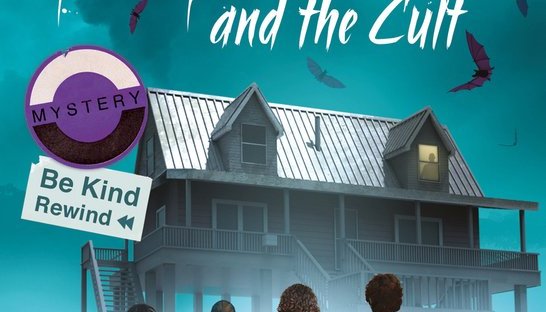
Of course! The Housetrap is a spooky, Scooby Doo-esque adventure where four almost-friends find themselves trapped in a strange house in the woods. The house is set for an escape room style party but for some reason it doesn’t want to let the kids go … it has other plans for them. The team have to unravel multiple mysteries and at the same time attempt to solve the puzzles and riddles left by the architect of the house, in a desperate effort to escape. The only thing they have in their favour is that they are alone in there …  

Or are they? 

For readers 9+ who like mystery, puzzles, adventure, and the odd jump scare. 

In addition to the creepy words (by me) the illustrations on the cover and interior are by Coralie Muce.

The editing process on The Housetrap was something of a metaphor for the book, in that it was a twisty, turny puzzle that needed unlocking, disassembling, and slotting back into place the right way round! I couldn’t have done any of it without my brilliant agent, Lauren Gardner, and my editor at Chicken House, Kesia Lupo who both helped me make it make sense.  

I’m not a natural plotter, although I usually formulate a rough plan in advance (plot points, pinch points etc); when it comes to writing I love the discovery approach – it’s a bit like wandering through a maze—or a house—that keeps changing and revealing new secrets. No spoilers, but there is one item in the book that the kids need to find, and I only worked out where it was by writing all the way to the end! It’s a fun method that works for me, but it does mean edits are usually hard work!  

Places I’ve been, and seen, always find their way into my books, and The Housetrap is no exception. The idea for the house itself, and the entire story really, came from a beautiful but declining hotel in Rome. Haphazardly built, it had several mezzanine levels, rooms that were unexpectedly connected, and stairs that didn’t seem to go where you thought they should.

As I wrote, I augmented it with fictional houses and hotels (the Overlook won’t be a surprise, I’m sure!) But it was another, real-life, hotel which lent the finishing touches, including all the taxidermy animals and mounted deer heads. This was another, past-its-best building, hidden in the New Forest in Hampshire (a forest created for a king, like Badwell Woods in the novel.) 

The Housetrap is set in Suffolk, where I grew up, which is home to Thetford forest – a magnificently huge place, which, when I was a child, I truly believed a person could get lost in forever. 

Character-wise, I think the only one who is drawn from life is Deliah. There is a lot of me in her – like her I was embarrassed of being smart; I thought it made other people uncomfortable so I masked it … being clever wasn’t cool where I went to school! In Deliah I wanted to create a character who could work through those feelings and grow to be proud of her intelligence. 

In Milton the Mighty/Megastar, I was keen to show the characters as realistically as possible, their spidery movement, physiology and, as much as possible within the bounds of the story, their behaviour. In The Housetrap, there’s not a lot of science directly on the page, but I still examine all my scenes to make sure they are logical, within the rules of whatever supernatural power is in play.

More generally, I find a wealth of story inspiration in science, from pure sci-fi ideas, to cli-fi, to the natural world and way beyond: the first story I ever had published was inspired by a conversation about ghosts on The Infinite Monkey Cage (a science comedy podcast with Professor Brian Cox) which makes it feel like I’ve come full circle! 

It might seem anathema to some to consider writing a competitive sport, but as an aspiring writer, I entered every comp going! My first win was a Twitter micro fiction competition (back in the days of 140 characters!) and I kept going until I hit the amazing heights of the BCNA shortlist. Writing competitions aren’t for everyone – the odds are not ever in your favour and the likelihood is you will fail. And if you do list, or even win, there are no guarantees of success.

But … if you can stomach with that, competitions provide interesting benefits (besides the chance to walk away with a prize). They are great motivators, providing hard deadlines of the sort you might get from a publisher; they force you to scrutinise your work, helping you become a better editor; and they acclimatise you to having professionals read your work and, if you’re lucky, critique it.  

If you’re going to enter competitions, my advice is to try and enter with friends; turn it into a team sport, where successes can be vicarious, and failure can be shared and contextualised. Also, be clear on why you’re entering and manage your expectations. What do you hope to accomplish? Achieving a listing, or a notable mention is a fantastic addition to your query letter, and getting used to rejection will set you in good stead for any writing journey. 

When it comes to The Housetrap, my main desire is for readers to have fun. I wanted to write a thrilling adventure, something that makes you gasp and squeal, with delight and just a little bit of terror – like riding your bike super fast downhill. But there are some messages to take away too – I’ve already mentioned Deliah’s smarts, but also I want readers (perhaps especially girls) to see that maths has value. I volunteer at my local primary school, helping out with maths and I see too many girls in KS2 with self-imposed barriers to the subject. I hope the book speaks to them, just a little. 

More broadly, appropriately scary books can be beneficial to children’s emotional development. There are a lot of studies across this subject but in a nutshell, readers can experience fear, almost practice it, in a safe environment and learn to recognise their own personal tolerance for risk. One of my favourite pieces of feedback for the book has been from readers wondering what they would do in the same situation. How would they respond, how would they escape? Allowing readers a ‘run-through’ like this, of their feelings, allows them to be challenged and grow emotionally, in a safe environment. 

As much as I’d love to scare the living daylights out of Deliah and the gang again, in all likelihood it’s probably not going to happen. If there were to be a sequel, I do have a seed of an idea as to what that might look like, so never say never – it might turn up as a short story or a freebie on my Substack!  

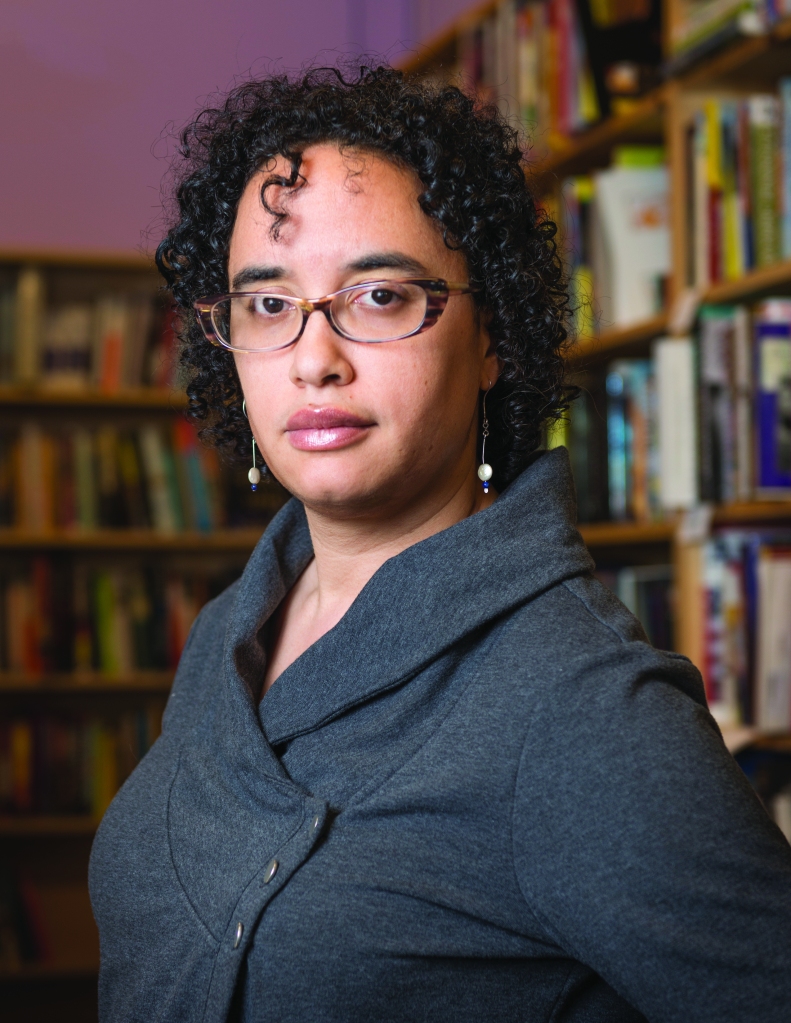
Emma Read is the author of The Housetrap, and the Milton series (Chicken House), including Milton the Mighty, one of The Times Best Children’s Books of 2019 and shortlisted for the Bath Children’s Novel Award.
She loves all things spooky (and spidery!) and can often be found walking through her local graveyard … but only in daylight. Like Mark Gatiss, she doesn’t believe in ghosts, but is scared of them. Connect with Emma at @emmydee73 (Twitter), @ediereadie (Instagram), subscribe at emmaread.substack.com/ for exclusive content, and get in touch at emmareadauthor.com   
Like his career, Steve’s writing is filled with tech and engineering, although his speculative thrillers tend to have higher stakes and fewer meetings. Before he found himself advising companies on digital transformation, Steve was a copywriter, a magazine editor, a communications director, a product designer and a webcaster, though not at the same time. Home is South London, where he lives with his wife and teenage daughters. They wish he’d stop saying, ‘What if…’

Stay tuned for Steve’s review of The Housetrap in our autumn/winter issue, coming soon!

PaperBound Magazine is an online magazine for the young, and the young at heart. We are dedicated to showcasing authors and illustrators for children’s and young adult fiction and we strive to deliver inspiring content, uplifting stories, and top tips for young and aspiring writers yet to burst on to the literary scene.

All our issues are completely free and run by volunteers, however if you would like to support PaperBound and the work we do, you can help us out by buying us a virtual book. We appreciate any support you can give us!

Don’t forget you can read with the latest issues of PaperBound Magazine – completely free – here.

Blog, Blog series, Writing craft

Guest Blog Post: Exploring Teen Issues Through Fiction

Contemporary YA fiction has a bit of a reputation, for better or worse, as a place where authors go to write about social issues which affect young people. I’d be lying if I said that I don’t sometimes think ‘I want to write a book about [insert social issue du jour]’ but it’s never the only thought I have when I’m thinking about fiction, and it’s rarely the first. Those thoughts are far more weird. I’ll give you an example. The very first thought I had when I started thinking of the book which became Grapefruit Moon was ‘What if there was a boy from Northern Ireland and he had, for some reason, to go and live in Granada in Spain for a time? And what if, while he was there, he went off exploring in one of those wee houses that are built into the caves in the side of the hills? And what if, when he was exploring, he ran into the ghost of Federico Garcia Lorca, the Spanish poet who was assassinated during the Spanish civil war? What if he kissed the ghost of Lorca? What if it changed his whole life?’

That scene, where the boy meets Lorca’s ghost in a cave in Granada, and they kiss, is not in the final version of Grapefruit Moon, but it stayed in for a long time. In the end it was clear that it didn’t fit with the rest of what the novel became, so I removed it, like the shin bone in the ‘vegetable’ soup that my mother used to make when we were kids. The ‘soup’ retains the flavour, but the story grew into something else as I learned about the characters and started asking them what their concerns were. And I think that’s where their ‘issues’ came in. My characters told me that they were worried about their exams, their futures, their friends. One of them told me she was freaking out because she was really good at ‘fitting in’ but she hated it, because she wanted to try being something else. One of them told me that he couldn’t pretend to be someone he wasn’t, and that he knew it was going to mess up his future. I introduced them to one another and after a while they got talking. It didn’t quite solve their problems but it did enable them to face them.

These are difficult times for young people in Northern Ireland. We’ve had the pandemic and its physical and mental knock-on effects, and we have a massive crisis in mental health provision. Even before Covid things were bad. Now they’re worse. When you ask teenagers how they’re doing they often say they’re tired. They’re stressed about exams and school. Social media can sometimes increase anxiety but it’s also where they find solidarity and release. Despite all of this, they’re more articulate than I was when I was a teenager. They are more socially engaged, better able to demand their rights, more creative. I want to try to reflect all of this as a writer for young people. I want to be as real as possible, and that, I think, includes the far-reaching parameters of hope.

So, I can write about the things that young people talk about; sexual assault, death, anxiety, sexism, homophobia… and much has been said about where the limits of YA are when it comes to authors choosing ‘gritty’ subject matters… but I think, for me, a more interesting discussion is about where stories are pointing the reader after the book ends. I won’t finish writing a YA story without a signpost, a window that’s open (even just a crack), a hand outstretched. Because, to me, hope is a live issue as well, for young people, but also for all of us; things continue to change (and there is hope in this), those left behind after someone dies continue to live (is there hope here too, as well as the pain?), we feel alone but we are alone-together. Maybe this speaks more to my own needs than it does to my readers’ perceived needs, but I am limited by my own psychology in that way, and I don’t mind indulging myself to assume that we all need some reassurance.

So I work with my characters, letting them explore the areas of their own concern, their issues, messing things up and trying to make things right again, and what I learn as the author is to step back as much as possible while still being there if they reach out for help. But they help me too. They show me myself and my own limitations, my own true beliefs and feelings, and I think they offer me back some hope as well.

Shirley-Anne McMillan is a writer from Northern Ireland. She has worked as a teacher, an Online Writer in Residence for the Irish Writers Centre, a youth worker with LGBTQ young people and a creative writing tutor. She lives in Co. Down with her family and in her free time she loves playing the guitar and knitting.

Stay tuned for a review of Grapefruit Moon in our autumn/winter issue, coming soon!

PaperBound Magazine is an online magazine for the young, and the young at heart. We are dedicated to showcasing authors and illustrators for children’s and young adult fiction and we strive to deliver inspiring content, uplifting stories, and top tips for young and aspiring writers yet to burst on to the literary scene.

All our issues are completely free and run by volunteers, however if you would like to support PaperBound and the work we do, you can help us out by buying us a virtual book. We appreciate any support you can give us!

Don’t forget you can read with the latest issues of PaperBound Magazine – completely free – here.

Blog, Blog series, Writing craft

Guest blog post: Patricia Forde on Returning to Speculative Fiction

PaperBound Magazine are thrilled to feature our first ever guest blog post in a series on the craft of writing from established authors.

Take a look to see award-winning author Patricia Forde’s take on writing speculative fiction.

Her new book The Girl Who Fell to Earth is out now.

Patricia Forde: Return to Speculative Fiction

I have always loved speculative fiction. I cut my teeth on Margaret Atwood’s fantastic books and swiftly moved on to writers like Philip Pullman and his amazing Northern Lights series.  

There are many definitions of speculative fiction as a genre, but I see it as all fiction that is not based in the real world. That includes science fiction, fantasy and tales of magic realism.  

In these types of books, writers speculate about other worlds. In my first novel, The Wordsmith, I was looking at a post-apocalyptic world. This was a future version of Earth, showing Ark – a world that was much kinder to the environment, producing energy in natural ways and leaving a very mild footprint on the planet.  

But Ark had its own problems. It was a harsh place for the human spirit. Music was banned, art was banned, and the language of Ark was List – a list of five hundred words. The people in power used the list to suppress free speech and to exercise total control over its people. 

Writing post-apocalyptic fiction is very similar in my head to writing historical fiction. In historical fiction you are writing about a world that was, building on some facts and imagining the rest, and with the other you are writing about a time that might happen in the future. Both demand a certain amount of inventiveness!  

When I was writing The Wordsmith duology, I took some advice from an article I read by Margaret Atwood. Amongst other things, she said that her speculative novels borrowed a lot from history. So, I turned to Irish history and was reminded of the time when the Irish language was being suppressed by the British.  

During Penal times tally sticks were introduced to suppress language.  A stick was hung around a child’s neck, and each time the child spoke Irish at school, a notch was put on the stick and the child received a slap for each notch at the end of the day.  

I took that idea and applied it to the citizens of Ark. Punishment using forbidden words involved the sinner being thrown into the woods to be eaten by wolves!  

In the second book of that duology Mother Tongue, I used the ancient Irish hedge schools as a model for the rebels in Ark to teach language. Some readers might have noticed that the rebels borrowed quite a bit from Michael Collins in their political structure – using small independent cells so that no one group held all the information! 

In my new novel The Girl Who Fell To Earth I returned to the realm of what-if and looked at what might happen if someone from a far more advanced Planet came to Earth.  

Terros is a planet run by scientists, where the environment is protected, and people live forever. Aria, the protagonist, has been brought up to despise humans who are well on the way to destroying their own planet.  When she is sent to Earth on a mission to destroy human life, she finds that, for all their faults, humans have some excellent qualities, and she sets about saving them and herself. 

In this book as in The Wordsmith I want children to get a glimpse of other possibilities, other ways of living, and other ways of co-existing with fellow creatures on their planet. I don’t believe in Utopias and these worlds that I create are far from perfect, but I think all of us, and maybe young people in particular, should be encouraged through literature to explore possibilities, and see that other models of living are possible.  

Some of those models are there to sound a warning; others to encourage a better way of living. 

For me, I don’t think I’ll ever stop wondering what-if and hopefully those musings will inspire me to write more speculative books!

Photo credited to Julien Behal

Patricia Forde

Patricia Forde lives in Galway, in the west of Ireland. She has published many books for children, in Irish and in English, as well as plays, soap operas and television drama series.
In another life, she was a primary school teacher and the artistic director of Galway Arts Festival. Two of her novels with Little Island, Bumpfizzle the Best on Planet Earth and The Wordsmith, a Library Association of America Notable Book for Children (published in the USA by SourceBooks as The List), were awarded White Raven awards by the International Youth Library.
Her picture book To the Island was co-published by Little Island and Galway 2020 European City of Culture. She is the seventh Laureate na nÓg, Ireland’s Children’s Literature Laureate. 

The Girl Who Fell to Earth is out now and published by Little Island.

PaperBound Magazine is an online magazine for the young, and the young at heart. We are dedicated to showcasing authors and illustrators for children’s and young adult fiction and we strive to deliver inspiring content, uplifting stories, and top tips for young and aspiring writers yet to burst on to the literary scene.

All our issues are completely free and run by volunteers, however if you would like to support PaperBound and the work we do, you can help us out by buying us a virtual book. We appreciate any support you can give us!

Don’t forget you can read with the latest issues of PaperBound Magazine – completely free – here.