Blog, Blog series, Bookshelf, Interview, Interviews, on writing, Writing craft

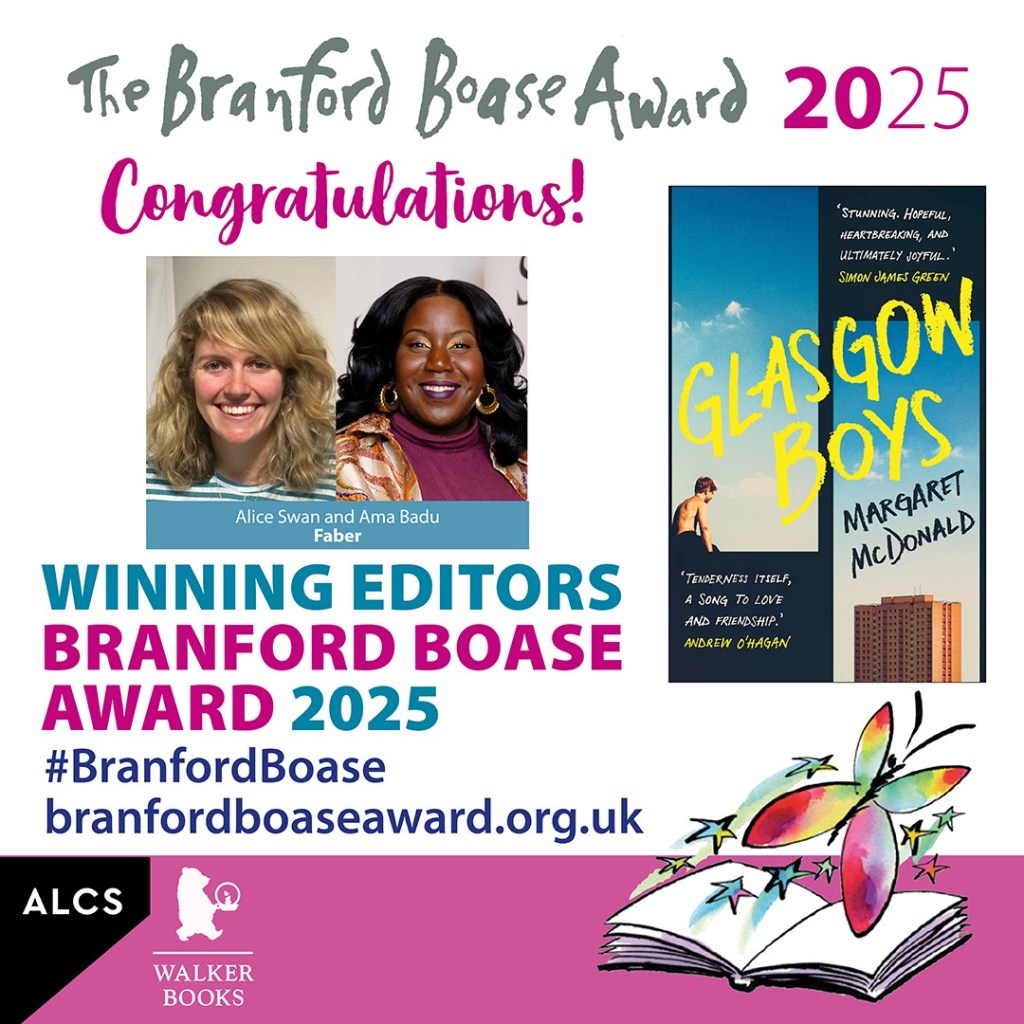
Branford Boase Award 2025: Faber & Faber editor Alice Swan on Glasgow Boys

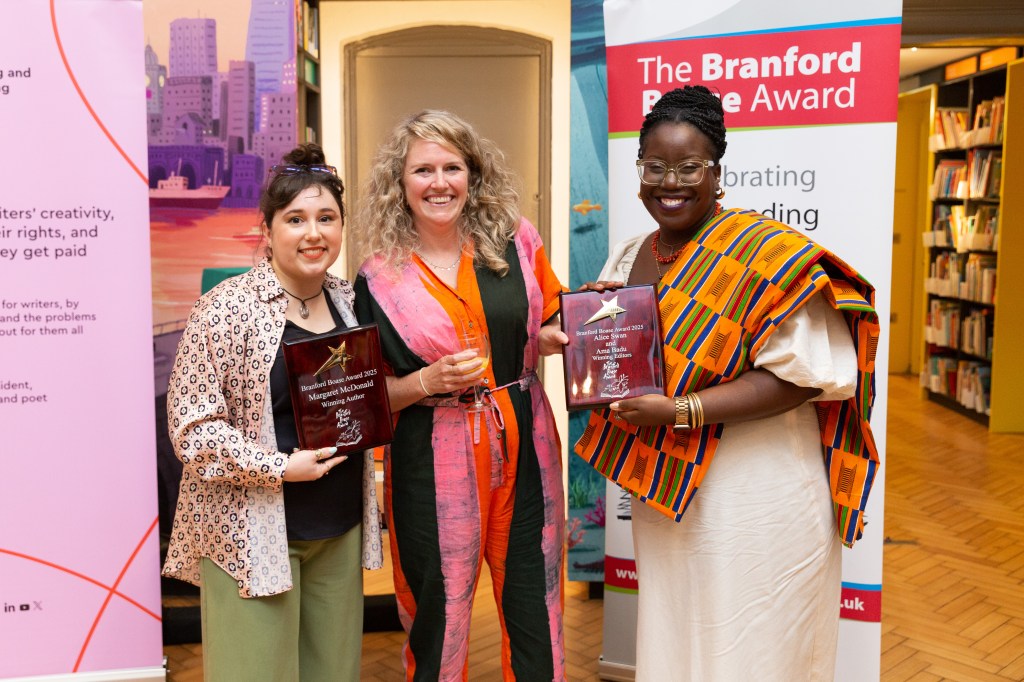
Author Margaret McDonald with Faber & Faber editors Alice Swan and Ama Badu

Working on Margaret McDonald’s Glasgow Boys was – joyfully – one of my favourite sort of edits. Often an edit can feel like a puzzle that you’re trying to put together and the desire is to have every piece in place at the end. However, the starting point for each book isn’t always the same. Sometimes it feels like the pieces are out of shape, or that half of them are hiding down the back of the sofa and there’s a question mark over whether they will all be found!

However, with Glasgow Boys, the starting point felt full of hope: looking down on the first draft, all the puzzle pieces were face up and on the table – the perfect story was there for the taking, we just had to rearrange the pieces into the right order. 

To step away from the metaphor for a moment, what I mean is that Margaret’s writing was exquisite, and her characters, Banjo and Finlay, felt fully formed from the first read. Working with my colleague, Ama Badu, our editorial mission was to ensure that the reading experience felt like a real ride – that the tension and the suspense built up to those moments of release.

I hate to say it, but we wanted to make readers cry!

We wanted to take them on an emotional journey, leaving them full of hope and love at the end. Luckily, that’s very much what Margaret wanted too, so we worked comfortably and carefully alongside her to help her shape her story into the best version of itself. 

Every edit is different, but the conditions for a good edit remain the same. It’s our job to be able to look down on the story from above, to see that puzzle and to think about what each book needs. The main thing an edit needs is time. It simply isn’t a job that can be done alongside checking emails or attending meetings.

Faber & Faber editor, Alice Swan

In order to really see a story as a whole, editing can take one, two, three or even more consecutive days of solid, uninterrupted concentration. For me, I need to be offline and in an entirely separate room to my laptop in order to harness the level of deep thinking required.

Editing is a skill I have honed over many years, and with experience comes further clarity about just what a story might need. It’s a skill that needs to be taught, cherished and protected, and above all given the luxury of time. 
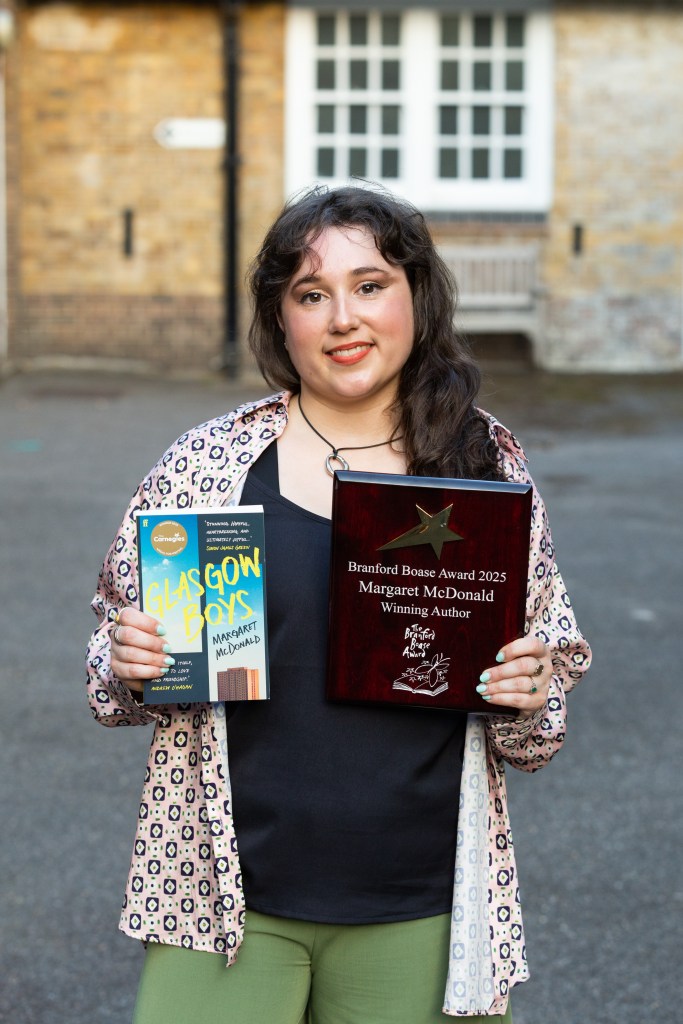
Author Margaret McDonald

At the end of the Glasgow Boys edit, which took five months in the end, it really did feel like every piece was where it should be. It felt like a real mic-drop moment – it was done. There wasn’t a single word out of place. And that, for an editor, is a rare and extraordinary feeling.  

Check out guest post with Faber & Faber editor Ama Badu here.

Faber & Faber editor, Ama Badu

.

Set up in memory of author Henrietta Branford and her editor Wendy Boase, the Branford Boase Award is the only award to recognise the editor as well as the author. Find out more about this year’s award on the website.
PaperBound Magazine is an online magazine for the young, and the young at heart. We are dedicated to showcasing authors and illustrators for children’s and young adult fiction and we strive to deliver inspiring content, uplifting stories, and top tips for young and aspiring writers yet to burst on to the literary scene.

All our issues are completely free and run by volunteers, however if you would like to support PaperBound and the work we do, you can help us out by buying us a virtual book. We appreciate any support you can give us!

Don’t forget you can read with the latest issues of PaperBound Magazine – completely free – here.

Blog, Blog series, Bookshelf, Interview, Interviews, on writing, Writing craft

Branford Boase Award 2025: Ama Badu on editing award-winning novel, Glasgow Boys

By the time it comes to the very first edit of any story, I’ve already read the manuscript a number of times. I’ve been on a journey with the characters and their world. For me, those first reads are the most precious because I learn something new about them every time. It’s a little like meeting a soon-to-be friend for the first time, and then again, and then again. You see something different on every encounter and they become dearer to you.

What I also observe with each read are my own emotions. How do I feel in this chapter and is this the way the author intends for me to feel? In a book like Glasgow Boys, this is especially important. The emotional experience is a core part of the reading experience and so I’d note down the moments that made my heart stop or tears build up. These observations followed me throughout the editing process.  

I enjoyed working collaboratively with Alice on Glasgow Boys. Editing can be a solitary process. It requires concentrated time and deep thought. Once those thoughts are in place, it then requires conversation. Usually, this is with the author, but in this case, Alice and I had each other to bounce ideas from.

We’d discuss every detail together, the moments that lingered with us the most, which chapters had the most punch, how the structure could be reworked to deliver more of the needed emotional pull. Many questions came out of those meetings. How do we get Banjo and Finlay from this point to that? Is this section working as strongly as it could here, or would it be more impactful there? Do we need to see this or that on the page more?

Raising these questions between ourselves first was such a useful exercise. In those conversations, we could see the parts of the story that resonated with each of us personally and where they differed. There is such an alchemy to editing and when two combine ideas, such magic happens. Alice and I often talk about this process as placing puzzle pieces together. We could see from the very start what image we were working on, we then had to figure out where each piece would fit. We passed ideas back and forth to each other and in doing so, we clarified our vision. 

Faber & Faber editor, Alice Swan

As a junior editor at the time, working alongside Alice and her wealth of experience taught me a great deal. There is much to be said about the training newer editors receive. Editing is a skill, one that is best harnessed through practice. Seeing other experienced editors at work is such a crucial part of the process and cannot be overlooked. There’s a proverb that talks about iron sharpening iron, just as one person sharpens another. Those editorial conversations and observing Alice at work certainly sharpened my skills and made me a more confident editor. 

Once we had our thoughts together, we then shared them with (the author) Margaret. This requires such trust, as it does with every author. Their manuscripts are a labour of love and as editors, our role is to polish them, to make them as strong as they can be for the readers.

Once again, a beautiful alchemy happened here with Margaret. We were working from such a rich tapestry and the three of us had a clear understanding of who Banjo and Finlay were and how they would develop from when we first met them to the last page of the novel. And so we worked, turned over every detail and questioned every word on the page. It was such a harmonious process.

Author Margaret McDonald

A book like Glasgow Boys emphasised the place of grace and care at every point. Not just because of the experiences of our beloved characters but also because of our responsibility to our readers. We had them in mind at every point, being sure to leave them the hope that we all desperately need to see. It was such a joy to see Margaret at work here too. With every draft I marvelled at how far she pushed her story.

The glowing reception Glasgow Boys has received is a testament to that.

Faber & Faber editor, Ama Badu

Guest post with Faber & Faber editor Alice Swan to follow.

.

Set up in memory of author Henrietta Branford and her editor Wendy Boase, the Branford Boase Award is the only award to recognise the editor as well as the author. Find out more about this year’s award on the website.

PaperBound Magazine is an online magazine for the young, and the young at heart. We are dedicated to showcasing authors and illustrators for children’s and young adult fiction and we strive to deliver inspiring content, uplifting stories, and top tips for young and aspiring writers yet to burst on to the literary scene.

All our issues are completely free and run by volunteers, however if you would like to support PaperBound and the work we do, you can help us out by buying us a virtual book. We appreciate any support you can give us!

Don’t forget you can read with the latest issues of PaperBound Magazine – completely free – here.

Blog, Blog series, Competition, on writing, Writing craft

Guest Blog Post: Branford Boase Award Judge, Christine Pillainayagam, on the 2024 shortlist

Brandford Boase Award 2024

When I wrote my debut novel Ellie Pillai Is Brown, I wrote it for me. Or more accurately, for 15 year old me. A girl who’d never seen herself – a brown, second generation, Catholic, Tamil immigrant – reflected in the world around her. Not in books or magazines or films or music. The places she looked to for comfort and guidance, never showed her a version of who she could be. Growing up, that feeling of invisibility, of not belonging, sticks. Like glue on the inside of a book spine, it forms a fundamental part of your structure.

Decades later, I sat down at my computer and a book began to pour out of me. I remember vividly the feeling of typing the first words onto a blank page – My name is Ellie. Ellie Pillai – and so my hero was born. Both me, and so much more than me, Ellie is a 15 year old brown girl caught between two cultures – a traditional Tamil upbringing with her family at home, and the life of a classic British teenager at school.

This story, loosely based on some of my own experiences as a music obsessed teenager growing up in a predominantly white area, is what the book industry describes as ‘own voice’ – meaning exactly that. A book written by an author with intimate knowledge and understanding of the material, because it is lived first hand.

As a debut author, taking an ‘own voice’ story into the world can be frightening. It can feel as if not simply your writing is being judged, but yourself and the validity and relevance of your experiences. I was told time and time again, by agents and publishers alike, that my story wasn’t really a story. That there wasn’t a ‘hook’ or a sense of jeopardy, yet to me, I felt the transformation of this shy 15 year old from someone determined to be invisible out of fear of racism, to someone with the courage to stand up and stand out, was a story needed by so many children today. Luckily, my brilliant agent and publisher agreed – and so did the judges of the Branford Boase Award who made me the winner of the prize in 2023.

Winning the BBA has had a profound impact on how I now view children’s stories and their importance in the world. The foundation they build in young people’s lives. The glue we create in their book spines. This year as a judge for the prize, I was delighted to see more ‘own voice’ stories being promoted by publishers. Books that speak to the reality of children’s lives and represent every version of who they are and who they could be.

With a longlist of 25 incredible books, my fellow judges and I had some spirited discussions about who would make the shortlist, but in the end, the word that comes to mind for all 6 shortlisted novels is ‘powerful’. Each one, through a mix of humour, joy, love, pain, fear, compassion, representation, felt powerful. Stories that stick with you long after you turn the final page.

Like the amazing You Think You Know Me by Ayaan Mohamud, which gripped the judges with its use of pace and tension as a terrible incident unfolds, and deals sensitively and beautifully with themes of racism, Islamophobia and microaggressions. Or the hilarious The Swifts by Beth Lincoln, a classic whodunnit full of twists and turns that has such a distinctive voice and is so cleverly layered with themes of identity and family that it becomes a celebration of individuality. The Jhalak Prize winning Safiyyah’s War by Hiba Noor Khan, a compassionate story full of heart, which taught us something we didn’t know, then made us want to learn more about it. The brilliant The First Move by Jenny Ireland, a YA love story with depth, that speaks openly and authentically about disability and covers themes from LGBTQIA+, to mental health and housing security. The outstanding The Final Move by Matt Goodfellow, a verse novel that draws you into a world so often unrepresented in children’s books – a hopeful, playful masterpiece.

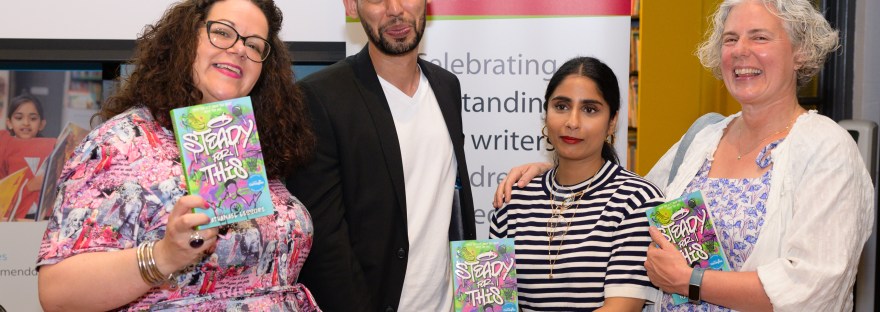
And of course, our wonderful 2024 Branford Boase Award winner Steady For This by Nathanael Lessore, a book of joy, emotion, light and shade. A story that confronts heavy subject matter in a life affirming and generous way. We wanted to push this brilliantly funny book into the hands of as many children as we could.

Each of these powerful novels represents the future of children’s books. One that is filled with hope and safety, whoever you are.

The Final Year Matt Goodfellow, illustrated by Joe Todd-Stanton, edited by Charlotte Hacking (Otter-Barry Books)

The First Move by Jenny Ireland, edited by Ruth Knowles with Sara Jafari (Penguin)

Safiyyah’s War by Hiba Noor Khan, edited by Eloise Wilson (Andersen Press)

Steady for This by Nathanael Lessore, edited by Ella Whiddett and Ruth Bennett (Hot Key Books)

The Swifts by Beth Lincoln, illustrated by Claire Powell, edited by Ben Horslen and Julie Strauss-Gabel (Puffin)

You Think You Know Me by Ayaan Mohamud, edited by Sarah Stewart (Usborne)

Brandford Boase Award 2024
Christine Pillainayagam was born in Norwich, grew up in Sheringham and attended school in Holt and Norwich. She now lives in Faversham in Kent.  She is a writer and retail strategist. A mild obsession with The Beatles and the desire to write a story that reflected her own experiences growing up as a first-generation immigrant led her to put that love of music and words into a book. Ellie Pillai is Brown features songs written by the protagonist, Ellie, and they are available to listen to via QR codes in the book. Ellie Pillai is Brown was shortlisted for the Waterstones Children’s Book Award and the Jhalak Children’s and YA Prize and won the 2023 Branford Boase Award.

PaperBound Magazine is an online magazine for the young, and the young at heart. We are dedicated to showcasing authors and illustrators for children’s and young adult fiction and we strive to deliver inspiring content, uplifting stories, and top tips for young and aspiring writers yet to burst on to the literary scene.

All our issues are completely free and run by volunteers, however if you would like to support PaperBound and the work we do, you can help us out by buying us a virtual book. We appreciate any support you can give us!

Don’t forget you can read with the latest issues of PaperBound Magazine – completely free – here.