
We are excited to bring you an interview with author Michael Thomas Ford who tells us about his new novel, Every Star That Falls, a sequel to cult favourite and social media sensation Suicide Notes.

Your book Suicide Notes is about Jeff, a teen who wakes up in a psychiatric ward and doesn’t believe he belongs there. The sequel, Every Star That Falls, is a follow up to his journey. Can you tell us a little more about it?
Every Star That Falls begins the day after Suicide Notes ends. Jeff returns home and goes back to his old life, but he’s no longer the old Jeff. He has to figure out what that means in terms of his relationships with his family, his friends, and his larger community. He also wants to explore what it means being an out member of the LGBTQ community, which involves finding a support group. The people he meets there change his life even more, in ways he could never have imagined a couple of months ago.
Suicide Notes was published over ten years ago now, yet it’s still making a huge impact on readers today. Are you surprised by how much Jeff’s story is able to speak to readers spanning this length of time?
It’s definitely surprising to me how Suicide Notes continues to find new readers. It’s also a testament to the power of social media, which wasn’t really a thing when the book first came out. Now, readers are sharing their experiences of the book on places like TikTok and Instagram, and that’s allowing it to connect with even more readers. One of the things I love most about the world right now is that the voices of readers are so strong and so powerful. They’re not waiting for anyone to tell them what to read and what they should like, they’re deciding for themselves and then spreading the word. It’s fantastic to watch this happen.

Recent movements in some parts of the world have arguably made a safer and more open place for the LGBTQ community compared to in the past, but there is still a long way to go. Do you think there are any things in particular that could be improved/changed in the future?
The most powerful tool for creating change is empathy. When we learn to really listen to people – particularly to people with whom we might not think we have anything in common – and hear about their experiences and what they feel, we learn to see the world in a different way. That’s how change happens. When we create barriers between us, we only see things from one perspective and it’s easier for other points of view to feel threatening. There’s much more that connects us than divides us, and learning to focus on those things while allowing for differing perspectives is what creates forward movement.
Although these books tackle difficult subjects, Jeff’s voice throughout both novels is very funny. Did you make this decision before writing, or did Jeff steer the novel in this way?
Jeff is essentially me, and I have always approached difficult situations by looking for the humour in them. I think that if you can find a way to laugh, even in the darkest moments, it creates a spark of light that grows brighter and shows you the way through. I realize not everyone appreciates this approach, because we’re all different, but for me the most effective way to deal with life when it gets hard or seems hopeless is to find the moments of joy that remind me that the darker times don’t last forever.
… the most effective way to deal with life when it gets hard or seems hopeless is to find the moments of joy that remind me that the darker times don’t last forever.
You always previously said that you wouldn’t write a sequel to Suicide Notes. Can we ask what changed your mind?
In general, I don’t enjoy sequels because no matter what happens, someone is disappointed. Once someone falls in love with a character, they developed expectations of what they want for them. With Suicide Notes I wanted readers to imagine what happens to Jeff when he leaves the hospital he’s in for the whole book. But as time went on, I thought of more things I wanted to say about certain topics, and continuing Jeff’s story was the best way to do that. Also, there were some characters and events from Suicide Notes that I found readers asking about over and over again, and writing a sequel gave me the opportunity to answer those questions.
Your books speak to readers in a very powerful way and stay with them for a long time. Can you tell us about anything else you are working on right now, or if any new books might be on the way?
I write for a number of different audiences, including adults and younger readers, so there’s always something happening. I’m currently finishing up a ghost-themed novel for middle grade readers, which is a lot of creepy fun. That will be out next year. And there just might be another part to the story about Jeff and his new friends coming. Readers can always find the latest news on my website: www.michaelthomasford.com.

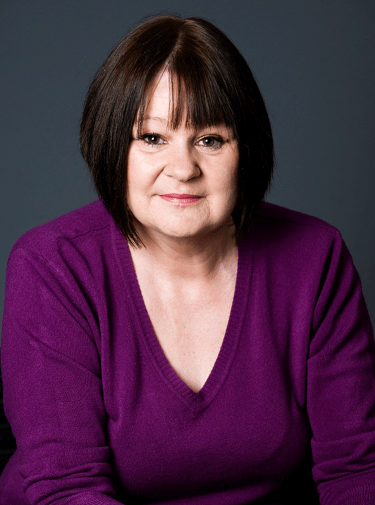
Michael Thomas Ford
Michael Thomas Ford is the author of numerous works for both adults and young readers, including Suicide Notes as well as some of the earliest books about the HIV/AIDS crisis and several books about the LGBTQ community. A five-time winner of the Lambda Literary Award, he has also been a finalist for the Shirley Jackson Award, the Bram Stoker Award, the Firecracker Alternative Book Award, and the Ignyte Award. He lives in rural Appalachia with his husband and dogs.
Every Star That Falls is out now from HarperCollins.

 PaperBound Magazine