
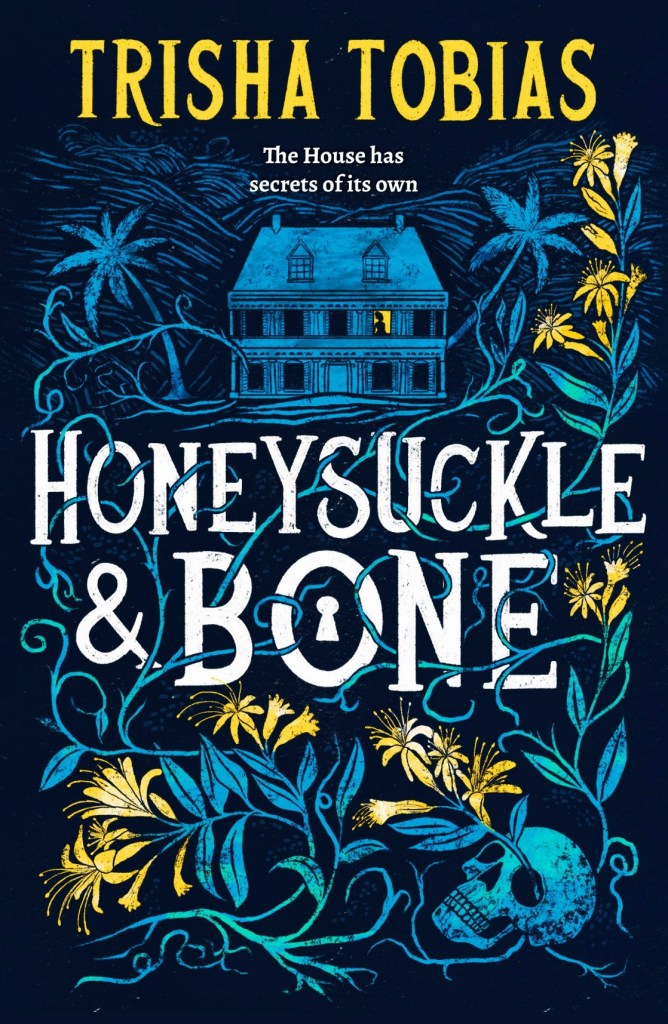
We are thrilled to share a guest post from YA author Trisha Tobias. Trisha discusses the importance of imperfect protagonists in today’s YA, like Carina in her new novel Honeysuckle and Bone.
by Trisha Tobias
Strap in, friends, because I’m finally ready to speak my truth: we need to make room for messy underrepresented protagonists in YA.
Young adult fiction is constantly changing. Part of that change can include making large leaps away from what’s old. But those leaps can create their own problems, like overcorrection. And while YA fiction has come a long way in depicting marginalized protagonists, allowing those same characters to embrace their imperfections on the page is the next step in crafting memorable heroes with relatable, meaningful stories. And I think we’re ready for it.
In my debut novel, Honeysuckle and Bone, eighteen-year-old Carina accepts an au pair job with a wealthy political family in Jamaica. But Carina isn’t just in Jamaica to pad her bank account. She’s got a history, one that fills her with so much shame that she runs away to escape the guilt—and the consequences of her actions. Except Carina soon learns that no matter how far she runs, she can’t escape what haunts her.
Carina is a Black teen who does her best, but “her best” tends to be a bit off. Honestly, it takes Carina a while to figure out how to properly deal with her issues. And in the meantime? She does almost everything…kind of wrong. At times, she’s more focused on self-preservation than “doing the right thing.” Which could make Carina frustrating to root for as a protagonist. But it also makes her very real.
In an extreme attempt to counterbalance decades of poor portrayals, these characters can sometimes find themselves flattened, no longer emulating how real teens think or behave.
Today, underrepresented YA protagonists are most at risk of being sanitized. In an extreme attempt to counterbalance decades of poor portrayals, these characters can sometimes find themselves flattened, no longer emulating how real teens think or behave. Instead, they present something more aspirational. They know what they shouldn’t do, and they’re rarely tempted to do those things anyway. They’re minimally judgmental or biased. They’re largely “unproblematic.”
It’s a strong swing of the storytelling pendulum, but it’s understandable. In the not-so-distant past, young adult fiction presented its marginalized teen protagonists (the few that existed, anyway) in…interesting ways. As a kid, it seemed to me that many books with characters who resembled me were either reductive reflections on American slavery or stories about troubled, “urban” Black teens. If not this, then my archetypal characters were sidekicks or “magical” helpers, probably with too much sass and a roll of the neck. It wasn’t great.
Cue the big push toward better depictions of characters with underrepresented identities. That shift towards positivity and away from stereotype was needed. Organizations like We Need Diverse Books have been instrumental in their vision, messaging, and education on this, and there’s still more work to do.
But where do we go from here?
We let the flawed marginalized main characters loose.
Of course, readers shouldn’t expect fake people to act in completely “real” ways all the time. After all, protagonists are meant to be bigger than life, and oftentimes, the audience feels they should be better than us common folks. But all of us, at some point, make decisions that stem from recklessness, selfishness, or prejudice. It’s not who we are at our best, but it is honest. We need to see some of that honesty in our protagonists.
Imperfect protagonists aren’t just fun—and challenging—to read about. They serve an important function for the audience. They act as models of personal growth and positive change. They reveal the complexity that comes with being a human in an ever-changing world. And these messy protagonists offer less-represented readers permission to be normal people rather than feeling like they must live up to an impossibly high standard of living—a standard that is often forced upon them.
Because the truth is this: we are all fallible.
Because the truth is this: we are all fallible. Yes, we should aspire to our ideals. But we will make mistakes. Luckily, fiction shows us that we can acknowledge our faults and choose to be better. Messy protagonists reveal that redemption is available to all who accept it, and change is possible, no matter where on the path someone starts.
Carina is deeply flawed—and that’s okay. She joins the growing ranks of marginalized teen protagonists who remind the rest of us that perfection isn’t the goal. Trying our best is. And all the missteps and mistakes? They’re unavoidable. In fact, they’re the whole point.
The mess is the point. And thank goodness.
Honeysuckle and Bone is OUT NOW and published by Simon and Schuster
Honeysuckle and Bone
A deliciously dark YA contemporary gothic ghost story where even paradise is haunted, from debut author Trisha Tobias.
After a tragedy rips her life apart, Carina Marshall is looking to reinvent herself in her mother’s homeland of Jamaica. With her new gig as the au pair for the wealthy and powerful Hall family at Blackbead House, Carina wants nothing more than to disappear into their world of mango trees, tropical breezes and glamorous parties.
At first, Blackbead House seems like the perfect escape, but new beginnings don’t come easy. Because Carina isn’t who she says she is, and Blackbead House already knows…

Trisha Tobias
Trisha Tobias grew up listening to her mother’s hushed ghost stories, tales of towering spirit wolves and the warning scent of honeysuckle because a duppy might be nearby. She isn’t sure if the myths are true, but they fuelled her imagination and her love for stories that are often only told in whispers. She is a 2019–2021 Highlights Foundation Diversity Fellow and a 2018 Walter Dean Myers Grant recipient. She is currently an associate developmental editor at Dovetail Fiction.

 PaperBound Magazine