article, Blog, Blog series, Bookshelf, Interview, Interviews, on writing, Writing craft

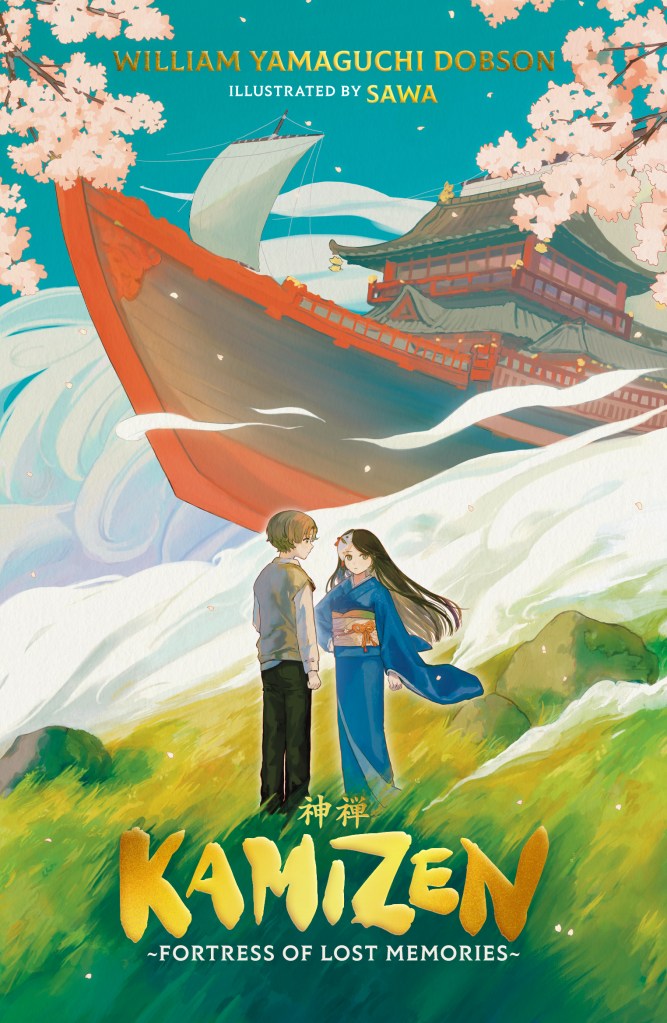
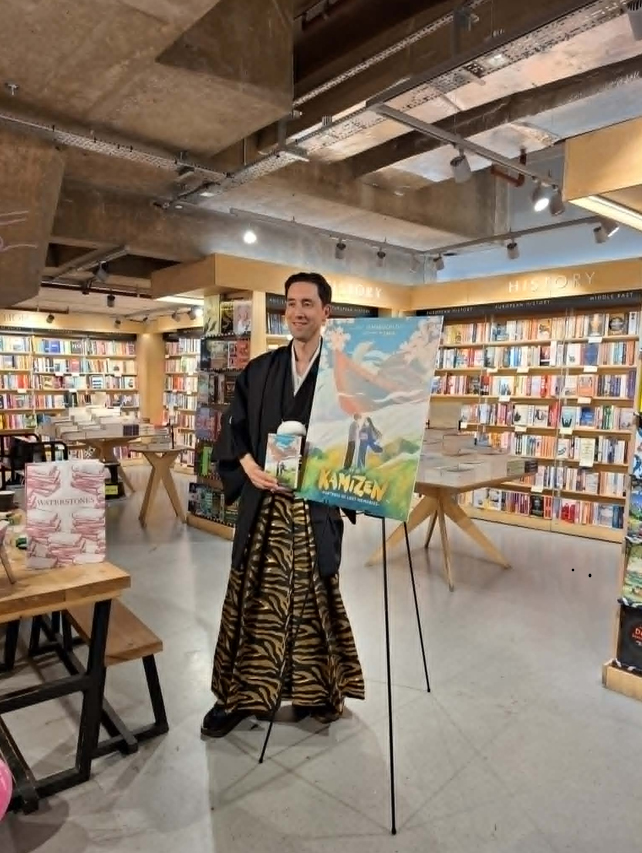
Interview: Kamizen: Fortress of Lost Memories by William Yamaguchi Dobson

It’s a middle-grade fantasy about a boy called Jonty who meets a mystical bonobo in Yorkshire and is offered the chance to enter through The Gate of Memory so that he can recover lost memories belonging to his beloved grandfather and help him finish his memoir about life as a primatologist.

Inspiration, I find, is a mystical thing in itself – if I could pinpoint the exact source, I would drop a GPS pin and camp there for the rest of my writing life. Thinking back now, I would say there were several whispers in my ear. I wanted to write a story about the relationship between a child and grandparent. One of my all-time favourite stories is Tove Jansson’s The Summer Book. I then wondered if I could combine that with my interest in primatology and jazz, as one does on a quiet afternoon. And because of the experience I had with my father’s dementia for over a decade, I had been reading widely about the science of memory. Everything slowly fell into place.

The book is aimed at children eight and over. My children witnessed my father’s cognitive and physical decline from a very young age. They had never known him other than “Grandad is poorly”. Many families I imagined were in the same boat. So I wanted to write a story for my children and fellow passengers about preserving the memory of a person before the anarchy of dementia changed them – a time before grandad became poorly. I don’t think I necessarily planned it this way at the outset, but the message I wanted to convey gently is that memories are what make us human and it’s through stories that we remember those who no longer remember us.

I didn’t find it too difficult carrying out the balancing exercise between telling the fantastical story and handling the topic of dementia. The reality of end stage dementia is that it’s relentlessly grim, but you can’t write a children’s story (or an adult one) with relentless grimness. Nobody would read that and nobody should. You sow enough hints about the reality and let your readers water it with their imagination, because the primary duty you have to the reader is that your book is there to entertain them.

A few characters were borrowed from folklore and myth. The kappa is one of the best known yōkai, alongside the tengu. The earth spider is also from a legendary tale. The talking bonobo, however, is entirely my invention, although there is a yōkai known as a satori, which has monkey-like features.

Lafcadio, the Irish kappa, wrote himself. Once I figured out his voice, he was telling me how he would say things and crossing out what I’d written. And to give PaperBound an exclusive, did you know the paintbrush yōkai, Kaita Zanko has several layers of hidden meaning? Kaita is the past tense of “to write” in Japanese. Kaita Zanko is an anagram of Takai Kozan, patron of the Edo period artist Hokusai and himself a painter of nightmarish yōkai.

Zanko is a one-armed yōkai in tribute to Shigeru Mizuki, one of Japan’s most treasured manga artists and folklorists who repopularised yōkai among postwar audiences.

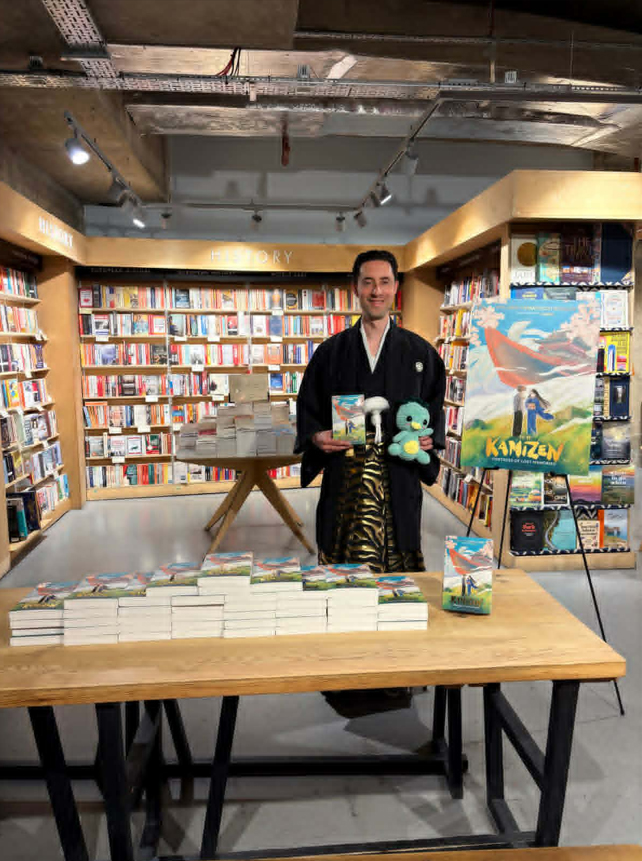
Audible acquired the book first and Scholastic bought the print rights shortly after. I had simultaneous edits and a smooth journey through production on both counts. The team Audible assembled was out of this world and you can tell from the quality of the production. There are so many highlights from the time, but two that stand out are: (1) when I was sent the audition clip for Tomoya Errington, who went on to be cast in the lead role. He stars in every single scene and is brilliant in every way; (2) when I first heard Timothy Spall playing Gramps I was walking along Tottenham Court Road and burst into tears as he sounded so much like my father (it happened opposite Waterstones, where I ended up holding my book launch!).

Working with Polly Lyall Grant and Karen Ball, my editors at Scholastic, and the wider team there has been a joy and painless experience. I wish I could find something to quibble about to give a juicy answer, but I’ll have to disappoint you! Best publishing experience? I received my first copy of Kamizen on my mother’s birthday when she happened to be staying with us, so I let her open the parcel without telling her what was inside. That was a lovely shared moment, entirely coincidental. 

I am reverting to writing longhand for a new project that may result in a highly illustrated middle-grade novel about a boy, a forest spirit and an unforgettable summer in the mountains of Japan.

Know your audience. If you have children, watch what they’re watching – see what makes them laugh and holds their attention: you can translate some of this to print fiction. You should already know what they’re reading and be familiar with the latest titles. Most importantly, in the words of Inspector Harold Francis Callahan, “you’ve got to ask yourself one question.” Why would a [insert age] child want to read the book I’m thinking of writing?

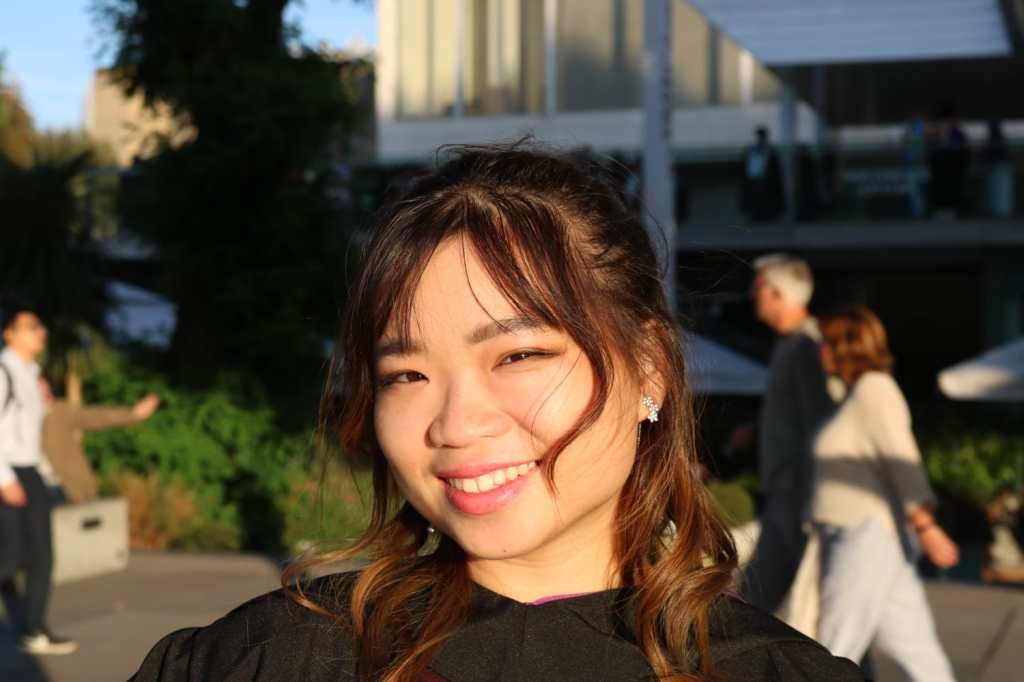
William Yamaguchi Dobson worked as a barrister before turning his hand to writing fiction. His childhood in Japan and love of manga influence his stories. When not looking after his children, he can be found reading or writing and likes to start the day with a cup of matcha and a smile.

PaperBound Magazine is an online magazine and blog for the young, and the young at heart. We are dedicated to showcasing authors and illustrators for children’s and young adult fiction and we strive to deliver inspiring content, uplifting stories, and top tips for young and aspiring writers yet to burst on to the literary scene.

All our issues are completely free and run by volunteers, however if you would like to support PaperBound and the work we do, you can help us out by buying us a virtual book. We appreciate any support you can give us!

Don’t forget you can read with the latest issues of PaperBound Magazine – completely free – here.

article, Blog, Blog series, Bookshelf, Interview, Interviews, on writing, Writing craft

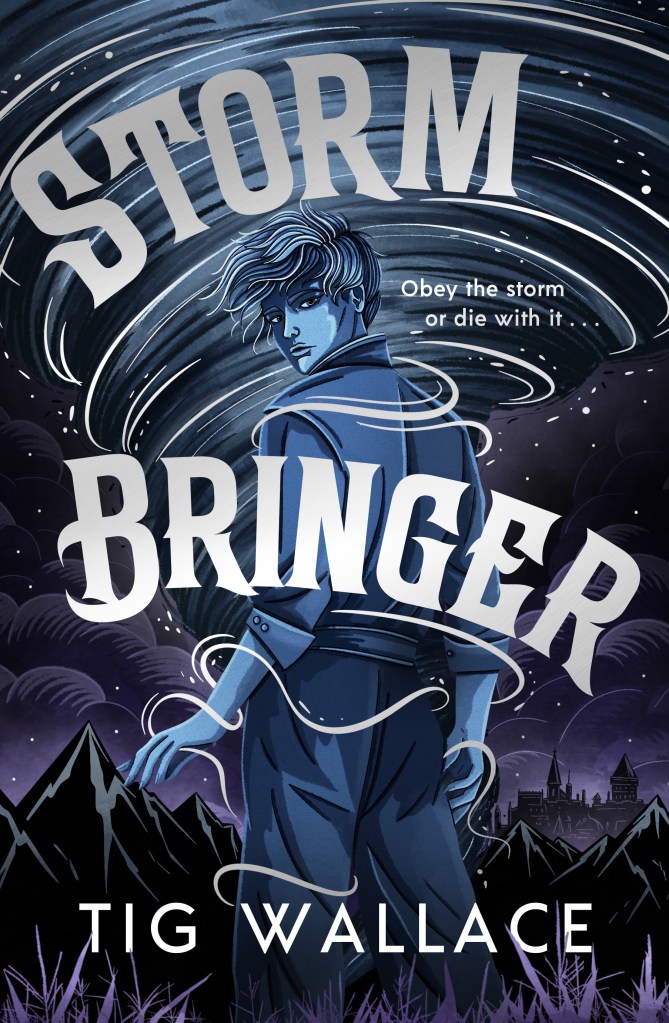
Interview: Tig Wallace on whirlwind YA debut Storm Bringer

Absolutely, and thank you for having me. Storm Bringer is a YA fantasy novel, set in a world besieged by big magical storms. The protagonist, Amelio, has lived in relative shelter for the past ten years, but has to, quite literally, venture into the storm when his mother goes missing. He encounters a world he never really knew and has to come to terms with a power he didn’t know he had, as the biggest storm ever threatens to destroy everything. It’s a bit like the movie Twisters but with tons of magic and a younger – and more rebellious – cast.  

It’s wonderful, if a little strange, to be on the other side of the table – I feel very lucky to get to do both. What’s surprised me the most is how brand new everything feels as an author. I went into it thinking I’d be able to anticipate some of how I’d feel, having a bit of inside scoop on the process, but that hasn’t been the case at all. I feel just as excited, nervous, and caught up in a whole range of emotions as every other author. People are kind and gerenous and I’ve been very well supported by everyone. I do sometimes have to turn my editor brain off though! 

I read an article years ago about a woman who chased eclipses – catching flights west during lunar events to see them as many times as she could, or for as long as possible. It stuck with me and morphed into an idea about chasing storms instead and eventually into an image in my mind of a teenager facing down an apocalyptic tornado. That was the seed of it all. I put it on the back burner initially to try writing other things, but kept coming back to it, and finally decided to write it. 

I knew I wanted to write fantasy that was action-packed and pacy, and hopefully also funny amidst all the peril. I always loved fantasy, whether classic or modern in feel, from Ursula Le Guin to Garth Nix to Leigh Bardugo, but also books that feel like blockbusters, like Matthew Reilly’s and Anthony Horowitz’s Alex Rider. I also love a disaster movie. So I thought, what if I bring all those things I love together…and the result is Storm Bringer. 

I’m glad they are terrifying! Yes, that was always the vision, and I knew I wanted to open with something big and startling to set the tone for what’s to come. There’s of course a great tradition of weather magic in fantasy novels, but I didn’t feel like I’d read anything where storms themselves are so innately magical and destructive. When I landed on that as an idea, it just seemed like something that made this world unique…and that it would be fun to write. I love a big set piece and I had a great time working out what would feel most dramatic on the page. But I also loved the idea that we might learn a lot about the characters by throwing them into massive storms. In Storm Bringer, life and death scenarios bring true feelings to the surface in the most intense moments. 

From the first iteration of the book I had ‘the Fault’ – the abyss that separates the two sides – but the rest took a long time to craft and work out. The magic vs no magic distinction wasn’t enough, so I spent time thinking about the history of the two places, their geographies, their mythologies, their beliefs, and tried to bring that through in the text. It’s funny, there’s actually loads more I wrote about Amrigo that didn’t make it into the final version of the book, for good reason. The thrust of the action takes place in Nimira and the book would have been much too long if we spent longer in Amrigo, but I was sad to leave Dex behind so soon in the story. Watch this space though! 

In The Hunger Games I love that Panem is a fantasy world based in reality, set on the North American continent. I drew inspiration from that a little for Storm Bringer – although it’s a pure fantasy world, I wanted it to feel like it could be ours with a big twist. A bit like the alternate Oxford we see in Northern Lights. I’m a huge sci-fi fan as well and I guess when I pictured Amrigo – at least where Amelio lives – I imagined something like the dusty, solitary peripheral towns in Blade Runner or the industrial off-world settlements in the Alien franchise. A place that’s gritty and unforgiving, geared towards function. 

Ooh, what a great question. I would have to say magic: I think however you define it, there is an exciting, unknown about it that represents something distinct from our own world. 

When it comes to Storm Bringer I’m most interested in how both magic and science are changing. As the book starts, we see magic has been declining, science on the rise, and the different attitudes and beliefs towards both, depending where you are in the world. These beliefs stem from history that has become mythology, and I’ve enjoyed exploring this through Amelio’s eyes. We see that both originate from the same source and I think there’s lots to explore in the grey area where the two meet. 

I am busy working away on the sequel to Storm Bringer, which is the first of three of books. Book two picks up pretty soon after the events of book one and readers can expect lots more from our three main characters, each of them dealing with something pretty major after the conclusion of the previous story. Book two roves further across the map, deepens the mythology of the world, showcases bigger magic and, of course, features lots of massive storms.  

I’m going to start by telling you my worst habit – as both an author and editor – which is that my default is to think I need a big chunk of time to start writing or editing. It’s not true. Big chunks of time are great of course, but don’t always present themselves. So, my first piece of advice is to sit down and write, even if you only have half an hour. 

The second tip is also about the writing itself: help tomorrow’s you by where you leave your writing today. I feel much less daunted, and much better equipped, to start writing when I’ve left myself in a good spot in the previous session. I leave myself scrappy notes in the document to remind myself what I have to do next, and I often pause writing before I’ve finished a scene or chapter, because I find it’s easier to get back into the flow that way, rather than starting a brand new scene from cold. 

My final tip is a classic with a twist I guess. Write the book you really want to write, not the one you think you should write – I can vouch for that first hand. That said, I think it’s really smart to equip yourself with as much market knowledge as you can. Go to book shops, trawl online, look at publisher catalogues to get a sense of what else is out there and working well. Think about which books you’d love to see yours sitting alongside in a shop. When it comes to approaching an agent, a publisher, or self-publishing, it will make your book feel more commercial and help it find its audience. 

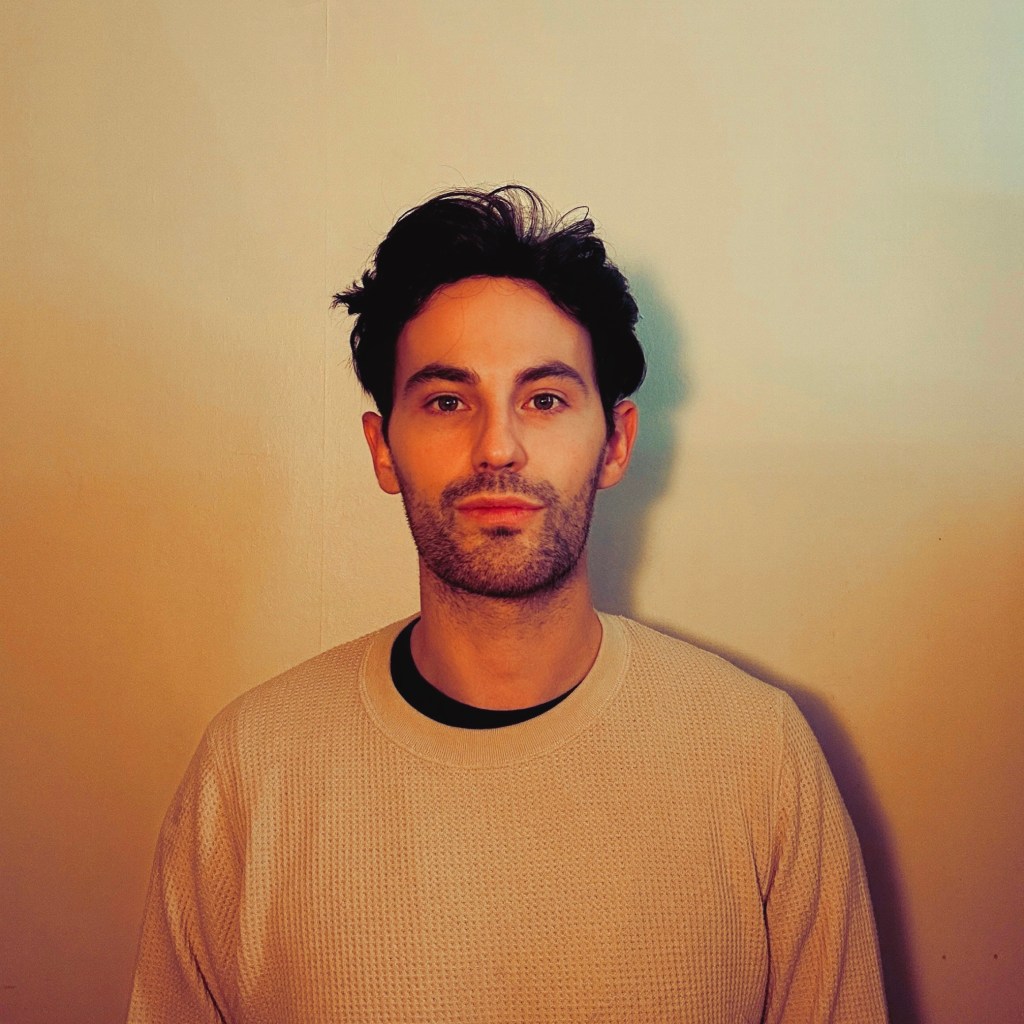
Tig Wallace grew up in a town between London and Oxford, reading as much fantasy as possible. After work as a runner on movies, and a brief, eye-opening experience working in magazines, Tig started a career in book publishing as an editor. Tig is a keen tennis fan, as both spectator and player, a cat enthusiast, and has never been known to say no to karaoke. He lives in London. Storm Bringer is his first book. 

PaperBound Magazine is an online magazine and blog for the young, and the young at heart. We are dedicated to showcasing authors and illustrators for children’s and young adult fiction and we strive to deliver inspiring content, uplifting stories, and top tips for young and aspiring writers yet to burst on to the literary scene.

All our issues are completely free and run by volunteers, however if you would like to support PaperBound and the work we do, you can help us out by buying us a virtual book. We appreciate any support you can give us!

Don’t forget you can read with the latest issues of PaperBound Magazine – completely free – here.

article, Blog, Blog series, Bookshelf, on writing, Writing craft

Andy Darcy Theo on Top Five YA Books for Mental Health Awareness Week

My debut YA fantasy, The Light That Blinds Us, is a deeply personal story that seeks to authentically and poignantly represent mental health with care and consideration. It pulls on some of the most loved tropes in fantasy, such as the found-family trope, slow-burn romance, and the hero’s journey, while exploring the condition of psychosis, as shown through the main character, Alexis Michaels.

This was inspired by my own family history and also by my time working as a clinical psychology assistant, where I worked closely with patients with schizophrenia, personality disorders, and bipolar, amongst others. Working intimately with patients provided me with a critical insight to help develop my story and write Alexis in a nuanced and powerful way, closely reflecting the real experiences of real people.

Of the utmost importance in my books is to portray Alexis as a whole and complete person, where his mental health doesn’t define him, but neither is this aspect of his character ignored or dismissed either.  

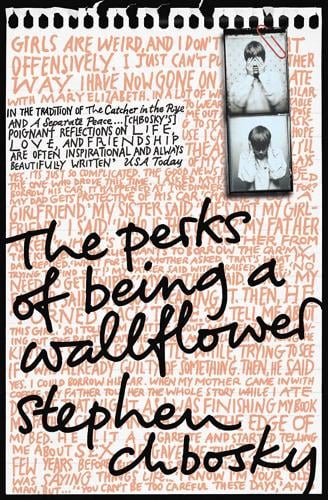
The Perks of Being A Wallflower by Stephen Chbosky 

A comfort read of mine when I was a teenager and also now as a 27 year old. Charlie’s story handles complex-PTSD with care, delicacy and love. This coming-of-age tale feels like a warm hug and a reminder that you are more than what happened to you. It’s also one of the first times where I’ve seen mental health considered in detail in young men which is extremely important in helping to reduce the stigma that boys must be stoic and that to feel is something to be ashamed of.    

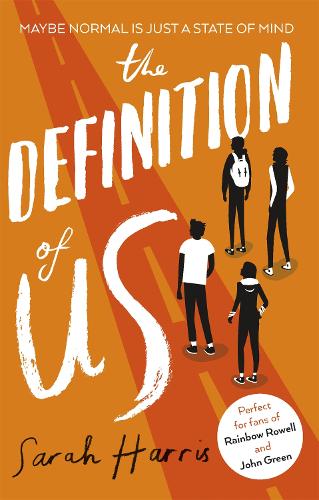
The Definition of Us by Sarah Harris  

A criminally underrated gem that deserves so much more hype. Various mental health conditions are explored in a nuanced way between the four main characters who are a mission to find their missing therapist. The story is an uplifting, heartwarming story of self-acceptance, which I think is really refreshing in the YA book space.  

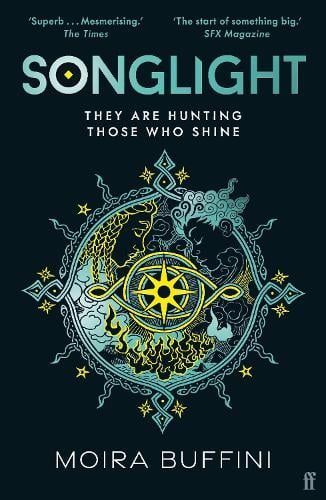
Songlight by Moira Buffini 

Buffini does an incredible job at intertwining raw human emotion with mental health exploration, while allowing the magical and page-turning plot to take centre stage. This is a great read for those who want to read a complex, action-packed novel with mental health representation carefully threaded through.  

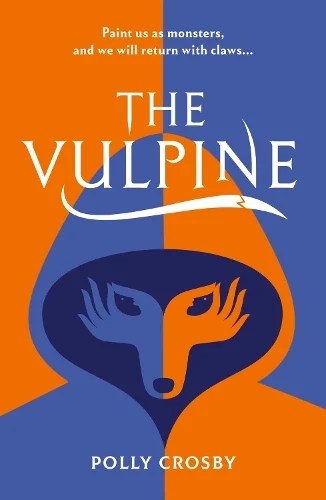
The Vulpine by Polly Crosby 

A beautiful, dystopian story that features not just mental health representation, but explores society’s stigma and mistreatment of a range of disabilities. We go on an internal and external journey with this one and its message has stuck with me long after finishing the book.  

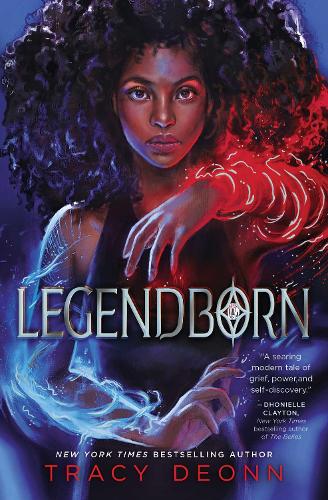
Legendborn by Tracy Deonn 

For a long time, I struggled to find a YA book that explored grief in a way that was adequately heart-breaking yet also tender. Bree’s journey with her grief was the most poignant element of this Arthurian fantasy tale and has me coming back to see how she gets on in each instalment in the series.  

.


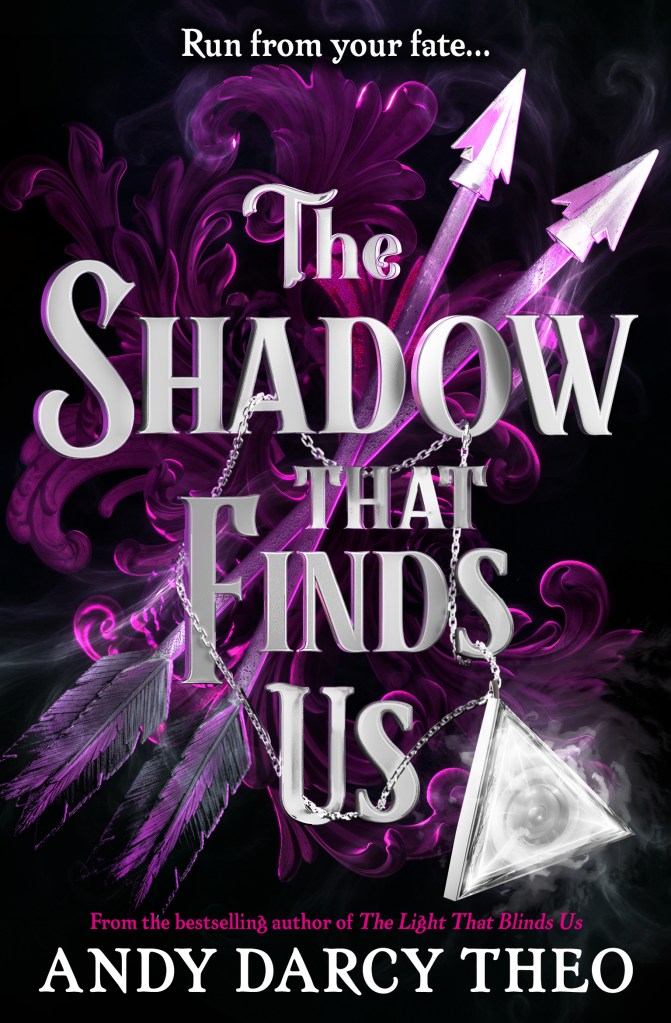
Alexis, Blaise, Caeli and Demi return to the Haven, carrying scars both on the surface and beneath. Shadows whisper to Alexis, destabilising his grasp on reality as he works to reveal his parents’ secret, while his friends wrestle with fractured trust and forbidden feelings. As the autumn equinox approaches, distrust mounts, forcing them to confront the true nature of their destiny, before it’s too late and they are lost to the shadows forever.

Andy Darcy Theo is the author of the bestselling TikTok sensation, The Light That Blinds Us, the first epic YA romantasy book in the Descent into Darkness series.
He is a British Greek Cypriot with an educational and occupational background in clinical psychology and teaching. When he is not teaching, learning, or reading, he is developing his compulsive, character-driven fantasy series he began writing at age thirteen.
He is also a prominent presence on BookTok and Bookstagram (where he posts as @AndyDarcyTheo) and has been documenting his author journey online and posting viral bookish content. He has millions of views and likes, which is nearly as many books as he has in his TBR pile.

PaperBound Magazine is an online magazine for the young, and the young at heart. We are dedicated to showcasing authors and illustrators for children’s and young adult fiction and we strive to deliver inspiring content, uplifting stories, and top tips for young and aspiring writers yet to burst on to the literary scene.

All our issues are completely free and run by volunteers, however if you would like to support PaperBound and the work we do, you can help us out by buying us a virtual book. We appreciate any support you can give us!

Don’t forget you can read with the latest issues of PaperBound Magazine – completely free – here.

Dead Straight Line book cover, by Malcolm Duffy
article, Blog, Blog series, Bookshelf, on writing, Writing craft

Malcolm Duffy on Dead Straight Line: The Story Behind the Story

Dead Straight Line book cover by author Malcolm Duffy

My stories are fiction, but they’re all rooted in fact. I like to base them on things that happen in the real world, like domestic abuse (Me Mam. Me Dad. Me), homelessness (Sofa Surfer) dyslexia (Read Between the Lies) and the Ukraine war (Seven Million Sunflowers). I decided to write my latest book about something we all do – take risks. Unlike my other stories, the inspiration came from someone very close to home – me. I turned the clock back to when I was a teenager and thought about my own risky behaviour.

Like a lot of young men, I was a risk taker. Not, incredibly scary stuff, like climbing Mount Everest or swimming with great white sharks, but stupid things, that didn’t seem dangerous at the time. The idea for Dead Straight Line came from a game I played as a teenager. I’ll never forget the queasy feeling in my stomach when my friend, Andrew, said we were going to head back to his house, not by following paths or roads, but in a dead straight line.

We ran through front and back gardens, climbed over fences and dived over hedges. It was exhilarating, scary and, looking back on it, quite stupid. Luckily neither of us got hurt.

The idea for Dead Straight Line came from a game I played as a teenager.

Another time I took a risk, things didn’t play out so well. In my early twenties I got into a car with some friends. We’d all been drinking. I didn’t put on my seatbelt. My friend who was driving crashed into a parked car, and I went through the windscreen.

I had cuts on my eyes, and over a hundred stitches in my head. I was off work for three months. My forehead is still numb to this day. Thankfully no-one was killed, but I still bear the scars from what happened on that sunny day in Newcastle all those years ago.

It seems I’m not alone in my risk-taking. Studies have shown young men are far more likely to indulge in risky behaviour than young women across all areas – driving, drinking, drugs, gambling. But I didn’t simply want to focus on risk, I wanted to look at what happens next, and what it means for a young guy like Rory who takes a risk and then has to deal with the fall-out when an innocent game takes a terrible turn.

Because when a bad thing happens, it doesn’t just affect one person, there’s a ripple effect. Rory’s actions impact his family, his girlfriend, his mates, his teachers. Who will support him? Who will hate him? Who will seek revenge? These questions are at the heart of the story.

As I know from my car accident, things can go horribly wrong in a split second. And this is what happens to Rory’s reluctant game player, Eliot, paralysed after a fall while taking part in the game. Eliot’s story was born from the experiences of my own family, helping our mum, who was confined to a wheelchair for the last few years of her life.

For someone who’d been incredibly active she found herself needing a wheelchair to get around. It came as both a shock and an eye-opener to our family, as the simplest things proved to be an obstacle. But, like Eliot, she showed how positivity can shine through, even in the most difficult circumstances.

The story isn’t only about risk, it’s about trust, something that can be so hard to gain, yet so easy to lose. As a result of what he’s done, Rory loses the trust of his close family and friends. Both he and Eliot suffer in different ways and need to rebuild their lives.

They discover that life is never a dead straight line.

.

Dead Straight Line book cover, by Malcolm Duffy

Sixteen-year-old Rory is a rule-breaker, a risk taker, a maverick. As a kick he comes up with a game called Dead Straight Line. The idea is simple – wherever you happen to be, you’ve got to get home in a dead straight line. Across the back gardens of stranger’s houses, locked parks, trespassing on private property – whatever it takes.
One day, Rory pressures his friend Eliot into playing, resulting in a serious accident. Shunned by friends and facing pressure from his furious parents, Rory becomes even more angry and disruptive. When his school suggests helping out a care home, he’s unimpressed. But paired up with Tanker, an eighty-year-old Geordie military veteran, who fought in the Falklands War, things slowly begin to change.
From seeking thrills to finding friends, choosing the right path in life is never a dead straight line. But there is always a way.

Malcolm was born and bred in Newcastle upon Tyne and now lives in Surrey. After a typical Geordie childhood, his parents moved south and deposited him in South East England. Having acquired a Law degree at Warwick University he worked his way through a host of London advertising agencies, picking up numerous awards for copy, press, TV and radio.
Having left ad-land he worked as Creative Director of Comic Relief, creating campaigns for Red Nose Day and Sport Relief. It was at Comic Relief that he was inspired to swap copywriting for writing and wrote his first novel, Me Mam. Me Dad. Me. His books have all been issue based, with much of the information gleaned from his work for different charities – Comic Relief (domestic violence), Shelter (homelessness), Nessy (dyslexia) and Combat Stress (PTSD).
His debut, Me Mam. Me Dad. Me. was shortlisted for the Waterstones Children’s Book Prize, and alongside Sofa Surfer, Read Between the Lies, and Seven Million Sunflowers has won and been shortlisted for multiple regional awards. All four of his books have been Sunday Times Children’s Books of the Week.

He’s supported in his efforts by his New Zealand wife Jann, and daughters Tallulah and Tabitha, who, under the threat of withholding pocket money, seem to like what he writes.

PaperBound Magazine is an online magazine for the young, and the young at heart. We are dedicated to showcasing authors and illustrators for children’s and young adult fiction and we strive to deliver inspiring content, uplifting stories, and top tips for young and aspiring writers yet to burst on to the literary scene.

All our issues are completely free and run by volunteers, however if you would like to support PaperBound and the work we do, you can help us out by buying us a virtual book. We appreciate any support you can give us!

Don’t forget you can read with the latest issues of PaperBound Magazine – completely free – here.

article, Blog, Blog series, Bookshelf, on writing, Writing craft

Grey is the New Black: Helen Price on Morally Grey Villains

I love an antagonist.

I mean, who doesn’t love a baddie?

But I like their hearts grey, not black. I want them conflicted, not cackling in the shadows, twirling their moustaches or plotting world domination just because they can. I’m far more drawn to antagonists who genuinely believe they’re doing the right thing, rather than those who hurt people simply because they enjoy it. Why? Because they’re more interesting. They’re layered. And most importantly, they feel real.

I like their hearts grey, not black.

YA readers are brilliant at spotting flat, two-dimensional villains. They’re far more perceptive, morally aware and emotionally intelligent than we give them credit for. If someone is evil purely for the sake of it, it feels false. Teen readers are complicated human beings. They’re living through, or more accurately surviving, their formative years. They’re already living in the grey. They’re questioning rules, challenging authority, working out who and what to believe in. So when a story presents a villain in black and white, it simply doesn’t ring true.

We live in uncertain times and in an uncertain world unwavering conviction can feel especially powerful but also dangerous. Storytelling needs to reflect that. Teens today are constantly exposed to loud and absolute opinions, voices that leave little room for doubt and rarely acknowledge the nuances of their lived experiences. It’s no surprise, then, that they’re drawn to antagonists with motivations they can relate to. Anti-heroes who act out of love, fear, loyalty, or even faith. They might not agree with them, but they do at least understand them. And that relatability makes for more powerful and engaging storytelling.

In KILL ME NOW, my antagonist believes modern teenagers have drifted off course. They see moral decline everywhere and believe souls are at stake. From their perspective, they aren’t destroying lives. They’re saving them. And for a long time, I confidently labelled them as morally grey. They have moments when they doubt themselves. Moments when they wrestle with whether they’re right and what they’re doing is moral. But ultimately, they believe the end justifies the means. And they keep on killing.

At some point, all antagonists believe they’re justified in their actions. History is full of people who’ve convinced themselves that harm and destruction are necessary to achieve their aim. So, why should fiction be any different? But just believing they’re right doesn’t make them grey.

“Seven lives is a small price to pay for the greater good.”

When my antagonist says these words, it’s not madness talking. It’s complete and utter conviction.

Morally grey antagonists work particularly well in YA because teen readers are sensitive to authority figures who claim to know what’s best for them. They recognise control when they see it. So when my antagonist insists they’re enforcing morality to ‘save’ their generation, I hope it strikes a chord with teen readers and even hits a nerve.

When we describe something as grey, we usually mean it’s unclear and that the lines around it are blurred. But in fiction, that greyness can feel strangely solid. Readers may not agree with the antagonist, and they certainly don’t have to side with them, but they can understand the reasoning behind their actions. They can see how someone might have ended up there and what drove them to commit such heinous acts. And if readers do that, then the greyness has worked. The author has created an antagonist with layers, depth, and complexity.

If you’re interested in writing a morally grey antagonist, first ask yourself: Do they ever question themself? Do they show any form of humanity or remorse to the people they hurt? Could a reader argue that they might indeed have a point? If the answer is yes, then it’s most likely that you’ve already crafted a morally-grey one. If the answer is no, but your antagonist’s logic is still structured and convincing, you may have written something slightly different: something more akin to an ideologically driven antagonist. And that isn’t a failing. In fact, in a thriller, it can be equally powerful and even more terrifying.

I went into KILL ME NOW thinking I had written a morally grey villain. What I realised instead was that I had created someone far more unsettling: someone grey in moments, but absolutely certain at their core. Certain they were right. Certain the future of humanity was at risk. Certain the actions they were taking, and the sacrifices they were making, were wholly justified. So, how do we tell the difference? Well, a morally grey antagonist questions their own morality. An ideologically driven one doesn’t.

In KILL ME NOW, I didn’t want readers to be shocked by the murders alone. I wanted them unsettled by the reasoning behind them. Sometimes the most frightening antagonists aren’t those who enjoy harming others, but those who believe it’s purely necessary. They’re not psychopaths, sociopaths, or narcissists, at least not in the conventional or clinical sense of the terms. Instead, they’re individuals so ideologically certain in an otherwise morally ambiguous world that it’s their conviction, not their cruelty, which makes them so frightening.

Our young adults today are already navigating a complicated and messy landscape. Creating characters who reflect that, who carry their own deep-rooted and complex sense of morality, can therefore spark discussions that resonate far beyond the final page.

So yes, as a thriller writer, I like morally grey characters.

Because while grey is the darkest shade of all, it’s also the truest.

.

It’s murder in the sixth form…

School golden boy Riley North is found dead. The funeral director’s son, Guy ‘Reaper’ Mortimer is accused. Determined to clear his name, Reaper teams up with spiky new girl, Samira; Riley’s loyal teammate, Bunsen; hot-headed Snake; and the ever-innocent Betty. They unravel the twisted layers of school, where secrets hide and deception is rife. But someone knows the truth and is determined to expose it – one deadly sin at a time.

Riverdale meets One of Us is Lying, KILL ME NOW is perfect for fans hunting for their next A Good Girl’s Guide to Murder obsession.

Helen Price is a young adult author of high-octane thrillers. After studying languages at university, she built a career in international HR and change management, writing mainly boring stuff like corporate speeches, handbooks, and communications, until fiction lured her in. She honed her craft by studying at The Golden Egg Academy and completed its prestigious mentorship program.
Originally from the historic city of Norwich, she now lives in a field in West Berkshire. A black belt in karate, she loves chocolate, her dog, and anything thriller-related, both on and off the page.
Follow her on Instagram @Priceywrites

PaperBound Magazine is an online magazine for the young, and the young at heart. We are dedicated to showcasing authors and illustrators for children’s and young adult fiction and we strive to deliver inspiring content, uplifting stories, and top tips for young and aspiring writers yet to burst on to the literary scene.

All our issues are completely free and run by volunteers, however if you would like to support PaperBound and the work we do, you can help us out by buying us a virtual book. We appreciate any support you can give us!

Don’t forget you can read with the latest issues of PaperBound Magazine – completely free – here.

article, Blog, Blog series, Bookshelf, on writing, Writing craft

Annaliese Avery on Fantasy Fiction – A Torch in the Darkness of Reality

When reality is full of issues that we feel too close to and that are too big for us to digest, placing them in a fantasy world can help us shine a light on these dark troubles. Within the epic landscape of a fantasy novel these issues somehow don’t feel as overwhelming, they appear more manageable and by viewing them in a fantastical setting they also feel removed so that we can see them with an objectivity that we can’t when we encounter them in reality,

In the dark days of the early twentieth century, fantasy spread its wings. Writers like Tolkien and Lewis took the broken post war world around them and to make better sense of it all they placed it in a fantasy setting that had enough room for them and their readers to hold these troubles at arm’s length and examine them. Fantasy fiction often feels like past wisdom, truths and knowledge from a time out of time from a people out of our reality – wisdom that is available to us all if we are willing to step through a wardrobe or join a wizard on an adventure.

In the later twentieth century fantasy fiction’s sister, science fiction, did something similar – taking the cold war and threat of nuclear annihilation and placing it in a galactic setting, one with the scope of stars and a wisdom ahead of our time, or from another place entirely, most likely a galaxy far far away.

If history is doomed to repeat itself then science fiction looks ahead at the inevitable repetition and questions is there another way? Do we have to wait till we can trave the stars to find out how to quell the darkness, or could we do it here and now?

Towards the end of the twentieth century, while we were living through a reality of relative peace and stability, another of fantasy fictions sisters, dystopia explored thoughts about this, shining a light on the fragility of peace and progress.

Dystopia spoke mostly in fiction for a young adult audience, specifically young women readers, women who had relatively recently in the grand history of the real world gained their liberty and stepped into their power. These stories where mostly female protagonists looked upon the horrors of a world that did not learn from the past, that suffered the same mistakes or worse, and in these worlds young women like Katniss, Triss, Cassia, to name a few, fought for a better world because the one they found themselves in was not only wanting, but it was fragile and had so far to go in order to be mended.

As we stand at the beginning of the twenty-first century, fantasy fictions youngest sister romantasy is shining brightly. Coming out of a time where COVID restrictions saw us all in need of comfort and company, the need for connection helped to drive the romantasy trope into a genre.

Led mostly but women, read by women and written for women; giving voice to those who would not have been heard as readily as they are today when fantasy and science fiction emerged. (Or course there were female voices in those waves: LeGuin, Atwood, Butler, Wynn-Jones, but the vast majority of the voices in this space were men.) Romantasy writers have created a space for themselves and they are holding it and growing it.

The romance genre has historically been seen as a space for women and by bring it more actively into the fantasy genre we are being given that expansive space to look at the darkness that is growing in our world but also to examine what it is to be a woman. Female leads charge the way with their strength and skill and ability, the fate of the world is on their shoulders as they must restore the magic, bringdown the corrupt king, fly the dragon – even become one, and they must do so while building friendships and saving the boy too.

The light that Romantasy is shining in the darkness of our world shows that we can not only kill the creatures and save the world, but we can save our shadow daddy too – mostly from himself.

After all women have been told for decades that they can have it all, that with a little girl power we can have the career we want, and the homelife too, saving the world on top of this is a small ask.

In a world where women have fought hard to have their voice finally heard, a world where rights are under threat it is no wonder that romantasy with its resonating themes of overcoming oppression, and its strong female character who are giving all they can to save the world as well as their own relationships, strikes a chord with many readers.

We are looking for heroes, and the ones we find in romantasy are real and flawed, they care deeply, they want the same thing we all do, they want to be happy, and they want their family (whatever that looks like) to be safe, and for their world to prosper. Violet Sorrengail, Feyra Archeron, Iris Winnow, Aurelia Wycherley, and so many more are all facing the darkness of their worlds, are all leveraging their skills, and going above and beyond to make their world better, something that we can all resonate with – especially in times like these.

Fantasy fiction provides readers with a light that can be shone in the darkness and with characters that tell us that we can overcome the troubles around us.

.

.

For the Kingdom. For the magic. And for love . . .

Aurelia Wycherley has found someone to tether her magic to – her enigmatic former enemy, Jules Nightly. Now, they are heading off to coven college to learn advanced magic. But they are also on a secret mission: to discover the Lost Quarter of the college, create their own coven of twelve and try to discover a way to bring back the Old Magic.
When malevolent magic interrupts their first night at college, Aurelia and Jules discover that Jonathan and his coven of untethered witches has escaped and now they are after her magic, curse and all…
Can they save the magic and the world – or will Aurelia lose her magic for good?

Annaliese Avery has spent most of her life surrounded by stories, both at work as a library manager and at home writing them. She holds an MA in Creative Writing and has worked as a children and young adult book editor, and has taught creative writing workshops across the UK.
She has worked at a global conservation charity, and is a keen amateur astronomer who founded an astronomical society in 2013. In January 2020, Annaliese was shortlisted for the SCBWI Undiscovered Voices 2020 anthology.
Her debut middle-grade novel, The Nightsilver Promise, was released in 2021, followed but The Doomfire Secret in 2022. In 2023 Annaliese’s YA debut The Immortal Games was released. The Wycherleys – Annaliese’s latest YA – was the inaugural Waterstones YA book of the month in May 25.
The Wycherleys: Love and Other Curses is her latest book.

PaperBound Magazine is an online magazine for the young, and the young at heart. We are dedicated to showcasing authors and illustrators for children’s and young adult fiction and we strive to deliver inspiring content, uplifting stories, and top tips for young and aspiring writers yet to burst on to the literary scene.

All our issues are completely free and run by volunteers, however if you would like to support PaperBound and the work we do, you can help us out by buying us a virtual book. We appreciate any support you can give us!

Don’t forget you can read with the latest issues of PaperBound Magazine – completely free – here.

article, Blog, Blog series, Bookshelf, on writing, Writing craft

Finbar Hawkins: Why We Tell Our Darkest Stories in the Darkest Season

I’ve always been fascinated by our impulse to gather in the darkness and scare ourselves witless. Not at Halloween, when we might expect it, but in the depths of winter, at the year’s darkest turning point. The Winter Solstice—that moment when the sun hangs lowest in the sky and the nights stretch their longest—has been a threshold time for as long as humans have told stories. It’s when the veil between worlds grows thin, when the dead draw close, when ancient things stir in the shadows. 

This is why, when I set out to write GHOST, Christmas felt like the only possible setting. The novel weaves together three young women across different time periods, all confronting an ancient evil that lurks in the woods. That evil is timeless, but it makes itself felt most powerfully when darkness reigns—and there’s no darker time in the British calendar than the dead days between the Solstice and New Year, when time itself seems suspended and the normal rules don’t quite apply. 

Our ancestors understood this instinctively. Take Sir Gawain and the Green Knight, that strange and unsettling medieval masterpiece. It begins at Christmas, at the height of Arthur’s Yuletide feast, when a monstrous green knight crashes the party and sets in motion a tale of magic, fear, and the supernatural. The poem is steeped in midwinter unease—the sense that something other is abroad when the world is frozen and dark. The Green Knight himself seems to embody the wild, unkillable force of nature at its most hostile and alien. He’s a Christmas ghost in all but name. 

Fast forward several centuries and we find M.R. James, that master of the antiquarian ghost story, making a conscious art form of the Christmas tale of terror. As a teacher at Eton, James would gather his pupils around the fire each Christmas Eve and read them a new ghost story he’d written especially for the occasion. Can you imagine it? The oldest, most prestigious school in England, and here was a distinguished scholar frightening boys in the darkness with tales of ancient curses, malevolent spirits, and things that should not be disturbed. James understood that Christmas wasn’t just about comfort and joy—it was about acknowledging the darkness, facing our fears communally, and emerging into the light together. 

.

.

For me, though, the book that truly crystallised this tradition was Susan Cooper’s The Dark is Rising. Reading it as a young person was a formative experience—I can still remember the visceral sensation of cold that emanated from its pages, the way Cooper made me feel the bite of winter and the weight of ancient evil pressing against the fragile warmth of Christmas.

Will Stanton’s battle against the Dark unfolds across the twelve days of Christmas, and Cooper understands implicitly that this is when such battles must be fought—when the year is at its most vulnerable, when the old magic is strongest, when everything hangs in the balance. The book showed me that Christmas stories could be more than cosy—they could be mythic, terrifying, and profound. They could matter. 

And then there’s Dickens. A Christmas Carol is so embedded in our festive culture that we sometimes forget how genuinely spooky it is. Yes, it ends in redemption and generosity, but it earns that ending through four ghostly visitations, a journey through death and regret, and the terrifying vision of what Scrooge himself will become.

The Ghost of Christmas Yet to Come is as frightening as anything in M.R. James—a silent, hooded figure of absolute dread. Dickens knew what he was doing. His story works precisely because it harnesses that ancient connection between Christmas and the uncanny. 

Why does this tradition endure? I think it’s because the Christmas season, for all its manufactured jollity, sits on something much older and darker. It’s a festival of light precisely because we’re surrounded by darkness. We feast because winter was always a time of potential starvation. We huddle together because the world outside is hostile. And we tell ghost stories because, in the darkest part of the year, we need to acknowledge what scares us—and then, together, we need to survive it and emerge into the growing light. 

In GHOST, I wanted to honour this tradition: to write a story that embraces the darkness of midwinter and asks what might be lurking there, waiting. Because some stories are best told when the nights are long, the fire is burning low, and we’re not quite sure what’s out there in the shadows. 

.


60AD A blackbird calls a warning. Aine, a slave girl running away from her Roman masters, pauses to listen as she lifts a totemic, druid carving she’s found in the tunnel where she’s hiding. The last thing she sees is a tangle of matted fur, a sheaf of claws, a flash of fangs, as she unleashes a hungry animal presence.

1783 AD Centuries later, white witch Sarah Gibson wanders the woods in search of refuge. She’s at ease here with the changing seasons, the plants and animals, until one moonlit night, she senses Aine’s terror. The blackbird calls a warning, but Sarah wants to help Aine’s restless spirit.

Present day Marie has dropped out of art college and is staying with her aunt for a while. But the woods nearby are hiding something. Marie can feel it. She hears the local gossip about tragic happenings there. Hopelessly caught by the ghostly voices of the past that echo uneasily in her present, Marie must pit her wits against powerful old magic..

Finbar Hawkins is a graduate of the Bath Spa MA in Writing for Young People. He grew up in Blackheath, London and now lives in Wiltshire with his family, in a landscape steeped in myth and legend.
He works as a creative director for animation studios such as Aardman in Bristol, where he makes fun interactive things for children of all ages.
Finbar’s debut novel, Witch, was shortlisted for the Branford Boase Award and nominated for the 2022 Carnegie medal, is also published by Zephyr.

Find out more at finbarhawkins.com

Instagram @finbarhawkins_writer

PaperBound Magazine is an online magazine for the young, and the young at heart. We are dedicated to showcasing authors and illustrators for children’s and young adult fiction and we strive to deliver inspiring content, uplifting stories, and top tips for young and aspiring writers yet to burst on to the literary scene.

All our issues are completely free and run by volunteers, however if you would like to support PaperBound and the work we do, you can help us out by buying us a virtual book. We appreciate any support you can give us!

Don’t forget you can read with the latest issues of PaperBound Magazine – completely free – here.

article, Blog, Blog series, Bookshelf, on writing, Writing craft

Guest post: Miranda Moore shares her top writing tips and path to publication

They amble back across the lawn to their Edwardian townhouse, where their secretary awaits. Steven Spielberg’s on the phone, wanting to make a movie of their latest book. Would they like to take the call?

OK, let’s make that scene a bit less Hollywood and a bit more reality TV.

Here’s another professional author. She’s sitting in her messy study in her dressing gown, a hot water bottle shoved up her jumper. Three emails ping in from her kids’ school – forms needing filled in.

The doorbell rings and she listens politely as a man and woman tell her that unless she repents her sins, she’s heading for eternal damnation, and wouldn’t she like to save her soul from this fate? Then she finds her cat toying with a terrified vole in the kitchen. She manages to banish the cat and save the vole. Hurray!

Her phone rings. No, she doesn’t need loft insulation, thanks.

Finally, she gets to work. She picks up the latest draft of her novel – she’s not entirely sure how many drafts she’s done, but it’s a lot more than one. She slashes paragraphs, scores out phrases, adds in better ones and scribbles notes down the margins. The paper is a shambolic mess of marks but she is curiously pleased. It’s progress.

Most writers don’t just sit down, struck by inspiration, and produce perfect novels on a first attempt. Most of us have sweated, sighed, sobbed and sworn for years before we become published novelists.

I wrote the first draft of my debut novel in 2016. Nine years later, that novel has just been published, having changed title twice and been though many revisions.

When I first sent it out, it had a long way to go. I queried a few agents and got several full manuscript requests. None of those turned into an offer of representation, but the feedback was invaluable. It simply wasn’t properly baked yet.

I also entered national novel competitions, and was quickly shortlisted for one in 2017, the first of many longlistings and shortlistings. Each time I got listed but didn’t make it further, I went back to my manuscript and asked myself: what can I improve? What’s not quite there yet? What more does it need?

And each time, with several months’ break from it, that distance provided clarity. I was able to see things I had been unable to see when I was too close to it. Feedback from critique group friends, beta readers and a manuscript appraisal service helped enormously. All along, I kept my eye on my goal: publication with a traditional publisher.

What I didn’t do was sit for seven years, waiting. I got on with other things. I took freelance writing commissions and editing jobs. I wrote gift books about mindfulness. I returned to the manuscript from time to time, read it, listened to it while doing yoga (I’m not joking – I got the Speech function on my computer to read it out to me). This way, I could hear passages that dragged or felt underdeveloped. And I wrote a second novel.

In all, I was longlisted six times, shortlisted three and won twice. That’s eleven competitions. There’s a pattern. Each time, I was inching closer. Each time, I had to go back to the factory floor and examine my work with a critical eye, to try to find the weaknesses; to see where it needed refining. Each time, I returned to the text and interrogated it. There was always something that could be tightened.

Of course, there’s inevitable disappointment when you get listed and don’t make it. You’ve poured your heart and soul into this. Who wouldn’t be temporarily crushed? But you pick yourself up and think: OK, the winning book is simply better than mine. I still have work to do. My time will come.

Overnight successes are rare. Most authors have honed their craft over years. So if your dream is to become a published writer, I recommend seeing it as an apprenticeship.

First, you need to learn the craft, with a dose of humility. You need to be able to listen to feedback. When people give you constructive criticism, they’re only trying to help. Some things they say won’t chime with you, so stick with your gut. Other times, their comments will illuminate something for you and help to highlight the scenes or characters that need work.

Beyond that, you need perseverance, a willingness to keep improving, a decent dollop of self-belief, and an unshakeable desire to reach that goal. There is nothing wrong with a little healthy ambition. It just means you’ll keep grafting until you get there.

Good luck and enjoy the trip!

.

In low moments when you’re feeling disheartened, I recommend putting the writing aside and simply doing something you enjoy – moving, dancing or something creative, perhaps. Taking focus off your writing will hopefully give your soul a little space to revive. When you’re ready, you’ll know when it’s time to pick up your pen.
Interrogate your central premise. Is it compelling enough? Make sure it pulses through the narrative from start to finish. Have the courage to ditch a weak idea and start something new, something that makes your chest feel tight. That urgency will shine out from the page.

Different writers have different aims. Some people simply want to write to express themselves. Some want to self-publish and retain control of their work. Some yearn to become a commercial bestseller; some would prefer critical acclaim; others would love to be published in a journal. And for some, making a difference to a single reader is enough. Consider what sort of writer you’d like to be, and picture yourself there.
Typically, novelists have written at least one book before they write their debut novel. According to Writability, the average author has written 3.24 books before they write their debut. I wrote two children’s stories before writing my own debut. They are still hiding in my computer.

.

When Nathan meets Cara, sparks fly.
Her smile lights him up, and he falls for her fast. Being with her is like taking a deep breath, after the terrible thing that happened three months ago.
Cara feels the same. And this joy is a gift – because her life is shattered, too. Nathan feels like a new start.
But they’re both hiding a secret. And the secrets intertwine in a way neither of them could imagine.
There’s no way Cara and Nathan can be together. But, despite everything, they find it impossible to be apart.

Miranda Moore is a writer of both fiction and non-fiction, as well as a freelance editor and writing coach. She won the Wells Festival of Literature Book for Children Competition in 2023 and is a Royal Literary Fund Fellow, supporting students in their writing. When she’s not writing, she sings in a covers band and enjoys exploring wild places. She lives with her family in the Scottish Borders. A Beautiful, Terrible Thing is her debut novel.

PaperBound Magazine is an online magazine for the young, and the young at heart. We are dedicated to showcasing authors and illustrators for children’s and young adult fiction and we strive to deliver inspiring content, uplifting stories, and top tips for young and aspiring writers yet to burst on to the literary scene.

All our issues are completely free and run by volunteers, however if you would like to support PaperBound and the work we do, you can help us out by buying us a virtual book. We appreciate any support you can give us!

Don’t forget you can read with the latest issues of PaperBound Magazine – completely free – here.

Abdullah's Bear Needs A Name! Illustration 1 by Sophie Benmouyal
article, Blog, Blog series, Bookshelf, Interview, Interviews, on writing, Writing craft

Guest post: Shirley-Anne Brightman and Yasmin Hanif on The Power of Storytelling and Using Your Own Name

By Shirley-Anne Brightman and Yasmin Hanif

© Floris

Storytelling has long been a tradition in many cultures around the world. In older generations in South Asian Pakistani culture, oral storytelling is often the only way stories were shared and passed down.

When I began working with a charming, little school in Glasgow on their ‘We Can Be Heroes’ project helping primary school children to see themselves in the stories they read, I had no idea how central the story of how the project began would be to the project itself, and indeed my unwritten book at that point. In fact, my few years with the schools, saw an ocean of stories; from fiction, non-fiction, memoir to something in between fill the school.

Shirley-Anne Brightman, the pioneer of the project and the Principal Teacher explains how our collaboration came about…

Shirley-Anne’s Story

When I was on playground duty, some of the older pupils came up to me asking for help: “Mrs Brightman, we don’t know enough names, can you help us?” Totally confused, I asked them to explain. They were preparing a Guess the Name of the Teddy fundraising activity and needed 30 names to be chosen by players; so far they had James, Emily and Belinda.

“I don’t understand, what about your name, Zainab? Or yours, Anum? There’s Eesa over there, Mohammed, Zeenat … we have 300 children in the school, what’s wrong with their names?” I asked with slight concern. I feared I knew what their reasons might be.

“You can’t call a teddy those names!” they said in complete sincerity.

“Why not?” I replied, matching their tone as nearly as I could.

It wasn’t the first time we had observed a disregard in our pupils for their own identity. We had seen primary 1 children drawing self-portraits showing themselves with white skin when their own was brown.

Some of the ways we were trying to address the representation was in the reading schemes and class library books we were buying but the books we wanted to buy were hard to find, if not non-existent.

I went to our Headteacher. “We have to do something!” I told her. “It’s not right.”

So, we did.

We worked with the Scottish Black People, People of Colour Writers Network (SBPOC) to find writers who would work with our pupils to write our own stories. That’s when we met Yasmin.

Yasmin’s experience

During phase 1 of the project the children came up with various ideas such as superheroes and secret laboratories (‘The Zedriz’), a shipwreck and being stranded on a remote island (‘Home is Where the Heart Is’) to two sisters being trapped in a cave (‘Cave of Gemstones’). By this stage in our project, the stories the children came up with still reflected what they read themselves or watched on TV or YouTube.

It was during phase 3 of the project that I felt the storytelling and imagination of both the school and the community were really captured.

One of the parents of the pupils I was working with told me a real-life story based on her grandparents falling in love in India, and a golden bangle that had been passed down through the generations. She still wore those bangles to this day. This became one of the published stories from the project.

Beat of the Dhol, ‘We Can Be Heroes’, St Albert’s.
Illustration by Hannah Rounding.

I found that storytelling leaves a legacy, not just a physical one like those bangles but a legacy of confidence, and of empowerment for those pupils that I worked with at the school, and they would be taking that legacy with them into later life.

In the same way, Abdullah gets a teddy bear passed down through the generations from his Abba (or dad) in my debut picture book, Abdullah’s Bear Needs A Name! which was inspired by events from the school. Just the like kids at the school, Abdullah struggles to name his bear, until he hears an old story from his heritage.

The message on both accounts is a powerful one; that your name matters, that your stories matter, that you matter.

© Floris

Yasmin is a Scottish writer and educator. She was shortlisted for the Kavya Arts Prize in 2023 for her story which became her debut picture book, Abdullah’s Bear Needs A Name! (Floris, 2025). She was a writer in residence at a primary school and worked on their project to promote diversity and inclusion within children’s writing and publishing, which won the SAMEE Aspiring Writers Award and the Scottish Education Curriculum Innovation Award 2022.

Shirley-Anne Brightman studied languages at the University of Cambridge and holds an MSc in Social Policy from London School of Economics. She has taught in primary schools and English as a Second Language contexts in four countries. She is currently a Leader of Learning at Glasgow City Council’s Improvement Challenge which aims to close the poverty-related attainment gap.

PaperBound Magazine is an online magazine and blog for the young, and the young at heart. We are dedicated to showcasing authors and illustrators for children’s and young adult fiction and we strive to deliver inspiring content, uplifting stories, and top tips for young and aspiring writers yet to burst on to the literary scene.

All our issues are completely free and run by volunteers, however if you would like to support PaperBound and the work we do, you can help us out by buying us a virtual book. We appreciate any support you can give us!

Don’t forget you can read with the latest issues of PaperBound Magazine – completely free – here.

Uncle Zeedie - The Blood Texts
article, Blog, Blog series, Bookshelf, on writing, Writing craft

Halloween guest post: 3 Horror Writing Tips by Colm Field

Of course, those things aren’t objective really. What scares one person won’t scare another, and my fears might well bore you. You might have many goals in your writing, might even bristle at my philistine summation.

Yet while you’re probably right, and a writer should never over-codify their process lest their work lose its soul, I promise that the following 3 tips can help your next devilish inspiration find a page to torment.

Like all writing ‘rules’, they should be read then shoved back to the same part of your mind that remembers to brush teeth and brake at red lights. I hope they’re of use.

Yep, I’m still being simplistic. But if you’ve had a great idea for a horror, only to find that it’s not getting any further in your head, you could do a lot worse than studying these three aspects of your story; the Monster, the Scares, and the Cares. The Monster is the thing we are frightened of, the Scares are the moments we, um, get scared, and the Cares are the characters we really don’t want to see hurt. I promise you – your story has them all, somewhere.

And not necessarily in equal measure. Come up with an exciting, memorable Monster, for example, and you might decide to inflict it on characters so tropey that their terror is immediately recognised, without all that effort spent getting into their psyche. Good for you – don’t worry about judgement here, we’re horror fans, we’re past all that.

But if you’re story still falls flat, then perhaps we do need more on the Cares … or maybe just more Scares. As Howard Hawks almost said, ‘A good horror is seven terrifying moments… and no boring ones.’

Or, you might have put all your effort into writing a complex and compelling love story, with characters rich in pathos and a drip drip drip of intangible dread. Wondering why your reader drifted off halfway through? Perhaps the threat to those characters is too wispy.

Develop your Monster a little more, give them some teeth to go with all that talk. Because if you exclude one part of this unholy trinity entirely, it will be missed.

You know this already, of course. The thing that goes bump in the night can be a very human bully, a voracious plant, your protagonist’s own id. They may turn out to be not a monster at all, but horribly misunderstood. It’s common knowledge, so why am I telling you about it here?

Well, for me, it’s the question itself that is of interest. Who is scaring us here? Why are they scary? What does our fear of them say about us?

Sometimes the answers are straightforward. I just don’t want to be eaten! If your Monster is a straight up heinous villain, then don’t worry, there’s nothing wrong with that.

Indeed, adding layers of sympathy can run the risk of excusing their crimes. I’m sorry about your parents’ divorce, Billy, but you just cut off my arms with a plasterboard saw.

But if the answers run deep? Then asking these questions can make your story truly profound. In T. Kingfisher’s book What Moves The Dead, an organism that causes a sinister change to its victims is reflected in other transformations taking place; through war, crumbling inheritance, and cold science.

Indeed, the one constant in the book is that of the protagonist’s gender fluidity; a fact, nothing more nor less, a source of comfort and familiarity while all our other assumptions are wrecked.

I won’t give anything away, but my first thought upon finishing the book was, Was that about a monster? I couldn’t decide. I still can’t.

In my own Uncle Zeedie (plug alert!) the teenaged protagonists are scared that their family friend may be a serial killer. The story poses similar questions: If somebody is weird, does that make them dangerous, or you narrow-minded?

If you choose to ignore a red flag, are you foolish or simply trusting? The answers aren’t simple, but I loved writing the debate.

It’s a dark, dark night, in a dark, dark wood. You know your monster, you know your characters, you know their end. What Scare will you choose?

If writing is craft, then Horror can be Lego, provided you learn your blocks right. Jump scares, atmospheric scares, paranormal activity (the activity, not the film), repulsion… there are so many different tools at your disposal, provided you use them correctly.

Is this midnight nature walk early in the story? Then why not a terrifying mirror reveal, or even just a simple jump scare? Something leapt from the bush and… end of chapter. Yeah, it’s a cheap cliffhanger… but it’s only cheap if you do it again, and remember: we’re horror fans! We like a bit of tacky now and then!

Ooh, but later? After we learned the myth of the beast, the foul curse, the soul-sucking spectre? After the best friend has died horribly?! Right then, a jump scare might be as welcome as a fart joke at a funeral.

Now it’s time to bring in the power tools instead, bring in some repulsive body horror, or a bad trip-inducing surrealism, or maybe throw in the Monster’s POV…

I could go on, and you could probably think of more that I would miss. Scares are tools, don’t be afraid to treat them as such.

With these tips, please don’t think I’m reducing the joy of writing into an AI prompt. Horror is not an objective science – it is an ethereal art form that revels in the uncertain, and loses its potency when stripped to bare and cynical mechanics.

But the scary books that have gripped me of late – say, Boys In The Valley by Philip Fracassi, or Deadstream by Mar-Romasco Moore – they featured these recognisable elements, delivered with a new and terrifying gusto.

Should you be struggling with this wicked masterpiece, and these bare and cynical mechanics can offer you a way through that struggle, then please, know this. You are writing for horror fans. If anybody won’t judge, it’s us.

Uncle Zeedie is weird, but at least he’s rich and his house is amazing.
That’s what George and Lacey tell themselves when they arrive at his isolated mansion in the Welsh woods. Only, something here is worse than weird.
Uncle Zeedie seems unhinged, serving them rotten food, and skulking around at night. The house is decaying, blood stained, and stinks of sour milk. And George is seeing kids that aren’t there. They’re dead, these kids.
And if the rumours are right, Uncle Zeedie is the one who’s killing them.
The players are in place. The stage is set. Curtain up.

Who is Colm Field? Well, he was born in the witching hour, beneath a blood-red moon, and under a bad sign.
His first words were not fit to print. Now he scratches stories with yellowed fingernails, across the mouldering walls of the abandoned nuclear power station he calls home.
If you like what you read, we’ll dare you to find out more . . . 

PaperBound Magazine is an online magazine for the young, and the young at heart. We are dedicated to showcasing authors and illustrators for children’s and young adult fiction and we strive to deliver inspiring content, uplifting stories, and top tips for young and aspiring writers yet to burst on to the literary scene.

All our issues are completely free and run by volunteers, however if you would like to support PaperBound and the work we do, you can help us out by buying us a virtual book. We appreciate any support you can give us!

Don’t forget you can read with the latest issues of PaperBound Magazine – completely free – here.