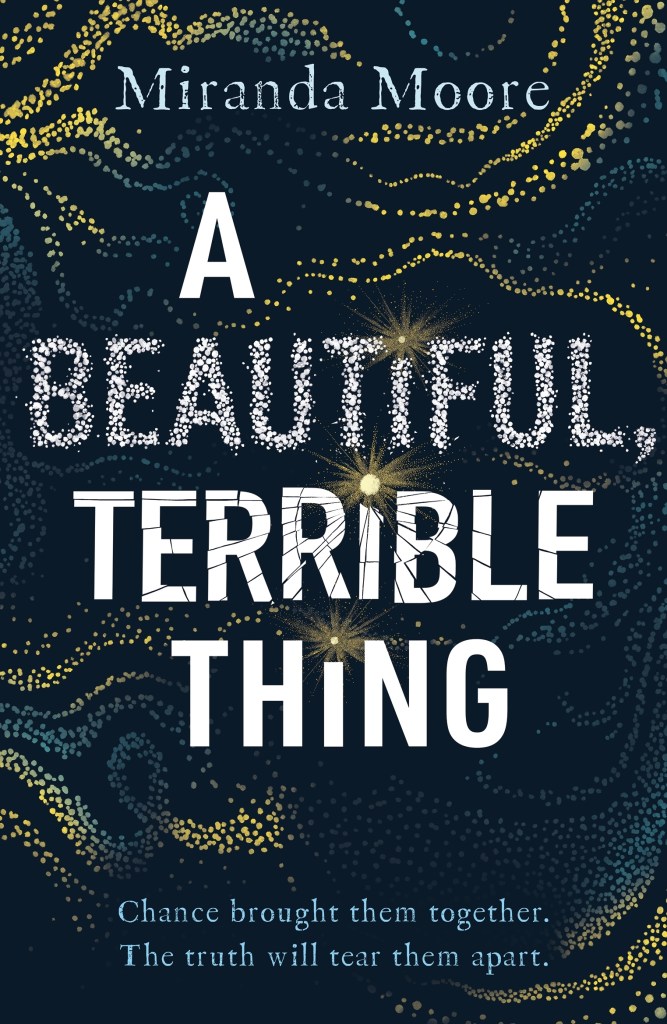
Author of YA novel, A Beautiful, Terrible Thing, Miranda Moore shares with readers some invaluable advice on the writing process, the key to her success, and top tips for aspiring writers.
by Miranda Moore
Let’s picture a professional author. They sit down in their hut at the end of the garden, sipping their favourite tea from their favourite mug, a beatific smile forming as they pen a perfect draft of a perfect novel. They type ‘The End’ and hit send. Job done!
They amble back across the lawn to their Edwardian townhouse, where their secretary awaits. Steven Spielberg’s on the phone, wanting to make a movie of their latest book. Would they like to take the call?
OK, let’s make that scene a bit less Hollywood and a bit more reality TV.
Here’s another professional author. She’s sitting in her messy study in her dressing gown, a hot water bottle shoved up her jumper. Three emails ping in from her kids’ school – forms needing filled in.
The doorbell rings and she listens politely as a man and woman tell her that unless she repents her sins, she’s heading for eternal damnation, and wouldn’t she like to save her soul from this fate? Then she finds her cat toying with a terrified vole in the kitchen. She manages to banish the cat and save the vole. Hurray!
Her phone rings. No, she doesn’t need loft insulation, thanks.
Finally, she gets to work. She picks up the latest draft of her novel – she’s not entirely sure how many drafts she’s done, but it’s a lot more than one. She slashes paragraphs, scores out phrases, adds in better ones and scribbles notes down the margins. The paper is a shambolic mess of marks but she is curiously pleased. It’s progress.
Most writers don’t just sit down, struck by inspiration, and produce perfect novels on a first attempt. Most of us have sweated, sighed, sobbed and sworn for years before we become published novelists.
I wrote the first draft of my debut novel in 2016. Nine years later, that novel has just been published, having changed title twice and been though many revisions.
When I first sent it out, it had a long way to go. I queried a few agents and got several full manuscript requests. None of those turned into an offer of representation, but the feedback was invaluable. It simply wasn’t properly baked yet.
I also entered national novel competitions, and was quickly shortlisted for one in 2017, the first of many longlistings and shortlistings. Each time I got listed but didn’t make it further, I went back to my manuscript and asked myself: what can I improve? What’s not quite there yet? What more does it need?
And each time, with several months’ break from it, that distance provided clarity. I was able to see things I had been unable to see when I was too close to it. Feedback from critique group friends, beta readers and a manuscript appraisal service helped enormously. All along, I kept my eye on my goal: publication with a traditional publisher.
Most writers don’t just sit down, struck by inspiration, and produce perfect novels on a first attempt. Most of us have sweated, sighed, sobbed and sworn for years before we become published novelists.
What I didn’t do was sit for seven years, waiting. I got on with other things. I took freelance writing commissions and editing jobs. I wrote gift books about mindfulness. I returned to the manuscript from time to time, read it, listened to it while doing yoga (I’m not joking – I got the Speech function on my computer to read it out to me). This way, I could hear passages that dragged or felt underdeveloped. And I wrote a second novel.
In all, I was longlisted six times, shortlisted three and won twice. That’s eleven competitions. There’s a pattern. Each time, I was inching closer. Each time, I had to go back to the factory floor and examine my work with a critical eye, to try to find the weaknesses; to see where it needed refining. Each time, I returned to the text and interrogated it. There was always something that could be tightened.
Of course, there’s inevitable disappointment when you get listed and don’t make it. You’ve poured your heart and soul into this. Who wouldn’t be temporarily crushed? But you pick yourself up and think: OK, the winning book is simply better than mine. I still have work to do. My time will come.
Overnight successes are rare. Most authors have honed their craft over years. So if your dream is to become a published writer, I recommend seeing it as an apprenticeship.
First, you need to learn the craft, with a dose of humility. You need to be able to listen to feedback. When people give you constructive criticism, they’re only trying to help. Some things they say won’t chime with you, so stick with your gut. Other times, their comments will illuminate something for you and help to highlight the scenes or characters that need work.
Beyond that, you need perseverance, a willingness to keep improving, a decent dollop of self-belief, and an unshakeable desire to reach that goal. There is nothing wrong with a little healthy ambition. It just means you’ll keep grafting until you get there.
Good luck and enjoy the trip!
.
Miranda’s top take aways:
One
In low moments when you’re feeling disheartened, I recommend putting the writing aside and simply doing something you enjoy – moving, dancing or something creative, perhaps. Taking focus off your writing will hopefully give your soul a little space to revive. When you’re ready, you’ll know when it’s time to pick up your pen.
Two
Interrogate your central premise. Is it compelling enough? Make sure it pulses through the narrative from start to finish. Have the courage to ditch a weak idea and start something new, something that makes your chest feel tight. That urgency will shine out from the page.
Three
Different writers have different aims. Some people simply want to write to express themselves. Some want to self-publish and retain control of their work. Some yearn to become a commercial bestseller; some would prefer critical acclaim; others would love to be published in a journal. And for some, making a difference to a single reader is enough. Consider what sort of writer you’d like to be, and picture yourself there.
Four
Typically, novelists have written at least one book before they write their debut novel. According to Writability, the average author has written 3.24 books before they write their debut. I wrote two children’s stories before writing my own debut. They are still hiding in my computer.
A Beautiful, Terrible Thing is OUT NOW and published by David Fickling Books
.
A Beautiful, Terrible Thing
When Nathan meets Cara, sparks fly.
Her smile lights him up, and he falls for her fast. Being with her is like taking a deep breath, after the terrible thing that happened three months ago.
Cara feels the same. And this joy is a gift – because her life is shattered, too. Nathan feels like a new start.
But they’re both hiding a secret. And the secrets intertwine in a way neither of them could imagine.
There’s no way Cara and Nathan can be together. But, despite everything, they find it impossible to be apart.
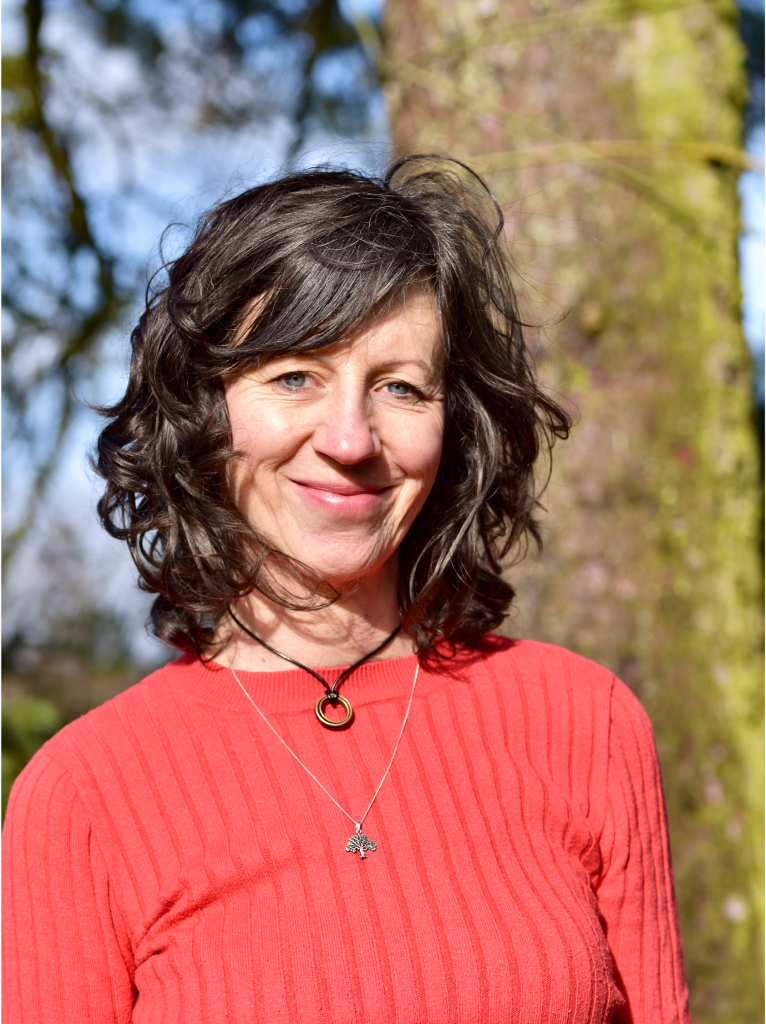
Miranda Moore
Miranda Moore is a writer of both fiction and non-fiction, as well as a freelance editor and writing coach. She won the Wells Festival of Literature Book for Children Competition in 2023 and is a Royal Literary Fund Fellow, supporting students in their writing. When she’s not writing, she sings in a covers band and enjoys exploring wild places. She lives with her family in the Scottish Borders. A Beautiful, Terrible Thing is her debut novel.

 PaperBound Magazine