Ghost author, Finbar Hawkins, shares his thoughts on writing ghost stories for winter – and how seasonal traditions can spark inspiration for new ideas.
by Finbar Hawkins
When people discover that my new novel GHOST is set at Christmas, I’m often met with a slightly puzzled look. Ghost stories? At Christmas? Aren’t we supposed to be writing about snow, carols, and the triumph of goodwill?
But scratch beneath the surface of our festive traditions and you’ll find that ghosts and Christmas have been companions for centuries—and for good reason.
I’ve always been fascinated by our impulse to gather in the darkness and scare ourselves witless. Not at Halloween, when we might expect it, but in the depths of winter, at the year’s darkest turning point. The Winter Solstice—that moment when the sun hangs lowest in the sky and the nights stretch their longest—has been a threshold time for as long as humans have told stories. It’s when the veil between worlds grows thin, when the dead draw close, when ancient things stir in the shadows.
This is why, when I set out to write GHOST, Christmas felt like the only possible setting. The novel weaves together three young women across different time periods, all confronting an ancient evil that lurks in the woods. That evil is timeless, but it makes itself felt most powerfully when darkness reigns—and there’s no darker time in the British calendar than the dead days between the Solstice and New Year, when time itself seems suspended and the normal rules don’t quite apply.
Our ancestors understood this instinctively. Take Sir Gawain and the Green Knight, that strange and unsettling medieval masterpiece. It begins at Christmas, at the height of Arthur’s Yuletide feast, when a monstrous green knight crashes the party and sets in motion a tale of magic, fear, and the supernatural. The poem is steeped in midwinter unease—the sense that something other is abroad when the world is frozen and dark. The Green Knight himself seems to embody the wild, unkillable force of nature at its most hostile and alien. He’s a Christmas ghost in all but name.
Fast forward several centuries and we find M.R. James, that master of the antiquarian ghost story, making a conscious art form of the Christmas tale of terror. As a teacher at Eton, James would gather his pupils around the fire each Christmas Eve and read them a new ghost story he’d written especially for the occasion. Can you imagine it? The oldest, most prestigious school in England, and here was a distinguished scholar frightening boys in the darkness with tales of ancient curses, malevolent spirits, and things that should not be disturbed. James understood that Christmas wasn’t just about comfort and joy—it was about acknowledging the darkness, facing our fears communally, and emerging into the light together.
.
Can you imagine it? The oldest, most prestigious school in England, and here was a distinguished scholar frightening boys in the darkness with tales of ancient curses, malevolent spirits, and things that should not be disturbed.
.
For me, though, the book that truly crystallised this tradition was Susan Cooper’s The Dark is Rising. Reading it as a young person was a formative experience—I can still remember the visceral sensation of cold that emanated from its pages, the way Cooper made me feel the bite of winter and the weight of ancient evil pressing against the fragile warmth of Christmas.
Will Stanton’s battle against the Dark unfolds across the twelve days of Christmas, and Cooper understands implicitly that this is when such battles must be fought—when the year is at its most vulnerable, when the old magic is strongest, when everything hangs in the balance. The book showed me that Christmas stories could be more than cosy—they could be mythic, terrifying, and profound. They could matter.
And then there’s Dickens. A Christmas Carol is so embedded in our festive culture that we sometimes forget how genuinely spooky it is. Yes, it ends in redemption and generosity, but it earns that ending through four ghostly visitations, a journey through death and regret, and the terrifying vision of what Scrooge himself will become.
The Ghost of Christmas Yet to Come is as frightening as anything in M.R. James—a silent, hooded figure of absolute dread. Dickens knew what he was doing. His story works precisely because it harnesses that ancient connection between Christmas and the uncanny.
Why does this tradition endure? I think it’s because the Christmas season, for all its manufactured jollity, sits on something much older and darker. It’s a festival of light precisely because we’re surrounded by darkness. We feast because winter was always a time of potential starvation. We huddle together because the world outside is hostile. And we tell ghost stories because, in the darkest part of the year, we need to acknowledge what scares us—and then, together, we need to survive it and emerge into the growing light.
In GHOST, I wanted to honour this tradition: to write a story that embraces the darkness of midwinter and asks what might be lurking there, waiting. Because some stories are best told when the nights are long, the fire is burning low, and we’re not quite sure what’s out there in the shadows.
Ghost is OUT NOW and published by Bloomsbury
.
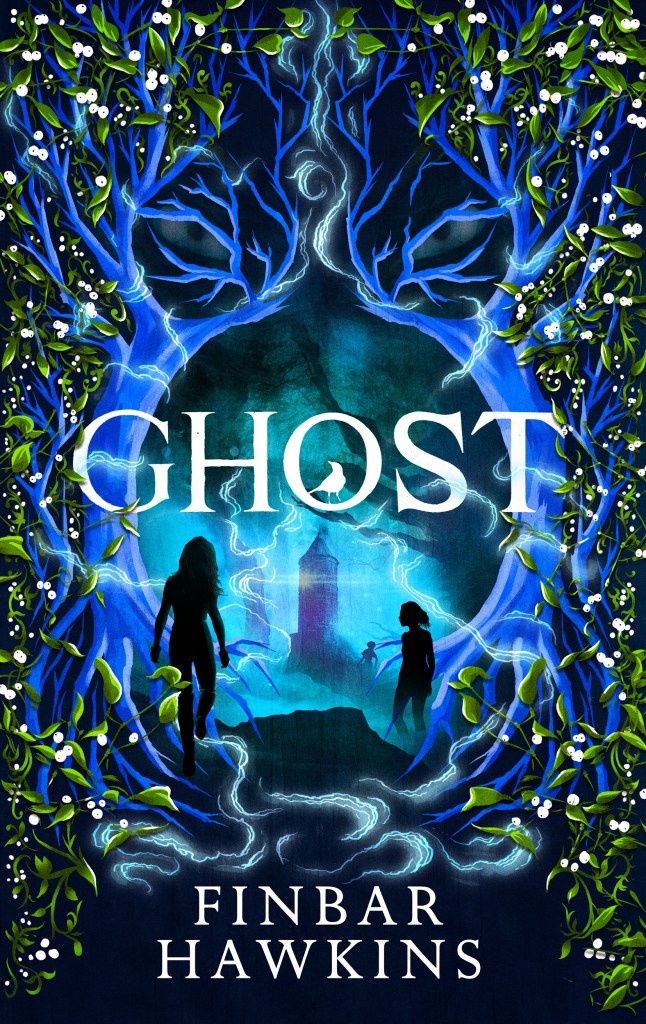
GHOST
60AD A blackbird calls a warning. Aine, a slave girl running away from her Roman masters, pauses to listen as she lifts a totemic, druid carving she’s found in the tunnel where she’s hiding. The last thing she sees is a tangle of matted fur, a sheaf of claws, a flash of fangs, as she unleashes a hungry animal presence.
1783 AD Centuries later, white witch Sarah Gibson wanders the woods in search of refuge. She’s at ease here with the changing seasons, the plants and animals, until one moonlit night, she senses Aine’s terror. The blackbird calls a warning, but Sarah wants to help Aine’s restless spirit.
Present day Marie has dropped out of art college and is staying with her aunt for a while. But the woods nearby are hiding something. Marie can feel it. She hears the local gossip about tragic happenings there. Hopelessly caught by the ghostly voices of the past that echo uneasily in her present, Marie must pit her wits against powerful old magic..
Finbar Hawkins
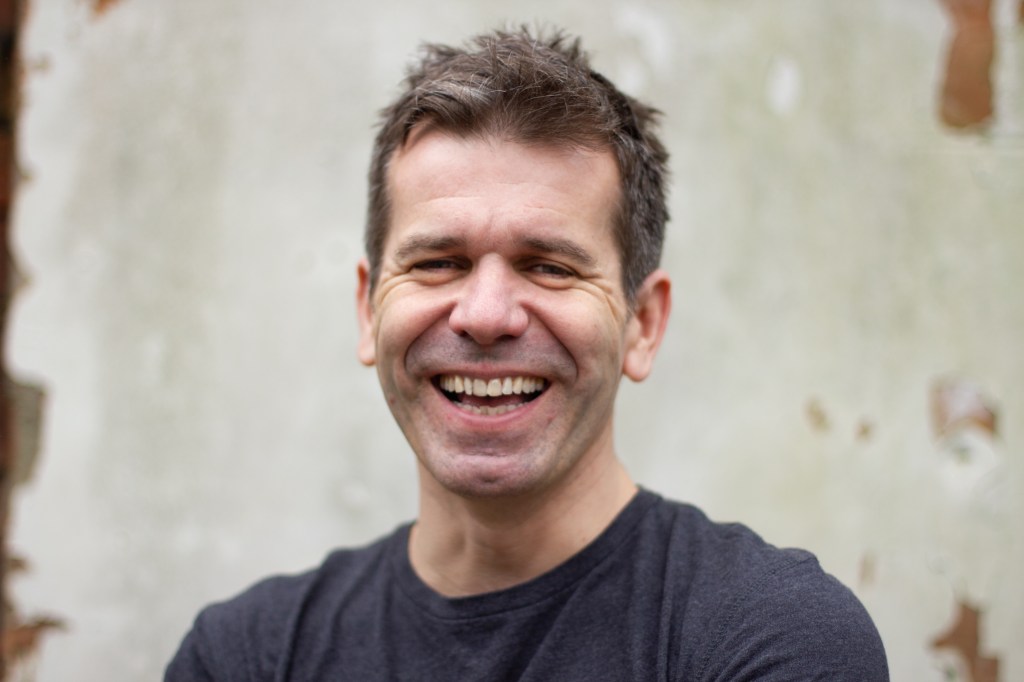
Finbar Hawkins is a graduate of the Bath Spa MA in Writing for Young People. He grew up in Blackheath, London and now lives in Wiltshire with his family, in a landscape steeped in myth and legend.
He works as a creative director for animation studios such as Aardman in Bristol, where he makes fun interactive things for children of all ages.
Finbar’s debut novel, Witch, was shortlisted for the Branford Boase Award and nominated for the 2022 Carnegie medal, is also published by Zephyr.
Find out more at finbarhawkins.com
Instagram @finbarhawkins_writer

 PaperBound Magazine