Blog, Bookshelf

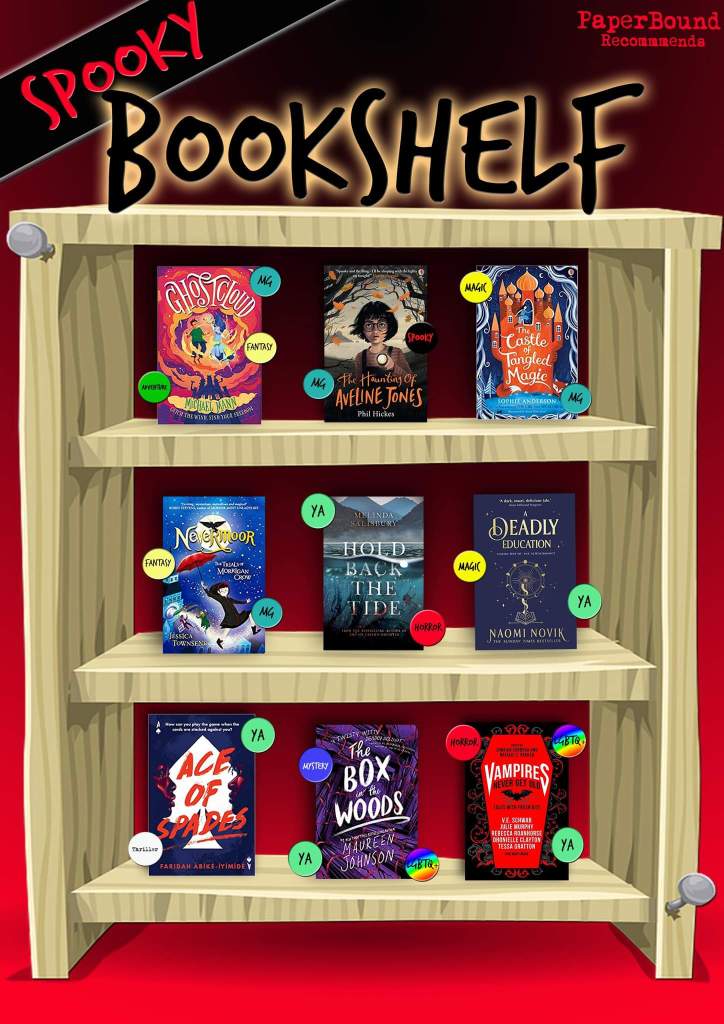
Spooky Bookshelf

Here, you can find our spooky themed bookshelf, as featured in our autumn 2021 issue, which has all kinds of haunting, atmospheric books perfect for the autumnal season. You can read even more spooky stories, author interviews and more in our latest issue by clicking here. 

PaperBound Magazine's Spooky Bookshelf

All our issues are completely free and run by volunteers, however if you would like to support PaperBound and the work we do, you can help us out by buying us a virtual book. 

Here at PaperBound, we love stories. Want to be a part of ours? Find out more.

© PaperBound Magazine

Blog, Short stories

‘Up the Stairs’: Meg Small

Each issue, we choose a winning entry from all the submissions sent to us. This time, our winning entry is spooky short story ‘Up the Stairs’ by Meg Small. Keep reading below to find out more.

Up the Stairs 

By Meg Small 

Alice couldn’t sleep. How could she, with that thing her dad had bought downstairs? 

It was, her dad insisted, a suit of armour. A piece of history, like all the other antiques he’d collected. But it wasn’t like any suit of armour Alice had ever seen.  

The lumpy body. The rusty, tarnished metal. The musty, dusty smell of it and how it slumped where it sat at the foot of the stairs. When she shut her eyes, she could picture it perfectly. Sitting there, in the dark, with its misshaped limbs and its odd crooked helmet with the empty, staring eye sockets.  

She imagined it crumpling forward, collapsing off the chair and onto the floor, and starting the long, painful climb up the stairs. Its armour would squeak, its fabric arms would rasp against the carpet. Its hands would thump, thump against each stair, and it would drag itself up. And up. And up. Until it was outside her door.  

Alice opened her eyes. She stared at her dark ceiling and gripped her duvet tightly.  

She wasn’t sure if she could handle another monster. The Thing at the Foot of the Bed was bad enough. If she shut her eyes almost all the way, and peeked through her eyelashes, she could see it. A silhouette almost shaped like a person. But it was too tall and too thin, its neck and arms and fingers too long to be human. Its face was blank, a shadow, but Alice knew it was watching her. It was always watching her.  

Last week, she had caught it reaching one long, long hand toward her. She had almost screamed the house down, and her dad insisted it was a nightmare.  

But Alice knew better.  

She knew, in her bones, that the suit of armour wasn’t just a suit of armour, either.  

The Thing at the Foot of the Bed shifted. It wobbled its empty face slightly to the left, like it was stretching its neck, then returned to its usual position. Alice watched it through her mostly closed eyes and felt her heart slowly crawling into her throat.  

Since all the screaming, it hadn’t tried anything. But if it was moving now… 

Thump, thump

Alice’s insides swooped like she’d tripped. She held very still and listened.  

Water gurgled in the pipes. Rain pitter-pattered against her window. A breeze rustled through the trees outside.  

It had been the pipes. The floorboards settling. Someone closing a car door down the street.  

It hadn’t been something reaching for the bottom stair.  

Squeeeeeaaaak. 

Alice yanked the duvet over her head. It was dangerous, with the Thing standing there, but she couldn’t help it. She needed to hide.  

In the soft, stuffy darkness, her heartbeat felt very loud and very close. It raced as hard and fast as a thundering horse.  

That hadn’t been the wind. Not the rain or the plumbing, either.  

It had been the grating squeal of rusted metal against rusted metal.  

Thump, thump.  

There it was again.  

Squeeeeeaaaak. 

It was coming closer. It was heaving its rusted, battered body up the stairs. Alice wanted to scream, but her thundering heart had lodged in her throat and no sound would come out.  

Why had her dad brought it home? Why had he looked at that horrible thing and thought, yes, that’ll look good in the living room? 

Now it was coming.  

Thump, thump.  

Squeeeeeaaaak. 

It was coming for her.  

Thump, thump.  

Squeeeeeaaaak. 

Closer and closer and closer.  

Thump, thump.  

Squeeeeeaaaak. 

Then silence.  

Alice held her breath. She held it until her head felt like it would burst. And when she couldn’t hold it anymore, and it whooshed out of her, a new sound made her choke on a startled gasp.  

Click. Click. Click.  

The sound of a doorknob rattling. Twisting one way then the other.  

Click.  

The sound of the latch opening. The sound of the door scraping softly over carpet.  

Alice scrunched her eyes shut and clamped her hands over her ears. But with only her hectic heartbeat for company, it was even worse. She couldn’t hear it. She couldn’t see it. She had no idea if it was crossing the carpet. Crawling toward her bed. Reaching for her with its musty, lumpy hands— 

Alice took a trembling breath. Peeling the duvet away from her eyes, she peeked over it. She got a mouthful of flowery-tasting fabric as she gasped again.  

It was there. It was in her doorway. The suit of armour. It was standing, not crawling, lopsided like it couldn’t support its own weight.  

Alice’s brain swirled. She didn’t breathe. She felt like a hedgehog in the middle of a road. Nowhere to run, and too frozen with fear to try.  

In the corner of her eye, she saw the Thing at the Foot of the Bed shift. It twisted its long body to look at the armour as well. In the light spilling in from the landing, Alice thought she saw a flash of teeth as it smiled a horrendous smile.  

Squeeeeeaaaak. 

Metal shifted. With a staggering, lumbering lurch, the suit of armour stepped forward. Alice could only stare, cold spreading through her veins as she watched it approach. It wobbled, then righted itself, then lurched forward another step.  

And that’s when Alice realised it wasn’t heading for her. It was heading for the foot of her bed. Its wonky hands surged forward and grabbed the Thing.  

And squeezed.  

The Thing hissed. Then it shrieked, a high sharp sound like a kettle boiling. It rang in Alice’s ears as the Thing swelled. It squirmed and spat, but it couldn’t escape. The suit of armour squeezed and squeezed and squeezed, until, without a sound, the Thing at the Foot of the Bed popped. Like a water balloon bursting, shadows scattered in every direction, and a cold, stale wind whipped through Alice’s bedroom, stinging her eyes and tangling her hair.  

When she winced and blinked and looked again, the Thing at the Foot of the Bed was gone and…  

The suit of armour was looking right at her. The shadows made its wonky helmet even wonkier, and Alice shivered when she met its empty eye sockets.  

Only, they weren’t so empty anymore. There was something there, something bright and soft, something that made Alice think of hot chocolate and holding hands and her dad’s soft voice telling her stories.  

The suit of armour turned toward the door. It stumbled back the way it had come. Pausing in the doorway, it looked back at her and gave her a slow, rusty nod. Then it stepped out into the landing, closed the door with a gentle click, and was gone. 

That night, there were no nightmares. There was no tossing and turning, no constant panicked glances at the end of her bed. There was just soft, still darkness. The feeling of being safe and protected. And Alice slept the best she had in weeks.  

Meg Small

Writer, Meg Small

Meg’s head has always been full of stories. Since finishing an MA in Writing for Young People from Bath Spa University, she spends her time daydreaming about spooky stories and fantasy adventures – and sometimes writing them, too! When she’s not writing, she can be found tending to her ever-growing army of succulents and spending far too much time playing videogames. You can follow her on Twitter here: @liminalace

You can read even more spooky stories, author interviews and more in our latest issue by clicking here. All our issues are completely free and run by volunteers, however if you would like to support PaperBound and the work we do, you can help us out by buying us a virtual book. 

Here at PaperBound, we love stories. Want to be a part of ours? Find out more.

Blog, Covers

Runner up: Autumn 2021

Rūta Čiutaitė entered her beautiful illustrations for our spooky autumn 2021 issue and we loved them instantly. Along with two other illustrations, we chose one in particular for the front cover.

You can read this issue in full here.

Spooky autumn 2021 illustration designed by Rūta Čiutaitė

Find out more …

Illustrator Rūta Čiutaitė

Rūta is an illustrator with a textile design background, which shows in her work where she uses lots of tiny textures and patterns. Her inspiration mostly comes from nature and fairytales, both in concept and the colour palettes she works with. Autumn is a great inspiration as well but, no matter the season, she’s always drawn to it!

Rūta illustrated the cover, contents page and printable writing prompts in our latest issue.

You can visit her Etsy page here, and follow her on Instagram: @blue_rue_designs.

Blog, Interviews

Interview with children’s author Clare Weze

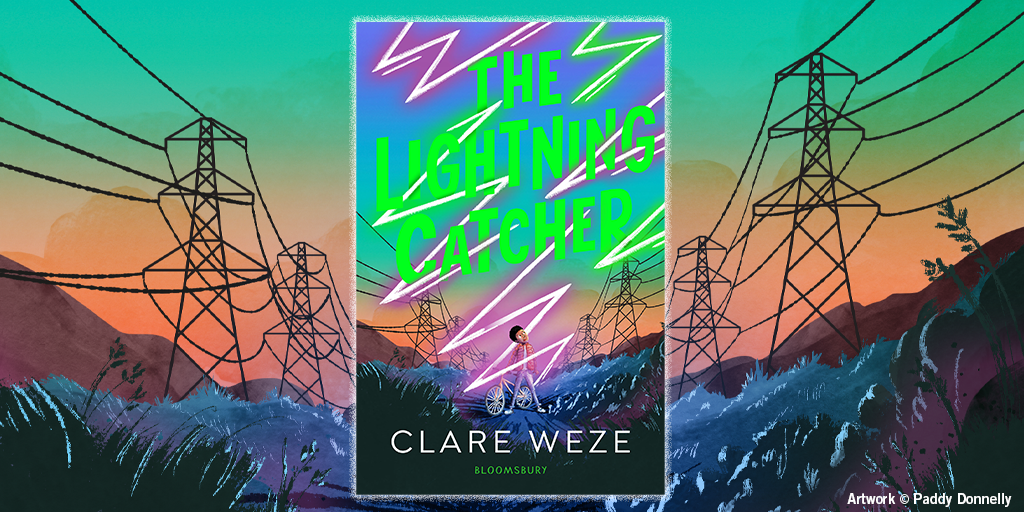
We caught up with author Clare Weze to talk about her debut novel, The Lightning Catcher, in the latest issue of PaperBound Magazine.

Could you tell us a little bit about your novel, The Lightning Catcher?

The Lightning Catcher is an adventure story featuring Alfie, who’s been transplanted from the city to a small village in the countryside because of problems his sister’s been having. He isn’t used to village life and doesn’t yet realise that whatever you do there tends to be SEEN! There are mysterious weather anomalies, including isolated icicles in July, whirlwinds in buckets and shoes icing up for no apparent reason. Alfie and his new best friend Sam decide to investigate, but Alfie is fearless (and reckless) and doesn’t understand that certain places are no-go areas. He accidentally releases something from a box while trespassing, and whatever it is unleashes yet more meteorological mayhem. The adventure blows up in Alfie’s face. Friendships are tested, new and special ones created, and there’s some extremely unfair scapegoating.  

The Lightning Catcher is full of sci-fi adventure, whiplash humour and mysterious goings-on. Where did the idea come from?

It grew out of the setting and main character, but my love of weather and biology probably sparked the idea for Whizzy. The book is a consolidation of all my interests, and they spiral around a character with a burning curiosity, someone who just has to find out WHY? I’ve always liked the idea of mysterious no-go areas, and people who attract labels and become outsiders, so once I had my strange and lonely house, I wondered why it was dilapidated and full of junk. What sort of person would let that happen, and why? So Mr Clemm, another important character, grew out of that setting.

This book has been affectionately described as Skellig meets Stranger Things. What do you think of this comparison, and were you inspired by any other film/TV/books when writing it?

Skellig and David Almond’s other books have been a huge influence on me, so I love the comparison. Finding someone or something in odd, dark places has always sparked my imagination, and I love the general tone of Skellig. Until this year I hadn’t watched Stranger Things, but I can see what people mean: boys on bikes making discoveries. There’s no horror in The Lightning Catcher though, so I think that’s where the similarity ends. I was inspired by John Gordon’s The Giant Under the Snow for that sense of an escalating, race-against-time adventure. And I loved the cheeky interplay between the siblings of Millions by Frank Cottrell Boyce.

Can you tell us anything about your writing journey so far, and what you’ve learned from it?

It’s been a long journey, but one of the main things I’ve learned is to have a bit of everything ready to suit all opportunities. There are openings popping up all over the place, so it’s best to join every writing-related organisation you see advertised so that you’ll hear about them. Some places are looking for short stories, others for flash fiction, and agents in particular are often looking for novels. It’s great if you can have something finished to submit. Watching the process of building a book from start to finish has also been fascinating. And meeting some of the people required to make the finished product – many more than you would think – has been very special. Seeing Paddy Donnelly’s illustration for The Lightning Catcher for the first time was also a huge highlight. It’s so beautiful. From those aspects of the journey, I’ve found out what a difference each person’s contribution can make, and seen the book and its concepts grow and change, which has been really exciting.

If you could choose 1 tip for an aspiring writer, what would it be?

There are lots of openings for very short fiction in online magazines these days, so trying your hand at flash fiction is a good idea. It helps to get your name out there and boosts your confidence.

What would you say is the most challenging thing when it comes to writing?

For me, keeping the momentum going while plotting is quite difficult. I find setting up the events and characters straightforward, and often know where I want them to end up, but keeping the engine of the book thrusting forwards is trickier.

What other middle grade books have you enjoyed reading recently?

Lenny’s Book of Everything by Karen Foxlee is fantastic. I read it last year and although there’s a rare medical condition at the centre of it, there’s so much heart and love, and city life is brilliantly painted through the eyes of a child. The Space We’re In by Katya Balen is lovely. It has a really different pace: quiet in the day-to-day, but in the background, there’s a huge and life-changing event ticking away.

How would you sum up your novel in three words?

Stormy, heart-warming, surprising

Clare Weze grew up in London and Yorkshire and has British and Nigerian heritage. She is the author of The Lightning Catcher (Bloomsbury) and a story called ‘Once’ in the forthcoming anthology Happy Here (Knights Of and BookTrust).

You can visit her website, and also follow her on Twitter and Instagram.

The Lightning Catcher was released on 13th May 2021 and is published by Bloomsbury.

Don’t forget you can catch up with the latest issues of PaperBound Magazine here – and they’re all completely free!

Blog, Short stories

Winner: Young Writers Competition – The Dig by Daisy Whittington

This year, we put together our FIRST EVER competition dedicated to young writers. After many fantastic entries, it was a difficult decision trying to narrow it down to a final shortlist before a winner was chosen by YA fantasy author Caroline Logan. She picked Daisy Whittington, aged 14, as our winner, who wrote The Dig, a rolleroaster tale with unexpected twists and turns.

Read on below to read The Dig by Daisy Whittington.

Tina’s dad is an archaeologist and ever since Tina was able to walk, he would always make an effort to involve her with his work. He would bring home special artifacts for Tina that would intrigue her greatly. Tina was always most intrigued by the bones. It could be any sort of bone: a rabbit bone, a deer bone. And it could be a bone of any shape: a tooth or perhaps a femur. Tina didn’t care, she just loved bones.

It didn’t take long for her to start collecting them. Every evening, she would eagerly wait for her dad to get back from work and she would jump with joy when he’d unveil a new bone from behind his back to add to her collection. She couldn’t get enough! Her collection grew and grew, however she still had not reached the level of fulfilment she felt compelled to reach. Tina soon came to the conclusion that her dad was not the best source of bone income. She needed to get her own bones.

Tina crept out the house. She found herself in a graveyard. A bone jackpot! She waited until no one was around, and then she began to dig into a grave. Tina dug fast. Excitement overcame her. She knew the skeletal remains were close by, she knew they were waiting for her to take them home. Tina dug deeper and deeper until….

“TINA!! You stop that right now!” It was Tina’s dad. He’d caught her. ‘You are a DISGRACE. I am taking you straight home, you bad, bad dog.”

We hope you enjoyed reading The Dig just as much as we did! You can read all the shortlisted stories – and Caroline Logan’s feedback on each one – by clicking here and scroll down to read our Summer 2021 issue – completely FREE!