Blog

Interviews

Interview with children’s author Tamsin Mori

We chatted with children’s author Tamsin Mori about her debut book The Weather Weaver. You can catch the interview in the full magazine by clicking here and scrolling down to our Spring 2021 issue.

OLYMPUS DIGITAL CAMERA

Can you tell us about The Weather Weaver and where the idea came from?

The Weather Weaver is an adventure story with a touch of magic. Stella, the main character, is spending the summer with her Grandpa in Shetland, but her life takes a turn for the stormy when she meets an old woman called Tamar, who asks her to catch a cloud …

My mother’s family are all Shetlanders and I grew up listening to my Granny’s tales of Shetland – both family stories and the island myths and legends. In all her stories, weather was never a backdrop, it was a character – tricksy and wild. I must have absorbed that idea quite rapidly, because by the time I was 10, I was already experimenting with calling the weather.

What challenges did you face when writing a book about showing how clouds might feel?

The main challenge was that Stella can’t hear her cloud, so there’s no dialogue. Also, though they can change shape and colour, clouds don’t have faces, so there aren’t any expressions to describe! Having said that, once I’d discovered what Nimbus was like as a personality, it became surprisingly easy to imagine how he’d react in any situation.

You might not be able to chat to your pets, but that doesn’t stop you from understanding how they’re feeling – it’s all about body language. When I was editing, I did quite a lot of acting out the scenes, to get the movement right. It would have looked completely bonkers if anyone had seen me.

What do you hope readers can take from The Weather Weaver?

I hope they’ll be left with a sense of the magic hidden inside everything – things that seem commonplace until you look at them a little differently. Even stones are full of stories! I’d love readers to finish The Weather Weaver and look around with a sense of possibility and wonder – breathe bit deeper, dream a bit larger. And who knows? Maybe we’ll discover a few new weather weavers out there.

Did you get into similar adventures as Stella when you were growing up?

Much like Stella, we moved a lot while I was growing up, but my mum’s family are all Shetlanders, so that was the one place we always returned to – the place that felt like home. And exactly like Stella, what I loved most was the freedom! Although they’re wild, the islands are very safe, so I was allowed to roam and explore as much as I liked. Fog was the one thing that could keep us there – when there’s fog, the planes can’t fly – so my earliest attempts at weather weaving involved whispering spells into the wind, to call the fog. It worked, too – we once got fogged in for a whole extra week! Magic!

What does your typical writing day look like?

I don’t really have a typical writing day – I write whenever I can find a quiet moment – that can be anything from in the car, first thing in the morning, in the middle of the night, on a windy hilltop, in bed … I have two children and a part time (non-writing) job, so I’ve become a master at making time elastic – stretching it out to make space for writing!

My ideal writing day involves waking up gently, so I can hold onto the tail end of dreams, then scribbling in my bedside notebook. I find mornings best for first-drafting – inventing new things. Afternoons are better for editing, because by that time, my logical brain has switched on.

Is there anything you wish you’d known before becoming a writer?

How long it takes to make a book! Not the writing bit – I love that – more the actual process of turning it into a book. I somehow imagined that having written a book, it would just magically appear on the shelves of bookshops. The truth is, there are lots and lots of rounds of editing and polishing and proofreading, and between each one is a long period of waiting. The waiting bits are the worst – I am not a patient person. I’ve got the hang of it now, so I have several stories on the go at the same time. Each time I send back edits on one, I’ve got another story to jump into. I wish I’d known that before!

In The Weather Weaver, Stella has a book of myths and legends she treasures. Are there any myths and legends that are your favourite?

My favourite myth is the selkies – magical creatures that look like seals, but can shed their skin to become human and walk on land. Growing up, I was half convinced that I was a selkie – I’ve always loved the water. I’d love the ability to transform and be just as at home under the water as on land. We used to sing the selkies when I was small. If you sing from the beach, the seals all pop up out f the water to listen – a semi circle of sleek brown heads, with soulful eyes – selkies one and all.

Tamsin had a nomadic childhood (eight different schools!), but the one place that always felt like home was Shetland, her mother’s homeland. Shetland is a collection of teeny tiny islands, so far north they fight too fit on the map. They are overflowing with myths and legends, most of which are true.  Growing up, Tamsin was usually to be found on the beach, whispering spells into sea shells and singing to the selkies.

Tamsin now lives in Bath with her husband, two children, one rabbit, several crows, and a badger, though she flies home to Shetland whenever she can – if you go there in the summer, you’ll probably spot her, striding about with the wind in her hair, chasing a wild story.

The Weather Weaver is published by ULCAN Publishing and is out NOW! You can keep up to date with Tamsin and all her book related news on Instagram and Twitter.

Don’t forget you can catch up with the latest issues of PaperBound Magazine here – and they’re all completely free!
Interviews

Interview with YA author C.G. Moore

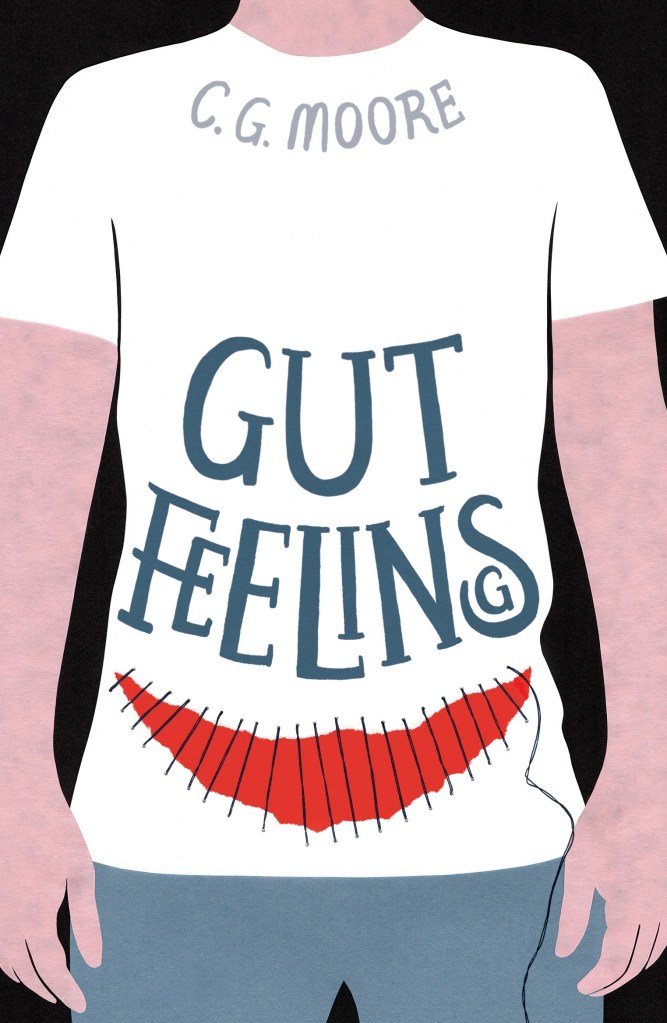
In our spring issue, we chatted with YA author C.G. Moore about his own life experiences and how they led to writing his new book, Gut Feelings. You can catch the interview in the full magazine by clicking here and scrolling down to our Spring 2021 issue.

Can you tell us more about your new YA novel Gut Feelings and how it felt to write it?

Gut Feelings tells my own story of living with a rare genetic illness known as Familial Adenomatous Polyposis (or FAP for short). Wart-like lumps known as adenomas or polyps grow in the bowel and rectum and eventually they turn cancerous. The book opens with my diagnosis at eleven, then treatment, before looking at the aftermath of chronic illness. Writing Gut Feelings was cathartic but emotional. The book is incredibly personal and doesn’t hold back.

How does it feel to be able to share your story in this way?

Scary. I was terrified readers will get an insight into my deepest fears and most embarrassing moments. As someone that didn’t see their chronic illness represented in the books I read as a teenager, it was so important to put myself out there and write the story I wanted to read. While it’s been scary, it’s also been hugely cathartic and the response has been overwhelmingly positive! I’m hugely grateful to my publisher (Hazel) for believing in me and Gut Feelings.

This and your previous novel, Fall Out, deal with important topics. What do you hope readers will take from them?

I hope it will inspire readers and create more empathy for those that have had different lived experiences and challenges in their lives. Reading for empathy is so important and it’s something that fascinates me about the power of the written word.

What made you decide to write this book in verse? Did it create any challenges?

Not many people have heard of my illness and fewer truly understand how it impacts the lives of those that suffer with it. When you try to explain it, you’re trying to get as much information across as possible in the most concise manner and it’s near impossible to describe the physical, emotional and psychological impacts. It was because of this that I had the idea of writing in verse. Once I started, I couldn’t stop. It felt right. It didn’t create challenges; it created possibilities for me to explore the illness in ways I would never be able to accomplish in prose.

What books/other verse novels do you enjoy?

My favourite verse novels include The Poet X by Elizabeth Acevedo, The Black Flamingo by Dean Atta, Kwame Alexander’s The Crossover and Karen Hesse’s Out of the Dust. Each has a different message and distinct style, but they are all beautifully immersive and engaging.

Is there anything you wish you’d known before becoming a writer?

When you’re writing with the intention to get published, you need to be so resilient and determined, but also willing to take chances, try new things and take constructive criticism. For me, I needed to learn this over time. I started writing with the intention of being published ten years before Fall Out. I needed that time to learn these lessons and wrote something that was true to me and the best story I could create. Knowing this before I became a writer would have changed my trajectory and the kind of stories I told.

Christopher (C.G. Moore) is a freelance editor and marketer. He currently lectures on the BA and MA in Publishing courses at the University of Central Lancashire. He is the author of Fall Out and Gut Feelings which are both published by UCLAN and available NOW!

Follow him on Twitter and Instagram: @YAfictionados

Don’t forget you can catch up with the latest issues of PaperBound Magazine here – and they’re all completely free!
Poetry

Winning entry: ‘picnic thoughts’ by Georgina Dent

We’re excited to share our first ever winning poetry submission featured in PaperBound, written by Georgina Dent. We love how this poem evokes so much emotion and conjures up images of what it’s like to share moments with someone beneath the clouds on a spring day.

You can view the poem in the magazine itself by clicking here and scrolling down to read our Spring 2021 issue.

look up at the soft afternoon sky with me

and tell me what you see when

you let your imagination dance with the sun

and form thoughts made of clouds that

don’t need to be contained

by the limiting compromise of

underwhelming silver linings.

daydream me a world in the clouds

mimicking the freedom of our own,

suspended up there

with no capacity to meet

and no rulebook to meticulously follow.

tell me you see dogs chasing rabbits,

spacemen driving motorcycles,

a lady you once saw on a packed train,

except now with a pineapple on her head,

playing a violin laced with sunflowers;

tell me that you see us, now,

sprawled on the grass,

daisy chains laced through our fingers,

our eyes glazed over with delight,

excitedly pointing out the next instalment

in our cotton candy tableau vivant in the sky.

endless possibility infuses our clouds,

and I love you in the same way.

Georgina is currently in the final year of her English BA, and she hopes to one day publish her own poetry athology. Her dream is to be living in London with her boyfriend and reading as much as possible with a pet cat in her lap (preferably multiple!)

Want to submit your own work to PaperBound? Find out more here.

Covers

Winning Illustration – Spring 2021

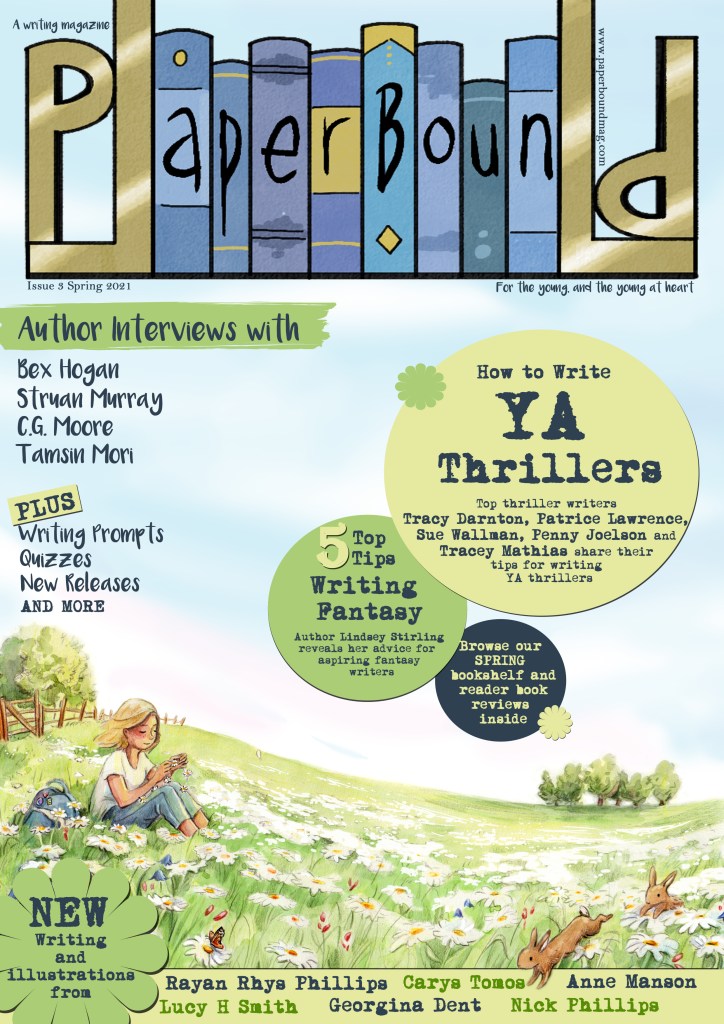
We absolutely loved the illustrations Lucy H Smith sent in for the spring issue of PaperBound. We think they fit the spring theme perfectly! Lucy’s illustrations feature on the front cover of PaperBound, in the contents page and alongside the poem picnic thoughts by Georgina Dent.

You can see all these by clicking here and scrolling down to read our Spring 2021 issue.

Find out more …

Lucy H Smith is a freelance illustrator from Cornwall. Her first published work was a bookcover design for The Bras and the Bees: The Extraordinary Life of BJ Sherriff.

She graduated from Falmouth University with a degree in illustration and now specialises in children’s book illustration. She loves using art to tell stories and bring characters to life, and is greatly inspired by animals and nature.

You can discover more about Lucy by visiting her website and following her on instagram.

Bookshelf

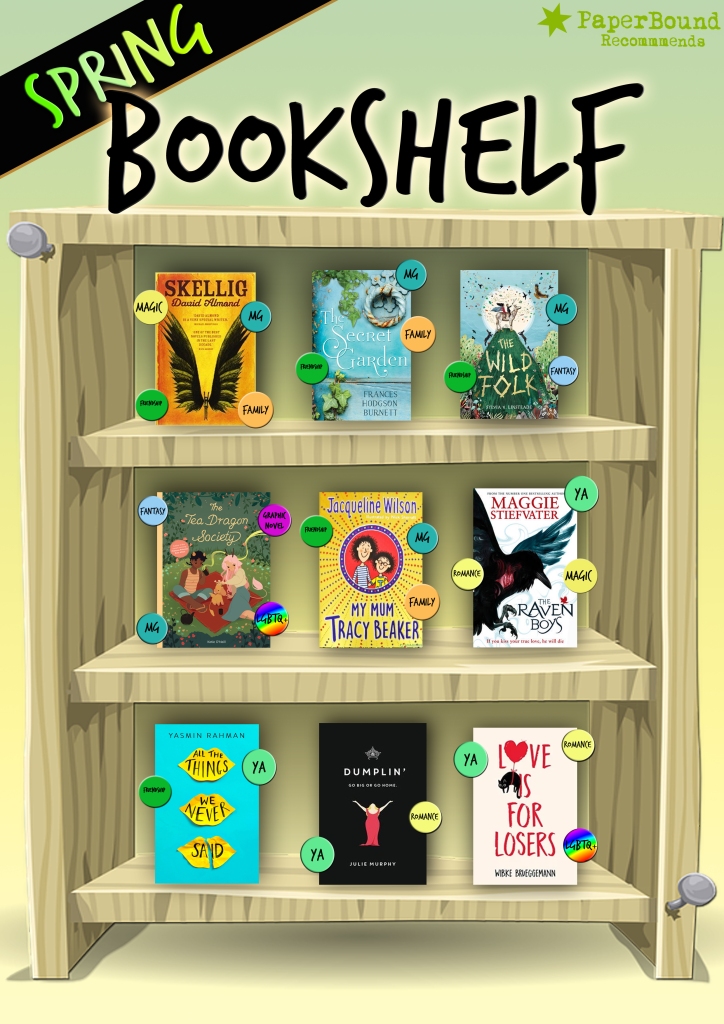
Our Spring Bookshelf

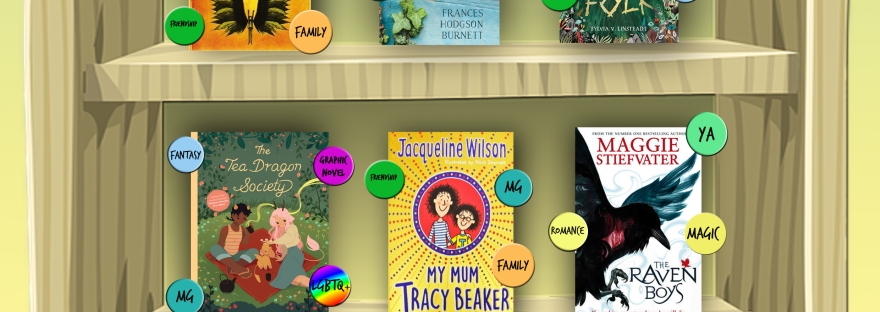
Our spring issue is full of stories about new beginnings and interesting mother figures, as well as featuring books set during spring. From classics like The Secret Garden to rip-roaringly hilarious new releases, like Love is for Losers, here are the books we’d love to share as part of our spring bookshelf. Are there any we’ve missed? Let us know in the comments below.

You can also see this page and lots more recommendations in our Spring 2021 Issue, which can be found here.

© PaperBound Magazine

Interviews

Interview with Michelle Kenney

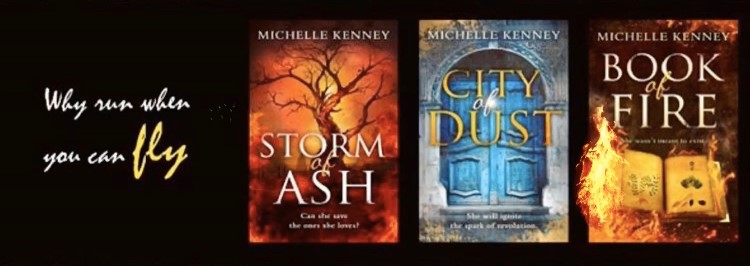
We chatted with YA author Michelle Kenney about her trilogy, Book of Fire, in the Winter 2020 issue of PaperBound. Read on to discover more about Michelle’s books and what inspires her writing …

Tell us a little about The Book of Fire trilogy.

The Book of Fire YA fantasy trilogy follows wild girl Talia, surviving as a hunter-gatherer in a treehouse village valley, after a biochemical Great War has destroyed most of the world. The story focuses on two communities: a sealed off scientific population who believe the outside world to be poisoned, and a treehouse-dwelling community of foragers who believe they are the only Great War survivors – until a chance encounter changes everything…

The trilogy is rich in Roman mythology, science and history, with plenty of romance thrown in for good measure. The action is also set in and around a war-torn ruined Exeter! Often dubbed ‘The Hunger Games meets Mythology,’ or ‘Percy Jackson meets The Bone Season’.

The series has strong themes and raises questions about the frequent conflict between nature and science.

Inspiration for the series grew from a visit to the Colosseum in Rome where they were burning torches of lavender at the end of every stand. The tour guide explained it was an authentic detail from the real gladiatorial games, where the scent was used to cover the scent of bloodshed. It was a tiny gruesome seed that lodged in my head, and stayed with me for nearly 20 years, before it grew into a trilogy.

How important is setting to you and your books?

I deliberately chose Exeter for my setting because I wanted the landscape to be local and recognisable – partly because I like to ground my fantasy in a little reality, and partly because Exeter has a deep vein of Roman history I knew I could tap into and use. I love living in Devon and feel very lucky to have the moor, coast and historical cities like Exeter on my doorstep for inspiration.

As the trilogy progressed, I realised readers were enjoying the local setting as much as I was enjoying writing it, and it inspired me to research and include more local history and landmarks. These included the ruined Roman bathhouse beneath Cathedral Green, which I deliberately used as a backdrop to action in City of Dust, and of course Exeter City’s famous underground passages.

Do you think dystopian fiction is on the rise again?

I think dystopian fiction is always bubbling away beneath the surface. Unfortunately, it’s not difficult to imagine a dystopian world given recent world events, and this adds a factor of relatability at the moment too. The Book of Fire series imagines a world after a devastating Great War, and I’ve been surprised by the number of readers who’ve been in touch to say how the setting feels a little too raw and realistic to be entirely comfortable. However, this is a real measure of its success for me.

Book of Fire’s core themes: science vs nature, history vs future and questioning if we should, just because we can underpin the whole series; and every reader who reviews or gets in contact to say Talia represents so much more than a wild girl in a recovering world, makes me very happy.

What dystopian novels do you love?

So many! The Bone Season series, The Handmaid’s Tale, The Hunger Games, 1984, Divergent, but perhaps the most influential for me was Robert C. O’Brien’s Z for Zachariah.

Z for Zachariah was the very first dystopian novel I ever read at the influential age of 13, and at that time it felt as though it changed everything. Before then, I’d read a usual range of popular childhood authors including C.S Lewis, Ursula Le Guin, Anne McCaffrey, Enid Blyton and Ruby Ferguson. But this one story turned everything on its head – a reimagining of a world after an apocalyptical war, where the race for survival is uppermost and no-one is who they seem, felt so exciting and unique. Afterwards, I actively sought books that gave that same thrill. I think part of the reason I love YA fantasy, is that it’s brave and unafraid of taking chances or asking the difficult questions.

Could you tell us a little about your writing journey?

I always scribbled stories as a child, and even had some short stories published in my local newspaper as a teenager/adult; however I didn’t start writing seriously until a traumatic event relating to the birth of my second child. While I always nursed secret hopes of getting published ‘one day’, the event was a wake-up call – a reminder that none of us are here forever, and fulfilling ambitions takes time and stamina! So I started writing seriously.

My first novel got an agent, but no deal. That same agent closed her business after a year, but by that point I had a second novel ‘Genetica’ and received four offers of representation within a week.

The initial feedback from publishers was great, but dystopia wasn’t in vogue and it went on the back burner while we worked on my next novel. Then, just as we were about to submit the new novel, a trilogy offer came in from HarperCollins HQ, a full twelve months after the original book was submitted! It was the most exciting moment of my writing journey.

Genetica became Book of Fire, the first book in the trilogy.

How valuable was it to have people to share your writing with?

Looking back, enrolling in the 2015 Curtis Brown Writing for Young Adults/Children course was one of the most valuable steps in my writing journey. More importantly than the writing wisdom and wizardry – though with Catherine Johnson as course leader there was plenty of that – I met a brilliant bunch of like-minded people who became the best friends and support network a writer could want.

Five years later we’re still in daily contact, sharing and supporting the highs and lows of each other’s journeys and lives. Some of us have agents and deals, some of us don’t, but it doesn’t matter because no-one’s success impinges anyone else’s, and everyone’s journey offers a chance to learn.

One of my cohort, Stuart White, started the hugely successful #WriteMentor, the online, accessible, support network for published and unpublished writers alike.

What’s your favourite ever book for young people?

Too hard! I do remember reading The Lion, The Witch and The Wardrobe very vividly, and being absolutely filled with wonder that someone had written a door to another world through the back of a wardrobe. It felt as though they’d read my mind, and heard the questions I whispered to myself when the lights were out. It still captures that essence of childhood magic for me.

Writing Prompt:

The Book of Fire series is full of Roman myths and legends! If you could recreate a beast of myth and legend, what would you create? What strengths/skills would it have and why?

Expand this into a map of your own mythological world. Where does your creature live? Who else lives there? Think about setting/time and add as much ‘world detail’ as you can.

We’d love to read what you come up with. Send your stories here: paperboundmagazine@outlook.com

We may even print it in a future issue!

Michelle is a firm believer in magic, and that ancient doorways to other worlds can still be found if we look hard enough. She is also a hopeless scribbleaholic and, when left to her own devices, likes nothing better than to dream up new fantasy worlds in the back of a dog-eared notebook. Doctors say they’re unlikely to find a cure any time soon.

The Book of Fire trilogy is published by HarperCollins HQStories and is available globally now (in English). The final book in the trilogy, Storm of Ash, was released earlier this year. Michelle is represented by Northbank Talent Management, and loves chatting all things book-related on her official website, Twitter, Facebook and Instagram.

Don’t forget you can catch up with the latest issues of PaperBound Magazine here – and they’re all completely free!
Interviews

Interview with Caroline Logan

We chatted with author Caroline Logan about her YA fantasy series, The Four Treasures, in the Winter 2020 issue of PaperBound. Read on to discover more about Caroline’s books and what inspires her writing …

Can you tell us more about The Four Treasures series and what readers can expect?

A few years ago, I got an idea for a story based on Scottish legends. I read a lot of Young Adult Fantasy but hadn’t really seen mythology represented. Originally, the story was supposed to be covered over one book but once I started plotting it out, I knew it would take a series to do it justice. I immediately knew what would happen in the first and second books, but then I had to make a decision about whether it would be a trilogy or a quadrilogy. Around that time, I stumbled upon the legend of The Four Treasures (which is actually an Irish story) and since my lucky number is four, I took it as a sign and plotted the other two books. 

The first book, The Stone of Destiny, is about a quest to find a magical stone, to save the kingdom and guarantee the safety of the king. But it’s actually so much more than that and I think people are always surprised when they read it. It’s really about the main character, Ailsa, who has been shunned all of her life by superstitious neighbours. She saves a pair of selkies who convince her to help them find the stone. But, meanwhile, something terrifying is stalking Ailsa through the forests of Eilanmor. There’s friendship, romance, action, and many monsters (my favourite things to write).

Have you always wanted to become a writer? How did you start?

No, I never thought I’d become a writer. English wasn’t my strong suit in school – I was much more suited to maths, science and art. I didn’t like dissecting poetry and hated writing essays. It wasn’t until I got back into reading again that I started thinking about writing. I had a New Year’s Resolution to read a book a week. By the end of the year, I wanted to give my own story a try. 

I started by coming up with characters, a plot and by building my world. That’s the best bit of writing a book in my opinion. I watched Youtube videos on writing and read blog posts. Then I just started. I didn’t think I would ever finish and I especially didn’t think anyone would ever read it. But a few years later, here I am with one book out and another on the way!

Did you have to do a lot of research into Scottish myths and folklore, or history, to write these books?

I already knew quite a few myths but I had to dig a little deeper when writing the book. There are often different versions of the same story, so I just chose the ones I liked best. Sometimes I’ll add a twist to them, like the selkie’s water magic. Sometimes I’ll just make something up. When I was in primary school, my friends and I pretended there were bog monsters in the mud, waiting to steal your wellies, so I put them in the book. I reckon it still counts – I am Scottish after all, so I can make Scottish myths!

In terms of history, originally I was going to set the books in a certain time period, but nothing was really lining up and I wouldn’t have been able to give my characters kilts or have them eat curry. That’s why I decided to set it in a fictional land based on Scotland. I always joke that I just couldn’t be bothered researching all the history.

The main character in The Stone of Destiny, Ailsa, is treated differently from a young age because of the way she looks. Is there anything you hope readers can take from this?

I really wanted to have interesting, diverse characters to set them apart from other medieval based fantasy books. Though all my characters in book 1 are white, I hope they all have distinctive features and personalities. As we move through the books, we’ll start to meet people from different places other than Eilanmor and the cast will become even more diverse. Hopefully, it conveys the message that if you broaden your horizons and meet people from different places, with different sexualities and gender identities, and abilities, your life will be better for it.

When I was creating my main character, I wanted someone who felt like an outcast. The Changeling Mark was another myth I’d heard about and when I saw this picture of a beautiful woman with a birthmark on her face, it all just clicked into place. I think Ailsa’s struggle is something we can all identify with. I believe that everyone has the experience of feeling left out at some point in their lives, so hopefully I made a main character who was relatable and could show the reader that being yourself is better than being another face in the crowd.

What do you love most about writing? What comes next for you and your books?

I love coming up with plots and characters. I really don’t like the actual writing part that much but it’s just part of telling the story. I have a four book contract with Cranachan Publishing. The Cauldron of Life, the second in the series, was released in October. Meanwhile, I’ll be writing Book 3 which will be out in 2021.

I have a few side projects on the go, but I just don’t have the time for them right now. One is inspired by the Gorbals Vampire legend, another is a fairytale retelling of The Twelve Dancing Princesses set in Ancient Egypt, and the last is an adult Science Fiction Western that’s about a gang of female criminals on the hunt for treasure. Maybe when The Four Treasures Series is finished, I’ll be able to get on with those.

How will you be spending the winter season?

Playing with my dogs: Ranger and Scout. I know it’s a bit cringey, but they really are my babies. I’ll also be up to my eyes in school work. I’m a secondary biology teacher and I have a lot of senior classes this year. It’s been a challenge working through the pandemic but I’m so glad to see my students again. I don’t think I’ve laughed so much in months.

Writing prompt:

You explore a hidden cave and discover two portals. One will take you to a beautiful place with a terrifying secret. The other will take you to a dangerous place with a great treasure.

Write about which one you would choose and what you see when you step through the door.

We’d love to read what you come up with. Send your stories here: paperboundmagazine@outlook.com

We may even print it in a future issue!

Caroline is a YA fantasy author. Her debut novel, The Stone of Destiny, is the first in The Four Treasures series. Caroline is a high school biology teacher who lives in the Cairngorms National Park in Scotland, with her husband. Before moving there, she lived and worked in Spain, Tenerife, Sri Lanka and the West Coast of Scotland. She graduated from The University of Glasgow with a bachelor’s degree in Marine and Freshwater Biology. In her spare time she tries to ski and paddle board, though she is happiest with a good book, a cup of tea and her dogs.

You can keep up to date with Caroline by visiting her website, or by following her on Twitter and Instagram.

The Stone of Destiny and The Cauldron of Life are both available to purchase now!

Don’t forget you can catch up with the latest issues of PaperBound Magazine here – and they’re all completely free!

Bookshelf

Our Winter Bookshelf

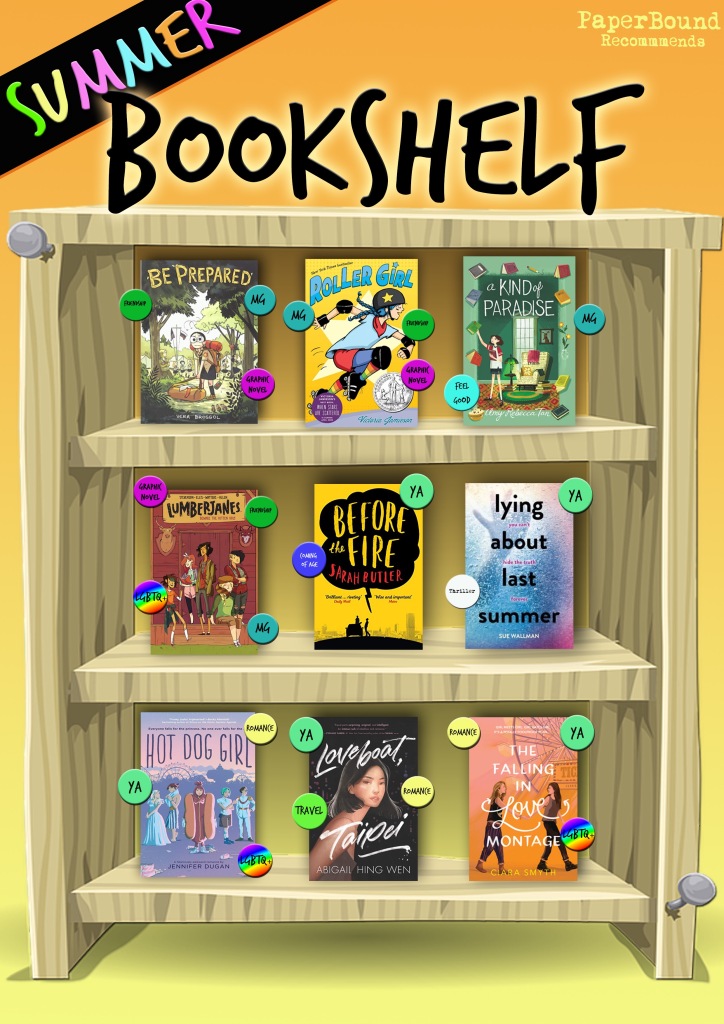
Take a look at our winter warmer bookshelf, filled with each of our own book recommendations for books to read in winter. From novels to short story collections, and middle grade to YA, we hope there’s something you can get stuck into over winter here, or maybe even find something new …

You can also see this page and lots more recommendations in our Winter 2020 Issue, which can be found here.

© PaperBound Magazine

Interviews

Interview with author Damaris Young

We spoke to author Damaris Young about her new novel The Creature Keeper in our Winter 2020 issue. Read on to discover more, or head over to our issues page to read the interview inside PaperBound Magazine itself.

Tell us a little about your new book The Creature Keeper. What made you decide to write it?

When animal lover Cora learns that Direspire’s mysterious owner is looking for a new Creature Keeper, she realises this might just be the chance she’s looking for to save her parents’ farm. But Direspire Hall is a spooky place, and the strange creatures who live there are nothing like Cora is expecting. As Cora settles into her new life, it soon becomes clear that Direspire has its secrets, and that somebody will do whatever it takes to keep them…

Growing up, I was always more comfortable around animals, and sometimes I struggled to talk to people. I wanted to write a story about a young girl who, just like me, feels a connection to animals, and send her on a journey of self-discovery and adventure, where she learns to find her voice.

What does your typical writing day look like?

The first thing I do is take my two dogs for a long walk near the river, which helps wake my brain up. When I get home, I’ll make breakfast, toast and a cup of coffee, and take it up to my home office. I usually write for a few hours, before finishing off the day by catching up on admin. I send out author letters to schools, sign bookplates, write articles for blog posts, and prepare for virtual workshops. I love connecting with schools and readers, it is one of the best parts of the job.

Your book The Creature Keeper has been described as having a ‘creepy gothic setting’. How important is setting to your writing?

The setting is incredibly important to my writing and I will treat it as a character, with its own quirks, personality and different moods. In The Switching Hour, the setting of the drought-stricken land became the antagonist that thwarted Amaya on her mission to save her brother. In The Creature Keeper, Direspire Hall is found near the coast and ‘The sea, the one that bordered our part of the world, wasn’t like any other. It had a mind of its own. Ma said it had eyes and ears and even teeth, and that it would gobble you up if you weren’t careful.’ The setting is wild and unpredictable, not unlike the creatures Cora discovers in Direspire hall.

What other middle grade novels do you love? What is it about them that you enjoyed?

I’m currently reading When Life Gives You Mangoes by Kereen Getten, set on a small Caribbean island. I love the strong sense of place, and the clever, and perceptive protagonist, Clara. I’m also a huge fan of the author Kirsty Applebaum, and her new story Troofriend is excellent! It follows a robot manufactured to be a child’s companion, and the curious and clever robot stole my heart from the very first page.

You’ve completed a writing course; how valuable was it to have people to share your writing with?

Being able to share your work with other writers and critique each other’s stories is invaluable. Writing a book is tough, and it is easy to lose motivation. Having other writers who support and encourage you is essential, as is being able to celebrate each other’s successes!

What other things do you enjoy when you’re not writing books?

I’ve recently started to learn cross-stitch, and it’s a great way to relax your mind! This year has been particularly challenging for lots of people’s mental health and being able to do something creative and relatively simple, like cross-stitch, has helped me.

If you could share one piece of writing advice with our readers, what would it be?

Don’t compare yourself and your writing to anyone else. When I started on my writing journey I often felt like a chameleon as I tried to emulate the writers I admired. I wasn’t allowing myself to find my voice as a writer, and I caused myself no end of frustration when I couldn’t get it ‘right’.

Once I stopped comparing myself to others (although full disclosure, I do still sometimes find myself slipping into those bad habits) I began to celebrate what made my writing unique.

Writing prompt:

In my new book The Creature Keeper, Cora looks after extraordinary creatures that are extremely rare. When writing your story, imagine your character comes across a rare or endangered creature. What is it? Write an adventure, helping the creature get back to its natural habitat.

We’d love to read what you come up with. Send your stories here: paperboundmagazine@outlook.com

We may even print it in a future issue!

Damaris studied on the Writing for Young People MA at Bath Spa University, where she wrote her debut novel, The Switching Hour. She is passionate about inspiring and empowering young readers with knowledge and action about climate change, as well as encouraging a love of the natural world with her stories. You can catch up with Damaris on Twitter, Instagram and Facebook.

The Switching Hour and The Creature Keeper are published by Scholastic UK and both books are available now!

Short stories

Winning story: ‘Winter’ by Anne Manson

We are thrilled to share ‘Winter’ by Anne Manson – the winning story featured in the Winter 2020 Issue which you can read in full here – on our featured content section of PaperBound. Get ready for a thrilling atmospheric story that’s bound to give you chills …

Wind howled across the frozen prairie, raising spiraling plumes of snow.

Bishop stared out the tiny cabin window into the wilderness, then emptied the flour bag into the week-old fat of the frying pan. It was the last of her food. She set it on the wood stove.

Above the howl of the wind rose another howl—a series of them. They were closing in on her.

At first, they’d simply gathered around the cabin at night, sniffing at the door. Later they’d got bolder, hurling themselves at the exterior with ravenous cries, while she stood terrified, shaking, clutching the cast iron pan—her only defense—as the cabin door shuddered under their weight.

Daytimes, they disappeared, and she wondered if her mind was playing tricks on her. She felt as though she’d been here forever, as though she was light years away from home. All alone. Sometimes, she even thought she felt a familiar, barely detectable vibration under her feet. It was hard to know what was real and what wasn’t.

As a precaution, she’d run around the perimeter of the cabin, squatting and urinating in the brilliant snow. Father had told her about a scientist who’d done that—marking his territory to keep them away—a vague memory from the mists of time. But they didn’t seem to notice. She remembered something else, something about the scientist altering his diet. Had he eaten mice? She would have tried it—tried anything. But there wasn’t a single sign of life in that white desert. Except for them.

Even the nights they didn’t come, she sat awake, sleepless, by the cooling wood stove, the iron pan in her lap, waiting, starting at any unfamiliar sound. During the day, she gazed out the window in a sleep-deprived fog, occasionally slipping into a blessed doze.

Eventually she made a plan. She took apart the chair, cut strips from the legs, soaked them in water and bent them, painstakingly forming an oval with a tapered end. She soaked cords from the hammock in fat and wove them across the frame. Snowshoes.

She spent endless hours pondering, mountains or prairie? Open plain or wooded slopes? They could bring her down in a flash in the open. And the mountains were covered in pines—she could climb a tree. But how long would she last? They would wait her out. And in the end, what were the chances of finding anyone to help her up there? Nil. She’d have to go across the prairie.

Bishop ate the greyish, floury sludge straight from the pan, staring out the window at the first glimmer of dawn—no rosy sunrise, but a lightening of the black landscape into a charcoal grey. She finished, put the pan away, banked the stove, and set about putting on every piece of clothing she had. By the time she was done, her shirt was damp with sweat and she could barely move. Last of all, she tied the snowshoes tightly to her boots.

She eased the cabin door open, but the wind caught it and slammed it hard against the exterior wall. A heavy mist of snow blew in and settled on the floor. She pulled her scarf up over her mouth. Then she summoned all her strength and heaved the door closed again. She might need to come back here.

She took a last look at the cabin’s small wooden overhang, the snow-covered wood pile, the thin trail of dying smoke from the chimney, and felt a pang. At least it had protected her for a while.

Then she turned and stared out into the grey, clouded light—the sun, a muted silvery glow on the horizon. To her right, the west, and the massive peaks of the mountains—sharp, snow-covered pines, spiking the grey sky. To her left, east, and the barren, white plain.

A chorus of howls rose from the mountains and her heart shot to her throat. She shouldn’t have used bacon fat to soak the rope for her snowshoes. It was like laying a trail for them. But what could she do now? She’d needed to make them waterproof.

She set off across the prairie, heading toward that silvery, clouded sun. She tripped and fell on her first few steps and terror rose in her gorge. What if the snowshoes didn’t work? But she figured out how to lift the tips with each step so they didn’t catch, and soon she settled into an uneasy, careful jog, her heart racing, her legs aching numbly from lack of exercise. She kept her eyes fixed on the rising sun. East. She’d have to keep her wits about her so she didn’t end up going in circles. Sun ahead. Mountains behind. Fingers crossed.

East. East. East. The sun edged along the horizon at a low angle. There was so little light at this time of year. When was sunset? Three? A little later? It only gave her six hours or so. Her inner clothes were soon drenched with sweat, her face, hands and feet, rigid with cold. She was fiercely thirsty. She stopped and raked her gloves over the frozen earth, stuffed snow in her mouth, gagged on the bits of grit, then scraped up some more. She pulled off her gloves and sucked on her numb fingertips. She couldn’t afford to lose them. A toe or two, even the tip of her nose, fine. But not a finger. Please.

There was still no sign of a living soul. No houses, no road. Maybe she should have stayed and starved in the cabin. The scarf around her mouth was frozen rigid. The winter air passed over it and raked her lungs with every breath. She stuffed her fingers back into the gloves, looked behind her, held her breath, and listened. No howls. No sounds at all over the wind. No low grey figures running through the waist-high mists of whirling snow. The cabin was long gone—vanished into the horizon. But she couldn’t see far. And they were clever. They might well be hunting her silently. Or merely waiting for her to tire and fall.

She set her jaw, lifted her aching legs, and set off again, this time keeping the low sun more or less on her right, to the south. It must be close to midday now. She stuffed down thoughts of panic and replaced them with anger. Yes. Rage would keep her warm. She untied the makeshift spear she had on her back and clutched it in her right hand. She wasn’t going down without a fight.

At the end, the sun was passing behind her, hovering on the edge of the horizon, the landscape all frozen shadow, and there was still no sign of human habitation. Why hadn’t she tried the mountains? She could have climbed a tree and rested. Her head was ringing. She had to hold herself upright. If she turned quickly or tilted her neck, the horizon spun round. She couldn’t feel her toes or fingers. She knew she should stop and eat more snow, but she feared if she squatted down, she’d tumble over and never get up again. She plodded forward, her legs numb with pain, her head reeling, using the spear as a walking stick.

Occasionally she thought she saw a light, heard a voice, but then it would vanish. She really was imagining things. Maybe everything was in her mind—the snow, the ravenous howls, the endless tundra. All she knew for sure was that she had no compass and night was falling. And the frozen earth was hard as rock—no way to make a snow cave, no wood for a fire.

It was then she heard them. Not the long-accustomed desolate howl—rather a chorus of joyous yips and barks.

They’d found her.

She ran, staggering wildly forward, trying to stay upright, as their hungry cries came closer and closer. She felt nothing but ache, saw nothing but grey whirls of snow, heard the eternal wind that grew and grew in her mind with the throbbing beat of her heart. Louder and louder, filling her head, like a relentless engine.

Suddenly she felt a stab of pain, glimpsed the grey mouth clamped on her leg and knew they’d got her. She fell, skidding forward. Immediately she felt a massive weight on her back. She screamed, her head reeling. She couldn’t move, spasms of agony in her leg, explosions of noise all around, that screaming roar in her head.

Then, nothing but black.

Bishop opened her eyes. Everything had turned still and white. So, what she’d heard was true—this was what you saw before you died.

Then she became aware of her throbbing leg and pounding head. And something else. That long-familiar hushed vibration underneath her, the smell of disinfectant and filtered air. She closed her eyes, wished she was back in the cabin. Out alone on the tundra, even. Anywhere but here.

“Congratulations, Bishop. The Committee felt that was a pass.” The voice was neutral, impassive.

She turned her head painfully. He was sitting next to her bed. His face, pocked with old acne scars, his green uniform, the pulsing, blueish screen in the upper corner of his wire rim glasses.

“Ingenious to mark the perimeter with urine. Unfortunately, they only respect that if you’ve eaten mice.” He didn’t look at her, didn’t take her hand. It was as though he didn’t even know her.

“What?” Bishop’s throat was painfully dry.

“You have to eat mice—that’s the wolf diet—in the arctic, that is. They smell it in the urine. That’s what keeps them away. I told you that. You didn’t remember?”

She stared at him. “There weren’t any blasted mice.”

“No mice?” He glanced at his watch. “Dear me. I’ll make a note of that.” His left eye flicked left and right, and a miniscule line of text rolled across the lens of his glasses.

Bishop wondered how the Committee would feel if she throttled him.

“In any case, no time for regrets. I suggest you prepare for stage two. You’ll have a week or so for…” He gestured at her injured leg with distaste. “And then…well, Bishop, we’re hopeful Spring may go a bit better. In the meantime, at least you’ve passed Winter.” He showed his teeth—his version of a smile.

Bishop stared at his yellowed canines. He was mistaken about the mice. It wouldn’t have made any difference. There was no escaping real wolves.

Anne has a Masters in Writing for Young People from Bath Spa University. Her first novel, ‘Lobster Wars’, is a thriller about two boys who find a dead body on a small island off the coast of Maine. Her second, ‘Dark Sun Rising’, is about a girl accused of murder at the time of the American Revolution. You can keep up to date with Anne by visiting her website or following her on Twitter.

Want to submit your own work to PaperBound? Find out more here.