Interviews

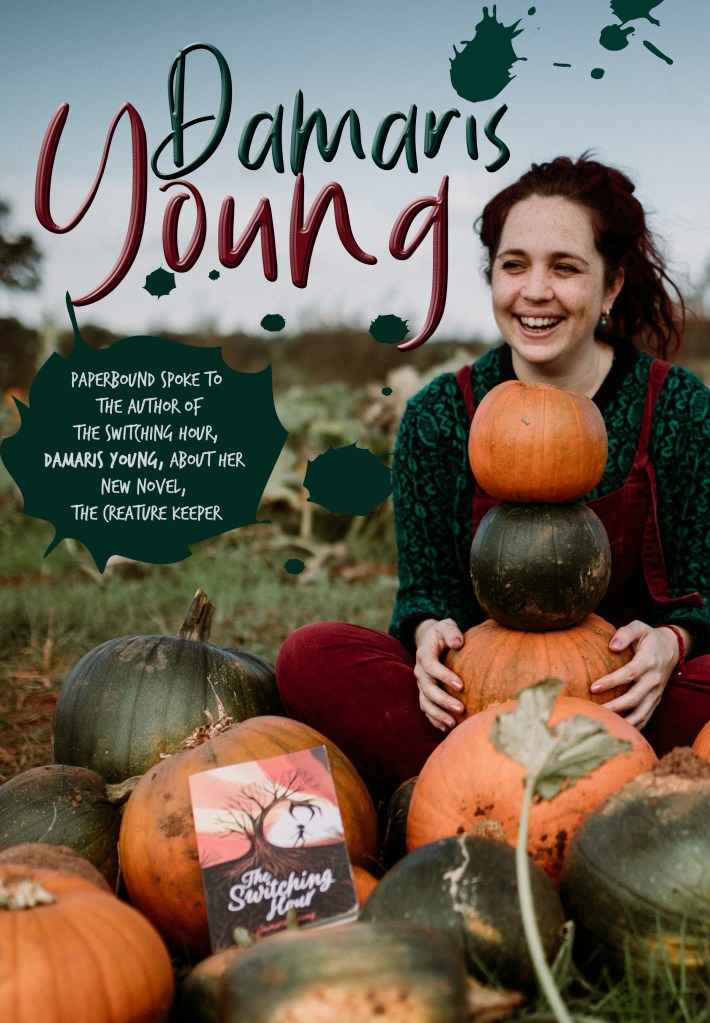
Interview with author Damaris Young

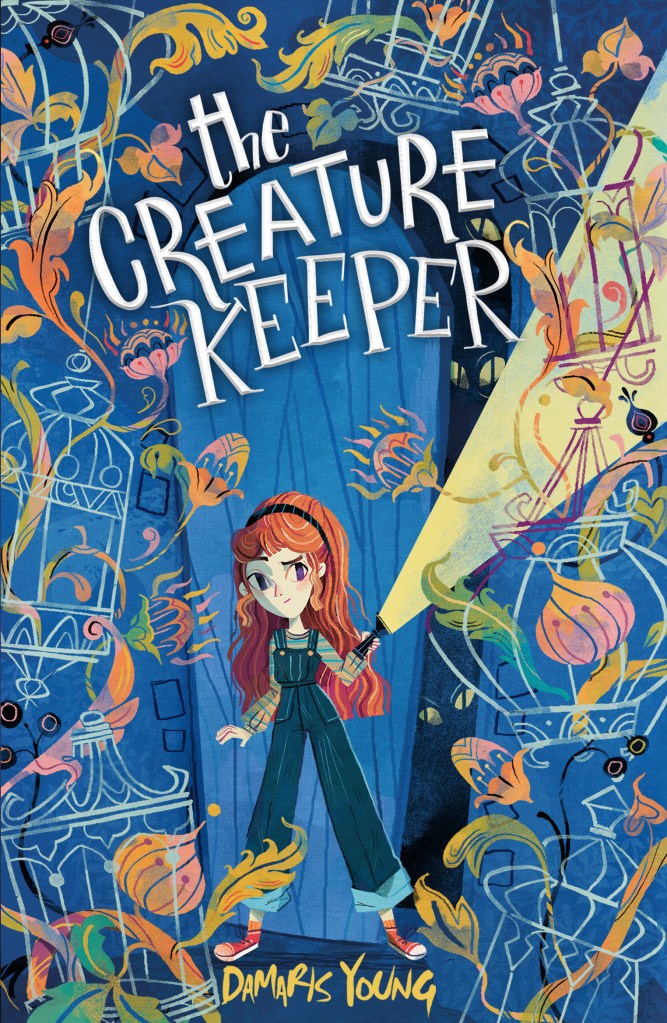
We spoke to author Damaris Young about her new novel The Creature Keeper in our Winter 2020 issue. Read on to discover more, or head over to our issues page to read the interview inside PaperBound Magazine itself.

Tell us a little about your new book The Creature Keeper. What made you decide to write it?

When animal lover Cora learns that Direspire’s mysterious owner is looking for a new Creature Keeper, she realises this might just be the chance she’s looking for to save her parents’ farm. But Direspire Hall is a spooky place, and the strange creatures who live there are nothing like Cora is expecting. As Cora settles into her new life, it soon becomes clear that Direspire has its secrets, and that somebody will do whatever it takes to keep them…

Growing up, I was always more comfortable around animals, and sometimes I struggled to talk to people. I wanted to write a story about a young girl who, just like me, feels a connection to animals, and send her on a journey of self-discovery and adventure, where she learns to find her voice.

What does your typical writing day look like?

The first thing I do is take my two dogs for a long walk near the river, which helps wake my brain up. When I get home, I’ll make breakfast, toast and a cup of coffee, and take it up to my home office. I usually write for a few hours, before finishing off the day by catching up on admin. I send out author letters to schools, sign bookplates, write articles for blog posts, and prepare for virtual workshops. I love connecting with schools and readers, it is one of the best parts of the job.

Your book The Creature Keeper has been described as having a ‘creepy gothic setting’. How important is setting to your writing?

The setting is incredibly important to my writing and I will treat it as a character, with its own quirks, personality and different moods. In The Switching Hour, the setting of the drought-stricken land became the antagonist that thwarted Amaya on her mission to save her brother. In The Creature Keeper, Direspire Hall is found near the coast and ‘The sea, the one that bordered our part of the world, wasn’t like any other. It had a mind of its own. Ma said it had eyes and ears and even teeth, and that it would gobble you up if you weren’t careful.’ The setting is wild and unpredictable, not unlike the creatures Cora discovers in Direspire hall.

What other middle grade novels do you love? What is it about them that you enjoyed?

I’m currently reading When Life Gives You Mangoes by Kereen Getten, set on a small Caribbean island. I love the strong sense of place, and the clever, and perceptive protagonist, Clara. I’m also a huge fan of the author Kirsty Applebaum, and her new story Troofriend is excellent! It follows a robot manufactured to be a child’s companion, and the curious and clever robot stole my heart from the very first page.

You’ve completed a writing course; how valuable was it to have people to share your writing with?

Being able to share your work with other writers and critique each other’s stories is invaluable. Writing a book is tough, and it is easy to lose motivation. Having other writers who support and encourage you is essential, as is being able to celebrate each other’s successes!

What other things do you enjoy when you’re not writing books?

I’ve recently started to learn cross-stitch, and it’s a great way to relax your mind! This year has been particularly challenging for lots of people’s mental health and being able to do something creative and relatively simple, like cross-stitch, has helped me.

If you could share one piece of writing advice with our readers, what would it be?

Don’t compare yourself and your writing to anyone else. When I started on my writing journey I often felt like a chameleon as I tried to emulate the writers I admired. I wasn’t allowing myself to find my voice as a writer, and I caused myself no end of frustration when I couldn’t get it ‘right’.

Once I stopped comparing myself to others (although full disclosure, I do still sometimes find myself slipping into those bad habits) I began to celebrate what made my writing unique.

Writing prompt:

In my new book The Creature Keeper, Cora looks after extraordinary creatures that are extremely rare. When writing your story, imagine your character comes across a rare or endangered creature. What is it? Write an adventure, helping the creature get back to its natural habitat.

We’d love to read what you come up with. Send your stories here: paperboundmagazine@outlook.com

We may even print it in a future issue!

Damaris studied on the Writing for Young People MA at Bath Spa University, where she wrote her debut novel, The Switching Hour. She is passionate about inspiring and empowering young readers with knowledge and action about climate change, as well as encouraging a love of the natural world with her stories. You can catch up with Damaris on Twitter, Instagram and Facebook.

The Switching Hour and The Creature Keeper are published by Scholastic UK and both books are available now!

Short stories

Winning story: ‘Winter’ by Anne Manson

We are thrilled to share ‘Winter’ by Anne Manson – the winning story featured in the Winter 2020 Issue which you can read in full here – on our featured content section of PaperBound. Get ready for a thrilling atmospheric story that’s bound to give you chills …

Wind howled across the frozen prairie, raising spiraling plumes of snow.

Bishop stared out the tiny cabin window into the wilderness, then emptied the flour bag into the week-old fat of the frying pan. It was the last of her food. She set it on the wood stove.

Above the howl of the wind rose another howl—a series of them. They were closing in on her.

At first, they’d simply gathered around the cabin at night, sniffing at the door. Later they’d got bolder, hurling themselves at the exterior with ravenous cries, while she stood terrified, shaking, clutching the cast iron pan—her only defense—as the cabin door shuddered under their weight.

Daytimes, they disappeared, and she wondered if her mind was playing tricks on her. She felt as though she’d been here forever, as though she was light years away from home. All alone. Sometimes, she even thought she felt a familiar, barely detectable vibration under her feet. It was hard to know what was real and what wasn’t.

As a precaution, she’d run around the perimeter of the cabin, squatting and urinating in the brilliant snow. Father had told her about a scientist who’d done that—marking his territory to keep them away—a vague memory from the mists of time. But they didn’t seem to notice. She remembered something else, something about the scientist altering his diet. Had he eaten mice? She would have tried it—tried anything. But there wasn’t a single sign of life in that white desert. Except for them.

Even the nights they didn’t come, she sat awake, sleepless, by the cooling wood stove, the iron pan in her lap, waiting, starting at any unfamiliar sound. During the day, she gazed out the window in a sleep-deprived fog, occasionally slipping into a blessed doze.

Eventually she made a plan. She took apart the chair, cut strips from the legs, soaked them in water and bent them, painstakingly forming an oval with a tapered end. She soaked cords from the hammock in fat and wove them across the frame. Snowshoes.

She spent endless hours pondering, mountains or prairie? Open plain or wooded slopes? They could bring her down in a flash in the open. And the mountains were covered in pines—she could climb a tree. But how long would she last? They would wait her out. And in the end, what were the chances of finding anyone to help her up there? Nil. She’d have to go across the prairie.

Bishop ate the greyish, floury sludge straight from the pan, staring out the window at the first glimmer of dawn—no rosy sunrise, but a lightening of the black landscape into a charcoal grey. She finished, put the pan away, banked the stove, and set about putting on every piece of clothing she had. By the time she was done, her shirt was damp with sweat and she could barely move. Last of all, she tied the snowshoes tightly to her boots.

She eased the cabin door open, but the wind caught it and slammed it hard against the exterior wall. A heavy mist of snow blew in and settled on the floor. She pulled her scarf up over her mouth. Then she summoned all her strength and heaved the door closed again. She might need to come back here.

She took a last look at the cabin’s small wooden overhang, the snow-covered wood pile, the thin trail of dying smoke from the chimney, and felt a pang. At least it had protected her for a while.

Then she turned and stared out into the grey, clouded light—the sun, a muted silvery glow on the horizon. To her right, the west, and the massive peaks of the mountains—sharp, snow-covered pines, spiking the grey sky. To her left, east, and the barren, white plain.

A chorus of howls rose from the mountains and her heart shot to her throat. She shouldn’t have used bacon fat to soak the rope for her snowshoes. It was like laying a trail for them. But what could she do now? She’d needed to make them waterproof.

She set off across the prairie, heading toward that silvery, clouded sun. She tripped and fell on her first few steps and terror rose in her gorge. What if the snowshoes didn’t work? But she figured out how to lift the tips with each step so they didn’t catch, and soon she settled into an uneasy, careful jog, her heart racing, her legs aching numbly from lack of exercise. She kept her eyes fixed on the rising sun. East. She’d have to keep her wits about her so she didn’t end up going in circles. Sun ahead. Mountains behind. Fingers crossed.

East. East. East. The sun edged along the horizon at a low angle. There was so little light at this time of year. When was sunset? Three? A little later? It only gave her six hours or so. Her inner clothes were soon drenched with sweat, her face, hands and feet, rigid with cold. She was fiercely thirsty. She stopped and raked her gloves over the frozen earth, stuffed snow in her mouth, gagged on the bits of grit, then scraped up some more. She pulled off her gloves and sucked on her numb fingertips. She couldn’t afford to lose them. A toe or two, even the tip of her nose, fine. But not a finger. Please.

There was still no sign of a living soul. No houses, no road. Maybe she should have stayed and starved in the cabin. The scarf around her mouth was frozen rigid. The winter air passed over it and raked her lungs with every breath. She stuffed her fingers back into the gloves, looked behind her, held her breath, and listened. No howls. No sounds at all over the wind. No low grey figures running through the waist-high mists of whirling snow. The cabin was long gone—vanished into the horizon. But she couldn’t see far. And they were clever. They might well be hunting her silently. Or merely waiting for her to tire and fall.

She set her jaw, lifted her aching legs, and set off again, this time keeping the low sun more or less on her right, to the south. It must be close to midday now. She stuffed down thoughts of panic and replaced them with anger. Yes. Rage would keep her warm. She untied the makeshift spear she had on her back and clutched it in her right hand. She wasn’t going down without a fight.

At the end, the sun was passing behind her, hovering on the edge of the horizon, the landscape all frozen shadow, and there was still no sign of human habitation. Why hadn’t she tried the mountains? She could have climbed a tree and rested. Her head was ringing. She had to hold herself upright. If she turned quickly or tilted her neck, the horizon spun round. She couldn’t feel her toes or fingers. She knew she should stop and eat more snow, but she feared if she squatted down, she’d tumble over and never get up again. She plodded forward, her legs numb with pain, her head reeling, using the spear as a walking stick.

Occasionally she thought she saw a light, heard a voice, but then it would vanish. She really was imagining things. Maybe everything was in her mind—the snow, the ravenous howls, the endless tundra. All she knew for sure was that she had no compass and night was falling. And the frozen earth was hard as rock—no way to make a snow cave, no wood for a fire.

It was then she heard them. Not the long-accustomed desolate howl—rather a chorus of joyous yips and barks.

They’d found her.

She ran, staggering wildly forward, trying to stay upright, as their hungry cries came closer and closer. She felt nothing but ache, saw nothing but grey whirls of snow, heard the eternal wind that grew and grew in her mind with the throbbing beat of her heart. Louder and louder, filling her head, like a relentless engine.

Suddenly she felt a stab of pain, glimpsed the grey mouth clamped on her leg and knew they’d got her. She fell, skidding forward. Immediately she felt a massive weight on her back. She screamed, her head reeling. She couldn’t move, spasms of agony in her leg, explosions of noise all around, that screaming roar in her head.

Then, nothing but black.

Bishop opened her eyes. Everything had turned still and white. So, what she’d heard was true—this was what you saw before you died.

Then she became aware of her throbbing leg and pounding head. And something else. That long-familiar hushed vibration underneath her, the smell of disinfectant and filtered air. She closed her eyes, wished she was back in the cabin. Out alone on the tundra, even. Anywhere but here.

“Congratulations, Bishop. The Committee felt that was a pass.” The voice was neutral, impassive.

She turned her head painfully. He was sitting next to her bed. His face, pocked with old acne scars, his green uniform, the pulsing, blueish screen in the upper corner of his wire rim glasses.

“Ingenious to mark the perimeter with urine. Unfortunately, they only respect that if you’ve eaten mice.” He didn’t look at her, didn’t take her hand. It was as though he didn’t even know her.

“What?” Bishop’s throat was painfully dry.

“You have to eat mice—that’s the wolf diet—in the arctic, that is. They smell it in the urine. That’s what keeps them away. I told you that. You didn’t remember?”

She stared at him. “There weren’t any blasted mice.”

“No mice?” He glanced at his watch. “Dear me. I’ll make a note of that.” His left eye flicked left and right, and a miniscule line of text rolled across the lens of his glasses.

Bishop wondered how the Committee would feel if she throttled him.

“In any case, no time for regrets. I suggest you prepare for stage two. You’ll have a week or so for…” He gestured at her injured leg with distaste. “And then…well, Bishop, we’re hopeful Spring may go a bit better. In the meantime, at least you’ve passed Winter.” He showed his teeth—his version of a smile.

Bishop stared at his yellowed canines. He was mistaken about the mice. It wouldn’t have made any difference. There was no escaping real wolves.

Anne has a Masters in Writing for Young People from Bath Spa University. Her first novel, ‘Lobster Wars’, is a thriller about two boys who find a dead body on a small island off the coast of Maine. Her second, ‘Dark Sun Rising’, is about a girl accused of murder at the time of the American Revolution. You can keep up to date with Anne by visiting her website or following her on Twitter.

Want to submit your own work to PaperBound? Find out more here.