Uncle Zeedie - The Blood Texts
article, Blog, Blog series, Bookshelf, on writing, Writing craft

Halloween guest post: 3 Horror Writing Tips by Colm Field

Of course, those things aren’t objective really. What scares one person won’t scare another, and my fears might well bore you. You might have many goals in your writing, might even bristle at my philistine summation.

Yet while you’re probably right, and a writer should never over-codify their process lest their work lose its soul, I promise that the following 3 tips can help your next devilish inspiration find a page to torment.

Like all writing ‘rules’, they should be read then shoved back to the same part of your mind that remembers to brush teeth and brake at red lights. I hope they’re of use.

Yep, I’m still being simplistic. But if you’ve had a great idea for a horror, only to find that it’s not getting any further in your head, you could do a lot worse than studying these three aspects of your story; the Monster, the Scares, and the Cares. The Monster is the thing we are frightened of, the Scares are the moments we, um, get scared, and the Cares are the characters we really don’t want to see hurt. I promise you – your story has them all, somewhere.

And not necessarily in equal measure. Come up with an exciting, memorable Monster, for example, and you might decide to inflict it on characters so tropey that their terror is immediately recognised, without all that effort spent getting into their psyche. Good for you – don’t worry about judgement here, we’re horror fans, we’re past all that.

But if you’re story still falls flat, then perhaps we do need more on the Cares … or maybe just more Scares. As Howard Hawks almost said, ‘A good horror is seven terrifying moments… and no boring ones.’

Or, you might have put all your effort into writing a complex and compelling love story, with characters rich in pathos and a drip drip drip of intangible dread. Wondering why your reader drifted off halfway through? Perhaps the threat to those characters is too wispy.

Develop your Monster a little more, give them some teeth to go with all that talk. Because if you exclude one part of this unholy trinity entirely, it will be missed.

You know this already, of course. The thing that goes bump in the night can be a very human bully, a voracious plant, your protagonist’s own id. They may turn out to be not a monster at all, but horribly misunderstood. It’s common knowledge, so why am I telling you about it here?

Well, for me, it’s the question itself that is of interest. Who is scaring us here? Why are they scary? What does our fear of them say about us?

Sometimes the answers are straightforward. I just don’t want to be eaten! If your Monster is a straight up heinous villain, then don’t worry, there’s nothing wrong with that.

Indeed, adding layers of sympathy can run the risk of excusing their crimes. I’m sorry about your parents’ divorce, Billy, but you just cut off my arms with a plasterboard saw.

But if the answers run deep? Then asking these questions can make your story truly profound. In T. Kingfisher’s book What Moves The Dead, an organism that causes a sinister change to its victims is reflected in other transformations taking place; through war, crumbling inheritance, and cold science.

Indeed, the one constant in the book is that of the protagonist’s gender fluidity; a fact, nothing more nor less, a source of comfort and familiarity while all our other assumptions are wrecked.

I won’t give anything away, but my first thought upon finishing the book was, Was that about a monster? I couldn’t decide. I still can’t.

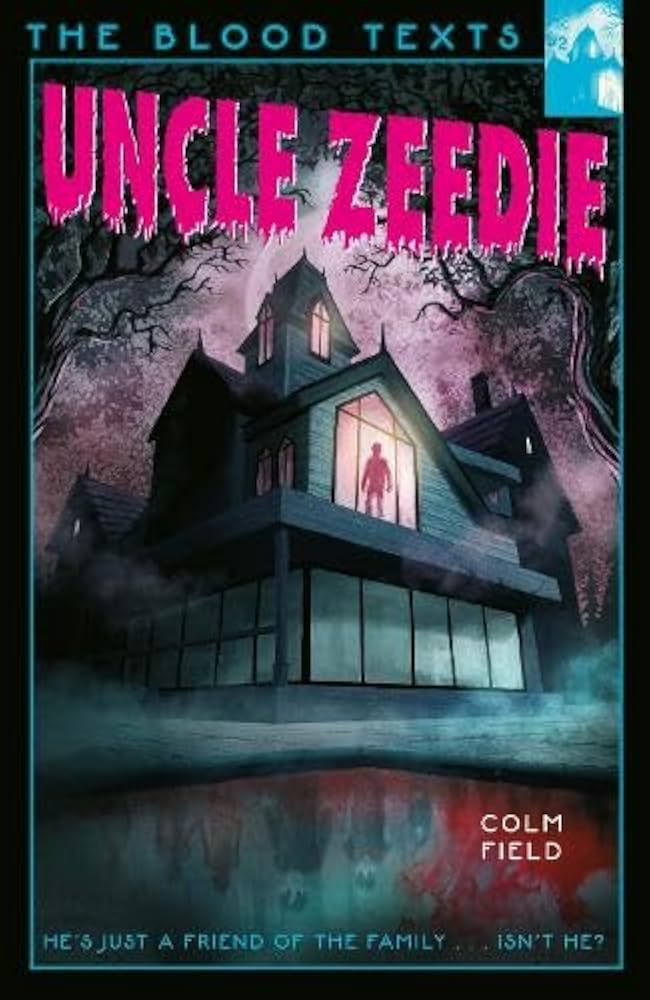
In my own Uncle Zeedie (plug alert!) the teenaged protagonists are scared that their family friend may be a serial killer. The story poses similar questions: If somebody is weird, does that make them dangerous, or you narrow-minded?

If you choose to ignore a red flag, are you foolish or simply trusting? The answers aren’t simple, but I loved writing the debate.

It’s a dark, dark night, in a dark, dark wood. You know your monster, you know your characters, you know their end. What Scare will you choose?

If writing is craft, then Horror can be Lego, provided you learn your blocks right. Jump scares, atmospheric scares, paranormal activity (the activity, not the film), repulsion… there are so many different tools at your disposal, provided you use them correctly.

Is this midnight nature walk early in the story? Then why not a terrifying mirror reveal, or even just a simple jump scare? Something leapt from the bush and… end of chapter. Yeah, it’s a cheap cliffhanger… but it’s only cheap if you do it again, and remember: we’re horror fans! We like a bit of tacky now and then!

Ooh, but later? After we learned the myth of the beast, the foul curse, the soul-sucking spectre? After the best friend has died horribly?! Right then, a jump scare might be as welcome as a fart joke at a funeral.

Now it’s time to bring in the power tools instead, bring in some repulsive body horror, or a bad trip-inducing surrealism, or maybe throw in the Monster’s POV…

I could go on, and you could probably think of more that I would miss. Scares are tools, don’t be afraid to treat them as such.

With these tips, please don’t think I’m reducing the joy of writing into an AI prompt. Horror is not an objective science – it is an ethereal art form that revels in the uncertain, and loses its potency when stripped to bare and cynical mechanics.

But the scary books that have gripped me of late – say, Boys In The Valley by Philip Fracassi, or Deadstream by Mar-Romasco Moore – they featured these recognisable elements, delivered with a new and terrifying gusto.

Should you be struggling with this wicked masterpiece, and these bare and cynical mechanics can offer you a way through that struggle, then please, know this. You are writing for horror fans. If anybody won’t judge, it’s us.

Uncle Zeedie is weird, but at least he’s rich and his house is amazing.
That’s what George and Lacey tell themselves when they arrive at his isolated mansion in the Welsh woods. Only, something here is worse than weird.
Uncle Zeedie seems unhinged, serving them rotten food, and skulking around at night. The house is decaying, blood stained, and stinks of sour milk. And George is seeing kids that aren’t there. They’re dead, these kids.
And if the rumours are right, Uncle Zeedie is the one who’s killing them.
The players are in place. The stage is set. Curtain up.
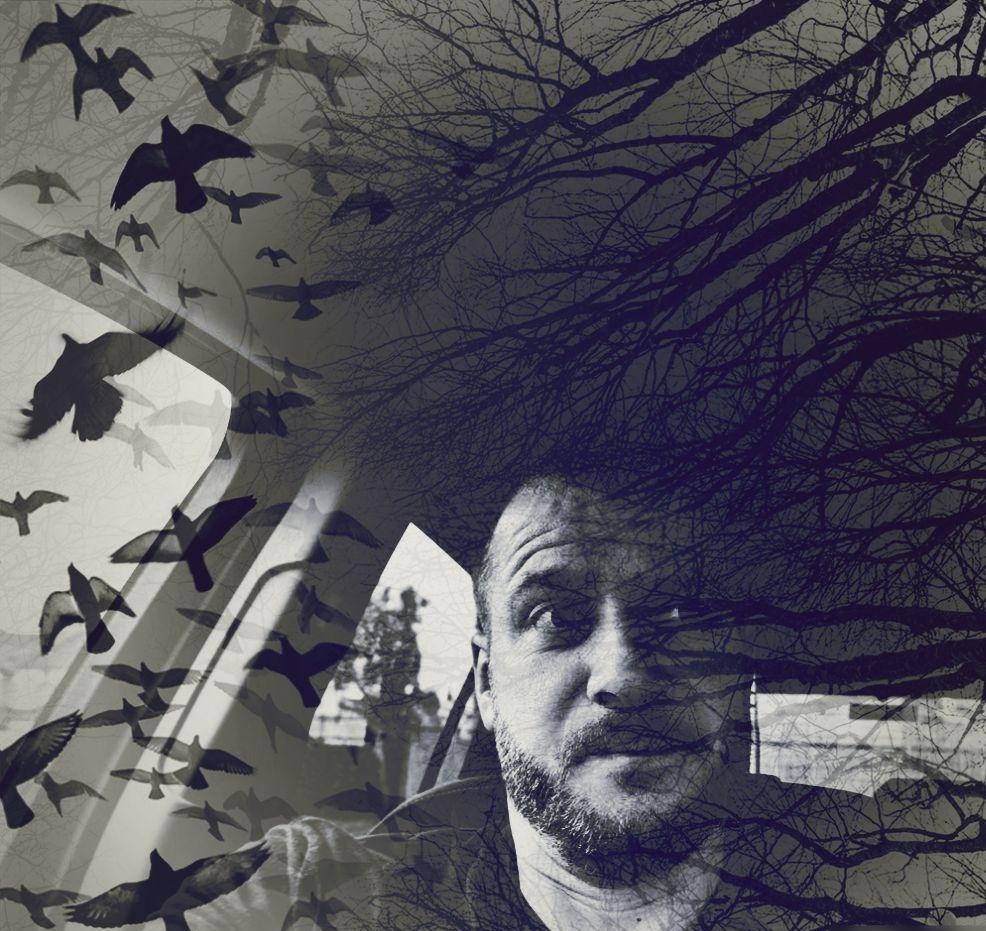
Who is Colm Field? Well, he was born in the witching hour, beneath a blood-red moon, and under a bad sign.
His first words were not fit to print. Now he scratches stories with yellowed fingernails, across the mouldering walls of the abandoned nuclear power station he calls home.
If you like what you read, we’ll dare you to find out more . . . 
PaperBound Magazine is an online magazine for the young, and the young at heart. We are dedicated to showcasing authors and illustrators for children’s and young adult fiction and we strive to deliver inspiring content, uplifting stories, and top tips for young and aspiring writers yet to burst on to the literary scene.

All our issues are completely free and run by volunteers, however if you would like to support PaperBound and the work we do, you can help us out by buying us a virtual book. We appreciate any support you can give us!

Don’t forget you can read with the latest issues of PaperBound Magazine – completely free – here.

Blog, Blog series, Bookshelf, Interview, Interviews, on writing, Writing craft

Halloween Special: ‘The Dark Within Us’ by Jess Popplewell

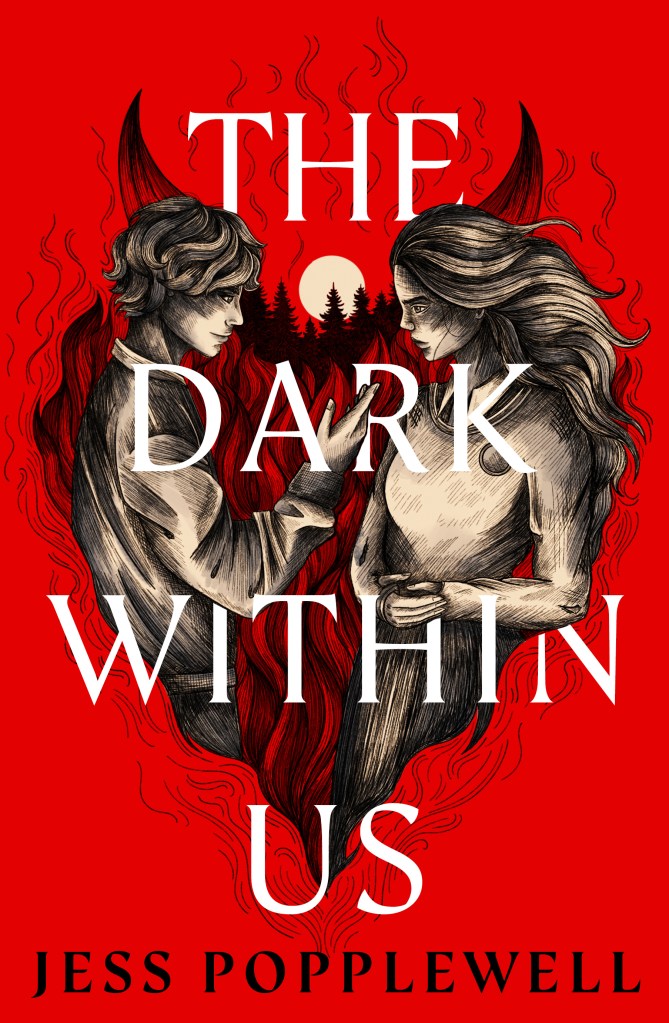
Of course! The Dark Within Us follows Jenny, a 16-year-old girl who is having a rough time. She’s fallen out with her mum and is therefore sleeping on her auntie’s sofa, which is clearly unsustainable. She’s fallen out with her best friend and been dumped by her first boyfriend – so when she meets a boy at a party who claims she doesn’t have a soul, this makes a weird sort of sense. Maybe if she can get her soul back, she can fix everything else as well. So, she decides to go with Luc – who it transpires, is a demon – into Hell in search of her soul. It’s inspired by a lot of things – not only did I leave home quite young, I also used to host for a youth homelessness charity so the idea of teenagers surviving via sofa-surfing is something I feel very strongly about. The book’s set sort of roughly in 2006, which is when I was a teenager, so I’ve also taken inspiration from TV, books and music of that era, most notably the TV show Skins.

Yes! When I was a teenager, I was a massive Goth and obsessed with religious and mythological perceptions of the afterlife. Some people get into horses and dolphins, I was slightly more morbid. I was always specifically interested in the way that rituals and beliefs around death evolve across cultures and over time – so I liked the idea of a modern teenager confronting centuries’ old beliefs and conceptions of the afterlife, especially ones like Inferno that have had such an influence on popular ideas of it even today (particularly in the West).

That’s a lovely thing to say, thank you! I have been known to say that Jenny is a cooler version of me as a teenager, but that’s not the whole truth. She was conceived more as someone I might have been friends with – I imagined her with my group of friends, and her personality was influenced by that. Also, as I mentioned earlier, I have some experience of working with young people, and I genuinely think teenagers are the most interesting people on the planet, mostly because they’re doing a lot of work all the time in figuring out how to navigate the complicated stuff life chucks at us. I wanted to show that through how Jenny navigates… some seriously complicated stuff.

In some ways no, because I do love all the characters in this book (well, maybe not Amber), but in terms of fun, probably Chloe-Lee and Joey. They’re such cryptic little weirdos, and cryptic little weirdos are almost always my favourite characters in any media. I’ve written so much backstory for them that had no place in the book, they still pop up in my head all the time.

Sure, how long do we have? The very first iteration of this book came about when I was 16. Over the years, characters have come and gone, plotlines have shifted, the relationship between Jenny and Luc has been wildly different, but the things that have always been the same are that Jenny starts out homeless, she goes to Hell because of Luc, and it’s heavily influenced by Dante’s Inferno and mythological references. I’ve written other things as well, but when the 2022 Chicken House Prize came around I knew this was the story to submit. For one thing, they ask for a full manuscript and this one was somewhat finished. I was in Reykjavik with a friend when I discovered I’d won, and Icelandic people seem to love ice cream an appropriate amount so we went out after the phone call and I had a mint choc chip in celebration. I met my agent through the prize as well, since she was one of the judges, and the whole process was incredibly positive. I’m so grateful the judges got what I was trying to do.

One: find a way to make time, whatever that means for you. For a long time I was working multiple jobs, or studying and working at the same time, and that’s the main reason it took me so long to write the book, because I just didn’t have the headspace for writing unless I was forced to by doing a writing course or my Creative Writing MA. It’s easier now because I know I’ve done it once and can do it again, but when you’re at that early stage it’s important to think about what you can do to make it happen.

Two: at the same time, don’t make yourself ill with the pressure. If you have lots of other responsibilities (parents, I don’t know how you do it!!), writing is often the thing that goes on the backburner, and that’s OK. Don’t beat yourself up over it. Remember that daydreaming the next scene you want to write before you get chance to write it… counts as writing!

Three: to help with the above, explore different ways of writing. Personally I use the notes app on my phone to jot down random dialogue snippets or an especially productive daydream. I like it because I can email it all to myself in one go when I’m next at my PC. I’ve also played a bit with speech to text dictation – I’m not great at the punctuation yet but it’s a great way to get quite a lot of work done in a short space of time, even if it all needs editing later on. You can’t edit an empty page, so something is better than nothing!

You can’t edit an empty page, so something is better than nothing!

I usually have 7 or 8 projects on the go at any given time – some of them are just for fun, like a 5-book series planned out in a cyberpunk dystopia (I call those projects my palate cleansers), but I’m also working on a couple of more serious projects. I do have ideas for more stories set in the world of The Dark Within Us; I’d love to write a follow up inspired by the themes in Purgatorio, but we’ll have to see if that pans out!

Photo by João Daniel Pereira

Jess Popplewell

Jess Popplewell is the author of The Dark Within Us, winner of the Times/Chicken House Chairman’s Prize 2022. She’s also a careers advisor in Higher Education, and has a series of free Careers Advice for Writers videos on TikTok (@jesspopps) and her website (jesspopplewell.com).

PaperBound Magazine is an online magazine for the young, and the young at heart. We are dedicated to showcasing authors and illustrators for children’s and young adult fiction and we strive to deliver inspiring content, uplifting stories, and top tips for young and aspiring writers yet to burst on to the literary scene.

All our issues are completely free and run by volunteers, however if you would like to support PaperBound and the work we do, you can help us out by buying us a virtual book. We appreciate any support you can give us!

Don’t forget you can read with the latest issues of PaperBound Magazine – completely free – here.

Blog, Blog series, Bookshelf, Interview, Interviews, on writing, Writing craft

Halloween Special: ‘Let’s Split Up’ by Bill Wood

Let’s Split Up follows a group of teenagers who investigate the murders of the IT couple at their school. Their search takes them to the supposedly haunted Carrington Manor. This book is my ode to Scooby-Doo, as well as 90s/2000s horror movies!

Honestly, anything Scooby-Doo. I had so many old VHS tapes that I watched over and over. Power Rangers was also a big one for me, but that didn’t exactly inspire this book. Then, as I got a bit older, and dipped my toes into horror, the late-90s films were my obsession for a while.

Definitely! My favourite thing about those 90s/2000s themed stories is the aspect of teen friendship. So, when I set out to write a ‘scarier Scooby-Doo novel,’ channelling this era was a no-brainer. It just felt so right.

Other than my dog, Macey, who is in the book (I had to!), the rest of the characters are not inspired by anyone. I did try and subvert a lot of cliché characters from horror movies though. Cam, for example, is the jock of the group but he’s not completely useless like a lot of depictions. He’s got a heart and has a lot more to him than you might expect.

For sure! I guess you can say there’s an element of the final girl trope in Let’s Split Up, but that’s also something I’ve tried to play with as well. Another big one is obvious from the title. Splitting up… But again, when the characters do have to split up, I tried to make a very good reason for it so you’re not screaming at the pages!

I started writing this at university, so it was all really fresh in my mind. I’m unsure if Let’s Split Up would be so inspired by film if I hadn’t started writing it when I did. But screenwriting is so helpful when it comes to writing dialogue because scripts are ninety-percent dialogue. I’ve found studying that for three years has really strengthened how believable my characters are.

TikTok is such a great social media because it connects you with people who enjoy the exact same things as you do, so you’re finding the ‘perfect audience,’ …

There’s pros and cons to it, of course, but it’s really helped with promoting the book. That’s a given. TikTok is such a great social media because it connects you with people who enjoy the exact same things as you do, so you’re finding the ‘perfect audience,’ if you will. TikTok also demystifies the author, if that makes sense. When I grew up, I never met any authors, so they seemed like these faceless people. Social media has definitely changed that.

I have a new YA mystery horror releasing autumn 2025. Like Let’s Split Up, it follows a group of teenagers. But this time around, we find ourselves in the Scottish Highlands…

Bill Wood

Bill Wood was born and raised in Birmingham, England. He has always had a love for all kinds of media and graduated from Birmingham City University in 2023 with a degree in Film & Screenwriting. When not writing, he is often found with a book and an iced coffee in hand, or filming ‘bookish’ social media content for his TikTok channel billreads, where he has amassed a following of over 124K. He currently lives with his family and Staffordshire Bull Terrier, Macey.

His debut novel Let’s Split Up (Scholastic, 2024) has become an instant bestseller and is a nail-biting and perfectly formed thriller for the YA BookTok generation – think Scooby Doo meets Pretty Little Liars.

PaperBound Magazine is an online magazine for the young, and the young at heart. We are dedicated to showcasing authors and illustrators for children’s and young adult fiction and we strive to deliver inspiring content, uplifting stories, and top tips for young and aspiring writers yet to burst on to the literary scene.

All our issues are completely free and run by volunteers, however if you would like to support PaperBound and the work we do, you can help us out by buying us a virtual book. We appreciate any support you can give us!

Don’t forget you can read with the latest issues of PaperBound Magazine – completely free – here.

article, Blog, Blog series, Bookshelf, on writing, Writing craft

Journey from Blogger to Author by Amy McCaw

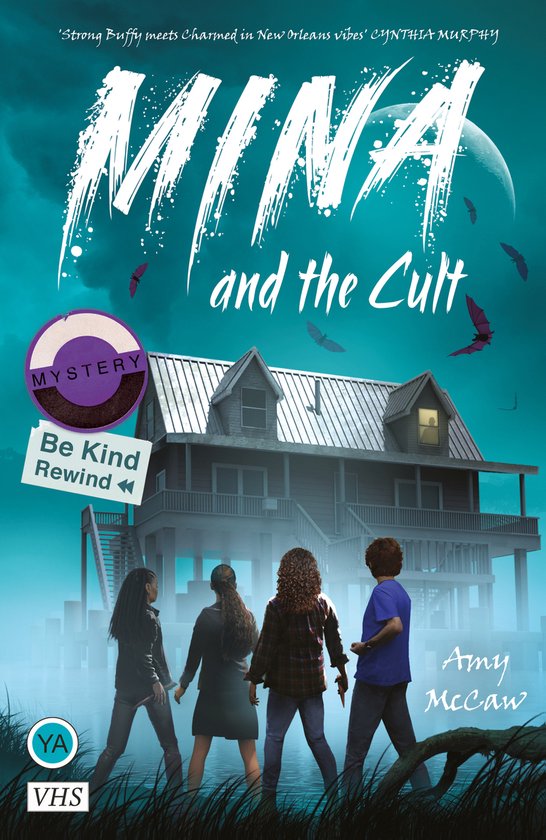
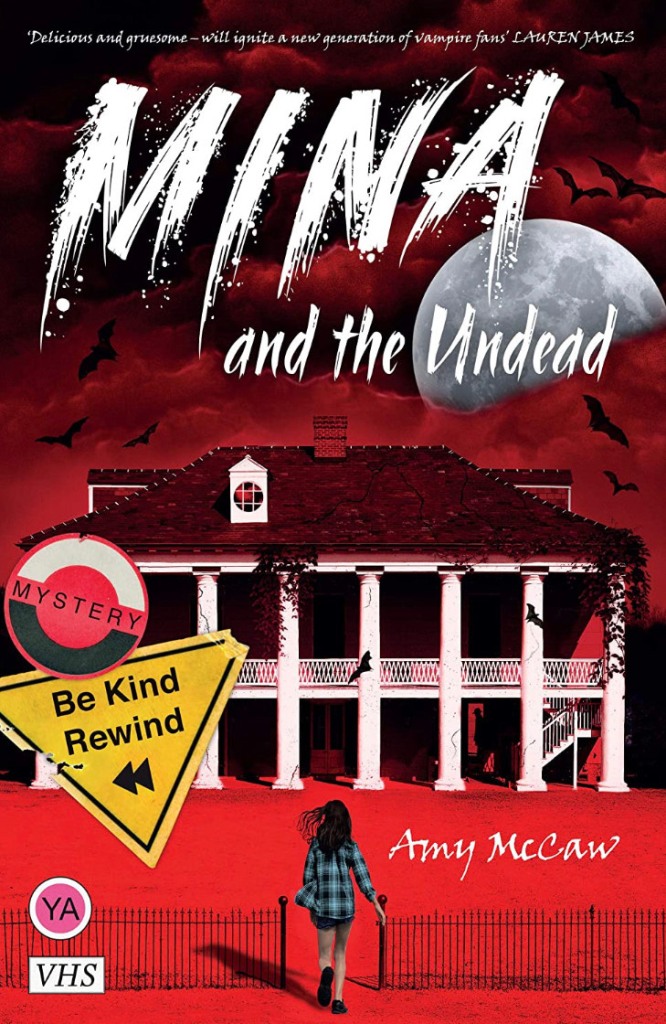
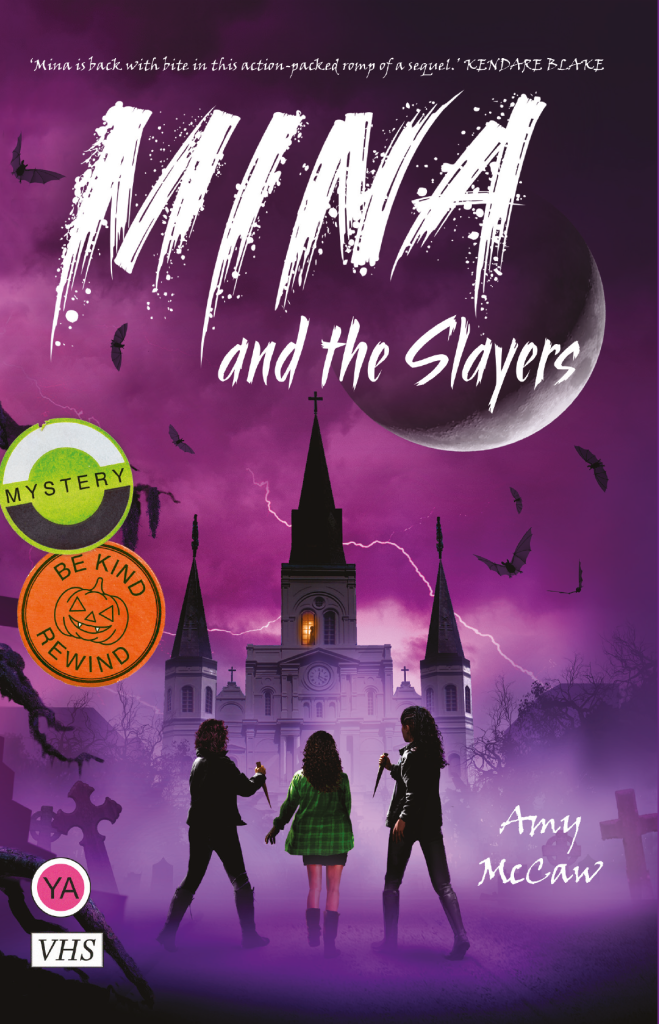
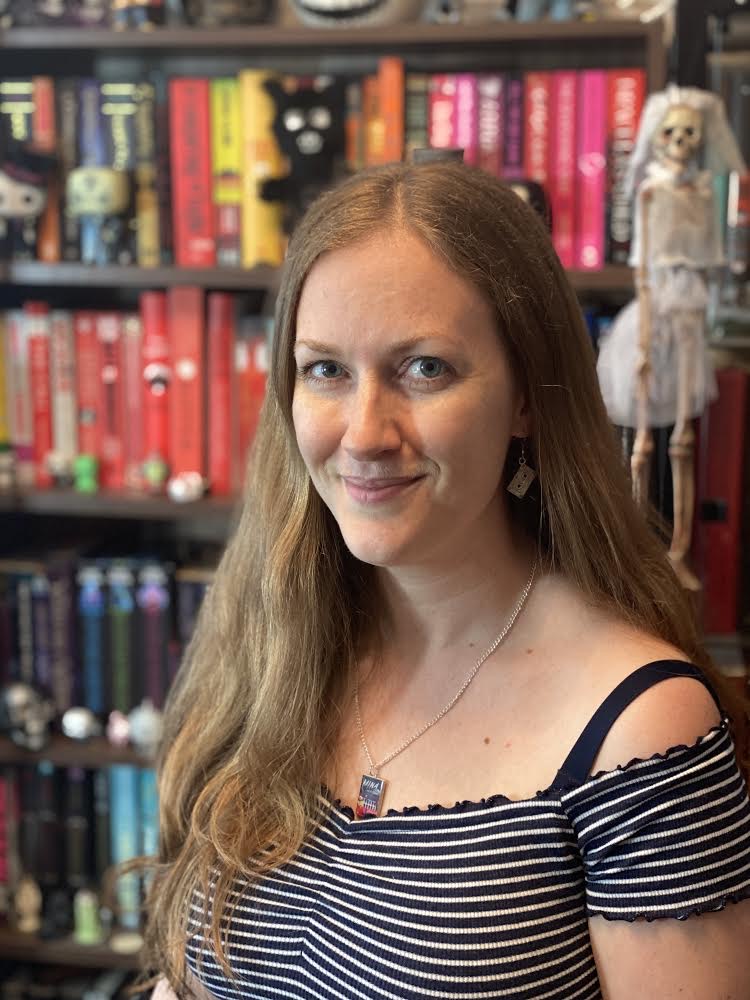
Amy McCaw is a YA author and YouTuber. She’s the author of the Mina and the Undead series, YA murder mysteries set in 1995 New Orleans. She also co-curated the A Taste of Darkness horror anthology with Maria Kuzniar. Her main interests are books, movies and the macabre, and her novels have elements of all of these. Unsurprisingly, she’s a huge Buffy the Vampire Slayer fan and has gone to conventions to meet James Marsters more times than she cares to admit.

If you want to talk with Amy about books or 90s movies, you can find her on Twitter, Instagram, Tiktok and YouTube.

PaperBound Magazine is an online magazine for the young, and the young at heart. We are dedicated to showcasing authors and illustrators for children’s and young adult fiction and we strive to deliver inspiring content, uplifting stories, and top tips for young and aspiring writers yet to burst on to the literary scene.

All our issues are completely free and run by volunteers, however if you would like to support PaperBound and the work we do, you can help us out by buying us a virtual book. We appreciate any support you can give us!

Don’t forget you can read with the latest issues of PaperBound Magazine – completely free – here.