Blog, Blog series, Bookshelf, Interview, Interviews, on writing, Writing craft

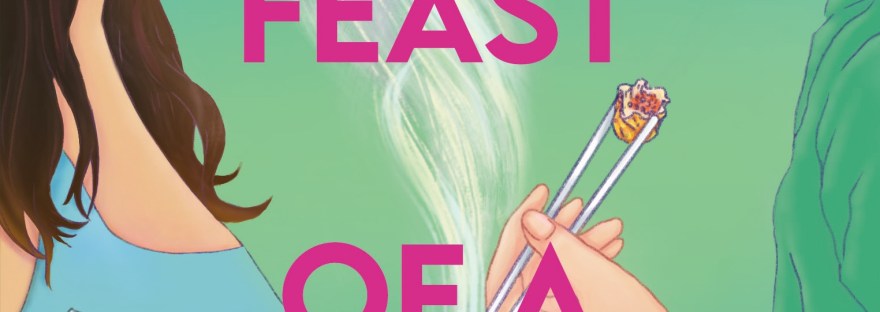
Interview: YA author Cynthia So on their new release ‘This Feast of a Life’

This Feast of a Life centres on the lives of two teenagers, Auden and Valerie. Auden is learning how to cook from their parents, and they start a food blog where they can record their family’s recipes along with the stories that come with them. It’s also a space for them to use their new name, Auden, which they just picked for themself and don’t feel comfortable using anywhere else yet. 

Valerie’s mum, who loved cooking, passed away over a year ago – and the kitchen’s been left unused because Valerie and her dad both don’t know how to cook. But when Valerie discovers Auden’s food blog, it sparks a curiosity about food and cooking – as well as about the writer of the blog. Soon Auden and Valerie are meeting up and reviewing restaurants together, but will they figure out what it is that they’re truly hungry for in their lives? 

The initial idea for the book came from thinking about food blogs and how everyone always complains about the long preamble you have to scroll through before you get to the recipe. But sometimes I actually find the preamble kind of charming! So I thought: what if you fell in love with someone through reading their recipe preambles? It’s not quite what happens in the book in the end, but that’s the nugget of an idea that I started with.

I always knew that it had to be dual narrative based on the story I was trying to tell, which boiled down to this: the love story of two chaotic bisexuals who are deeply terrified of committing to a relationship for very different reasons. (Or at least Auden thinks of themself as bisexual in the beginning of the book, although their understanding of their sexuality evolves.) 

It’s crucial to the book that Auden and Valerie have extremely contrasting approaches to romance and dating, and I wanted to give them both equal space to explore their feelings.

I’ve never written a food blog, but I was a book blogger for a while. That and my experiences in fandom as well showed me what it was like to connect with someone online through a shared interest, and how absolutely vital some of those connections can feel. 

I’m very inspired by a lot of food blogs I come across! I especially love the Woks of Life, written by a family of four Chinese American cooks who also share stories from their travels. I love the warm vibe of this blog and the fact that there’s a whole family working on it together.  

Similarly, Made with Lau is a blog created by the son of a Chinese chef, to share his father’s recipes with the world, and the recipes are so wonderful because they’re also accompanied by videos of his father making them.

Yes, absolutely. As mentioned above, part of the joy of writing a dual narrative book is contrast, and it was fun to flesh out what makes Auden and Valerie so different. I loved writing a bigger, bustling family and exploring the pros and cons of being the baby of that family. It was nice to alternate between that and the quiet stillness of Valerie’s life – and I took care to show how important chosen family is, and how Valerie spends a lot of her time with her best friend and her best friend’s older sister. They’re family to her. But there’s still so much emptiness, especially when she goes home. I wanted to contrast that against Auden’s home life to really emphasise what’s missing from Valerie’s. 

However, both Auden and Valerie are in fact quite lonely characters, even if Auden has a much bigger family. I wanted readers to understand that it doesn’t matter how many people you have around you – loneliness comes from not being seen, and neither Auden nor Valerie feel very seen at the beginning of the book.

I’d love to say I have a writing routine, but I sadly don’t. Writing my first book and writing my second book felt like such different experiences, and I expect it will be the same every time I write a book – I will have to find a new way to write it. 

I’ve been writing stories ever since I can remember, but I stopped dreaming about publication somewhere along the way. Being selected as a New Voice for Proud, the 2019 LGBTQ+ YA anthology published by Little Tiger, changed my life. It helped me see a path towards writing as a career, and I started working hard on my first novel after that. My first book, If You Still Recognise Me, came out in June 2022, and it was wonderful to be shortlisted for the Waterstones Children’s Book Prize and the YA Book Prize in 2023. I love getting messages from readers who tell me that If You Still Recognise Me made them feel less alone, and I hope that This Feast of a Life will reach people in the same way. .

Know why you want to write for young adults, that’s the first thing. For me, it’s because I know how formative books were when I was that age, and how life-saving the right book could be. I felt a lot of things as a teenager that I really relied on books to help me navigate. 

The second thing is to have a very clear understanding of why you want to write this particular story, and what is most important to you about it. Writing a book takes a long time, and sometimes it’s easy to lose sight of why you’re doing it, and the overall shape of the story you want to tell, when you’re in the middle of wrangling plot points and herding characters. So make sure you know the heart of it: what about this story makes you feel alive writing it? Never forget that part. 

I’m always, always fond of writing moments of realisation in romance – when characters realise they want each other, and when characters give into that want.

Valerie’s journey with her grief felt very meaningful to me, and I loved giving her the space to express that grief in a variety of ways. 

I’m always, always fond of writing moments of realisation in romance – when characters realise they want each other, and when characters give into that want. This book was no exception! It’s like a roller coaster for me, the ones with the long, slow climb towards the top that feels almost torturous, and then the exhilarating rush of descent at the end. 

And of course, the food! I never tire of writing descriptions of food, honestly.

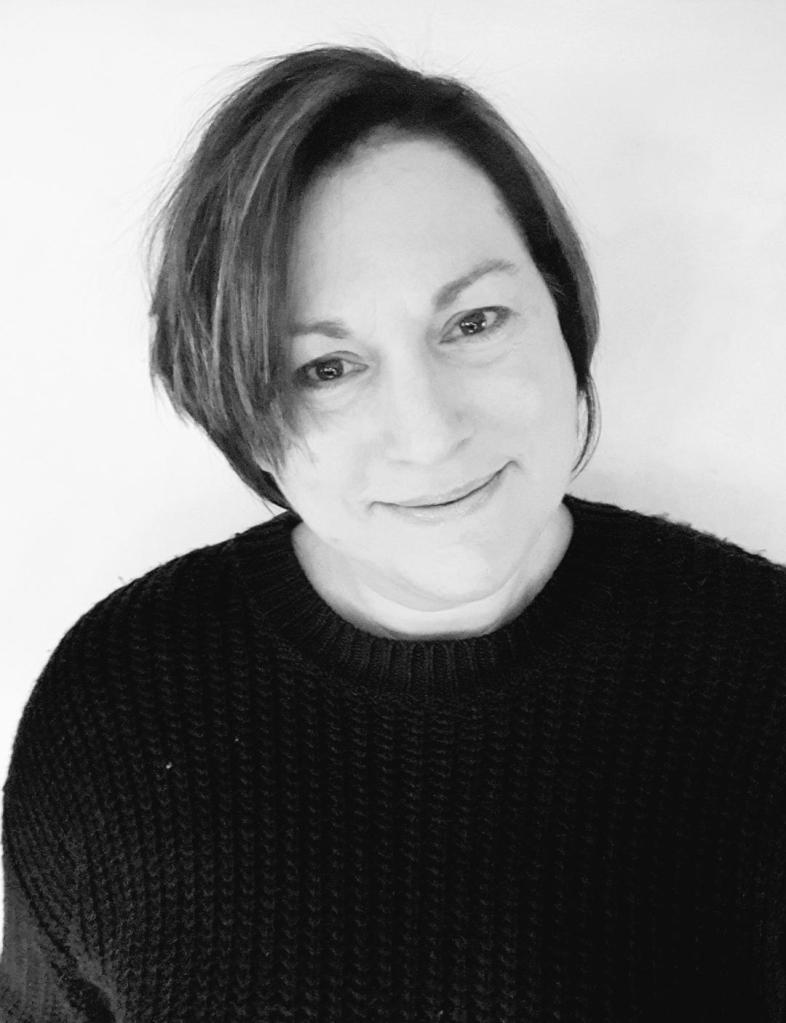
Cynthia So

Cynthia So is the author of If You Still Recognise Me, which was shortlisted for the Waterstones Children’s Book Prize and the YA Book Prize in 2023. They were one of the new voices in Proud, an anthology of LGBTQ+ YA stories, poems, and art by LGBTQ+ creators, published in 2019. Their short fiction and poetry have also appeared in Uncanny Magazine, Strange Horizons, and Anathema, among others. Cynthia was born in Hong Kong and lives in London with their wife.

PaperBound Magazine is an online magazine for the young, and the young at heart. We are dedicated to showcasing authors and illustrators for children’s and young adult fiction and we strive to deliver inspiring content, uplifting stories, and top tips for young and aspiring writers yet to burst on to the literary scene.

All our issues are completely free and run by volunteers, however if you would like to support PaperBound and the work we do, you can help us out by buying us a virtual book. We appreciate any support you can give us!

Don’t forget you can read with the latest issues of PaperBound Magazine – completely free – here.

Blog, Blog series, Bookshelf, Interview, Interviews, on writing, Writing craft

Halloween Special: ‘The Dark Within Us’ by Jess Popplewell

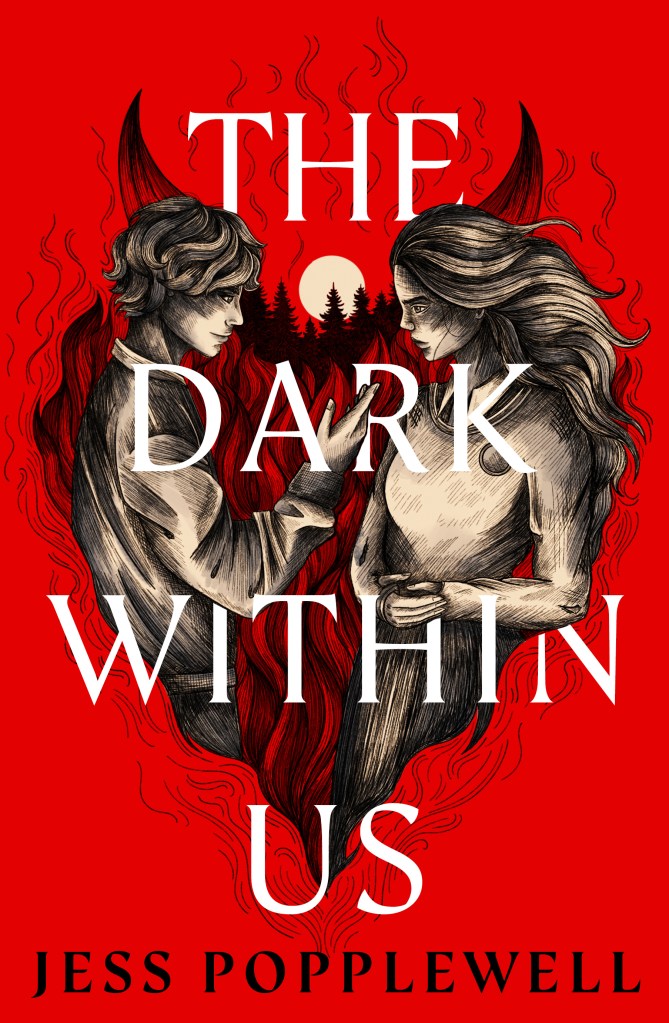
Of course! The Dark Within Us follows Jenny, a 16-year-old girl who is having a rough time. She’s fallen out with her mum and is therefore sleeping on her auntie’s sofa, which is clearly unsustainable. She’s fallen out with her best friend and been dumped by her first boyfriend – so when she meets a boy at a party who claims she doesn’t have a soul, this makes a weird sort of sense. Maybe if she can get her soul back, she can fix everything else as well. So, she decides to go with Luc – who it transpires, is a demon – into Hell in search of her soul. It’s inspired by a lot of things – not only did I leave home quite young, I also used to host for a youth homelessness charity so the idea of teenagers surviving via sofa-surfing is something I feel very strongly about. The book’s set sort of roughly in 2006, which is when I was a teenager, so I’ve also taken inspiration from TV, books and music of that era, most notably the TV show Skins.

Yes! When I was a teenager, I was a massive Goth and obsessed with religious and mythological perceptions of the afterlife. Some people get into horses and dolphins, I was slightly more morbid. I was always specifically interested in the way that rituals and beliefs around death evolve across cultures and over time – so I liked the idea of a modern teenager confronting centuries’ old beliefs and conceptions of the afterlife, especially ones like Inferno that have had such an influence on popular ideas of it even today (particularly in the West).

That’s a lovely thing to say, thank you! I have been known to say that Jenny is a cooler version of me as a teenager, but that’s not the whole truth. She was conceived more as someone I might have been friends with – I imagined her with my group of friends, and her personality was influenced by that. Also, as I mentioned earlier, I have some experience of working with young people, and I genuinely think teenagers are the most interesting people on the planet, mostly because they’re doing a lot of work all the time in figuring out how to navigate the complicated stuff life chucks at us. I wanted to show that through how Jenny navigates… some seriously complicated stuff.

In some ways no, because I do love all the characters in this book (well, maybe not Amber), but in terms of fun, probably Chloe-Lee and Joey. They’re such cryptic little weirdos, and cryptic little weirdos are almost always my favourite characters in any media. I’ve written so much backstory for them that had no place in the book, they still pop up in my head all the time.

Sure, how long do we have? The very first iteration of this book came about when I was 16. Over the years, characters have come and gone, plotlines have shifted, the relationship between Jenny and Luc has been wildly different, but the things that have always been the same are that Jenny starts out homeless, she goes to Hell because of Luc, and it’s heavily influenced by Dante’s Inferno and mythological references. I’ve written other things as well, but when the 2022 Chicken House Prize came around I knew this was the story to submit. For one thing, they ask for a full manuscript and this one was somewhat finished. I was in Reykjavik with a friend when I discovered I’d won, and Icelandic people seem to love ice cream an appropriate amount so we went out after the phone call and I had a mint choc chip in celebration. I met my agent through the prize as well, since she was one of the judges, and the whole process was incredibly positive. I’m so grateful the judges got what I was trying to do.

One: find a way to make time, whatever that means for you. For a long time I was working multiple jobs, or studying and working at the same time, and that’s the main reason it took me so long to write the book, because I just didn’t have the headspace for writing unless I was forced to by doing a writing course or my Creative Writing MA. It’s easier now because I know I’ve done it once and can do it again, but when you’re at that early stage it’s important to think about what you can do to make it happen.

Two: at the same time, don’t make yourself ill with the pressure. If you have lots of other responsibilities (parents, I don’t know how you do it!!), writing is often the thing that goes on the backburner, and that’s OK. Don’t beat yourself up over it. Remember that daydreaming the next scene you want to write before you get chance to write it… counts as writing!

Three: to help with the above, explore different ways of writing. Personally I use the notes app on my phone to jot down random dialogue snippets or an especially productive daydream. I like it because I can email it all to myself in one go when I’m next at my PC. I’ve also played a bit with speech to text dictation – I’m not great at the punctuation yet but it’s a great way to get quite a lot of work done in a short space of time, even if it all needs editing later on. You can’t edit an empty page, so something is better than nothing!

You can’t edit an empty page, so something is better than nothing!

I usually have 7 or 8 projects on the go at any given time – some of them are just for fun, like a 5-book series planned out in a cyberpunk dystopia (I call those projects my palate cleansers), but I’m also working on a couple of more serious projects. I do have ideas for more stories set in the world of The Dark Within Us; I’d love to write a follow up inspired by the themes in Purgatorio, but we’ll have to see if that pans out!

Photo by João Daniel Pereira

Jess Popplewell

Jess Popplewell is the author of The Dark Within Us, winner of the Times/Chicken House Chairman’s Prize 2022. She’s also a careers advisor in Higher Education, and has a series of free Careers Advice for Writers videos on TikTok (@jesspopps) and her website (jesspopplewell.com).

PaperBound Magazine is an online magazine for the young, and the young at heart. We are dedicated to showcasing authors and illustrators for children’s and young adult fiction and we strive to deliver inspiring content, uplifting stories, and top tips for young and aspiring writers yet to burst on to the literary scene.

All our issues are completely free and run by volunteers, however if you would like to support PaperBound and the work we do, you can help us out by buying us a virtual book. We appreciate any support you can give us!

Don’t forget you can read with the latest issues of PaperBound Magazine – completely free – here.

Blog, Blog series, Bookshelf, Interview, Interviews, on writing, Writing craft

Halloween Special: ‘Let’s Split Up’ by Bill Wood

Let’s Split Up follows a group of teenagers who investigate the murders of the IT couple at their school. Their search takes them to the supposedly haunted Carrington Manor. This book is my ode to Scooby-Doo, as well as 90s/2000s horror movies!

Honestly, anything Scooby-Doo. I had so many old VHS tapes that I watched over and over. Power Rangers was also a big one for me, but that didn’t exactly inspire this book. Then, as I got a bit older, and dipped my toes into horror, the late-90s films were my obsession for a while.

Definitely! My favourite thing about those 90s/2000s themed stories is the aspect of teen friendship. So, when I set out to write a ‘scarier Scooby-Doo novel,’ channelling this era was a no-brainer. It just felt so right.

Other than my dog, Macey, who is in the book (I had to!), the rest of the characters are not inspired by anyone. I did try and subvert a lot of cliché characters from horror movies though. Cam, for example, is the jock of the group but he’s not completely useless like a lot of depictions. He’s got a heart and has a lot more to him than you might expect.

For sure! I guess you can say there’s an element of the final girl trope in Let’s Split Up, but that’s also something I’ve tried to play with as well. Another big one is obvious from the title. Splitting up… But again, when the characters do have to split up, I tried to make a very good reason for it so you’re not screaming at the pages!

I started writing this at university, so it was all really fresh in my mind. I’m unsure if Let’s Split Up would be so inspired by film if I hadn’t started writing it when I did. But screenwriting is so helpful when it comes to writing dialogue because scripts are ninety-percent dialogue. I’ve found studying that for three years has really strengthened how believable my characters are.

TikTok is such a great social media because it connects you with people who enjoy the exact same things as you do, so you’re finding the ‘perfect audience,’ …

There’s pros and cons to it, of course, but it’s really helped with promoting the book. That’s a given. TikTok is such a great social media because it connects you with people who enjoy the exact same things as you do, so you’re finding the ‘perfect audience,’ if you will. TikTok also demystifies the author, if that makes sense. When I grew up, I never met any authors, so they seemed like these faceless people. Social media has definitely changed that.

I have a new YA mystery horror releasing autumn 2025. Like Let’s Split Up, it follows a group of teenagers. But this time around, we find ourselves in the Scottish Highlands…

Bill Wood

Bill Wood was born and raised in Birmingham, England. He has always had a love for all kinds of media and graduated from Birmingham City University in 2023 with a degree in Film & Screenwriting. When not writing, he is often found with a book and an iced coffee in hand, or filming ‘bookish’ social media content for his TikTok channel billreads, where he has amassed a following of over 124K. He currently lives with his family and Staffordshire Bull Terrier, Macey.

His debut novel Let’s Split Up (Scholastic, 2024) has become an instant bestseller and is a nail-biting and perfectly formed thriller for the YA BookTok generation – think Scooby Doo meets Pretty Little Liars.

PaperBound Magazine is an online magazine for the young, and the young at heart. We are dedicated to showcasing authors and illustrators for children’s and young adult fiction and we strive to deliver inspiring content, uplifting stories, and top tips for young and aspiring writers yet to burst on to the literary scene.

All our issues are completely free and run by volunteers, however if you would like to support PaperBound and the work we do, you can help us out by buying us a virtual book. We appreciate any support you can give us!

Don’t forget you can read with the latest issues of PaperBound Magazine – completely free – here.

Blog, Blog series, Bookshelf, Interview, Interviews, on writing, Writing craft

Interview: John Hearne chats about his speculative sci-fi novel ‘Someone’s Been Messing With Reality’ for middle grade readers

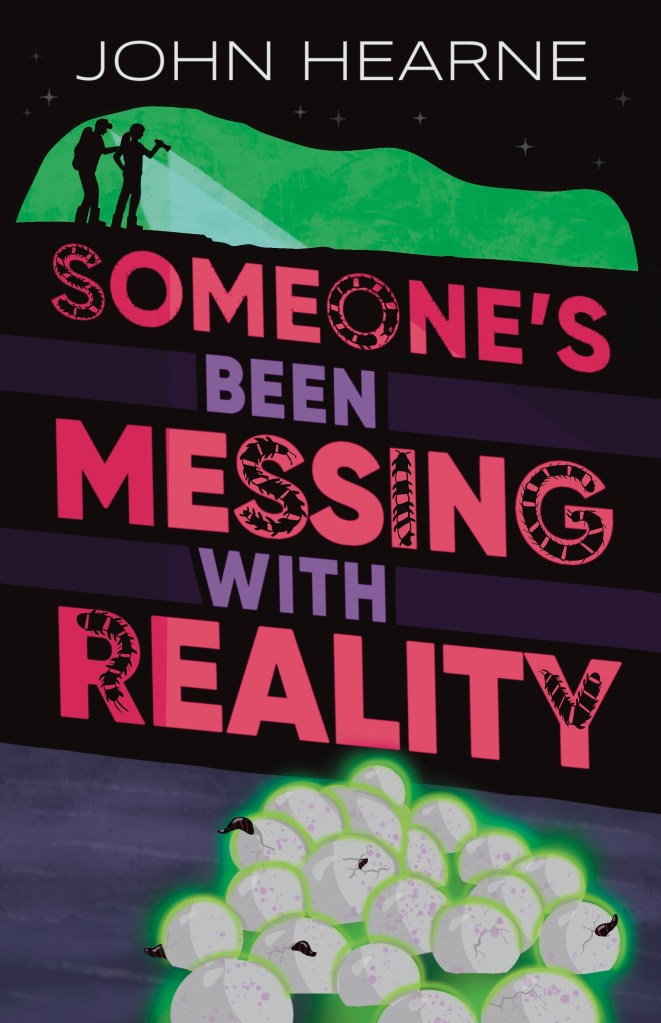
So here’s my tagline – ‘When Martin Ryan sees a video of his father flying unaided through the air, he realises that everything he has assumed about his life up to this point has been a lie’.

The whole novel arose out of the following proposition: ‘What if you were an alien, but didn’t know it?’ The moment Martin discovers the truth is also the moment that his parents disappear. He and his friends Tina and Enda realise that their disappearance is part of a larger conspiracy which they must unravel and thwart.

What inspired me to write it? I liked that proposition. Like a lot of writers, I log all the different story ideas that occur to me. Most of these ideas will never go anywhere, but if I hit one that’s sufficiently intriguing and exciting, I’ll start sketching out where I might go with it. What kind of characters could carry this kind of plotline? Where could I set it? Where will the intrigue come from? Once the ball gets rolling, it takes on a life of its own.

I’m a plotter and a planner. I like to work out where I’m going to go before I get there – but things always surprise you during the writing phase. I like to think of my outline as a map. I’m going to use it to get to where I’m going, but if I spot something interesting that doesn’t lie along the planned route, I’ll go explore it. The writing process tends to generate fresh ideas, and I think you’ve got to be open to evaluating them rather than sticking rigidly to the original plan.

Also, I often find as I write that that clever little plot detail or character quirk that I thought would work actually doesn’t, so I often stop midstream and rethink things. I find too that once you’ve established how a character acts, you’ve often got to give them more freedom that the original plot allowed. In Someone’s Been Messing with Reality, Martin’s friend Tina caused both him and me a lot of grief through her impulsivity – I had to keep readjusting things when I realised that ‘Hmmm, Tina would never do that…’

The process was similar, though it did have a lot more steps. I spent a lot of time figuring out exactly what would happen with Indigo before I dived into draft 1, but because this was my first attempt at anything like this, draft 1 was pretty much like the first chair that a trainee carpenter might make. The back was crooked and all the legs were different lengths. It went through several redrafts before I arrived at something that I would willingly show anyone – and the finished product didn’t bear much resemblance to the first draft. It’s true that most books aren’t written, they’re rewritten.

The Very Dangerous Sisters of Indigo McCloud had a fictitious setting – the absurdly miserable town of Blunt, and was choc-full of outlandish characters. I wanted to set Someone’s Been Messing with Reality in the real world, and make the characters a little more human. This is sci-fi – yes – but the relationships and problems and characters themselves are all real, or as real as I could make them.

Enda is one of the three friends at the centre of the book. He’s recovering from a brain injury. The emotional arc of the story rests on the different ways in which his two friends deal with this. I’ve always had an interest in brain injury. I made a radio documentary for RTE Radio 1 a few years ago about someone who was recovering from a very serious head injury. The weird thing is that after I had started work on this book, and after I had written Enda into it, I fell and hit my head. I gave myself what would be termed a ‘mild brain injury’. It may not have been life threatening, but it was very debilitating.

To cut a very long story short, I suffered from prolonged bouts of fatigue and could do very little work of any kind for a long time. Thankfully I’m fully recovered now, but the process took a couple of years. I couldn’t use a computer for much of that recovery. I had damaged the visual cortex at the back of the head, and my brain simply couldn’t deal with the kind of light that emanated from the screen. So much of this book was actually written longhand.

It has been lengthy! Much rejection, much rethinking, rewriting, repositioning. Getting published is hard and getting harder. This book – my second – was a little easier than the first, because I had a good relationship with the publisher, and they were happy to read what I wrote, but it had to reach a higher standard to get through. Rising costs have made it more difficult for independent publishers to take a chance on something, so they’ve got to love it before they’ll agree to put scarce resources on the line.

Since my book is science fiction, I’ll stick to that. My favourite in the genre is When You Reach Me by Rebecca Stead. A wonderful book, with a plot that rumbles slowly under the surface – you don’t quite realise that it’s sci-fi until close to the end. I also really like Ender’s Game by Orson Scott Card, the Dune books and The Iron Giant. My kids also love Hilo: The boy who crashed to earth by Judd Winick.

Much of the standard advice is correct. I think you need to do three things – read in the genre you’re writing in, develop your craft by reading about writing or taking classes, and finally, get feedback on your work. The third one is the one that most of us struggle with, but if you’re ambitious for your writing, you need to show it to people – and not just any people – I’m talking about people who understand the market and know what good writing looks like.

The other thing I’d say is that if your sole ambition is to get published, you are probably letting yourself in for a great deal of misery. Unless you’re exceptionally talented and blindingly lucky, the chances of getting published early in the game are low.

I write because I want to get published, yes, but I also write because I love to write. If you don’t love it for its own sake, I would chuck it in. You only get so much time on earth, so you’ve got to get something out of the journey. Without a love of the process, the time will feel wasted, and the destination – even if you do reach it – will not live up to expectations.

I’m working on something alright, but as we speak it’s an unholy mess. I’ll let you know if and when something readable emerges from it …

Photo courtesy of David Ruffles

John Hearne was born in Wexford, Ireland in 1970. He worked as an economist in Dublin before changing direction and becoming a freelance writer. He has ghostwritten and edited a range of bestselling books, while his journalism has appeared in numerous national and international newspapers and magazines.

His first middle grade novel, The Very Dangerous Sisters of Indigo McCloud was published to critical acclaim by Little Island in 2021. His second book Someone’s Been Messing with Reality is out now. You can find him on Instagram @johnhearneauthor.

www.johnhearneauthor.com

PaperBound Magazine is an online magazine for the young, and the young at heart. We are dedicated to showcasing authors and illustrators for children’s and young adult fiction and we strive to deliver inspiring content, uplifting stories, and top tips for young and aspiring writers yet to burst on to the literary scene.

All our issues are completely free and run by volunteers, however if you would like to support PaperBound and the work we do, you can help us out by buying us a virtual book. We appreciate any support you can give us!

Don’t forget you can read with the latest issues of PaperBound Magazine – completely free – here.

Blog, Blog series, Bookshelf, Interview, Interviews, on writing, Writing craft

Interview: Louise Finch chats about her brand-new YA novel ‘Iris Green, Unseen’

Sure! Iris Green, Unseen is about a talented, but shy street photographer who, on the day she discovers her boyfriend is cheating on her with her best friend, starts turning invisible. As she tries to put herself and her life back together, Iris has to work out some difficult truths about herself and the people around her as well as trying not to fade away entirely.

It’s a novel about self-discovery, self-confidence and allowing yourself to be really seen.

First of all, I have to confess that I’m actually married to a photographer! So that was not only immensely helpful when it came to some of the technical questions, but also certainly contributed to the inspiration behind Iris’s art.

Also, although I’m not a particularly good photographer myself, I have always been interested in art and studied History of Art at uni. One artist whose work and story really inspires me is Vivian Maier, and she features quite prominently in the novel. Maier was an amazing and prolific street photographer who was entirely unknown in her lifetime, but her posthumous discovery has brought not only acclaim and recognition for her work, but also a lot of interest and speculation about her life. Her story raises so many interesting questions about why we make art and the exposure that comes with sharing it, which are certainly things Iris grapples with.

I also dabbled with a little darkroom photography once upon a time too and remain fascinated by the process. That moment when the picture begins to develop really is special and reminds me of how ideas arrive for novels – emerging on the blank page seemingly out of nowhere, but actually with a lot of hidden work and time to get to that stage.

I am a pantser to my core, unfortunately, writing my first drafts in a sometimes quite fragmented and chaotic way before going back through and attempting to impose order through edits. I’d love to be able to piece together a plot without writing the whole thing down scene by scene, but that doesn’t seem to be how my brain works.

Similarly, my ideas can start from anywhere and aren’t usually something I sit down and try to make happen. With Iris, the concept arrived first, but it brought the character along with it, because I knew immediately the kind of girl who would be manifesting her own invisibility.

What felt important to me was to focus on the interaction between all those relationships and how Iris feels about herself. From the start this was always about being seen and known by yourself and others, why that matters and how much it hurts when people get it wrong. While I had a sense of that when starting to write, I did end up going off on tangents during the writing that were less relevant and eventually had to be cut, which I think is inevitable when you’re not a plotter.

One thing that emerged during drafting which I enjoyed exploring was all the contradictions in Iris’s character and her relationships. For example, she’s someone who feels unworthy and doesn’t want to ask for anything from anyone, but ends up needing people to be there for her quite a bit. She’s hyper observant when it come to small slights, or the detail of a street scene, but fails to see Baker’s genuine interest in her.

My main advice is to be as honest as possible while also offering hope and empathy. I’m always mindful that, while my characters aren’t real people, my readers are. I believe that when writing about emotional real-world issues, writers have a responsibility to leave readers feeling safe and with a sense of optimism, even if things aren’t perfect in character’s lives by the final page.

Other than that, it’s always a good idea to ask trusted readers for feedback, because none of us can never see all angles of our own work. I’d be nowhere without my brilliant writer friends!

I do! I’m currently working on a horror novel, which is a slight change of direction, but not a total departure as it weaves together some real-world horrors with their supernatural counterparts.

Louise Finch is an autistic author who lives on the Surrey/Hampshire border with her partner and two dogs surrounded by vintage furniture and too many houseplants. The Eternal Return of Clara Hart, Louise Finch’s YA debut, was published by Little Island Books in 2022. It was shortlisted for the Yoto Carnegie Medal for Writing, the Branford Boase Award, the Great Reads Award, and the Bookseller YA Book Prize.

http://www.louisefinch.co.uk

PaperBound Magazine is an online magazine for the young, and the young at heart. We are dedicated to showcasing authors and illustrators for children’s and young adult fiction and we strive to deliver inspiring content, uplifting stories, and top tips for young and aspiring writers yet to burst on to the literary scene.

All our issues are completely free and run by volunteers, however if you would like to support PaperBound and the work we do, you can help us out by buying us a virtual book. We appreciate any support you can give us!

Don’t forget you can read with the latest issues of PaperBound Magazine – completely free – here.

Blog, Blog series, Bookshelf, Interview, Interviews, on writing, Writing craft

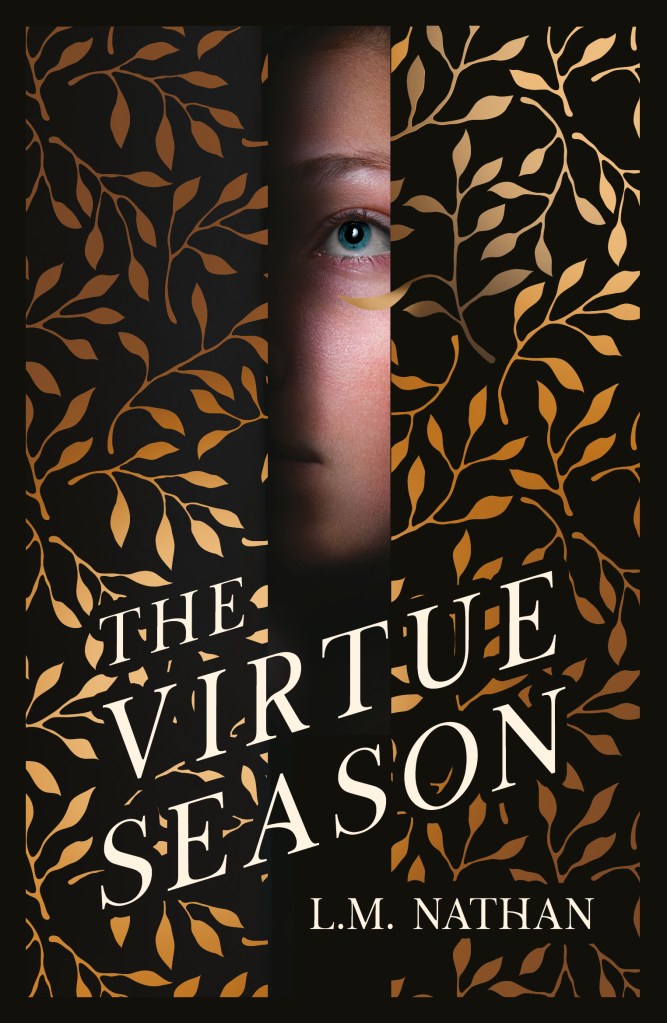
Interview: L.M. Nathan speaks to PaperBound about her new YA dystopian novel ‘The Virtue Season’

The Virtue Season is the story of Manon – a debutant who wants nothing more than love, but love is also the thing that terrifies her the most. Now that she is eighteen, and about to attend the virtue season balls, it is tantalisingly close. At the end of the season, she could have found the one – if her match is sanctioned by the council. But she lives in a world that holds some very spurious beliefs as truth, a world where genetic flaws are feared, and it is believed that bloodlines must be pure. And Manon is hiding a secret about her family that would be viewed as a defect. If it is discovered, Manon will be decommissioned. She will not be allowed to marry, or to have children, and will live as an outcast with her future decided by the oppressive council… just like her best friend Agatha.

Growing up I never really felt I fit anywhere. It took me a long time to realise that’s how most people feel – regardless of how confident they seem or how much they appear to be winning at life. When I was teaching, I saw it all the time, that feeling of being different, of being wrong in a world full of rights and I wanted to write something that was a clarion call to young people to shout: you do not define me, and, hopefully, to believe it too.

Like Manon, I felt from a young age my tendency for interiority and reflection might become something more insidious later in life, and I have had my struggles with anxiety but, also like Manon, I am strong and resilient and never give up. So it’s fair to say, she was inspired by own experiences.

I didn’t realise it when I was writing, but I was also weaving my dad’s experience into the story through the decoms. I would describe my dad as extremely able-bodied, if that is a thing. He was the kind of dad who threw you over one shoulder and carried you around giggling or launched you across the swimming pool, further than anyone else’s dad could. But then he was struck with illness and left disabled and though it didn’t change him – or his spirit – one bit, I saw how it changed the way society viewed him.   

I’m not a plotter. I tend to have a general gist of where the story will go and some sense of the main beats within it, but I like the way the story reveals itself to me through writing. There’s a magic to it. The story becomes a living, breathing thing and it takes me with it.

Calde Valley was inspired by the Ribble Valley, which is every bit as majestic as it appears in the story. Shortly after I moved there, it flooded and I found myself standing at the top of Clitheroe Castle, on a very windy, rainswept day, staring out at Pendle Hill and wondering…what if? Most people who are inspired by Pendle Hill tell stories about witches, but I managed to turn it into an apocalyptic dystopia.

My experience of finding Manon and Agatha verges on the supernatural. Once I had the setting of Calde Valley, they seemed to wander onto the hillside, take a bow and introduce themselves. I’m not a fan of character development exercises – what’s in their handbag and so on – but I know lots of writers swear by them. Because this was my first book, and I was finding my way, I did do this for Manon but very little of it was used. I think the only thing I kept from those types of questionnaires was her most treasured possession, which was her grandmother’s recipe book, which gifted me her cooking ability. So, I suppose it was worth doing but I prefer to tease out character through writing exercises. I might write a scene from a different character’s point of view and watch as Manon or Agatha reveal themselves through observation. I wrote lots from the perspective of Councillor Torrent and some from Wick’s as well. It allowed me to watch the two girls rather than being in their head all the time. Another great exercise is to put your character in a scene ‘outside’ the story – perhaps as a child or reflecting later in life, or in a location they don’t visit as part of the story. That’s always revealing, and no writing is ever wasted, even if it doesn’t make it into the book. 

Looking back, I wish I’d understood how much of the ‘writing’ happens after the first draft is finished. I wouldn’t have procrastinated over that draft for so long if so, but it felt like the stakes were high and I put it off for a lot of years.

Without a doubt, the most enjoyable part of this process has been meeting other people going through the same thing, discussing plot and character and motivation and all things bookish. It might seem strange, but the moment of publication has been the least enjoyable part. Sharing this story, which has been such an important part of my life, is scary and vulnerable and surreal. I have to hold fast to my own belief that the story is good.

I could go on writing about these characters forever. There is so much more for Manon and Agatha to accomplish. Real change happens slowly and, without giving away any spoilers, it didn’t feel right to gift them utopia at the end of this book and so, there is unfinished business, I think. There are also characters whose backstories I’d love to explore – Torrent, Drewis and Trent, Gillam and Cayte. And there are the stories that represent Calde Valley’s future too. Agatha’s sister Wren pleads her case often. Even Bertie, who I think is brave and dear and understated. They have so much life yet to live in my head. 

L.M. Nathan grew up in the East Midlands, moving from there to Bristol where she studied English and Drama and then to Malta where she completed an MA in Literature. She also has an MA in Journalism which she studied for in Manchester. She now lives in rural Lancashire, in the shadow of Pendle Hill, and teaches English.

Her first novel, The Virtue Season, was inspired by the wild landscape of home and completed when she was selected to be part of the Curtis Brown Creative novel course.

PaperBound Magazine is an online magazine for the young, and the young at heart. We are dedicated to showcasing authors and illustrators for children’s and young adult fiction and we strive to deliver inspiring content, uplifting stories, and top tips for young and aspiring writers yet to burst on to the literary scene.

All our issues are completely free and run by volunteers, however if you would like to support PaperBound and the work we do, you can help us out by buying us a virtual book. We appreciate any support you can give us!

Don’t forget you can read with the latest issues of PaperBound Magazine – completely free – here.

Blog, Blog series, Bookshelf, Interview, Interviews, Writing craft

Interview: Clare Pollard chats about her new middle grade fantasy ‘The Untameables’

Cover illustration by Reena Makwana

I’ve always absolutely loved Arthurian myth, from the sword in stone to the lady of the lake, faeries to questing beasts. But reading the tales to my children I was suddenly very conscious both that the legend of the ‘round table’ has been used historically to defend the idea of a ‘ruling class’, and that the stories are very violent. I suddenly had a very clear vision of Rowan and Elva, two children who live below-stairs, setting off on a quest to get to the holy grail before the knights do. And I knew they had to get the grail with kindness, not force.

Tales of Camelot are often considered part of the ‘Matter of Britain’. In many ways, Camelot has always been an idealised version of England and Englishness. I began writing this around the time of Brexit, and I wanted to explore what it is to be born under a ruler you don’t agree with. And, historically, England has of course done lots of very bad things. What if your nation are ‘the bad guys’? How can we embrace the best things about our history and culture, whilst resisting the narratives of those in power?

Elva is my favourite, I think. She just came to me fully formed, with all her righteous fury! Quests are all about overcoming obstacles, and young people who have disabilities or are in pain have a whole extra set of obstacles they have to overcome every day. She is a total heroine.

I love T.H. White’s Sword in the Stone. It actually has a dog-boy in it, which I think I must have half-remembered when I invented Rowan. I’m also a poet, so I was very inspired by poetry – Simon Armitage’s translation of Sir Gawain and the Green Knight, Tennyson’s The Lady of Shalott, Browning’s Childe Roland to the Dark Tower Came, as well as medieval riddle poems. I’ve been enjoying going into schools and getting children to write their own.

I am currently working on another children’s book about the voyage of the Argonauts. I am crazy about Greek myth, so am having a lot of fun with this. There’s a little girl who wants to be the Oracle of Delphi when she’s older who has joined the crew. Also a six-year-old siren with a really horrible singing voice!

I actually found it very hard to get The Untameables published. It was rejected by a lot of publishers. I think the children’s book world can be naturally quite conservative and the fact it has political parallels – that the round table is a sort of Bullingdon club – put them off. I also got asked if I could rewrite it so Rowan wants to be a knight! Little boys are supposed to be ‘knights-in-training’. So I think the fact this book is anti-knight worried editors. It was in a drawer for a couple of years before I saw that The Emma Press, who I knew as a wonderful poetry publisher, had a call-out for children’s chapter books and I submitted. I think as a small press they’re more open to radical texts, and I also knew they would make a very beautiful book. I am so happy they asked Reena Makwana to illustrate it – she is a total joy to work with.

I’m promoting my adult novel The Modern Fairies, and have a poetry book coming out next year. But yes, I have started another children’s book – my children are 8 and 11, just the right age, and there’s nothing like the pleasure of reading them a new chapter every night. It makes me feel very lucky.

Clare Pollard has published five collections of poetry, most recently Incarnation (Bloodaxe). Her play The Weather (Faber) was performed at The Royal Court Theatre. Her translations include Ovid’s Heroines, which she toured as a one-woman show. She has also written a non-fiction title, Fierce Bad Rabbits: The Tales Behind Children’s Picture Books (Fig Tree), her first children’s novel, The Untameables (The Emma Press), and two adult novels, Delphi and The Modern Fairies (Fig Tree).

With thanks to Sophie Davidson for this image.

PaperBound Magazine is an online magazine for the young, and the young at heart. We are dedicated to showcasing authors and illustrators for children’s and young adult fiction and we strive to deliver inspiring content, uplifting stories, and top tips for young and aspiring writers yet to burst on to the literary scene.

All our issues are completely free and run by volunteers, however if you would like to support PaperBound and the work we do, you can help us out by buying us a virtual book. We appreciate any support you can give us!

Don’t forget you can read with the latest issues of PaperBound Magazine – completely free – here.

Blog, Blog series, Bookshelf, Interview, Interviews, Writing craft

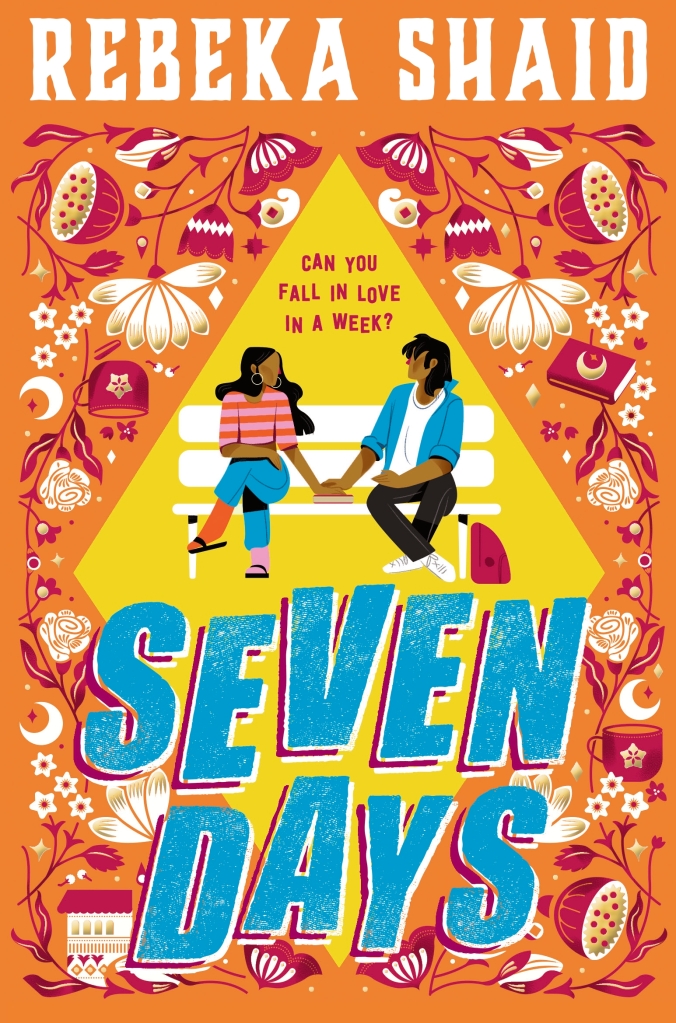
Interview: Rebeka Shaid on her debut coming of age YA romance ‘Seven Days’

Seven Days is a diverse YA romance about two teenagers, sassy Noori and troubled Aamir, who are struggling to understand where they belong in this world after experiencing tragedy. It’s a story about finding yourself after losing yourself, but it’s also a story about finding love and hope in unlikely places.

I was inspired to write a contemporary YA novel that discusses topics many teenagers are confronted with: first love, family relationships, but also questions of identity. To me it was also about representation because Noori is of mixed heritage and Aamir’s parents are immigrants, which reflects my own upbringing. I can’t think of that many YA novels that look at what it’s like to grow up between different cultures so I wanted to write a story that my 16-year-old self would probably have enjoyed!

If truth be told, I never plan anything meticulously these days! But it was always clear to me that I wanted to write a relatively fast-paced story that takes place over seven days. I knew how the story would end and begin but everything else developed organically.

Writing about loss is something that is very natural to me. In fact, while I was drafting Seven Days I was still in the early stages of my grief journey so it was cathartic to write about two grieving teenagers because I could easily identify with their feelings and thoughts about loss. It was not that difficult for me to create these two characters, and their struggles certainly feel real to me.

I love both Noori and Aamir. They are almost complete opposites but still manage to find common ground and learn so much from each other. I had fun exploring their personalities and, admittedly, there is a bit of me in both of them. Noori is so bold while Aaamir tends to be more introspective, even if he doesn’t show it in conventional ways. I find it difficult to pick a favourite but if absolutely had to, I’d go for Noori because she might not always think things through but has such a big heart.

My almost five-month-old baby has thrown any routine out the window! But I tend to be someone who writes in the evenings because that’s the only time I can make space for writing without getting distracted.

My journey to publication was not straightforward. While I was lucky enough to find my incredible agent within weeks of querying literary agencies, it took years before Seven Days got published – and it’s also not the first novel I wrote! My advice to aspiring authors is: keep writing and don’t get disheartened by rejections – they are part of the process and are not a reflection of you or your abilities as a writer.

Trying to! It’s a bit tricky to find proper time for writing at the moment but I’m working on a rough outline for my next YA novel.

Rebeka was raised in a multicultural household, surrounded by piles of books, nosy siblings and lots of mythical trees that are known as the Black Forest. Growing up she wanted to be a snake charmer or ventriloquist, but that (luckily) didn’t pan out. Instead, she turned to words and writing. After doing sensible adult things like going to university, working as a business journalist, and becoming a mum, she decided to pen a YA novel.

In her writing, she likes to explore themes of identity, loss, and coming-of-age. Rebeka lives in Germany.

PaperBound Magazine is an online magazine for the young, and the young at heart. We are dedicated to showcasing authors and illustrators for children’s and young adult fiction and we strive to deliver inspiring content, uplifting stories, and top tips for young and aspiring writers yet to burst on to the literary scene.

All our issues are completely free and run by volunteers, however if you would like to support PaperBound and the work we do, you can help us out by buying us a virtual book. We appreciate any support you can give us!

Don’t forget you can read with the latest issues of PaperBound Magazine – completely free – here.

Blog, Blog series, Bookshelf, Interview, Interviews, Writing craft

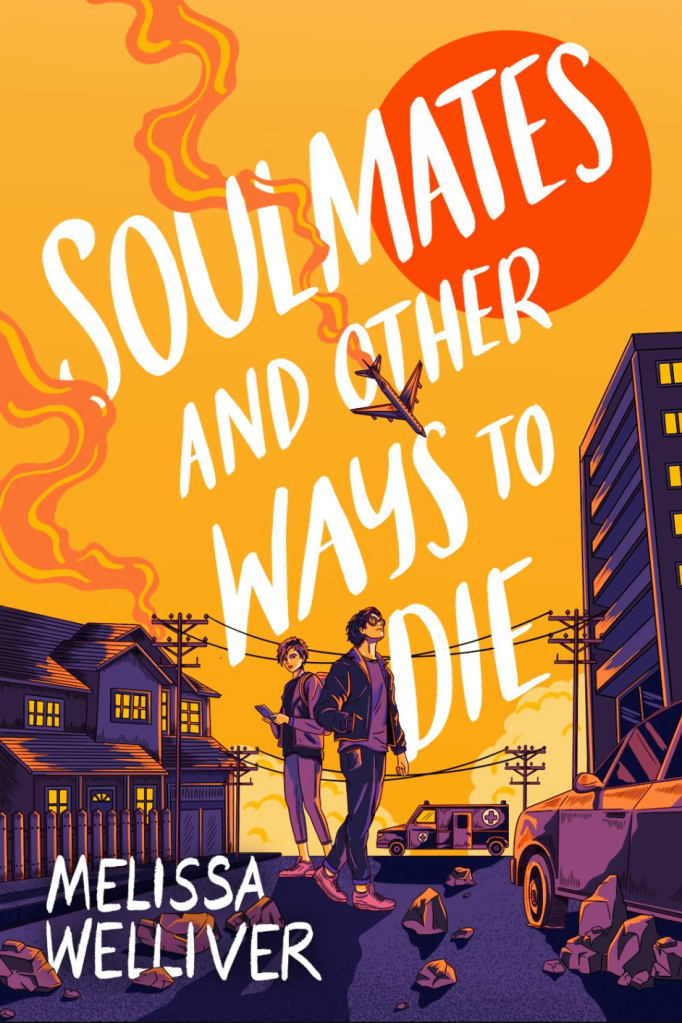
Interview: YA author Melissa Welliver chats about her new dystopian romcom ‘Soulmates and Other Ways to Die’

Of course! My name is Melissa Welliver and I write speculative novels, most recently dystopian YA with a dash of romance and comedy. I live in the North of England with my dogs and I run a community online for kidlit writers called the WriteMentor hub. I am also a co-host of The Chosen Ones and Other Tropes, a podcast based around trending tropes in commercial fiction.

This story was actually born from playing online games in a team arena. One game I played had a rule where if one member of the team took damage, the whole team lost health points. And I thought, what a fun idea to bring into the real world! I love a dash of romance in everything I write, and I thought this specific idea would work really well in the exploration of the Soulmate trope. In Soulmates, if you feel pain, so does your significant other. And if they die… you die too.

For anyone who hasn’t read the book, there is an app mentioned that can match you to your soulmate. This is partly practical as it’s good to know who the other person is that could possibly, accidentally, kill you, but also it’s essentially a dating app – but with all the choices removed. Imagine that there is no swiping right or left – there’s one answer, and that’s who you are tied to forever. Nightmare! To be honest, many elements of the app were inspired by the NHS covid app that would register whether you were vaccinated and whether you had been in close contact with someone who had tested positive. I wanted to ask the question: is it a good thing to track ourselves so closely? Can there be good and bad elements to these sorts of closely tracked government apps?

As for my own apps, I’ve turned off all my notifications on my phone, so for my social media, I have to open the app to see if I’ve had any messages. I find this stops me checking my phone so much when I’m out and about in real life with friends! But my favourite app, as a bit of a prepper myself, is what.three.words. It’s an app that can pinpoint your location to a 3m by 3m area, no address needed, with three simple words. Very helpful in an emergency to let people know where you are – just because I’m paranoid, doesn’t mean I’m wrong!

So obviously, the correct answer is, of course not! But if Argo Duff, the eccentric billionaire app owner who bought a social media franchise and has some interesting dating habits, and is a little more than a bit controlling, reminds you of anyone… then that’s on you.

Ah, I love dogs too, they absolutely count! But aside from doggo pals – I’m very much someone who believes we make our own luck and destiny in life. A soulmate is whatever we make of it – in the book, I was keen to explore the concept of choice versus control, and whether having a soulmate thrust upon you – until death do you very literally part – are they truly your soulmate anyway? I also wanted to explore different types of love – platonic love, familial love, asexual love, romantic love – who says a soulmate has to be what dating apps tell us they are? There are many different kinds of love, and soulmate means something different to everyone. So are soulmates real? Maybe. Read the book to find out.

Honestly, I’m not as fit and prepared as Zoe in the novel, who is a world class doomsdayer, but I’d like to think I’d have a chance of not going out in the first wave of whatever it is taking us out! I carry around a rechargeable battery pack, plus some gadgets like trackers that I allow my family to follow so we would always know our last movements in an emergency. My Dad is from LA, so he also gave me an emergency earthquake kit when I went to uni (in deepest darkest Leeds. Earthquake central, of course) that consisted of a torch, matches, spare batteries, all sorts of stuff. So even though I might not be the classic bad-ass female cutting my way through the hordes of zombies, I think I could find a pretty good place to hide until it all blows over.

Sure! So it’s become a bit of a tradition now for me to write a novel in the month of January. I plot incessantly, so I use the more conventional NaNoWriMo (when a lot of writers write a novel in a month!) to plot each chapter of the book, and then have a break in December before coming back in January to write it. I write for 2 hours a day, between 10am-12pm, in concentrated writing sprints, and that usually nets me a chapter, or 3000 words. I’m not allowed to read back what I’ve written, or pause writing during the sprints, even if I’m getting stuck! It’s all about powering through to get that first draft down. And I usually write 25-30 chapters depending on the age range, so that gives me my month of writing quite neatly.

I have two books coming out this year, which is really exciting! Soulmates and Other Ways to Die is in March, and the re-release of my self-published book, The Undying Tower, is coming out with UCLan Publishing in August. While my Chicken House books all lean towards a slightly wacky take on the apocalypse, The Undying Tower is very much a dark dystopian in the same vein as The Hunger Games or Divergent, and is the first in a planned trilogy. I can’t wait to see what everyone thinks of the redesigned cover, and to reach new readers through re-printing this book baby of mine!

Don’t listen to advice! Just kidding – well, sort of. Follow your writing heart and don’t let trends get in your way. The books you see on shelves right now were written and negotiated years ago, so there’s no point jumping on a bandwagon if your heart isn’t in it, just because you think it will sell. Write what you love and it will come across in the writing, so readers will love it too. Also, don’t give up! It’s a long old road, publishing – you’ll get there. The only difference between a published author and an unpublished author is perseverance.

Melissa Welliver writes Young Adult Speculative novels. She works at WriteMentor and runs the Community Writing Hub for Children’s writers. She has two dystopian rom-coms, My Love Life and the Apocalypse and Soulmates and Other Ways to Die, published with Chicken House Books. The first in her dark dystopian trilogy, The Undying Tower, will be published by UCLan in August 2024.

She can be found across social media under @melliver, and on tiktok under @melissawelliver.

Like his career, Steve’s writing is filled with tech and engineering, although his speculative thrillers tend to have higher stakes and fewer meetings. Before working as a copywriter and editor, he was a consultant, a magazine editor, a communications director, a product designer and a webcaster, though not at the same time. Home is South London, where he lives with his wife and teenage daughters. They wish he’d stop saying, ‘What if…’

PaperBound Magazine is an online magazine for the young, and the young at heart. We are dedicated to showcasing authors and illustrators for children’s and young adult fiction and we strive to deliver inspiring content, uplifting stories, and top tips for young and aspiring writers yet to burst on to the literary scene.

All our issues are completely free and run by volunteers, however if you would like to support PaperBound and the work we do, you can help us out by buying us a virtual book. We appreciate any support you can give us!

Don’t forget you can read with the latest issues of PaperBound Magazine – completely free – here.

Blog, Blog series, Bookshelf, Interview, Interviews, Writing craft

Interview: A. J. Clack chats all about her debut YA thriller ‘Lie or Die’!

Lie or Die is a twisty, dark YA thriller set in a Reality TV game show. It follows 17-year-old Kass Kennedy who auditions for the show to help her fame obsessed best friend, Thea. Once in the game Kass soon realises that not everything is as it seems and, as the contestants start dying for real, Kass realises that they are trapped in a TV show set with someone who isn’t here to play. To survive Kass must figure out who the real killer is and find a way out.

Reality TV just got real!

I did! Lie or Die’s setting is inspired by my time as a Production Manager for Fountain Television Studios in Wembley, the biggest TV studio in Europe. It was my job to oversee the shows that came in, working closely with each production to make sure they had the crew, equipment, facilities, hospitality and celebrity care they required. I worked on a number of shows with a great deal of celebrities, directors and crew, giving me quite a thorough and unique insight into the world of TV and celebrity. My (now) husband worked on all the reality shows, from Big Brother, X Factor to I’m a Celeb so I had a real insight into reality TV from the inside. When I had the idea to make a Mafia type murder mystery game show, it seemed natural to place it in a reality TV setting.

I had great fun thinking them up! (I obviously need to get out more.) I read and watch a lot of psychological horror and thrillers and grew up reading the masters of horror, James Herbert and Stephen King, so I had a lot to fall back on. It was great to let my imagination run wild – as a TV show I had the freedom to do pretty much anything. There was one character in particular who I really didn’t want to kill, but realised I had no choice! Sorry – I can’t tell you which one **spoiler**.

Thrillers take a lot of planning, which is something I’m not very good at! I like to go with the flow and let the story evolve, but I think thrillers need more structure. Don’t forget to leave breadcrumbs, little clues for the reader to pick up along the way and of course red herrings, you can have lots of fun with them! I kept asking myself – what would the characters try to do next?  Then I would show the characters doing just that and failing, starting with the most obvious and then moving onto the next possibility. The reader will expect those questions to be answered.

Ahh like I mentioned above I am a natural born panster. I like to have a loose outline, a chapter ‘in’ point and an ‘out’ point and then have the freedom to get from A – B. It’s harder to do that with tightly plotted thrillers, and this one was quite complicated, being a game, set within a reality murder mystery game, set inside a television studio. I tend to get a first draft out quite quickly – it’s terrible but at least then I have something to go back over and work on. It’s like placing the foundations and the scaffold of the story. Later, when I feel secure enough, I take most of it away.

There have been some fantastic highlights such as being a finalist in the Undiscovered Voices 2022 Anthology. There have also been some difficult lows, including a novel going out on submission the first week of the Covid lockdown and disappearing into the pandemic ether, losing my agent and having to start all over again. But along the way I have won competitions and made many, many amazing writing friends and found representation with my new and fabulous agent, Saskia Leach. I would recommend to any new writer not to try to do this alone; it’s hard, you need a community of writers around you to support you and pick you up and also to help celebrate all those little wins along the way.

I am loving Mirror Me by Jan Dunning, a fairy tale retelling set in the fashion world and I have just started Fourth Wing by Rebecca Yarros.

A. J. Clack moved from a small village in Wales to London to pursue a career in television. She worked on a huge range of shows from Teletubbies to Friends, while also writing plays for the Edinburgh Fringe and development scripts/pilots for children’s television. She now lives in Essex with a handful of teenagers and can often be found freezing on the side of a football pitch.

PaperBound Magazine is an online magazine for the young, and the young at heart. We are dedicated to showcasing authors and illustrators for children’s and young adult fiction and we strive to deliver inspiring content, uplifting stories, and top tips for young and aspiring writers yet to burst on to the literary scene.

All our issues are completely free and run by volunteers, however if you would like to support PaperBound and the work we do, you can help us out by buying us a virtual book. We appreciate any support you can give us!

Don’t forget you can read with the latest issues of PaperBound Magazine – completely free – here.