Blog, Blog series, Bookshelf, Interview, Interviews, Writing craft

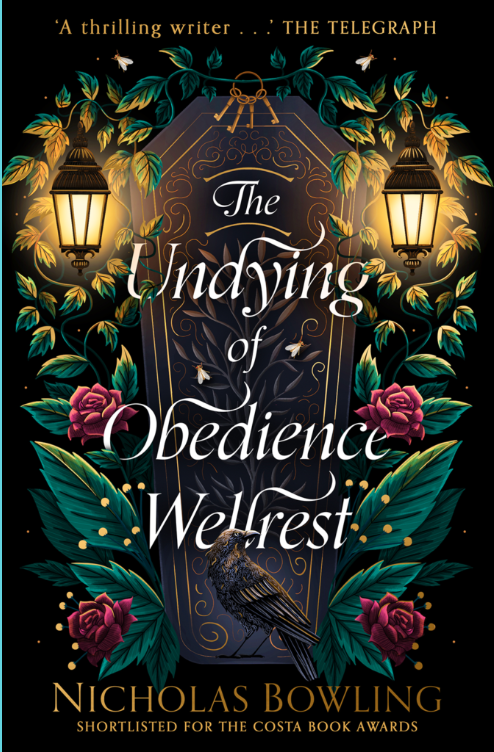
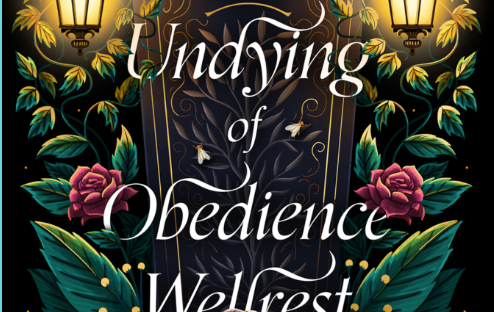
Interview: Costa-Award shortlisted author Nicholas Bowling talks about recent release: ‘The Undying of Obedience Wellrest’

It’s a fairly straightforward fantasy-tinged gothic-horror-comedy-semi-romance. It’s set in the early nineteenth century, and it’s about a young gravedigger (Ned) who crosses paths with an aristocratic teenage girl (Bede) who is trying to make progress as an amateur chemist and escape an arranged marriage. So, sort of Jane Austen meets Frankenstein. It’s told from both their points of view and sees them weaving in and out of danger and death and friendship and maybe (maybe?) love.

Sometimes a whole book, and a whole world, seems to arrive in my brain fully formed, but this one actually started from a much smaller seed. Originally it was all about Ned and Pa’s relationship. I had an image of a grandfather and grandson gravedigging team – I think originally they solved mysteries, or fought demons, or something. And I liked the idea of a parish churchyard as a little self-contained world. I was reading Shirley Jackson’s We Have Always Lived In The Castle at the time, and found the voice of Merricat very inspiring. I loved the idea of writing from the point of view of the weirdest, most isolated character in the story – the point of view of the “monster” really. So the protagonist is on the outside of acceptable society looking in, but, in their own mind, is actually on the inside looking out.

Originally it was set in the 21st century, but once there were body snatchers involved it made more sense to take place in the 19th century. And once it was set there and then, all the interesting stuff about early science and the Enlightenment and the links to Frankenstein started to make itself felt. And Bede emerged from that, as an intelligent, headstrong young woman ensnared in the mores of that era. It’s no coincidence that Bede is short for “Obedience”. It’s really, really fun writing a character who is much smarter and more furious than you are.

As pretentious and cliched as it sounds, I really do just listen and watch them and see what they do. I probably have a subconscious blueprint for each character somewhere in my brain – maybe an amalgam of certain people I’ve met, either in real life or in books – but it’s not like I draw up a spreadsheet of their traits and histories before I write about them. It really is just about following a feeling you have about them. And it’s nice to be surprised when they reveal something of their character or their past to you.

Obvious to say, but I loved both Ned and Bede. Ned because I think he’s the person I actually am (quiet, introspective, a bit odd) and Bede because she’s the person I often would like to be (smart, self-assuredl, a zinger for every occasion). Perhaps they really are two halves of my psyche.  They make a perfect unlikely pairing.

Mosca? I still feel like there’s so much mystery around him. I don’t even know what he’s thinking or feeling. Maybe I’ll write a companion piece to the main book that’s just his internal monologue, all in stream of consciousness fly-speak.

Thank you very much! I think I said this on Twitter (sorry, X). Those were literally the first words I wrote. The first words of the first chapter of the first draft, maybe four years ago. And that line stayed at the top of the Word document through all of the many, many drafts and edits. I think the only thing I had to change was Ned’s age. I knew when I first put the line down that it was a keeper. Sometimes things like that come to you and you can’t quite believe it and you give yourself the rest of the day off.

I don’t know if I have any tips or secrets about an opening line. I suppose a good opener is always really a question in disguise. A tiny, self-enclosed, one line mystery.

I think plotting is actually the thing I find hardest. I never plot in advance, at least not in any great detail, and always end up tying myself in knots. I never learn, but I also think the thing feels dead on the slab if every little nook and cranny of plot is already explored. But the really BIG twists, I do know about them in advance. Usually I have one prepped for about halfway, and one for the end, and if you’re aware of them then you can at least have some fun with red-herrings and easter eggs (pretty weird brunch recipe for you, there) as you’re writing.

Favourite bits – and I don’t think I’m alone here – are the very beginning and the very end. I still love the thrill of the blank page, of possibility, of creating something entirely new. And I love fine-tuning the prose at the very end, and putting in little nods and callbacks to the various twists and turns. Basically everything in between is all wailing and gnashing of teeth.

Structural edits in particular are like the worst, least fun, most labour-intensive game of Tetris you’ve ever played. 

I’m working up two ideas at the moment. One is an inverted Arthurian legend (can’t really say more than that, but it involves a young swineherd and a supremely unlikeable King Arthur). The other is a sort of ecological fable about a frozen giant. It’s like Ted Hughes’ The Iron Man, set in the Himalayas, reimagined by Studio Ghibli.

I also have a book for adults coming out in Jan 2025 under the name Nick Newman – but I really can’t tell you any more about that!

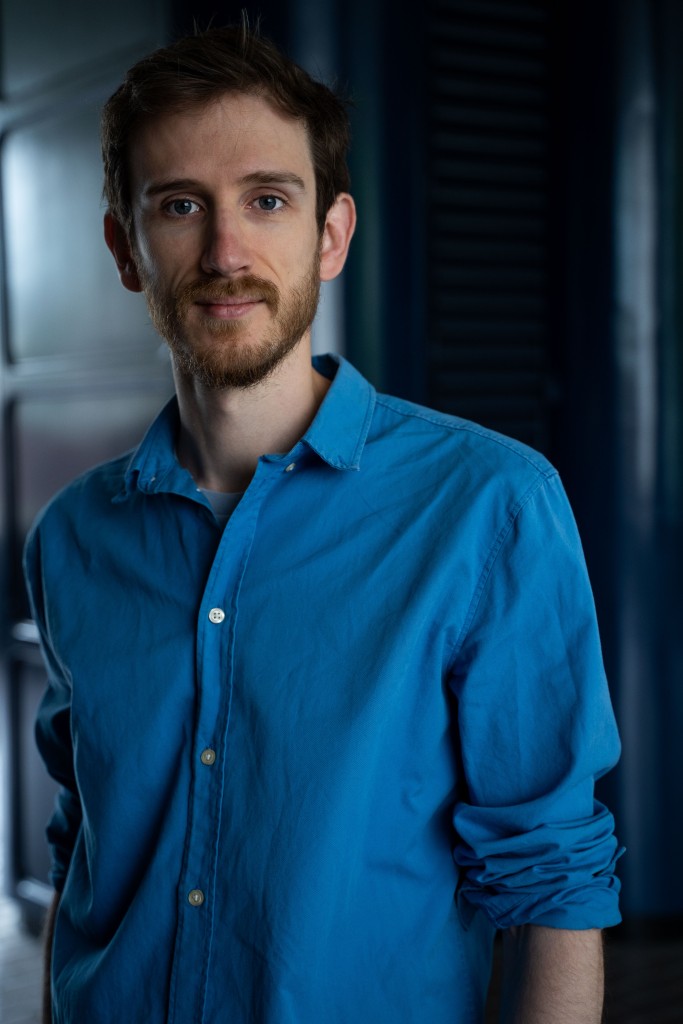
Nicholas Bowling is the critically acclaimed, Costa Award-shortlisted author of WitchbornIn the Shadow of Heroes and Song of the Far Isles. He grew up in Chester and studied English and Classics at Oxford University. As well as writing, Nick has been a classics teacher, has co-written, recorded and released an album and two EPs and is now a bookseller. He lives in London but gets out when he can to climb mountains or swim in very, very cold water. .
PaperBound Magazine is an online magazine for the young, and the young at heart. We are dedicated to showcasing authors and illustrators for children’s and young adult fiction and we strive to deliver inspiring content, uplifting stories, and top tips for young and aspiring writers yet to burst on to the literary scene.

All our issues are completely free and run by volunteers, however if you would like to support PaperBound and the work we do, you can help us out by buying us a virtual book. We appreciate any support you can give us!

Don’t forget you can read with the latest issues of PaperBound Magazine – completely free – here.

Blog, Blog series, Bookshelf, Interview, Interviews, Short stories, Writing craft

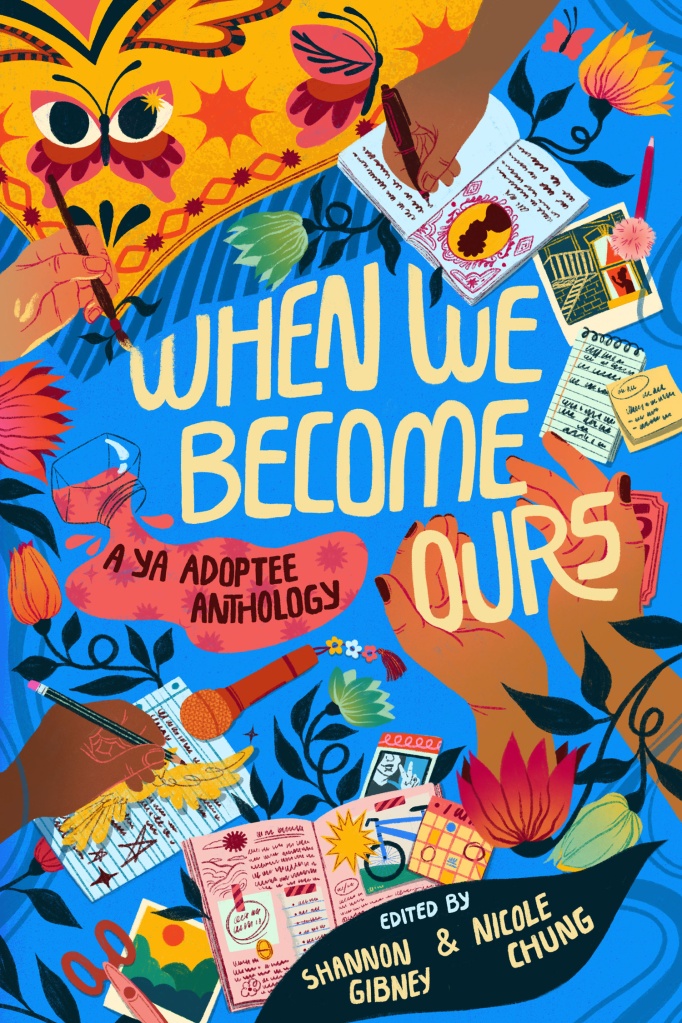
Interview: Shannon Gibney and Nicole Chung on groundbreaking YA anthology ‘When We Become Ours’

When We Become Ours is a young-adult fiction anthology by and for adoptees. In many ways, this is the book we wish we’d had when we were growing up. While adoption isn’t the central focus of every plot, every story is written by an adoptee author of colour and features a young adoptee as a protagonist. We don’t know of another book like it for teens, and hope it will be the first of many.

That the collection is so strong and wide-ranging is really a testament to our contributors’ talent and creativity. From the beginning, we knew we wanted to put together an anthology that represented as many different adoptee perspectives and experiences as possible. In the end, it wasn’t terribly difficult to ensure the breadth and diversity of narratives, because (as expected) we received so many wonderful original stories for consideration, and no two were alike! The hardest part of the process was probably narrowing down our selections, since we only had room for a small number of stories.

After the book was sold and announced, we put out a call for stories and read every submission as it came in. As mentioned, it wasn’t easy to make our selections from such a large number, but luckily we were aligned on the stories that most excited us. Next we did a round of developmental (or big picture) edits on each story, followed by a round or two of more detailed line edits, with our fantastic Harper Teen editor, Megan Ilnitzki, weighing in at each stage. The entire process was really a labour of love—all of us involved felt very strongly about the importance of this project. Our authors were truly a pleasure to work with, which made it a fun and collaborative experience from start to finish.
Despite the great and increasing diversity of YA literature by authors from marginalized backgrounds, adoptee-authored, adoptee-centered representation in literature for young people is still lacking. But, as we write in our Editors’ Note at the start of the book, we have always been here, and we know our imaginations and our stories are powerful. Our hope is that many readers will be able to see themselves, their feelings, their families, and their experiences reflected in these stories—an experience that is far too rare for young adoptees. At the same time, we think this is a book for everyone. We know that stories can entertain, teach, transform, and challenge us all, and we believe this anthology is one that anyone of any age can pick up and love.

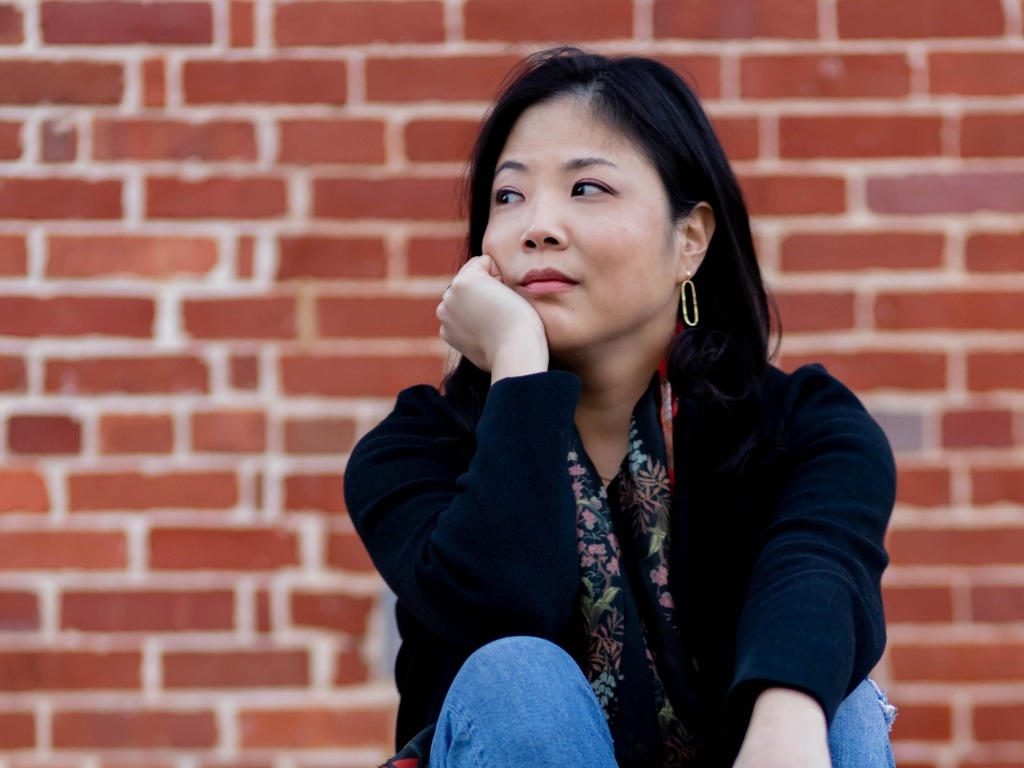
Nicole Chung is the bestselling author of All You Can Ever Know (2018) and A Living Remedy (2023) and the co-editor of several anthologies, including When We Become Ours. Born and adopted in Seattle, raised in Oregon, she now lives in the Washington, DC area. @nicolesjchung on Instagram + Twitter | nicolechung.net

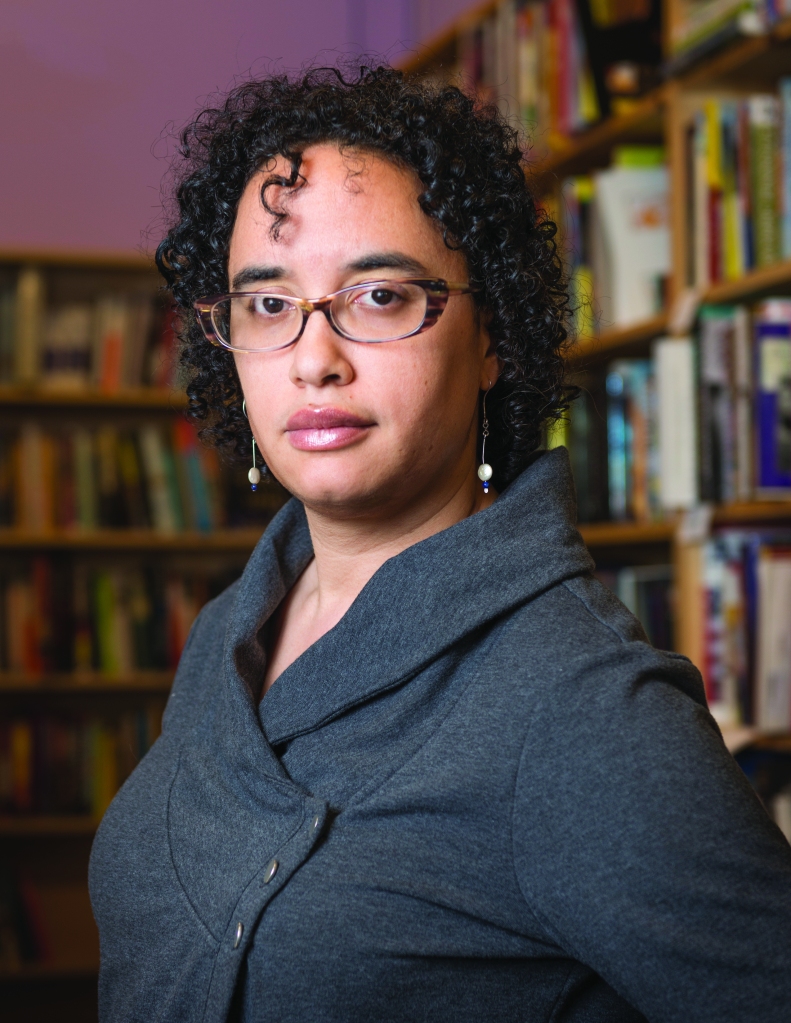
Shannon Gibney lives and writes in Minneapolis. Her work spans multiple genres, and she is the author of Dream Country (2018) and See No Color (2015), YA novels that won Minnesota Book Awards. Her newest novel is The Girl I Am, Was, and Never Will Be: A Speculative Memoir of Transracial Adoption (Dutton, 2023). @shannonelainegibney on Instagram | shannongibney.com

PaperBound Magazine is an online magazine for the young, and the young at heart. We are dedicated to showcasing authors and illustrators for children’s and young adult fiction and we strive to deliver inspiring content, uplifting stories, and top tips for young and aspiring writers yet to burst on to the literary scene.

All our issues are completely free and run by volunteers, however if you would like to support PaperBound and the work we do, you can help us out by buying us a virtual book. We appreciate any support you can give us!

Don’t forget you can read with the latest issues of PaperBound Magazine – completely free – here.

Blog, Blog series, Interview, Interviews, Writing craft

Interview: Maya MacGregor on YA book ‘The Evolving Truth of Ever-Stronger Will’.

This book was a lot like The Many Half-Lived Lives of Sam Sylvester, in that it was a way for me to tell a story like a roadmap for my younger self. There’s a lot of found family, a lot of self-discovery, and some spooky happenings that tie the narrative together.

The Evolving Truth of Ever-Stronger Will is a love letter to every kid who has been made to feel monstrous. While that takes place through a lens of a kid who’s neurodivergent and agender, I hope Will’s journey will resonate with teens who may not share those traits too. It took me a long time to learn the lessons Will learns—that an abuser’s projected image of them is not their truth—and I hope that Will’s perseverance, tenacity, and self-preservation will help model a way forwards for anyone in a similar boat.

It was the only way I could get across a very specific message that acts as a framing device for the story on several levels. I wasn’t sure I could get away with it, but it felt true to the story I wanted to tell. That feels a bit insufferable to write out, ha. But ultimately, I choose points of view to reflect emotional proximity to the characters. Which isn’t to say that third person can’t be emotionally resonant—it absolutely can—but first and second person each invite the reader much closer in a way that feels more intimate to me. Others may disagree, of course!

One of the things I’ve mentioned at a few in-person events is that a certain plot point that happens right at the end of, I think, chapter three or four had an absolutely eerie reflection in my own personal life. I paused writing just after that, a paragraph or so into the next chapter (which was smack in the heart of the emotion still) and put the book aside for a filmmaking project and a choir trip to Austria, and in the time I was away, I discovered via Ancestry.com DNA that my biological father was someone entirely different to who I thought he was. If you read the book to that point, you can probably understand how when I went back and read into my progress to get my bearings, I had to go take a few minutes to collect myself.

Will is very much like me on many levels—agender, an undiagnosed autistic teen (I was a teen once!), the product of a lot of upheaval and poverty—and the emotion of having written a different (but just as emotionally impactful) revelation bare months before I experienced my own welded this book to my heart in a way I don’t think anything else could have. My estranged biological mother is not Francis and was not physically abusive like that, but she did keep some whoppers from me, and over the past few years, like Will, I’ve been sorting through all that. I’ve also been privileged to meet and form a very loving relationship with my biological dad, and we’ve been making up for thirty-four years of lost time.

Without a doubt, Will, Raz, and Julian. I love Matt and Hannah as well, of course, but gosh, I adore Julian and Raz so much. We all need people who see us for who we are without us having to offer a university-level course in how to relate to us, and it was very important for me to model that with those characters. I also want Raz and Junius Sylvester to be best pals!

Absolutely. As a wee anecdote, we’d actually trunked both of my YA books because they bounced off editorial boards for the use of they/them pronouns (and non-stereotypical autistic phenotypes, to boot) in 2017-2018 when I wrote the books. My first ever agent, Jes Negrón, had since gone into editing at BMK (now Astra Books for Young Readers), and when she started acquiring YA, she came straight to me and my new agent Sara Megibow, knowing I’d a trunked manuscript. If she hadn’t been so keen to work with me again, I don’t know that these books would exist.

I cannot count the number of messages I’ve received from readers saying that they have never seen themselves represented in fiction before now. That’s heartbreaking in a lot of ways, but in others, it’s such a relief for me to hear. I had to write the books for them to exist, as did so many of my contemporaries who are doing just that these days. Now there are many more chances for this moment to happen at younger ages! Things are changing for the better, albeit slowly and not without a lot of pushback.

Alas, I don’t think I’m allowed to say much, but I will say there’s a Gaelic-heavy YA fantasy in the works, set in my beloved Argyll in the Gàidhealtachd. It’s a story about belonging, magic, the sìthichean, and intergenerational language transmission. Gaelic music and culture informs my entire life; I use the language every day, and our cultural practices are the foundation of my entire sense of home. I hope to bring some of that to the wider world from the perspective of someone who lives and breathes within that sphere.

Plus, the book also has an agender autistic protagonist—and a genderfluid shapeshifting sidhe prince for a love interest, so what’s not to love? 😉

The book is done, and I truly hope to have news about a publisher and publication timeline soon! I’m absolutely itching for folk to meet Cam and Ezra.

Maya MacGregor is an author, singer, and artist based in Glasgow, Scotland. A fluent Gaelic speaker, Maya is active in many community activities in Gaelic music as well as writing contemporary YA and adult fiction (as Emmie Mears and M Evan MacGriogair). Maya has a degree in history and is passionate about writing the stories for teens they wish had existed when they were younger and fills them with the type of people who have always populated their world.
Their pronouns are they/them.
The Many Half-Lived Lives of Sam Sylvester was Maya’s first YA novel and was a finalist for the Andre Norton Nebula award and the Walden Award. The Evolving Truth of Ever-Stronger Will, Maya’s second YA, came out Halloween 2023.

Caitlyn is a young reader from Cornwall who is a proud member of the LGBTQIA+ community. They enjoy reading stories about young people like them, as well as fantasy novels. They surround themselves with media that includes the LGBTQIA+ community, so this book fit right in with their bookshelf.

PaperBound Magazine is an online magazine for the young, and the young at heart. We are dedicated to showcasing authors and illustrators for children’s and young adult fiction and we strive to deliver inspiring content, uplifting stories, and top tips for young and aspiring writers yet to burst on to the literary scene.

All our issues are completely free and run by volunteers, however if you would like to support PaperBound and the work we do, you can help us out by buying us a virtual book. We appreciate any support you can give us!

Don’t forget you can read with the latest issues of PaperBound Magazine – completely free – here.

Blog, Blog series, Interview, Interviews, Writing craft

Interview: Jennifer Burkinshaw on her new YA book ‘Happiness Seeker’.

Happiness Seeker tells the story of just one week’s sixth form field trip to the beautiful but lethal Morecambe Bay. On her very first afternoon, Allie meets a mysterious lad on the shore which changes the lives of everyone involved. One reviewer has described Happiness Seeker as a ‘thriller-mystery-love story’ which does sum it up its genres neatly; I’d add in ‘tragedy’, as the prologue tells you someone is lost in the vast, dark seas of Morecambe Bay.

Places seem to be what spark a story in me, both in my debut Igloo and Happiness Seeker. Visiting my parents in Grange-over-Sands on Morecambe Bay so often; learning about the history of the Bay and seeing people, every day, still walking out onto the treacherous sands despite all the warning signs. Before my parents even moved there, though, I once took a Drama group to a hostel near Grange to rehearse, which is pretty close to the set up in the novel; however, none of my group broke every rule in the book and we all went home safely.

At the heart of the story is what could be described as a political issue which particularly concerns me, so I recruited the advice of the charity Unseen during my writing process.

Map and plan of the novel’s setting by Douglas McCleery, architecture student

I first started to feel an irresistible pull to write about twenty years ago and knew I had to start to learn the craft, an endless journey, of course. Since I still feel seventeen in my head, writing for young adults was a natural move to me; I love the intensity of feeling you need to create in YA fiction; the need to be immediate and and pacy, as well as reflective; I love how so much of YA fiction deals with first and life-changing experiences for its characters. So, I did an MA in Creative Writing for Children at Manchester Met; after that I joined the Golden Egg Academy and was mentored by Imogen Cooper. I count myself as extremely fortunate that then Debbie McGowan, my genuinely brilliant editor and publisher at Beaten Track, offered to publish my debut, Igloo, and now Happiness Seeker.

As a former Drama teacher, I couldn’t resist creating a group who, having to script a piece for their A Level, choose to write it about Morecambe Bay and the many who have drowned there over the centuries. These past tragedies soon bleed into the present of the story. I also include some reference to Arthur Miller’s A View from the Bridge which Allie is reading that fateful week; Miller is my favourite playwright but, also, the action of his tragedy has some echoes in the story happening ‘now’ in Happiness Seeker.

Map and plan of the novel’s setting by Douglas McCleery, architecture student

What was really tricky was to work out what Mareno would reveal to Allie and when – especially since he has such compelling reasons not to tell her his whole truth. I spent ages thinking what he would least mind Allie knowing and what he’d try to keep from her at all costs. I hope he intrigues the reader; I tried so hard to see him through Allie’s eyes – what draws her to him even as she finds him such a ‘dark horse’.

Allie has a painful rivalry with Courtney, a girl in her drama group who has bullied her since Allie joined the school late in Year 9. To some extent, I am like Allie – quieter, on the fringe of groups and I do remember girls at my single-sex school who could be cutting like Courtney. Allie’s best friend is Finn but unfortunately, he falls for Courtney which causes Allie a lot of heartache. I haven’t experienced having a boy as a best friend but I relished creating their deep friendship which is at the heart of the story just as much as Allie’s new relationships in Grange.

I need to get back to ‘Going West’, a story told from the POV of a member of each of three generations in a family who move from Essex back to the mum’s childhood home in Wales. I’m toying whether to tell some of it in verse …

Jennifer’s debut book is Igloo, a winter coming-of-age story of first love set in the French Alps and Lancashire, where she grew up. Happiness Seeker is her second book.
Now, she’s a bit of a nomad – loves spending time by the sea as much as in the mountains and with her growing family.
You can visit her website here.

PaperBound Magazine is an online magazine for the young, and the young at heart. We are dedicated to showcasing authors and illustrators for children’s and young adult fiction and we strive to deliver inspiring content, uplifting stories, and top tips for young and aspiring writers yet to burst on to the literary scene.

All our issues are completely free and run by volunteers, however if you would like to support PaperBound and the work we do, you can help us out by buying us a virtual book. We appreciate any support you can give us!

Don’t forget you can read with the latest issues of PaperBound Magazine – completely free – here.