article, Blog, Blog series, Bookshelf, on writing, Writing craft

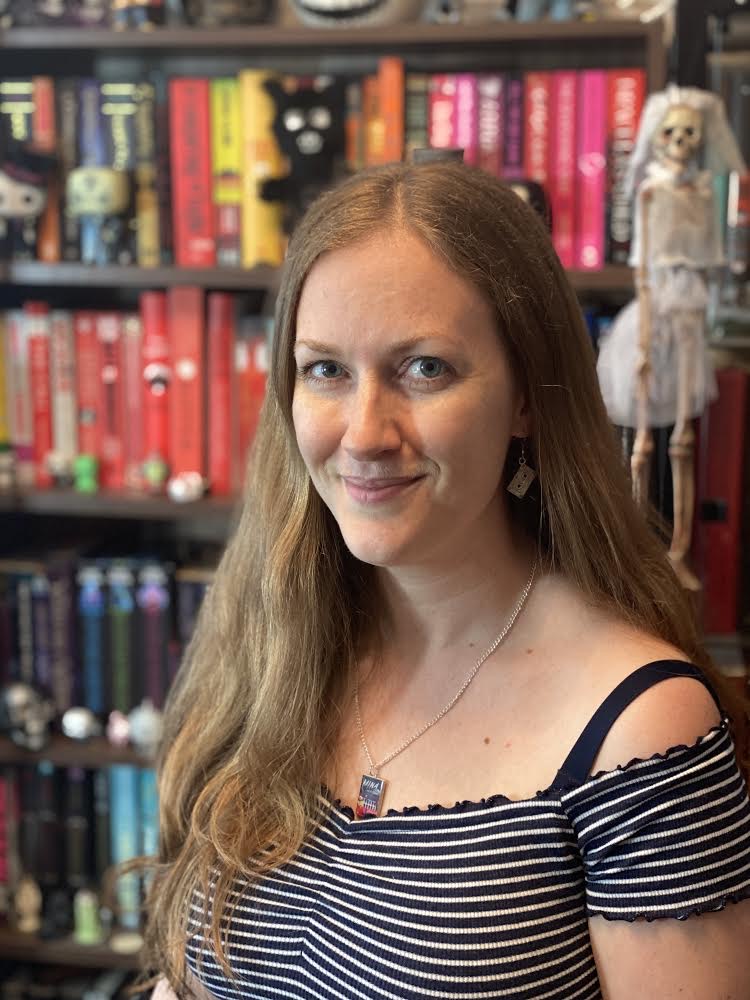
Journey from Blogger to Author by Amy McCaw

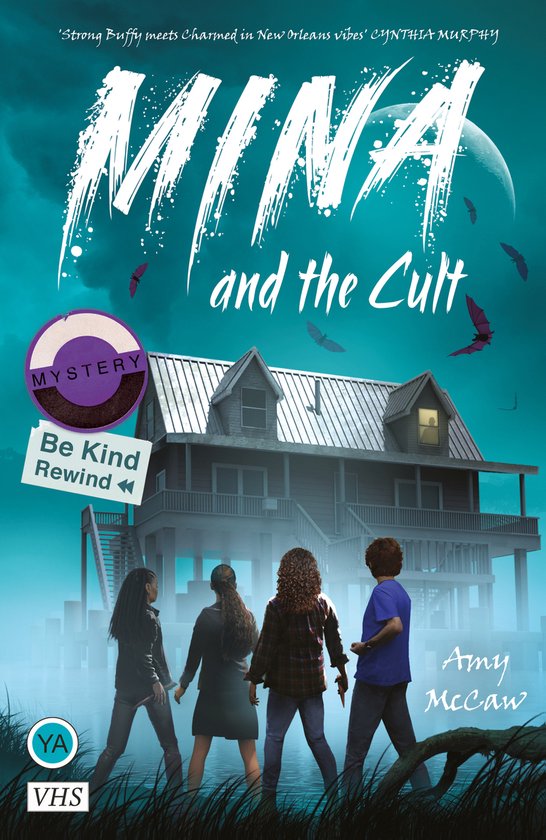
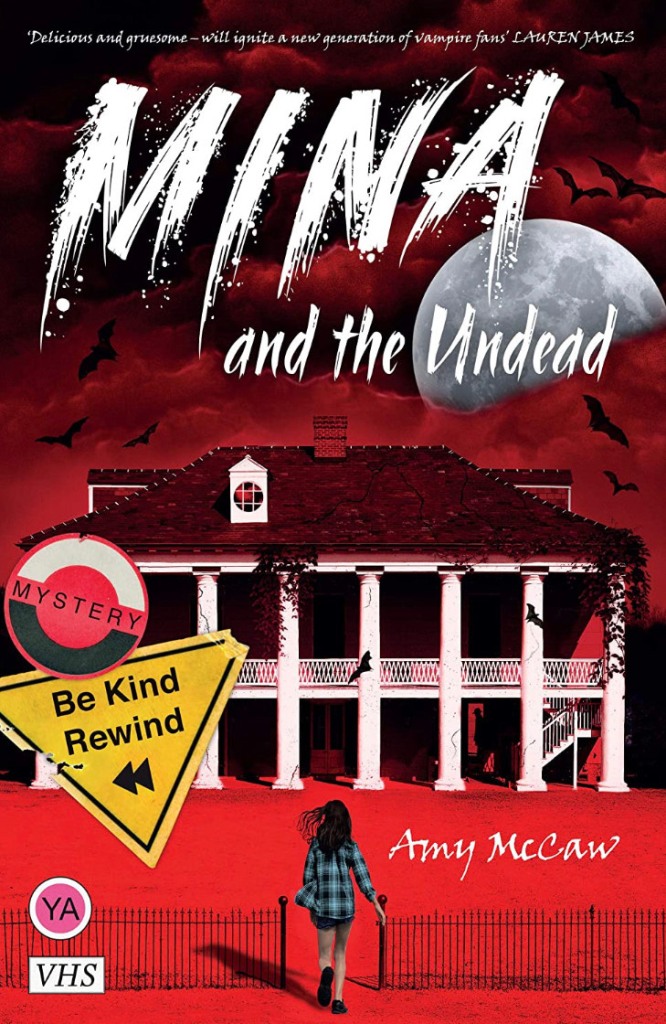
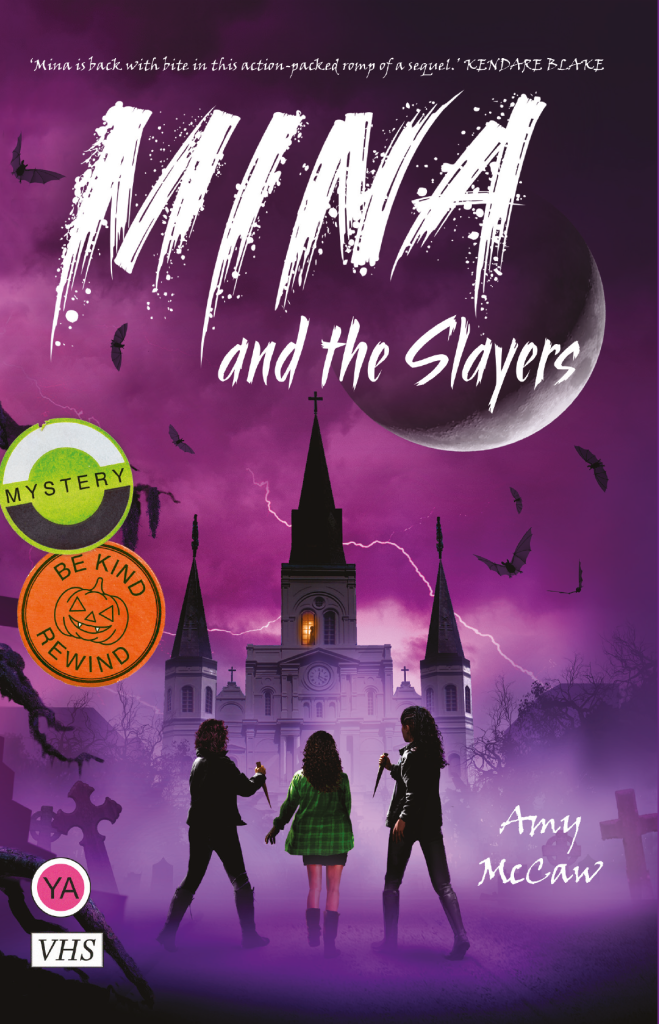
Amy McCaw is a YA author and YouTuber. She’s the author of the Mina and the Undead series, YA murder mysteries set in 1995 New Orleans. She also co-curated the A Taste of Darkness horror anthology with Maria Kuzniar. Her main interests are books, movies and the macabre, and her novels have elements of all of these. Unsurprisingly, she’s a huge Buffy the Vampire Slayer fan and has gone to conventions to meet James Marsters more times than she cares to admit.

If you want to talk with Amy about books or 90s movies, you can find her on Twitter, Instagram, Tiktok and YouTube.

PaperBound Magazine is an online magazine for the young, and the young at heart. We are dedicated to showcasing authors and illustrators for children’s and young adult fiction and we strive to deliver inspiring content, uplifting stories, and top tips for young and aspiring writers yet to burst on to the literary scene.

All our issues are completely free and run by volunteers, however if you would like to support PaperBound and the work we do, you can help us out by buying us a virtual book. We appreciate any support you can give us!

Don’t forget you can read with the latest issues of PaperBound Magazine – completely free – here.

Blog, Blog series, Bookshelf, Interview, Interviews, Writing craft

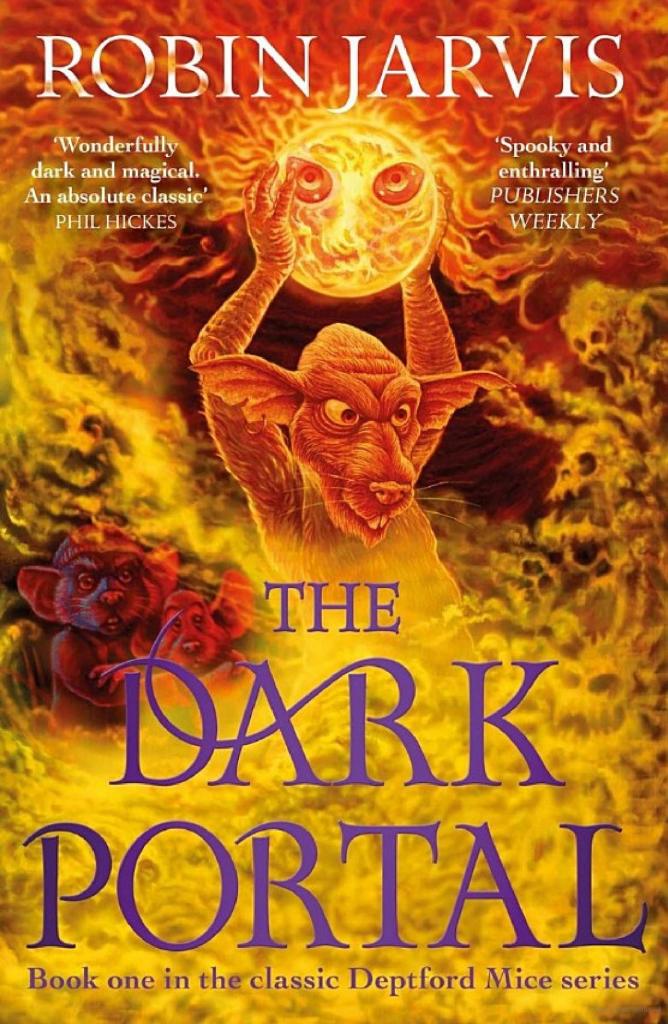
Interview: Robin Jarvis on the relaunch of his popular Deptford Mice series, starting with the release of Book One: ‘The Dark Portal’

Daniel Seton, editor at Pushkin Children’s Books contacted me and said he’d love to reissue the series, as he was a fan of the mice back in the day. It’s also the 35th anniversary too, so it was absolutely the right time and it’s given me the chance to cram as many new illustrations in there as possible.

I was actually a bit nervous at first, as it’s been a while since I last ventured into those Deptford sewers, but the characters have never been far from my thoughts. They really have continued to live out their lives in my head, so I know what they’ve been up to. I hope new readers will be able to dive into that world and be excited and a bit scared by it. I’ve had brilliant feedback already from the original fans who now have children of their own, and it’s been such a pleasure to hear that the stories have stayed with them all this time.

Oh absolutely. The best stories are those with fright and menace in them. The original versions of fairy tales contained some really gruesome aspects, such as the stepsisters hacking off their toes and heels to squeeze their feet into the slipper, or the wicked queen in Snow White being made to wear red hot iron shoes and dance until she dropped dead. When I was young (a very long time ago) I was mad about monsters – still am. The scares in my books are safe scares. The threats are fantastical, the sort you’d never encounter in real life. I like to think of my books as white knuckle reads.

Yes, apart from giving the writing a good old dusting, there were certain things that I wasn’t comfortable with, such as the Raddle sisters, two elderly mice who I originally described as ‘old maids’. Deary me, that had to go. The biggest change was Madame Akkikuyu, over recent years I’ve noticed she’s attracted criticism because some people thought there was a racial element and bolted human concerns onto her. She was a black rat, as in her fur was black, just as Piccadilly’s fur is grey and Oswald’s is white, but they all have pink skin. In fact, if Akkikuyu’s skin wasn’t pink, the tattoo on her ear wouldn’t stand out and that’s the big plot point of The Crystal Prison. Still, I don’t want anyone to get the wrong idea about her, so her fur is now a rich brown instead and the bone with which she stirred her potions has become a key from a tin of corned beef – which is a much better image anyway.

From a young age I watched anything with a monster in and enjoyed escaping into other worlds. The Green Knowe series was a favourite, as was Tolkien.

Just read and absorb everything, until you decide what stories/styles/themes/characters you enjoy the most and that should give you an idea of what you want to do. 

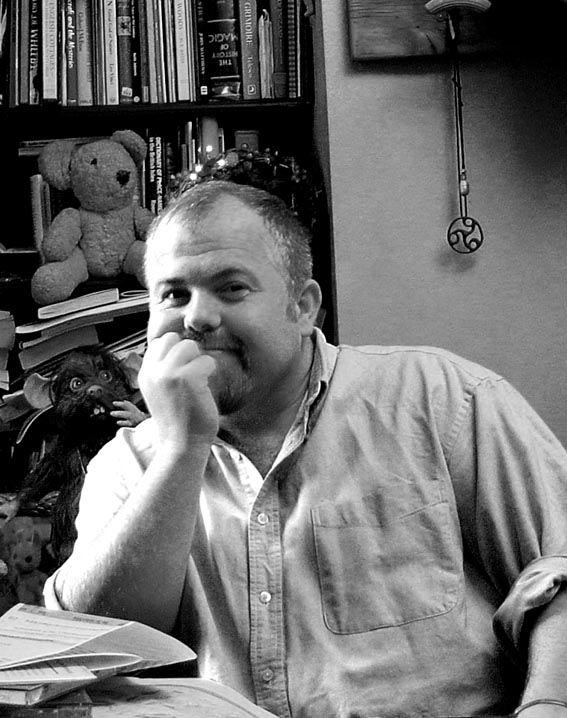
When Robin isn’t writing, he’s probably making something, usually a creature from one of his books to take with him to events and signings. It’s something he’s always done.

Before he started writing, he was a model maker and he gets grumpy if he can’t make something. It’s so much easier now he has a resin printer, no more mess on the kitchen table for weeks on end. At the moment he’s making Madame Akkikuyu, which brings him full circle, as he first made a wearable version of her all the way back at the beginning, 35 years ago. 

PaperBound Magazine is an online magazine for the young, and the young at heart. We are dedicated to showcasing authors and illustrators for children’s and young adult fiction and we strive to deliver inspiring content, uplifting stories, and top tips for young and aspiring writers yet to burst on to the literary scene.

All our issues are completely free and run by volunteers, however if you would like to support PaperBound and the work we do, you can help us out by buying us a virtual book. We appreciate any support you can give us!

Don’t forget you can read with the latest issues of PaperBound Magazine – completely free – here.

Blog, Blog series, Bookshelf, Interview, Interviews, Writing craft

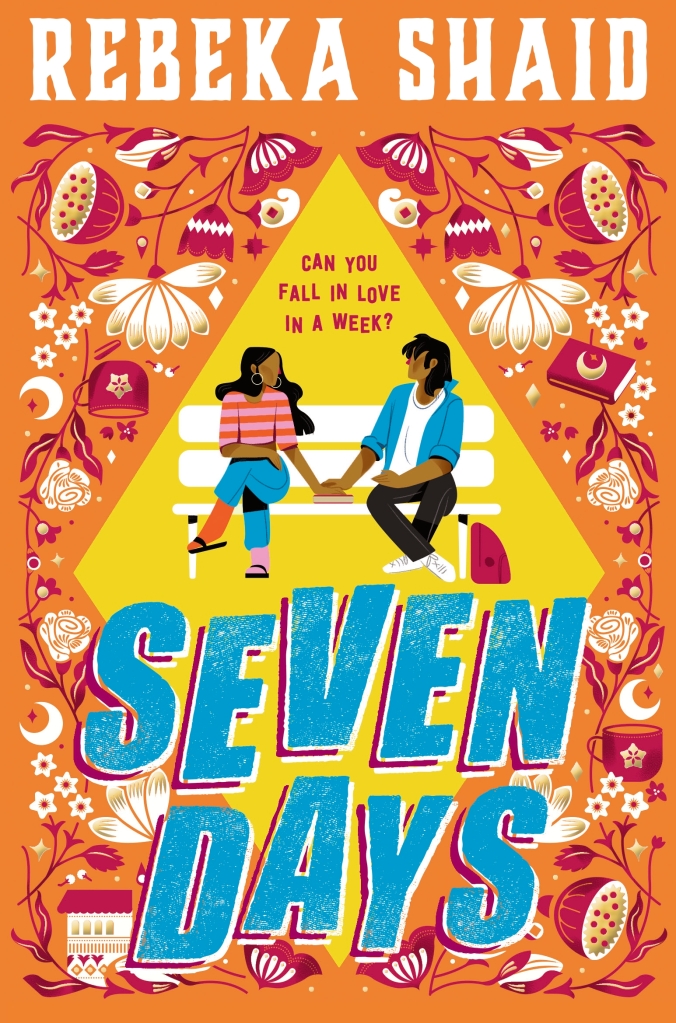
Interview: Rebeka Shaid on her debut coming of age YA romance ‘Seven Days’

Seven Days is a diverse YA romance about two teenagers, sassy Noori and troubled Aamir, who are struggling to understand where they belong in this world after experiencing tragedy. It’s a story about finding yourself after losing yourself, but it’s also a story about finding love and hope in unlikely places.

I was inspired to write a contemporary YA novel that discusses topics many teenagers are confronted with: first love, family relationships, but also questions of identity. To me it was also about representation because Noori is of mixed heritage and Aamir’s parents are immigrants, which reflects my own upbringing. I can’t think of that many YA novels that look at what it’s like to grow up between different cultures so I wanted to write a story that my 16-year-old self would probably have enjoyed!

If truth be told, I never plan anything meticulously these days! But it was always clear to me that I wanted to write a relatively fast-paced story that takes place over seven days. I knew how the story would end and begin but everything else developed organically.

Writing about loss is something that is very natural to me. In fact, while I was drafting Seven Days I was still in the early stages of my grief journey so it was cathartic to write about two grieving teenagers because I could easily identify with their feelings and thoughts about loss. It was not that difficult for me to create these two characters, and their struggles certainly feel real to me.

I love both Noori and Aamir. They are almost complete opposites but still manage to find common ground and learn so much from each other. I had fun exploring their personalities and, admittedly, there is a bit of me in both of them. Noori is so bold while Aaamir tends to be more introspective, even if he doesn’t show it in conventional ways. I find it difficult to pick a favourite but if absolutely had to, I’d go for Noori because she might not always think things through but has such a big heart.

My almost five-month-old baby has thrown any routine out the window! But I tend to be someone who writes in the evenings because that’s the only time I can make space for writing without getting distracted.

My journey to publication was not straightforward. While I was lucky enough to find my incredible agent within weeks of querying literary agencies, it took years before Seven Days got published – and it’s also not the first novel I wrote! My advice to aspiring authors is: keep writing and don’t get disheartened by rejections – they are part of the process and are not a reflection of you or your abilities as a writer.

Trying to! It’s a bit tricky to find proper time for writing at the moment but I’m working on a rough outline for my next YA novel.

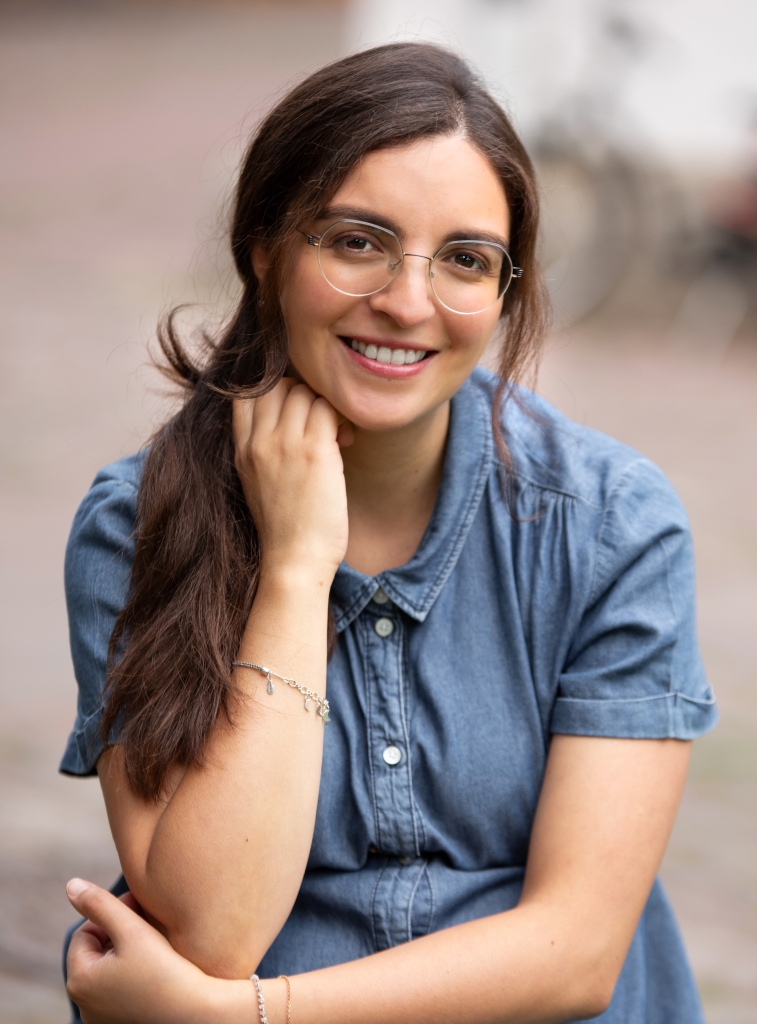
Rebeka was raised in a multicultural household, surrounded by piles of books, nosy siblings and lots of mythical trees that are known as the Black Forest. Growing up she wanted to be a snake charmer or ventriloquist, but that (luckily) didn’t pan out. Instead, she turned to words and writing. After doing sensible adult things like going to university, working as a business journalist, and becoming a mum, she decided to pen a YA novel.

In her writing, she likes to explore themes of identity, loss, and coming-of-age. Rebeka lives in Germany.

PaperBound Magazine is an online magazine for the young, and the young at heart. We are dedicated to showcasing authors and illustrators for children’s and young adult fiction and we strive to deliver inspiring content, uplifting stories, and top tips for young and aspiring writers yet to burst on to the literary scene.

All our issues are completely free and run by volunteers, however if you would like to support PaperBound and the work we do, you can help us out by buying us a virtual book. We appreciate any support you can give us!

Don’t forget you can read with the latest issues of PaperBound Magazine – completely free – here.

Blog, Blog series, Bookshelf, Interview, Interviews, Writing craft

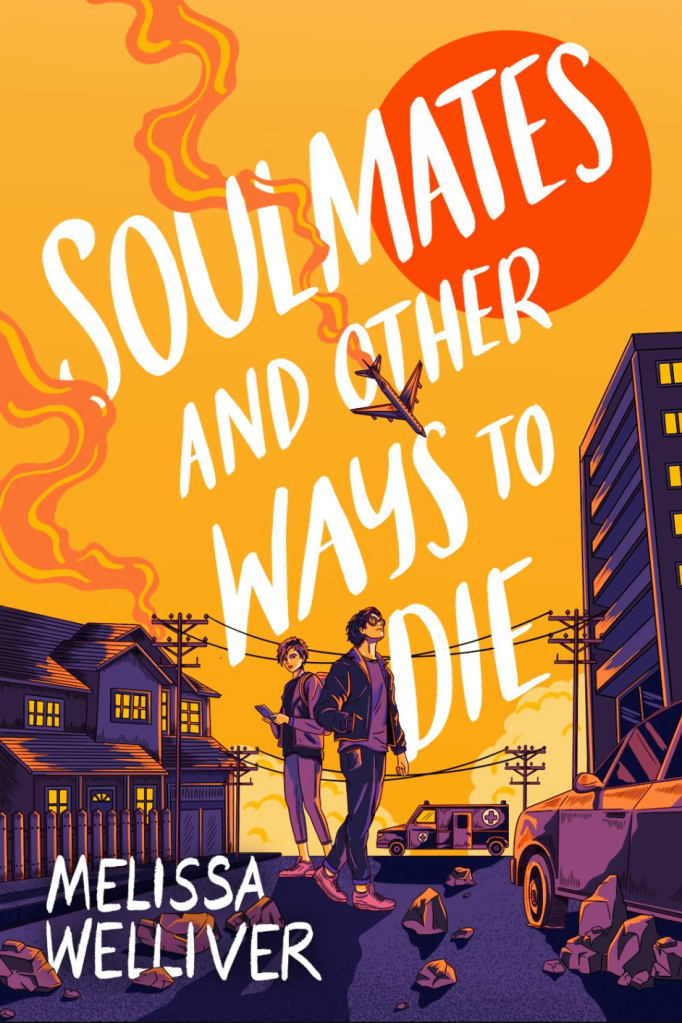
Interview: YA author Melissa Welliver chats about her new dystopian romcom ‘Soulmates and Other Ways to Die’

Of course! My name is Melissa Welliver and I write speculative novels, most recently dystopian YA with a dash of romance and comedy. I live in the North of England with my dogs and I run a community online for kidlit writers called the WriteMentor hub. I am also a co-host of The Chosen Ones and Other Tropes, a podcast based around trending tropes in commercial fiction.

This story was actually born from playing online games in a team arena. One game I played had a rule where if one member of the team took damage, the whole team lost health points. And I thought, what a fun idea to bring into the real world! I love a dash of romance in everything I write, and I thought this specific idea would work really well in the exploration of the Soulmate trope. In Soulmates, if you feel pain, so does your significant other. And if they die… you die too.

For anyone who hasn’t read the book, there is an app mentioned that can match you to your soulmate. This is partly practical as it’s good to know who the other person is that could possibly, accidentally, kill you, but also it’s essentially a dating app – but with all the choices removed. Imagine that there is no swiping right or left – there’s one answer, and that’s who you are tied to forever. Nightmare! To be honest, many elements of the app were inspired by the NHS covid app that would register whether you were vaccinated and whether you had been in close contact with someone who had tested positive. I wanted to ask the question: is it a good thing to track ourselves so closely? Can there be good and bad elements to these sorts of closely tracked government apps?

As for my own apps, I’ve turned off all my notifications on my phone, so for my social media, I have to open the app to see if I’ve had any messages. I find this stops me checking my phone so much when I’m out and about in real life with friends! But my favourite app, as a bit of a prepper myself, is what.three.words. It’s an app that can pinpoint your location to a 3m by 3m area, no address needed, with three simple words. Very helpful in an emergency to let people know where you are – just because I’m paranoid, doesn’t mean I’m wrong!

So obviously, the correct answer is, of course not! But if Argo Duff, the eccentric billionaire app owner who bought a social media franchise and has some interesting dating habits, and is a little more than a bit controlling, reminds you of anyone… then that’s on you.

Ah, I love dogs too, they absolutely count! But aside from doggo pals – I’m very much someone who believes we make our own luck and destiny in life. A soulmate is whatever we make of it – in the book, I was keen to explore the concept of choice versus control, and whether having a soulmate thrust upon you – until death do you very literally part – are they truly your soulmate anyway? I also wanted to explore different types of love – platonic love, familial love, asexual love, romantic love – who says a soulmate has to be what dating apps tell us they are? There are many different kinds of love, and soulmate means something different to everyone. So are soulmates real? Maybe. Read the book to find out.

Honestly, I’m not as fit and prepared as Zoe in the novel, who is a world class doomsdayer, but I’d like to think I’d have a chance of not going out in the first wave of whatever it is taking us out! I carry around a rechargeable battery pack, plus some gadgets like trackers that I allow my family to follow so we would always know our last movements in an emergency. My Dad is from LA, so he also gave me an emergency earthquake kit when I went to uni (in deepest darkest Leeds. Earthquake central, of course) that consisted of a torch, matches, spare batteries, all sorts of stuff. So even though I might not be the classic bad-ass female cutting my way through the hordes of zombies, I think I could find a pretty good place to hide until it all blows over.

Sure! So it’s become a bit of a tradition now for me to write a novel in the month of January. I plot incessantly, so I use the more conventional NaNoWriMo (when a lot of writers write a novel in a month!) to plot each chapter of the book, and then have a break in December before coming back in January to write it. I write for 2 hours a day, between 10am-12pm, in concentrated writing sprints, and that usually nets me a chapter, or 3000 words. I’m not allowed to read back what I’ve written, or pause writing during the sprints, even if I’m getting stuck! It’s all about powering through to get that first draft down. And I usually write 25-30 chapters depending on the age range, so that gives me my month of writing quite neatly.

I have two books coming out this year, which is really exciting! Soulmates and Other Ways to Die is in March, and the re-release of my self-published book, The Undying Tower, is coming out with UCLan Publishing in August. While my Chicken House books all lean towards a slightly wacky take on the apocalypse, The Undying Tower is very much a dark dystopian in the same vein as The Hunger Games or Divergent, and is the first in a planned trilogy. I can’t wait to see what everyone thinks of the redesigned cover, and to reach new readers through re-printing this book baby of mine!

Don’t listen to advice! Just kidding – well, sort of. Follow your writing heart and don’t let trends get in your way. The books you see on shelves right now were written and negotiated years ago, so there’s no point jumping on a bandwagon if your heart isn’t in it, just because you think it will sell. Write what you love and it will come across in the writing, so readers will love it too. Also, don’t give up! It’s a long old road, publishing – you’ll get there. The only difference between a published author and an unpublished author is perseverance.

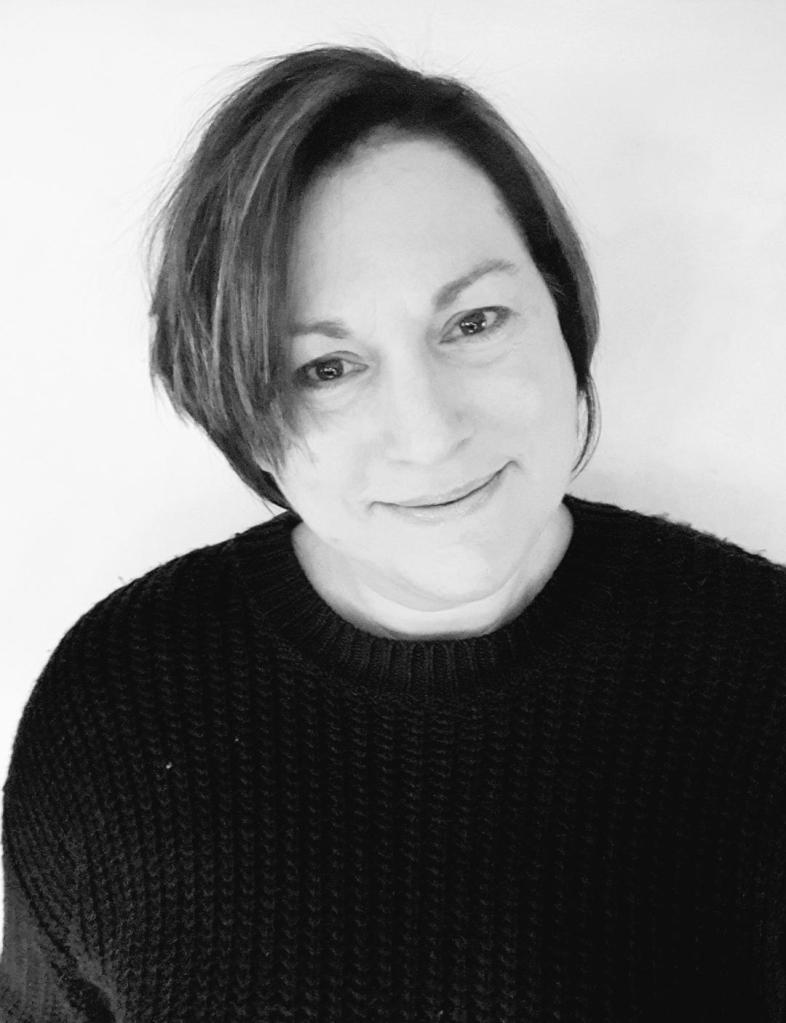
Melissa Welliver writes Young Adult Speculative novels. She works at WriteMentor and runs the Community Writing Hub for Children’s writers. She has two dystopian rom-coms, My Love Life and the Apocalypse and Soulmates and Other Ways to Die, published with Chicken House Books. The first in her dark dystopian trilogy, The Undying Tower, will be published by UCLan in August 2024.

She can be found across social media under @melliver, and on tiktok under @melissawelliver.

Like his career, Steve’s writing is filled with tech and engineering, although his speculative thrillers tend to have higher stakes and fewer meetings. Before working as a copywriter and editor, he was a consultant, a magazine editor, a communications director, a product designer and a webcaster, though not at the same time. Home is South London, where he lives with his wife and teenage daughters. They wish he’d stop saying, ‘What if…’

PaperBound Magazine is an online magazine for the young, and the young at heart. We are dedicated to showcasing authors and illustrators for children’s and young adult fiction and we strive to deliver inspiring content, uplifting stories, and top tips for young and aspiring writers yet to burst on to the literary scene.

All our issues are completely free and run by volunteers, however if you would like to support PaperBound and the work we do, you can help us out by buying us a virtual book. We appreciate any support you can give us!

Don’t forget you can read with the latest issues of PaperBound Magazine – completely free – here.

Blog, Blog series, Bookshelf, Interview, Interviews, Writing craft

Interview: A. J. Clack chats all about her debut YA thriller ‘Lie or Die’!

Lie or Die is a twisty, dark YA thriller set in a Reality TV game show. It follows 17-year-old Kass Kennedy who auditions for the show to help her fame obsessed best friend, Thea. Once in the game Kass soon realises that not everything is as it seems and, as the contestants start dying for real, Kass realises that they are trapped in a TV show set with someone who isn’t here to play. To survive Kass must figure out who the real killer is and find a way out.

Reality TV just got real!

I did! Lie or Die’s setting is inspired by my time as a Production Manager for Fountain Television Studios in Wembley, the biggest TV studio in Europe. It was my job to oversee the shows that came in, working closely with each production to make sure they had the crew, equipment, facilities, hospitality and celebrity care they required. I worked on a number of shows with a great deal of celebrities, directors and crew, giving me quite a thorough and unique insight into the world of TV and celebrity. My (now) husband worked on all the reality shows, from Big Brother, X Factor to I’m a Celeb so I had a real insight into reality TV from the inside. When I had the idea to make a Mafia type murder mystery game show, it seemed natural to place it in a reality TV setting.

I had great fun thinking them up! (I obviously need to get out more.) I read and watch a lot of psychological horror and thrillers and grew up reading the masters of horror, James Herbert and Stephen King, so I had a lot to fall back on. It was great to let my imagination run wild – as a TV show I had the freedom to do pretty much anything. There was one character in particular who I really didn’t want to kill, but realised I had no choice! Sorry – I can’t tell you which one **spoiler**.

Thrillers take a lot of planning, which is something I’m not very good at! I like to go with the flow and let the story evolve, but I think thrillers need more structure. Don’t forget to leave breadcrumbs, little clues for the reader to pick up along the way and of course red herrings, you can have lots of fun with them! I kept asking myself – what would the characters try to do next?  Then I would show the characters doing just that and failing, starting with the most obvious and then moving onto the next possibility. The reader will expect those questions to be answered.

Ahh like I mentioned above I am a natural born panster. I like to have a loose outline, a chapter ‘in’ point and an ‘out’ point and then have the freedom to get from A – B. It’s harder to do that with tightly plotted thrillers, and this one was quite complicated, being a game, set within a reality murder mystery game, set inside a television studio. I tend to get a first draft out quite quickly – it’s terrible but at least then I have something to go back over and work on. It’s like placing the foundations and the scaffold of the story. Later, when I feel secure enough, I take most of it away.

There have been some fantastic highlights such as being a finalist in the Undiscovered Voices 2022 Anthology. There have also been some difficult lows, including a novel going out on submission the first week of the Covid lockdown and disappearing into the pandemic ether, losing my agent and having to start all over again. But along the way I have won competitions and made many, many amazing writing friends and found representation with my new and fabulous agent, Saskia Leach. I would recommend to any new writer not to try to do this alone; it’s hard, you need a community of writers around you to support you and pick you up and also to help celebrate all those little wins along the way.

I am loving Mirror Me by Jan Dunning, a fairy tale retelling set in the fashion world and I have just started Fourth Wing by Rebecca Yarros.

A. J. Clack moved from a small village in Wales to London to pursue a career in television. She worked on a huge range of shows from Teletubbies to Friends, while also writing plays for the Edinburgh Fringe and development scripts/pilots for children’s television. She now lives in Essex with a handful of teenagers and can often be found freezing on the side of a football pitch.

PaperBound Magazine is an online magazine for the young, and the young at heart. We are dedicated to showcasing authors and illustrators for children’s and young adult fiction and we strive to deliver inspiring content, uplifting stories, and top tips for young and aspiring writers yet to burst on to the literary scene.

All our issues are completely free and run by volunteers, however if you would like to support PaperBound and the work we do, you can help us out by buying us a virtual book. We appreciate any support you can give us!

Don’t forget you can read with the latest issues of PaperBound Magazine – completely free – here.

Blog, Blog series, Bookshelf, Interview, Interviews, Writing craft

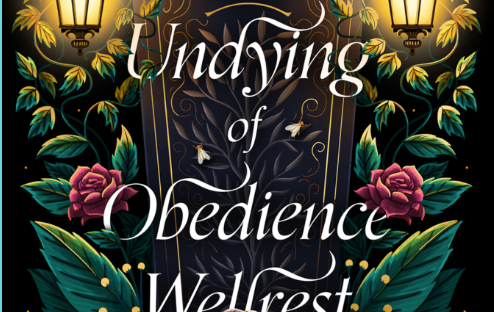
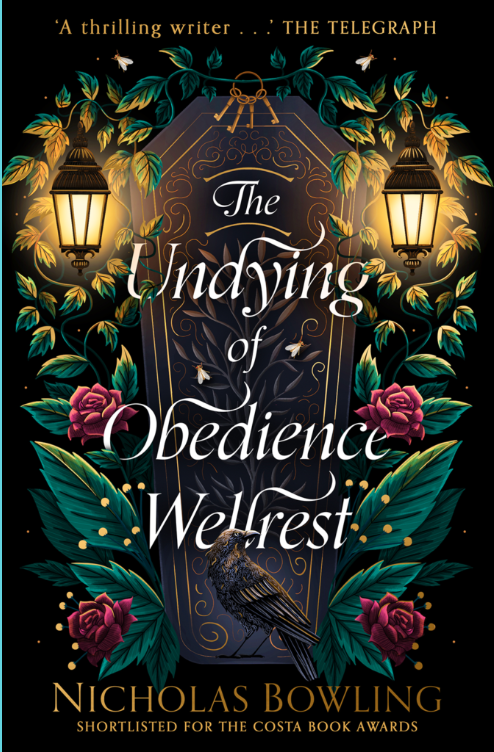
Interview: Costa-Award shortlisted author Nicholas Bowling talks about recent release: ‘The Undying of Obedience Wellrest’

It’s a fairly straightforward fantasy-tinged gothic-horror-comedy-semi-romance. It’s set in the early nineteenth century, and it’s about a young gravedigger (Ned) who crosses paths with an aristocratic teenage girl (Bede) who is trying to make progress as an amateur chemist and escape an arranged marriage. So, sort of Jane Austen meets Frankenstein. It’s told from both their points of view and sees them weaving in and out of danger and death and friendship and maybe (maybe?) love.

Sometimes a whole book, and a whole world, seems to arrive in my brain fully formed, but this one actually started from a much smaller seed. Originally it was all about Ned and Pa’s relationship. I had an image of a grandfather and grandson gravedigging team – I think originally they solved mysteries, or fought demons, or something. And I liked the idea of a parish churchyard as a little self-contained world. I was reading Shirley Jackson’s We Have Always Lived In The Castle at the time, and found the voice of Merricat very inspiring. I loved the idea of writing from the point of view of the weirdest, most isolated character in the story – the point of view of the “monster” really. So the protagonist is on the outside of acceptable society looking in, but, in their own mind, is actually on the inside looking out.

Originally it was set in the 21st century, but once there were body snatchers involved it made more sense to take place in the 19th century. And once it was set there and then, all the interesting stuff about early science and the Enlightenment and the links to Frankenstein started to make itself felt. And Bede emerged from that, as an intelligent, headstrong young woman ensnared in the mores of that era. It’s no coincidence that Bede is short for “Obedience”. It’s really, really fun writing a character who is much smarter and more furious than you are.

As pretentious and cliched as it sounds, I really do just listen and watch them and see what they do. I probably have a subconscious blueprint for each character somewhere in my brain – maybe an amalgam of certain people I’ve met, either in real life or in books – but it’s not like I draw up a spreadsheet of their traits and histories before I write about them. It really is just about following a feeling you have about them. And it’s nice to be surprised when they reveal something of their character or their past to you.

Obvious to say, but I loved both Ned and Bede. Ned because I think he’s the person I actually am (quiet, introspective, a bit odd) and Bede because she’s the person I often would like to be (smart, self-assuredl, a zinger for every occasion). Perhaps they really are two halves of my psyche.  They make a perfect unlikely pairing.

Mosca? I still feel like there’s so much mystery around him. I don’t even know what he’s thinking or feeling. Maybe I’ll write a companion piece to the main book that’s just his internal monologue, all in stream of consciousness fly-speak.

Thank you very much! I think I said this on Twitter (sorry, X). Those were literally the first words I wrote. The first words of the first chapter of the first draft, maybe four years ago. And that line stayed at the top of the Word document through all of the many, many drafts and edits. I think the only thing I had to change was Ned’s age. I knew when I first put the line down that it was a keeper. Sometimes things like that come to you and you can’t quite believe it and you give yourself the rest of the day off.

I don’t know if I have any tips or secrets about an opening line. I suppose a good opener is always really a question in disguise. A tiny, self-enclosed, one line mystery.

I think plotting is actually the thing I find hardest. I never plot in advance, at least not in any great detail, and always end up tying myself in knots. I never learn, but I also think the thing feels dead on the slab if every little nook and cranny of plot is already explored. But the really BIG twists, I do know about them in advance. Usually I have one prepped for about halfway, and one for the end, and if you’re aware of them then you can at least have some fun with red-herrings and easter eggs (pretty weird brunch recipe for you, there) as you’re writing.

Favourite bits – and I don’t think I’m alone here – are the very beginning and the very end. I still love the thrill of the blank page, of possibility, of creating something entirely new. And I love fine-tuning the prose at the very end, and putting in little nods and callbacks to the various twists and turns. Basically everything in between is all wailing and gnashing of teeth.

Structural edits in particular are like the worst, least fun, most labour-intensive game of Tetris you’ve ever played. 

I’m working up two ideas at the moment. One is an inverted Arthurian legend (can’t really say more than that, but it involves a young swineherd and a supremely unlikeable King Arthur). The other is a sort of ecological fable about a frozen giant. It’s like Ted Hughes’ The Iron Man, set in the Himalayas, reimagined by Studio Ghibli.

I also have a book for adults coming out in Jan 2025 under the name Nick Newman – but I really can’t tell you any more about that!

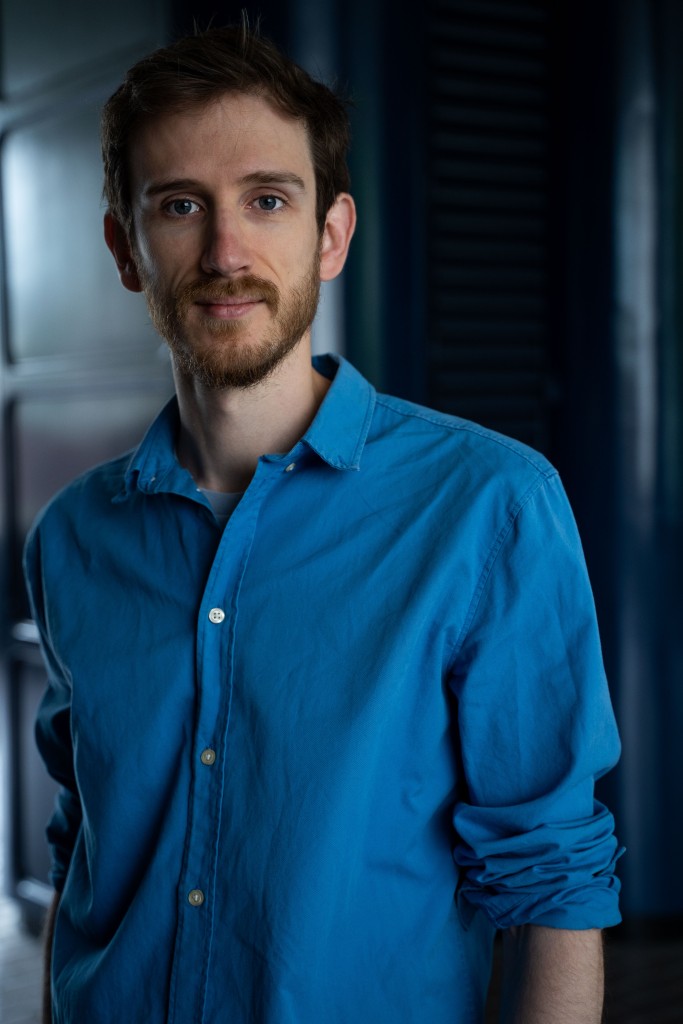
Nicholas Bowling is the critically acclaimed, Costa Award-shortlisted author of WitchbornIn the Shadow of Heroes and Song of the Far Isles. He grew up in Chester and studied English and Classics at Oxford University. As well as writing, Nick has been a classics teacher, has co-written, recorded and released an album and two EPs and is now a bookseller. He lives in London but gets out when he can to climb mountains or swim in very, very cold water. .

PaperBound Magazine is an online magazine for the young, and the young at heart. We are dedicated to showcasing authors and illustrators for children’s and young adult fiction and we strive to deliver inspiring content, uplifting stories, and top tips for young and aspiring writers yet to burst on to the literary scene.

All our issues are completely free and run by volunteers, however if you would like to support PaperBound and the work we do, you can help us out by buying us a virtual book. We appreciate any support you can give us!

Don’t forget you can read with the latest issues of PaperBound Magazine – completely free – here.

Blog, Blog series, Bookshelf, Interview, Interviews, Short stories, Writing craft

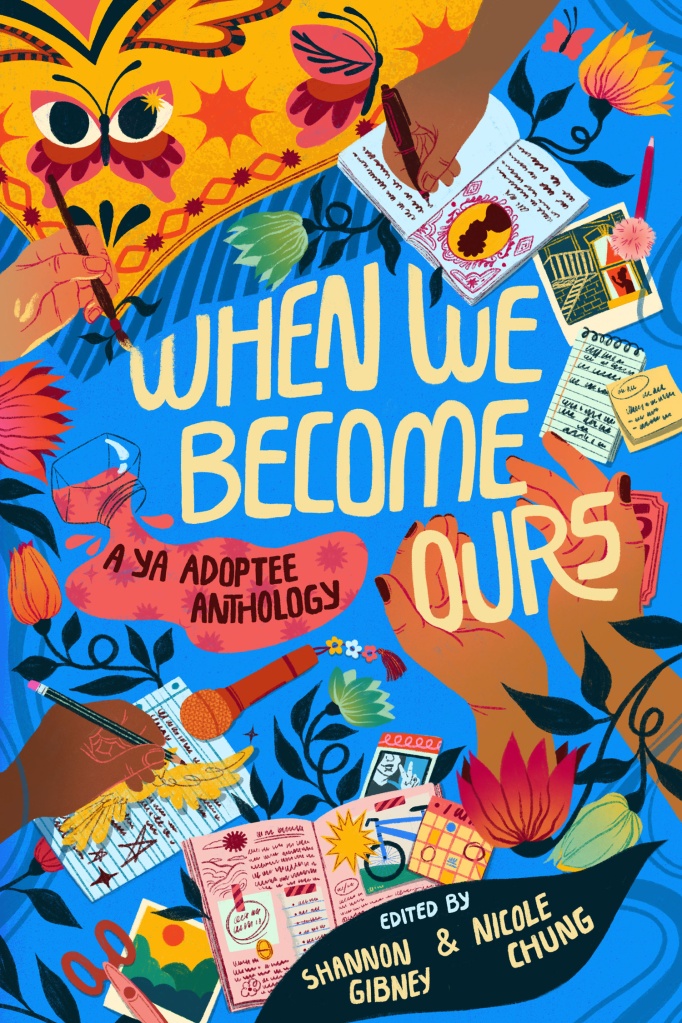
Interview: Shannon Gibney and Nicole Chung on groundbreaking YA anthology ‘When We Become Ours’

When We Become Ours is a young-adult fiction anthology by and for adoptees. In many ways, this is the book we wish we’d had when we were growing up. While adoption isn’t the central focus of every plot, every story is written by an adoptee author of colour and features a young adoptee as a protagonist. We don’t know of another book like it for teens, and hope it will be the first of many.

That the collection is so strong and wide-ranging is really a testament to our contributors’ talent and creativity. From the beginning, we knew we wanted to put together an anthology that represented as many different adoptee perspectives and experiences as possible. In the end, it wasn’t terribly difficult to ensure the breadth and diversity of narratives, because (as expected) we received so many wonderful original stories for consideration, and no two were alike! The hardest part of the process was probably narrowing down our selections, since we only had room for a small number of stories.

After the book was sold and announced, we put out a call for stories and read every submission as it came in. As mentioned, it wasn’t easy to make our selections from such a large number, but luckily we were aligned on the stories that most excited us. Next we did a round of developmental (or big picture) edits on each story, followed by a round or two of more detailed line edits, with our fantastic Harper Teen editor, Megan Ilnitzki, weighing in at each stage. The entire process was really a labour of love—all of us involved felt very strongly about the importance of this project. Our authors were truly a pleasure to work with, which made it a fun and collaborative experience from start to finish.
Despite the great and increasing diversity of YA literature by authors from marginalized backgrounds, adoptee-authored, adoptee-centered representation in literature for young people is still lacking. But, as we write in our Editors’ Note at the start of the book, we have always been here, and we know our imaginations and our stories are powerful. Our hope is that many readers will be able to see themselves, their feelings, their families, and their experiences reflected in these stories—an experience that is far too rare for young adoptees. At the same time, we think this is a book for everyone. We know that stories can entertain, teach, transform, and challenge us all, and we believe this anthology is one that anyone of any age can pick up and love.

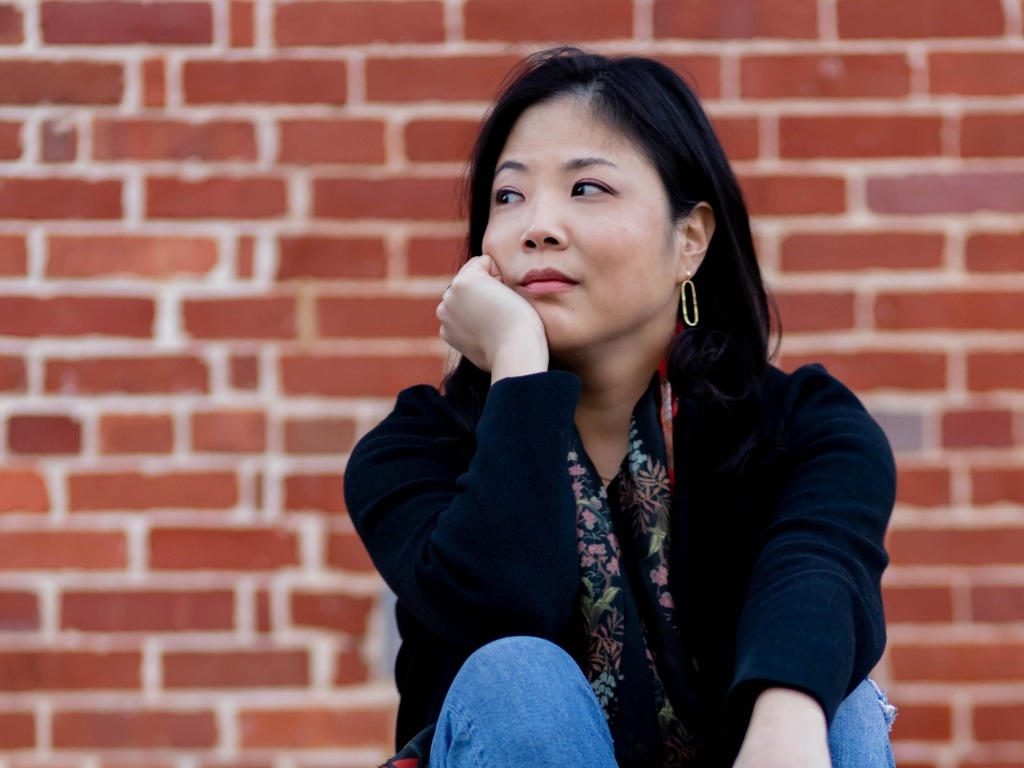
Nicole Chung is the bestselling author of All You Can Ever Know (2018) and A Living Remedy (2023) and the co-editor of several anthologies, including When We Become Ours. Born and adopted in Seattle, raised in Oregon, she now lives in the Washington, DC area. @nicolesjchung on Instagram + Twitter | nicolechung.net

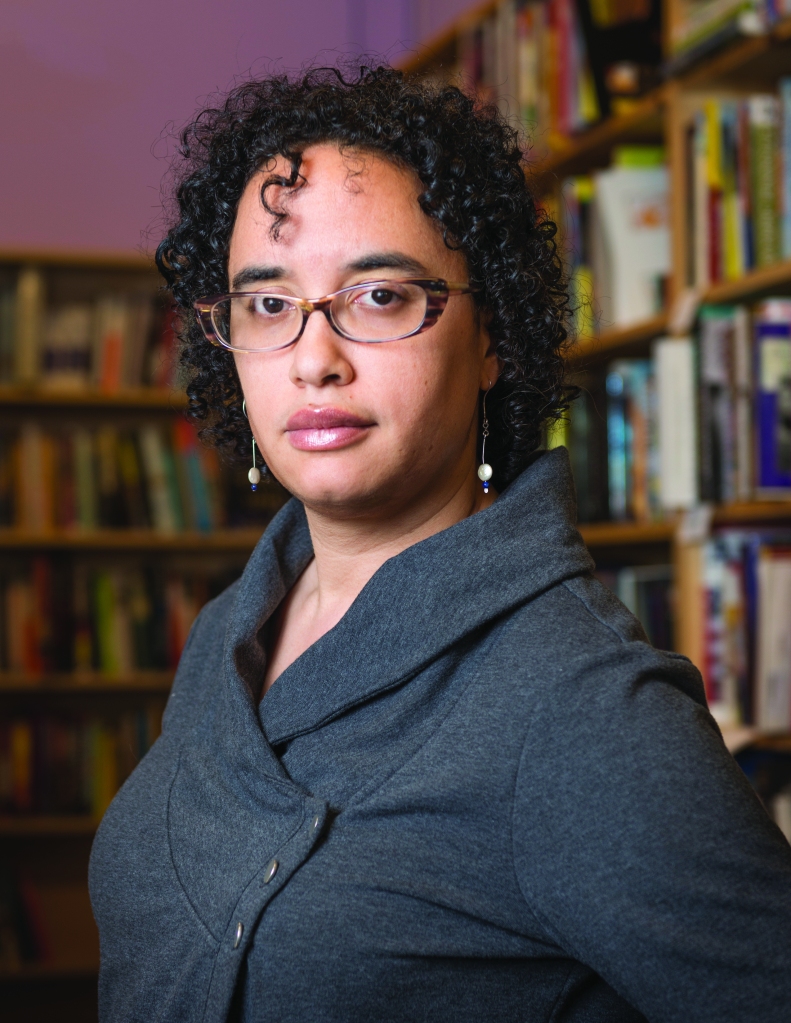
Shannon Gibney lives and writes in Minneapolis. Her work spans multiple genres, and she is the author of Dream Country (2018) and See No Color (2015), YA novels that won Minnesota Book Awards. Her newest novel is The Girl I Am, Was, and Never Will Be: A Speculative Memoir of Transracial Adoption (Dutton, 2023). @shannonelainegibney on Instagram | shannongibney.com

PaperBound Magazine is an online magazine for the young, and the young at heart. We are dedicated to showcasing authors and illustrators for children’s and young adult fiction and we strive to deliver inspiring content, uplifting stories, and top tips for young and aspiring writers yet to burst on to the literary scene.

All our issues are completely free and run by volunteers, however if you would like to support PaperBound and the work we do, you can help us out by buying us a virtual book. We appreciate any support you can give us!

Don’t forget you can read with the latest issues of PaperBound Magazine – completely free – here.

Blog, Blog series, Writing craft

Guest Blog Post: Emily-Jane Clark on Writing Comedy, author of The Beasts of Knobbly Bottom series

“Can you write a joke about this building that looks like Donald Trump?” This was just one of random things I worked on when I was a TV comedy writer!

Before I was a children’s author, I wrote for television shows such as The Mash Report, Mock the Week and The Jonathan Ross Show, where I learnt a lot about joke-writing and how to use comedy to engage an audience, both of which were really useful when I started working on my funny series for children – The Beasts of Knobbly Bottom!

Writing jokes about feminism, politics, pop culture and parenting, may be very different to the humour in my The Beasts of Knobbly Bottom books but actually the process I use to come up with funny ideas is the same!

One of my favourite ways to come up with a comical situation is by using my ‘Wouldn’t it be funny if?’ technique. I will take an ordinary everyday occurrence or current issue and think of a way to make it silly, fun, or sometimes absurd! For instance, what if … toilets came alive and were really cross that people were weeing on them! Or, what if the King accidentally did a massive burp during his Christmas Day speech or even, as I put in my first book, wouldn’t it be funny if sheep turned into mean gangster vampires?

While it was a lot of fun creating comedy for grown ups, I find you can be even more bonkers when writing for children, which is one of the reasons I wanted to write a kid’s novel. That, and the fact I love a good bum joke, which tend to go down much better with under elevens…

Another form of humour I love to write is observational comedy – I did a lot of this for The Mash Report and the Daily Mash, so I really wanted to incorporate it into my books! As a mum of two young daughters, I realised that some of our discussions (OK, arguments!) are pretty funny. Children often try to find a loophole in their parents’ rules, think very literally or just be plain cheeky, and this can be hilarious. Therefore, I tried to include this in the relationship between my Knobbly Bottom mum character, Lucy, and her two daughters, Maggie, and Lily. It was important to me that their interactions were realistic and relatable and make parents laugh along with their children.

I love writing comedy for adults, but as a mother on a permanent quest to make her children laugh, and a massive kid at heart, creating Knobbly Bottom and all its weird and wonderful characters really has been a dream come true.

Emily-Jane Clark is a TV comedy writer, author and part-time drama teacher whose passion for stories and making children laugh inspired her to turn her hand to funny children’s fiction. She has written two books for children aged 8 – 11  THE BEASTS OF KNOBBLY BOTTOM: ATTACK OF THE VAMPIRE SHEEP and THE BEASTS OF KNOBBLY BOTTOM: RISE OF THE ZOMBIE PIGS (out on the 4th January).

PaperBound Magazine is an online magazine for the young, and the young at heart. We are dedicated to showcasing authors and illustrators for children’s and young adult fiction and we strive to deliver inspiring content, uplifting stories, and top tips for young and aspiring writers yet to burst on to the literary scene.

All our issues are completely free and run by volunteers, however if you would like to support PaperBound and the work we do, you can help us out by buying us a virtual book. We appreciate any support you can give us!

Don’t forget you can read with the latest issues of PaperBound Magazine – completely free – here.

Blog, Blog series, Interview, Interviews, Writing craft

Interview: Maya MacGregor on YA book ‘The Evolving Truth of Ever-Stronger Will’.

This book was a lot like The Many Half-Lived Lives of Sam Sylvester, in that it was a way for me to tell a story like a roadmap for my younger self. There’s a lot of found family, a lot of self-discovery, and some spooky happenings that tie the narrative together.

The Evolving Truth of Ever-Stronger Will is a love letter to every kid who has been made to feel monstrous. While that takes place through a lens of a kid who’s neurodivergent and agender, I hope Will’s journey will resonate with teens who may not share those traits too. It took me a long time to learn the lessons Will learns—that an abuser’s projected image of them is not their truth—and I hope that Will’s perseverance, tenacity, and self-preservation will help model a way forwards for anyone in a similar boat.

It was the only way I could get across a very specific message that acts as a framing device for the story on several levels. I wasn’t sure I could get away with it, but it felt true to the story I wanted to tell. That feels a bit insufferable to write out, ha. But ultimately, I choose points of view to reflect emotional proximity to the characters. Which isn’t to say that third person can’t be emotionally resonant—it absolutely can—but first and second person each invite the reader much closer in a way that feels more intimate to me. Others may disagree, of course!

One of the things I’ve mentioned at a few in-person events is that a certain plot point that happens right at the end of, I think, chapter three or four had an absolutely eerie reflection in my own personal life. I paused writing just after that, a paragraph or so into the next chapter (which was smack in the heart of the emotion still) and put the book aside for a filmmaking project and a choir trip to Austria, and in the time I was away, I discovered via Ancestry.com DNA that my biological father was someone entirely different to who I thought he was. If you read the book to that point, you can probably understand how when I went back and read into my progress to get my bearings, I had to go take a few minutes to collect myself.

Will is very much like me on many levels—agender, an undiagnosed autistic teen (I was a teen once!), the product of a lot of upheaval and poverty—and the emotion of having written a different (but just as emotionally impactful) revelation bare months before I experienced my own welded this book to my heart in a way I don’t think anything else could have. My estranged biological mother is not Francis and was not physically abusive like that, but she did keep some whoppers from me, and over the past few years, like Will, I’ve been sorting through all that. I’ve also been privileged to meet and form a very loving relationship with my biological dad, and we’ve been making up for thirty-four years of lost time.

Without a doubt, Will, Raz, and Julian. I love Matt and Hannah as well, of course, but gosh, I adore Julian and Raz so much. We all need people who see us for who we are without us having to offer a university-level course in how to relate to us, and it was very important for me to model that with those characters. I also want Raz and Junius Sylvester to be best pals!

Absolutely. As a wee anecdote, we’d actually trunked both of my YA books because they bounced off editorial boards for the use of they/them pronouns (and non-stereotypical autistic phenotypes, to boot) in 2017-2018 when I wrote the books. My first ever agent, Jes Negrón, had since gone into editing at BMK (now Astra Books for Young Readers), and when she started acquiring YA, she came straight to me and my new agent Sara Megibow, knowing I’d a trunked manuscript. If she hadn’t been so keen to work with me again, I don’t know that these books would exist.

I cannot count the number of messages I’ve received from readers saying that they have never seen themselves represented in fiction before now. That’s heartbreaking in a lot of ways, but in others, it’s such a relief for me to hear. I had to write the books for them to exist, as did so many of my contemporaries who are doing just that these days. Now there are many more chances for this moment to happen at younger ages! Things are changing for the better, albeit slowly and not without a lot of pushback.

Alas, I don’t think I’m allowed to say much, but I will say there’s a Gaelic-heavy YA fantasy in the works, set in my beloved Argyll in the Gàidhealtachd. It’s a story about belonging, magic, the sìthichean, and intergenerational language transmission. Gaelic music and culture informs my entire life; I use the language every day, and our cultural practices are the foundation of my entire sense of home. I hope to bring some of that to the wider world from the perspective of someone who lives and breathes within that sphere.

Plus, the book also has an agender autistic protagonist—and a genderfluid shapeshifting sidhe prince for a love interest, so what’s not to love? 😉

The book is done, and I truly hope to have news about a publisher and publication timeline soon! I’m absolutely itching for folk to meet Cam and Ezra.

Maya MacGregor is an author, singer, and artist based in Glasgow, Scotland. A fluent Gaelic speaker, Maya is active in many community activities in Gaelic music as well as writing contemporary YA and adult fiction (as Emmie Mears and M Evan MacGriogair). Maya has a degree in history and is passionate about writing the stories for teens they wish had existed when they were younger and fills them with the type of people who have always populated their world.
Their pronouns are they/them.
The Many Half-Lived Lives of Sam Sylvester was Maya’s first YA novel and was a finalist for the Andre Norton Nebula award and the Walden Award. The Evolving Truth of Ever-Stronger Will, Maya’s second YA, came out Halloween 2023.

Caitlyn is a young reader from Cornwall who is a proud member of the LGBTQIA+ community. They enjoy reading stories about young people like them, as well as fantasy novels. They surround themselves with media that includes the LGBTQIA+ community, so this book fit right in with their bookshelf.

PaperBound Magazine is an online magazine for the young, and the young at heart. We are dedicated to showcasing authors and illustrators for children’s and young adult fiction and we strive to deliver inspiring content, uplifting stories, and top tips for young and aspiring writers yet to burst on to the literary scene.

All our issues are completely free and run by volunteers, however if you would like to support PaperBound and the work we do, you can help us out by buying us a virtual book. We appreciate any support you can give us!

Don’t forget you can read with the latest issues of PaperBound Magazine – completely free – here.

Blog, Interview, Interviews

Interview: Millie Florence on being a Teenage Published Author, Navigating Negativity, and Middle Grade Book Deals

PaperBound Magazine are thrilled to feature a blog Q&A with author Millie Florence.

This interview has been composed and written by freelance writer Cailey Tin.

Q&A with Millie Florence

You published your debut book, Honey Butter, at age thirteen. What was the process of writing and publishing it like for you? Were there any resources or help you got at the start?

I may not have finished Honey Butter without NaNoWriMo. NaNoWriMo stands for National Novel Writing Month, which is every November. It’s the challenge to write the entire first draft of a novel in thirty days. Their official website provides you with tools to track your word count goal, advice, and inspirational pep talks to keep you motivated. The program was definitely what pushed me to write the first draft of Honey Butter. 
I’ve been obsessed with writing and storytelling for as long as I can remember, but always struggled to finish anything longer than a short story. My goal in writing Honey Butter was to write something a step up from a short story. Something simple and short and sweet, but something I could write with excellence. Something I could be proud of. Although all my projects before this had been epic fantasy and sci-fi novels, for this I purposefully kept myself to a limit of 30k words and a contemporary story set in an ordinary suburban neighborhood. 
I have a video on my YouTube channel about the process of writing Honey Butter, which I highly recommend. I explain everything more eloquently and in depth there, with some advice for young writers who are experiencing the same struggles I did! 
So far, yes, I have read my book reviews, but that’s mostly because there aren’t very many of them. Due to having a smaller number of reviews, there also aren’t many hateful ones. I anticipate receiving a lot more reviews once my traditionally published books are released, because those companies have a built-in audience that I don’t, and it has been on my mind lately, how I should approach reviews once I start getting large numbers of them. 
Abbie Emmons, an author and YouTuber I follow, mentioned getting in a very bad mental place with reviews when her first novel came out. She read every single review for a while, and whether she had a good day or a bad day depended on the reviews she got. Obviously, that’s not healthy. 
I think it’s a balance. You need to be able to take feedback and hear what your readers are saying, but you can’t let it consume your life. It comes down to having confidence in your story. You have to be able to see through both flattery and hate to recognize your story for what is truly is. 
It’s been a really interesting experience, and I love both! I love the control of self-publishing and the fact that I get to be intimately a part of how the book is produced. Still, traditional publishing has a wonderful collaborative nature to it, and it’s amazing to work with such talented and hard-working individuals. The process and experience with traditional publishing can also really change depending on what company you work with. 
In the future, I’ll choose a route depending on what I think each book needs. 
My favorite part of writing is when the characters come to life. If you develop characters well, they’ll sort of start talking and acting on their own, or, to put it in less whimsical terms, you know exactly what they would do or say in any situation. Thus, all you have to do is create the right situations, put your characters in them, sit back, and type as fast as you can. It’s like building a marble run and then experiencing the satisfaction of watching your marble zoom through it exactly as you intended. Those are my favorite scenes to write, with characters bouncing off each other and their environment until they land exactly where they need to be to further the plot. 
Of course, sometimes it’s not that easy. Sometimes you’ve miscalculated the placement of a few pieces in your marble run, and when you put the marble in it falls out off the track, or goes in a different direction entirely. That’s when adjustments need to be made.
I always write my first draft as quickly as possible, which takes one to three months, depending on the length of the draft. I have to strike while the iron is hot, so to speak, and take advantage of that initial burst of inspiration. The drafts after that vary, they can less or more time than the first draft, it all depends on what changes I decide to make. I alternate between receiving feedback from beta readers and author friends, and implementing the changes until I feel that the story is the best it can possibly be! It usually takes me four or five drafts to get there. 
When I’m writing a first draft I spend anywhere from one to five hours a day writing. That’s the most intensive part of the process. Once I get to later drafts progress it a bit more difficult to measure. I’ll often go days or weeks without writing in drafts two and three, but I never stop brainstorming and thinking through the best way to improve the storyline. That way, when I do sit down to write, I don’t spend too much time staring at my blinking cursor. Half the battle is sorting out what I’m going to write. After that, it comes pretty easily to me. 
I always knew I wanted to publish my books someday, so I would say it felt a lot more exciting than intimidating. There was definitely a lot to learn, but I loved every minute of the learning process. I started out by researching publishing in-depth and eventually settled on using Ingramspark for my self-publishing distributor. Later, when I wanted to explore traditional publishing, I did a lot of research on how to query and the different pieces that went into that avenue. 
Getting distracted. Our modern world is full of distractions, and writing, by nature, requires you to be bored enough to come up with your own imaginative entertainment. When social media is always at my fingertips, that can be very difficult. Those distractions have always been a struggle for me, but I learn and grow every day! 
I follow my inspiration, and so far all the story ideas I’ve come up with have been middle-grade! If I get an idea in the future that better lends itself to YA, then yes, I’ll write a YA book, but otherwise, I don’t have any plans to. I do have plans to write more picture books in the future! Picture books are a very special medium to me–they’re like an art gallery and a short story rolled into one. I can’t draw, but I love working with people who can, and I love the challenge that comes with telling a story in such a short format. 
A stage actor. 
I’ve been acting in community theater since I was very young, and I absolutely love it. The collaboration with the cast and crew and the opportunity to bring a character to life is a very special experience. I love working with fellow creative people, and I love putting on a show. There’s something beautiful about hearing your audience’s reaction in real-time, and for a few hours, in one room, a group of strangers are all fully immersed in a story together.
Yes! I’m a big fan of middle-grade, and I always will be. Two books that were influential to me at a young age were Anne of Green Gables by L. M. Montgomery and A Little Princess by Frances Hodgson Burnett. I listened to those two audiobooks over and over and over again when I was little, and they definitely instilled in me a sense of wonder for everyday life, and the importance of imagination and hope. 
One of my favorite quotes about storytelling is “The two most engaging powers of an author are to make new things familiar, and familiar things new.” Anne of Green Gables and A Little Princess are in the category of making familiar things new. 
In the category of making new things familiar, I also grew up reading Harry Potter, The Lord of the Rings, and The Chronicles of Narnia
My favorite book of all time is The Mysterious Benedict Society by Trenton Lee Stewart. It checks all the boxes of everything I love in a middle-grade novel and executes them to near perfection. Mystery and adventure, lively characters, subtly quirky narration, impossible odds, and yet everlasting hope. It’s an adventure that is fun and fantastic, while simultaneously holding great depth and wisdom that leaves a lingering warmth in your chest when you finish. It’s the sort of book I want to write!
Quite honestly, I would say “Don’t worry so much.” 
I’m very passionate and motivated when it comes to my writing, but there is a dark side to that when doubts start to creep in. What if I don’t make it? What if my writing isn’t good? What if it is good but it doesn’t matter because it gets lost on the internet and no one ever reads it? What if I do everything right, but I just wasn’t lucky enough? What if I’m still here in fifteen years? 
But worrying about those questions doesn’t answer them. Doubting if a dream will come true doesn’t make it any more likely to do so. Worrying doesn’t make a difference in the outcome, but it does make a difference in our mood, and not in a good way. What does make a difference in the outcome is excitement and creativity and passion for the stories we write, and you’ll live a happier life along the way. 

Millie Florence

Millie Florence is an adventurous homeschooler who published her first book, ‘Honey Butter’, at age 13, and another middle grade book at age 15. Currently, she has two books on the way. She loves sushi, zip lines, and just about all things yellow. 

Connect with Millie on Instagram: @millieflorenceauthor.

Cailey Tin

Cailey Tin is an interview editor of Paper Crane Journal. She is an Asia-based staff writer and podcast co-host at The Incandescent Review, a columnist in Incognito Press and Spiritus Mundi Review, and her work has been published in Fairfield Scribes, Alien Magazine, Cathartic Lit, and more.
Her work is forthcoming in the Eunoia Review and Dragon Bone Publishing. Visit her Instagram @itscaileynotkylie.

PaperBound Magazine is an online magazine for the young, and the young at heart. We are dedicated to showcasing authors and illustrators for children’s and young adult fiction and we strive to deliver inspiring content, uplifting stories, and top tips for young and aspiring writers yet to burst on to the literary scene.

All our issues are completely free and run by volunteers, however if you would like to support PaperBound and the work we do, you can help us out by buying us a virtual book. We appreciate any support you can give us!

Don’t forget you can read with the latest issues of PaperBound Magazine – completely free – here.