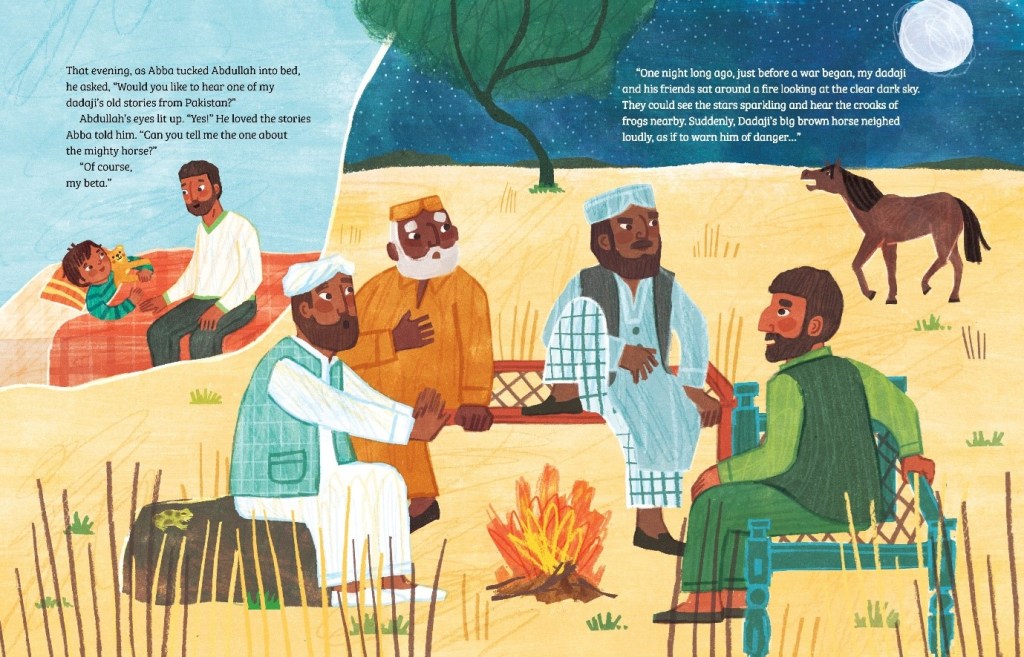
Abdullah's Bear Needs A Name! Illustration 1 by Sophie Benmouyal
article, Blog, Blog series, Bookshelf, Interview, Interviews, on writing, Writing craft

Guest post: Shirley-Anne Brightman and Yasmin Hanif on The Power of Storytelling and Using Your Own Name

By Shirley-Anne Brightman and Yasmin Hanif

© Floris

Storytelling has long been a tradition in many cultures around the world. In older generations in South Asian Pakistani culture, oral storytelling is often the only way stories were shared and passed down.

When I began working with a charming, little school in Glasgow on their ‘We Can Be Heroes’ project helping primary school children to see themselves in the stories they read, I had no idea how central the story of how the project began would be to the project itself, and indeed my unwritten book at that point. In fact, my few years with the schools, saw an ocean of stories; from fiction, non-fiction, memoir to something in between fill the school.

Shirley-Anne Brightman, the pioneer of the project and the Principal Teacher explains how our collaboration came about…

Shirley-Anne’s Story

When I was on playground duty, some of the older pupils came up to me asking for help: “Mrs Brightman, we don’t know enough names, can you help us?” Totally confused, I asked them to explain. They were preparing a Guess the Name of the Teddy fundraising activity and needed 30 names to be chosen by players; so far they had James, Emily and Belinda.

“I don’t understand, what about your name, Zainab? Or yours, Anum? There’s Eesa over there, Mohammed, Zeenat … we have 300 children in the school, what’s wrong with their names?” I asked with slight concern. I feared I knew what their reasons might be.

“You can’t call a teddy those names!” they said in complete sincerity.

“Why not?” I replied, matching their tone as nearly as I could.

It wasn’t the first time we had observed a disregard in our pupils for their own identity. We had seen primary 1 children drawing self-portraits showing themselves with white skin when their own was brown.

Some of the ways we were trying to address the representation was in the reading schemes and class library books we were buying but the books we wanted to buy were hard to find, if not non-existent.

I went to our Headteacher. “We have to do something!” I told her. “It’s not right.”

So, we did.

We worked with the Scottish Black People, People of Colour Writers Network (SBPOC) to find writers who would work with our pupils to write our own stories. That’s when we met Yasmin.

Yasmin’s experience

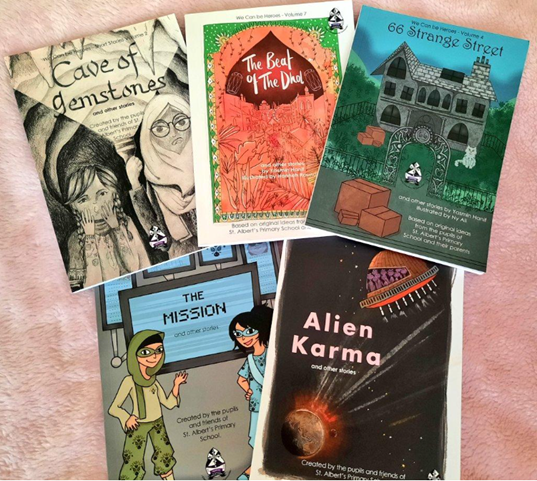
During phase 1 of the project the children came up with various ideas such as superheroes and secret laboratories (‘The Zedriz’), a shipwreck and being stranded on a remote island (‘Home is Where the Heart Is’) to two sisters being trapped in a cave (‘Cave of Gemstones’). By this stage in our project, the stories the children came up with still reflected what they read themselves or watched on TV or YouTube.
It was during phase 3 of the project that I felt the storytelling and imagination of both the school and the community were really captured.

One of the parents of the pupils I was working with told me a real-life story based on her grandparents falling in love in India, and a golden bangle that had been passed down through the generations. She still wore those bangles to this day. This became one of the published stories from the project.
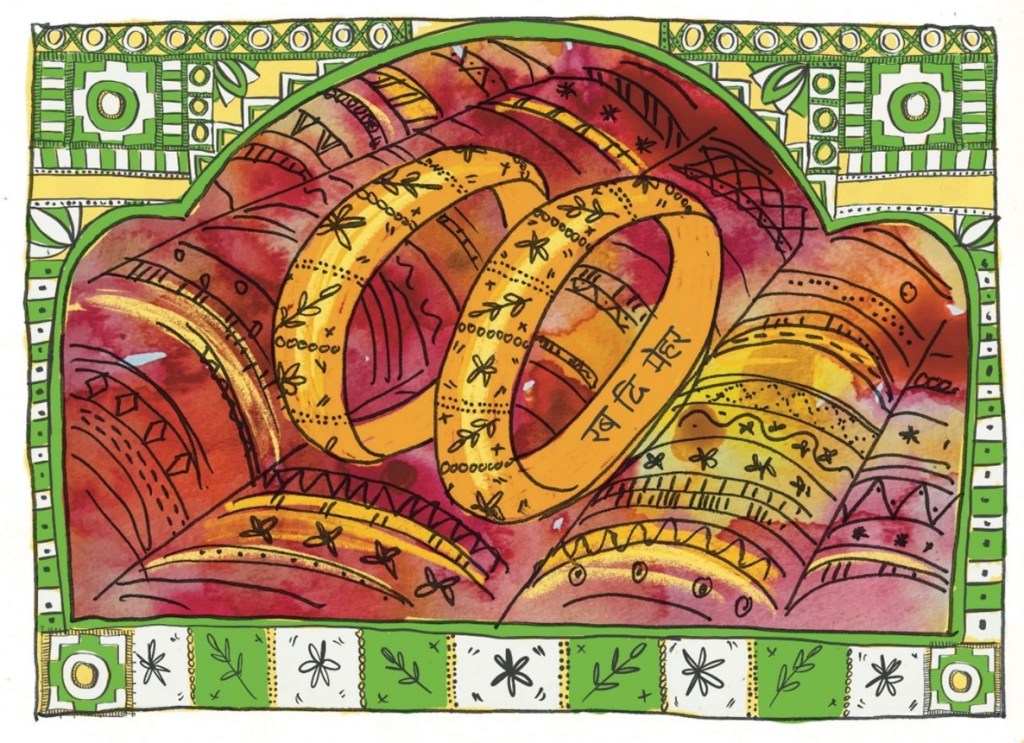
Beat of the Dhol, ‘We Can Be Heroes’, St Albert’s.
Illustration by Hannah Rounding.

I found that storytelling leaves a legacy, not just a physical one like those bangles but a legacy of confidence, and of empowerment for those pupils that I worked with at the school, and they would be taking that legacy with them into later life.

In the same way, Abdullah gets a teddy bear passed down through the generations from his Abba (or dad) in my debut picture book, Abdullah’s Bear Needs A Name! which was inspired by events from the school. Just the like kids at the school, Abdullah struggles to name his bear, until he hears an old story from his heritage.

The message on both accounts is a powerful one; that your name matters, that your stories matter, that you matter.

© Floris

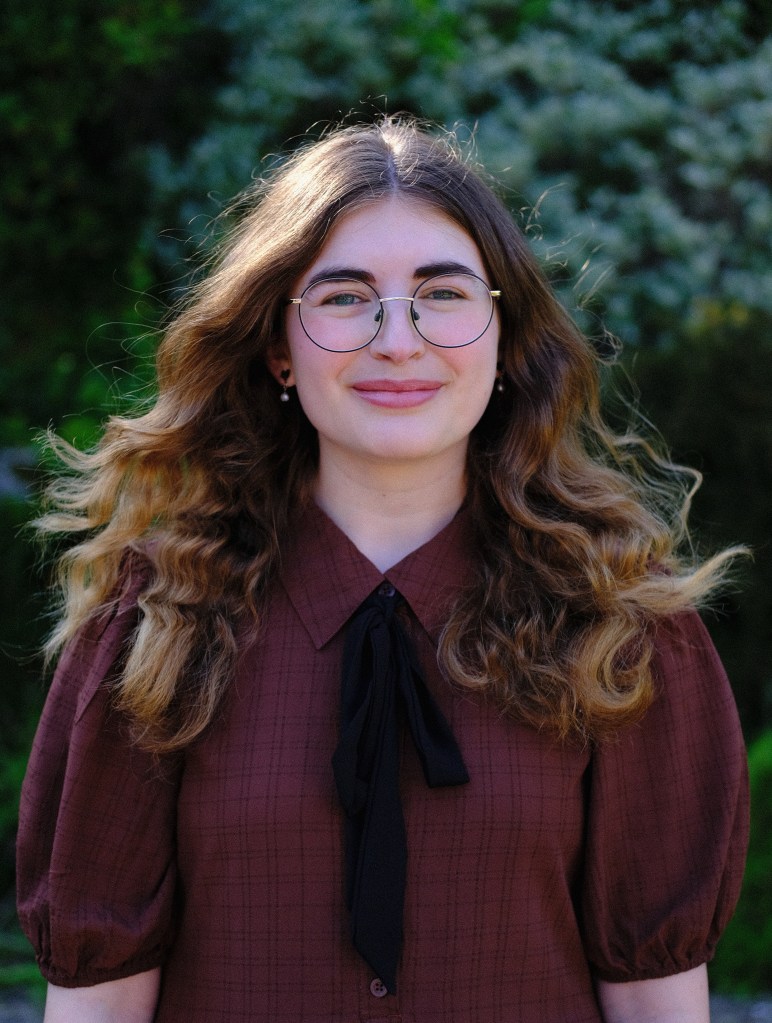
Yasmin is a Scottish writer and educator. She was shortlisted for the Kavya Arts Prize in 2023 for her story which became her debut picture book, Abdullah’s Bear Needs A Name! (Floris, 2025). She was a writer in residence at a primary school and worked on their project to promote diversity and inclusion within children’s writing and publishing, which won the SAMEE Aspiring Writers Award and the Scottish Education Curriculum Innovation Award 2022.

Shirley-Anne Brightman studied languages at the University of Cambridge and holds an MSc in Social Policy from London School of Economics. She has taught in primary schools and English as a Second Language contexts in four countries. She is currently a Leader of Learning at Glasgow City Council’s Improvement Challenge which aims to close the poverty-related attainment gap.
PaperBound Magazine is an online magazine and blog for the young, and the young at heart. We are dedicated to showcasing authors and illustrators for children’s and young adult fiction and we strive to deliver inspiring content, uplifting stories, and top tips for young and aspiring writers yet to burst on to the literary scene.

All our issues are completely free and run by volunteers, however if you would like to support PaperBound and the work we do, you can help us out by buying us a virtual book. We appreciate any support you can give us!

Don’t forget you can read with the latest issues of PaperBound Magazine – completely free – here.

article, Blog, Blog series, Bookshelf, Interview, Interviews, on writing, Writing craft

Interview: A Grave Inheritance by Felicity Epps

A Grave Inheritance is a gothic murder mystery, delving into seances and spiritualism in Victorian London. My main character Dolores Rain is grieving the loss of her parents and older sister, but when ghostly occurrences point to dark secrets within her house, she teams up with her friends to unveil the truth…and solve a murder!

I had so much fun writing this novel, because I was able to indulge all my favourite themes, from spirits and haunted houses to mysterious apothecaries and mourning fashion. It is very much a reflection of the kind of novels that I like to read, so the inspiration for the novel came from cosy nights reading ghost stories!

Dolores appeared as a fully-fledged character from the start – I think because I indulged her quirks and worries, it all seemed to come naturally! The first scene in the novel was also the first vision that I had for the story: Dolores anxiously declaring that she must be on her “deathbed”, while also mourning how many novels she still has to read.

It felt like such an engaging start for a murder mystery, because Dolores is not set up to be a particularly good investigator – she is overly fearful and really just wants to retreat to her bed. As the novel progresses though, I really enjoyed having her confidence grow, especially once she learns to trust her friends and realises that she can confront the things that frighten her.

The theme of power was always such a key element, because women in the Victorian era lacked independence and the freedom to govern a lot of their own decisions. Dolores finds herself in a unique position being granted her family’s inheritance, but it still comes with the expectations of London society, as she is pressured to get married.

This theme of power then evolved for me, as I quickly realised that ghosts were not the only danger in the novel – from Dolores’ nerves being dismissed as hysteria to the looming threat of being sent to an asylum, Dolores and her friends, Ada and Violet, struggle to be taken seriously. Eventually, the girls form The Society of Free Spirits, hoping that by embracing seances and spiritualism, they will finally be able to make their voices heard.

A symptom of Dolores’ grief is that it has made her world feel claustrophobic. This element definitely strengthened the supernatural aspect of the novel, allowing the haunted house to feel restrictive as well.

I think Dolores would have struggled to overcome her fears if she hadn’t had the outside encouragement of the other characters – Ada does an amazing job of dragging Dolores into society and helping her rediscover the pleasures of life that have been lost in her grief. Meanwhile, the spiritual medium, Violet, helps Dolores find her voice, asking questions that have been ignored by many of the male characters in the book.

I do like to imagine that Dolores always had this resilience within her; she just had to remember it! In the novel, she often feels overwhelmed in social situations, but then finds her strength again in quiet moments. Through all her ghostly experiences, she doesn’t want to give up – and this desire to look for answers pushes her through, even when she wants to shut her front door and ignore the outside world!

When I used to imagine being published, I’d fantasise about finding my novel on a shelf in a bookshop. So now, to have A Grave Inheritance popping up in Waterstones windows has been absolutely beyond my hopes as a debut author!

I have loved seeing the apothecary bottles, candles and skulls that have appeared in such creative displays across the stores. I’m so grateful to all the amazing booksellers that have championed the novel, and I like to think that A Grave Inheritance has ushered in spooky season early this year!

I’m currently working on a sequel to A Grave Inheritance, which will be Book 2 in The Society of Free Spirits series. I’m so excited to share more about Dolores, Ada and Violet, as they embark on further ghostly investigations!

While Dolores’ house can feel gloomy and oppressive, I’m keen to delve more into the world of her friend Ada – exploring the glittering ballrooms of Victorian high society, where dark secrets are kept closely hidden.

My main advice would be to finish a first draft without worrying about it being perfect. When I first started writing, I wanted each chapter to be just right, before moving onto the next. But now, I focus on letting the characters lead me to the end of the novel and save worrying about plot holes for future revisions.

I find this gives me a better perspective on the project overall, and it’s such an uplifting feeling to have a manuscript in your hands – even a messy first draft!

Felicity Epps studied a degree in English Literature before completing a Masters in Eighteenth-Century Studies, where her research focused on female murderers in true crime writing! Felicity finds inspiration in history; researching strange and spooky subjects. She enjoys exploring cemeteries, collecting old books and hunting for ghostly Victorian photographs in antique shops.

Felicity currently lives in Broadstairs, Kent, UK, with her partner, Josh, and their baby daughter, Madeline. When she isn’t writing, Felicity loves going to the beach, knitting colourful jumpers and drinking far too many cups of hot chocolate. A Grave Inheritance is her debut novel.

PaperBound Magazine is an online magazine and blog for the young, and the young at heart. We are dedicated to showcasing authors and illustrators for children’s and young adult fiction and we strive to deliver inspiring content, uplifting stories, and top tips for young and aspiring writers yet to burst on to the literary scene.

All our issues are completely free and run by volunteers, however if you would like to support PaperBound and the work we do, you can help us out by buying us a virtual book. We appreciate any support you can give us!

Don’t forget you can read with the latest issues of PaperBound Magazine – completely free – here.