article, Blog, Blog series, Bookshelf, Interview, Interviews, on writing, Writing craft

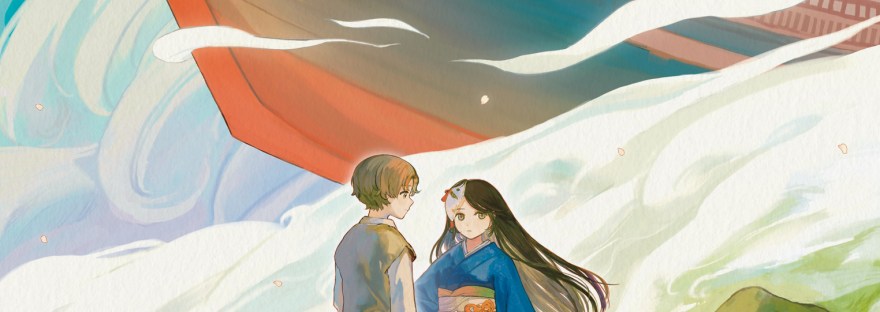
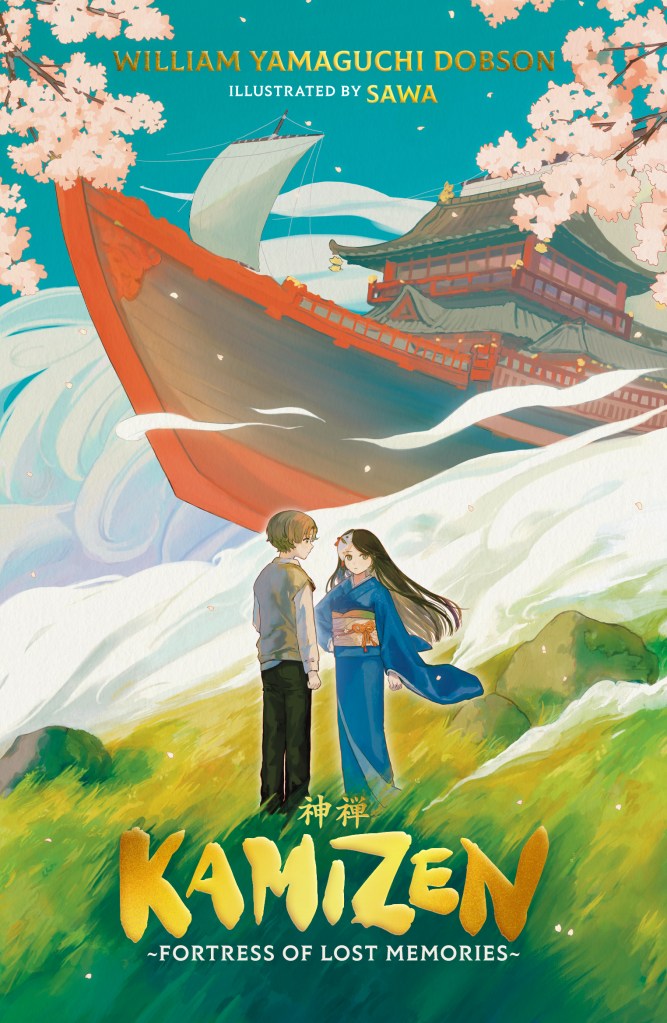
Interview: Kamizen: Fortress of Lost Memories by William Yamaguchi Dobson

It’s a middle-grade fantasy about a boy called Jonty who meets a mystical bonobo in Yorkshire and is offered the chance to enter through The Gate of Memory so that he can recover lost memories belonging to his beloved grandfather and help him finish his memoir about life as a primatologist.

Inspiration, I find, is a mystical thing in itself – if I could pinpoint the exact source, I would drop a GPS pin and camp there for the rest of my writing life. Thinking back now, I would say there were several whispers in my ear. I wanted to write a story about the relationship between a child and grandparent. One of my all-time favourite stories is Tove Jansson’s The Summer Book. I then wondered if I could combine that with my interest in primatology and jazz, as one does on a quiet afternoon. And because of the experience I had with my father’s dementia for over a decade, I had been reading widely about the science of memory. Everything slowly fell into place.

The book is aimed at children eight and over. My children witnessed my father’s cognitive and physical decline from a very young age. They had never known him other than “Grandad is poorly”. Many families I imagined were in the same boat. So I wanted to write a story for my children and fellow passengers about preserving the memory of a person before the anarchy of dementia changed them – a time before grandad became poorly. I don’t think I necessarily planned it this way at the outset, but the message I wanted to convey gently is that memories are what make us human and it’s through stories that we remember those who no longer remember us.

I didn’t find it too difficult carrying out the balancing exercise between telling the fantastical story and handling the topic of dementia. The reality of end stage dementia is that it’s relentlessly grim, but you can’t write a children’s story (or an adult one) with relentless grimness. Nobody would read that and nobody should. You sow enough hints about the reality and let your readers water it with their imagination, because the primary duty you have to the reader is that your book is there to entertain them.

A few characters were borrowed from folklore and myth. The kappa is one of the best known yōkai, alongside the tengu. The earth spider is also from a legendary tale. The talking bonobo, however, is entirely my invention, although there is a yōkai known as a satori, which has monkey-like features.

Lafcadio, the Irish kappa, wrote himself. Once I figured out his voice, he was telling me how he would say things and crossing out what I’d written. And to give PaperBound an exclusive, did you know the paintbrush yōkai, Kaita Zanko has several layers of hidden meaning? Kaita is the past tense of “to write” in Japanese. Kaita Zanko is an anagram of Takai Kozan, patron of the Edo period artist Hokusai and himself a painter of nightmarish yōkai.

Zanko is a one-armed yōkai in tribute to Shigeru Mizuki, one of Japan’s most treasured manga artists and folklorists who repopularised yōkai among postwar audiences.

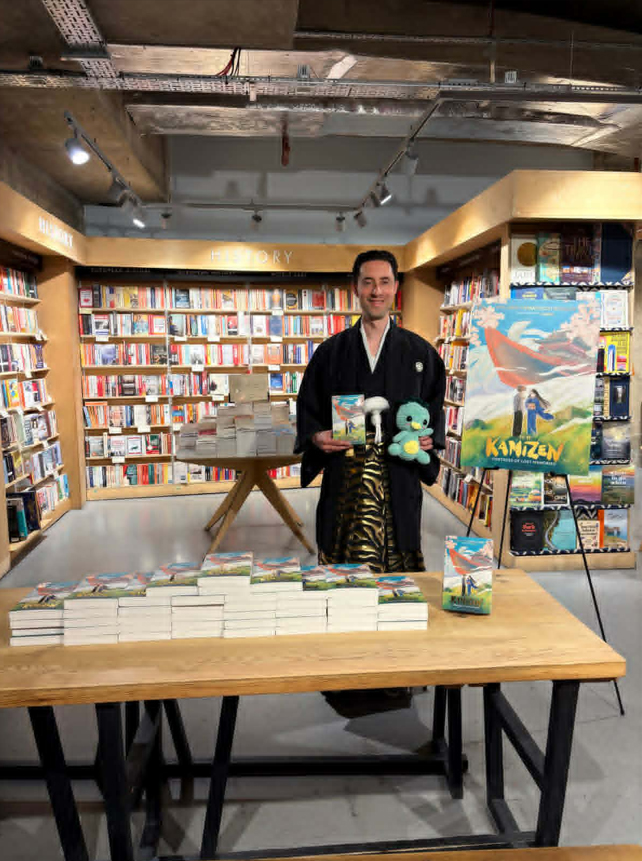
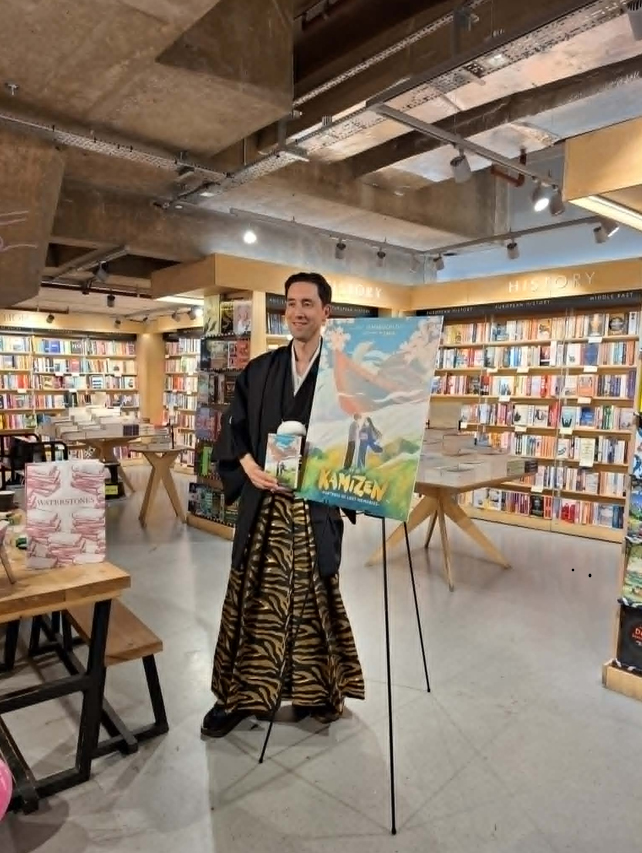
Audible acquired the book first and Scholastic bought the print rights shortly after. I had simultaneous edits and a smooth journey through production on both counts. The team Audible assembled was out of this world and you can tell from the quality of the production. There are so many highlights from the time, but two that stand out are: (1) when I was sent the audition clip for Tomoya Errington, who went on to be cast in the lead role. He stars in every single scene and is brilliant in every way; (2) when I first heard Timothy Spall playing Gramps I was walking along Tottenham Court Road and burst into tears as he sounded so much like my father (it happened opposite Waterstones, where I ended up holding my book launch!).

Working with Polly Lyall Grant and Karen Ball, my editors at Scholastic, and the wider team there has been a joy and painless experience. I wish I could find something to quibble about to give a juicy answer, but I’ll have to disappoint you! Best publishing experience? I received my first copy of Kamizen on my mother’s birthday when she happened to be staying with us, so I let her open the parcel without telling her what was inside. That was a lovely shared moment, entirely coincidental. 

I am reverting to writing longhand for a new project that may result in a highly illustrated middle-grade novel about a boy, a forest spirit and an unforgettable summer in the mountains of Japan.

Know your audience. If you have children, watch what they’re watching – see what makes them laugh and holds their attention: you can translate some of this to print fiction. You should already know what they’re reading and be familiar with the latest titles. Most importantly, in the words of Inspector Harold Francis Callahan, “you’ve got to ask yourself one question.” Why would a [insert age] child want to read the book I’m thinking of writing?

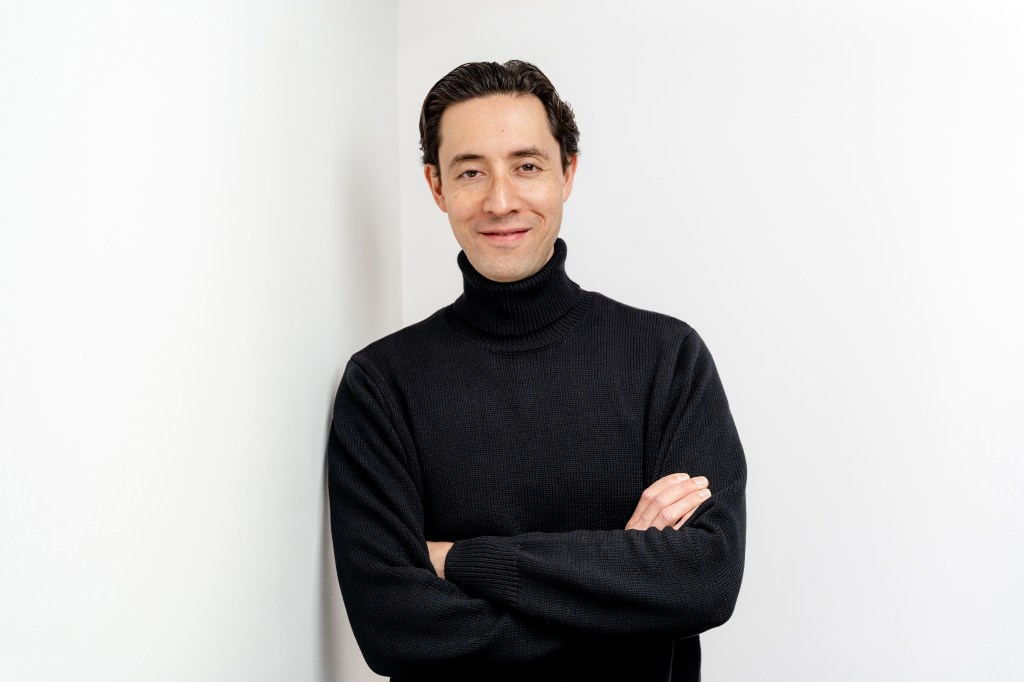
William Yamaguchi Dobson worked as a barrister before turning his hand to writing fiction. His childhood in Japan and love of manga influence his stories. When not looking after his children, he can be found reading or writing and likes to start the day with a cup of matcha and a smile.

PaperBound Magazine is an online magazine and blog for the young, and the young at heart. We are dedicated to showcasing authors and illustrators for children’s and young adult fiction and we strive to deliver inspiring content, uplifting stories, and top tips for young and aspiring writers yet to burst on to the literary scene.

All our issues are completely free and run by volunteers, however if you would like to support PaperBound and the work we do, you can help us out by buying us a virtual book. We appreciate any support you can give us!

Don’t forget you can read with the latest issues of PaperBound Magazine – completely free – here.

article, Blog, Blog series, Bookshelf, Interview, Interviews, on writing, Writing craft

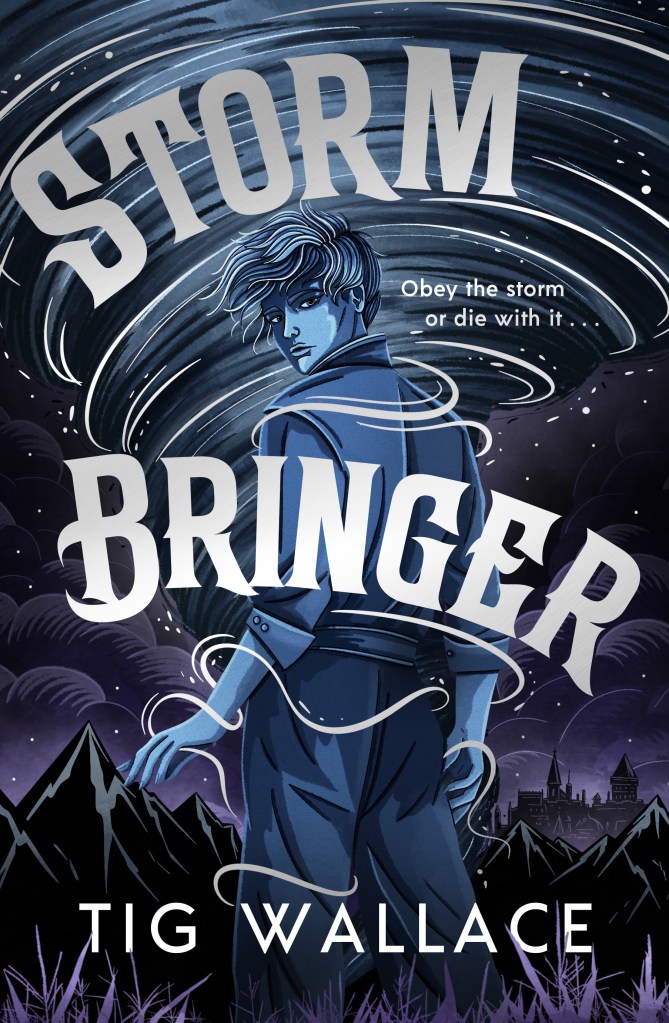
Interview: Tig Wallace on whirlwind YA debut Storm Bringer

Absolutely, and thank you for having me. Storm Bringer is a YA fantasy novel, set in a world besieged by big magical storms. The protagonist, Amelio, has lived in relative shelter for the past ten years, but has to, quite literally, venture into the storm when his mother goes missing. He encounters a world he never really knew and has to come to terms with a power he didn’t know he had, as the biggest storm ever threatens to destroy everything. It’s a bit like the movie Twisters but with tons of magic and a younger – and more rebellious – cast.  

It’s wonderful, if a little strange, to be on the other side of the table – I feel very lucky to get to do both. What’s surprised me the most is how brand new everything feels as an author. I went into it thinking I’d be able to anticipate some of how I’d feel, having a bit of inside scoop on the process, but that hasn’t been the case at all. I feel just as excited, nervous, and caught up in a whole range of emotions as every other author. People are kind and gerenous and I’ve been very well supported by everyone. I do sometimes have to turn my editor brain off though! 

I read an article years ago about a woman who chased eclipses – catching flights west during lunar events to see them as many times as she could, or for as long as possible. It stuck with me and morphed into an idea about chasing storms instead and eventually into an image in my mind of a teenager facing down an apocalyptic tornado. That was the seed of it all. I put it on the back burner initially to try writing other things, but kept coming back to it, and finally decided to write it. 

I knew I wanted to write fantasy that was action-packed and pacy, and hopefully also funny amidst all the peril. I always loved fantasy, whether classic or modern in feel, from Ursula Le Guin to Garth Nix to Leigh Bardugo, but also books that feel like blockbusters, like Matthew Reilly’s and Anthony Horowitz’s Alex Rider. I also love a disaster movie. So I thought, what if I bring all those things I love together…and the result is Storm Bringer. 

I’m glad they are terrifying! Yes, that was always the vision, and I knew I wanted to open with something big and startling to set the tone for what’s to come. There’s of course a great tradition of weather magic in fantasy novels, but I didn’t feel like I’d read anything where storms themselves are so innately magical and destructive. When I landed on that as an idea, it just seemed like something that made this world unique…and that it would be fun to write. I love a big set piece and I had a great time working out what would feel most dramatic on the page. But I also loved the idea that we might learn a lot about the characters by throwing them into massive storms. In Storm Bringer, life and death scenarios bring true feelings to the surface in the most intense moments. 

From the first iteration of the book I had ‘the Fault’ – the abyss that separates the two sides – but the rest took a long time to craft and work out. The magic vs no magic distinction wasn’t enough, so I spent time thinking about the history of the two places, their geographies, their mythologies, their beliefs, and tried to bring that through in the text. It’s funny, there’s actually loads more I wrote about Amrigo that didn’t make it into the final version of the book, for good reason. The thrust of the action takes place in Nimira and the book would have been much too long if we spent longer in Amrigo, but I was sad to leave Dex behind so soon in the story. Watch this space though! 

In The Hunger Games I love that Panem is a fantasy world based in reality, set on the North American continent. I drew inspiration from that a little for Storm Bringer – although it’s a pure fantasy world, I wanted it to feel like it could be ours with a big twist. A bit like the alternate Oxford we see in Northern Lights. I’m a huge sci-fi fan as well and I guess when I pictured Amrigo – at least where Amelio lives – I imagined something like the dusty, solitary peripheral towns in Blade Runner or the industrial off-world settlements in the Alien franchise. A place that’s gritty and unforgiving, geared towards function. 

Ooh, what a great question. I would have to say magic: I think however you define it, there is an exciting, unknown about it that represents something distinct from our own world. 

When it comes to Storm Bringer I’m most interested in how both magic and science are changing. As the book starts, we see magic has been declining, science on the rise, and the different attitudes and beliefs towards both, depending where you are in the world. These beliefs stem from history that has become mythology, and I’ve enjoyed exploring this through Amelio’s eyes. We see that both originate from the same source and I think there’s lots to explore in the grey area where the two meet. 

I am busy working away on the sequel to Storm Bringer, which is the first of three of books. Book two picks up pretty soon after the events of book one and readers can expect lots more from our three main characters, each of them dealing with something pretty major after the conclusion of the previous story. Book two roves further across the map, deepens the mythology of the world, showcases bigger magic and, of course, features lots of massive storms.  

I’m going to start by telling you my worst habit – as both an author and editor – which is that my default is to think I need a big chunk of time to start writing or editing. It’s not true. Big chunks of time are great of course, but don’t always present themselves. So, my first piece of advice is to sit down and write, even if you only have half an hour. 

The second tip is also about the writing itself: help tomorrow’s you by where you leave your writing today. I feel much less daunted, and much better equipped, to start writing when I’ve left myself in a good spot in the previous session. I leave myself scrappy notes in the document to remind myself what I have to do next, and I often pause writing before I’ve finished a scene or chapter, because I find it’s easier to get back into the flow that way, rather than starting a brand new scene from cold. 

My final tip is a classic with a twist I guess. Write the book you really want to write, not the one you think you should write – I can vouch for that first hand. That said, I think it’s really smart to equip yourself with as much market knowledge as you can. Go to book shops, trawl online, look at publisher catalogues to get a sense of what else is out there and working well. Think about which books you’d love to see yours sitting alongside in a shop. When it comes to approaching an agent, a publisher, or self-publishing, it will make your book feel more commercial and help it find its audience. 

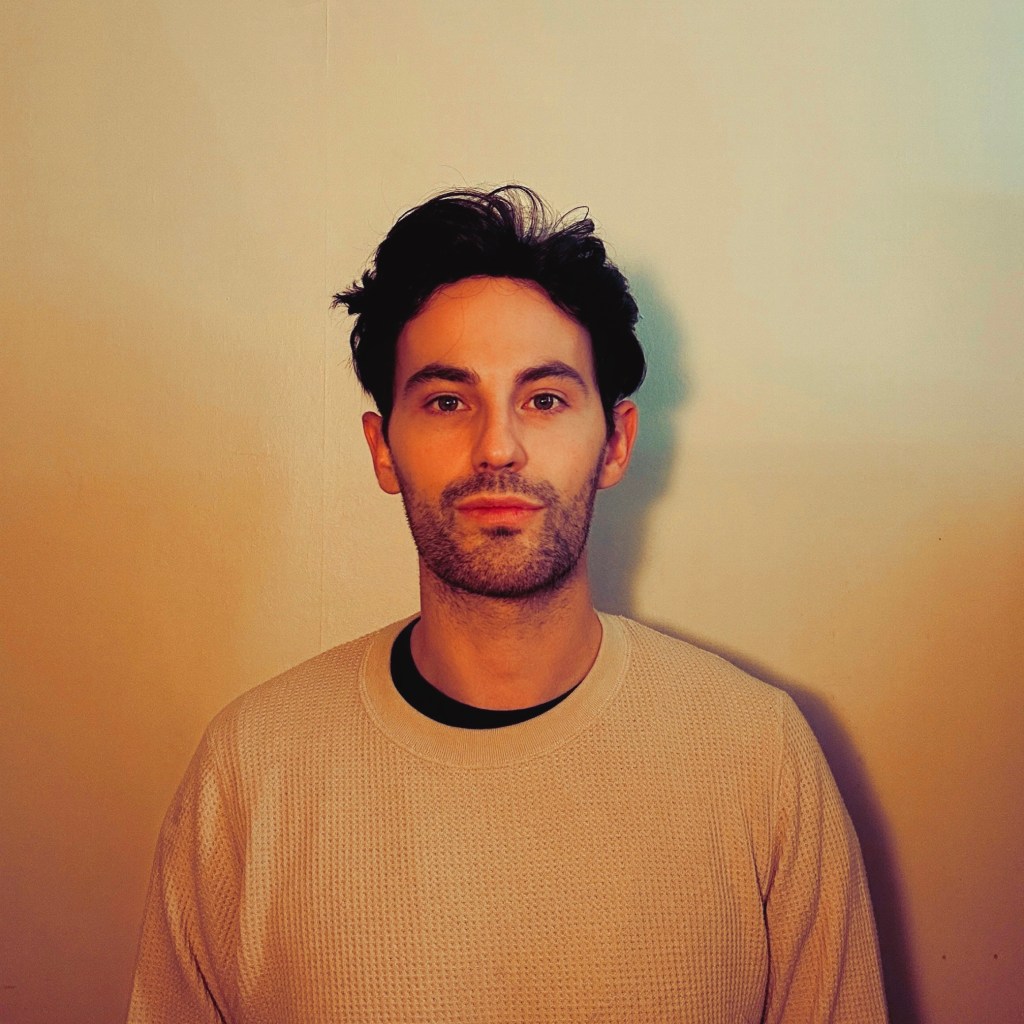
Tig Wallace grew up in a town between London and Oxford, reading as much fantasy as possible. After work as a runner on movies, and a brief, eye-opening experience working in magazines, Tig started a career in book publishing as an editor. Tig is a keen tennis fan, as both spectator and player, a cat enthusiast, and has never been known to say no to karaoke. He lives in London. Storm Bringer is his first book. 

PaperBound Magazine is an online magazine and blog for the young, and the young at heart. We are dedicated to showcasing authors and illustrators for children’s and young adult fiction and we strive to deliver inspiring content, uplifting stories, and top tips for young and aspiring writers yet to burst on to the literary scene.

All our issues are completely free and run by volunteers, however if you would like to support PaperBound and the work we do, you can help us out by buying us a virtual book. We appreciate any support you can give us!

Don’t forget you can read with the latest issues of PaperBound Magazine – completely free – here.

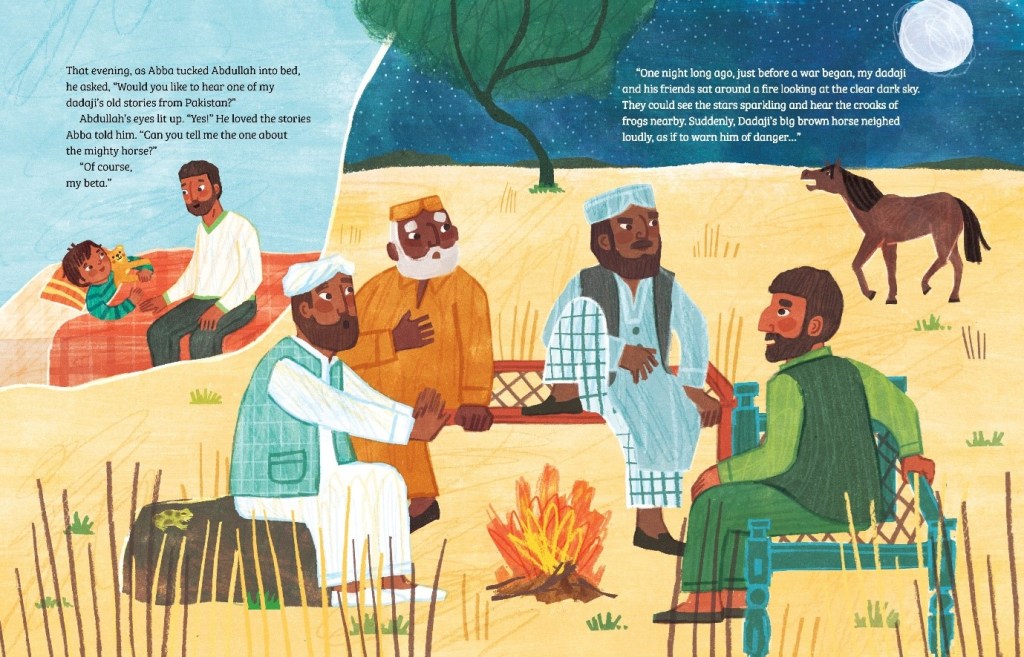
Abdullah's Bear Needs A Name! Illustration 1 by Sophie Benmouyal
article, Blog, Blog series, Bookshelf, Interview, Interviews, on writing, Writing craft

Guest post: Shirley-Anne Brightman and Yasmin Hanif on The Power of Storytelling and Using Your Own Name

By Shirley-Anne Brightman and Yasmin Hanif

© Floris

Storytelling has long been a tradition in many cultures around the world. In older generations in South Asian Pakistani culture, oral storytelling is often the only way stories were shared and passed down.

When I began working with a charming, little school in Glasgow on their ‘We Can Be Heroes’ project helping primary school children to see themselves in the stories they read, I had no idea how central the story of how the project began would be to the project itself, and indeed my unwritten book at that point. In fact, my few years with the schools, saw an ocean of stories; from fiction, non-fiction, memoir to something in between fill the school.

Shirley-Anne Brightman, the pioneer of the project and the Principal Teacher explains how our collaboration came about…

Shirley-Anne’s Story

When I was on playground duty, some of the older pupils came up to me asking for help: “Mrs Brightman, we don’t know enough names, can you help us?” Totally confused, I asked them to explain. They were preparing a Guess the Name of the Teddy fundraising activity and needed 30 names to be chosen by players; so far they had James, Emily and Belinda.

“I don’t understand, what about your name, Zainab? Or yours, Anum? There’s Eesa over there, Mohammed, Zeenat … we have 300 children in the school, what’s wrong with their names?” I asked with slight concern. I feared I knew what their reasons might be.

“You can’t call a teddy those names!” they said in complete sincerity.

“Why not?” I replied, matching their tone as nearly as I could.

It wasn’t the first time we had observed a disregard in our pupils for their own identity. We had seen primary 1 children drawing self-portraits showing themselves with white skin when their own was brown.

Some of the ways we were trying to address the representation was in the reading schemes and class library books we were buying but the books we wanted to buy were hard to find, if not non-existent.

I went to our Headteacher. “We have to do something!” I told her. “It’s not right.”

So, we did.

We worked with the Scottish Black People, People of Colour Writers Network (SBPOC) to find writers who would work with our pupils to write our own stories. That’s when we met Yasmin.

Yasmin’s experience

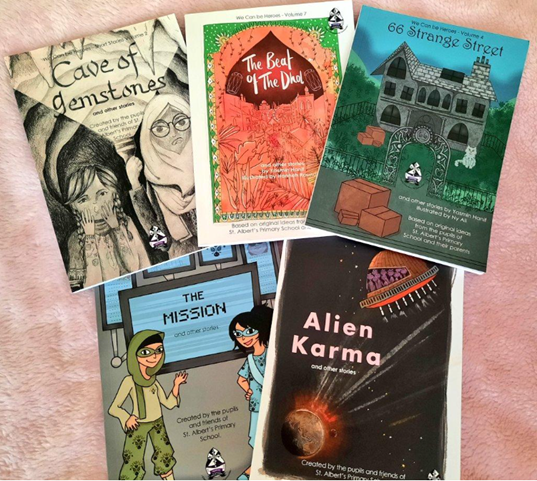
During phase 1 of the project the children came up with various ideas such as superheroes and secret laboratories (‘The Zedriz’), a shipwreck and being stranded on a remote island (‘Home is Where the Heart Is’) to two sisters being trapped in a cave (‘Cave of Gemstones’). By this stage in our project, the stories the children came up with still reflected what they read themselves or watched on TV or YouTube.

It was during phase 3 of the project that I felt the storytelling and imagination of both the school and the community were really captured.

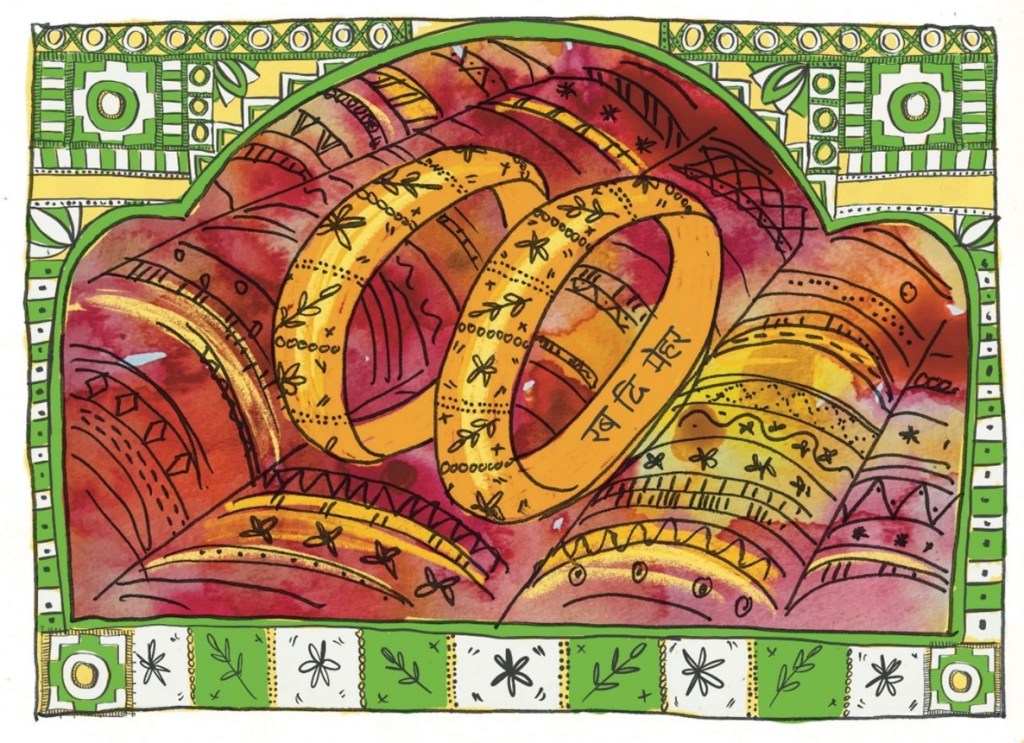
One of the parents of the pupils I was working with told me a real-life story based on her grandparents falling in love in India, and a golden bangle that had been passed down through the generations. She still wore those bangles to this day. This became one of the published stories from the project.

Beat of the Dhol, ‘We Can Be Heroes’, St Albert’s.
Illustration by Hannah Rounding.

I found that storytelling leaves a legacy, not just a physical one like those bangles but a legacy of confidence, and of empowerment for those pupils that I worked with at the school, and they would be taking that legacy with them into later life.

In the same way, Abdullah gets a teddy bear passed down through the generations from his Abba (or dad) in my debut picture book, Abdullah’s Bear Needs A Name! which was inspired by events from the school. Just the like kids at the school, Abdullah struggles to name his bear, until he hears an old story from his heritage.

The message on both accounts is a powerful one; that your name matters, that your stories matter, that you matter.

© Floris

Yasmin is a Scottish writer and educator. She was shortlisted for the Kavya Arts Prize in 2023 for her story which became her debut picture book, Abdullah’s Bear Needs A Name! (Floris, 2025). She was a writer in residence at a primary school and worked on their project to promote diversity and inclusion within children’s writing and publishing, which won the SAMEE Aspiring Writers Award and the Scottish Education Curriculum Innovation Award 2022.

Shirley-Anne Brightman studied languages at the University of Cambridge and holds an MSc in Social Policy from London School of Economics. She has taught in primary schools and English as a Second Language contexts in four countries. She is currently a Leader of Learning at Glasgow City Council’s Improvement Challenge which aims to close the poverty-related attainment gap.

PaperBound Magazine is an online magazine and blog for the young, and the young at heart. We are dedicated to showcasing authors and illustrators for children’s and young adult fiction and we strive to deliver inspiring content, uplifting stories, and top tips for young and aspiring writers yet to burst on to the literary scene.

All our issues are completely free and run by volunteers, however if you would like to support PaperBound and the work we do, you can help us out by buying us a virtual book. We appreciate any support you can give us!

Don’t forget you can read with the latest issues of PaperBound Magazine – completely free – here.

article, Blog, Blog series, Bookshelf, Interview, Interviews, on writing, Writing craft

Interview: A Grave Inheritance by Felicity Epps

A Grave Inheritance is a gothic murder mystery, delving into seances and spiritualism in Victorian London. My main character Dolores Rain is grieving the loss of her parents and older sister, but when ghostly occurrences point to dark secrets within her house, she teams up with her friends to unveil the truth…and solve a murder!

I had so much fun writing this novel, because I was able to indulge all my favourite themes, from spirits and haunted houses to mysterious apothecaries and mourning fashion. It is very much a reflection of the kind of novels that I like to read, so the inspiration for the novel came from cosy nights reading ghost stories!

Dolores appeared as a fully-fledged character from the start – I think because I indulged her quirks and worries, it all seemed to come naturally! The first scene in the novel was also the first vision that I had for the story: Dolores anxiously declaring that she must be on her “deathbed”, while also mourning how many novels she still has to read.

It felt like such an engaging start for a murder mystery, because Dolores is not set up to be a particularly good investigator – she is overly fearful and really just wants to retreat to her bed. As the novel progresses though, I really enjoyed having her confidence grow, especially once she learns to trust her friends and realises that she can confront the things that frighten her.

The theme of power was always such a key element, because women in the Victorian era lacked independence and the freedom to govern a lot of their own decisions. Dolores finds herself in a unique position being granted her family’s inheritance, but it still comes with the expectations of London society, as she is pressured to get married.

This theme of power then evolved for me, as I quickly realised that ghosts were not the only danger in the novel – from Dolores’ nerves being dismissed as hysteria to the looming threat of being sent to an asylum, Dolores and her friends, Ada and Violet, struggle to be taken seriously. Eventually, the girls form The Society of Free Spirits, hoping that by embracing seances and spiritualism, they will finally be able to make their voices heard.

A symptom of Dolores’ grief is that it has made her world feel claustrophobic. This element definitely strengthened the supernatural aspect of the novel, allowing the haunted house to feel restrictive as well.

I think Dolores would have struggled to overcome her fears if she hadn’t had the outside encouragement of the other characters – Ada does an amazing job of dragging Dolores into society and helping her rediscover the pleasures of life that have been lost in her grief. Meanwhile, the spiritual medium, Violet, helps Dolores find her voice, asking questions that have been ignored by many of the male characters in the book.

I do like to imagine that Dolores always had this resilience within her; she just had to remember it! In the novel, she often feels overwhelmed in social situations, but then finds her strength again in quiet moments. Through all her ghostly experiences, she doesn’t want to give up – and this desire to look for answers pushes her through, even when she wants to shut her front door and ignore the outside world!

When I used to imagine being published, I’d fantasise about finding my novel on a shelf in a bookshop. So now, to have A Grave Inheritance popping up in Waterstones windows has been absolutely beyond my hopes as a debut author!

I have loved seeing the apothecary bottles, candles and skulls that have appeared in such creative displays across the stores. I’m so grateful to all the amazing booksellers that have championed the novel, and I like to think that A Grave Inheritance has ushered in spooky season early this year!

I’m currently working on a sequel to A Grave Inheritance, which will be Book 2 in The Society of Free Spirits series. I’m so excited to share more about Dolores, Ada and Violet, as they embark on further ghostly investigations!

While Dolores’ house can feel gloomy and oppressive, I’m keen to delve more into the world of her friend Ada – exploring the glittering ballrooms of Victorian high society, where dark secrets are kept closely hidden.

My main advice would be to finish a first draft without worrying about it being perfect. When I first started writing, I wanted each chapter to be just right, before moving onto the next. But now, I focus on letting the characters lead me to the end of the novel and save worrying about plot holes for future revisions.

I find this gives me a better perspective on the project overall, and it’s such an uplifting feeling to have a manuscript in your hands – even a messy first draft!

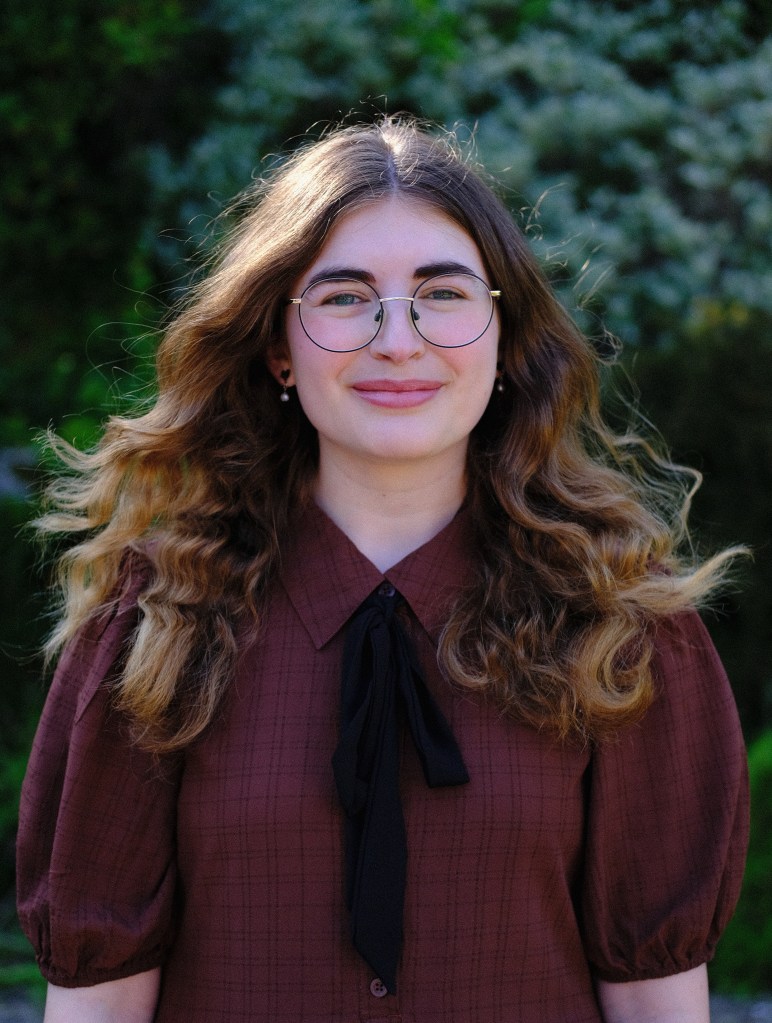
Felicity Epps studied a degree in English Literature before completing a Masters in Eighteenth-Century Studies, where her research focused on female murderers in true crime writing! Felicity finds inspiration in history; researching strange and spooky subjects. She enjoys exploring cemeteries, collecting old books and hunting for ghostly Victorian photographs in antique shops.

Felicity currently lives in Broadstairs, Kent, UK, with her partner, Josh, and their baby daughter, Madeline. When she isn’t writing, Felicity loves going to the beach, knitting colourful jumpers and drinking far too many cups of hot chocolate. A Grave Inheritance is her debut novel.

PaperBound Magazine is an online magazine and blog for the young, and the young at heart. We are dedicated to showcasing authors and illustrators for children’s and young adult fiction and we strive to deliver inspiring content, uplifting stories, and top tips for young and aspiring writers yet to burst on to the literary scene.

All our issues are completely free and run by volunteers, however if you would like to support PaperBound and the work we do, you can help us out by buying us a virtual book. We appreciate any support you can give us!

Don’t forget you can read with the latest issues of PaperBound Magazine – completely free – here.