

Author Felicity Epps joins the blog to chat about debut ghostly murder mystery, A Grave Inheritance, and the inspiration behind it – as well as share some of her own writing advice.

Could you tell us a little about your novel, A Grave Inheritance, and how you came to write it?
A Grave Inheritance is a gothic murder mystery, delving into seances and spiritualism in Victorian London. My main character Dolores Rain is grieving the loss of her parents and older sister, but when ghostly occurrences point to dark secrets within her house, she teams up with her friends to unveil the truth…and solve a murder!
I had so much fun writing this novel, because I was able to indulge all my favourite themes, from spirits and haunted houses to mysterious apothecaries and mourning fashion. It is very much a reflection of the kind of novels that I like to read, so the inspiration for the novel came from cosy nights reading ghost stories!
The theme of power was always such a key element, because women in the Victorian era lacked independence and the freedom to govern a lot of their own decisions …
From the very first page, Dolores is such a captivating character, who is living in Victorian England amid an outbreak of cholera. Her character is utterly charming, for all her flaws. Did she always appear to you in this way, or did you have to work to craft her character?
Dolores appeared as a fully-fledged character from the start – I think because I indulged her quirks and worries, it all seemed to come naturally! The first scene in the novel was also the first vision that I had for the story: Dolores anxiously declaring that she must be on her “deathbed”, while also mourning how many novels she still has to read.
It felt like such an engaging start for a murder mystery, because Dolores is not set up to be a particularly good investigator – she is overly fearful and really just wants to retreat to her bed. As the novel progresses though, I really enjoyed having her confidence grow, especially once she learns to trust her friends and realises that she can confront the things that frighten her.
This is very much a female-driven story with interesting themes of power, modern medicine, truth, and grief. Were any themes stronger when it came to writing the novel first, and did any evolve as you wrote?
The theme of power was always such a key element, because women in the Victorian era lacked independence and the freedom to govern a lot of their own decisions. Dolores finds herself in a unique position being granted her family’s inheritance, but it still comes with the expectations of London society, as she is pressured to get married.
This theme of power then evolved for me, as I quickly realised that ghosts were not the only danger in the novel – from Dolores’ nerves being dismissed as hysteria to the looming threat of being sent to an asylum, Dolores and her friends, Ada and Violet, struggle to be taken seriously. Eventually, the girls form The Society of Free Spirits, hoping that by embracing seances and spiritualism, they will finally be able to make their voices heard.
Dolores’ vulnerability spoke volumes throughout the book when it came to ghostly happenings surrounding her own grief. Do you think her journey would have been different if she hadn’t spent as much time with the other characters of this book, and in what way?
A symptom of Dolores’ grief is that it has made her world feel claustrophobic. This element definitely strengthened the supernatural aspect of the novel, allowing the haunted house to feel restrictive as well.
I think Dolores would have struggled to overcome her fears if she hadn’t had the outside encouragement of the other characters – Ada does an amazing job of dragging Dolores into society and helping her rediscover the pleasures of life that have been lost in her grief. Meanwhile, the spiritual medium, Violet, helps Dolores find her voice, asking questions that have been ignored by many of the male characters in the book.
I do like to imagine that Dolores always had this resilience within her; she just had to remember it! In the novel, she often feels overwhelmed in social situations, but then finds her strength again in quiet moments. Through all her ghostly experiences, she doesn’t want to give up – and this desire to look for answers pushes her through, even when she wants to shut her front door and ignore the outside world!
This book was recently chosen as a Waterstones Book of the Month! How did it feel to gain that sort of recognition from one of the UK’s top commercial booksellers?
When I used to imagine being published, I’d fantasise about finding my novel on a shelf in a bookshop. So now, to have A Grave Inheritance popping up in Waterstones windows has been absolutely beyond my hopes as a debut author!
I have loved seeing the apothecary bottles, candles and skulls that have appeared in such creative displays across the stores. I’m so grateful to all the amazing booksellers that have championed the novel, and I like to think that A Grave Inheritance has ushered in spooky season early this year!
We love gothic stories here at PaperBound. Do you have any more books you have written that you can tell us about, which might be coming next?
I’m currently working on a sequel to A Grave Inheritance, which will be Book 2 in The Society of Free Spirits series. I’m so excited to share more about Dolores, Ada and Violet, as they embark on further ghostly investigations!
While Dolores’ house can feel gloomy and oppressive, I’m keen to delve more into the world of her friend Ada – exploring the glittering ballrooms of Victorian high society, where dark secrets are kept closely hidden.
What advice do you have for any aspiring writers hoping to get published?
My main advice would be to finish a first draft without worrying about it being perfect. When I first started writing, I wanted each chapter to be just right, before moving onto the next. But now, I focus on letting the characters lead me to the end of the novel and save worrying about plot holes for future revisions.
I find this gives me a better perspective on the project overall, and it’s such an uplifting feeling to have a manuscript in your hands – even a messy first draft!
A Grave Inheritance by Felicity Epps is out now from Hachette (UK)
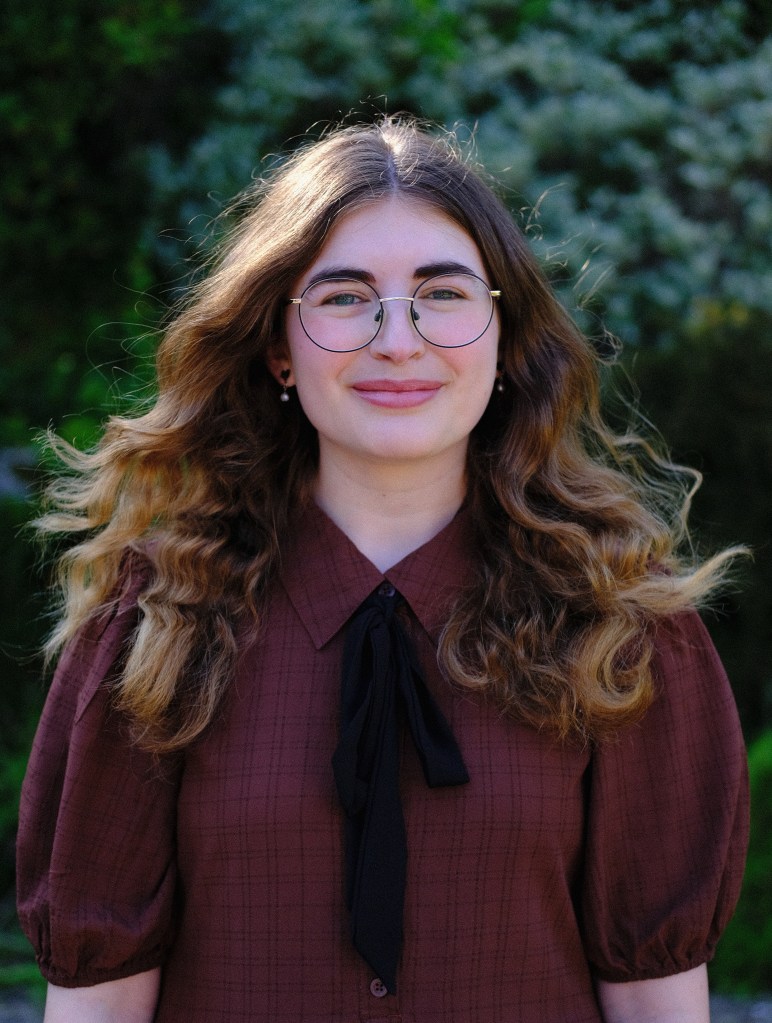
Felicity Epps
Felicity Epps studied a degree in English Literature before completing a Masters in Eighteenth-Century Studies, where her research focused on female murderers in true crime writing! Felicity finds inspiration in history; researching strange and spooky subjects. She enjoys exploring cemeteries, collecting old books and hunting for ghostly Victorian photographs in antique shops.
Felicity currently lives in Broadstairs, Kent, UK, with her partner, Josh, and their baby daughter, Madeline. When she isn’t writing, Felicity loves going to the beach, knitting colourful jumpers and drinking far too many cups of hot chocolate. A Grave Inheritance is her debut novel.
 PaperBound Magazine