Author of A Scrap of Moss and Magick, Helen Parry, delves into her love for folklore, and the inspiration of folk horror literature behind her novel.
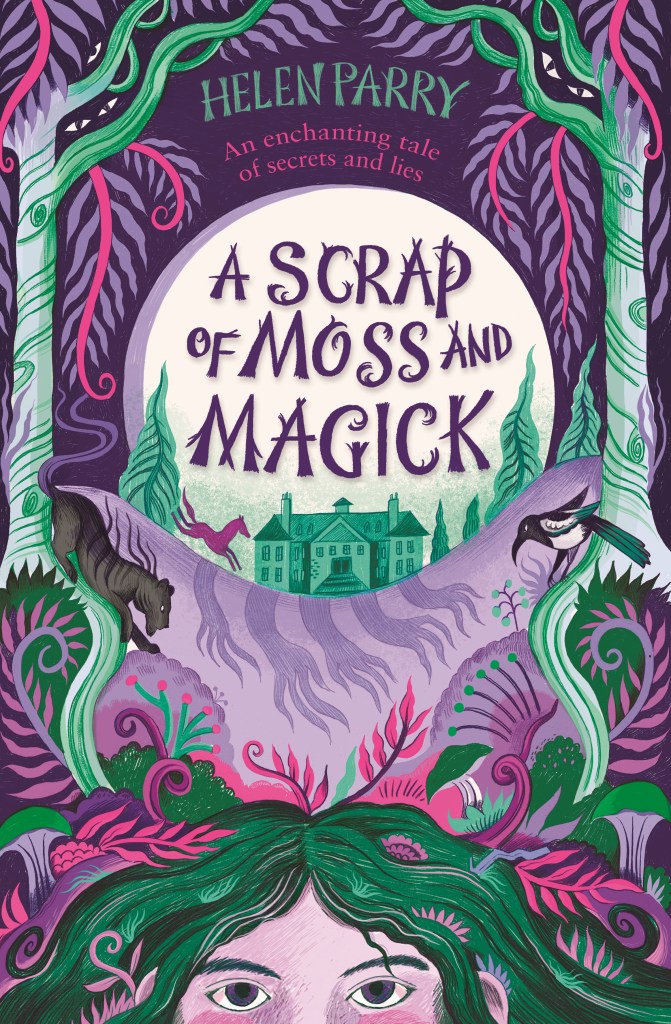
by Helen Parry
The nights are drawing in, the leaves are beautifully dying and Hallowe’en is creeping towards us; suddenly we’re more aware of owls hooting and creatures scuttling in the dark undergrowth, of ancient buildings and sacred places, and of the myths and legends that infuse them.
Rural landscapes, cruel old traditions and the darker side of folklore are the lifeblood of folk horror, a term first used to describe a subgenre of British films of the late 1960s and early 1970s (The Wicker Man is perhaps the most famous of these) and more recently extended to literature.
Place is very important in folk horror and it is often set in lonely stretches of countryside – woods, moors – and remote villages or houses cut off from modern life and suffused with the occult. Eerie and atmospheric, it’s derived from the Gothic novel, but in folk horror, the forests are haunted and the witches are real. You might think of fiction by M. R. James, Arthur Machen, Zoe Gilbert, Andrew Michael Hurley, Melinda Salisbury… You might think of dark fairy tales or Scottish border ballads steeped in blood and ghosts.
The story is firmly rooted in fairy and folk tale. And there is magick – plenty of it – and a monster.
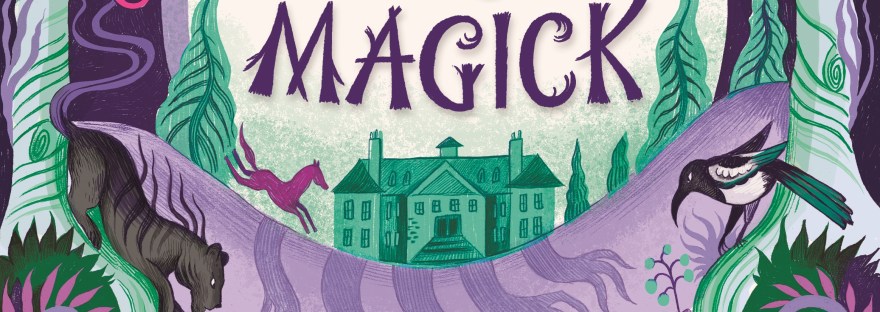
I would not call my children’s novel, A Scrap of Moss and Magick, folk horror exactly, although it has elements of it: an isolated country house, a land where the creatures of folklore are very real and hungry – when dusk comes, you should wear a necklace of rowan berries or turn your gloves inside out for protection from things that lurk in the darkness. The story is firmly rooted in fairy and folk tale. And there is magick – plenty of it – and a monster.
But while folk horror proper seeks to disturb and disorientate, to question humanity’s place in an uncanny, implacable world, I wanted to celebrate the beauty of nature and create a land which readers might find an exciting place to inhabit but which demanded they treat with respect. A land where trolls and mere-maidens, Black Shuck and Jenny Greenteeth, imps and redcaps and brownies, all exist. Almost Narnia – but sinister. Feed the troll but watch your step.
I spent a lot of time with Katharine Briggs’s Abbey Lubbers, Banshees & Boggarts: A Who’s Who of Fairies, a dictionary of folklore from Britain and Ireland, full of horrors. The Watkins Book of English Folktales by Neil Philip is packed with traditional stories, some humorous, others distinctly unsettling. These showed me another Britain, with the supernatural leaking through its seams, and this Britain is where A Scrap of Moss and Magick takes place.
Magical creatures, shape-shifting, books of spells, a strange old house…
But my starting point was actually: ‘What if there was a book like The Wolves of Willoughby Chase but with magic?’ (Because ever since I wept with terror when the wolf leaps at Sylvia through the train window, I have loved that book and all of Joan Aiken’s work.) And then I wrote down all the things I should like to read about in such a book: some brave but vulnerable heroines, magical creatures, shapeshifting, books of spells, a strange old house…
So I combined folk horror with the traditions of Gothic, particularly the amazing Uncle Silas by Sheridan Le Fanu, and also with traditional and historical fantasy. Not just the tour de force that is Jonathan Strange & Mr Norrell by Susanna Clarke, but also books by the writers of my youth: Susan Cooper, Alan Garner, John Gordon, Diana Wynne Jones; the modern fantasies of Frances Hardinge, Lucy Strange, Philippa Leathley; and historical fantasies by Nazneen Ahmed Pathak, Gita Ralleigh and Hayley Hoskins.
These genres allow you to pass beyond the boundaries of what is possible, what is believable, into a heightened reality. Here, you have enormous scope to entertain your reader and explore even quite dark emotional terrain because of its distance from the ‘real’. And after you and your reader have played about together in your shared imaginary world, maybe you’ll both view our shared physical world with new eyes, new ideas.
A Scrap of Moss and Magick by Helen Parry is out 8 October 2026 | Paperback | £7.99 | David Fickling Books
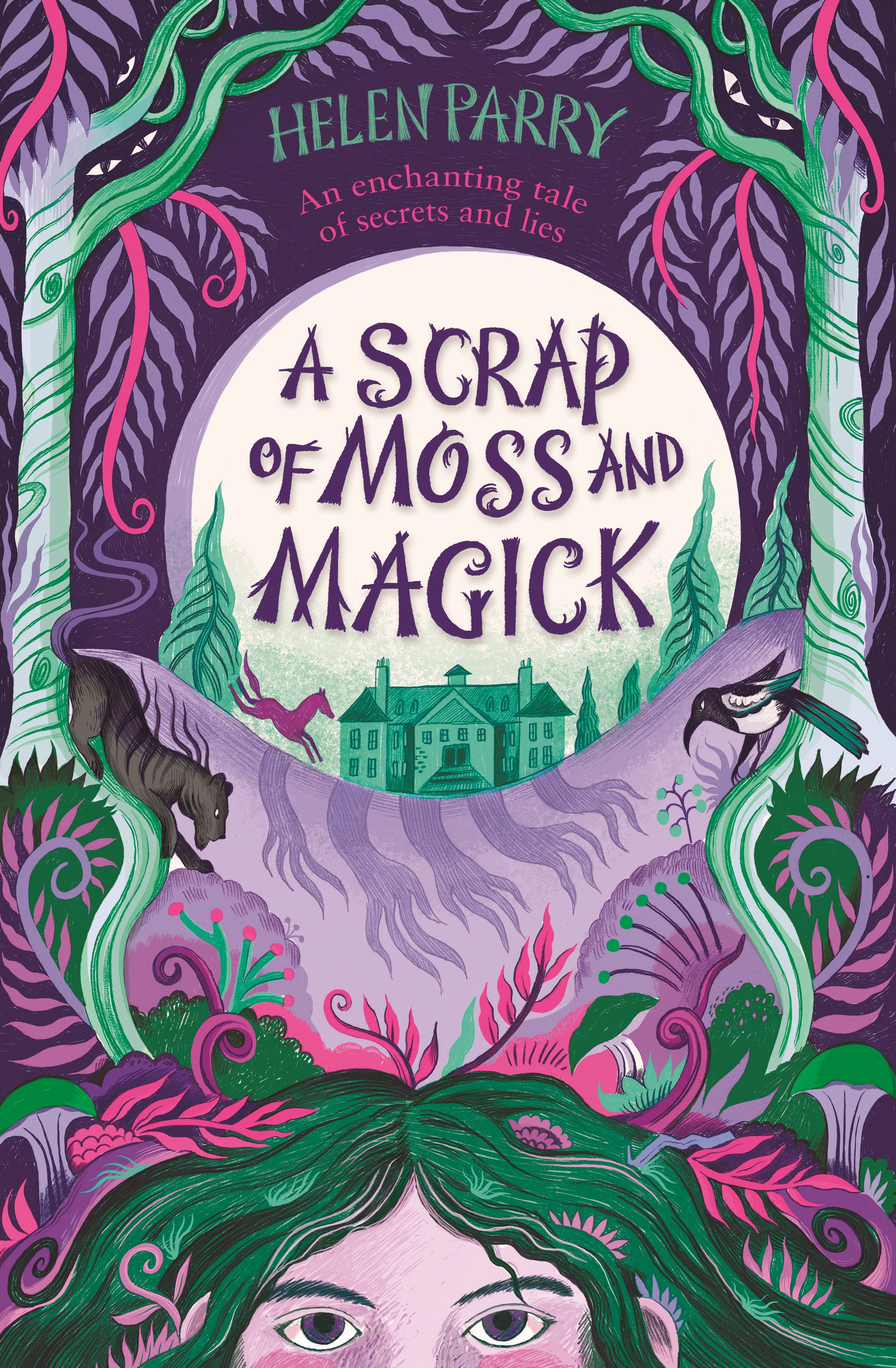
A Scrap of Moss and Magick
Set in an alternative nineteenth-century Britain inhabited by folkloric creatures, and centred on two friends, Thirza and Cecily, in a strange old house full of magick and secrets, A Scrap of Moss and Magick thus weaves together folk horror, historical fantasy and Gothic fiction.
Helen Parry
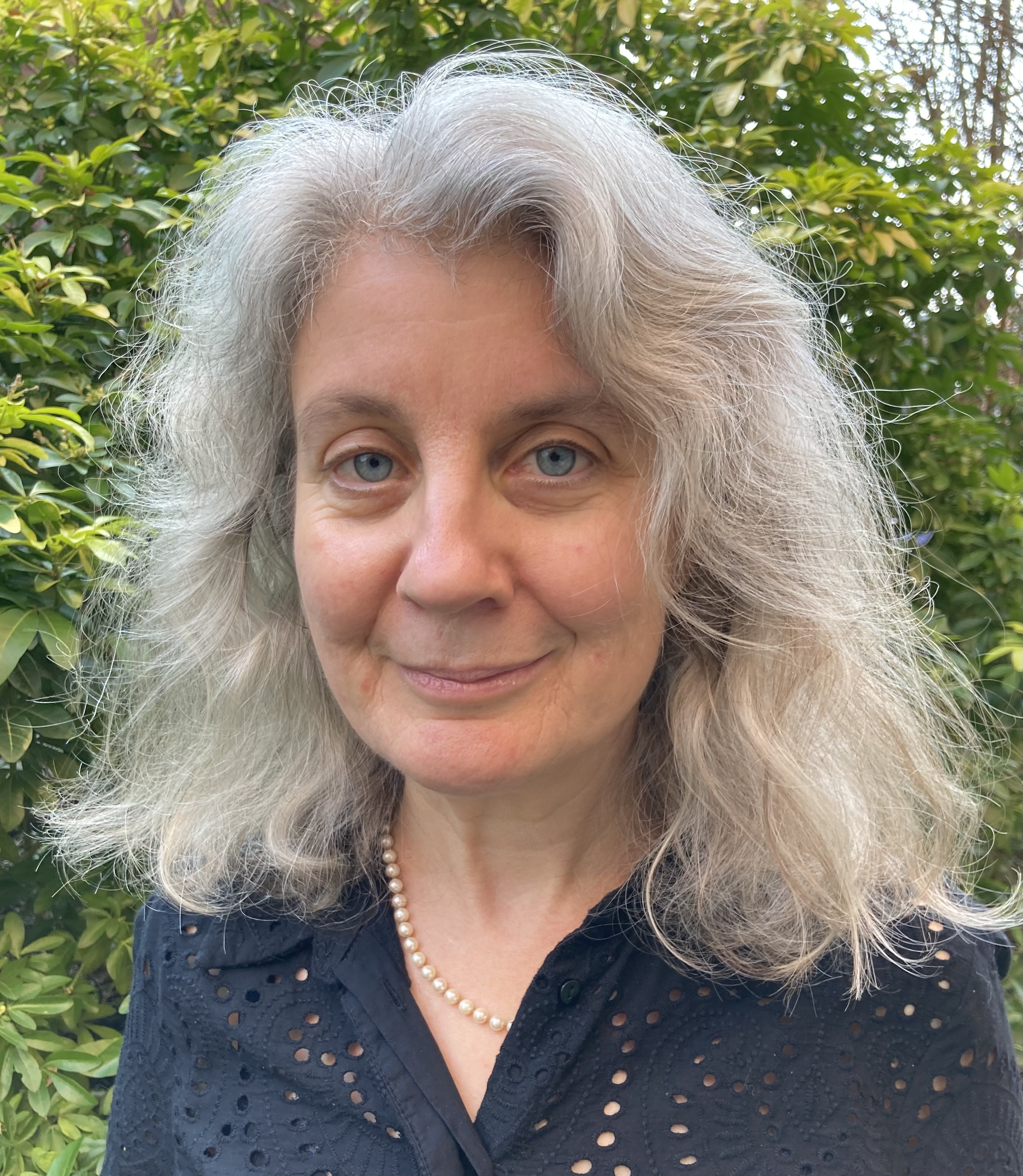
Helen Parry grew up in an old house on a hill in Ipswich, where she spent most of her time reading, searching for magic portals and casting spells that never quite worked. She studied literature at university, worked in publishing in London and lived for a couple of years in Nigeria before moving to Belgium.
She now lives there with her family, some hens and the two most spoilt cats in the universe. When she isn’t daydreaming or writing, she teaches English to adults. A Scrap of Moss & Magick is her first book.