article, Blog, Blog series, Bookshelf, on writing, Writing craft

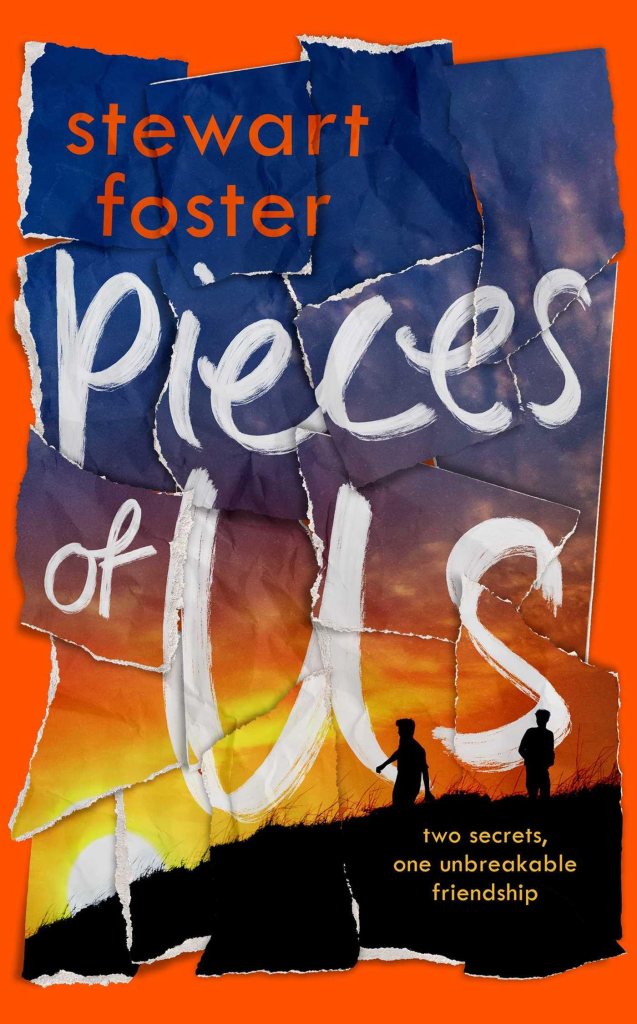
Guest post from author of YA novel ‘Pieces of Us’, Stewart Foster: Don’t Hide Behind the Songs

My character, seventeen-year-old Jonas, felt the same way. In the first chapter, he says to his best friend: ‘Louis, if ever I thought anyone would actually read this, I’m not sure I would write the first line.’ And I sat back from the screen and thought, ‘God, that is so true for me too.’

I kept writing, still with those worries in my head, not just about the bulimia but also the closeness of Jonas’s relationship with Louis. Later in the book, there’s a poem called The Cormorant. I wrote it one Sunday evening after watching a nature programme on TV showing a cormorant regurgitating food for its young. It repulsed me; an instant picture of what I was doing to myself in the bathroom. That poem went under my bed with thousands of other pieces of poetry I’d written since the age of ten.

I eventually showed it to my best friend two years later as we put songs together to record. He had no idea what The Cormorant was about, until late one night, I explained it – that it wasn’t about an ugly seabird, it was me. Like others, like my whole family, he had no idea of my secret, just thought I’d lost weight as I’d got taller. The next evening as we recorded it onto tape, he stopped midway through and said, ‘Stew, you could have told me, you didn’t have to hide it in a song.’

Looking back, I realise I wasn’t hiding behind the songs – showing him was my way of telling him, in the same way that you might write a diary and secretly hope someone might read it.

In a secondary school visit recently, I was reminded of how I used to feel at school, even later at university, because I believe this can be what mostly holds us back, like the Year Seven student I met recently who told me he found it hard to write.

‘Why?’ I asked him.

‘Because I always end up on my Xbox.’

‘No, why?’

‘Because I want to talk to my friends.’

‘No, why?’

‘Because I don’t have confidence, and I’m scared what my friends will think.’

‘There you go!’

The giggling in the room didn’t hide that that’s what the majority of classmates were thinking too: confidence, trust, peer pressure, what will my friends think?

Students are in the middle of the most confusing years of their lives, often feeling isolated in class, often (at university) hundreds of miles from home. Whether through song, poem, short story, third person, first person, or writing about dreams, it’s OK to put your feelings and emotions in them. In my case, a novel. And in that novel, what it took for me to write it – to block out those worries, block out those I thought would cast doubt – was to come up with this plan.

When my friendship ended with the person I’d first shown The Cormorant to, I was guilty of pushing those poems back under the bed until years later, whilst at university, I met someone who resurrected those feelings of close friendship and trust. They backed me with my writing – from emails to Facebook messages full of poetry, lines, thoughts, and chapters. They joined me in dreams of huge contracts and winning The Booker Prize.

And on those nights where doubts crept in, when Jonas’s actions became explicit and his secret eating disorder came out (along with it mine), I would hesitate over paragraphs, lines, words, and then I’d gather myself and say, ‘If I can say this to my friend, then I can write it in this book.’

It’s hard to put our feelings out there.

In poetry.

In songs.

In books. But for me, it became harder to say nothing at all.

Two secrets, an unbreakable bond … and a powerful and heartbreaking love letter to a life-changing friendship, from award-winning author, Stewart Foster.

As the summer before college begins, Jonas is hiding a secret. He suffers with bulimia, but no one knows. Not even he knows how bad it really is. Until he meets Louis, a confident dreamer who believes in a better future for Jonas and together they enjoy a sun-kissed summer filled with music, memories and life-changing moments.
But when tragedy strikes, Jonas must decide if he has the strength to face things alone ….
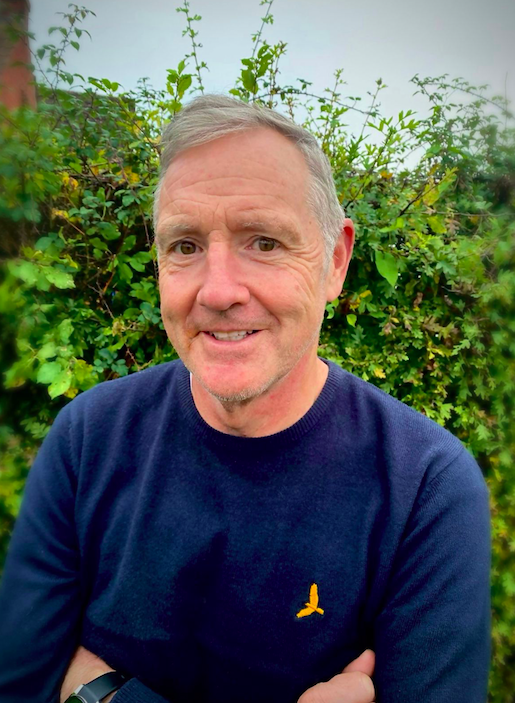
Stewart Foster is an adult and children’s novelist, born in Bath. His books have won multiple school and library awards and are recommended by Empathy Lab and Reading Well.
His first children’s book, The Bubble Boy, was published in 2016, winning Sainsbury’s Children’s Book Award in 2016 and many schools and libraries awards, as well as being nominated for The Carnegie Book Award.
Since then, Stewart has written four more children’s books: All the Things That Could Go Wrong, Checkmates, The Perfect Parent Project and Can You Feel the Noise?
PaperBound Magazine is an online magazine for the young, and the young at heart. We are dedicated to showcasing authors and illustrators for children’s and young adult fiction and we strive to deliver inspiring content, uplifting stories, and top tips for young and aspiring writers yet to burst on to the literary scene.

All our issues are completely free and run by volunteers, however if you would like to support PaperBound and the work we do, you can help us out by buying us a virtual book. We appreciate any support you can give us!

Don’t forget you can read with the latest issues of PaperBound Magazine – completely free – here.

Blog, Blog series, Interview, Interviews, Writing craft

Interview: Rebecca Barrow on YA Thriller ‘And Don’t Look Back’

Thanks for having me! And Don’t Look Back is a twisty thriller that centres on Harlow, a girl who has spent her entire life on the run. When her mother is killed in a car accident, Harlow is left to unravel the secrets of her life and her family all alone.. 

I really love writing about mothers and daughters, and I thought it would be interesting to explore generational trauma—how a girl like Harlow is shaped by her mother’s experiences, and how she deals with that while at the same time struggling to figure out who she is in the same way all teenagers do. I really enjoy writing older YA because that time in life is so interesting—you’re on the precipice on adulthood but still a kid, at the same time. And like Harlow, a lot of teenagers are dealing with really heavy things like the loss of a parent or mental health struggles or a million other things, and I think it’s important to acknowledge those things.

It took a while to come together but once the planning was done, the writing came quite easily. I usually don’t like to plan too much because I like discovering things through the writing, but often writing a mystery means you need to plan, so it’s about finding the right balance for me. Some of the plot aspects had been in my head for years just waiting for the right story so it really was a mix of long term planning and figuring some things out as I went!

Yes, I actually really do! I don’t think I will ever run out of ideas, but I do find they sometimes take a while to come to me. I’m definitely not one of those authors who have so many ideas that the main struggle is choosing which one to work on, but I think needing to let things develop in the back of my mind can also be really beneficial. I don’t see myself ever not writing. 

I write in twenty-minute blocks and use a program called Freedom to block the internet while I write, otherwise I would never get anything done. I usually have a word count goal so I just keep writing in those twenty minute slices with breaks in between until I have the words! I like to use different playlists for different books, to help me get in the right headspace, and that’s about it! 

I have mostly always wanted to be a writer but I did entertain the idea of several other careers—nurse, fashion designer, and choreographer were the big three! But it was mostly always writer for me.

Rebecca Barrow is the critically acclaimed author of And Don’t Look Back, Bad Things Happen Here, and several others.
She is a lover of sunshine, Old Hollywood icons, and all things high femme. She lives and writes in England.

PaperBound Magazine is an online magazine for the young, and the young at heart. We are dedicated to showcasing authors and illustrators for children’s and young adult fiction and we strive to deliver inspiring content, uplifting stories, and top tips for young and aspiring writers yet to burst on to the literary scene.

All our issues are completely free and run by volunteers, however if you would like to support PaperBound and the work we do, you can help us out by buying us a virtual book. We appreciate any support you can give us!

Don’t forget you can read with the latest issues of PaperBound Magazine – completely free – here.

Blog, Blog series, Interview, Interviews, Writing craft

Interview: Michael Thomas Ford chats about his new novel ‘Every Star That Falls’

Every Star That Falls begins the day after Suicide Notes ends. Jeff returns home and goes back to his old life, but he’s no longer the old Jeff. He has to figure out what that means in terms of his relationships with his family, his friends, and his larger community. He also wants to explore what it means being an out member of the LGBTQ community, which involves finding a support group. The people he meets there change his life even more, in ways he could never have imagined a couple of months ago. 

It’s definitely surprising to me how Suicide Notes continues to find new readers. It’s also a testament to the power of social media, which wasn’t really a thing when the book first came out. Now, readers are sharing their experiences of the book on places like TikTok and Instagram, and that’s allowing it to connect with even more readers. One of the things I love most about the world right now is that the voices of readers are so strong and so powerful. They’re not waiting for anyone to tell them what to read and what they should like, they’re deciding for themselves and then spreading the word. It’s fantastic to watch this happen.

The most powerful tool for creating change is empathy. When we learn to really listen to people – particularly to people with whom we might not think we have anything in common – and hear about their experiences and what they feel, we learn to see the world in a different way. That’s how change happens. When we create barriers between us, we only see things from one perspective and it’s easier for other points of view to feel threatening. There’s much more that connects us than divides us, and learning to focus on those things while allowing for differing perspectives is what creates forward movement.

Jeff is essentially me, and I have always approached difficult situations by looking for the humour in them. I think that if you can find a way to laugh, even in the darkest moments, it creates a spark of light that grows brighter and shows you the way through. I realize not everyone appreciates this approach, because we’re all different, but for me the most effective way to deal with life when it gets hard or seems hopeless is to find the moments of joy that remind me that the darker times don’t last forever. 

In general, I don’t enjoy sequels because no matter what happens, someone is disappointed. Once someone falls in love with a character, they developed expectations of what they want for them. With Suicide Notes I wanted readers to imagine what happens to Jeff when he leaves the hospital he’s in for the whole book. But as time went on, I thought of more things I wanted to say about certain topics, and continuing Jeff’s story was the best way to do that. Also, there were some characters and events from Suicide Notes that I found readers asking about over and over again, and writing a sequel gave me the opportunity to answer those questions. 

I write for a number of different audiences, including adults and younger readers, so there’s always something happening. I’m currently finishing up a ghost-themed novel for middle grade readers, which is a lot of creepy fun. That will be out next year. And there just might be another part to the story about Jeff and his new friends coming. Readers can always find the latest news on my website: www.michaelthomasford.com.

Michael Thomas Ford is the author of numerous works for both adults and young readers, including Suicide Notes as well as some of the earliest books about the HIV/AIDS crisis and several books about the LGBTQ community. A five-time winner of the Lambda Literary Award, he has also been a finalist for the Shirley Jackson Award, the Bram Stoker Award, the Firecracker Alternative Book Award, and the Ignyte Award. He lives in rural Appalachia with his husband and dogs.

PaperBound Magazine is an online magazine for the young, and the young at heart. We are dedicated to showcasing authors and illustrators for children’s and young adult fiction and we strive to deliver inspiring content, uplifting stories, and top tips for young and aspiring writers yet to burst on to the literary scene.

All our issues are completely free and run by volunteers, however if you would like to support PaperBound and the work we do, you can help us out by buying us a virtual book. We appreciate any support you can give us!

Don’t forget you can read with the latest issues of PaperBound Magazine – completely free – here.

Blog, Interview, Interviews

Interview with YA author Helena Close

YA author Helena Close has released a new book that we just couldn’t put down! We chatted with her about recent release Things I Know and why she wanted to tell this story. Read on below to discover more …

Can you tell us a little about your new YA novel Things I Know

I always find this question so difficult to answer. It’s the story of eighteen year old Saoirse and her struggle through trauma, toxic friendship and loss. It deals with mental health, teenage suicide and spiralling anxiety and sadness but it is also a story about hope and recovery.  

Your main character, Saoirse, is grieving the loss of her mother throughout this book, then unexpectedly must grieve the loss of an ex boyfriend too. What inspired you to write about these difficult topics? 

Things I Know follows Saoirse and her journey through the difficulties and traumas of mental illness, suicide, bereavement and eventual recovery. My youngest daughter was diagnosed with cancer, aged just sixteen, and suffered mental health issues post chemotherapy. She accessed the public mental health system and it was an eye-opener. In some ways, even a shocker. I didn’t want to write about mental health – but I had to. 

I suppose I was lucky (or unlucky) that I had witnessed my daughter’s journey and had a body of research already available. I also consulted professionals, teenagers, anyone who would talk to me about their own struggles and experiences. People wanted to talk. I think that surprised me. They wanted to talk about counsellors, good and bad, about medication, about the ongoing day to day struggle, about panic attacks, crippling anxiety, unresolved trauma.  

This book is set in a small town in Ireland, where Saoirse feels isolated and trapped compared to where she lived before. It also features Irish phrases and dialect which roots the reader very firmly to the setting. Was this town inspired by somewhere you are familiar with yourself? 

We moved to a small town in West Clare when my youngest daughters were thirteen and nine and spent six years there before returning to Limerick. It was a stunningly beautiful location but the daughters were city children at heart! I was immersed in a rural community so dialect, vernacular etc. came easily to me. I think it’s important to anchor stories in language that young people are familiar with and use themselves. Language that comes from the setting. There is a tendency sometimes in writing to sweep dialect and the vernacular away and I think stories lose a sense of place and personality as a result. Language is organic to story, it’s not something that should be imposed on it.  

What do you hope this book might offer to a young person struggling with their own mental health? 

I’m not an expert on mental health but I researched extensively to get the balance right. I wanted young people to see themselves in the story, to be able to relate to Saoirse, in all her mess and sadness and hope. We shouldn’t shy away from difficult themes, especially where young people are concerned. Things I Know is not Five Go Down To The Sea for Mental Health. It’s an honest and challenging read about mental health and the taboos surrounding it, about grief and how we deal or don’t deal with it, counselling, medication and professional help. If the voice and story ring true, young people will get it. They will understand and empathise. They will see themselves in the story, be comforted and consoled.  

What advice would you give to aspiring writers who want to write young adult fiction? 

Respect young people. Familiarise yourself with their world, their challenges. Listen to them. To the way they speak, act, respond. Give your work to a teenage reader – that’s how you will know if your story works or not. They are extremely insightful critics. (And terrifyingly honest!)  

You have been writing full time for over 20 years. Can you tell us what might come next for your writing?  

I am currently working on a new YA novel. I’m also working on a collection of short stories and have co-written a play for theatre that’s about to be produced.

From Limerick City in the west of Ireland, Helena Close has been writing full-time for twenty years. She has written or co-written seven novels, published by Hodder Headline (under the pseudonym Sarah O’Brien), Hachette Ireland and Blackstaff Press. Things I Know is her second young adult novel and out now in Ireland, UK and America.

You can keep up to date with Helena on Twitter and Instagram.

Don’t forget you can catch up with the latest issues of PaperBound Magazine here. All our issues are completely free and run by volunteers, however if you would like to support PaperBound and help keep us running you can buy us a virtual book.