Blog, Short stories

PaperBound’s winning story ‘The Music of the Vale’ by Steve Blackman

Each issue, we choose a winning entry from all the submissions sent to us. For the winter issue of PaperBound Magazine 2022, our winning entry is the short story ‘The Music of the Vale’ by Steve Blackman. Keep reading below to find out more.

The Music of the Vale

By Steve Blackman

For as long as anyone can remember, we’ve lived on the floor of the vale. Our village here is safe, protected – a sprawl of houses and schools and shops that line one bank of the crashing river.  

On the other side, facing us, is another village, a mirror of ours. The people who live there go about their lives a stone’s throw away from us, but we’ve never met. No bridge has ever been built, and entering the torrent that separates us would mean certain death. 

Over the years, many have searched for ways to cross the river, following its course in both directions. None met with success, even those who travelled for many weeks, though they returned with stories of forests, and meadows filled with exotic flowers, and wild deer and bobcats. Most people stay close to the village. Even the farmers on the furthest outskirts of our communities are only a day away, close enough that sometimes – if the wind’s in the right direction – we can smell the cows and pigs and sheep in their pens.  

The farmers and the shepherds are here tonight though, the one night every year when they leave their crops and their animals to join the residents of both villages, lining the steep sides of the vale. Some have used ladders and ropes to climb as high as they can – finding the uppermost rocks and outcrops before the canyon walls become smooth and unclimbable. From where my fellow villagers sit, it’s impossible to see the faces of those far away on the opposite side, only shapes, lit by the flickering of torches held aloft or wedged into fissures. Not that they’re looking at one another – all eyes are focused down on the open spaces that mark the eastern end of our communities.  

That’s where I am now, near the bank of the river, me and eleven other cantors and musicians from my village. After fifteen years of watching this ceremony from the side, it’s finally our turn. We’re facing another group of twelve across the noise and the spray. I recognise the girl at the front of their troupe. I see her sometimes, going to school or running errands. She’s just like me: same age, same clothes, same life. Except she’s there and I’m here. Still, I feel connected to her somehow, like I know her. Normally, if nobody’s around, we might even wave. But there’s no waving tonight. We’re here to fight for our lives.  

I’ve rehearsed with my troupe all year, but my mum’s been preparing me since I was a baby, when she taught me how to understand the sounds around me. I could identify birds from their songs by the time I was five; could predict a change in the weather from the movement of the wind over the rock walls surrounding us. It was her who showed me how to seek the right music; how to know it when I heard it.  

Tonight I won’t live or die because of how beautifully I sing, but how well I listen. 

The hum of the crowd fades as the leader of each village steps onto their podium. Both Alderwomen wear their cloaks of office: ours is thick with black raven feathers that shine in silky highlights of turquoise and purple; theirs is a dazzling white, the soft fur of wolf hides rippling in the breeze. As last year’s winners, it’s the other side that begins the ceremony. Sure enough, their Alderwoman lifts the ceremonial mallet above her head, and the silence around us deepens. She stands like that for what feels like an eternity, and when she finally strikes the bell, its ring fills the night. As tradition dictates, our performances must begin before it fades.  

There’s a chill in the air, but I’m sweating. My heart is racing and my nerves are stretched so tight they might snap. Breathe, says my mum’s voice in my head. Listen. I wipe my palms on my skirt, and slow my breathing until I find a place of stillness within; until the raging water offers me the tone I need.  

Gently at first, I begin to sing, harmonising with the music of the river. Next to me, Silas follows – a baritone murmur that echoes the distant rumbling of the night sky. From the opposite bank comes the high keening of a wooden flute, like a fledgling osprey calling for its mother. A minute later, my best friend Beth wakes her marimba with the hollow echoes of the earth below our feet. One by one, the others around me respond to the music they hear in the world.  

Before long, around half the performers on both sides have found their own sounds, and already the pull is there – a tug that begins in my guts, compelling me forward. It becomes more insistent every time another voice joins in, calling me, like a siren song, but I clench my fists and stand firm. Beth misses a note, and I know she, too, is resisting the urge to step forward. Soon, someone will lose that fight, and will be pulled into the torrent, and lost forever.  

Above us all, the night sky is strewn with so many stars it’s hard to see the blackness between them. A pair of shadows float across it, only visible as they blot out the stars above them, and the high mewling call of a female nighthawk floats down. In response, the final member of our troupe begins to sing. Eloise’s voice is haunting, ethereal, filled with pain and hope and love. My eyes fill with tears as she completes our number and we become one.  

Our song is the world, the land we walk on, the air we breathe. It’s part of the night, filling the vale, impossible to resist.  

There’s a cry from someone in the troupe opposite, and their song falters. It’s the opening we need, and we focus our performances on that weakness. But their cantors are strong, and they come together, building their defence. It continues like that, each troupe searching for an opportunity to strike, our songs intertwining, clashing, flowing from one side to the other.  

On the edge of my vision there’s movement. Silas has taken a shuffling step forward. I reach out to grasp his hand and our fingers intertwine. But he takes another step, longer this time. My pulse thrums in my neck and in my fingertips. It’s in Silas’s hand too, like we’re sharing a single heartbeat. I grip his fingers as hard as I can, so his nails cut into my skin, but it’s not enough, and his hand is slowly pulled from mine as he edges forward. 

Lifting my head, I sing to the sky, driven by the rhythm of the blood flowing through me, and one by one, more shadows mask the stars. Eloise sings to them, and the nighthawks call back, dipping and swirling with our voices. Silas is making sounds I’ve never heard before, so deep they seem solid – like I could grasp them. I close my eyes, and listen harder than I’ve ever listened in my life, and slowly, faintly, it reaches me. Below the constant booming of the water is something else, the rasp of the torrent against its banks, the chattering of the stones racing along the river bed. Those sounds become part of my song, or I become part of them, and I yield to them: irresistible, elemental. 

For the first time since we gathered, another voice cuts through the performances – the single cry of a mother, calling No! I open my eyes, and my guts cramp like someone’s reached in and squeezed them. The girl opposite me is moving. Her eyes are locked on mine, and she’s smiling, but tears are flowing down her cheeks. And still she’s singing. Her body shakes as she tries to resist, but our call is too strong, too pure, and inch by inch, it pulls her onwards. 

I have no choice but to focus my voice on her – we all do – and our performance is so powerful, the air between us seems to bend and shimmer. It pulls her to the edge of the steep riverbank. One more step and she’ll be lost, but she plants her feet in a last effort to defy our music. Her eyes are squeezed shut now, and she’s shaking her head, and it’s so much effort to stand firm, she gasps, breaking her song. As she does, I change my pitch – an octave higher – and it’s like I’ve pushed a door, opening the way in. The voices around me swirl across the river, wrapping around the girl like a net. She cries out in pain, a high, piercing note, and takes the final step. 

When the river swallows her, her voice hangs in the air like the chiming of the bell. Eventually it fades, leaving only the calling of the birds, the rushing of the water. 

Despite his name, Steve’s neither the showrunner of The Umbrella Academy nor the wrestler, although he’d happily give either a go. He is, however, the inventor of the self-heating soup can, the internet, and sourdough. When he’s not inventing, he writes YA novels with STEM themes. Most of the time, he lives in South London with his wife and their two teenage daughters. He still doesn’t have a Facebook account. You can follow him on Twitter here.

You can read even more music-themed stories, author interviews and more in our latest issue by clicking here. All our issues are completely free and run by volunteers, however if you would like to support PaperBound and the work we do, you can help us out by buying us a virtual book. 

Here at PaperBound, we love stories. Want to be a part of ours? Find out more.

Blog, Bookshelf

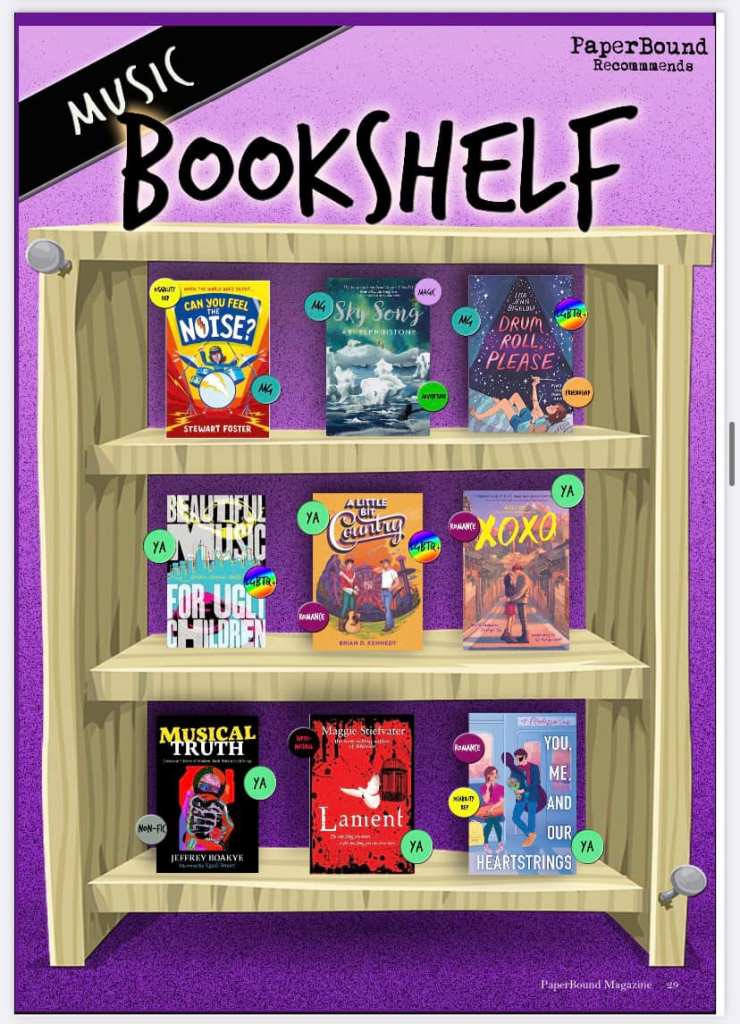
Our winter 2022/23 bookshelf

Take a look at our music themed bookshelf, as featured in our winter 2022/23 issue, which has all kinds of books perfect for spreading the love of music. You can read even more wonderful stories, author interviews and more in our latest issue by clicking here. 

All our issues are completely free and run by volunteers, however if you would like to support PaperBound and the work we do, you can help us out by buying us a virtual book. 

Here at PaperBound, we love stories. Want to be a part of ours? Find out more.

© PaperBound Magazine

Blog, Covers

Our winter 2022/23 issue is out now!

Did you know the winter 2022/23 issue of PaperBound Magazine is out now?

This issue’s theme is based on ‘MUSIC’, filled with lots of new captivating writing and gorgeous illustrations, plus all kinds of fantastic author interviews, writing prompts, book recommendations, and more.

You can read the latest issue of PaperBound completely free here. Just scroll down until you see our WINTER 2022/23 issue.

We hope you enjoy it!

Blog, Interview, Interviews

Interview with YA author Natasha Devon

Catch our interview with Young Adult author Natasha Devon as featured in the latest issue of PaperBound, as she tells us all about her new book Toxic and offers her own tips for aspiring writers.

Discover even more great content in all our issues.

Can you tell us about your book, Toxic, and what inspired you to write it?

I visit an average of three schools or colleges every week, delivering talks and conducting research on mental health and related issues. The research involves doing focus groups with 13-18 year olds and a theme that emerged just before I wrote Toxic was how to navigate difficult friendships. I thought fiction was an ideal format to explore this because it’s such a very nuanced and complex phenomenon. 

As kids, we’re taught that life is divided into heroes and villains and that good always triumphs over evil. But as you grow up you realize that actually, the world is just full of flawed people doing their best to get by. Sometimes two people create a dysfunctional dynamic and it’s okay to acknowledge that, to extract yourself from the harmful situation without having to hold a grudge, or encourage everyone you know to ‘pick a side’. That’s the central theme of Toxic, it’s about a young woman learning how to have boundaries.

Your main character, Llewella, struggles with anxiety and panic attacks, which the writing captures so well. Did you have to do any research when writing about these topics?

I actually have a diagnosis of panic disorder and, with the knowledge I now have about the condition, have realized that I’ve been having panic attacks since I was ten. Back then, mental health wasn’t acknowledged or spoken about in the same way it is now, though, so I was misdiagnosed with asthma and allergies as a child – I didn’t receive the correct diagnosis until much later. So, writing about panic and anxiety came very easily to me. 

Having said that, panic attacks vary massively from person to person. When I’m talking to young people who experience them, I encourage them to plot how their panic manifests from stages 1-10, so they can identify them early – this is actually a technique I learned from my therapist and that Llewella uses in the book. 

Friendship can often be tricky to navigate when you’re a teen. What advice do you have for any young people struggling with toxic relationships?

This applies to many struggles we face, not just friendships: Think about the advice you would give someone you really cared about if they told you they were in the situation you are in. This is a technique I learned from one of my best friends, Shahroo, who wrote a book called The Kindness Method. She noticed that we are often kinder, more forgiving and understanding to the people we love than we are to ourselves. 

The chances are, you would tell someone whose interests you had at heart that they tried their best, that being in a difficult friendship dynamic is not a reflection of their value and that you wouldn’t judge them at all for taking a step back for their own emotional safety. The same applies to you! 

Toxic also explores racial identity and the personal challenges some people might face. Did this change how the story developed?

The racial dynamics within the story definitely add another layer of complexity. 

I was inspired to create Llewella when I watched a Channel 4 documentary called ‘The School That Tried to End Racism’. One of the contributors was called Farrah and she was of mixed heritage with one white parent and one from Sri-Lanka. Like Llewella, Farrah was light-skinned and you wouldn’t necessarily assume she was mixed. When her class were split into racial affinity groups, she didn’t know whether to join the white or the racialized group. There was this moment of pure panic on her face and, as a viewer, I found myself wondering if this was a reflection of not knowing where she fitted in generally, not just in the context of the exercise.

There was also an activity the children had to do later in the documentary, where they brought in objects which reflected their culture. The children from racialized backgrounds were bringing in items such as beaded prayer mats and African jewellery and were able to explain exactly what they represented and how they were used. The white children seemed really embarrassed and had brought in things like the England flag, not really understanding why. It made me reflect on whether having a strong sense of cultural identity is a form of privilege. Hence Llewella, who was raised by a single white mother and doesn’t know her Asian father or his family, started to form in my mind.  

Aretha (who is the other half of the toxic friendship in the book) is also mixed. Her mother is white and her very present, supportive and loving father is Black. Aretha both experiences and demonstrates racism towards darker Black people in Toxic. She also uses elements of critical race theory to bully Llewella into doing what she wants. The point I’m trying to make is that you can’t just cherry pick aspects of CRT when it suits your agenda, or throw around terms like ‘privilege’ without properly understanding them (both of which I see a LOT of on social media). 

Do you have any tips for aspiring writers?

I read an incredible book when I was in the early stages of writing Toxic called ‘Story Genius’. It posits that all engaging stories are about a protagonist who is trying to avoid something which the audience knows is inevitable. It also talks about how we, as the reader, actually join the story part way through. The characters have already had experiences and challenges and triumphs which have shaped them before the reader ever meets them. It’s important not to think of your characters as blank canvasses at the beginning that just have stuff happen to them (which if often how we are taught to approach story writing in primary school). 

Can you tell us about anything else you’re working on at the moment?

I have a non-fiction book called Yes You Can: Ace School without Losing Your Mind coming out in August. It’s about how you don’t have to choose between your academic performance and your mental health – looking after your brain makes you cleverer (because mental health and cleverness both happen in your brain).

Natasha Devon is a writer, broadcaster & activist. She tours schools and events throughout the UK and beyond, delivering talks and conducting research on mental health, body image, gender & equality. She presents on LBC Radio every Saturday and writes regularly for Grazia Magazine.

Toxic was published 7th July 2022 by UCLan. It is available in the UK and will be released on audiobook soon.

Don’t forget you can catch up with the latest issues of PaperBound Magazine here. All our issues are completely free and run by volunteers, however if you would like to support PaperBound and the work we do, you can help us out by buying us a virtual book.

Blog, Covers

Runner up: Jillian Nichole Anderson – Winter 2021/22

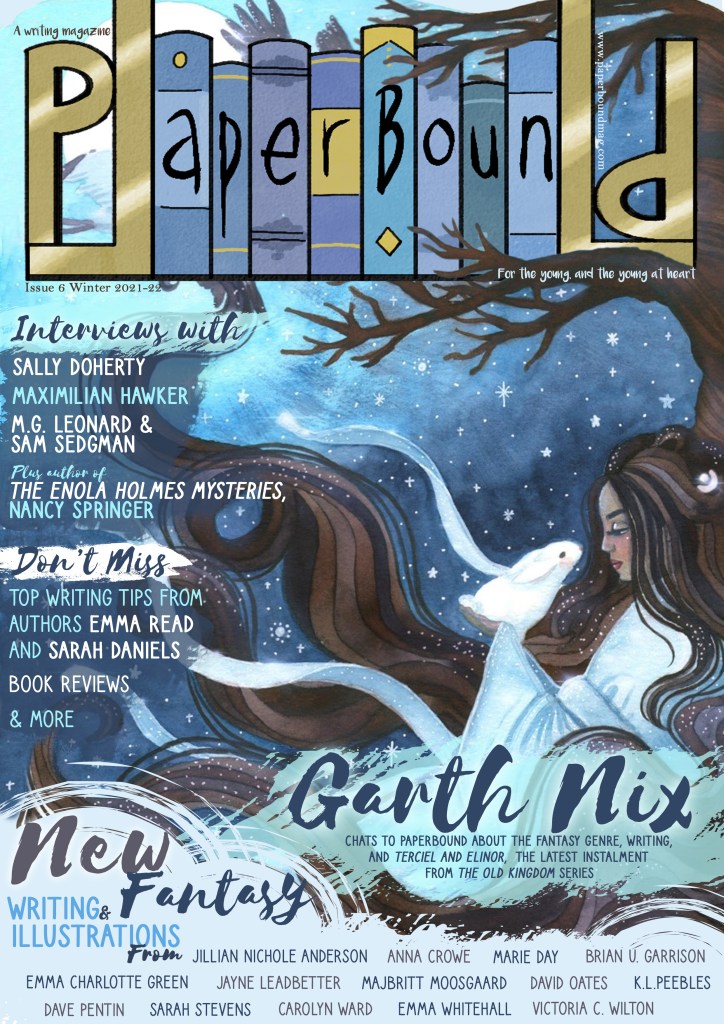
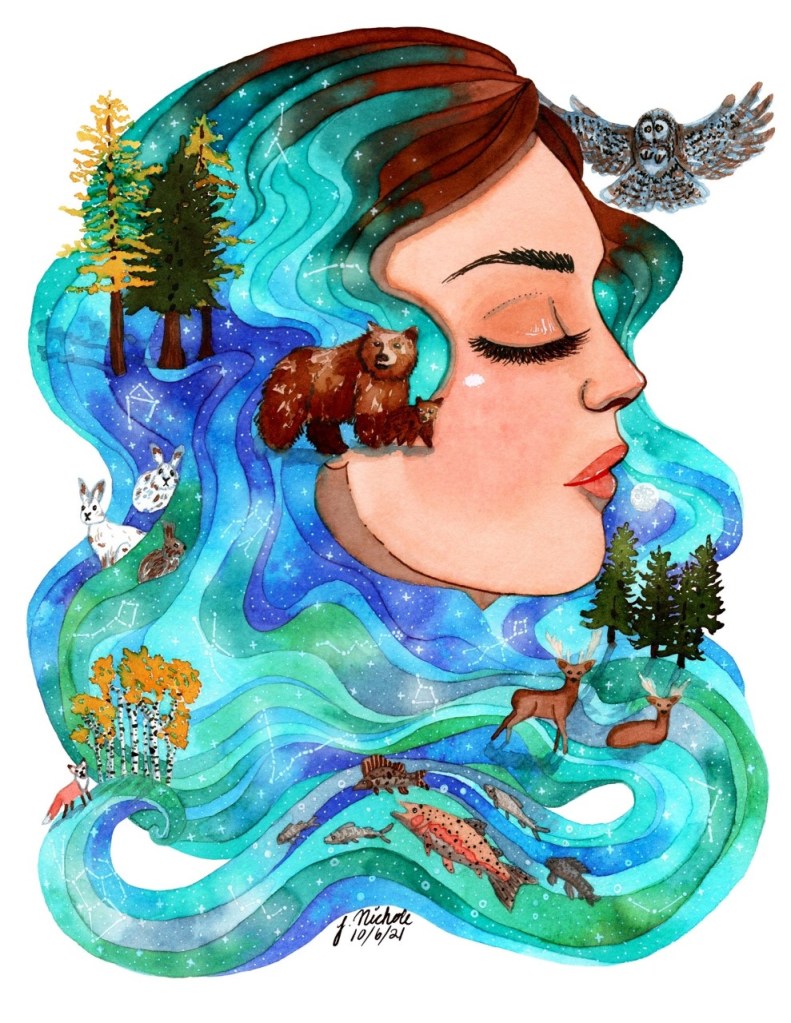
Jillian Nichole Anderson entered her stunning fantasy illustrations for our winter 2021/22 issue and we loved them instantly. Along with several other illustrations she submitted, we chose one in particular for the front cover.

You can read this issue in full here.

Jillian Nichole’s artwork on the cover of PaperBound’s winter 2021/22 issue

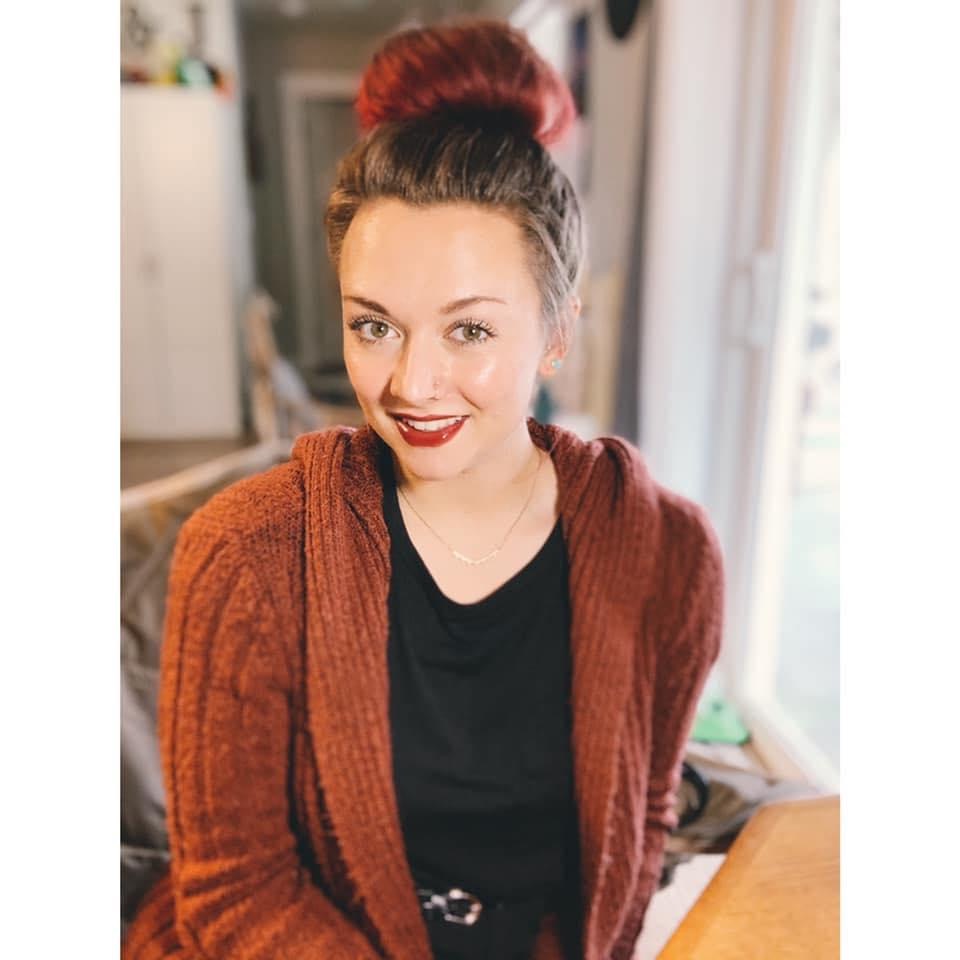
Jillian Nichole Anderson has loved creating art since she could hold a crayon. She lives in the Pacific Northwest with her family and fills her days with drawing and painting mostly with watercolors and inks. She also loves using her iPad and Procreate, and creates many digital designs. She has put many of her drawings and paintings on home decor and apparel and sells prints of her work at jilliannicholeillustration.com

You can discover even more of Jillian’s illustrations in the latest issue of PaperBound Magazine by clicking here. All our issues are completely free and run by volunteers, however if you would like to support PaperBound and the work we do, you can help us out by buying us a virtual book. 

Here at PaperBound, we love stories. Want to be a part of ours? Find out more.

Blog, Interviews

Interview with YA author Julia Tuffs

PaperBound caught up with YA author Julia Tuffs to chat all about her debut novel, HEXED! Join us as we discover more about Julia’s writing, her top current reads, and how she came up with the idea for HEXED.

You can catch the full interview and all other issues of PaperBound FREE here.

Can you tell us a little about your novel, Hexed

Hexed is about Jessie Jones; new girl, witch and accidental activist. Jessie’s life is turned upside down when her mum suddenly moves the family back to her home town on the Isle of Wight. All Jessie wants to do is fade into the background, coast and avoid the attention of school douchebag Callum Henderson and his toxic cronies, but when strange and uncontrollable magical powers start to manifest during her period, flying under the radar becomes impossible. Hexed is about finding your place and your power and learning to love your differences. 

Your novel deals with important and timely themes, such as sexism and toxic masculinity, and easily puts the reader in Jessie’s shoes. What inspired you to write about these issues? 

Donald Trump – amongst other things! It was really painful to watch as someone who had boasted about grabbing women’s genitals was elected president and it was a moment in time that highlighted how little society values women and women’s rights. I wanted to write something that looked at how ingrained it is in all aspects of society – our schools, our media, our courts, our government – but I wanted it to be relatable and focus on what all girls experience and are forced to navigate through on a day to day basis. 

These themes are woven into a story about witchcraft. Can you tell us how you came up with the idea to combine these two things? 

I was thinking about the recent surge in our reproductive rights being threatened and all the ways men in power try to control women and women’s bodies (Britney, how can we help?!) and that led me to the witch trials; the way women were strip searched for Devil’s marks and how anyone single or widowed could be suspected and tried. Even today, like hundreds of years ago, if women don’t fit into a prescribed box – if we dare to be angry or outspoken or stray out of our lane – we’re labelled and shamed. I found the parallel interesting (and terrifying) and I loved the idea of that which makes us different actually making us stronger – which is how the period witch idea came about – wearing a super plus but being able to magic up your dinner and punish nasty boys! 

The setting of Hexed is vividly portrayed. Did you always plan on setting it on the Isle of Wight? What was it about this setting that you were drawn to? 

I love the Isle of Wight! My husband is from the Island and we lived there for a few years when our children were small. It’s such a unique setting – beautiful in places, 1950s seaside in other places, removed from the mainland and with a population that doubles over the summer. I wanted to explore how someone would feel moving there from a big city, especially if that person was trying so desperately hard to be invisible – which is basically impossible in a small town setting where everyone knows everyone and it’s harder to escape! I also loved the idea of being on Jessie’s journey with her as she falls in love with the Island and begins to appreciate how special it is.   

Can you sum up your novel in 3 words? 

Funny, feisty, feminist. 

What’s the one thing you’d wished you’d known before becoming a writer? 

That it’s a rollercoaster of emotions and A LOT of waiting – waiting for edits, waiting for news, waiting until you’re allowed to announce news, waiting for publication day… 

What are your top reads from the last year (MG or YA), and why? 

Oooh, this is hard – there have been so many good books! For YA, I’d say The Yearbook by Holly Bourne which is in her typical style of being frank and funny whilst also dealing with serious issues and Afterlove by Tanya Byrne which is a gorgeous and heartbreaking love story.  

After a brief (but fun) stint working in television and as a primary school teacher, Julia decided to take her writing dreams more seriously. She lives in South-West London with her family and ragdoll cats (Billy and Nora) and spends her time writing, reading, dreaming of holidays and watching too much reality TV. She aims to write the kinds of books that shaped and inspired her as a teenager. HEXED is her debut novelYou can keep up to date with Julia on Twitter, Instagram and by visiting her website.

HEXED was released in July 2021 by Hachette. It is available NOW in the UK and Australia. 

Don’t forget you can catch up with the latest issues of PaperBound Magazine here. All our issues are completely free and run by volunteers, however if you would like to support PaperBound and the work we do, you can help us out by buying us a virtual book. 

Blog, Interviews

Interview with author Philip Womack

We caught up with author Philip Womack to talk about his latest novel, Wildlord, in the latest issue of PaperBound Magazine.

Philip Womack Wildlord book cover

Could you tell us a little about your new novel, Wildlord?

WIldlord is about a teenage boy, Tom, whose long lost uncle invites him to stay with him on a farm in Suffolk. He’s stuck at his boarding school for the summer, and so decides to escape without telling anyone. But when he turns up, he finds some very mysterious things going on, and discovers that the farm is menaced by various strange forces, known as the Samdhya – and the people inside the farm are pretty weird too, including a silver-haired boy called Kit, and an enigmatic girl called Zita. It’s a fantasy novel with some elements of time travel to it.

Wildlord is set in a different time period to many of your previous novels, and is aimed at teen readers. What inspired you to tell this story, and what do you hope readers take from it?

I’ve always loved folklore and fairy tales, and been fascinated by the idea of the Sidhe, or the Good Folk – the many names for fairies we have in these islands. They’re quite strongly associated with mounds, and of course they can’t cross running water or abide iron. In Suffolk, where I spend quite a lot of time, there are plenty of houses (even small ones) with moats – and when I saw this, of course my natural conclusion was that they must have been put there to stop the Good Folk getting in. From there it was a short step to thinking about why they were being prevented from coming in – and from that came Wildlord. I have written novels in the past which are set in the present day – my first novel, The Other Book, was set in a country prep school; my second, The Liberators, was in London post-financial crash; and The Darkening Path trilogy begins and ends in our world.

I don’t really think of time as linear – the past is all around us, and we are essentially in the future as we go about our daily lives. So I wanted to write something about time and how people think about it. I’m fascinated by history, and by all the moments that contrived to make each and every one of us who we are. Sometimes it’s dizzying to think of that chain of consequences.

It’s also about a teenager finding his own place in the world. I hope that readers will enjoy the setting and the story, and that it will make them think about our own place in history.

Can you sum up your novel in 3 words?

Mysterious, dark, hopeful.

Could you tell us a little about your writing journey, and why you decided to become a writer?

I think that as long as I can remember, I wanted to be a writer. There’s something about the ability to create a story – a good, convincing story – that seems like magic. I swallowed down books as a child, indiscriminately, and I always wanted to know and understand how to write them. It’s an ongoing journey, of course – as a writer, I learn new things every time I sit down to write a sentence. I think it’s also something that, once started, is very difficult to give up, because you always want to go one better.

Are you working on anything else at the moment?

I’m thinking about possible angles for a sequel to Wildlord – we shall have to see. I had two books published in 2020, and it would be nice to see sequels for them too, in some form. I loved writing The Arrow of Apollo, which is set in the ancient world, and have enjoyed seeing its reception, so we shall have to see about that too.

Why do you think readers find fantasy so appealing? Are there any other fantasy books you would recommend for young people today?

Fantasy speaks to us in many ways. There’s a danger with realist fiction (which of course has its place) that it can be too specific and therefore date very quickly. With fantasy, you’re dealing with archetype, and metaphor, which means that it can console and inspire people in quite complicated and mysterious fashions. There’s escapism, of course; and then there’s dealing with our own world in a way that throws new light on it. Fantasy has been with us since we told stories. When you’re a child and you listen to fairy stories, you don’t think about them in terms of reality structures – you listen to them for deeper meanings that you can’t articulate yet. I’ve never been a fan of the kind of criticism that says, oh well, fairy tales are all about kings and princesses and are about power structures and so forth. That seems to miss the point – they’re stories in which people can imagine themselves as princes and princesses.

What are your three top tips for young aspiring writers?

Read, read, read. That’s number one. Read everything. Read things you don’t understand. Read them again when you’re older. Then read them once more. Read everything – poetry, prose, drama, non-fiction. Absorb things. Don’t be put off by people who tell you that things are complicated, or not for you. Just do it.

Write, write, write. I seriously mourn the loss of letter writing, with pens. It was such a nice and easy way to learn, subconsciously, how to tell a story. If you went to stay with a friend, you’d write a letter afterwards, and I soon learnt to tell a little anecdote. The fragmentation of most communication now, I think, is quite a worrying thing.

Turn off your computer and your phone. Yes, yes, I know it makes me sound like a fuddy duddy or a Luddite. But computers take up enormous amounts of your emotional and creative bandwith. They do things for you. There are computer programs now which try to anticipate what you are going to write. Take a pen and a piece of paper, and go and sit in a park or a café or on top of a bus, and note down what you see, hear, smell. Look at people. Fiction is ultimately about people.

Philip Womack is a British author and journalist, and his writing has appeared in The Daily Telegraph, The Times, The Literary Review, and TLS. His books for children and teens include the fantasy trilogy The Darkening Path and The Arrow of Apollo. The non-fiction book How to Teach Classics to Your Dog was published in 2020.

You can keep up with Philip on Twitter, Instagram and Facebook.

Wildlord was released in October 2021 and published by Little Island, available in the UK and Ireland.

Don’t forget you can catch up with the latest issues of PaperBound Magazine here. All our issues are completely free and run by volunteers, however if you would like to support PaperBound and the work we do, you can help us out by buying us a virtual book. 
Blog, Bookshelf

Spooky Bookshelf

Here, you can find our spooky themed bookshelf, as featured in our autumn 2021 issue, which has all kinds of haunting, atmospheric books perfect for the autumnal season. You can read even more spooky stories, author interviews and more in our latest issue by clicking here. 

PaperBound Magazine's Spooky Bookshelf

All our issues are completely free and run by volunteers, however if you would like to support PaperBound and the work we do, you can help us out by buying us a virtual book. 

Here at PaperBound, we love stories. Want to be a part of ours? Find out more.

© PaperBound Magazine

Interviews

Interview with YA author Clare Owen

We chatted with author Clare Owen recently all about her new YA novel, Zed and the Cormorants.

Can you tell us a little about your novel, Zed and the Cormorants? What made you want to write it?

It’s a story of a young girl who moves from London to Cornwall. Zed’s dad is convinced that a fresh start and a simpler lifestyle will improve the family’s life – he even gives up his job to start an artisanal bakery – but Zed is riddled with anxiety about starting a new school and becomes increasingly convinced that she’s under attack from a flock of cormorants who live in the woods near her home.

 It’s got ghosts, mythology, romance, Cornish history, baking, environmental issues and bucket loads of teenage angst!

The inspiration came when I was walking my dogs and I saw two cormorants on the sand banks, and it struck me how poised but also how sinister they looked!  I went home, began to research them and learned how adaptable they are – they’ve been around since the dinosaurs and live in all parts of the world – but also how often they feature in mythology and literature. I’d been playing around with the idea of writing a story about a young girl struggling with anxiety, but the cormorants wouldn’t go away.  In my mind they stretched out their wings, and said, ‘If we’re good enough for The Bible, The Odyssey, Shakespeare and Milton, don’t you think you should give us a look in?’

Zed and the Cormorants is steeped in mystery, family and centres around a haunting love story that spurs on the entire book. Did you know what you wanted to include from the start, and did anything change through the course of writing it?

I knew I wanted to explore anxiety, loneliness and the oblique ways that we find to face difficult emotions and overcome them. Love needed to be a part of this: the fear of never finding it and the fear of finding it and having it taken away. I also wanted Zed to have a loving family – for that never to be an issue – but for them all to be real, flawed and struggling themselves, so they aren’t always able to give her the support that she needs.  The question was how to combine this very ‘real’ story with the more fanciful elements; how to introduce all the mythology, ways of communicating with the birds and the possibilities for making a truce. And that was where Denzil (a young man who sometimes sleeps rough in the woods) came in.  Once I’d got to grips with who he was – his particular challenges and coping strategies – then he became a kind of bridge between the two worlds. 

This book has themes of mental health, parental illness, loss, and new beginnings. Can you tell us a little about why you felt these themes were important to include? Were any difficult to write about?

All these things are part of our lives and as such they should be written about in literature for any age. The joy of writing YA is that you can tackle them head on, with characters who are hungry to learn about the world, open to self-discovery and their feelings are usually pretty close to the surface.  I didn’t find those bits hard to write, in some ways they were the easiest because they needed the least imaginative input.

Your writinghas been described as ‘Daphne Du Maurier for the 21st century’. Do you find your writing has been influenced by gothic style?

It’s funny, I never set out to write a gothic book and didn’t think I was drawn to the gothic style! I’ve never ever read Frankenstein or Dracula, and it’s only in the last few weeks that I’ve read Poe’s The Raven and du Maurier’s The Birds.  But, of course, Zed is gothic – it has mystery, suspense, foreshadowing, the supernatural and overwrought emotions. And I’ve always loved the Brontës, particularly Jane Eyre and Wuthering Heights, and they are all about wild landscapes, hidden secrets, haunted buildings and passionate, intense love affairs.

The setting and landscape plays such a key role in this book. Did you ever think about setting it anywhere else?

No, right from the start it was always set in a particular wood near my home.  Partly because it’s where I first saw the birds that inspired the story, but also because although it’s specifically a story about a girl at war with a flock of cormorants – why they are seeking revenge and how she can make amends – it’s also about someone being forced to engage with the natural for the very first time and what they gain from that.  I needed a setting that would be alien and isolating to a city girl but also offers her headspace and access to wildlife, so that she can learn to live in harmony with it and at the same time find some peace within herself.

What’s next for you and your writing? Are there any more books on the horizon?

Last year I wrote a lot of short stories and now I’m working on a novel for adults. I’ve had to do a lot of research trips on Google Earth which has slowed me down a bit and isn’t half as much fun as spending the day away from your desk: drinking lots of coffee and lots eating lots of cake to fuel hours and hours of hours of walking round locations that may or may not be used. 

What are your top 3 tips for aspiring writers?

Read. Read. Read. As much as possible and as widely as possible and when you like something – whether it’s a description, a punchy bit of dialogue or even just the rhythm of a sentence, copy it down somewhere.  I put it in Notes on my phone.  Then when you lack inspiration, you can just dip into it and you’ll get all fired up again.

Be nosey. I don’t just mean listening to other people’s conversations (although I do this a lot, I’m afraid!) but also follow your nose. Be curious. Most of us have the internet at our fingertips, so use it.  If you have a phone, don’t just use it to scroll through social media, but use it to investigate things. Any number of questions can be answered in a ten-minute bus ride, and those questions can lead to any number of ‘what ifs’ which can lead to any number of stories.

‘Write with the handbrake off’!  I don’t know who said this, but I put it in block capitals somewhere prominent when I start any new writing project.  It’s really just a mantra to push you to the end of the first draft – because that for me is always the hardest bit.  Once you have a first draft then everything slows down, and you can spend as long as you like fiddling with one paragraph!

What are your top YA book recommendations for young people today?

I think every teenager (and probably every adult) should read All the Places I’ve Cried in Public (Holly Bourne) as it explores how easy it is to get into a toxic relationship and how painful it is to get out.

The Space Between (Meg Grehan) – a tender, lyrical novel in verse about mental anguish and coming out.

Sisters by Daisy Johnson. It isn’t marketed as YA, but it explores the dark relationship between two teenage sisters.  It’s beautifully written but very disturbing and not for the faint-hearted!

How would you sum up your novel in three words?

‘The-Birds meets Bake-off’ (ha.. that’s really cheating isn’t it?)

After working as an actor in London – performing in venues that ranged from The National Theatre to the boot of a Ford Fiesta – Clare married a boat builder and moved to Cornwall. Her short stories have been published by Mslexia, Storgy, Litro & Fairlight and in the anthology An Outbreak of Peace.  Zed and the Cormorants (Arachne Press) is her first YA novel. 

You can keep up to date with Clare by visiting her website, and follow her on Facebook, Twitter and Instagram. Zed and the Cormorants is available now and published by Arachne Press.

Don’t forget you can catch up with the latest issues of PaperBound Magazine here – and they’re all completely free!

Bookshelf

Summer Bookshelf

Our summer bookshelf is full of book recommendations set during the heat of summer for you to enjoy, from middle grade and graphic novels to YA. These are just a few of our favourites. Are there any we’ve missed? Let us know in the comments below.

You can also see this page and lots more recommendations in our Summer 2021 issue, which can be found here.

© PaperBound Magazine