Author of Love, Gods & Sinners, Camille Chong, shares how she found inspiration for her novel through questioning the things she loves and the things she knows.
As a writer, one of the most important creative processes is learning how to take inspiration from other media through the art of questioning.
We are often told to write what we ‘know’. As a Singaporean-Chinese child obsessed with X-Men and the Avengers, what I ‘knew’ in media was very different from what I ‘knew’ in real life. I was an Asian girl who wanted to write what I ‘knew’ in media: about jumping across tall buildings and sticking the landing, about having fantastical powers, A.K.A about Iron Man, Spiderman and Charles Xavier, but they were all Caucasian men! I didn’t know that.
Meanwhile, what I ‘knew’ in my real life was about school in Singapore, which I was honestly writing stories to escape from. So I didn’t want to write that, either.
It was all very confusing.
As I grew older, I also fell in love with everyday romantic comedies. One of my favourite aspects of an everyday romance is learning to fall in love with yourself. Seeing people who look like you – with similar physical and personality traits they’re insecure about – be worthy of a swoony romance was important for me growing up. It showed me how I could handle the less loveable parts of me, and that everyone was worthy of love, through their flaws.
I still loved action movies for how fun and punchy they were, but I did not feel as connected to the characters. While I enjoyed watching high-stakes fight scenes, I craved that emotional connection.
The solution to this dilemma was: why choose?
While these are two seemingly separate genres, it turns out that writing and creating is a lot about combining what you know with what you want to question. My question was my dilemma – I knew how to be ordinary in Singapore, I knew rom-coms and action movies, but I wanted to question what superheroes would look like in my ordinary life. Would they be able to fit in superhero-ing amidst homework, club activities and tuition classes? I wanted to see myself in a rom-com and an action movie.
I wanted to question what superheroes would look like in my ordinary life.
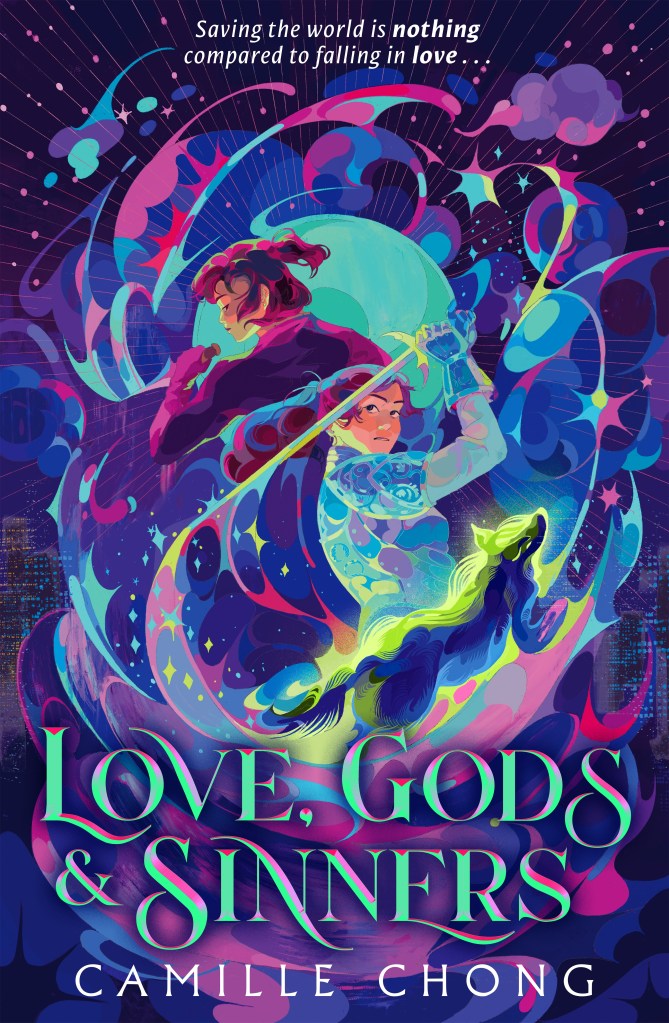
In Love, Gods & Sinners, I answered this question by placing my Asian protagonists in usual action scenarios but in a Singaporean setting. I also married the emotional connection of romantic-comedies with the high-stakes and fast plot beats of action movies.
Additionally, the art of questioning is not only a good way to find your place, but also a great way to hone your artistic style and taste. In Love, Gods & Sinners, I was deeply inspired by the flashy fight scenes of old action movies like Kickass (which, in itself, is inspired by a comic!). I wanted to maintain that fun vibe while getting across the punchy-ness of battle scenes in the Avengers franchise. Having to translate my love for film scenes into words meant analysing and figuring out the literary equivalent of different film techniques. For example, using short and quick sentences to imitate jump-cut scenes, knowing choreography, and being familiar with common fight scene angles. Screen and animation showed me how a fight scene could look more fun and colourful than a boring action sequence on TV. Wanting to translate certain effects between different mediums also helped me elevate my writing skill to be able to get the right effect across, as well as hone my personal style in a unique way.
It is not only important to question your inspirations from other media, but also from different genres of stories. Famous rom-com author Emily Henry uses a technique in her rom-com People We Meet on Vacation that she learnt from murder-mystery thrillers, where she introduces a question within the first couple of pages and keeps readers guessing throughout the story. When we question why some stories are so exciting, we can similarly extract its strengths and apply it to a different genre to create something new. For example, after questioning why I liked the superhero genre, I found that I liked the constant dread in a story where a person with a secret identity would inevitably have their secret ripped open. When I used this as an additional plotline in Love, Gods and Sinners, it helped to turn the girls’ romance into something with even higher personal stakes. We must question what we like to build on it and create the work we want to read.
When we question why some stories are so exciting, we can similarly extract its strengths and apply it to a different genre to create something new.
I urge all young readers to keep reading and watching media, to take inspiration from different genres or mediums, and continue to develop what you know against what you question. Love, Gods & Sinners is my answer to my question – an Asian sapphic rom-com with all the vibes of a fun action movie, representing my interests and experiences. I hope you find your questions and your answers too.
Love, Gods & Sinners is out on 11th June 2026 and is published by First Ink
.
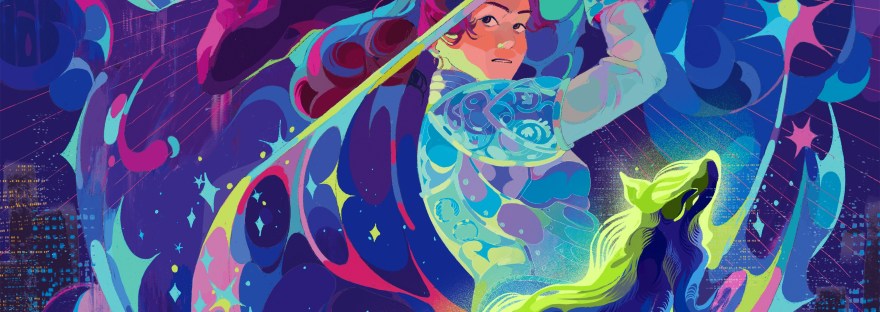
Love, Gods and Sinners
Harper and Tia are roommates, and interns at the same tech company. They clash, they fight, they flirt. And, under cover of night, the two of them adopt secret identities and head out on missions across the city for their respective magical clans. Tia is the beautiful descendant of the Moon Goddess, and Harper is secretly Raven, the leader-in-waiting of the feared and villainous Foxes.
When each is tasked by their clan to kill the other, a deceitful game of cat-and-mouse begins. And Harper and Tia will start to understand that the concepts of right and wrong can be just as complicated – and dangerous – as falling in love.
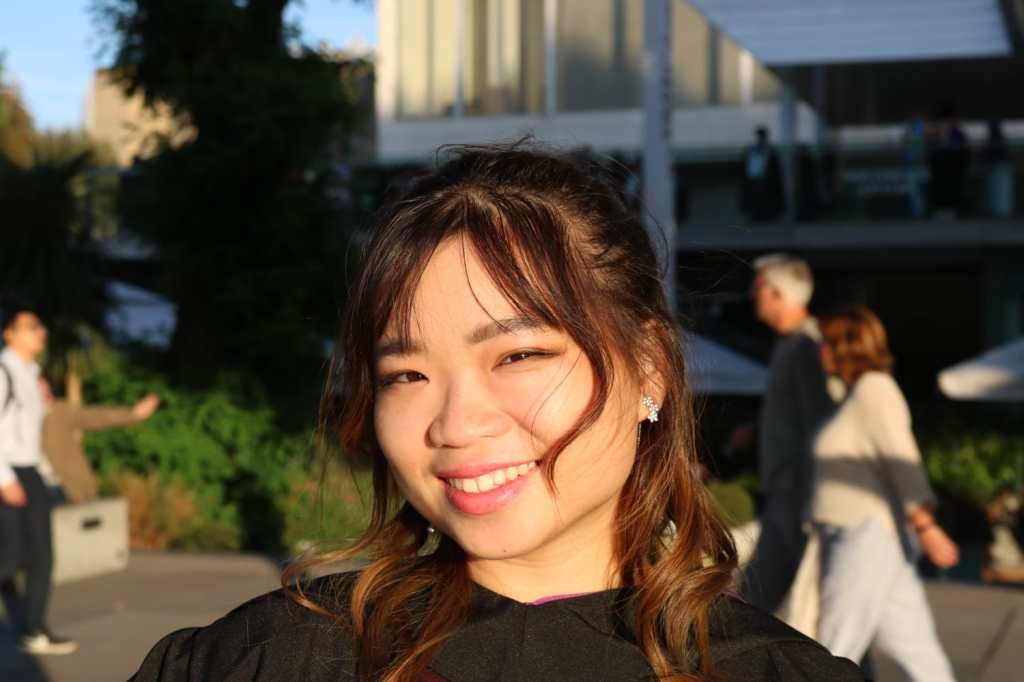
Camille Chong
Camille Chong is a Singapore-raised writer of queer Asian stories. When not reading and writing fantasy rom-coms, she’s watching B-grade movies, making a mess of her kitchen or battling demons at her local bouldering wall. Love, Gods and Sinners is her debut novel and a love letter to Asian daughters and fans of punchy rom-coms and secret identity shenanigans. She works on her novels while pursuing a Law degree at University College London.