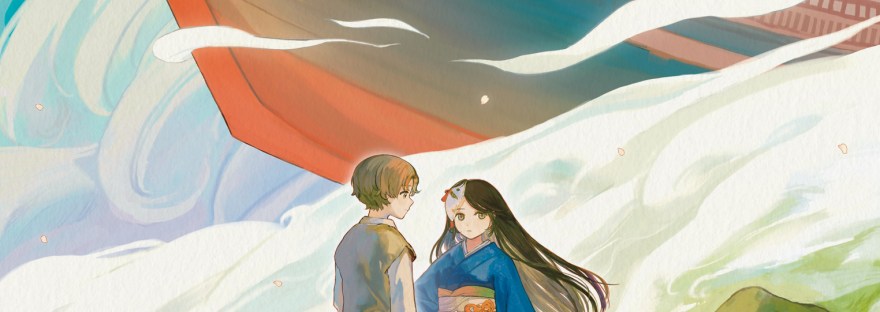
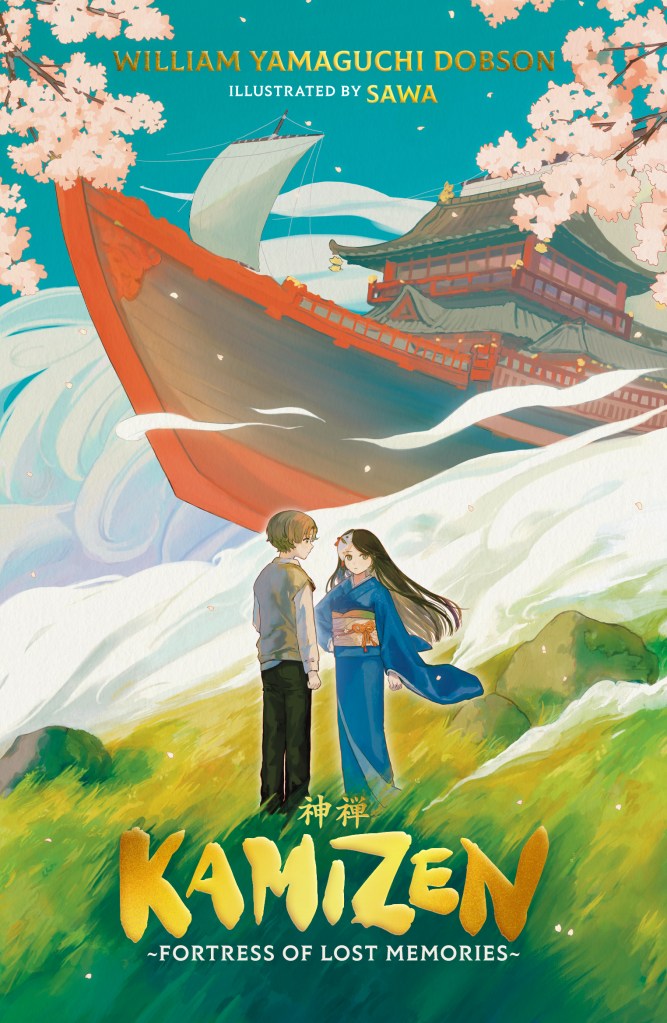
Recently, we not only got to attend the brilliant book launch for Kamizen: Fortress of Lost Memories, but we also interviewed the author, William Yamaguchi Dobson. Read on to discover more about this magical and heartfelt debut, based on Japanese myth and folklore.
Could you introduce us to your book, Kamizen: Fortress of Lost Memories?
It’s a middle-grade fantasy about a boy called Jonty who meets a mystical bonobo in Yorkshire and is offered the chance to enter through The Gate of Memory so that he can recover lost memories belonging to his beloved grandfather and help him finish his memoir about life as a primatologist.
What can you share with us about the inspiration behind the book?
Inspiration, I find, is a mystical thing in itself – if I could pinpoint the exact source, I would drop a GPS pin and camp there for the rest of my writing life. Thinking back now, I would say there were several whispers in my ear. I wanted to write a story about the relationship between a child and grandparent. One of my all-time favourite stories is Tove Jansson’s The Summer Book. I then wondered if I could combine that with my interest in primatology and jazz, as one does on a quiet afternoon. And because of the experience I had with my father’s dementia for over a decade, I had been reading widely about the science of memory. Everything slowly fell into place.
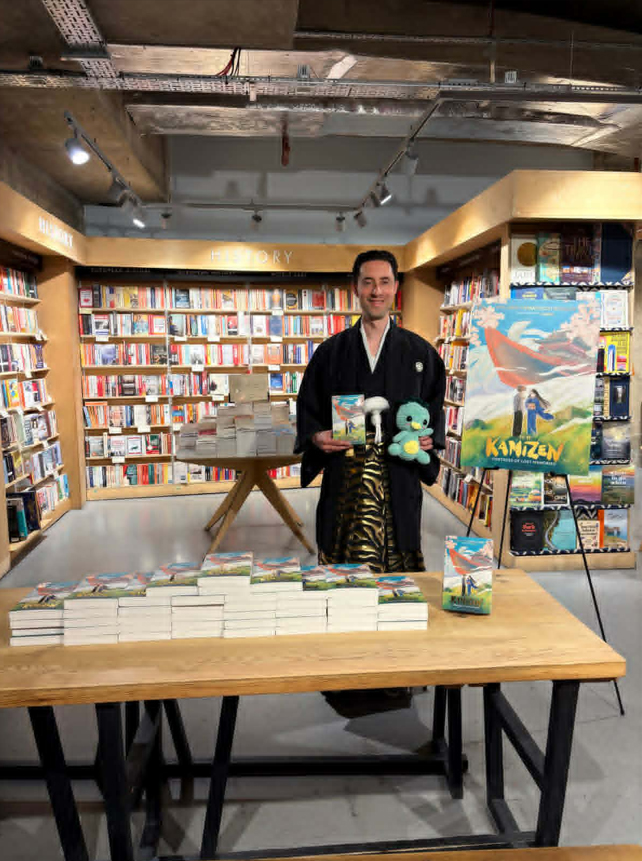
… memories are what make us human and it’s through stories that we remember those who no longer remember us.
The story combines real-life sensitive topics with a highly fantastical world. How hard was it to balance the two? And what do you hope readers take from this story?
The book is aimed at children eight and over. My children witnessed my father’s cognitive and physical decline from a very young age. They had never known him other than “Grandad is poorly”. Many families I imagined were in the same boat. So I wanted to write a story for my children and fellow passengers about preserving the memory of a person before the anarchy of dementia changed them – a time before grandad became poorly. I don’t think I necessarily planned it this way at the outset, but the message I wanted to convey gently is that memories are what make us human and it’s through stories that we remember those who no longer remember us.
I didn’t find it too difficult carrying out the balancing exercise between telling the fantastical story and handling the topic of dementia. The reality of end stage dementia is that it’s relentlessly grim, but you can’t write a children’s story (or an adult one) with relentless grimness. Nobody would read that and nobody should. You sow enough hints about the reality and let your readers water it with their imagination, because the primary duty you have to the reader is that your book is there to entertain them.
There are so many wonderful characters in the book, including a talking bonobo and lots of brilliant yōkai characters. Were all these taken from Japanese mythology and folklore, or did you create anyone specially for this book. And, also, did you have a favourite to write?
A few characters were borrowed from folklore and myth. The kappa is one of the best known yōkai, alongside the tengu. The earth spider is also from a legendary tale. The talking bonobo, however, is entirely my invention, although there is a yōkai known as a satori, which has monkey-like features.
Lafcadio, the Irish kappa, wrote himself. Once I figured out his voice, he was telling me how he would say things and crossing out what I’d written. And to give PaperBound an exclusive, did you know the paintbrush yōkai, Kaita Zanko has several layers of hidden meaning? Kaita is the past tense of “to write” in Japanese. Kaita Zanko is an anagram of Takai Kozan, patron of the Edo period artist Hokusai and himself a painter of nightmarish yōkai.
Zanko is a one-armed yōkai in tribute to Shigeru Mizuki, one of Japan’s most treasured manga artists and folklorists who repopularised yōkai among postwar audiences.
This is your debut book, but it also came out first with Audible. Could you share a little about your experience with the creation of the audio book, and your journey to publication?
Audible acquired the book first and Scholastic bought the print rights shortly after. I had simultaneous edits and a smooth journey through production on both counts. The team Audible assembled was out of this world and you can tell from the quality of the production. There are so many highlights from the time, but two that stand out are: (1) when I was sent the audition clip for Tomoya Errington, who went on to be cast in the lead role. He stars in every single scene and is brilliant in every way; (2) when I first heard Timothy Spall playing Gramps I was walking along Tottenham Court Road and burst into tears as he sounded so much like my father (it happened opposite Waterstones, where I ended up holding my book launch!).
What has been the best publishing experience so far? And has there been a worst?
Working with Polly Lyall Grant and Karen Ball, my editors at Scholastic, and the wider team there has been a joy and painless experience. I wish I could find something to quibble about to give a juicy answer, but I’ll have to disappoint you! Best publishing experience? I received my first copy of Kamizen on my mother’s birthday when she happened to be staying with us, so I let her open the parcel without telling her what was inside. That was a lovely shared moment, entirely coincidental.
Can you tell us about anything else that you are currently working on?
I am reverting to writing longhand for a new project that may result in a highly illustrated middle-grade novel about a boy, a forest spirit and an unforgettable summer in the mountains of Japan.
What piece of advice would you give an aspiring writer thinking about writing for young people?
Know your audience. If you have children, watch what they’re watching – see what makes them laugh and holds their attention: you can translate some of this to print fiction. You should already know what they’re reading and be familiar with the latest titles. Most importantly, in the words of Inspector Harold Francis Callahan, “you’ve got to ask yourself one question.” Why would a [insert age] child want to read the book I’m thinking of writing?
Kamizen: Fortress of Lost Memories by William Yamaguchi Dobson is out now, and published by Scholastic.
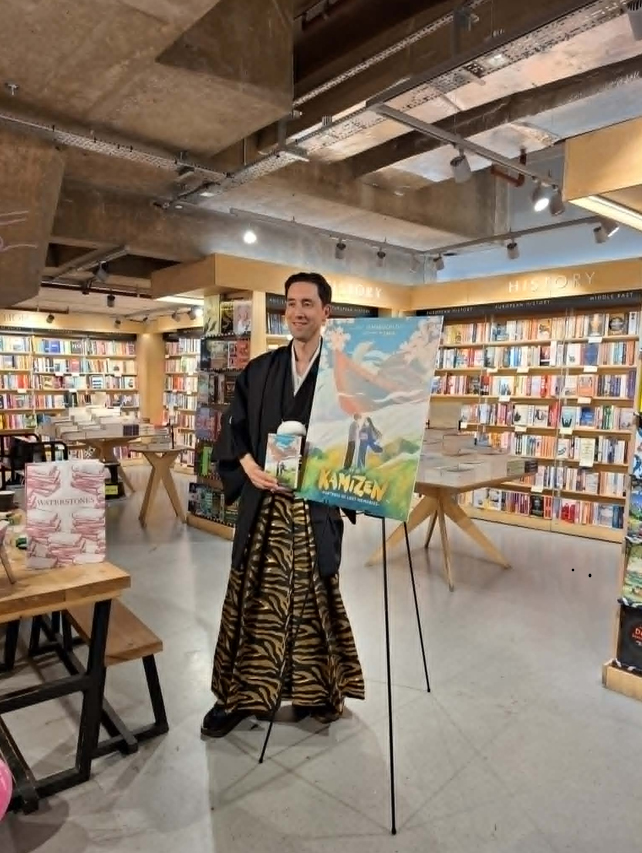

William Yamaguchi Dobson
William Yamaguchi Dobson worked as a barrister before turning his hand to writing fiction. His childhood in Japan and love of manga influence his stories. When not looking after his children, he can be found reading or writing and likes to start the day with a cup of matcha and a smile.