Blog, Blog series, Bookshelf, Interview, Interviews, on writing, Writing craft

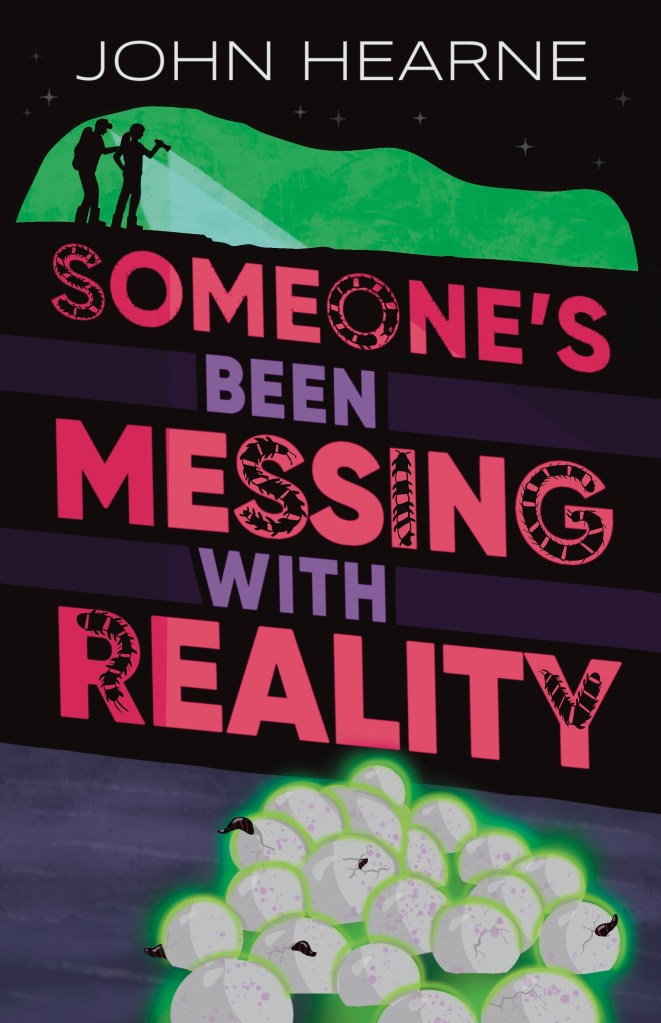
Interview: John Hearne chats about his speculative sci-fi novel ‘Someone’s Been Messing With Reality’ for middle grade readers

So here’s my tagline – ‘When Martin Ryan sees a video of his father flying unaided through the air, he realises that everything he has assumed about his life up to this point has been a lie’.

The whole novel arose out of the following proposition: ‘What if you were an alien, but didn’t know it?’ The moment Martin discovers the truth is also the moment that his parents disappear. He and his friends Tina and Enda realise that their disappearance is part of a larger conspiracy which they must unravel and thwart.

What inspired me to write it? I liked that proposition. Like a lot of writers, I log all the different story ideas that occur to me. Most of these ideas will never go anywhere, but if I hit one that’s sufficiently intriguing and exciting, I’ll start sketching out where I might go with it. What kind of characters could carry this kind of plotline? Where could I set it? Where will the intrigue come from? Once the ball gets rolling, it takes on a life of its own.

I’m a plotter and a planner. I like to work out where I’m going to go before I get there – but things always surprise you during the writing phase. I like to think of my outline as a map. I’m going to use it to get to where I’m going, but if I spot something interesting that doesn’t lie along the planned route, I’ll go explore it. The writing process tends to generate fresh ideas, and I think you’ve got to be open to evaluating them rather than sticking rigidly to the original plan.

Also, I often find as I write that that clever little plot detail or character quirk that I thought would work actually doesn’t, so I often stop midstream and rethink things. I find too that once you’ve established how a character acts, you’ve often got to give them more freedom that the original plot allowed. In Someone’s Been Messing with Reality, Martin’s friend Tina caused both him and me a lot of grief through her impulsivity – I had to keep readjusting things when I realised that ‘Hmmm, Tina would never do that…’

The process was similar, though it did have a lot more steps. I spent a lot of time figuring out exactly what would happen with Indigo before I dived into draft 1, but because this was my first attempt at anything like this, draft 1 was pretty much like the first chair that a trainee carpenter might make. The back was crooked and all the legs were different lengths. It went through several redrafts before I arrived at something that I would willingly show anyone – and the finished product didn’t bear much resemblance to the first draft. It’s true that most books aren’t written, they’re rewritten.

The Very Dangerous Sisters of Indigo McCloud had a fictitious setting – the absurdly miserable town of Blunt, and was choc-full of outlandish characters. I wanted to set Someone’s Been Messing with Reality in the real world, and make the characters a little more human. This is sci-fi – yes – but the relationships and problems and characters themselves are all real, or as real as I could make them.

Enda is one of the three friends at the centre of the book. He’s recovering from a brain injury. The emotional arc of the story rests on the different ways in which his two friends deal with this. I’ve always had an interest in brain injury. I made a radio documentary for RTE Radio 1 a few years ago about someone who was recovering from a very serious head injury. The weird thing is that after I had started work on this book, and after I had written Enda into it, I fell and hit my head. I gave myself what would be termed a ‘mild brain injury’. It may not have been life threatening, but it was very debilitating.

To cut a very long story short, I suffered from prolonged bouts of fatigue and could do very little work of any kind for a long time. Thankfully I’m fully recovered now, but the process took a couple of years. I couldn’t use a computer for much of that recovery. I had damaged the visual cortex at the back of the head, and my brain simply couldn’t deal with the kind of light that emanated from the screen. So much of this book was actually written longhand.

It has been lengthy! Much rejection, much rethinking, rewriting, repositioning. Getting published is hard and getting harder. This book – my second – was a little easier than the first, because I had a good relationship with the publisher, and they were happy to read what I wrote, but it had to reach a higher standard to get through. Rising costs have made it more difficult for independent publishers to take a chance on something, so they’ve got to love it before they’ll agree to put scarce resources on the line.

Since my book is science fiction, I’ll stick to that. My favourite in the genre is When You Reach Me by Rebecca Stead. A wonderful book, with a plot that rumbles slowly under the surface – you don’t quite realise that it’s sci-fi until close to the end. I also really like Ender’s Game by Orson Scott Card, the Dune books and The Iron Giant. My kids also love Hilo: The boy who crashed to earth by Judd Winick.

Much of the standard advice is correct. I think you need to do three things – read in the genre you’re writing in, develop your craft by reading about writing or taking classes, and finally, get feedback on your work. The third one is the one that most of us struggle with, but if you’re ambitious for your writing, you need to show it to people – and not just any people – I’m talking about people who understand the market and know what good writing looks like.

The other thing I’d say is that if your sole ambition is to get published, you are probably letting yourself in for a great deal of misery. Unless you’re exceptionally talented and blindingly lucky, the chances of getting published early in the game are low.

I write because I want to get published, yes, but I also write because I love to write. If you don’t love it for its own sake, I would chuck it in. You only get so much time on earth, so you’ve got to get something out of the journey. Without a love of the process, the time will feel wasted, and the destination – even if you do reach it – will not live up to expectations.

I’m working on something alright, but as we speak it’s an unholy mess. I’ll let you know if and when something readable emerges from it …

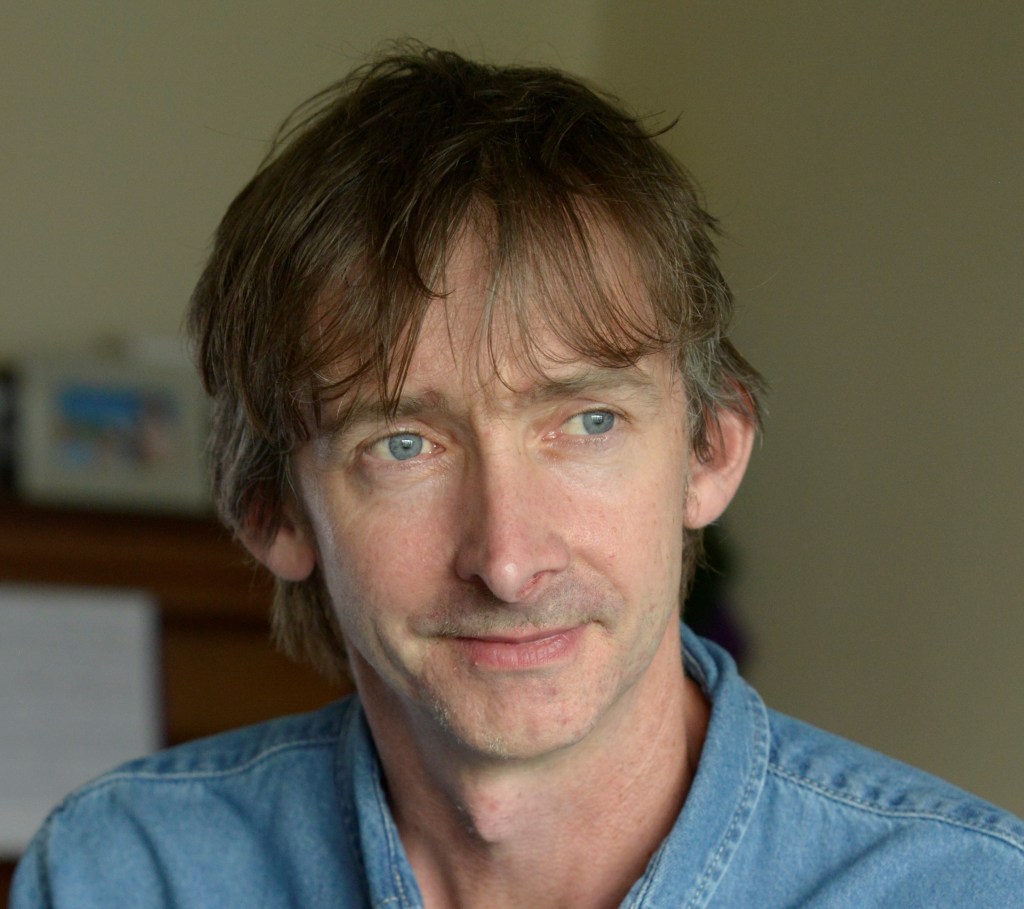
Photo courtesy of David Ruffles

John Hearne was born in Wexford, Ireland in 1970. He worked as an economist in Dublin before changing direction and becoming a freelance writer. He has ghostwritten and edited a range of bestselling books, while his journalism has appeared in numerous national and international newspapers and magazines.

His first middle grade novel, The Very Dangerous Sisters of Indigo McCloud was published to critical acclaim by Little Island in 2021. His second book Someone’s Been Messing with Reality is out now. You can find him on Instagram @johnhearneauthor.

www.johnhearneauthor.com

PaperBound Magazine is an online magazine for the young, and the young at heart. We are dedicated to showcasing authors and illustrators for children’s and young adult fiction and we strive to deliver inspiring content, uplifting stories, and top tips for young and aspiring writers yet to burst on to the literary scene.

All our issues are completely free and run by volunteers, however if you would like to support PaperBound and the work we do, you can help us out by buying us a virtual book. We appreciate any support you can give us!

Don’t forget you can read with the latest issues of PaperBound Magazine – completely free – here.

Blog, Blog series, Bookshelf, Interview, Interviews, Writing craft

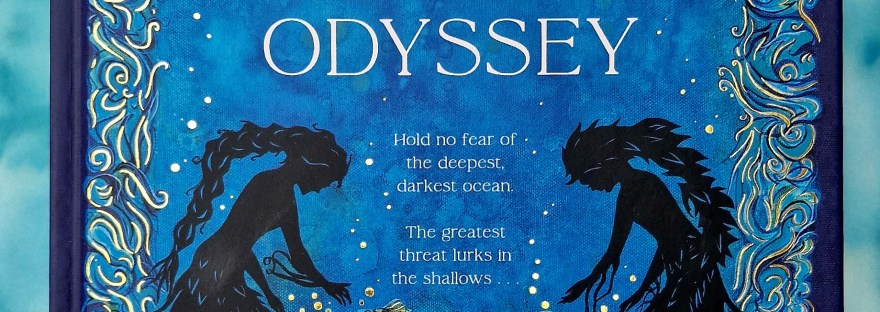
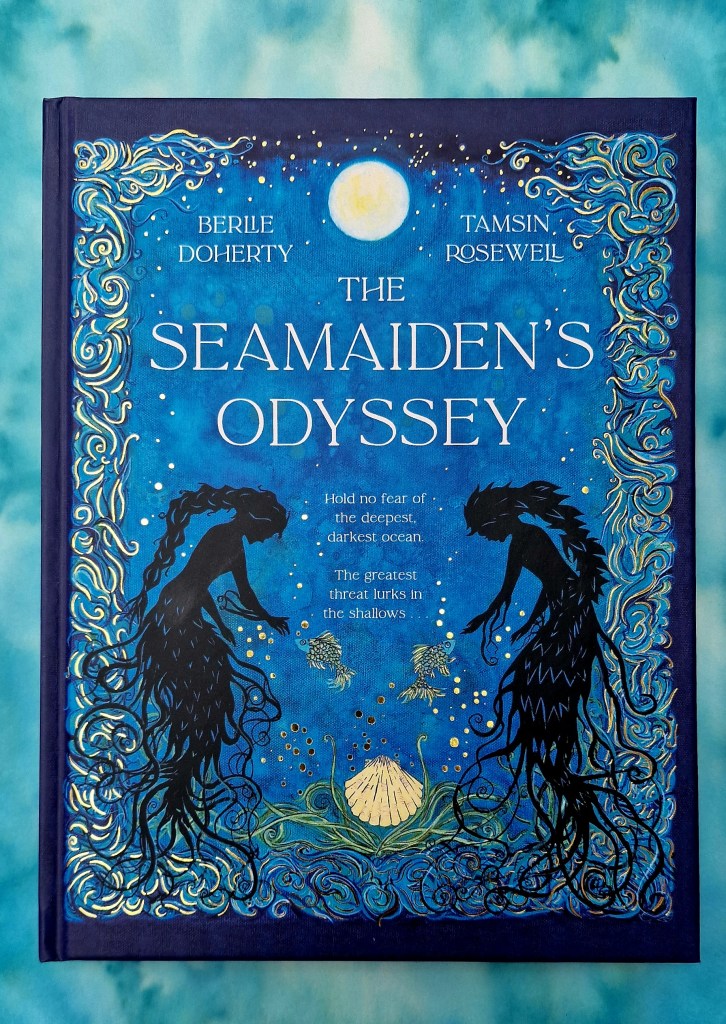
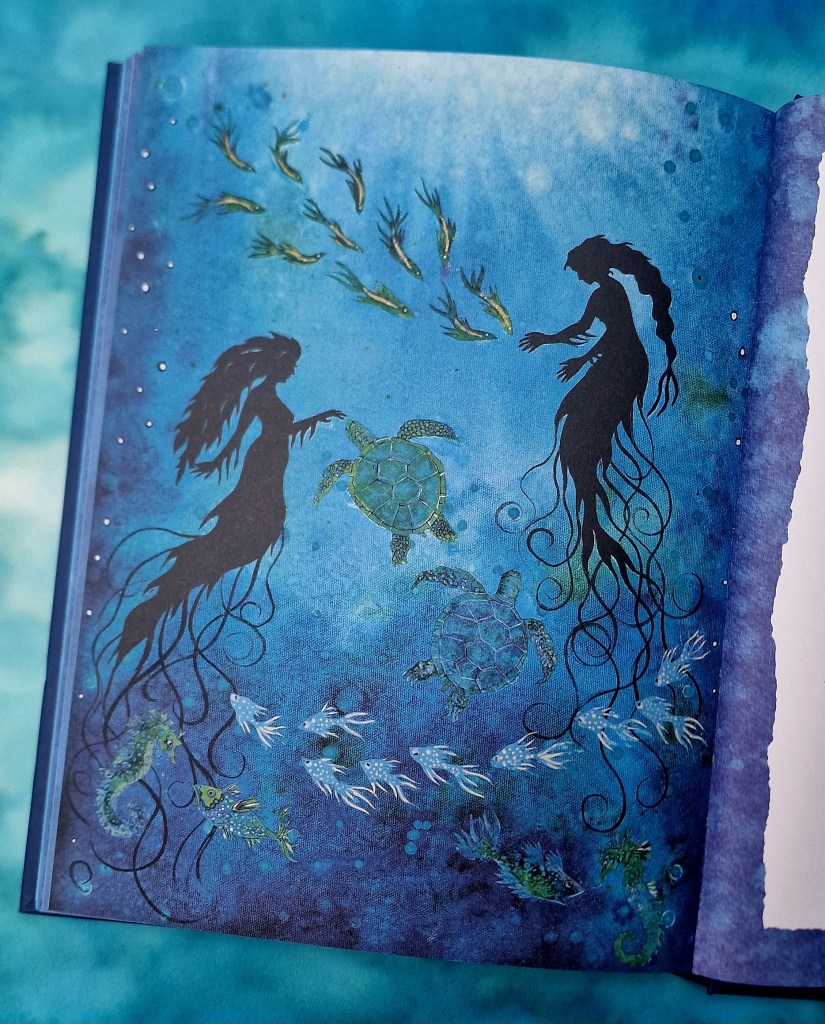
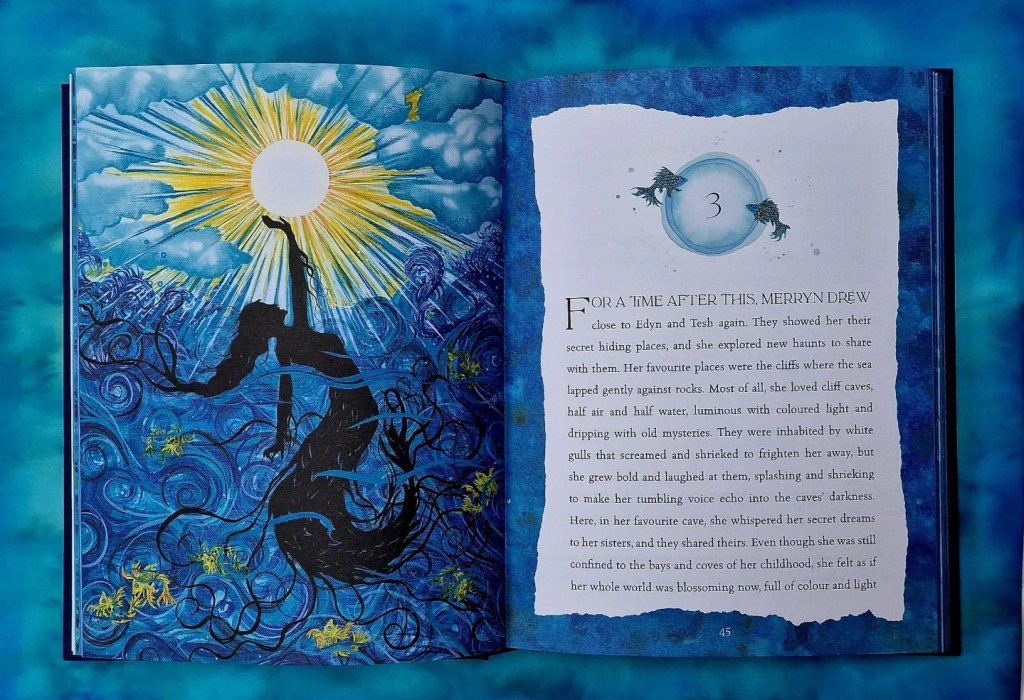
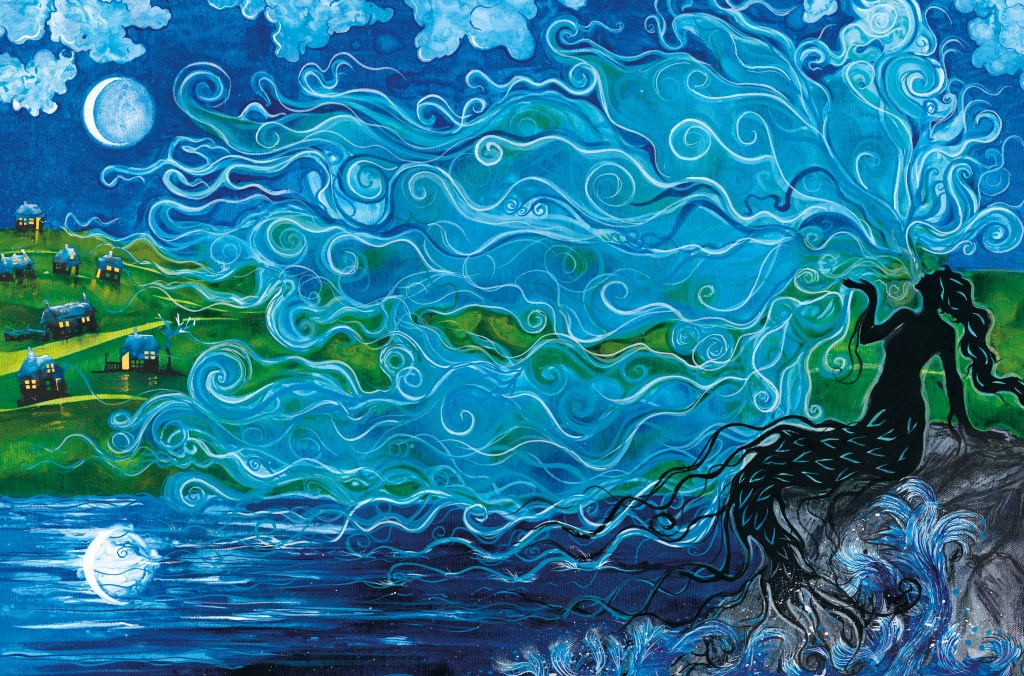
Guest Blog Post: Berlie Doherty and Tamsin Rosewell on the writing and illustration process for The Seamaiden’s Odyssey

Berlie Doherty is the author of the best-selling novel, Street Child, and over 60 more books for children, teenagers and adults, and has written many plays for radio, theatre and television. She has been translated into over twenty languages and has won many awards, including the Carnegie medal for both Granny Was a Buffer Girl and Dear Nobody, and the Writers’ Guild Award for both Daughter of the Sea and the theatre version of Dear Nobody. She has three children and seven grandchildren, and lives in the Derbyshire Peak District.

Tamsin Rosewell is an artist, historian and broadcaster with a background in politics. She was a bookseller for 15 years, with a specialist knowledge in children’s and picture books before moving to illustration. She is also known for her painted window displays. Tamsin is a regular panel speaker and Festival event chair, as well as being a judge of the Stratford Salariya Picture Book Prize. She is based at 55-year-old independent bookshop, Kenilworth Books, but divides her time between London, Oxford and Warwickshire.

PaperBound Magazine is an online magazine for the young, and the young at heart. We are dedicated to showcasing authors and illustrators for children’s and young adult fiction and we strive to deliver inspiring content, uplifting stories, and top tips for young and aspiring writers yet to burst on to the literary scene.

All our issues are completely free and run by volunteers, however if you would like to support PaperBound and the work we do, you can help us out by buying us a virtual book. We appreciate any support you can give us!

Don’t forget you can read with the latest issues of PaperBound Magazine – completely free – here.

Blog, Blog series, Bookshelf, Interview, Interviews, on writing, Writing craft

Interview: Louise Finch chats about her brand-new YA novel ‘Iris Green, Unseen’

Sure! Iris Green, Unseen is about a talented, but shy street photographer who, on the day she discovers her boyfriend is cheating on her with her best friend, starts turning invisible. As she tries to put herself and her life back together, Iris has to work out some difficult truths about herself and the people around her as well as trying not to fade away entirely.

It’s a novel about self-discovery, self-confidence and allowing yourself to be really seen.

First of all, I have to confess that I’m actually married to a photographer! So that was not only immensely helpful when it came to some of the technical questions, but also certainly contributed to the inspiration behind Iris’s art.

Also, although I’m not a particularly good photographer myself, I have always been interested in art and studied History of Art at uni. One artist whose work and story really inspires me is Vivian Maier, and she features quite prominently in the novel. Maier was an amazing and prolific street photographer who was entirely unknown in her lifetime, but her posthumous discovery has brought not only acclaim and recognition for her work, but also a lot of interest and speculation about her life. Her story raises so many interesting questions about why we make art and the exposure that comes with sharing it, which are certainly things Iris grapples with.

I also dabbled with a little darkroom photography once upon a time too and remain fascinated by the process. That moment when the picture begins to develop really is special and reminds me of how ideas arrive for novels – emerging on the blank page seemingly out of nowhere, but actually with a lot of hidden work and time to get to that stage.

I am a pantser to my core, unfortunately, writing my first drafts in a sometimes quite fragmented and chaotic way before going back through and attempting to impose order through edits. I’d love to be able to piece together a plot without writing the whole thing down scene by scene, but that doesn’t seem to be how my brain works.

Similarly, my ideas can start from anywhere and aren’t usually something I sit down and try to make happen. With Iris, the concept arrived first, but it brought the character along with it, because I knew immediately the kind of girl who would be manifesting her own invisibility.

What felt important to me was to focus on the interaction between all those relationships and how Iris feels about herself. From the start this was always about being seen and known by yourself and others, why that matters and how much it hurts when people get it wrong. While I had a sense of that when starting to write, I did end up going off on tangents during the writing that were less relevant and eventually had to be cut, which I think is inevitable when you’re not a plotter.

One thing that emerged during drafting which I enjoyed exploring was all the contradictions in Iris’s character and her relationships. For example, she’s someone who feels unworthy and doesn’t want to ask for anything from anyone, but ends up needing people to be there for her quite a bit. She’s hyper observant when it come to small slights, or the detail of a street scene, but fails to see Baker’s genuine interest in her.

My main advice is to be as honest as possible while also offering hope and empathy. I’m always mindful that, while my characters aren’t real people, my readers are. I believe that when writing about emotional real-world issues, writers have a responsibility to leave readers feeling safe and with a sense of optimism, even if things aren’t perfect in character’s lives by the final page.

Other than that, it’s always a good idea to ask trusted readers for feedback, because none of us can never see all angles of our own work. I’d be nowhere without my brilliant writer friends!

I do! I’m currently working on a horror novel, which is a slight change of direction, but not a total departure as it weaves together some real-world horrors with their supernatural counterparts.

Louise Finch is an autistic author who lives on the Surrey/Hampshire border with her partner and two dogs surrounded by vintage furniture and too many houseplants. The Eternal Return of Clara Hart, Louise Finch’s YA debut, was published by Little Island Books in 2022. It was shortlisted for the Yoto Carnegie Medal for Writing, the Branford Boase Award, the Great Reads Award, and the Bookseller YA Book Prize.

http://www.louisefinch.co.uk

PaperBound Magazine is an online magazine for the young, and the young at heart. We are dedicated to showcasing authors and illustrators for children’s and young adult fiction and we strive to deliver inspiring content, uplifting stories, and top tips for young and aspiring writers yet to burst on to the literary scene.

All our issues are completely free and run by volunteers, however if you would like to support PaperBound and the work we do, you can help us out by buying us a virtual book. We appreciate any support you can give us!

Don’t forget you can read with the latest issues of PaperBound Magazine – completely free – here.

Blog, Blog series, Bookshelf, Interview, Interviews, on writing, Writing craft

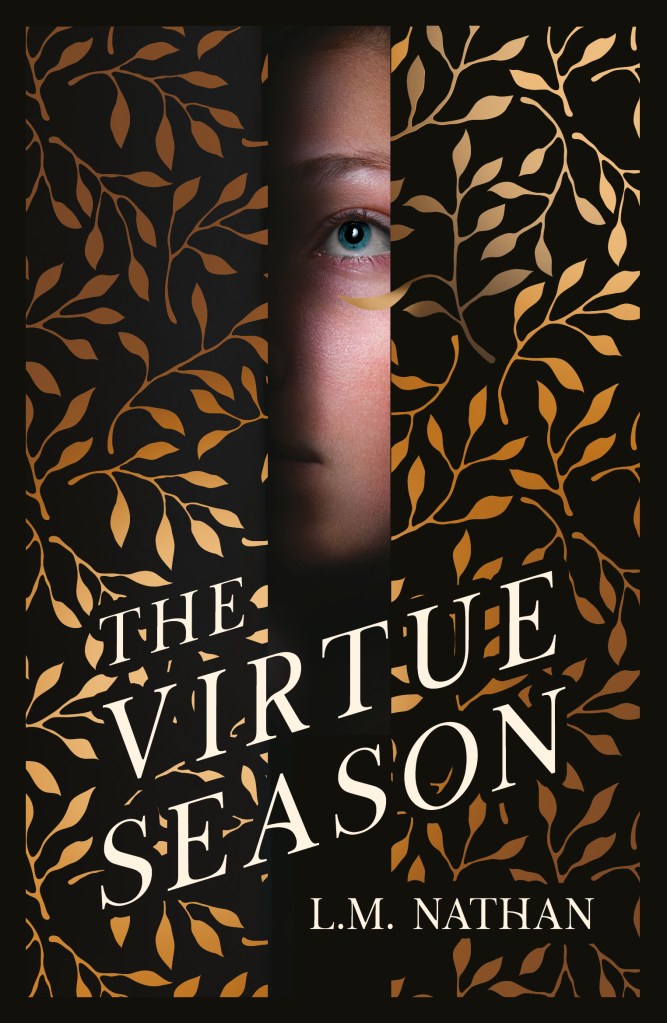
Interview: L.M. Nathan speaks to PaperBound about her new YA dystopian novel ‘The Virtue Season’

The Virtue Season is the story of Manon – a debutant who wants nothing more than love, but love is also the thing that terrifies her the most. Now that she is eighteen, and about to attend the virtue season balls, it is tantalisingly close. At the end of the season, she could have found the one – if her match is sanctioned by the council. But she lives in a world that holds some very spurious beliefs as truth, a world where genetic flaws are feared, and it is believed that bloodlines must be pure. And Manon is hiding a secret about her family that would be viewed as a defect. If it is discovered, Manon will be decommissioned. She will not be allowed to marry, or to have children, and will live as an outcast with her future decided by the oppressive council… just like her best friend Agatha.

Growing up I never really felt I fit anywhere. It took me a long time to realise that’s how most people feel – regardless of how confident they seem or how much they appear to be winning at life. When I was teaching, I saw it all the time, that feeling of being different, of being wrong in a world full of rights and I wanted to write something that was a clarion call to young people to shout: you do not define me, and, hopefully, to believe it too.

Like Manon, I felt from a young age my tendency for interiority and reflection might become something more insidious later in life, and I have had my struggles with anxiety but, also like Manon, I am strong and resilient and never give up. So it’s fair to say, she was inspired by own experiences.

I didn’t realise it when I was writing, but I was also weaving my dad’s experience into the story through the decoms. I would describe my dad as extremely able-bodied, if that is a thing. He was the kind of dad who threw you over one shoulder and carried you around giggling or launched you across the swimming pool, further than anyone else’s dad could. But then he was struck with illness and left disabled and though it didn’t change him – or his spirit – one bit, I saw how it changed the way society viewed him.   

I’m not a plotter. I tend to have a general gist of where the story will go and some sense of the main beats within it, but I like the way the story reveals itself to me through writing. There’s a magic to it. The story becomes a living, breathing thing and it takes me with it.

Calde Valley was inspired by the Ribble Valley, which is every bit as majestic as it appears in the story. Shortly after I moved there, it flooded and I found myself standing at the top of Clitheroe Castle, on a very windy, rainswept day, staring out at Pendle Hill and wondering…what if? Most people who are inspired by Pendle Hill tell stories about witches, but I managed to turn it into an apocalyptic dystopia.

My experience of finding Manon and Agatha verges on the supernatural. Once I had the setting of Calde Valley, they seemed to wander onto the hillside, take a bow and introduce themselves. I’m not a fan of character development exercises – what’s in their handbag and so on – but I know lots of writers swear by them. Because this was my first book, and I was finding my way, I did do this for Manon but very little of it was used. I think the only thing I kept from those types of questionnaires was her most treasured possession, which was her grandmother’s recipe book, which gifted me her cooking ability. So, I suppose it was worth doing but I prefer to tease out character through writing exercises. I might write a scene from a different character’s point of view and watch as Manon or Agatha reveal themselves through observation. I wrote lots from the perspective of Councillor Torrent and some from Wick’s as well. It allowed me to watch the two girls rather than being in their head all the time. Another great exercise is to put your character in a scene ‘outside’ the story – perhaps as a child or reflecting later in life, or in a location they don’t visit as part of the story. That’s always revealing, and no writing is ever wasted, even if it doesn’t make it into the book. 

Looking back, I wish I’d understood how much of the ‘writing’ happens after the first draft is finished. I wouldn’t have procrastinated over that draft for so long if so, but it felt like the stakes were high and I put it off for a lot of years.

Without a doubt, the most enjoyable part of this process has been meeting other people going through the same thing, discussing plot and character and motivation and all things bookish. It might seem strange, but the moment of publication has been the least enjoyable part. Sharing this story, which has been such an important part of my life, is scary and vulnerable and surreal. I have to hold fast to my own belief that the story is good.

I could go on writing about these characters forever. There is so much more for Manon and Agatha to accomplish. Real change happens slowly and, without giving away any spoilers, it didn’t feel right to gift them utopia at the end of this book and so, there is unfinished business, I think. There are also characters whose backstories I’d love to explore – Torrent, Drewis and Trent, Gillam and Cayte. And there are the stories that represent Calde Valley’s future too. Agatha’s sister Wren pleads her case often. Even Bertie, who I think is brave and dear and understated. They have so much life yet to live in my head. 

L.M. Nathan grew up in the East Midlands, moving from there to Bristol where she studied English and Drama and then to Malta where she completed an MA in Literature. She also has an MA in Journalism which she studied for in Manchester. She now lives in rural Lancashire, in the shadow of Pendle Hill, and teaches English.

Her first novel, The Virtue Season, was inspired by the wild landscape of home and completed when she was selected to be part of the Curtis Brown Creative novel course.

PaperBound Magazine is an online magazine for the young, and the young at heart. We are dedicated to showcasing authors and illustrators for children’s and young adult fiction and we strive to deliver inspiring content, uplifting stories, and top tips for young and aspiring writers yet to burst on to the literary scene.

All our issues are completely free and run by volunteers, however if you would like to support PaperBound and the work we do, you can help us out by buying us a virtual book. We appreciate any support you can give us!

Don’t forget you can read with the latest issues of PaperBound Magazine – completely free – here.

Blog, Blog series, Bookshelf, Interview, Interviews, Writing craft

Interview: Clare Pollard chats about her new middle grade fantasy ‘The Untameables’

Cover illustration by Reena Makwana

I’ve always absolutely loved Arthurian myth, from the sword in stone to the lady of the lake, faeries to questing beasts. But reading the tales to my children I was suddenly very conscious both that the legend of the ‘round table’ has been used historically to defend the idea of a ‘ruling class’, and that the stories are very violent. I suddenly had a very clear vision of Rowan and Elva, two children who live below-stairs, setting off on a quest to get to the holy grail before the knights do. And I knew they had to get the grail with kindness, not force.

Tales of Camelot are often considered part of the ‘Matter of Britain’. In many ways, Camelot has always been an idealised version of England and Englishness. I began writing this around the time of Brexit, and I wanted to explore what it is to be born under a ruler you don’t agree with. And, historically, England has of course done lots of very bad things. What if your nation are ‘the bad guys’? How can we embrace the best things about our history and culture, whilst resisting the narratives of those in power?

Elva is my favourite, I think. She just came to me fully formed, with all her righteous fury! Quests are all about overcoming obstacles, and young people who have disabilities or are in pain have a whole extra set of obstacles they have to overcome every day. She is a total heroine.

I love T.H. White’s Sword in the Stone. It actually has a dog-boy in it, which I think I must have half-remembered when I invented Rowan. I’m also a poet, so I was very inspired by poetry – Simon Armitage’s translation of Sir Gawain and the Green Knight, Tennyson’s The Lady of Shalott, Browning’s Childe Roland to the Dark Tower Came, as well as medieval riddle poems. I’ve been enjoying going into schools and getting children to write their own.

I am currently working on another children’s book about the voyage of the Argonauts. I am crazy about Greek myth, so am having a lot of fun with this. There’s a little girl who wants to be the Oracle of Delphi when she’s older who has joined the crew. Also a six-year-old siren with a really horrible singing voice!

I actually found it very hard to get The Untameables published. It was rejected by a lot of publishers. I think the children’s book world can be naturally quite conservative and the fact it has political parallels – that the round table is a sort of Bullingdon club – put them off. I also got asked if I could rewrite it so Rowan wants to be a knight! Little boys are supposed to be ‘knights-in-training’. So I think the fact this book is anti-knight worried editors. It was in a drawer for a couple of years before I saw that The Emma Press, who I knew as a wonderful poetry publisher, had a call-out for children’s chapter books and I submitted. I think as a small press they’re more open to radical texts, and I also knew they would make a very beautiful book. I am so happy they asked Reena Makwana to illustrate it – she is a total joy to work with.

I’m promoting my adult novel The Modern Fairies, and have a poetry book coming out next year. But yes, I have started another children’s book – my children are 8 and 11, just the right age, and there’s nothing like the pleasure of reading them a new chapter every night. It makes me feel very lucky.

Clare Pollard has published five collections of poetry, most recently Incarnation (Bloodaxe). Her play The Weather (Faber) was performed at The Royal Court Theatre. Her translations include Ovid’s Heroines, which she toured as a one-woman show. She has also written a non-fiction title, Fierce Bad Rabbits: The Tales Behind Children’s Picture Books (Fig Tree), her first children’s novel, The Untameables (The Emma Press), and two adult novels, Delphi and The Modern Fairies (Fig Tree).

With thanks to Sophie Davidson for this image.

PaperBound Magazine is an online magazine for the young, and the young at heart. We are dedicated to showcasing authors and illustrators for children’s and young adult fiction and we strive to deliver inspiring content, uplifting stories, and top tips for young and aspiring writers yet to burst on to the literary scene.

All our issues are completely free and run by volunteers, however if you would like to support PaperBound and the work we do, you can help us out by buying us a virtual book. We appreciate any support you can give us!

Don’t forget you can read with the latest issues of PaperBound Magazine – completely free – here.

article, Blog, Blog series, Bookshelf, on writing, Writing craft

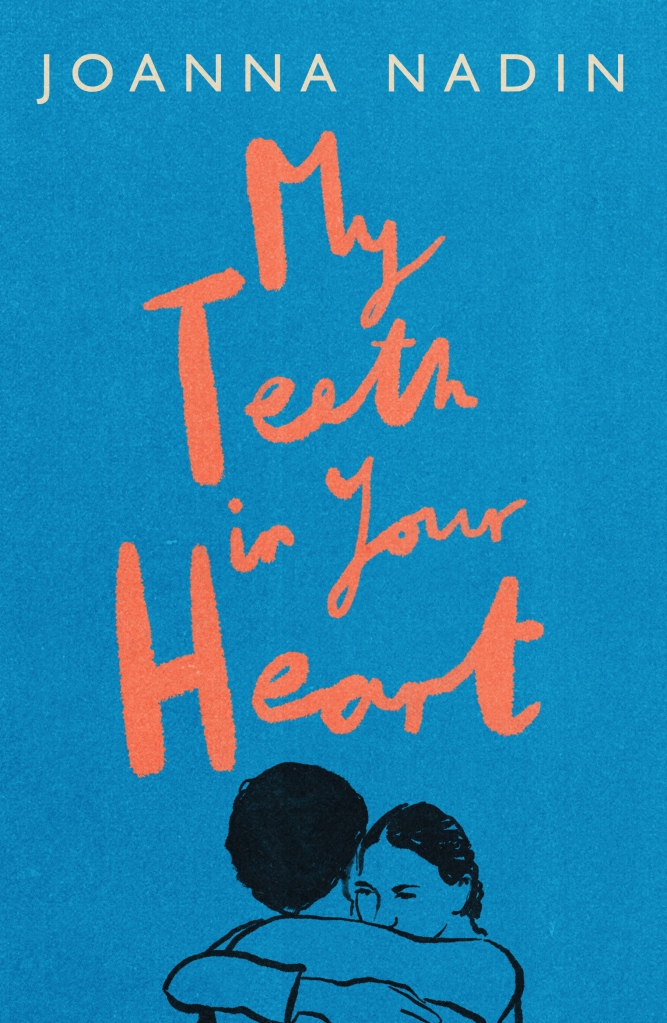
Author of ‘My Teeth in Your Heart’, Joanna Nadin on Writing Dual Timelines

A former broadcast journalist and special adviser to the Prime Minister (not this one), since leaving politics Joanna Nadin has written more than 90 books for children and adults, including the UK bestselling The Worst Class in the World series, the Flying Fergus series with Sir Chris Hoy, and the Carnegie-nominated Joe All Alone, No Man’s Land and Calamity of Mannerings
She has been a World Book Day author, a Blue Peter book of the month and Radio 4 and the i magazine Book of the Year, won the Fantastic Book Award and the Highland Book Prize, and been shortlisted for the Roald Dahl Funny Prize, Queen of Teen and the Big Book Awards among many others, and is published across multiple territories. She has a PhD in Creative Writing and is a Senior Lecturer in the subject at University of Bristol, as well as teaching for the Arvon Foundation.

PaperBound Magazine is an online magazine for the young, and the young at heart. We are dedicated to showcasing authors and illustrators for children’s and young adult fiction and we strive to deliver inspiring content, uplifting stories, and top tips for young and aspiring writers yet to burst on to the literary scene.

All our issues are completely free and run by volunteers, however if you would like to support PaperBound and the work we do, you can help us out by buying us a virtual book. We appreciate any support you can give us!

Don’t forget you can read with the latest issues of PaperBound Magazine – completely free – here.

article, Blog, Blog series, Bookshelf, Interview, Interviews, on writing, Writing craft

Refugee Week 2024: Seven Million Sunflowers by Malcolm Duffy

Could you tell us a little about your book, Seven Million Sunflowers?

This is a book I wish I didn’t have to write.

When Russia invaded Ukraine in February, 2022, it affected so many lives across the world. Including our own. Having joined the Homes for Ukraine scheme, and inviting the Marchenko family into our home, I discovered the strength, resilience and humility of the Ukrainian people. I learnt what it was like to have to flee a conflict, and adapt to a new country, new language, new culture.

This was the inspiration for my story, Seven Million Sunflowers.

This novel has many themes, from resilience and acceptance of different cultures to coping with post-traumatic stress disorder and the changing dynamics of a family, to name a few. Were any themes most important for you to include as the writer?

Writing is like making a meal – all the ingredients are important. But I think there was one key ingredient – acceptance. To what extent can you accept strangers in your home, accept the views of others, accept different cultures? This applies to both the hosts and the guests. 

The opening paragraph and description of the attack on Kateryno’s building is so vivid – the burst pipes, flames and fire grounds you in the present. What kind of research did you do to help write the book?

I wanted to start the book in as dramatic a way as possible. The story doesn’t reflect Sofiia’s escape from Ukraine, but it does reflect the experience of many Ukrainians, especially those living near the front line, like those in Kharkiv.

The idea for the chapter came from a real event where a Russian missile struck an apartment block in Dnipro, Ukraine. A young woman, Anastasia Shvets, was on the 5th floor of the building. 236 apartments were destroyed and many people were killed, including her parents, but she somehow survived. A photographer captured her, clinging to a small green teddy, as she sat in the rubble far above the city.

The topics you’ve written about must have been very sensitive to discuss with Sofiia. How did you both feel talking about what happened?

For me it’s important to remember that this is fiction, based on fact. It’s not Sofiia’s story or that of her family. I spoke to many Ukrainians when writing the story, as well as reading books and articles on the conflict. The characters are an amalgam of different people I’ve met, and stories I’ve heard.

Sofiia helped me understand the feelings of Ukrainians, the anger and sadness at having been forced from their homeland. 

It’s interesting how you describe both external and internal conflicts: the war in Ukraine and Georgia and Marko’s relationship under the same roof. What were some of the challenges you faced as a father inviting a family into your home?

The Marchenkos were a delightful family to have in our home. They kept themselves to themselves, were respectful of us and our home, and helped us when they could. The drama in the book came from stories I’d heard from various sources about problems between host families and their Ukrainian guests. Sometimes the host family were at fault, sometimes the Ukrainians. I wanted to reflect this in Seven Million Sunflowers.

Although this is a work of fiction, you’ve based the book on your personal experience. Do any of the characters in the book resemble you in any way?

I don’t think any of the characters in the book resemble me. Having said that I like to include elements of human nature that mean a lot to me – humour, empathy, kindness, understanding.

Are you working on anything new at the moment?

Yes, I’m working on a new YA book at the moment, but I don’t want to jinx it by talking about it!

The opening to this novel is very powerful. The description of everyday things such as the guitar, desk etc. all upside down amid the fear and the deafness is so vivid. I was almost choking from the smoke. How much of this was true to your story?

I was fortunate enough not to live too close to Russia unlike the heroine of Malcolm’s story. I am fortunate enough that my flat is still not damaged. But I think the early morning of 24th February was frightening for everyone. I woke up from the explosions. Although we all knew war was coming – I didn’t expect to feel it myself in central Ukraine so soon. My town is of an average size – it has 250,000 people. But even this small town experienced some damage during the ongoing Russian invasion. First missiles, then a few months later drones etc.

I was very frightened although I tried not to show it to my friends and family. On the day of the 24th, the first thing I did was go to the local corner shop and buy champagne and my favourite chocolate. This has always amused me but now I understand I probably was thinking they might be my last days on this earth so I’m gonna celebrate my life. After having those for breakfast I didn’t eat anything at all for the next 3-4 days.

Kat defends and protects her mother by not translating certain negative conversations. Did you ever have this experience?

We definitely didn’t have a negative experience with our host family. Malcolm and his wife and children are super sweet and supportive. But there definitely were some moments outside of our host family’s house (like dealing with the search for work and accommodation) that were stressful and I didn’t always translate everything to my mum for the sake of her wellbeing. I know she likes to solve problems and support me but with her not being able to speak English, it really left her feeling helpless and I didn’t want to add to that.

Malcolm and Sofiia

Was it difficult adapting to rules in someone else’s home?

As I mentioned earlier – our host family were super sweet and understanding. It wasn’t difficult to adapt to their rules, we are really lucky we met them. We are still friends and love babysitting for their lovely dog Layla sometimes.

What was hard for me was the lack of personal space which I always had growing up. I am an only child and my parents were working a lot, so I had a lot of moments being alone in the house. I am not used to having many people around, so this was hard. I always had some anxiety, even back in Ukraine when we had some guests visiting, so even though our host family were the loveliest and the most understanding people ever, I did miss being alone sometimes – this is an environment where I regain my strength and resources to carry on in difficult times.

How did it feel being in the UK, while people you knew and cared about were still in your homeland?

Definitely a lot of guilt. Feeling you are the lucky one who got away and survived and can carry on having a normal life.

What do you think of the final book, Seven Million Sunflowers?

I have read it and I do love it! I think it is amazing of Malcolm to address this issue through a powerful story like this, and it’s definitely a compelling and moving story. It describes all the difficulties a young Ukrainian teenager faces when escaping the war and having to live a ‘normal’ life while having loved ones in danger every day.

The book is excellent at describing the emotions of a person having to deal with all the mixed feelings of living in two different worlds on the same continent where one is full of chaos and death and other one is peaceful and carefree.

Do you still live in the UK? If so, what are you doing? What plans have you got for the future?

I still live in the UK. We are renting a flat with my mum in a nice area. Currently I am teaching piano classes, mostly to kids, and finishing my Communications degree online. For now, I just want to take time to think about what I actually want and what I am going to do next. To be honest, I didn’t have much time to think about that before.

Refugee Week runs from June 17th to 23rd 2024. Read more about it here.

Malcolm was born and bred in Newcastle upon Tyne and now lives in Surrey. After a typical Geordie childhood, his parents moved south and deposited him in South East England. Having acquired a Law degree at Warwick University he worked his way through a host of London advertising agencies, picking up numerous awards for copy, press, TV and radio.
Having left ad-land he worked as Creative Director of Comic Relief, creating campaigns for Red Nose Day and Sport Relief. It was at Comic Relief that he was inspired to swap copywriting for writing and wrote his first novel, Me Mam. Me Dad. Me. His books have all been issue based, with much of the information gleaned from his work for different charities – Comic Relief (domestic violence), Shelter (homelessness), Nessy (dyslexia) and Combat Stress (PTSD).
He’s supported in his efforts by his New Zealand wife Jann, and daughters Tallulah and Tabitha, who, under the threat of withholding pocket money, seem to like what he writes.
Find out more at malcolmduffy.com and follow him @malcolmduffyUK

Huge thanks to Jayne Leadbetter for preparing the interview questions. Jayne has also reviewed Seven Million Sunflowers in our Spring/Summer 2024 issue, which you can download for FREE here.

Jayne Leadbetter emigrated to Australia from the UK and is a high school teacher at a multicultural high school in Sydney, where she lives on the land of the Gadigal and Bidjigal people. She’s currently studying for a master’s degree in creative writing at university and is in the process of writing two novels, while enjoying the nature and the beaches of Australia with her huge dog Clifford.

PaperBound Magazine is an online magazine for the young, and the young at heart. We are dedicated to showcasing authors and illustrators for children’s and young adult fiction and we strive to deliver inspiring content, uplifting stories, and top tips for young and aspiring writers yet to burst on to the literary scene.

All our issues are completely free and run by volunteers, however if you would like to support PaperBound and the work we do, you can help us out by buying us a virtual book. We appreciate any support you can give us!

Don’t forget you can read with the latest issues of PaperBound Magazine – completely free – here.

article, Blog, Blog series, Bookshelf, on writing, Writing craft

C.G. Moore on Writing in Verse: The Joys and Challenges, plus extract of new novel Trigger

*Trigger warning: sexual assault

See below an extract of the opening of Trigger:

C. G. (or Chris) Moore is the published author of three books. His second book – Gut Feelings – explored his own experiences living with chronic illness and was nominated for the Yoto Carnegie Medal and won the KPMG Children’s Books Ireland Book of the Year Award 2022. His new book – Trigger – is inspired by his own experiences of sexual assault and looks at consent. 
Chris has also contributed a poem to Our Rights – an anthology endorsed by Amnesty International. He also works as a Campaign Officer for The Reading Agency where he leads on digital events and supports libraries and schools across the UK. 

PaperBound Magazine is an online magazine for the young, and the young at heart. We are dedicated to showcasing authors and illustrators for children’s and young adult fiction and we strive to deliver inspiring content, uplifting stories, and top tips for young and aspiring writers yet to burst on to the literary scene.

All our issues are completely free and run by volunteers, however if you would like to support PaperBound and the work we do, you can help us out by buying us a virtual book. We appreciate any support you can give us!

Don’t forget you can read with the latest issues of PaperBound Magazine – completely free – here.

article, Blog, Blog series, Bookshelf, on writing, Writing craft

Journey from Blogger to Author by Amy McCaw

Amy McCaw is a YA author and YouTuber. She’s the author of the Mina and the Undead series, YA murder mysteries set in 1995 New Orleans. She also co-curated the A Taste of Darkness horror anthology with Maria Kuzniar. Her main interests are books, movies and the macabre, and her novels have elements of all of these. Unsurprisingly, she’s a huge Buffy the Vampire Slayer fan and has gone to conventions to meet James Marsters more times than she cares to admit.

If you want to talk with Amy about books or 90s movies, you can find her on Twitter, Instagram, Tiktok and YouTube.

PaperBound Magazine is an online magazine for the young, and the young at heart. We are dedicated to showcasing authors and illustrators for children’s and young adult fiction and we strive to deliver inspiring content, uplifting stories, and top tips for young and aspiring writers yet to burst on to the literary scene.

All our issues are completely free and run by volunteers, however if you would like to support PaperBound and the work we do, you can help us out by buying us a virtual book. We appreciate any support you can give us!

Don’t forget you can read with the latest issues of PaperBound Magazine – completely free – here.

Blog, Blog series, Bookshelf, Interview, Interviews, Writing craft

Interview: Robin Jarvis on the relaunch of his popular Deptford Mice series, starting with the release of Book One: ‘The Dark Portal’

Daniel Seton, editor at Pushkin Children’s Books contacted me and said he’d love to reissue the series, as he was a fan of the mice back in the day. It’s also the 35th anniversary too, so it was absolutely the right time and it’s given me the chance to cram as many new illustrations in there as possible.

I was actually a bit nervous at first, as it’s been a while since I last ventured into those Deptford sewers, but the characters have never been far from my thoughts. They really have continued to live out their lives in my head, so I know what they’ve been up to. I hope new readers will be able to dive into that world and be excited and a bit scared by it. I’ve had brilliant feedback already from the original fans who now have children of their own, and it’s been such a pleasure to hear that the stories have stayed with them all this time.

Oh absolutely. The best stories are those with fright and menace in them. The original versions of fairy tales contained some really gruesome aspects, such as the stepsisters hacking off their toes and heels to squeeze their feet into the slipper, or the wicked queen in Snow White being made to wear red hot iron shoes and dance until she dropped dead. When I was young (a very long time ago) I was mad about monsters – still am. The scares in my books are safe scares. The threats are fantastical, the sort you’d never encounter in real life. I like to think of my books as white knuckle reads.

Yes, apart from giving the writing a good old dusting, there were certain things that I wasn’t comfortable with, such as the Raddle sisters, two elderly mice who I originally described as ‘old maids’. Deary me, that had to go. The biggest change was Madame Akkikuyu, over recent years I’ve noticed she’s attracted criticism because some people thought there was a racial element and bolted human concerns onto her. She was a black rat, as in her fur was black, just as Piccadilly’s fur is grey and Oswald’s is white, but they all have pink skin. In fact, if Akkikuyu’s skin wasn’t pink, the tattoo on her ear wouldn’t stand out and that’s the big plot point of The Crystal Prison. Still, I don’t want anyone to get the wrong idea about her, so her fur is now a rich brown instead and the bone with which she stirred her potions has become a key from a tin of corned beef – which is a much better image anyway.

From a young age I watched anything with a monster in and enjoyed escaping into other worlds. The Green Knowe series was a favourite, as was Tolkien.

Just read and absorb everything, until you decide what stories/styles/themes/characters you enjoy the most and that should give you an idea of what you want to do. 

When Robin isn’t writing, he’s probably making something, usually a creature from one of his books to take with him to events and signings. It’s something he’s always done.

Before he started writing, he was a model maker and he gets grumpy if he can’t make something. It’s so much easier now he has a resin printer, no more mess on the kitchen table for weeks on end. At the moment he’s making Madame Akkikuyu, which brings him full circle, as he first made a wearable version of her all the way back at the beginning, 35 years ago. 

PaperBound Magazine is an online magazine for the young, and the young at heart. We are dedicated to showcasing authors and illustrators for children’s and young adult fiction and we strive to deliver inspiring content, uplifting stories, and top tips for young and aspiring writers yet to burst on to the literary scene.

All our issues are completely free and run by volunteers, however if you would like to support PaperBound and the work we do, you can help us out by buying us a virtual book. We appreciate any support you can give us!

Don’t forget you can read with the latest issues of PaperBound Magazine – completely free – here.