article, Blog, Blog series, Bookshelf, Interview, Interviews, on writing, Writing craft

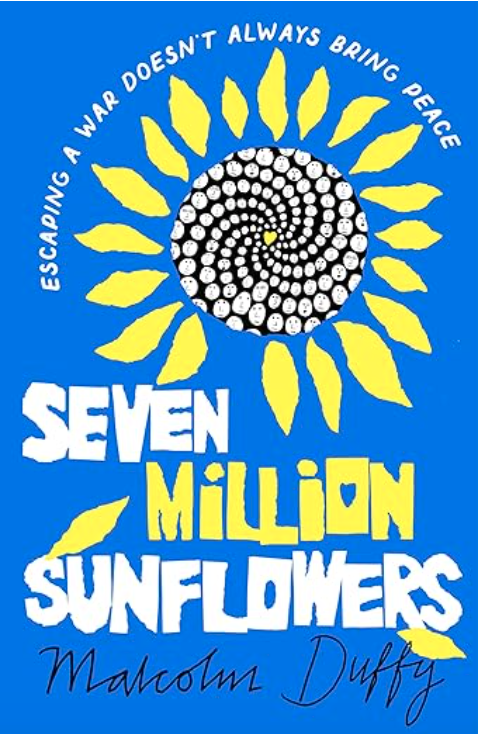
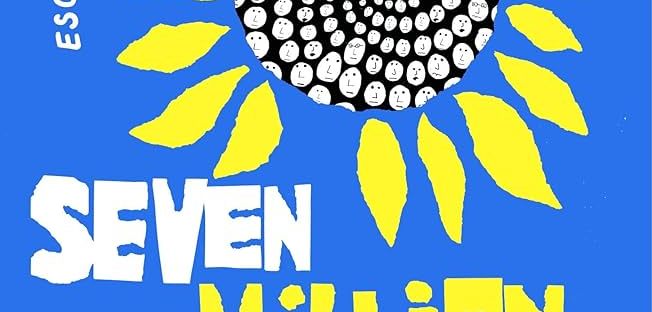
Refugee Week 2024: Seven Million Sunflowers by Malcolm Duffy

Could you tell us a little about your book, Seven Million Sunflowers?

This is a book I wish I didn’t have to write.

When Russia invaded Ukraine in February, 2022, it affected so many lives across the world. Including our own. Having joined the Homes for Ukraine scheme, and inviting the Marchenko family into our home, I discovered the strength, resilience and humility of the Ukrainian people. I learnt what it was like to have to flee a conflict, and adapt to a new country, new language, new culture.

This was the inspiration for my story, Seven Million Sunflowers.

This novel has many themes, from resilience and acceptance of different cultures to coping with post-traumatic stress disorder and the changing dynamics of a family, to name a few. Were any themes most important for you to include as the writer?

Writing is like making a meal – all the ingredients are important. But I think there was one key ingredient – acceptance. To what extent can you accept strangers in your home, accept the views of others, accept different cultures? This applies to both the hosts and the guests. 

The opening paragraph and description of the attack on Kateryno’s building is so vivid – the burst pipes, flames and fire grounds you in the present. What kind of research did you do to help write the book?

I wanted to start the book in as dramatic a way as possible. The story doesn’t reflect Sofiia’s escape from Ukraine, but it does reflect the experience of many Ukrainians, especially those living near the front line, like those in Kharkiv.

The idea for the chapter came from a real event where a Russian missile struck an apartment block in Dnipro, Ukraine. A young woman, Anastasia Shvets, was on the 5th floor of the building. 236 apartments were destroyed and many people were killed, including her parents, but she somehow survived. A photographer captured her, clinging to a small green teddy, as she sat in the rubble far above the city.

The topics you’ve written about must have been very sensitive to discuss with Sofiia. How did you both feel talking about what happened?

For me it’s important to remember that this is fiction, based on fact. It’s not Sofiia’s story or that of her family. I spoke to many Ukrainians when writing the story, as well as reading books and articles on the conflict. The characters are an amalgam of different people I’ve met, and stories I’ve heard.

Sofiia helped me understand the feelings of Ukrainians, the anger and sadness at having been forced from their homeland. 

It’s interesting how you describe both external and internal conflicts: the war in Ukraine and Georgia and Marko’s relationship under the same roof. What were some of the challenges you faced as a father inviting a family into your home?

The Marchenkos were a delightful family to have in our home. They kept themselves to themselves, were respectful of us and our home, and helped us when they could. The drama in the book came from stories I’d heard from various sources about problems between host families and their Ukrainian guests. Sometimes the host family were at fault, sometimes the Ukrainians. I wanted to reflect this in Seven Million Sunflowers.

Although this is a work of fiction, you’ve based the book on your personal experience. Do any of the characters in the book resemble you in any way?

I don’t think any of the characters in the book resemble me. Having said that I like to include elements of human nature that mean a lot to me – humour, empathy, kindness, understanding.

Are you working on anything new at the moment?

Yes, I’m working on a new YA book at the moment, but I don’t want to jinx it by talking about it!

The opening to this novel is very powerful. The description of everyday things such as the guitar, desk etc. all upside down amid the fear and the deafness is so vivid. I was almost choking from the smoke. How much of this was true to your story?

I was fortunate enough not to live too close to Russia unlike the heroine of Malcolm’s story. I am fortunate enough that my flat is still not damaged. But I think the early morning of 24th February was frightening for everyone. I woke up from the explosions. Although we all knew war was coming – I didn’t expect to feel it myself in central Ukraine so soon. My town is of an average size – it has 250,000 people. But even this small town experienced some damage during the ongoing Russian invasion. First missiles, then a few months later drones etc.

I was very frightened although I tried not to show it to my friends and family. On the day of the 24th, the first thing I did was go to the local corner shop and buy champagne and my favourite chocolate. This has always amused me but now I understand I probably was thinking they might be my last days on this earth so I’m gonna celebrate my life. After having those for breakfast I didn’t eat anything at all for the next 3-4 days.

Kat defends and protects her mother by not translating certain negative conversations. Did you ever have this experience?

We definitely didn’t have a negative experience with our host family. Malcolm and his wife and children are super sweet and supportive. But there definitely were some moments outside of our host family’s house (like dealing with the search for work and accommodation) that were stressful and I didn’t always translate everything to my mum for the sake of her wellbeing. I know she likes to solve problems and support me but with her not being able to speak English, it really left her feeling helpless and I didn’t want to add to that.
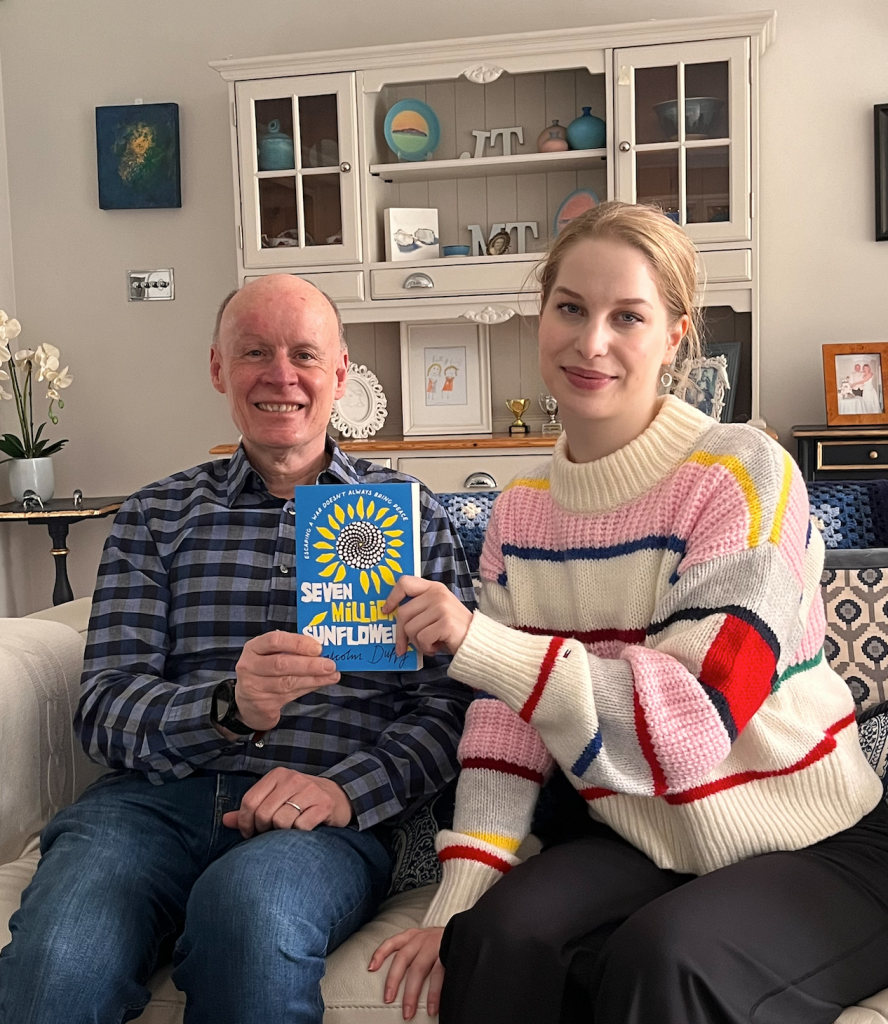
Malcolm and Sofiia

Was it difficult adapting to rules in someone else’s home?

As I mentioned earlier – our host family were super sweet and understanding. It wasn’t difficult to adapt to their rules, we are really lucky we met them. We are still friends and love babysitting for their lovely dog Layla sometimes.

What was hard for me was the lack of personal space which I always had growing up. I am an only child and my parents were working a lot, so I had a lot of moments being alone in the house. I am not used to having many people around, so this was hard. I always had some anxiety, even back in Ukraine when we had some guests visiting, so even though our host family were the loveliest and the most understanding people ever, I did miss being alone sometimes – this is an environment where I regain my strength and resources to carry on in difficult times.

How did it feel being in the UK, while people you knew and cared about were still in your homeland?

Definitely a lot of guilt. Feeling you are the lucky one who got away and survived and can carry on having a normal life.

What do you think of the final book, Seven Million Sunflowers?

I have read it and I do love it! I think it is amazing of Malcolm to address this issue through a powerful story like this, and it’s definitely a compelling and moving story. It describes all the difficulties a young Ukrainian teenager faces when escaping the war and having to live a ‘normal’ life while having loved ones in danger every day.

The book is excellent at describing the emotions of a person having to deal with all the mixed feelings of living in two different worlds on the same continent where one is full of chaos and death and other one is peaceful and carefree.

Do you still live in the UK? If so, what are you doing? What plans have you got for the future?

I still live in the UK. We are renting a flat with my mum in a nice area. Currently I am teaching piano classes, mostly to kids, and finishing my Communications degree online. For now, I just want to take time to think about what I actually want and what I am going to do next. To be honest, I didn’t have much time to think about that before.

Refugee Week runs from June 17th to 23rd 2024. Read more about it here.
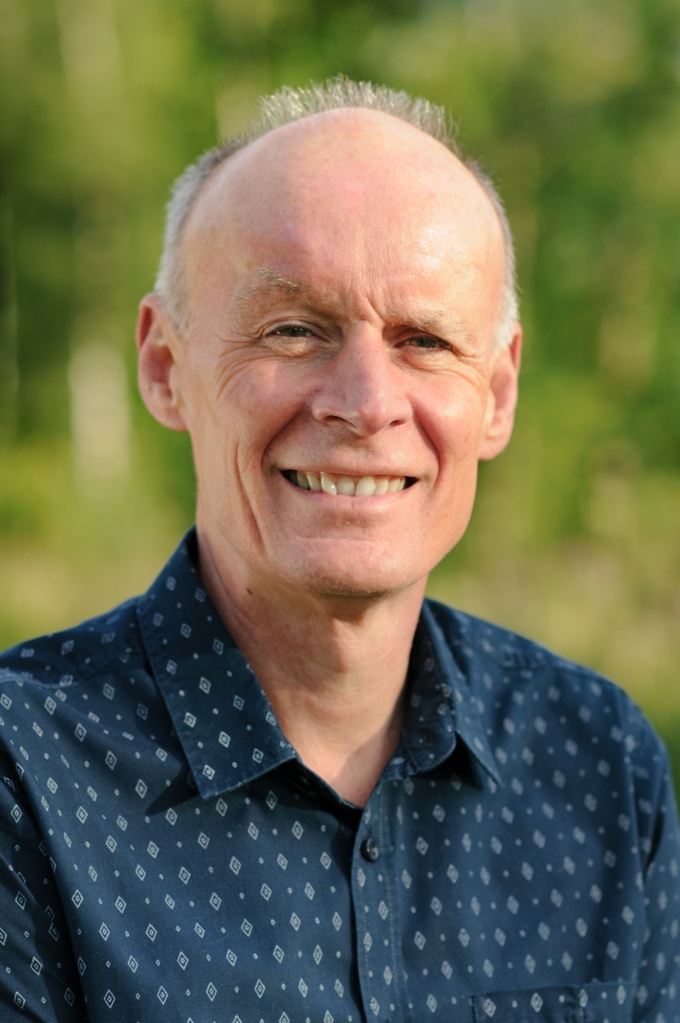
Malcolm was born and bred in Newcastle upon Tyne and now lives in Surrey. After a typical Geordie childhood, his parents moved south and deposited him in South East England. Having acquired a Law degree at Warwick University he worked his way through a host of London advertising agencies, picking up numerous awards for copy, press, TV and radio.
Having left ad-land he worked as Creative Director of Comic Relief, creating campaigns for Red Nose Day and Sport Relief. It was at Comic Relief that he was inspired to swap copywriting for writing and wrote his first novel, Me Mam. Me Dad. Me. His books have all been issue based, with much of the information gleaned from his work for different charities – Comic Relief (domestic violence), Shelter (homelessness), Nessy (dyslexia) and Combat Stress (PTSD).
He’s supported in his efforts by his New Zealand wife Jann, and daughters Tallulah and Tabitha, who, under the threat of withholding pocket money, seem to like what he writes.
Find out more at malcolmduffy.com and follow him @malcolmduffyUK

Huge thanks to Jayne Leadbetter for preparing the interview questions. Jayne has also reviewed Seven Million Sunflowers in our Spring/Summer 2024 issue, which you can download for FREE here.

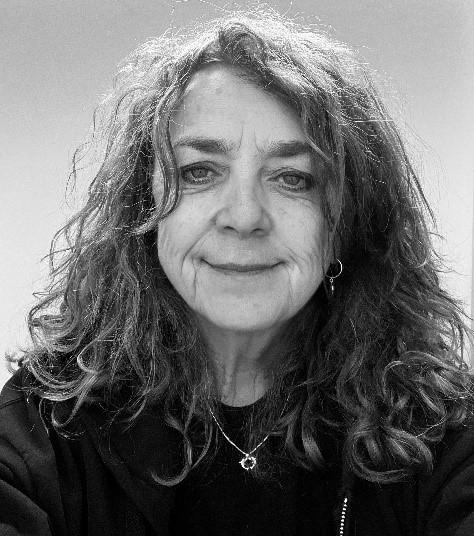
Jayne Leadbetter emigrated to Australia from the UK and is a high school teacher at a multicultural high school in Sydney, where she lives on the land of the Gadigal and Bidjigal people. She’s currently studying for a master’s degree in creative writing at university and is in the process of writing two novels, while enjoying the nature and the beaches of Australia with her huge dog Clifford.
PaperBound Magazine is an online magazine for the young, and the young at heart. We are dedicated to showcasing authors and illustrators for children’s and young adult fiction and we strive to deliver inspiring content, uplifting stories, and top tips for young and aspiring writers yet to burst on to the literary scene.

All our issues are completely free and run by volunteers, however if you would like to support PaperBound and the work we do, you can help us out by buying us a virtual book. We appreciate any support you can give us!

Don’t forget you can read with the latest issues of PaperBound Magazine – completely free – here.

Blog, Blog series, Interview, Interviews, Writing craft

Interview: Maya MacGregor on YA book ‘The Evolving Truth of Ever-Stronger Will’.

This book was a lot like The Many Half-Lived Lives of Sam Sylvester, in that it was a way for me to tell a story like a roadmap for my younger self. There’s a lot of found family, a lot of self-discovery, and some spooky happenings that tie the narrative together.

The Evolving Truth of Ever-Stronger Will is a love letter to every kid who has been made to feel monstrous. While that takes place through a lens of a kid who’s neurodivergent and agender, I hope Will’s journey will resonate with teens who may not share those traits too. It took me a long time to learn the lessons Will learns—that an abuser’s projected image of them is not their truth—and I hope that Will’s perseverance, tenacity, and self-preservation will help model a way forwards for anyone in a similar boat.

It was the only way I could get across a very specific message that acts as a framing device for the story on several levels. I wasn’t sure I could get away with it, but it felt true to the story I wanted to tell. That feels a bit insufferable to write out, ha. But ultimately, I choose points of view to reflect emotional proximity to the characters. Which isn’t to say that third person can’t be emotionally resonant—it absolutely can—but first and second person each invite the reader much closer in a way that feels more intimate to me. Others may disagree, of course!

One of the things I’ve mentioned at a few in-person events is that a certain plot point that happens right at the end of, I think, chapter three or four had an absolutely eerie reflection in my own personal life. I paused writing just after that, a paragraph or so into the next chapter (which was smack in the heart of the emotion still) and put the book aside for a filmmaking project and a choir trip to Austria, and in the time I was away, I discovered via Ancestry.com DNA that my biological father was someone entirely different to who I thought he was. If you read the book to that point, you can probably understand how when I went back and read into my progress to get my bearings, I had to go take a few minutes to collect myself.

Will is very much like me on many levels—agender, an undiagnosed autistic teen (I was a teen once!), the product of a lot of upheaval and poverty—and the emotion of having written a different (but just as emotionally impactful) revelation bare months before I experienced my own welded this book to my heart in a way I don’t think anything else could have. My estranged biological mother is not Francis and was not physically abusive like that, but she did keep some whoppers from me, and over the past few years, like Will, I’ve been sorting through all that. I’ve also been privileged to meet and form a very loving relationship with my biological dad, and we’ve been making up for thirty-four years of lost time.

Without a doubt, Will, Raz, and Julian. I love Matt and Hannah as well, of course, but gosh, I adore Julian and Raz so much. We all need people who see us for who we are without us having to offer a university-level course in how to relate to us, and it was very important for me to model that with those characters. I also want Raz and Junius Sylvester to be best pals!

Absolutely. As a wee anecdote, we’d actually trunked both of my YA books because they bounced off editorial boards for the use of they/them pronouns (and non-stereotypical autistic phenotypes, to boot) in 2017-2018 when I wrote the books. My first ever agent, Jes Negrón, had since gone into editing at BMK (now Astra Books for Young Readers), and when she started acquiring YA, she came straight to me and my new agent Sara Megibow, knowing I’d a trunked manuscript. If she hadn’t been so keen to work with me again, I don’t know that these books would exist.

I cannot count the number of messages I’ve received from readers saying that they have never seen themselves represented in fiction before now. That’s heartbreaking in a lot of ways, but in others, it’s such a relief for me to hear. I had to write the books for them to exist, as did so many of my contemporaries who are doing just that these days. Now there are many more chances for this moment to happen at younger ages! Things are changing for the better, albeit slowly and not without a lot of pushback.

Alas, I don’t think I’m allowed to say much, but I will say there’s a Gaelic-heavy YA fantasy in the works, set in my beloved Argyll in the Gàidhealtachd. It’s a story about belonging, magic, the sìthichean, and intergenerational language transmission. Gaelic music and culture informs my entire life; I use the language every day, and our cultural practices are the foundation of my entire sense of home. I hope to bring some of that to the wider world from the perspective of someone who lives and breathes within that sphere.

Plus, the book also has an agender autistic protagonist—and a genderfluid shapeshifting sidhe prince for a love interest, so what’s not to love? 😉

The book is done, and I truly hope to have news about a publisher and publication timeline soon! I’m absolutely itching for folk to meet Cam and Ezra.

Maya MacGregor is an author, singer, and artist based in Glasgow, Scotland. A fluent Gaelic speaker, Maya is active in many community activities in Gaelic music as well as writing contemporary YA and adult fiction (as Emmie Mears and M Evan MacGriogair). Maya has a degree in history and is passionate about writing the stories for teens they wish had existed when they were younger and fills them with the type of people who have always populated their world.
Their pronouns are they/them.
The Many Half-Lived Lives of Sam Sylvester was Maya’s first YA novel and was a finalist for the Andre Norton Nebula award and the Walden Award. The Evolving Truth of Ever-Stronger Will, Maya’s second YA, came out Halloween 2023.

Caitlyn is a young reader from Cornwall who is a proud member of the LGBTQIA+ community. They enjoy reading stories about young people like them, as well as fantasy novels. They surround themselves with media that includes the LGBTQIA+ community, so this book fit right in with their bookshelf.

PaperBound Magazine is an online magazine for the young, and the young at heart. We are dedicated to showcasing authors and illustrators for children’s and young adult fiction and we strive to deliver inspiring content, uplifting stories, and top tips for young and aspiring writers yet to burst on to the literary scene.

All our issues are completely free and run by volunteers, however if you would like to support PaperBound and the work we do, you can help us out by buying us a virtual book. We appreciate any support you can give us!

Don’t forget you can read with the latest issues of PaperBound Magazine – completely free – here.

Blog, Blog series, Interview, Interviews, Writing craft

Interview: Jennifer Burkinshaw on her new YA book ‘Happiness Seeker’.

Happiness Seeker tells the story of just one week’s sixth form field trip to the beautiful but lethal Morecambe Bay. On her very first afternoon, Allie meets a mysterious lad on the shore which changes the lives of everyone involved. One reviewer has described Happiness Seeker as a ‘thriller-mystery-love story’ which does sum it up its genres neatly; I’d add in ‘tragedy’, as the prologue tells you someone is lost in the vast, dark seas of Morecambe Bay.

Places seem to be what spark a story in me, both in my debut Igloo and Happiness Seeker. Visiting my parents in Grange-over-Sands on Morecambe Bay so often; learning about the history of the Bay and seeing people, every day, still walking out onto the treacherous sands despite all the warning signs. Before my parents even moved there, though, I once took a Drama group to a hostel near Grange to rehearse, which is pretty close to the set up in the novel; however, none of my group broke every rule in the book and we all went home safely.

At the heart of the story is what could be described as a political issue which particularly concerns me, so I recruited the advice of the charity Unseen during my writing process.

Map and plan of the novel’s setting by Douglas McCleery, architecture student

I first started to feel an irresistible pull to write about twenty years ago and knew I had to start to learn the craft, an endless journey, of course. Since I still feel seventeen in my head, writing for young adults was a natural move to me; I love the intensity of feeling you need to create in YA fiction; the need to be immediate and and pacy, as well as reflective; I love how so much of YA fiction deals with first and life-changing experiences for its characters. So, I did an MA in Creative Writing for Children at Manchester Met; after that I joined the Golden Egg Academy and was mentored by Imogen Cooper. I count myself as extremely fortunate that then Debbie McGowan, my genuinely brilliant editor and publisher at Beaten Track, offered to publish my debut, Igloo, and now Happiness Seeker.

As a former Drama teacher, I couldn’t resist creating a group who, having to script a piece for their A Level, choose to write it about Morecambe Bay and the many who have drowned there over the centuries. These past tragedies soon bleed into the present of the story. I also include some reference to Arthur Miller’s A View from the Bridge which Allie is reading that fateful week; Miller is my favourite playwright but, also, the action of his tragedy has some echoes in the story happening ‘now’ in Happiness Seeker.

Map and plan of the novel’s setting by Douglas McCleery, architecture student

What was really tricky was to work out what Mareno would reveal to Allie and when – especially since he has such compelling reasons not to tell her his whole truth. I spent ages thinking what he would least mind Allie knowing and what he’d try to keep from her at all costs. I hope he intrigues the reader; I tried so hard to see him through Allie’s eyes – what draws her to him even as she finds him such a ‘dark horse’.

Allie has a painful rivalry with Courtney, a girl in her drama group who has bullied her since Allie joined the school late in Year 9. To some extent, I am like Allie – quieter, on the fringe of groups and I do remember girls at my single-sex school who could be cutting like Courtney. Allie’s best friend is Finn but unfortunately, he falls for Courtney which causes Allie a lot of heartache. I haven’t experienced having a boy as a best friend but I relished creating their deep friendship which is at the heart of the story just as much as Allie’s new relationships in Grange.

I need to get back to ‘Going West’, a story told from the POV of a member of each of three generations in a family who move from Essex back to the mum’s childhood home in Wales. I’m toying whether to tell some of it in verse …

Jennifer’s debut book is Igloo, a winter coming-of-age story of first love set in the French Alps and Lancashire, where she grew up. Happiness Seeker is her second book.
Now, she’s a bit of a nomad – loves spending time by the sea as much as in the mountains and with her growing family.
You can visit her website here.

PaperBound Magazine is an online magazine for the young, and the young at heart. We are dedicated to showcasing authors and illustrators for children’s and young adult fiction and we strive to deliver inspiring content, uplifting stories, and top tips for young and aspiring writers yet to burst on to the literary scene.

All our issues are completely free and run by volunteers, however if you would like to support PaperBound and the work we do, you can help us out by buying us a virtual book. We appreciate any support you can give us!

Don’t forget you can read with the latest issues of PaperBound Magazine – completely free – here.

Blog, Blog series, Interview, Interviews, Writing craft

Interview: Author Jennifer Claessen chats about her new book ‘The November Witches’.

The November Witches picks up Clemmie’s story immediately after all of the things she did – and feels bad about! – in October. She’s expecting a magic-free month and all of the witches are mostly miserable about it but, of course, magical mayhem is about to ensue. It’s up to Clemmie to learn to speak up for herself and the young hags though, as it’s only together that they can fight back against the fires and knights plaguing them.

Thank you so much! And yes, I was already thinking about Bonfire Night and marshmallows and a strange knight knocking on the door even as I wrote The October Witches! November doesn’t always get the festive love that October and December get but it’s an amazing month for forest walks. I moved house just before writing this book and now live on the edge of an incredible, ever-changing forest which definitely inspired the story.

My family is costume-obsessed so we usually dress up at least three times for Halloween, always cute, never creepy! This year one of our fancy dress outfits was the ‘soot sprites’ from My Neighbour Totoro which was pure chaos and so fun. Toasting marshmallows outdoors is a must of course. Like the Merlyns, I have mixed feelings about fireworks but I love a bonfire. Oh, and Pie Night, like Aunt Connie creates, is essential too! Autumn clothes are the best too – the season begins for me when I put on a scarf and a big pair of boots, or for Clemmie and her coven, a binbag.

In The October Witches, Clemmie wrestles with coming into her power but now, in a magicless November, she’s struggling with using her voice. I write generally knowing the ending as I love a big, busy, bustly finale where the covens get together and finally sort out their problems! I think this is officially a spoiler but, just between us, there’s a dragon in The November Witches, too hot to even touch, and she was a surprise!

I love everything magical! I’m currently reading The Thief of Farrowfell Hall by Ravena Guron which has a really cool magical system as the magic is edible. I love the world which is believable and compelling and the magic itself, though it often sounds disgusting to eat!

I’m always super happy digging deep into some magical research! For the whole ‘A Month of Magic’ trilogy I did lots of reading about the old, wise, male Merlin (versus my young, self-conscious and female Merlyns!) and what happened to him. I’d never even heard of ‘Avalon’ where some Arthurian scholars believe the Once and Future King will still rise again from but became pretty fascinated by it. For The November Witches I went to the Fitzwilliam Museum in Cambridge to be completely surrounded by armour and imagine what it was like to be a knight – mostly pretty uncomfortable it turns out!

Well, now we’re this deep into autumn, we have to finish the trilogy! The December Witches comes out in 2024 and I’ve just had a sneak peek of early cover designs and it is looking gorgeously sparkly and snowy! Writing-wise, I’m working on new myth-inspired tales, this time set in Ancient Greece – and in a summer holiday!

Photo by Jack Barnes

Jennifer was born in Reading and grew up a book worm. She studied literature and theatre at the University of Sheffield, the Chinese University of Hong Kong, Canterbury Christchurch University and Central School of Speech and Drama. A teacher and theatre-maker, Jennifer loves stories, especially for children, whether on stage or page. Jennifer currently works in the West End, taking children to the theatre and lives in the East End with her partner, a Dutch toymaker, and their baby daughter. She loves reading, travel and ice cream. You can find her on her yellow bike or in a red velvet seat in the stalls, applauding.

PaperBound Magazine is an online magazine for the young, and the young at heart. We are dedicated to showcasing authors and illustrators for children’s and young adult fiction and we strive to deliver inspiring content, uplifting stories, and top tips for young and aspiring writers yet to burst on to the literary scene.

All our issues are completely free and run by volunteers, however if you would like to support PaperBound and the work we do, you can help us out by buying us a virtual book. We appreciate any support you can give us!

Don’t forget you can read with the latest issues of PaperBound Magazine – completely free – here.

Blog, Blog series, Interview, Interviews, Writing craft

Interview: Rebecca Barrow on YA Thriller ‘And Don’t Look Back’

Thanks for having me! And Don’t Look Back is a twisty thriller that centres on Harlow, a girl who has spent her entire life on the run. When her mother is killed in a car accident, Harlow is left to unravel the secrets of her life and her family all alone.. 

I really love writing about mothers and daughters, and I thought it would be interesting to explore generational trauma—how a girl like Harlow is shaped by her mother’s experiences, and how she deals with that while at the same time struggling to figure out who she is in the same way all teenagers do. I really enjoy writing older YA because that time in life is so interesting—you’re on the precipice on adulthood but still a kid, at the same time. And like Harlow, a lot of teenagers are dealing with really heavy things like the loss of a parent or mental health struggles or a million other things, and I think it’s important to acknowledge those things.

It took a while to come together but once the planning was done, the writing came quite easily. I usually don’t like to plan too much because I like discovering things through the writing, but often writing a mystery means you need to plan, so it’s about finding the right balance for me. Some of the plot aspects had been in my head for years just waiting for the right story so it really was a mix of long term planning and figuring some things out as I went!

Yes, I actually really do! I don’t think I will ever run out of ideas, but I do find they sometimes take a while to come to me. I’m definitely not one of those authors who have so many ideas that the main struggle is choosing which one to work on, but I think needing to let things develop in the back of my mind can also be really beneficial. I don’t see myself ever not writing. 

I write in twenty-minute blocks and use a program called Freedom to block the internet while I write, otherwise I would never get anything done. I usually have a word count goal so I just keep writing in those twenty minute slices with breaks in between until I have the words! I like to use different playlists for different books, to help me get in the right headspace, and that’s about it! 

I have mostly always wanted to be a writer but I did entertain the idea of several other careers—nurse, fashion designer, and choreographer were the big three! But it was mostly always writer for me.

Rebecca Barrow is the critically acclaimed author of And Don’t Look Back, Bad Things Happen Here, and several others.
She is a lover of sunshine, Old Hollywood icons, and all things high femme. She lives and writes in England.

PaperBound Magazine is an online magazine for the young, and the young at heart. We are dedicated to showcasing authors and illustrators for children’s and young adult fiction and we strive to deliver inspiring content, uplifting stories, and top tips for young and aspiring writers yet to burst on to the literary scene.

All our issues are completely free and run by volunteers, however if you would like to support PaperBound and the work we do, you can help us out by buying us a virtual book. We appreciate any support you can give us!

Don’t forget you can read with the latest issues of PaperBound Magazine – completely free – here.

Blog, Blog series, Interview, Interviews, Writing craft

Interview: YA author Shelby Mahurin chats about ‘The Scarlet Veil’

Of course! The Scarlet Veil is the first in a new duology set in the same universe as Serpent & Dove. It follows Célie Tremblay, the first woman initiated into the brotherhood of Chasseurs, as she investigates a string of murders in Cesarine—all the victims of magical origin, all their bodies drained of blood. Her investigation leads her straight to the heart of a vampire lair, where she captures the attention of its cruel yet beautiful king. He has plans of his own for Célie, who refuses to acknowledge the whispers from her past that still haunt her.

Interestingly enough, no—I didn’t plan to tell Célie’s story at all. In the thick of deadline with Gods & Monsters, I even swore I’d never return to the world of Serpent & Dove again. I wanted to tell new stories with new characters; I’d even sold another duology about Greek sirens! With a little time and distance, however, I realized I wasn’t quite ready to let the world go. When I called my critique partner on the way home from my local indie the day before Gods & Monsters published, crying, she told me it didn’t necessarily need to be over—and then she asked about Célie. We both agreed her story hadn’t reached its conclusion, and I’d always wanted to write a vampire book. Their inclusion felt like a natural extension to this world. Within ten minutes, we’d plotted out a rough outline of The Scarlet Veil, and the rest is history.

Yes! I always knew The Scarlet Veil would end the way it did, and I knew I didn’t want to write another trilogy so soon after Serpent & Dove. Thus, a duology was the perfect fit!

It seems like the trickiest part for me to write is always the part I’m currently writing. Ha! In all seriousness, though, Célie is an extremely emotional and vulnerable character—a complete foil to Lou and Reid, who both avoid their emotions at all costs. I personally err more on their side of emotional avoidance, so it took a lot for me to sit with Célie and her feelings. Other scenes that are always difficult to write are action sequences; I know literally nothing about self-defence, so whenever Célie or Michal needed to physically fight someone, it meant a lot of time on the internet looking up choreography and trying to describe such technical movements in a natural way.

The easiest scenes for me to write involve romance—banter, sexual tension, a lingering look. Those are always my favorite.

I’ve always loved vampires—Twilight, The Vampire Diaries, Underworld, and True Blood were pillars of my adolescence. There’s something inherently seductive about a vampire, especially after Bram Stoker brought a refined façade to their savagery with Dracula. Maybe it’s because vampires are so powerful with their predatory speed and strength, or maybe it’s because they’re immortal. They never grow old. They live forever young, forever attractive, yet they’ve seen things we haven’t. They know things we don’t. It’s the ultimate fantasy, isn’t it? For such an all-powerful creature to fall in love with a human? And then there’s the whole business of their drinking our blood—it makes everything all the more dangerous, and don’t we all crave a little danger? I know Célie does.

It’s so interesting that you mention worldbuilding specifically because—to be completely transparent—I’ve never loved worldbuilding. Or at least, I’ve always loved it less than character work and romance. In fact, I would argue that most of the worldbuilding in The Scarlet Veil came along as a means to cram every single trope I love into this story. The vampires’ casket company, for example, was an answer to the question, “How can I realistically get Michal and Célie into one casket together?” It needed to make sense. It needed to feel like a natural progression of both the plot and world. And so, I started brainstorming, and one thing led to another, and of course vampires have always needed a way to sneak into Cesarine, right? Lou and Reid would’ve known about them in the original trilogy otherwise. And Célie needed to face her fear of caskets after what happened with Filippa in Blood & Honey. And thus, Requiem, Ltd. was born. I could think of a dozen more examples of this sort of jigsaw puzzle worldbuilding, but you get the idea.

My advice to aspiring authors would be to lean into what you love—find a way to use it, to leverage it throughout your story, and the pieces will fall into place.

Good romance requires tension. Lots of tension. For me, that means I need both an internal and external reason to keep the lovers apart. Otherwise, why wouldn’t they get together as soon as they feel that first spark of attraction? Again, those reasons also need to make logical sense; nothing infuriates me more as a reader than a flimsy excuse for two people who want to be together not being together. The reasons also need to involve personal stakes—what will happen if they do get together? It needs to have a real consequence.

I’m still drafting The Scarlet Veil’s sequel now, but afterward, I’ll be returning my attention to the Greek siren duology I mentioned earlier. I actually sold those books back in 2020 and 2021, so I’m extremely eager to get back to them!

Shelby Mahurin is theNew York Times bestselling author of the Serpent & Dove trilogy. She grew up on a small farm in rural Indiana, where sticks became wants and cows became dragons. Her rampant imagination didn’t fade with age, so she continues to play make-believe every day—with words now instead of cows. When not writing, Shelby watches The Office and reads voraciously. She still lives near that childhood farm with her very tall husband and semi feral children.

PaperBound Magazine is an online magazine for the young, and the young at heart. We are dedicated to showcasing authors and illustrators for children’s and young adult fiction and we strive to deliver inspiring content, uplifting stories, and top tips for young and aspiring writers yet to burst on to the literary scene.

All our issues are completely free and run by volunteers, however if you would like to support PaperBound and the work we do, you can help us out by buying us a virtual book. We appreciate any support you can give us!

Don’t forget you can read with the latest issues of PaperBound Magazine – completely free – here.

Blog, Blog series, Interview, Interviews, Writing craft

Interview: Michael Thomas Ford chats about his new novel ‘Every Star That Falls’

Every Star That Falls begins the day after Suicide Notes ends. Jeff returns home and goes back to his old life, but he’s no longer the old Jeff. He has to figure out what that means in terms of his relationships with his family, his friends, and his larger community. He also wants to explore what it means being an out member of the LGBTQ community, which involves finding a support group. The people he meets there change his life even more, in ways he could never have imagined a couple of months ago. 

It’s definitely surprising to me how Suicide Notes continues to find new readers. It’s also a testament to the power of social media, which wasn’t really a thing when the book first came out. Now, readers are sharing their experiences of the book on places like TikTok and Instagram, and that’s allowing it to connect with even more readers. One of the things I love most about the world right now is that the voices of readers are so strong and so powerful. They’re not waiting for anyone to tell them what to read and what they should like, they’re deciding for themselves and then spreading the word. It’s fantastic to watch this happen.

The most powerful tool for creating change is empathy. When we learn to really listen to people – particularly to people with whom we might not think we have anything in common – and hear about their experiences and what they feel, we learn to see the world in a different way. That’s how change happens. When we create barriers between us, we only see things from one perspective and it’s easier for other points of view to feel threatening. There’s much more that connects us than divides us, and learning to focus on those things while allowing for differing perspectives is what creates forward movement.

Jeff is essentially me, and I have always approached difficult situations by looking for the humour in them. I think that if you can find a way to laugh, even in the darkest moments, it creates a spark of light that grows brighter and shows you the way through. I realize not everyone appreciates this approach, because we’re all different, but for me the most effective way to deal with life when it gets hard or seems hopeless is to find the moments of joy that remind me that the darker times don’t last forever. 

In general, I don’t enjoy sequels because no matter what happens, someone is disappointed. Once someone falls in love with a character, they developed expectations of what they want for them. With Suicide Notes I wanted readers to imagine what happens to Jeff when he leaves the hospital he’s in for the whole book. But as time went on, I thought of more things I wanted to say about certain topics, and continuing Jeff’s story was the best way to do that. Also, there were some characters and events from Suicide Notes that I found readers asking about over and over again, and writing a sequel gave me the opportunity to answer those questions. 

I write for a number of different audiences, including adults and younger readers, so there’s always something happening. I’m currently finishing up a ghost-themed novel for middle grade readers, which is a lot of creepy fun. That will be out next year. And there just might be another part to the story about Jeff and his new friends coming. Readers can always find the latest news on my website: www.michaelthomasford.com.

Michael Thomas Ford is the author of numerous works for both adults and young readers, including Suicide Notes as well as some of the earliest books about the HIV/AIDS crisis and several books about the LGBTQ community. A five-time winner of the Lambda Literary Award, he has also been a finalist for the Shirley Jackson Award, the Bram Stoker Award, the Firecracker Alternative Book Award, and the Ignyte Award. He lives in rural Appalachia with his husband and dogs.

PaperBound Magazine is an online magazine for the young, and the young at heart. We are dedicated to showcasing authors and illustrators for children’s and young adult fiction and we strive to deliver inspiring content, uplifting stories, and top tips for young and aspiring writers yet to burst on to the literary scene.

All our issues are completely free and run by volunteers, however if you would like to support PaperBound and the work we do, you can help us out by buying us a virtual book. We appreciate any support you can give us!

Don’t forget you can read with the latest issues of PaperBound Magazine – completely free – here.

Blog, Interview, Interviews

Interview: Shanti Hershenson in conversation with Cailey Tin

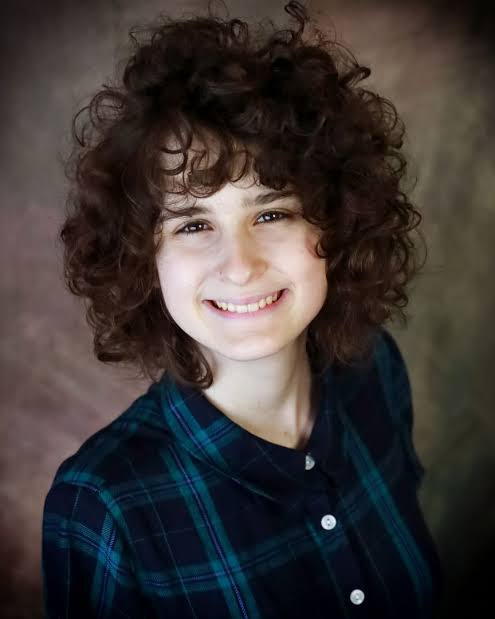
We are delighted to share an interview of Shanti Hershenson in conversation with Cailey Tin. Shanti Herhenson is a teen author who has published a number of books, from science fiction novels to a book told in poetry.

Here, she discusses her creative writing process, how she overcame bullying by using writing as an outlet, becoming a social media star, marketing her own books, and making a name for herself in the publishing world.

Being a teenager is tough, but she wrote around all of these obstacles and that inspires so many aspiring young creators today.   

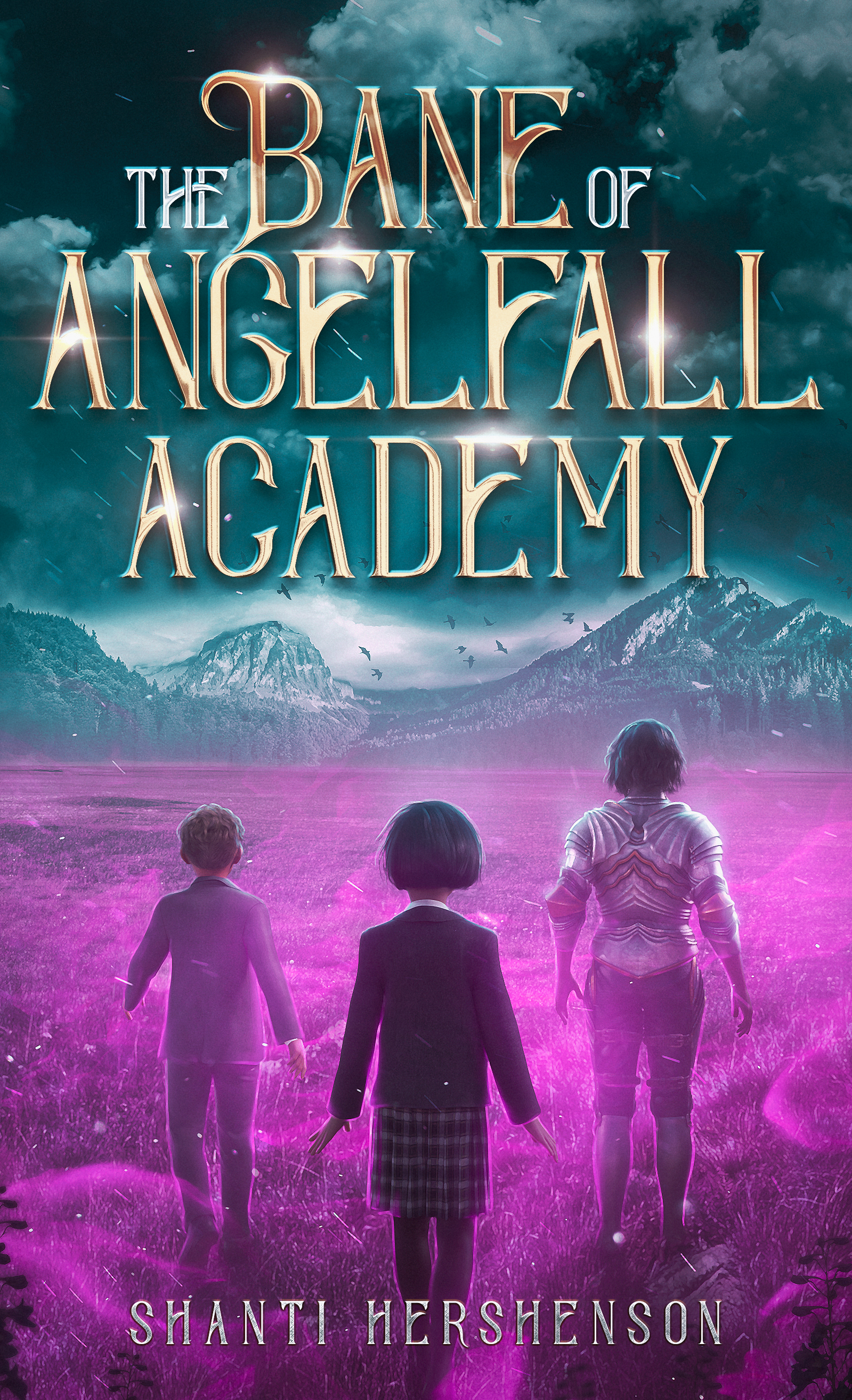
Shanti, thank you for taking the time to answer some burning questions. I’ve read that you’re in the process of publishing your thirteenth book, entitled The Bane of Angelfall Academy. Can you tell us what it’s about?

Sure! The Bane of Angelfall Academy follows a girl called Devan and her parents are both famous writers. She’s sent to a futuristic boarding school for the most talented authors, because her parents help fund the school, and it’s this nepotism thing. [Devan] loves to write, but with a lot of pressure to overcome, she feels like she’s not good at it. Then suddenly, characters from her book bleed into her reality and beg her to finish her story. Now she has to deal with this, along with navigating the student body and the twists and turns of the school. When her characters come to life, Devan realises that she has not only a novel to write, but a world to save. 

When you’re writing these characters, how do you write real humans that feel alive and resonate with you?

Any character that is three dimensional doesn’t exactly have to be well-rounded, but they need to have advantages and weaknesses, including positive and negative things about their personalities. I think we need to have their future in mind to shape these characters. Some of them have my feelings poured into them, but not all, because every character can’t be like me. I enjoy using character sheets sometimes, because even if some [information] will not be in the book, at least we know things that can be brought up if needed.  

Most of your books are fantasy and science fiction, which is your favourite genre. What makes you love this genre more than others?  

When I was a kid, I was introduced to many science fiction books. I loved the story of a cat who was a stowaway in space. The idea of technology and the future was something I was naturally drawn to. At an early age, I was introduced to Star Wars. My first books had robots that I loved. With fantasy, I enjoy exploring new worlds and escaping reality in any brand-new place.  

What is your favourite book that you wrote? Out of all the stories you’ve penned, have you ever gotten the feeling like, ‘If I could be known for any story, this is what I would want to be known for,’ and why? 

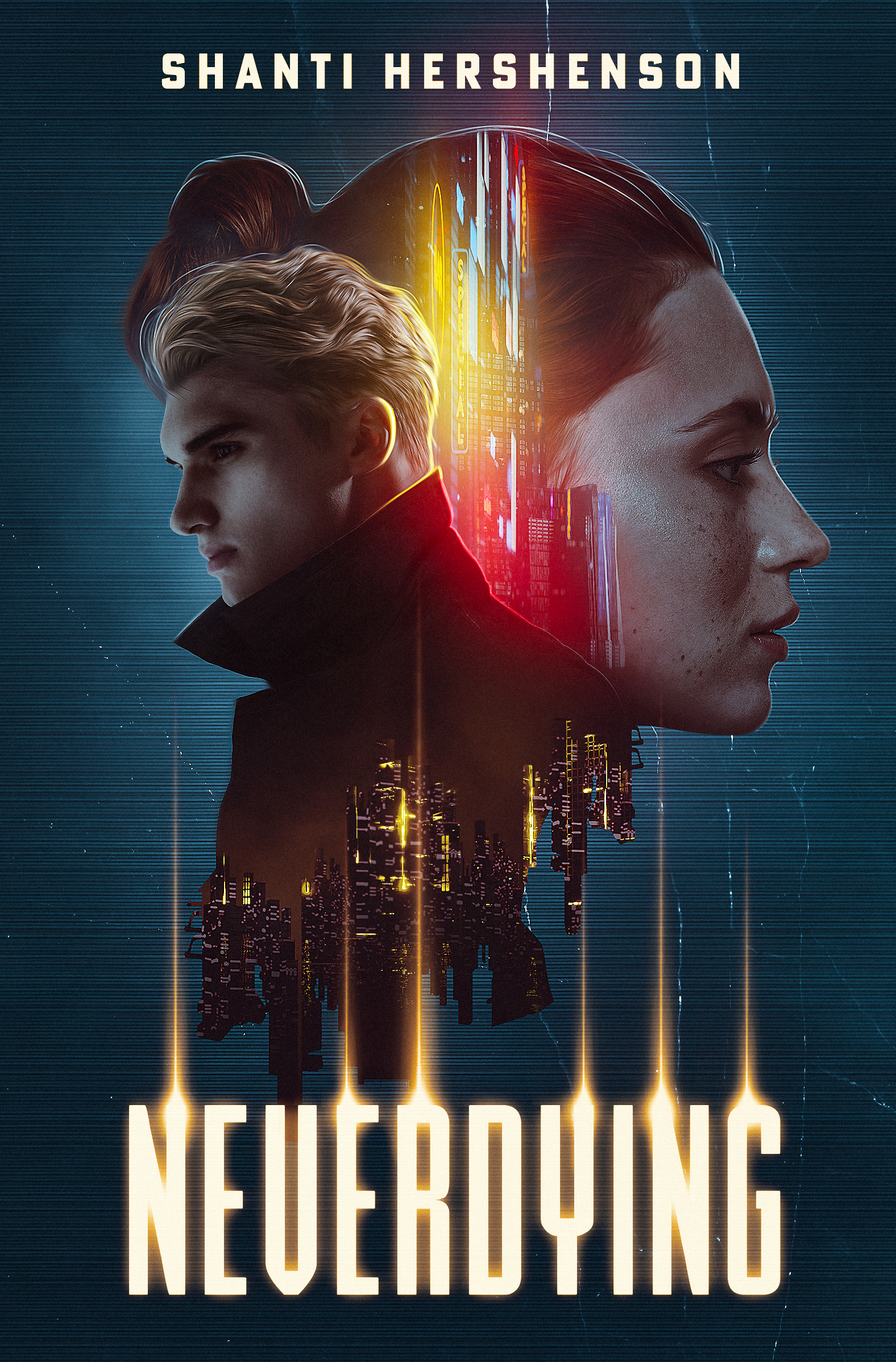
I have three books in mind. First would be The Bane of Angelfall Academy because of the plot points that were so difficult to tie together that I almost scrapped it, and I thought, ‘Man, this is my worst book.’ But during the editing process, I grew a love towards it. Otherwise, Neverdying is probably the best book I’ve published. It was a breakthrough for me when my writing improved and so did my storytelling skills. It felt like it was written by an adult, and I thought, ‘Did I actually write this? That’s crazy!’ The other book, not yet published, was what I wrote in winter, and I only have a few social media posts on it but it’s so good, it’ll probably come out in early 2024 because it’s a super long one to edit.  

Your novel told in poetry, entitled You Won’t Know Her Name, perfectly shared your struggles with bullying, and it tells your real-life story as the victim of incredibly harsh bullying, which included sensitive topics. How does your poetry process differ from writing novels? Especially with difficult topics?  

I did a thousand words of poetry every single day, which was about ten poems. They’re in chronological order that explain what happened [in my experience]. Some are more poetic while others are rough, but that’s okay, because the story is rough. That book was one of the hardest to write, not because the process was particularly challenging, nor because I struggled with writer’s block, but I always woke up telling myself, ‘Why are you writing this? This is a bad idea, just stop.’ That was my daily thought process, which was wrong.  

You’re such a strong advocate of anti-bullying. How was writing something that guided you with life’s challenges, as reflected in your poetry book? 

Poetry, and specifically shorter stories have been an outlet for my emotions. I write about things that upset and scare me, it’s a great way to lift a weight off of my chest, just getting it on paper. In the aftermath of being severely bullied, I really wanted to get the story out. I didn’t want to keep it in. Writing was a way I could process things, maybe share it with other people.

The situation was ridiculous and originally I wanted to write it as a novel, like a non-fiction of me going through the [bullying] events and sharing what I wish I could’ve said in those moments. I barely got through the second chapter. Another idea was a fiction, almost reminiscent story, and the other one was a standpoint of how I was surviving and coping afterwards. None of those ideas worked; my big problem was that I can’t use anyone’s names because I don’t want to get sued, nor call people out. I didn’t want to change the names because it felt less personal.

In the end, I realised poetry is perfect because it plays such a big role in my story, which was cool because it’s about poetry, and actually poetry. 

When I was checking out your other novels, what specifically stood out to me were the blurbs. Just how concise, well written, and closely woven to the story they are. When you’re beginning your story, do you already have a blurb in mind? Or does it flow to you naturally, how do you navigate that?   

Most of the time I don’t write the blurb until the halfway mark, which I did with my first book, Biome Lock, when it was time to promote it. But it really depends on the book, whether they’re challenging. Sometimes it takes multiple revisions and I let someone read through them. Other times it’s a first draft, then I’ll read it through and there is nothing to fix. With a few stories, my ideas completely change at the halfway mark. I have a weird writing process where sometimes I only know little plot points to piece together as the story goes on, then it slowly falls into place. 

What are some key aspects of storytelling that you really want to focus on in your work? Whether that be character development or plot points, what do you focus the most on?

I feel you can’t have a good book without strong characters. It needs to be a character-driven story, I’m more of a character writer myself because I need to focus on their journeys. I love a strong plot, but the most underrated and overshadowed thing is the setting. I’m a sucker for vivid locations, and I strive to focus on it more. 

How do you balance relationships, school, and all these other things with your passion for writing?  

I had to learn a ton of time management skills that I didn’t have before. Thankfully, I’m allowed to write on my school computer during homeroom. I do as much writing as I need at home, then I’ll do schoolwork. If I have lots of schoolwork, then I do thirty minutes of that and alternate it with writing. My goal is one thousand words a day, but lately I’ve been averaging two thousand words. Learning to switch from these two was a helpful, valuable skill.  

That sounds incredibly motivating. With all the passion you’ve been putting into writing, what was the exact moment where you felt like you wanted to be a writer? 

In elementary school, I thought that writing books when I was older would be cool, but I wrote short stories then while thinking, ‘Maybe when I’m an adult I could write a full-length novel.’ The time I discovered that I could make this a career as a teenager was in sixth grade, when I penned two novellas with a friend, and we self-published them through Amazon KDP. They didn’t sell well, so I returned to short stories thinking, ‘I can’t write a full book and become successful.’

But one day, my family and I were at the beach, it was getting dark, and I was wondering what to do because I was very bored. I thought of watching movies or playing video games, but it felt boring. I told my sister, ‘It would be cool to write a book and say that I made it, but what would I do though?’ Then I got the idea of teenagers stuck in these biomes and they couldn’t move, and over time, that became my current four books, one of the first in the series being Biome Lock. There was a crossover novel, so in total that would be five books.  

Who was your biggest inspiration when you began writing? Whether it be a popular author, famous person, close friend, anyone?

I always stop every time I get that question because it’s changed so much. There are authors of the books I’m currently reading, but then that would be such a long list. One of my inspirations is my younger self, particularly in fourth grade, because I was always creating stories. I love the idea of my younger self seeing me now and going, ‘Oh my gosh, we made it!’ Funnily enough, I’m currently working on a screenplay for school about a famous author who gets to meet her younger self. 

Let’s talk about book publishing and marketing‌. It’s filled with overwhelming things where we have to stop actually writing in order to market. Were there particular resources that helped you through it?

Sometimes marketing is harder than writing itself. When I began writing my book, I thought, ‘These have to be successful. As a teenager, I need to make a name for myself.’ I had moments where I’d stay up really late and wonder if my work would pay off one day. I read all these blog posts that gave me lists of markets before I needed them, and that was helpful.

I began posting on TikTok, and it blew up for me. Editing Biome Lock was a challenging editing process, and during it, I ended up writing a series of novellas that got published before it. With those books, I experimented with marketing tactics as I did giveaways, and from there I kept going. Now I have a concrete plan on what gets sales, what doesn’t, and the only way to make books successful is to keep trying new things.  

Sometimes the industry makes you want to focus on a specific type of book. How do you manage these expectations while still staying true to what you love writing?

If I’m writing something because other people want it, then it wouldn’t be as great. Fan service is awesome and I like putting little things in my book that readers suggest, but only when I agree with it. People push for mature scenes in my books all the time, but I ignore it because it isn’t my genuine work. I think people who write more mature books are cool, but I’m fifteen; I don’t want adults to read books that don’t stay true to my audience.

Some reviewers go, ‘When is it gonna get spicy?’ but it’s a young adult novel and I also need to stay true to myself. There’s a lot of pressure on authors to stay in one genre and stick to that, but I want to experiment with a variety of books, which means having more readers and reaching more people. I want to write books targeted to teens, then also kids, too.  

You’ve been consistent with social media posts, with over fifty thousand followers on TikTok. How do you continue doing something that can get extremely draining, and not let it affect your mental health?  

Tiktok is one of my biggest resources for marketing, but it’s also a struggle. For every one hundred comments that are nice and supportive, there’s a rude person. Although I don’t get that many hate comments, occasionally some are pretty mean. There was an incident where someone uploaded my TikTok for free in a compilation with other TikTok videos related to books and writing, but they misspelled something in the caption and everyone thought it was me who wrote it. They absolutely came for me! Luckily that’s all sorted out now. 

How do you convert negativity and experiences like this into art, and into your stories? 

I remind myself that every successful writer faces criticism. In every book signing, there are questions asked [regarding] how to deal with negative reviews, and every author’s answer varies. But for me, when the review is constructive, then I’ll apply it to my next book and forget about the first, because it’s already published after all. It’s also important to remember that people like different things, and sometimes they’re not even part of your target audience, so no book like yours would appeal to them. We have to focus on the positive people, and make their voices louder than the negative ones.  

Last question. This is such a cliché one, but seriously, what is the most valuable advice you could give another young, emerging author, specifically your younger self?  

Okay, I can get pretty corny and cliché about this too. Don’t let your age get in the way of your dreams. Don’t join the military when you’re ten years old, though! But for things like writing, you’re never too young or old to create a book. When you’re four, you can still scribble on paper, make a children’s book. A lot of kids that are twelve, thirteen, fourteen, or fifteen, you start discovering what they want to do. Sadly, many of them are told that they’re too young. But with enough practice, a thirteen-year-old can write better than an adult. A tip that goes along with this is try to write every day. If you miss one day or more, that’s totally fine, but just attempt to. Forming a routine trains your brain and helps you get into the author habit. You’re testing out new territory and improving with every passing sentence, so start early and be consistent. 

Shanti Hershenson’s first two novellas were published when she was in the sixth grade, although her writing journey started long before then. Ever since she could hold a pencil, marker, or crayon, she was creating stories. They started from pictures, mere scribbles, and eventually, turned into captivating tales.

She lives in California with her parents, sister, and furry friends. Besides writing, she enjoys skateboarding, Beyblading, free-running, falconry, and of course, reading.

She writes in a variety of genres, including Science Fiction, Fantasy, and Historical Fiction, although she mostly sticks to Sci-Fi.

She advocates for anti-bullying, and you may find her at open mic-nights, performing her spoken word poem Needles & Thorns, which is about the struggle of bullying in middle schools.

About Cailey:

Cailey Tin is a mixed-raced staff writer and podcast co-host at The Incandescent Review, and an interview editor at Paper Crane Journal. Her work was awarded by Spillwords Press and published in Fairfield Scribes, Globe Review, Alien Magazine, The Inflections, and more, under the pen name Cailey Tarriane. During her free time, she plays the piano or watches children’s shows with her dog.

PaperBound Magazine is an online magazine for the young, and the young at heart. We are dedicated to showcasing authors and illustrators for children’s and young adult fiction and we strive to deliver inspiring content, uplifting stories, and top tips for young and aspiring writers yet to burst on to the literary scene.

All our issues are completely free and run by volunteers, however if you would like to support PaperBound and the work we do, you can help us out by buying us a virtual book. We appreciate any support you can give us!

Don’t forget you can catch up with the latest issues of PaperBound Magazine here.

Blog, Interview, Interviews

Interview: Meg Grehan in conversation with Siobhán Parkinson

To celebrate today’s release of middle grade title The Lonely Book, we are excited to share an interview of author Meg Grehan in conversation with Siobhán Parkinson. This is a loving story about gender identity, family, and the magic of books.

Annie’s family is made of love.

When her moms open up their bookshop in the mornings, there is always a mysterious pile of books on the counter. By evening, every book has found its ideal reader. But one day there is a book on gender identity that doesn’t get bought. Who can its reader be, and why don’t they come?

 Days pass, and the book with no owner gets lonelier and lonelier. The bookshop is unhappy, its magic starts to go awry, and the moms are worried that the shop isn’t making enough money. Meanwhile, Annie’s sibling has become withdrawn.

Annie has a plan to save the shop, but is this all that’s worrying her sibling?

Meg, I was thinking about what a lovely – and intriguing – title ‘The Lonely Book’ is. And of course this new verse novel is not just about a book — it’s actually set in a bookshop. Which reminds me that the main character in your first book, The Space Between, worked in a bookshop. So it seems that you are drawn to the idea of bookshops, not just as places to visit as a customer, but as rather enchanting places to work in. Have you ever worked in a bookshop, or is it just a dream?

I love bookshops. When I found it harder to leave my house they were real sanctuaries to me, little homes away from my real home. If I could get home I was OK, and if I could get to a bookshop I was OK. I think bookshops are so special, so unlike anywhere else.

I did work in a bookshop! I was a bookseller and I did most of the ordering. It was very fun but a lot more stressful than I expected! I loved getting to talk to people about books, help them with their most specific and niche requests. I need a book about a sloth, I need a book about the high seas, I need a book about … I loved that! Getting to know people has always been easiest for me when it’s through books. I feel confident that I know and understand the world of books and it’s where I feel safest, so working in a bookshop was very special to me.

And of course in this story, the bookshop has a very special kind of magic. It is the bookshop itself that chooses certain books and makes sure that they find their ideal readers. Later in the story, when this one unattached book, the lonely book, doesn’t find its person for some time, the bookshop gets very agitated. How did you come up with such an extraordinary device?

When I worked in the bookshop I had a little desk down the back where I would unbox all the new books I’d ordered, put them on the system and get them ready for the shelves. There were a couple of instances when someone would come up and say, ‘Oh, I heard about this book, it’s about …’ and I would have that very book sitting right in front of me! They always reacted like it was magic, and I always kind of felt like it was. That’s what gave me the idea for a bookshop that works with its people, helps with some of the bookselling – though they still have to find the right readers, of course.

The idea of a magic bookshop works very well in a story that centres on such a young character. I mean Annie, who is about eight or nine? She is not exactly the main character (that is probably Annie’s older sibling, Charlie); but Annie is a main character in another sense, because the story is told from her point of view. That was an interesting decision. It is Charlie’s story, but it is told from Annie’s perspective. What made you think of telling it that way?

I agree that Charlie is really the main character, but for what I wanted to achieve with this book Annie made sense as the character whose point of view we follow. In my last book for children, The Deepest Breath, we followed Stevie as she discovered that she liked girls. It made sense to follow Stevie on that journey, as she was starting from the complete beginning. It’s the same with Annie: she doesn’t know anything about gender at the start of the story and it makes her the perfect character to learn and grow with.

Charlie is a little older, a teenager, and a book about them would be a YA (young adult) story. But I felt that this book needed to be middle-grade – for younger readers. Just like with The Deepest Breath, I wanted to introduce concepts gently and carefully and in a positive way, and following Annie allowed me to do that. It is also very much Charlie’s story, though, I love them so much and I do think we see a lot that goes on with them through Annie’s eyes.

Yes, I see what you mean. The central issue, which clarifies as the story opens up, is that Charlie is starting to realise that they are non-binary. That is a big idea to mediate through the thoughts and worries of a much younger child, but it works really well, doesn’t it? I suppose Annie’s openness to new ideas is something that comes naturally to her, as a child – when you are small, everything is new, and you maybe haven’t acquired too many prejudices. So that makes her an ideal narrator, would you agree?

I do agree! It’s what’s so amazing about children, isn’t it? They learn and learn and learn every day, they are so open and ready for new things and so, so brave.

I wrote The Deepest Breath and The Lonely Book for younger readers because they both deal with topics I don’t think are written about enough for children. Queer stories are for everyone, and I wanted to share some!

Annie might be very young and very open, but she does also suffer from anxiety. Her worries are a kind of subplot – she knows there is something bothering Charlotte; she knows her mothers are worried about something completely different – whether the bookshop is financially secure. And one reaction she has to these anxieties is that she finds very often she can’t speak. Can you tell us a bit about selective mutism and why you chose to explore it in this story?

Selective mutism is a type of anxiety disorder that means that sometimes you just can’t speak. I decided to write about it because I have it. In times of extreme stress I lose the ability to speak. For instance, during the height of the pandemic I couldn’t speak at all for almost a year. My speech slowly came back but it was quite scary. Generally it just manifests in little ways: like, in an argument, sometimes words just vanish for me. It feels like quite a betrayal because I have always considered words friends. Writing about it, however minor a subplot it may be, was really nice for me. It reminded me that words take many forms and I am never truly without them.

Using sign language to overcome mutism is a creative as well as a very loving response, and the whole family becomes involved. Can you tell us a bit about that?

Again, that comes from personal experience. For those months when I couldn’t speak my girlfriend and I learned sign language. We learned together and it was a very beautiful thing. It was her idea. We had tried a text-to-speech app but I didn’t like that, and we tried me writing things out, but it was such a slow process. Sign was the perfect answer. We loved learning it, we loved using it and I loved it so much that she learned it with me; and that made me feel so loved and respected and valued. And so that is why I wrote that into the story of The Lonely Book. It just seemed right.

The love that Annie and Charlie share with their two mothers is very strong, very warm, very sustaining. And emotionally very satisfying to read about. It is the core of the book, really. But I like how you don’t allow the fact that this family is united in love and togetherness to be an easy solution to their various anxieties. It’s important that they have each other, but it’s not enough to make all their worries disappear. Can you tell us a bit more about your thinking on this?

I am very lucky to be in a relationship for almost twelve years now with a warm, funny, kind and caring person. I am loved and cared for and supported beyond what I ever thought possible. But I still have my anxieties, my troubles, my worries and struggles. The love I receive and the love I give can soothe these worries, they can lessen the load, they can calm me when things get too much. But they cannot take them away.

It isn’t fair to expect a person, no matter who they are, to fix your problems or take away your struggles with just the power of love and togetherness. But it is OK to expect respect and love and tenderness, I think. That’s what this family do: they love and respect and care for each other because they are a family and this is what comes naturally to them. They don’t expect each other to fix everything for them, or expect themselves to be able to fix everything for the others.

This is what Annie is learning, you can’t fix everything for a person, even if you wish you could. But you can love them and support them and be there for them, and that can be just as powerful.

The Deepest Breath, which is also written for quite a young readership, is realistic, as was your first book, The Space Between, which is more for a YA audience. Then, with Baby Teeth, definitely YA, you plunged right into fantasy (almost horror), and that went down very well!

Do you think Baby Teeth opened up the way for the kind of magic realism we find in The Lonely Book? Maybe in the same way that centring the story on a younger child in The Deepest Breath might have inspired you to write The Lonely Book also for a young audience?

Maybe! I’ve never had any interest in categorising myself when it comes to writing. I am not a person who has a lot of ideas, I am not at all brimming with them and I rarely have to choose between them to decide what to write. Usually I have one idea and I sit with it for as long as it takes to form and grow and develop. Then I write it.

Same for me!

Beth (the main character in The Space Between) came to me first, then Stevie (The Deepest Breath), then Immy (Baby Teeth) and now Annie. Immy was the most self-indulgent for me (though it may seem to be Beth from The Space Between!) because I love horror, I love paranormal stories, I love the innate drama of vampires and the idea of many lives lived.

I also love not holding back when I write, letting myself be as over-the-top or dramatic or even maybe pretentious as I want to be and Immy let me do that. I very much wrote that book for myself and the fact that other people liked it too definitely made me much braver moving forward, which, yes, could have played a part in inspiring me to write about a magic bookshop.

All your books, Meg, are verse novels. Do you find that verse comes to you more naturally than prose? And do you find that audiences respond especially well to the poetic form?

It definitely comes more naturally to me. I have always, always loved poetry. My nana wrote poetry and she wrote a poem about me when I was little. I still have the book that it’s published in on my bookcase. I like to think she wrote me into the world of poetry.

What a gift!

Wasn’t it just?

I was also a drama kid. I performed poetry I loved and wrote and performed my own poetry. I’ve always read it, always written it, and always loved it. So when I learned that books could be poetry too, that I could write a whole story in a poetic form, a new world opened up to me. It just comes naturally to me, it makes me happy, it makes me feel free and brave and inspired.

I love verse a lot, and I do think people respond well to it, even if they don’t quite know what it is. I try quite hard to make my verse accessible and make it flow nicely so it isn’t too taxing to read and I think, or I hope rather, that readers feel that. I think people are often surprised by how much they like verse, it kind of delights me!

Yes, I see what you mean about how naturally it comes to you, but I’m still wondering if it was a conscious decision to use verse as a form and magic realism as a storytelling style in order to tackle a subject that some readers might find more difficult to think about if they encountered them in a realistic novel or one in prose?

Honestly, no, not really. I trust readers, I trust young readers. I think they can handle bigger ideas and concepts than we give them credit for.

I totally agree, Meg. I think that respect for young readers is what marks the best writers for children and young people.

So, the reason I chose verse is that that is what I love and how I write best, and I wanted to give this story it’s best chance at being good. And I chose magical realism or fabulism because it allowed me to tell the story I wanted to tell and because the idea excited me. I think it just worked out well that these choices helped me in telling the story as clearly and accessibly as I could.

And it all worked out pretty well perfectly! Thank you, Meg, for talking to me, and thank you for this wonderful book.

You can catch this interview in the back of The Lonely Book upon its paperback release from Little Island Books. We want to thank Little Island for giving us permission to publish this interview on our blog to celebrate this fantastic release!

PaperBound Magazine is an online magazine for the young, and the young at heart. We are dedicated to showcasing authors and illustrators for children’s and young adult fiction and we strive to deliver inspiring content, uplifting stories, and top tips for young and aspiring writers yet to burst on to the literary scene.

All our issues are completely free and run by volunteers, however if you would like to support PaperBound and the work we do, you can help us out by buying us a virtual book. We appreciate any support you can give us!

Don’t forget you can catch up with the latest issues of PaperBound Magazine here.

Blog, Interview, Interviews

Interview with children’s author AF Harrold

We teamed up with Emma Stanford who reviewed The Worlds We Leave Behind by A.F. Harrold (and beautifully illustrated by Levi Pinfold) in a previous PaperBound issue and put together a few questions for the author. Read the interview below, or in the latest issue of PaperBound here.

The Worlds We Leave Behind by A.F. Harrold

Could you tell us a little about The Worlds We Leave Behind, and the inspiration behind the story and illustrations? Did it start with a setting, a character or something else?

The Worlds We Leave Behind is a strange, slightly dark, slightly creepy, slightly odd story about a boy, Hex (short for Hector), who gets in some trouble down the woods, meets an old lady and her dog in a cottage that shouldn’t exist and gets offered a bargain that could change his life. I think that’s probably all I could say about the story without saying too much. 

The inspiration for it came from the previous book Levi and I made together, The Song from Somewhere Else. That was a story that I wrote and which the publisher (Bloomsbury) went out and found an illustrator for (which was Levi, obviously). And what Levi did with that story, and what the designer (Andrea Kearney) made of the book-as-object, was utterly delicious, dark and moody and beautiful. Naturally people asked if we were going to do anything else together… 

And, a few books later, the thought came of taking one of the minor characters from that book and letting them have a go. And so Frank (the main character in The Song…) had a little brother, Hector. What if, I thought, time had moved on five or six years, so that he was now the age Frank had been when she had her adventure (10-11)? And how might he react put through some of the same sorts of difficulties she was? 

The previous books, The Imaginary and The Afterwards (both with Emily Gravett), and The Song…, all have some sort of bargain at their heart. In the two books with Emily the ‘villains’ of the books have made supernatural bargains to allow them something they shouldn’t have, and in the first book with Levi, a boy called Nick’s dad has made a bargain with a secret agent to bend the rules… This time, I felt, I could look at one of these bargains being made, with an outer entity. 

And so the thought of someone offering Hex the chance to get his own back, to have his revenge on someone who’d hurt him, who’d wronged him… that seemed a good starting point. And the story grew and changed and spread and got pruned and eventually sort of fitted in and around that original thought, and ended up how it looks today. (Thanks to plenty of work with my editor Zöe Griffiths, who asked the important questions and made me stretch for the answers.) 

What is the process of working with an illustrator like? When did you start collaborating? Were the illustrations created after the story was complete, or did they develop along with the story itself? 

Since Levi lives in Australia and I’m in the UK, we’ve only met, in person, a few times. But when we have met we’ve got on well, and although he’s a decade younger than me, we have enough childhood loves and experiences in common (me growing up in the pre-internet ‘70s/’80s, he in the pre-internet ‘80s/’90s) that we have a shared understanding of the sort of story we’re making, and the atmosphere we want to give. Although the story is ‘modern’, in that there are mobile phones and computers, it’s still very much rooted in our shared ‘80s memory, I think. 

And so, where The Song from Somewhere Else was written without knowing who would be illustrating it, this new book I wrote specifically with Levi in mind. So, although it isn’t a collaboration in the sense of ‘coming up with the story together’, it is very much a collaboration in that I was thinking, ‘What do I want to see Levi draw?’ as I went along, knowing the visual language and atmosphere of the previous book. It was as if he was sat on my shoulder as I wrote and tinkered. 

And then, a few weeks before the first lockdown, Levi happened to be in the UK, and he had a spare afternoon so he came over to Reading, where I live, and we had a cup of tea, and we sat in my shed and I told him the story, face to face, and that was a really lovely moment I’ve not had with anyone else. 

And so, then he gets the ‘finished’ manuscript and goes away and makes his art. And I get to see it at various points and simply be amazed, moved and feel immensely, intensely lucky to know such a man with such a talent! 

Time is used in a very unique way in this book. Did this bring up any issues with structuring the story at all? If so, how did you overcome them? 

Because of how The Song from Somewhere Else had been structured (days instead of chapters), this book was obviously going be the same, which meant you’ve only got four days for the story (Monday to Thursday, plus evenings/nights), so it’s actually very linear. Things happen in the order in which they happen, and so that’s quite simple. 

Although there are some wrinkles (trying to be spoiler free, one might allude to alternative timelines), there is no back and forth time travel or paradoxes to be negotiated (I think of something like Gareth P. Jones’ No True Echo (which I read after seeing it mentioned in a review for The Worlds…), where it’s proper mind-bending timelines folding in around themselves, past and future and present in a big timey-wimey complex)… none of that. Just things happening one after another. 

What are your top three tips for aspiring young writers and illustrators? 

I think my two tips would be unsurprising ones. Firstly, read books. For one thing, reading books is a great way to fill your time and take yourself to all sorts of places and times and viewpoints you’d not otherwise get to visit (or to see places, people and times that you do know, but with fresh eyes), and secondly, if you want to be a writer, by seeing how other people do it you’ll get a feel for how to do it, or how not to do it… 

And my second tip is, if you don’t feel like writing, don’t, and don’t beat yourself up about it. You don’t have to write every day. Sometimes you’ll write loads, and sometimes you won’t  Sometimes ideas will pour out of you, and sometimes they won’t. Don’t worry, don’t panic, don’t beat yourself up. You’re allowed to not write. 

My third tip is have a bath whenever you can. It’s a good place to read, and it’s a good place to think. 

Photo by by Alex Genn-Bash

A.F. Harrold is a poet, performer and children’s author who has written funny and spooky books for all ages and gotten to make art with some of the finest illustrators of the age, including Chris Riddell (Things You Find in a Poet’s Beard), Emily Gravett (The Imaginary), Joe Todd-Stanton (Greta Zargo and the Death Robots from Outer Space), Mini Grey (The Book of Not Entirely Useful Advice) and Sarah Horne (the Fizzlebert Stump series).

His two books with Levi Pinfold, The Song from Somewhere Else (winner of the Amnesty International/CILIP Honour, 2018) and The Worlds We Leave Behind are good things. 

Don’t forget you can catch up with the latest issues of PaperBound Magazine here. All our issues are completely free and run by volunteers, however if you would like to support PaperBound and help keep us running you can buy us a virtual book.