article, Blog, Blog series, Bookshelf, on writing, Writing craft

Finbar Hawkins: Why We Tell Our Darkest Stories in the Darkest Season

I’ve always been fascinated by our impulse to gather in the darkness and scare ourselves witless. Not at Halloween, when we might expect it, but in the depths of winter, at the year’s darkest turning point. The Winter Solstice—that moment when the sun hangs lowest in the sky and the nights stretch their longest—has been a threshold time for as long as humans have told stories. It’s when the veil between worlds grows thin, when the dead draw close, when ancient things stir in the shadows. 

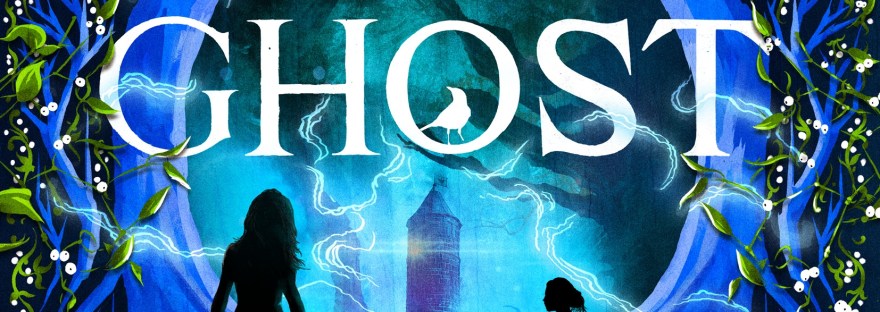
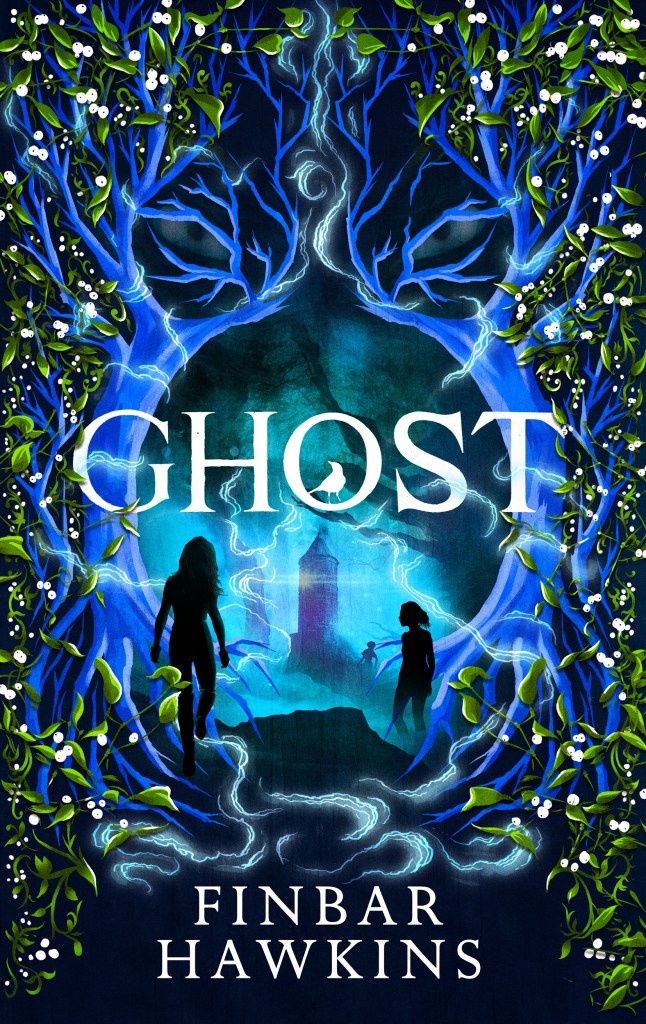
This is why, when I set out to write GHOST, Christmas felt like the only possible setting. The novel weaves together three young women across different time periods, all confronting an ancient evil that lurks in the woods. That evil is timeless, but it makes itself felt most powerfully when darkness reigns—and there’s no darker time in the British calendar than the dead days between the Solstice and New Year, when time itself seems suspended and the normal rules don’t quite apply. 

Our ancestors understood this instinctively. Take Sir Gawain and the Green Knight, that strange and unsettling medieval masterpiece. It begins at Christmas, at the height of Arthur’s Yuletide feast, when a monstrous green knight crashes the party and sets in motion a tale of magic, fear, and the supernatural. The poem is steeped in midwinter unease—the sense that something other is abroad when the world is frozen and dark. The Green Knight himself seems to embody the wild, unkillable force of nature at its most hostile and alien. He’s a Christmas ghost in all but name. 

Fast forward several centuries and we find M.R. James, that master of the antiquarian ghost story, making a conscious art form of the Christmas tale of terror. As a teacher at Eton, James would gather his pupils around the fire each Christmas Eve and read them a new ghost story he’d written especially for the occasion. Can you imagine it? The oldest, most prestigious school in England, and here was a distinguished scholar frightening boys in the darkness with tales of ancient curses, malevolent spirits, and things that should not be disturbed. James understood that Christmas wasn’t just about comfort and joy—it was about acknowledging the darkness, facing our fears communally, and emerging into the light together. 

.

.

For me, though, the book that truly crystallised this tradition was Susan Cooper’s The Dark is Rising. Reading it as a young person was a formative experience—I can still remember the visceral sensation of cold that emanated from its pages, the way Cooper made me feel the bite of winter and the weight of ancient evil pressing against the fragile warmth of Christmas.

Will Stanton’s battle against the Dark unfolds across the twelve days of Christmas, and Cooper understands implicitly that this is when such battles must be fought—when the year is at its most vulnerable, when the old magic is strongest, when everything hangs in the balance. The book showed me that Christmas stories could be more than cosy—they could be mythic, terrifying, and profound. They could matter. 

And then there’s Dickens. A Christmas Carol is so embedded in our festive culture that we sometimes forget how genuinely spooky it is. Yes, it ends in redemption and generosity, but it earns that ending through four ghostly visitations, a journey through death and regret, and the terrifying vision of what Scrooge himself will become.

The Ghost of Christmas Yet to Come is as frightening as anything in M.R. James—a silent, hooded figure of absolute dread. Dickens knew what he was doing. His story works precisely because it harnesses that ancient connection between Christmas and the uncanny. 

Why does this tradition endure? I think it’s because the Christmas season, for all its manufactured jollity, sits on something much older and darker. It’s a festival of light precisely because we’re surrounded by darkness. We feast because winter was always a time of potential starvation. We huddle together because the world outside is hostile. And we tell ghost stories because, in the darkest part of the year, we need to acknowledge what scares us—and then, together, we need to survive it and emerge into the growing light. 

In GHOST, I wanted to honour this tradition: to write a story that embraces the darkness of midwinter and asks what might be lurking there, waiting. Because some stories are best told when the nights are long, the fire is burning low, and we’re not quite sure what’s out there in the shadows. 

.


60AD A blackbird calls a warning. Aine, a slave girl running away from her Roman masters, pauses to listen as she lifts a totemic, druid carving she’s found in the tunnel where she’s hiding. The last thing she sees is a tangle of matted fur, a sheaf of claws, a flash of fangs, as she unleashes a hungry animal presence.

1783 AD Centuries later, white witch Sarah Gibson wanders the woods in search of refuge. She’s at ease here with the changing seasons, the plants and animals, until one moonlit night, she senses Aine’s terror. The blackbird calls a warning, but Sarah wants to help Aine’s restless spirit.

Present day Marie has dropped out of art college and is staying with her aunt for a while. But the woods nearby are hiding something. Marie can feel it. She hears the local gossip about tragic happenings there. Hopelessly caught by the ghostly voices of the past that echo uneasily in her present, Marie must pit her wits against powerful old magic..

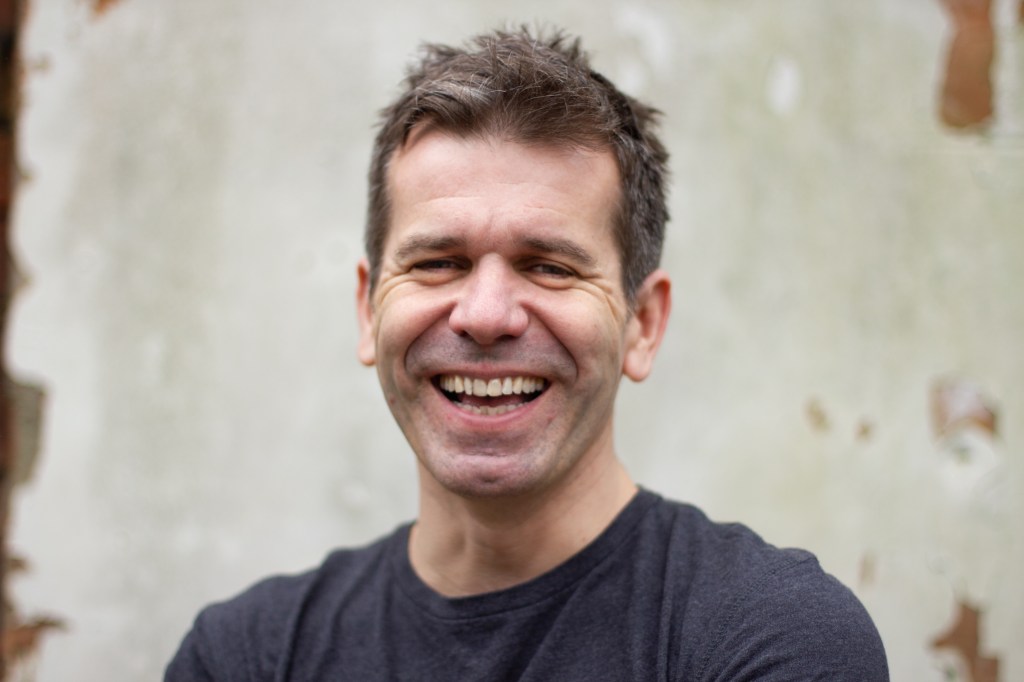
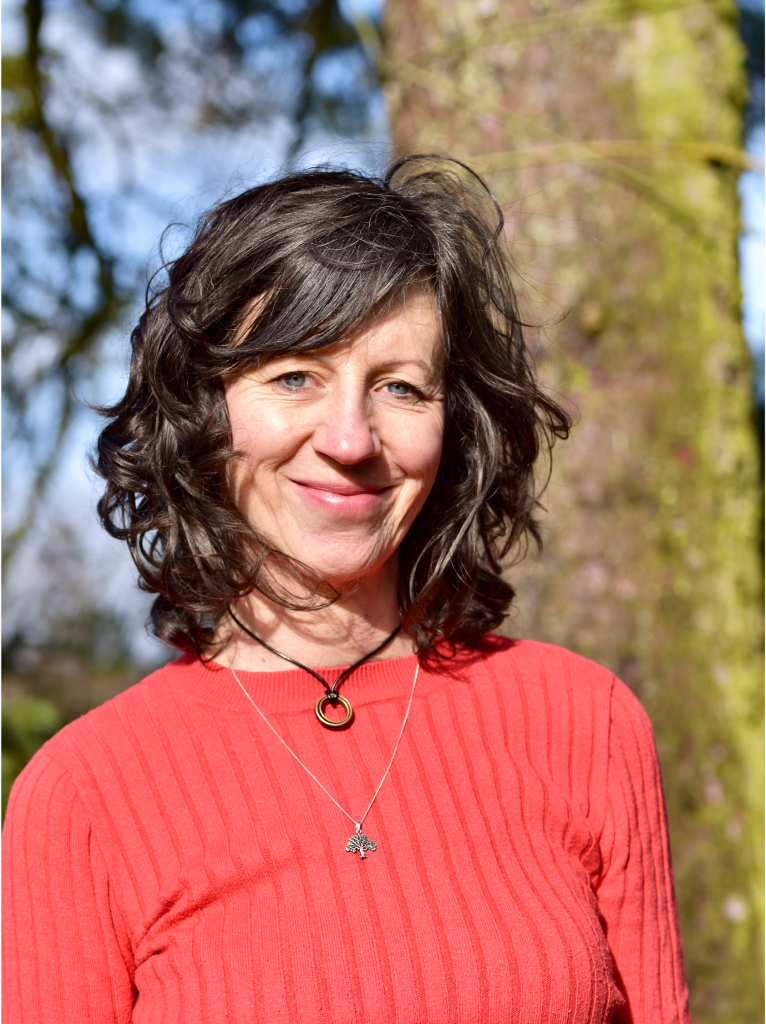
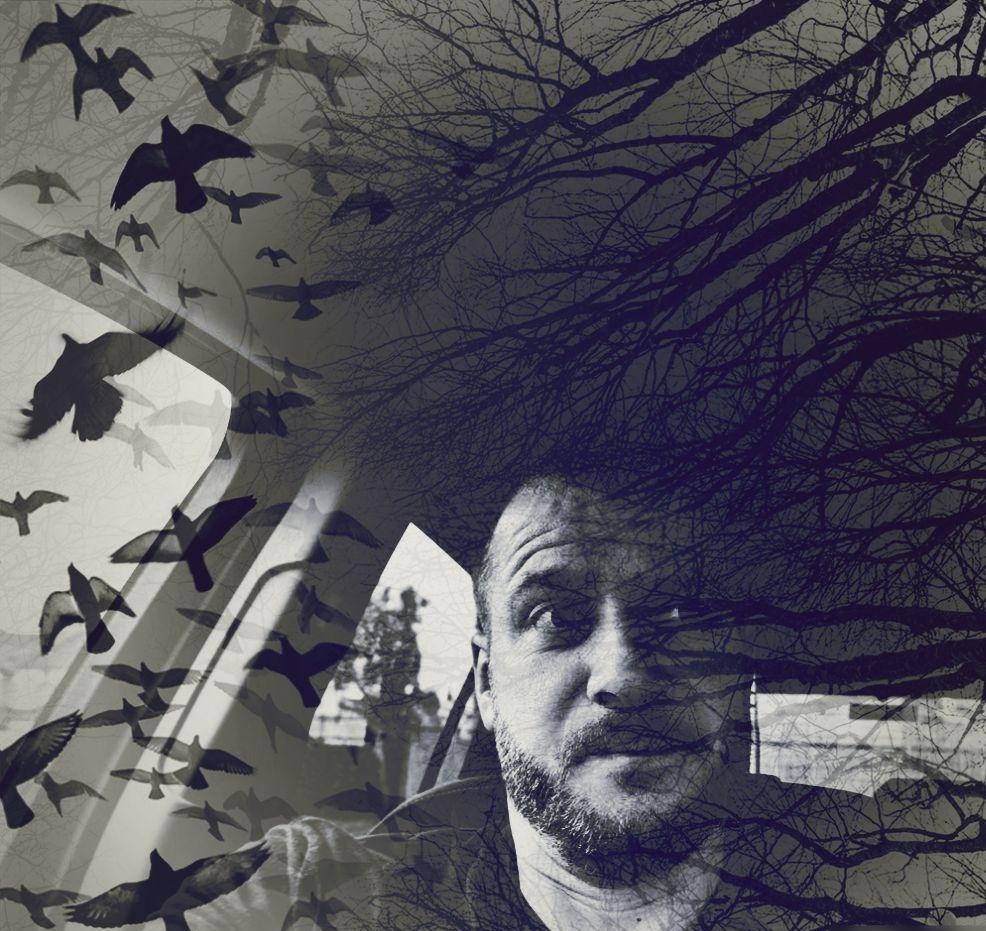
Finbar Hawkins is a graduate of the Bath Spa MA in Writing for Young People. He grew up in Blackheath, London and now lives in Wiltshire with his family, in a landscape steeped in myth and legend.
He works as a creative director for animation studios such as Aardman in Bristol, where he makes fun interactive things for children of all ages.
Finbar’s debut novel, Witch, was shortlisted for the Branford Boase Award and nominated for the 2022 Carnegie medal, is also published by Zephyr.

Find out more at finbarhawkins.com

Instagram @finbarhawkins_writer

PaperBound Magazine is an online magazine for the young, and the young at heart. We are dedicated to showcasing authors and illustrators for children’s and young adult fiction and we strive to deliver inspiring content, uplifting stories, and top tips for young and aspiring writers yet to burst on to the literary scene.

All our issues are completely free and run by volunteers, however if you would like to support PaperBound and the work we do, you can help us out by buying us a virtual book. We appreciate any support you can give us!

Don’t forget you can read with the latest issues of PaperBound Magazine – completely free – here.

article, Blog, Blog series, Bookshelf, on writing, Writing craft

Guest post: Miranda Moore shares her top writing tips and path to publication

They amble back across the lawn to their Edwardian townhouse, where their secretary awaits. Steven Spielberg’s on the phone, wanting to make a movie of their latest book. Would they like to take the call?

OK, let’s make that scene a bit less Hollywood and a bit more reality TV.

Here’s another professional author. She’s sitting in her messy study in her dressing gown, a hot water bottle shoved up her jumper. Three emails ping in from her kids’ school – forms needing filled in.

The doorbell rings and she listens politely as a man and woman tell her that unless she repents her sins, she’s heading for eternal damnation, and wouldn’t she like to save her soul from this fate? Then she finds her cat toying with a terrified vole in the kitchen. She manages to banish the cat and save the vole. Hurray!

Her phone rings. No, she doesn’t need loft insulation, thanks.

Finally, she gets to work. She picks up the latest draft of her novel – she’s not entirely sure how many drafts she’s done, but it’s a lot more than one. She slashes paragraphs, scores out phrases, adds in better ones and scribbles notes down the margins. The paper is a shambolic mess of marks but she is curiously pleased. It’s progress.

Most writers don’t just sit down, struck by inspiration, and produce perfect novels on a first attempt. Most of us have sweated, sighed, sobbed and sworn for years before we become published novelists.

I wrote the first draft of my debut novel in 2016. Nine years later, that novel has just been published, having changed title twice and been though many revisions.

When I first sent it out, it had a long way to go. I queried a few agents and got several full manuscript requests. None of those turned into an offer of representation, but the feedback was invaluable. It simply wasn’t properly baked yet.

I also entered national novel competitions, and was quickly shortlisted for one in 2017, the first of many longlistings and shortlistings. Each time I got listed but didn’t make it further, I went back to my manuscript and asked myself: what can I improve? What’s not quite there yet? What more does it need?

And each time, with several months’ break from it, that distance provided clarity. I was able to see things I had been unable to see when I was too close to it. Feedback from critique group friends, beta readers and a manuscript appraisal service helped enormously. All along, I kept my eye on my goal: publication with a traditional publisher.

What I didn’t do was sit for seven years, waiting. I got on with other things. I took freelance writing commissions and editing jobs. I wrote gift books about mindfulness. I returned to the manuscript from time to time, read it, listened to it while doing yoga (I’m not joking – I got the Speech function on my computer to read it out to me). This way, I could hear passages that dragged or felt underdeveloped. And I wrote a second novel.

In all, I was longlisted six times, shortlisted three and won twice. That’s eleven competitions. There’s a pattern. Each time, I was inching closer. Each time, I had to go back to the factory floor and examine my work with a critical eye, to try to find the weaknesses; to see where it needed refining. Each time, I returned to the text and interrogated it. There was always something that could be tightened.

Of course, there’s inevitable disappointment when you get listed and don’t make it. You’ve poured your heart and soul into this. Who wouldn’t be temporarily crushed? But you pick yourself up and think: OK, the winning book is simply better than mine. I still have work to do. My time will come.

Overnight successes are rare. Most authors have honed their craft over years. So if your dream is to become a published writer, I recommend seeing it as an apprenticeship.

First, you need to learn the craft, with a dose of humility. You need to be able to listen to feedback. When people give you constructive criticism, they’re only trying to help. Some things they say won’t chime with you, so stick with your gut. Other times, their comments will illuminate something for you and help to highlight the scenes or characters that need work.

Beyond that, you need perseverance, a willingness to keep improving, a decent dollop of self-belief, and an unshakeable desire to reach that goal. There is nothing wrong with a little healthy ambition. It just means you’ll keep grafting until you get there.

Good luck and enjoy the trip!

.

In low moments when you’re feeling disheartened, I recommend putting the writing aside and simply doing something you enjoy – moving, dancing or something creative, perhaps. Taking focus off your writing will hopefully give your soul a little space to revive. When you’re ready, you’ll know when it’s time to pick up your pen.

Interrogate your central premise. Is it compelling enough? Make sure it pulses through the narrative from start to finish. Have the courage to ditch a weak idea and start something new, something that makes your chest feel tight. That urgency will shine out from the page.

Different writers have different aims. Some people simply want to write to express themselves. Some want to self-publish and retain control of their work. Some yearn to become a commercial bestseller; some would prefer critical acclaim; others would love to be published in a journal. And for some, making a difference to a single reader is enough. Consider what sort of writer you’d like to be, and picture yourself there.

Typically, novelists have written at least one book before they write their debut novel. According to Writability, the average author has written 3.24 books before they write their debut. I wrote two children’s stories before writing my own debut. They are still hiding in my computer.

.

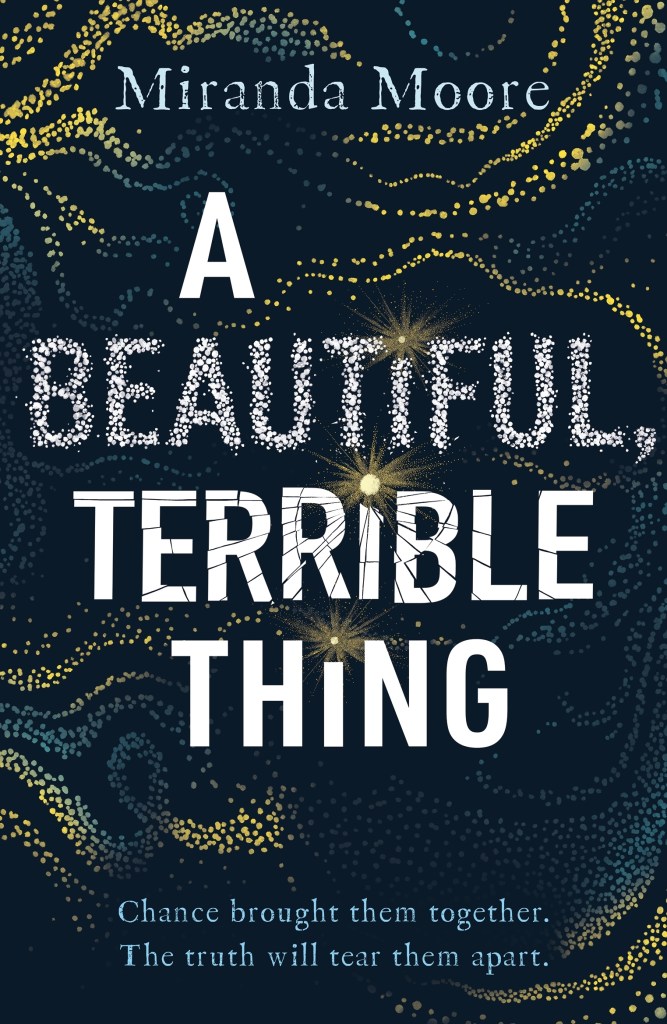
When Nathan meets Cara, sparks fly.
Her smile lights him up, and he falls for her fast. Being with her is like taking a deep breath, after the terrible thing that happened three months ago.
Cara feels the same. And this joy is a gift – because her life is shattered, too. Nathan feels like a new start.
But they’re both hiding a secret. And the secrets intertwine in a way neither of them could imagine.
There’s no way Cara and Nathan can be together. But, despite everything, they find it impossible to be apart.

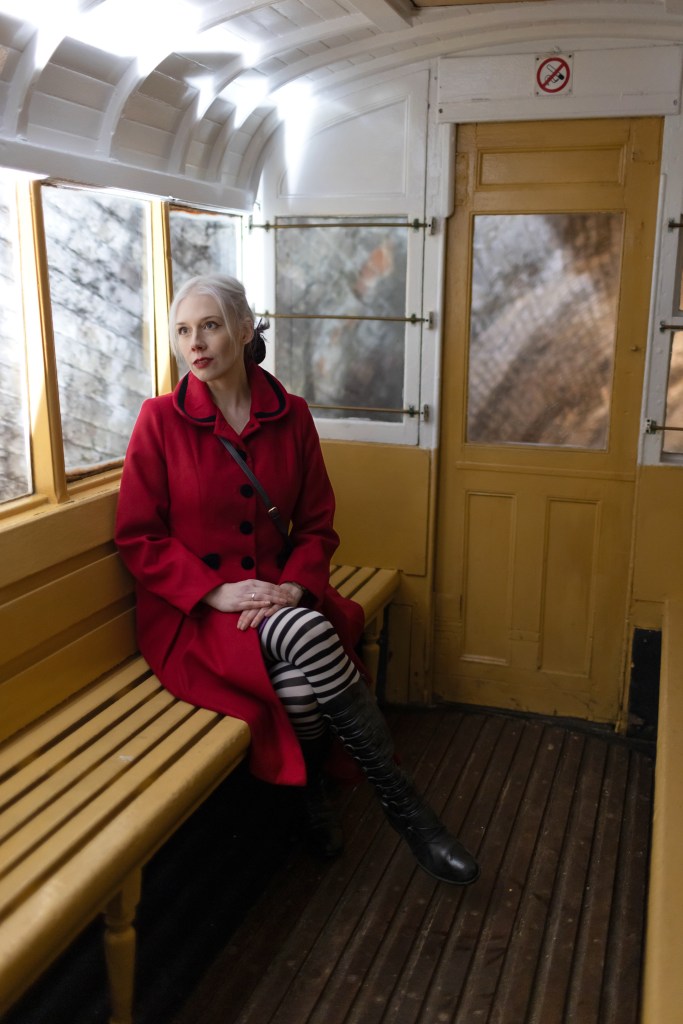
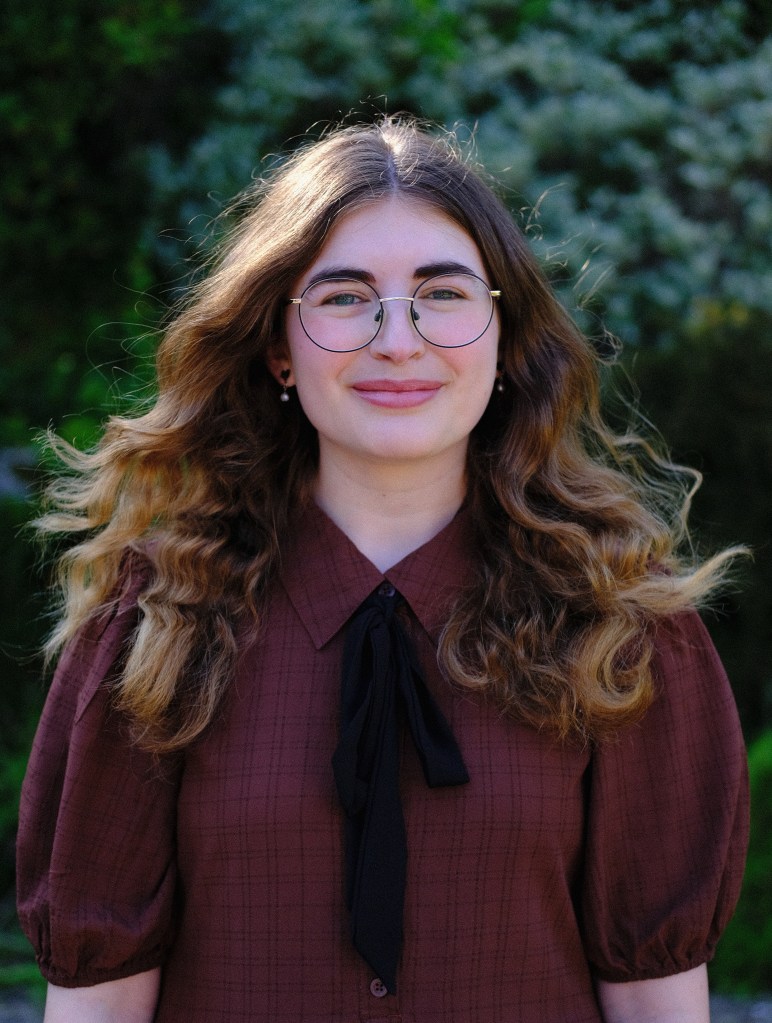
Miranda Moore is a writer of both fiction and non-fiction, as well as a freelance editor and writing coach. She won the Wells Festival of Literature Book for Children Competition in 2023 and is a Royal Literary Fund Fellow, supporting students in their writing. When she’s not writing, she sings in a covers band and enjoys exploring wild places. She lives with her family in the Scottish Borders. A Beautiful, Terrible Thing is her debut novel.

PaperBound Magazine is an online magazine for the young, and the young at heart. We are dedicated to showcasing authors and illustrators for children’s and young adult fiction and we strive to deliver inspiring content, uplifting stories, and top tips for young and aspiring writers yet to burst on to the literary scene.

All our issues are completely free and run by volunteers, however if you would like to support PaperBound and the work we do, you can help us out by buying us a virtual book. We appreciate any support you can give us!

Don’t forget you can read with the latest issues of PaperBound Magazine – completely free – here.

article, Blog, Blog series, Bookshelf, Interview, Interviews, on writing, Writing craft

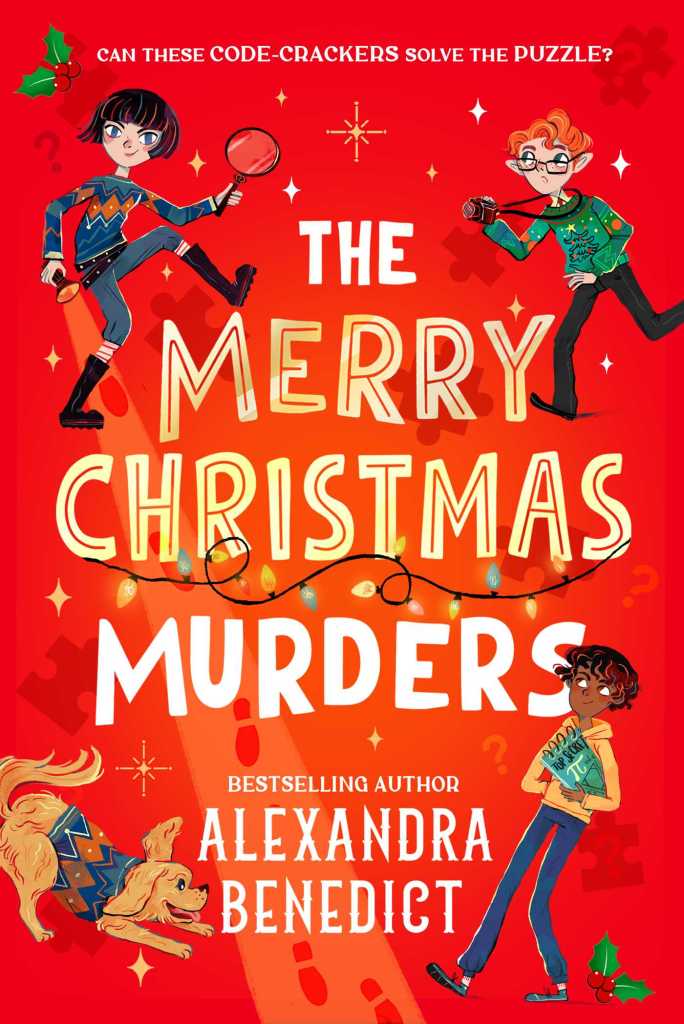
Alexandra Benedict on middle grade debut The Merry Christmas Murders

Brooke Parkin not expecting it to be a very merry Christmas. She is an anxious autistic ADHDer whose only friend is her loyal support dog, Buoy, and the headmaster of her new school has died in mysterious circumstances.

And then she meets the other members of the Neurokind Club, an after-school group for neurodivergent kids. Together, Brooke and the rest of the club must embrace their strengths and their growing friendship to solve the murders and make Christmas merry after all.

I was really surprised that, for me, the process of writing for kids was really similar to that of for adults, aside from getting the tone right for middle grade (not too dark, not too light) and making motives for the murders age appropriate.

I loved the spooky atmospheres, the plots, and how they all used different skills to solve the mystery, something I hope also appears in The Merry Christmas Murders. Most of all, I absolutely adored George – she was so strong and clever.

I was really inspired by how she rejected expectations of what it is to be female. And who didn’t love Timmy the dog? Buoy, Brooke’s support animal, is directly inspired by Timmy.

I am really driven by writing fully rounded neurodivergent characters. Looking back, all of my main characters have been ND, even if at the time I didn’t know it! I love Brooke’s bravery – she is so anxious, all of the time, and it takes her real courage to not hide it. She inspires me to get outside when I otherwise would stay in for days.

In the run up to Christmas, I revel in festive activities such as Christmas markets, wreath making, going on the Polar Express, seeing friends, making decorations, etc. From Christmas Eve on, I relish being at home with my little family, eating lots, watching lots, playing lots and laughing even more. I love Christmas SO MUCH!

Fun, kind, inclusive.

The Neurokind Club will be back next year in The Jingle Bell Murders! I’m writing it at the moment, alongside my next adult Christmas mystery, The Advent of Death.

Read and write as much as you can, in different genres and styles! A classic piece of advice in creative writing circles is to ‘write what you know’, but I advise writing about what you’d like to know.

What fascinates you? What story has gripped you so much that you have to tell it?

Finding purpose in your writing is really important as it’s a very difficult industry to get into, and even harder to stay in, so believing in yourself and your words is essential. I’d also advise finding other writer friends to celebrate with when you have success and commiserate with at all other times!

Alexandra Benedict is a USA Today bestselling and award-winning writer for children and adults. Her novels, including the Gold Dagger shortlisted The Christmas Murder Game and Little Red Death are published in twenty territories.

Huge thanks to Laura Jones for preparing the interview questions. Laura is one of our regular contributors and her reviews feature in issues of PaperBound Magazine. Read her review of The Merry Christmas Murders in our autumn/winter issue by checking out our issues page.

Laura Jones is a secondary school teacher in Cornwall. She teaches English and Media and recently completed an MA in Publishing. Laura is part of a local writing group and hopes to eventually complete one of the many book ideas she has saved on her laptop, some of which are inspired by the Cornish landscape.

PaperBound Magazine is an online magazine for the young, and the young at heart. We are dedicated to showcasing authors and illustrators for children’s and young adult fiction and we strive to deliver inspiring content, uplifting stories, and top tips for young and aspiring writers yet to burst on to the literary scene.

All our issues are completely free and run by volunteers, however if you would like to support PaperBound and the work we do, you can help us out by buying us a virtual book. We appreciate any support you can give us!

Don’t forget you can read with the latest issues of PaperBound Magazine – completely free – here.

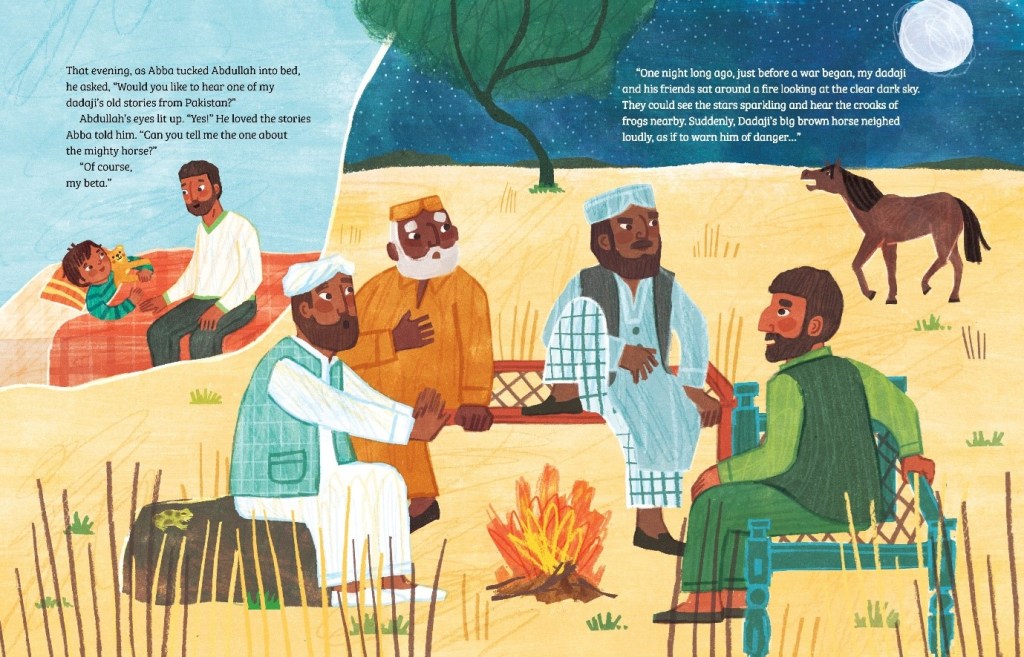
Abdullah's Bear Needs A Name! Illustration 1 by Sophie Benmouyal
article, Blog, Blog series, Bookshelf, Interview, Interviews, on writing, Writing craft

Guest post: Shirley-Anne Brightman and Yasmin Hanif on The Power of Storytelling and Using Your Own Name

By Shirley-Anne Brightman and Yasmin Hanif

© Floris

Storytelling has long been a tradition in many cultures around the world. In older generations in South Asian Pakistani culture, oral storytelling is often the only way stories were shared and passed down.

When I began working with a charming, little school in Glasgow on their ‘We Can Be Heroes’ project helping primary school children to see themselves in the stories they read, I had no idea how central the story of how the project began would be to the project itself, and indeed my unwritten book at that point. In fact, my few years with the schools, saw an ocean of stories; from fiction, non-fiction, memoir to something in between fill the school.

Shirley-Anne Brightman, the pioneer of the project and the Principal Teacher explains how our collaboration came about…

Shirley-Anne’s Story

When I was on playground duty, some of the older pupils came up to me asking for help: “Mrs Brightman, we don’t know enough names, can you help us?” Totally confused, I asked them to explain. They were preparing a Guess the Name of the Teddy fundraising activity and needed 30 names to be chosen by players; so far they had James, Emily and Belinda.

“I don’t understand, what about your name, Zainab? Or yours, Anum? There’s Eesa over there, Mohammed, Zeenat … we have 300 children in the school, what’s wrong with their names?” I asked with slight concern. I feared I knew what their reasons might be.

“You can’t call a teddy those names!” they said in complete sincerity.

“Why not?” I replied, matching their tone as nearly as I could.

It wasn’t the first time we had observed a disregard in our pupils for their own identity. We had seen primary 1 children drawing self-portraits showing themselves with white skin when their own was brown.

Some of the ways we were trying to address the representation was in the reading schemes and class library books we were buying but the books we wanted to buy were hard to find, if not non-existent.

I went to our Headteacher. “We have to do something!” I told her. “It’s not right.”

So, we did.

We worked with the Scottish Black People, People of Colour Writers Network (SBPOC) to find writers who would work with our pupils to write our own stories. That’s when we met Yasmin.

Yasmin’s experience

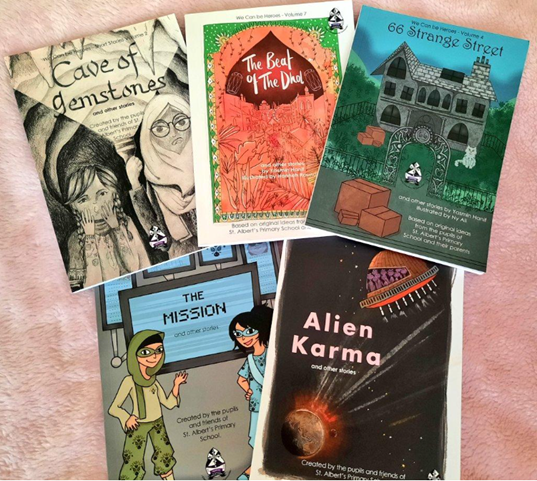
During phase 1 of the project the children came up with various ideas such as superheroes and secret laboratories (‘The Zedriz’), a shipwreck and being stranded on a remote island (‘Home is Where the Heart Is’) to two sisters being trapped in a cave (‘Cave of Gemstones’). By this stage in our project, the stories the children came up with still reflected what they read themselves or watched on TV or YouTube.

It was during phase 3 of the project that I felt the storytelling and imagination of both the school and the community were really captured.

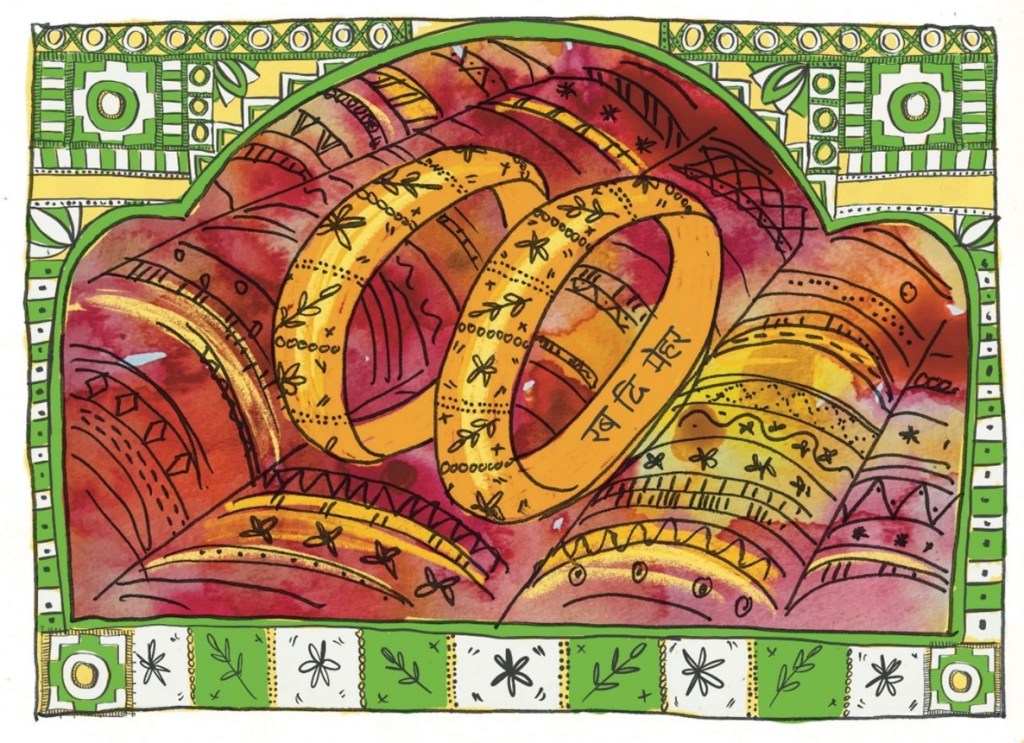
One of the parents of the pupils I was working with told me a real-life story based on her grandparents falling in love in India, and a golden bangle that had been passed down through the generations. She still wore those bangles to this day. This became one of the published stories from the project.

Beat of the Dhol, ‘We Can Be Heroes’, St Albert’s.
Illustration by Hannah Rounding.

I found that storytelling leaves a legacy, not just a physical one like those bangles but a legacy of confidence, and of empowerment for those pupils that I worked with at the school, and they would be taking that legacy with them into later life.

In the same way, Abdullah gets a teddy bear passed down through the generations from his Abba (or dad) in my debut picture book, Abdullah’s Bear Needs A Name! which was inspired by events from the school. Just the like kids at the school, Abdullah struggles to name his bear, until he hears an old story from his heritage.

The message on both accounts is a powerful one; that your name matters, that your stories matter, that you matter.

© Floris

Yasmin is a Scottish writer and educator. She was shortlisted for the Kavya Arts Prize in 2023 for her story which became her debut picture book, Abdullah’s Bear Needs A Name! (Floris, 2025). She was a writer in residence at a primary school and worked on their project to promote diversity and inclusion within children’s writing and publishing, which won the SAMEE Aspiring Writers Award and the Scottish Education Curriculum Innovation Award 2022.

Shirley-Anne Brightman studied languages at the University of Cambridge and holds an MSc in Social Policy from London School of Economics. She has taught in primary schools and English as a Second Language contexts in four countries. She is currently a Leader of Learning at Glasgow City Council’s Improvement Challenge which aims to close the poverty-related attainment gap.

PaperBound Magazine is an online magazine and blog for the young, and the young at heart. We are dedicated to showcasing authors and illustrators for children’s and young adult fiction and we strive to deliver inspiring content, uplifting stories, and top tips for young and aspiring writers yet to burst on to the literary scene.

All our issues are completely free and run by volunteers, however if you would like to support PaperBound and the work we do, you can help us out by buying us a virtual book. We appreciate any support you can give us!

Don’t forget you can read with the latest issues of PaperBound Magazine – completely free – here.

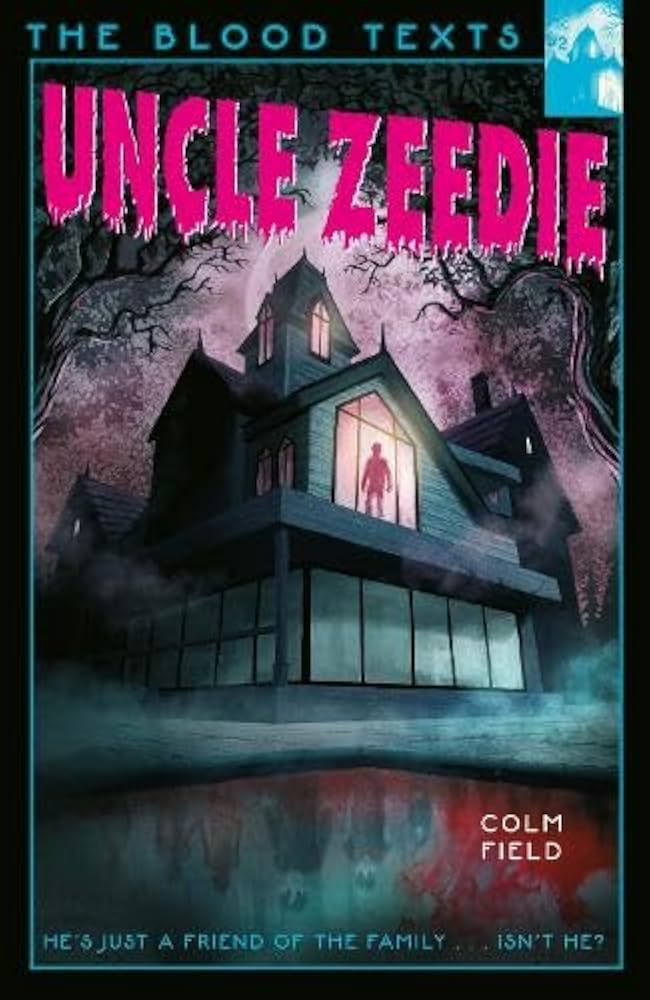
Uncle Zeedie - The Blood Texts
article, Blog, Blog series, Bookshelf, on writing, Writing craft

Halloween guest post: 3 Horror Writing Tips by Colm Field

Of course, those things aren’t objective really. What scares one person won’t scare another, and my fears might well bore you. You might have many goals in your writing, might even bristle at my philistine summation.

Yet while you’re probably right, and a writer should never over-codify their process lest their work lose its soul, I promise that the following 3 tips can help your next devilish inspiration find a page to torment.

Like all writing ‘rules’, they should be read then shoved back to the same part of your mind that remembers to brush teeth and brake at red lights. I hope they’re of use.

Yep, I’m still being simplistic. But if you’ve had a great idea for a horror, only to find that it’s not getting any further in your head, you could do a lot worse than studying these three aspects of your story; the Monster, the Scares, and the Cares. The Monster is the thing we are frightened of, the Scares are the moments we, um, get scared, and the Cares are the characters we really don’t want to see hurt. I promise you – your story has them all, somewhere.

And not necessarily in equal measure. Come up with an exciting, memorable Monster, for example, and you might decide to inflict it on characters so tropey that their terror is immediately recognised, without all that effort spent getting into their psyche. Good for you – don’t worry about judgement here, we’re horror fans, we’re past all that.

But if you’re story still falls flat, then perhaps we do need more on the Cares … or maybe just more Scares. As Howard Hawks almost said, ‘A good horror is seven terrifying moments… and no boring ones.’

Or, you might have put all your effort into writing a complex and compelling love story, with characters rich in pathos and a drip drip drip of intangible dread. Wondering why your reader drifted off halfway through? Perhaps the threat to those characters is too wispy.

Develop your Monster a little more, give them some teeth to go with all that talk. Because if you exclude one part of this unholy trinity entirely, it will be missed.

You know this already, of course. The thing that goes bump in the night can be a very human bully, a voracious plant, your protagonist’s own id. They may turn out to be not a monster at all, but horribly misunderstood. It’s common knowledge, so why am I telling you about it here?

Well, for me, it’s the question itself that is of interest. Who is scaring us here? Why are they scary? What does our fear of them say about us?

Sometimes the answers are straightforward. I just don’t want to be eaten! If your Monster is a straight up heinous villain, then don’t worry, there’s nothing wrong with that.

Indeed, adding layers of sympathy can run the risk of excusing their crimes. I’m sorry about your parents’ divorce, Billy, but you just cut off my arms with a plasterboard saw.

But if the answers run deep? Then asking these questions can make your story truly profound. In T. Kingfisher’s book What Moves The Dead, an organism that causes a sinister change to its victims is reflected in other transformations taking place; through war, crumbling inheritance, and cold science.

Indeed, the one constant in the book is that of the protagonist’s gender fluidity; a fact, nothing more nor less, a source of comfort and familiarity while all our other assumptions are wrecked.

I won’t give anything away, but my first thought upon finishing the book was, Was that about a monster? I couldn’t decide. I still can’t.

In my own Uncle Zeedie (plug alert!) the teenaged protagonists are scared that their family friend may be a serial killer. The story poses similar questions: If somebody is weird, does that make them dangerous, or you narrow-minded?

If you choose to ignore a red flag, are you foolish or simply trusting? The answers aren’t simple, but I loved writing the debate.

It’s a dark, dark night, in a dark, dark wood. You know your monster, you know your characters, you know their end. What Scare will you choose?

If writing is craft, then Horror can be Lego, provided you learn your blocks right. Jump scares, atmospheric scares, paranormal activity (the activity, not the film), repulsion… there are so many different tools at your disposal, provided you use them correctly.

Is this midnight nature walk early in the story? Then why not a terrifying mirror reveal, or even just a simple jump scare? Something leapt from the bush and… end of chapter. Yeah, it’s a cheap cliffhanger… but it’s only cheap if you do it again, and remember: we’re horror fans! We like a bit of tacky now and then!

Ooh, but later? After we learned the myth of the beast, the foul curse, the soul-sucking spectre? After the best friend has died horribly?! Right then, a jump scare might be as welcome as a fart joke at a funeral.

Now it’s time to bring in the power tools instead, bring in some repulsive body horror, or a bad trip-inducing surrealism, or maybe throw in the Monster’s POV…

I could go on, and you could probably think of more that I would miss. Scares are tools, don’t be afraid to treat them as such.

With these tips, please don’t think I’m reducing the joy of writing into an AI prompt. Horror is not an objective science – it is an ethereal art form that revels in the uncertain, and loses its potency when stripped to bare and cynical mechanics.

But the scary books that have gripped me of late – say, Boys In The Valley by Philip Fracassi, or Deadstream by Mar-Romasco Moore – they featured these recognisable elements, delivered with a new and terrifying gusto.

Should you be struggling with this wicked masterpiece, and these bare and cynical mechanics can offer you a way through that struggle, then please, know this. You are writing for horror fans. If anybody won’t judge, it’s us.

Uncle Zeedie is weird, but at least he’s rich and his house is amazing.
That’s what George and Lacey tell themselves when they arrive at his isolated mansion in the Welsh woods. Only, something here is worse than weird.
Uncle Zeedie seems unhinged, serving them rotten food, and skulking around at night. The house is decaying, blood stained, and stinks of sour milk. And George is seeing kids that aren’t there. They’re dead, these kids.
And if the rumours are right, Uncle Zeedie is the one who’s killing them.
The players are in place. The stage is set. Curtain up.

Who is Colm Field? Well, he was born in the witching hour, beneath a blood-red moon, and under a bad sign.
His first words were not fit to print. Now he scratches stories with yellowed fingernails, across the mouldering walls of the abandoned nuclear power station he calls home.
If you like what you read, we’ll dare you to find out more . . . 

PaperBound Magazine is an online magazine for the young, and the young at heart. We are dedicated to showcasing authors and illustrators for children’s and young adult fiction and we strive to deliver inspiring content, uplifting stories, and top tips for young and aspiring writers yet to burst on to the literary scene.

All our issues are completely free and run by volunteers, however if you would like to support PaperBound and the work we do, you can help us out by buying us a virtual book. We appreciate any support you can give us!

Don’t forget you can read with the latest issues of PaperBound Magazine – completely free – here.

article, Blog, Blog series, Bookshelf, Interview, Interviews, on writing, Writing craft

Interview: A Grave Inheritance by Felicity Epps

A Grave Inheritance is a gothic murder mystery, delving into seances and spiritualism in Victorian London. My main character Dolores Rain is grieving the loss of her parents and older sister, but when ghostly occurrences point to dark secrets within her house, she teams up with her friends to unveil the truth…and solve a murder!

I had so much fun writing this novel, because I was able to indulge all my favourite themes, from spirits and haunted houses to mysterious apothecaries and mourning fashion. It is very much a reflection of the kind of novels that I like to read, so the inspiration for the novel came from cosy nights reading ghost stories!

Dolores appeared as a fully-fledged character from the start – I think because I indulged her quirks and worries, it all seemed to come naturally! The first scene in the novel was also the first vision that I had for the story: Dolores anxiously declaring that she must be on her “deathbed”, while also mourning how many novels she still has to read.

It felt like such an engaging start for a murder mystery, because Dolores is not set up to be a particularly good investigator – she is overly fearful and really just wants to retreat to her bed. As the novel progresses though, I really enjoyed having her confidence grow, especially once she learns to trust her friends and realises that she can confront the things that frighten her.

The theme of power was always such a key element, because women in the Victorian era lacked independence and the freedom to govern a lot of their own decisions. Dolores finds herself in a unique position being granted her family’s inheritance, but it still comes with the expectations of London society, as she is pressured to get married.

This theme of power then evolved for me, as I quickly realised that ghosts were not the only danger in the novel – from Dolores’ nerves being dismissed as hysteria to the looming threat of being sent to an asylum, Dolores and her friends, Ada and Violet, struggle to be taken seriously. Eventually, the girls form The Society of Free Spirits, hoping that by embracing seances and spiritualism, they will finally be able to make their voices heard.

A symptom of Dolores’ grief is that it has made her world feel claustrophobic. This element definitely strengthened the supernatural aspect of the novel, allowing the haunted house to feel restrictive as well.

I think Dolores would have struggled to overcome her fears if she hadn’t had the outside encouragement of the other characters – Ada does an amazing job of dragging Dolores into society and helping her rediscover the pleasures of life that have been lost in her grief. Meanwhile, the spiritual medium, Violet, helps Dolores find her voice, asking questions that have been ignored by many of the male characters in the book.

I do like to imagine that Dolores always had this resilience within her; she just had to remember it! In the novel, she often feels overwhelmed in social situations, but then finds her strength again in quiet moments. Through all her ghostly experiences, she doesn’t want to give up – and this desire to look for answers pushes her through, even when she wants to shut her front door and ignore the outside world!

When I used to imagine being published, I’d fantasise about finding my novel on a shelf in a bookshop. So now, to have A Grave Inheritance popping up in Waterstones windows has been absolutely beyond my hopes as a debut author!

I have loved seeing the apothecary bottles, candles and skulls that have appeared in such creative displays across the stores. I’m so grateful to all the amazing booksellers that have championed the novel, and I like to think that A Grave Inheritance has ushered in spooky season early this year!

I’m currently working on a sequel to A Grave Inheritance, which will be Book 2 in The Society of Free Spirits series. I’m so excited to share more about Dolores, Ada and Violet, as they embark on further ghostly investigations!

While Dolores’ house can feel gloomy and oppressive, I’m keen to delve more into the world of her friend Ada – exploring the glittering ballrooms of Victorian high society, where dark secrets are kept closely hidden.

My main advice would be to finish a first draft without worrying about it being perfect. When I first started writing, I wanted each chapter to be just right, before moving onto the next. But now, I focus on letting the characters lead me to the end of the novel and save worrying about plot holes for future revisions.

I find this gives me a better perspective on the project overall, and it’s such an uplifting feeling to have a manuscript in your hands – even a messy first draft!

Felicity Epps studied a degree in English Literature before completing a Masters in Eighteenth-Century Studies, where her research focused on female murderers in true crime writing! Felicity finds inspiration in history; researching strange and spooky subjects. She enjoys exploring cemeteries, collecting old books and hunting for ghostly Victorian photographs in antique shops.

Felicity currently lives in Broadstairs, Kent, UK, with her partner, Josh, and their baby daughter, Madeline. When she isn’t writing, Felicity loves going to the beach, knitting colourful jumpers and drinking far too many cups of hot chocolate. A Grave Inheritance is her debut novel.

PaperBound Magazine is an online magazine and blog for the young, and the young at heart. We are dedicated to showcasing authors and illustrators for children’s and young adult fiction and we strive to deliver inspiring content, uplifting stories, and top tips for young and aspiring writers yet to burst on to the literary scene.

All our issues are completely free and run by volunteers, however if you would like to support PaperBound and the work we do, you can help us out by buying us a virtual book. We appreciate any support you can give us!

Don’t forget you can read with the latest issues of PaperBound Magazine – completely free – here.

article, Blog, Blog series, Bookshelf, on writing, Writing craft

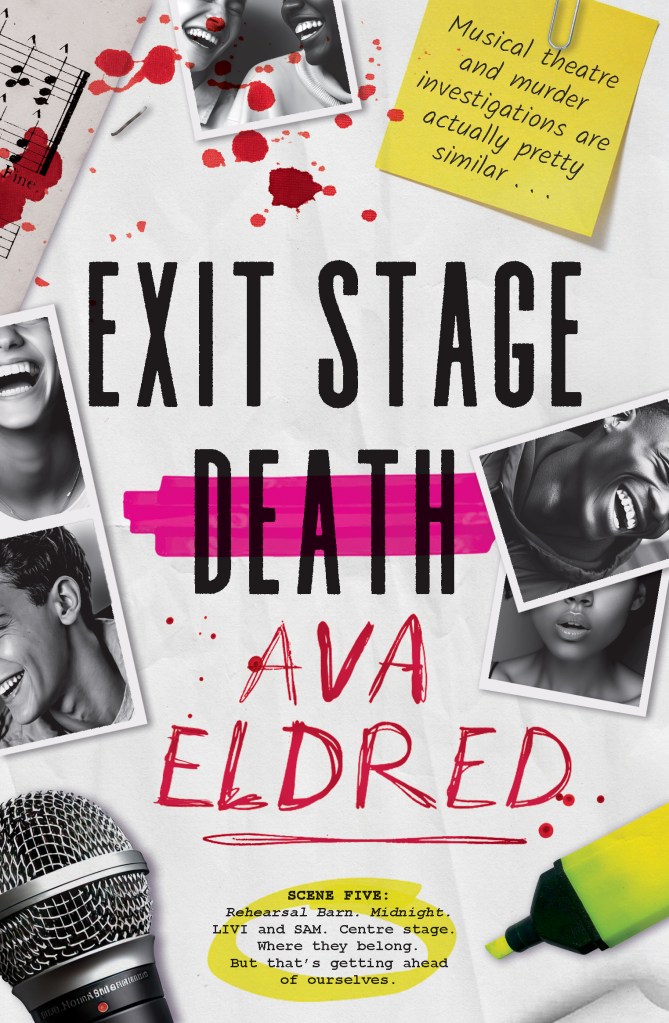
Guest post: Ava Eldred on new YA murder mystery novel ‘Exit Stage Death’

I won’t share her justification here (you’ll have to read it!) but I realised in the writing of the book that while our reasoning is different, I mostly agree with her, and that those similarities are one of the reasons it was the most fun I’ve ever had with a writing project.

I’ve worked in theatre myself for over 15 years, so in some senses bringing that world in to my YA novels was inevitable, but since I write murder mysteries, it wasn’t immediately obvious how the two might intersect.

When I thought about it a little more deeply, though, I realised that quite a lot of the things that can be taken from enjoying musicals can also be applied to mystery novels. Both allow a level of escape that feels safer, somehow, than other art forms tackling the same subjects might allow.

That is not to say that either musical theatre or YA murder mysteries sanitise things – more that, in adding the heightened layers that bring a little unreality to proceedings – the singing and dancing that we’d probably never come across in real life, the way YA protagonists have of becoming the default investigator that is unlikely outside of novels, we give the audience a way of processing things at a slight remove.

Fear is allowed to give way to thrills. Looking at it like that was part of the inspiration for Exit Stage Death – murder aside, the book tackles the complexities of coming of age, and finding a sense of belonging, which are things that all teenagers will come up against. The idea to set those growing up moments at a musical theatre summer camp, where a fellow camper is found dead on the third day, followed very quickly.

When it comes to theatre, and particularly my own creative work within it, I’ve always been more interested in work that holds a mirror up to the real world than going in for pure escapism. There is absolutely a place for both, but when I think about my favourite contemporary shows, there’s always a layer of something real that elevates them from good pieces of theatre to my all time greats.

The way that Next to Normal explores complex mental health conditions through song and dance, and even how less obviously dark shows like Wicked delve in to the complexities of female friendship and fitting in, make them a really enjoyable way of approaching and untangling scenarios that we may one day be faced with in our day to day lives.

I feel very similar about YA murder mysteries, both the ones I’ve written and many that I’ve read – YA authors are so brilliant at cutting right to the heart of the matter, and teenage audiences are so open to emotion in a way that adult readers sometimes resist, which makes them the perfect readers to explore things that are objectively terrifying, like murder, through a lens that usually isn’t. It’s facing the scary thing, whether that’s emotional or physical, and finding a way to unpack it.

I’m also always keen to make sure the protagonists in my novels have agency and, even when they’re afraid, find a way to use it. Teenage girls are so smart, and in a society that often tries to gaslight us in to thinking that isn’t the case, I think it’s our job as writers to push back against that every chance we get. That intelligence, too, is a reason murder mysteries are so appealing to this audience – when done well, they allow the reader to feel clever, give them something to push up against, and something to solve.

I’ve never met a teenage girl who didn’t like solving puzzles, whether that’s who the rogue arm in their friends Instagram photo belongs to, or who the killer is in their favourite book.

When I think of myself as a teenager, so many of the things that were most important to me weren’t things I saw represented in TV, or film, or other forms of culture. My platonic friendships were my most important love stories, and having interests like theatre and reading to throw myself into made so many things a whole lot more enjoyable.

My teenage self would have loved Exit Stage Death, if I do say so myself – there are plenty of platonic love stories, a touch of romance, questions to be answered, and a whole lot of songs to be sung along the way.

My biggest hope for this book is that the teenagers of 2025 who feel the same find it, and perhaps feel like someone understands.

Livi Campbell’s summer to-do list is simple:
1. Have the best final summer at Camp Chance.
2. Prove to her parents that acting is an acceptable career choice.
3. Smash all her rehearsals and get the lead in the senior showcase.
But when a fellow camper shows up dead under mysterious circumstances and Livi finds a note suggesting all is not as it seems, she must team up with her campmates to catch the culprit before they kill again.
Enter Juliet, the social media influencer with everything to prove; Aaron, the nepo baby who isn’t sure he wants to be in Hollywood at all; Daisy, the inexperienced newbie trying to find her place; and Sam, the leading man who broke Livi’s heart last summer.
The players are in place. The stage is set. Curtain up.

Ava Eldred was born in London, and has spent much of the last decade writing and developing stage musicals, as well as producing large scale theatrical concerts.
Her work has been performed both in London and internationally. She is a recent alumnus of Faber Academy’s Writing a Novel course.
Her debut novel, The Boyband Murder Mystery, was published by Penguin Random House in 2021.

PaperBound Magazine is an online magazine for the young, and the young at heart. We are dedicated to showcasing authors and illustrators for children’s and young adult fiction and we strive to deliver inspiring content, uplifting stories, and top tips for young and aspiring writers yet to burst on to the literary scene.

All our issues are completely free and run by volunteers, however if you would like to support PaperBound and the work we do, you can help us out by buying us a virtual book. We appreciate any support you can give us!

Don’t forget you can read with the latest issues of PaperBound Magazine – completely free – here.

article, Blog, Blog series, Bookshelf, Interview, Interviews, on writing, Writing craft

Interview: Best of All Worlds by Kenneth Oppel

It’s a survival thriller in which Xavier, my teenaged hero, wakes one morning to find that his family’s lakeside cottage has been moved somewhere completely different. When he, his father, and heavily pregnant stepmother go to explore, they find themselves on a farm – hens, two Nubian goats, thriving crops! When they wander further, they realize they’re trapped inside a dome.

I wondered how people would react to finding themselves in an inexplicable situation – what kind of story you’d need to tell yourself to make sense of it, what your plan of action would be. I also wrote the novel because I was fed up with conspiracy theorists, science deniers (especially deniers of climate change), and people who mangled the concept of freedom to justify hate, racism, and blatant self-interest. The world is hard enough for adults to navigate; for kids it must be even more bewildering, being deluged with misinformation.

Oh yes! I learned a lot about sustainable farming, the best kind of milk goats to get (also how to breed, castrate and butcher them). I read about the best time to plant certain crops and harvest them. I went down way to manner research rabbit holes. I also, sadly, had to research various conspiracy theories and the people who perpetrated them.

I am a big plotter and planner, and spend a lot of time “daydreaming” the world of the story before I start chapter one. But during the writing there are always delightful surprises. The biggest was probably the decision to introduce another family into the dome, one that had vastly different values than the first.

Usually the concept or setting. Best of All Worlds was definitely concept; books like Airborn and The Boundless were the settings.

Don’t expect it to be perfect the first time. If you get stuck somewhere in the story, jump to another place. Get as much feedback as possible from trusted readers.

Having a book in outer space. Airborn went to the ISS for six months with Canadian astronaut Robert Thirsk, and I got to meet him afterwards, and see my space book – though sadly they didn’t let me keep it!

I have a couple novels vying for attention at the moment. One involves U-Boats, the other a young rock band behaving badly.

Kenneth Oppel is the bestselling author of many books, including Airborn, which won the Governor General’s Award for children’s literature and a Michael L Printz Honor Book Award, and the Silverwing trilogy, which has sold over a million copies worldwide. Some of his other books include Ghostlight, The Boundless, Every Hidden Thing, and Inkling. The Nest and Half Brother both won the Canadian Library Association’s Book of the Year for Children Award. Kenneth lives in Toronto with his family.

PaperBound Magazine is an online magazine and blog for the young, and the young at heart. We are dedicated to showcasing authors and illustrators for children’s and young adult fiction and we strive to deliver inspiring content, uplifting stories, and top tips for young and aspiring writers yet to burst on to the literary scene.

All our issues are completely free and run by volunteers, however if you would like to support PaperBound and the work we do, you can help us out by buying us a virtual book. We appreciate any support you can give us!

Don’t forget you can read with the latest issues of PaperBound Magazine – completely free – here.

Aphrodite by Bryony Pearce book cover. Bright pink background against a single yellow eye with long lashes
article, Blog, Blog series, Bookshelf, Interview, Interviews, on writing, Writing craft

Interview: Aphrodite by Bryony Pearce

Aphrodite is a retelling of the life of the Greek goddess of love and beauty, a story that contains themes of power, love, betrayal and family.  

I have always loved myths from around the world and characters from mythology have appeared in many of my other novels: Angels Fury contains Nephilim; The Weight of Souls, Anubis; in Savage Island Carmen is a modern day Maenad; Hannah Messenger and the Gods of Hockwold contains many of the Greek gods.  

I have a particular fascination with Greek mythology and have been wanting to construct a complete Greek myth retelling for some time. Aphrodite struck me as the perfect vehicle for a modern rewrite, with the confusion about her birth, the possibilities of her power and the way she is a catalyst in so many stories.

I am so glad you saw the power in Aphrodite, as I was keen to give her that strength. In many ways she represents womanhood as a whole, and her story highlights the dangers for powerful women when they threaten the status quo.  

I loved writing the scenes where her power emerges, where she literally battles for her life. I also loved writing the scenes where she uses her cunning, hidden behind the mask of her pretty face.

What I found most difficult was remembering to make sure that she retained her innocence and didn’t have more knowledge than she should. It is easy to allow authorial voice to creep in, for example, in naming plants, animals and so on, so I had to keep checking myself – does she know this yet? How would she react to this thing that is so strange to her? What would she do here? How would she learn? Who will teach her?

I am one of the strictest plotters you’ll ever meet. I do character work, world-building research (I researched an awful lot about Ancient Greece from food to clothes to geography, politics, marriage customs and religious observations). Then I plan every beat of the story in advance. Following this, I write a chapter outline. And only then do I start to write.  

Some writers feel that writing like this removes the freshness from their work and cannot bring themselves to do it, but I feel that it allows me to focus on the language rather than worrying about what is going to happen next, to construct beautiful scenes, to ensure that everything fits together, that every action has consequences, that every scene moves the story on and every word has a role to play, and I can seed, early on, themes and elements that will be important much later.

I have always been a fan of world mythology. From a pre-teen I I had books about various myths, Egyptian tombs, the lives of the Mayans and Aztecs and explorations of religions and how they developed.  

My favourite stories have always been folklore and myths, from Havelock the Dane to King Arthur. Pantheons and heroes fascinate me and have so much to say about the values of a culture and how, ultimately, we are all so similar.

This is the thirteenth full length novel I have had published (and I’m hoping it isn’t unlucky number thirteen). I started to write in 2004, with the aim of seeing if it was possible for me to write a novel. I had no intention of trying for publication. However, once it was ‘finished’, I realised that I had a lot of love for it, and approached agents, who sent me to Cornerstones Literary Consultancy for feedback. After a rewrite following their advice, I entered the SCBWI Undiscovered Voices Competition 2008 and was one of the winners. From there I got my first agent and, in 2009, my first book deal.  

I also write short stories for adults which have appeared in various anthologies and magazines.  

In terms of tips for other writers, I would recommend that you read widely within your genre, and that once you have taken your first draft as far as you can alone, seek constructive feedback before approaching agents, whether that be through paid support such as literary consultancies, or through writing groups, mentors, or critique centres such as Wattpad.

I also recommend entering competitions, which are usually run by industry professionals, who might remember you and which often have great prizes from free feedback to book deals. Be polite, persistent, resilient and keep your love of writing – that is the most important thing, that you keep loving what you do

I am hoping to see my third adult thriller on the shelves, which is doing the rounds with publishers at the moment. This is set in London, and involves a woman who ends up entangled in a children’s game, gone terribly wrong. The current title is Simon Says.  

I am hoping also to write a sequel to Aphrodite, which goes into her role in the Trojan War (which in my version she starts deliberately, as a gift to her lover, Ares).  

I will be able to write the sequel if Aphrodite does well, so … hint, hint …

Imagine that you wake, full grown, in a strange world, naked and alone, with no memory and no skills. Where are you? Why and how did you end up there? Do you have the ability to survive, or are you helpless? What are your priorities (shelter, clothing, food, exploration, weapons etc.)? Do you receive help and support from the locals, or are you in great danger? What do you find when you explore? What do you become?

Bryony Pearce is a multi-award-winning novelist and short story writer. She has written a mixture of thrillers, paranormal adventures, science fiction and horror, for Mid-grade, Young Adult and Adult readers. Her most recent novels are based on Greek mythology: Hannah Messenger and the Gods of Hockwold, for readers aged 9-12, and Aphrodite, for young adults.

In addition to writing her own novels, Bryony teaches creative writing at City University (London) and works as a consultant and mentor, in order to help aspiring authors achieve their dreams.

She lives in Gloucestershire and has two teenagers. Consequently she spends a lot of time at the side of sports fields, listening to concerts and being creative in car-parks.

PaperBound Magazine is an online magazine for the young, and the young at heart. We are dedicated to showcasing authors and illustrators for children’s and young adult fiction and we strive to deliver inspiring content, uplifting stories, and top tips for young and aspiring writers yet to burst on to the literary scene.

All our issues are completely free and run by volunteers, however if you would like to support PaperBound and the work we do, you can help us out by buying us a virtual book. We appreciate any support you can give us!

Don’t forget you can read with the latest issues of PaperBound Magazine – completely free – here.

article, Blog, Blog series, Bookshelf, Interview, Interviews, on writing, Writing craft

Interview: The Notorious Virtues by Alwyn Hamilton

The Notorious Virtues is 1920’s New York meets Grimm Fairytales. A group of heiresses compete to win their family’s money and magic in a tournament of virtues.

There are so many pieces that came together to make this story. It’s partly inspired by all the folktales of “The King had 3 sons and he sent them on a quest for a McGuffin to decide the heir”.

It’s also inspired by my friend who is a social worker and once pointed out that there is a recurring narrative in fantasy of glorifying a young person’s lost birth parent at the expense of the adoptive parents. It’s very you were raised by peasants but secretly you’re royalty, which is a terrible narrative for adoptive kids or kids in the foster system. She wished that fantasy would include more positive adoption stories. Apparently what I heard was write a story that subverts the narrative of the glorious perfect birth family that makes you special.

Well since you bring up world, one of the number one mistakes I see aspiring fantasy writers make is feeling like they need to have the whole world built before they start writing the story. Yes, of course you need to know some things, but the world will grow as you write it. No matter how prepared you are, you will inevitably hit something you have to invent on the fly. Don’t let building the world stop you from telling the story. Most of the time it’s an excuse.

This book was a built over such a long period of time that I would struggle to tell you what originally was in there and what came in the writing. The character of August is probably the biggest component that came in after I had pitched it. I realized quickly that Nora needed someone to talk to and be her mystery investigator sidekick (August would say she is the sidekick). And I think with him the mystery became a more active part of the book.

A lot of the charms were born from necessity in the world. I think it got cut in editing, but there was a charm that kept high heels from sinking into the grass at garden parties. I have been to enough outdoor weddings that I would gladly take a charmed shoe!

Authors aren’t supposed to have favourites… but my favourite is Nora, also known as Honora Holtzfall, the once heiress apparent trying to win back her place in the family, while also solving her mother’s murder. Nora is such a mix of brains, sass and reckless self-confidence. Writing her, and especially her banter with August, was the most fun.

I’ve heard the saying that you never learn to write a book, you only learn how to write the book you’re currently writing (and the next one is a whole new beast). I think that’s true to an extent, but I have always written better in a café than in my house, so I try to have a rhythm of leaving the house.

I feel like if I reveal anything about book 2 a sniper will appear pointed at my head. I am currently writing it, the fairy tale aspect is way bigger than in book 1, lots of fun creatures to see. And after that I have an idea I am so so so excited by. But we’ll just have to wait to see if I sell it!

New York Times bestselling author Alwyn Hamilton was born in Toronto and spent her early years bouncing between Europe and Canada until her parents settled in France. She moved to the UK when she was 18 and has been here ever since as an author/bookseller. Her first novel Rebel of the Sands was sold in 14 territories and won the Goodreads Choice Award for best debut. Her fourth book The Notorious Virtues will release in 2025. Follow @alwynhamilton on TikTok.

https://www.alwynhamilton.com/

PaperBound Magazine is an online magazine for the young, and the young at heart. We are dedicated to showcasing authors and illustrators for children’s and young adult fiction and we strive to deliver inspiring content, uplifting stories, and top tips for young and aspiring writers yet to burst on to the literary scene.

All our issues are completely free and run by volunteers, however if you would like to support PaperBound and the work we do, you can help us out by buying us a virtual book. We appreciate any support you can give us!

Don’t forget you can read with the latest issues of PaperBound Magazine – completely free – here.