Aphrodite by Bryony Pearce book cover. Bright pink background against a single yellow eye with long lashes
article, Blog, Blog series, Bookshelf, Interview, Interviews, on writing, Writing craft

Interview: Aphrodite by Bryony Pearce

Aphrodite is a retelling of the life of the Greek goddess of love and beauty, a story that contains themes of power, love, betrayal and family.  

I have always loved myths from around the world and characters from mythology have appeared in many of my other novels: Angels Fury contains Nephilim; The Weight of Souls, Anubis; in Savage Island Carmen is a modern day Maenad; Hannah Messenger and the Gods of Hockwold contains many of the Greek gods.  

I have a particular fascination with Greek mythology and have been wanting to construct a complete Greek myth retelling for some time. Aphrodite struck me as the perfect vehicle for a modern rewrite, with the confusion about her birth, the possibilities of her power and the way she is a catalyst in so many stories.

I am so glad you saw the power in Aphrodite, as I was keen to give her that strength. In many ways she represents womanhood as a whole, and her story highlights the dangers for powerful women when they threaten the status quo.  

I loved writing the scenes where her power emerges, where she literally battles for her life. I also loved writing the scenes where she uses her cunning, hidden behind the mask of her pretty face.

What I found most difficult was remembering to make sure that she retained her innocence and didn’t have more knowledge than she should. It is easy to allow authorial voice to creep in, for example, in naming plants, animals and so on, so I had to keep checking myself – does she know this yet? How would she react to this thing that is so strange to her? What would she do here? How would she learn? Who will teach her?

I am one of the strictest plotters you’ll ever meet. I do character work, world-building research (I researched an awful lot about Ancient Greece from food to clothes to geography, politics, marriage customs and religious observations). Then I plan every beat of the story in advance. Following this, I write a chapter outline. And only then do I start to write.  

Some writers feel that writing like this removes the freshness from their work and cannot bring themselves to do it, but I feel that it allows me to focus on the language rather than worrying about what is going to happen next, to construct beautiful scenes, to ensure that everything fits together, that every action has consequences, that every scene moves the story on and every word has a role to play, and I can seed, early on, themes and elements that will be important much later.

I have always been a fan of world mythology. From a pre-teen I I had books about various myths, Egyptian tombs, the lives of the Mayans and Aztecs and explorations of religions and how they developed.  

My favourite stories have always been folklore and myths, from Havelock the Dane to King Arthur. Pantheons and heroes fascinate me and have so much to say about the values of a culture and how, ultimately, we are all so similar.

This is the thirteenth full length novel I have had published (and I’m hoping it isn’t unlucky number thirteen). I started to write in 2004, with the aim of seeing if it was possible for me to write a novel. I had no intention of trying for publication. However, once it was ‘finished’, I realised that I had a lot of love for it, and approached agents, who sent me to Cornerstones Literary Consultancy for feedback. After a rewrite following their advice, I entered the SCBWI Undiscovered Voices Competition 2008 and was one of the winners. From there I got my first agent and, in 2009, my first book deal.  

I also write short stories for adults which have appeared in various anthologies and magazines.  

In terms of tips for other writers, I would recommend that you read widely within your genre, and that once you have taken your first draft as far as you can alone, seek constructive feedback before approaching agents, whether that be through paid support such as literary consultancies, or through writing groups, mentors, or critique centres such as Wattpad.

I also recommend entering competitions, which are usually run by industry professionals, who might remember you and which often have great prizes from free feedback to book deals. Be polite, persistent, resilient and keep your love of writing – that is the most important thing, that you keep loving what you do

I am hoping to see my third adult thriller on the shelves, which is doing the rounds with publishers at the moment. This is set in London, and involves a woman who ends up entangled in a children’s game, gone terribly wrong. The current title is Simon Says.  

I am hoping also to write a sequel to Aphrodite, which goes into her role in the Trojan War (which in my version she starts deliberately, as a gift to her lover, Ares).  

I will be able to write the sequel if Aphrodite does well, so … hint, hint …

Imagine that you wake, full grown, in a strange world, naked and alone, with no memory and no skills. Where are you? Why and how did you end up there? Do you have the ability to survive, or are you helpless? What are your priorities (shelter, clothing, food, exploration, weapons etc.)? Do you receive help and support from the locals, or are you in great danger? What do you find when you explore? What do you become?

Bryony Pearce is a multi-award-winning novelist and short story writer. She has written a mixture of thrillers, paranormal adventures, science fiction and horror, for Mid-grade, Young Adult and Adult readers. Her most recent novels are based on Greek mythology: Hannah Messenger and the Gods of Hockwold, for readers aged 9-12, and Aphrodite, for young adults.

In addition to writing her own novels, Bryony teaches creative writing at City University (London) and works as a consultant and mentor, in order to help aspiring authors achieve their dreams.

She lives in Gloucestershire and has two teenagers. Consequently she spends a lot of time at the side of sports fields, listening to concerts and being creative in car-parks.
PaperBound Magazine is an online magazine for the young, and the young at heart. We are dedicated to showcasing authors and illustrators for children’s and young adult fiction and we strive to deliver inspiring content, uplifting stories, and top tips for young and aspiring writers yet to burst on to the literary scene.

All our issues are completely free and run by volunteers, however if you would like to support PaperBound and the work we do, you can help us out by buying us a virtual book. We appreciate any support you can give us!

Don’t forget you can read with the latest issues of PaperBound Magazine – completely free – here.

article, Blog, Blog series, Bookshelf, Interview, Interviews, on writing, Writing craft

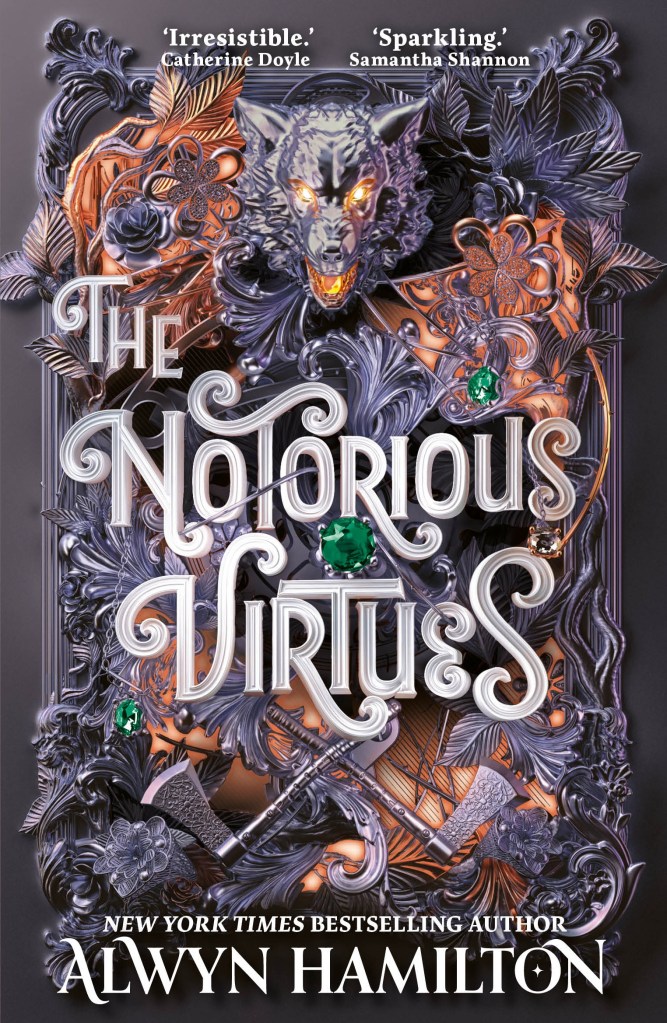
Interview: The Notorious Virtues by Alwyn Hamilton

The Notorious Virtues is 1920’s New York meets Grimm Fairytales. A group of heiresses compete to win their family’s money and magic in a tournament of virtues.

There are so many pieces that came together to make this story. It’s partly inspired by all the folktales of “The King had 3 sons and he sent them on a quest for a McGuffin to decide the heir”.

It’s also inspired by my friend who is a social worker and once pointed out that there is a recurring narrative in fantasy of glorifying a young person’s lost birth parent at the expense of the adoptive parents. It’s very you were raised by peasants but secretly you’re royalty, which is a terrible narrative for adoptive kids or kids in the foster system. She wished that fantasy would include more positive adoption stories. Apparently what I heard was write a story that subverts the narrative of the glorious perfect birth family that makes you special.

Well since you bring up world, one of the number one mistakes I see aspiring fantasy writers make is feeling like they need to have the whole world built before they start writing the story. Yes, of course you need to know some things, but the world will grow as you write it. No matter how prepared you are, you will inevitably hit something you have to invent on the fly. Don’t let building the world stop you from telling the story. Most of the time it’s an excuse.

This book was a built over such a long period of time that I would struggle to tell you what originally was in there and what came in the writing. The character of August is probably the biggest component that came in after I had pitched it. I realized quickly that Nora needed someone to talk to and be her mystery investigator sidekick (August would say she is the sidekick). And I think with him the mystery became a more active part of the book.

A lot of the charms were born from necessity in the world. I think it got cut in editing, but there was a charm that kept high heels from sinking into the grass at garden parties. I have been to enough outdoor weddings that I would gladly take a charmed shoe!

Authors aren’t supposed to have favourites… but my favourite is Nora, also known as Honora Holtzfall, the once heiress apparent trying to win back her place in the family, while also solving her mother’s murder. Nora is such a mix of brains, sass and reckless self-confidence. Writing her, and especially her banter with August, was the most fun.

I’ve heard the saying that you never learn to write a book, you only learn how to write the book you’re currently writing (and the next one is a whole new beast). I think that’s true to an extent, but I have always written better in a café than in my house, so I try to have a rhythm of leaving the house.

I feel like if I reveal anything about book 2 a sniper will appear pointed at my head. I am currently writing it, the fairy tale aspect is way bigger than in book 1, lots of fun creatures to see. And after that I have an idea I am so so so excited by. But we’ll just have to wait to see if I sell it!

New York Times bestselling author Alwyn Hamilton was born in Toronto and spent her early years bouncing between Europe and Canada until her parents settled in France. She moved to the UK when she was 18 and has been here ever since as an author/bookseller. Her first novel Rebel of the Sands was sold in 14 territories and won the Goodreads Choice Award for best debut. Her fourth book The Notorious Virtues will release in 2025. Follow @alwynhamilton on TikTok.

https://www.alwynhamilton.com/

PaperBound Magazine is an online magazine for the young, and the young at heart. We are dedicated to showcasing authors and illustrators for children’s and young adult fiction and we strive to deliver inspiring content, uplifting stories, and top tips for young and aspiring writers yet to burst on to the literary scene.

All our issues are completely free and run by volunteers, however if you would like to support PaperBound and the work we do, you can help us out by buying us a virtual book. We appreciate any support you can give us!

Don’t forget you can read with the latest issues of PaperBound Magazine – completely free – here.

Blog, Blog series, Bookshelf, Interview, Interviews, Writing craft

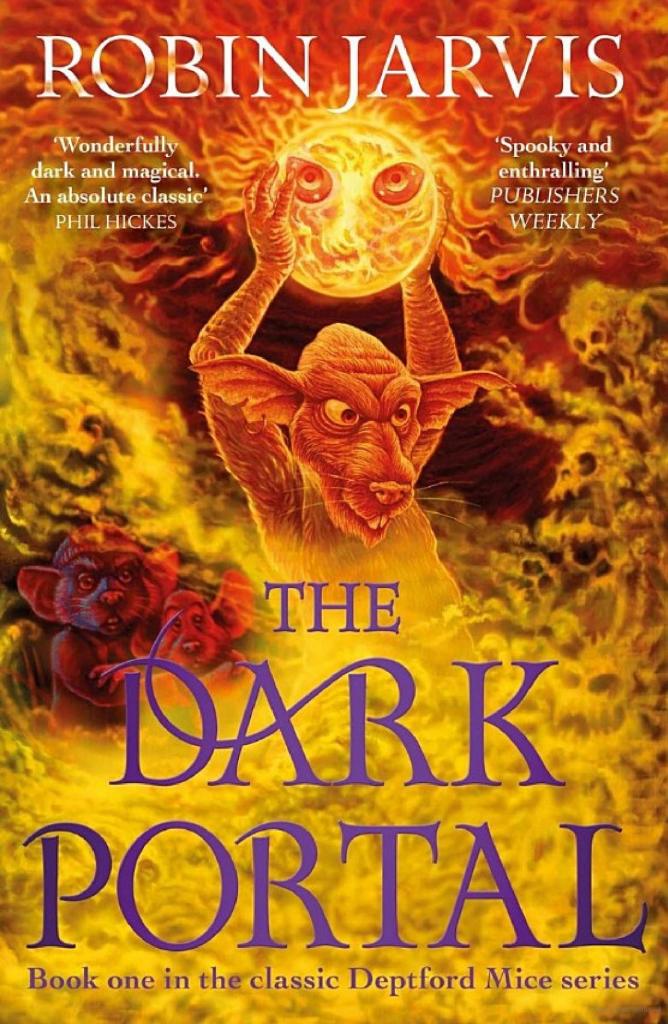
Interview: Robin Jarvis on the relaunch of his popular Deptford Mice series, starting with the release of Book One: ‘The Dark Portal’

Daniel Seton, editor at Pushkin Children’s Books contacted me and said he’d love to reissue the series, as he was a fan of the mice back in the day. It’s also the 35th anniversary too, so it was absolutely the right time and it’s given me the chance to cram as many new illustrations in there as possible.

I was actually a bit nervous at first, as it’s been a while since I last ventured into those Deptford sewers, but the characters have never been far from my thoughts. They really have continued to live out their lives in my head, so I know what they’ve been up to. I hope new readers will be able to dive into that world and be excited and a bit scared by it. I’ve had brilliant feedback already from the original fans who now have children of their own, and it’s been such a pleasure to hear that the stories have stayed with them all this time.

Oh absolutely. The best stories are those with fright and menace in them. The original versions of fairy tales contained some really gruesome aspects, such as the stepsisters hacking off their toes and heels to squeeze their feet into the slipper, or the wicked queen in Snow White being made to wear red hot iron shoes and dance until she dropped dead. When I was young (a very long time ago) I was mad about monsters – still am. The scares in my books are safe scares. The threats are fantastical, the sort you’d never encounter in real life. I like to think of my books as white knuckle reads.

Yes, apart from giving the writing a good old dusting, there were certain things that I wasn’t comfortable with, such as the Raddle sisters, two elderly mice who I originally described as ‘old maids’. Deary me, that had to go. The biggest change was Madame Akkikuyu, over recent years I’ve noticed she’s attracted criticism because some people thought there was a racial element and bolted human concerns onto her. She was a black rat, as in her fur was black, just as Piccadilly’s fur is grey and Oswald’s is white, but they all have pink skin. In fact, if Akkikuyu’s skin wasn’t pink, the tattoo on her ear wouldn’t stand out and that’s the big plot point of The Crystal Prison. Still, I don’t want anyone to get the wrong idea about her, so her fur is now a rich brown instead and the bone with which she stirred her potions has become a key from a tin of corned beef – which is a much better image anyway.

From a young age I watched anything with a monster in and enjoyed escaping into other worlds. The Green Knowe series was a favourite, as was Tolkien.

Just read and absorb everything, until you decide what stories/styles/themes/characters you enjoy the most and that should give you an idea of what you want to do. 

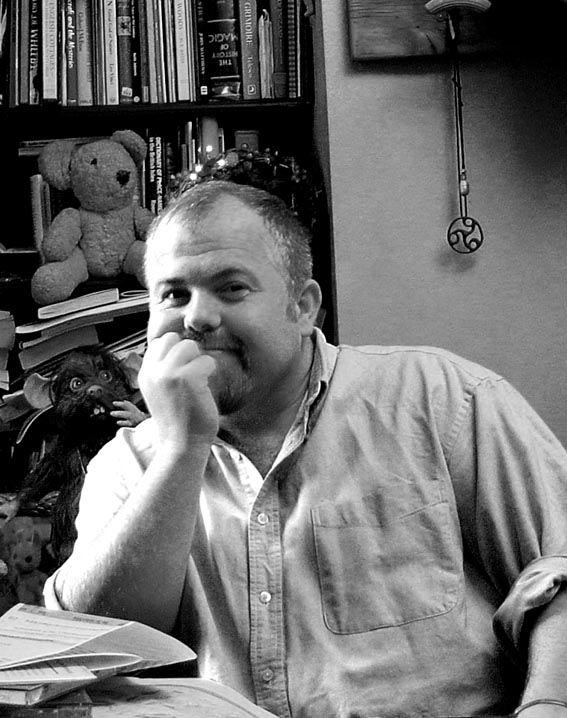
When Robin isn’t writing, he’s probably making something, usually a creature from one of his books to take with him to events and signings. It’s something he’s always done.

Before he started writing, he was a model maker and he gets grumpy if he can’t make something. It’s so much easier now he has a resin printer, no more mess on the kitchen table for weeks on end. At the moment he’s making Madame Akkikuyu, which brings him full circle, as he first made a wearable version of her all the way back at the beginning, 35 years ago. 

PaperBound Magazine is an online magazine for the young, and the young at heart. We are dedicated to showcasing authors and illustrators for children’s and young adult fiction and we strive to deliver inspiring content, uplifting stories, and top tips for young and aspiring writers yet to burst on to the literary scene.

All our issues are completely free and run by volunteers, however if you would like to support PaperBound and the work we do, you can help us out by buying us a virtual book. We appreciate any support you can give us!

Don’t forget you can read with the latest issues of PaperBound Magazine – completely free – here.

Blog, Blog series, Interview, Interviews, Writing craft

Interview: Jennifer Burkinshaw on her new YA book ‘Happiness Seeker’.

Happiness Seeker tells the story of just one week’s sixth form field trip to the beautiful but lethal Morecambe Bay. On her very first afternoon, Allie meets a mysterious lad on the shore which changes the lives of everyone involved. One reviewer has described Happiness Seeker as a ‘thriller-mystery-love story’ which does sum it up its genres neatly; I’d add in ‘tragedy’, as the prologue tells you someone is lost in the vast, dark seas of Morecambe Bay.

Places seem to be what spark a story in me, both in my debut Igloo and Happiness Seeker. Visiting my parents in Grange-over-Sands on Morecambe Bay so often; learning about the history of the Bay and seeing people, every day, still walking out onto the treacherous sands despite all the warning signs. Before my parents even moved there, though, I once took a Drama group to a hostel near Grange to rehearse, which is pretty close to the set up in the novel; however, none of my group broke every rule in the book and we all went home safely.

At the heart of the story is what could be described as a political issue which particularly concerns me, so I recruited the advice of the charity Unseen during my writing process.

Map and plan of the novel’s setting by Douglas McCleery, architecture student

I first started to feel an irresistible pull to write about twenty years ago and knew I had to start to learn the craft, an endless journey, of course. Since I still feel seventeen in my head, writing for young adults was a natural move to me; I love the intensity of feeling you need to create in YA fiction; the need to be immediate and and pacy, as well as reflective; I love how so much of YA fiction deals with first and life-changing experiences for its characters. So, I did an MA in Creative Writing for Children at Manchester Met; after that I joined the Golden Egg Academy and was mentored by Imogen Cooper. I count myself as extremely fortunate that then Debbie McGowan, my genuinely brilliant editor and publisher at Beaten Track, offered to publish my debut, Igloo, and now Happiness Seeker.

As a former Drama teacher, I couldn’t resist creating a group who, having to script a piece for their A Level, choose to write it about Morecambe Bay and the many who have drowned there over the centuries. These past tragedies soon bleed into the present of the story. I also include some reference to Arthur Miller’s A View from the Bridge which Allie is reading that fateful week; Miller is my favourite playwright but, also, the action of his tragedy has some echoes in the story happening ‘now’ in Happiness Seeker.

Map and plan of the novel’s setting by Douglas McCleery, architecture student

What was really tricky was to work out what Mareno would reveal to Allie and when – especially since he has such compelling reasons not to tell her his whole truth. I spent ages thinking what he would least mind Allie knowing and what he’d try to keep from her at all costs. I hope he intrigues the reader; I tried so hard to see him through Allie’s eyes – what draws her to him even as she finds him such a ‘dark horse’.

Allie has a painful rivalry with Courtney, a girl in her drama group who has bullied her since Allie joined the school late in Year 9. To some extent, I am like Allie – quieter, on the fringe of groups and I do remember girls at my single-sex school who could be cutting like Courtney. Allie’s best friend is Finn but unfortunately, he falls for Courtney which causes Allie a lot of heartache. I haven’t experienced having a boy as a best friend but I relished creating their deep friendship which is at the heart of the story just as much as Allie’s new relationships in Grange.

I need to get back to ‘Going West’, a story told from the POV of a member of each of three generations in a family who move from Essex back to the mum’s childhood home in Wales. I’m toying whether to tell some of it in verse …

Jennifer’s debut book is Igloo, a winter coming-of-age story of first love set in the French Alps and Lancashire, where she grew up. Happiness Seeker is her second book.
Now, she’s a bit of a nomad – loves spending time by the sea as much as in the mountains and with her growing family.
You can visit her website here.

PaperBound Magazine is an online magazine for the young, and the young at heart. We are dedicated to showcasing authors and illustrators for children’s and young adult fiction and we strive to deliver inspiring content, uplifting stories, and top tips for young and aspiring writers yet to burst on to the literary scene.

All our issues are completely free and run by volunteers, however if you would like to support PaperBound and the work we do, you can help us out by buying us a virtual book. We appreciate any support you can give us!

Don’t forget you can read with the latest issues of PaperBound Magazine – completely free – here.

Blog, Blog series, Interview, Interviews, Writing craft

Interview: Author Jennifer Claessen chats about her new book ‘The November Witches’.

The November Witches picks up Clemmie’s story immediately after all of the things she did – and feels bad about! – in October. She’s expecting a magic-free month and all of the witches are mostly miserable about it but, of course, magical mayhem is about to ensue. It’s up to Clemmie to learn to speak up for herself and the young hags though, as it’s only together that they can fight back against the fires and knights plaguing them.

Thank you so much! And yes, I was already thinking about Bonfire Night and marshmallows and a strange knight knocking on the door even as I wrote The October Witches! November doesn’t always get the festive love that October and December get but it’s an amazing month for forest walks. I moved house just before writing this book and now live on the edge of an incredible, ever-changing forest which definitely inspired the story.

My family is costume-obsessed so we usually dress up at least three times for Halloween, always cute, never creepy! This year one of our fancy dress outfits was the ‘soot sprites’ from My Neighbour Totoro which was pure chaos and so fun. Toasting marshmallows outdoors is a must of course. Like the Merlyns, I have mixed feelings about fireworks but I love a bonfire. Oh, and Pie Night, like Aunt Connie creates, is essential too! Autumn clothes are the best too – the season begins for me when I put on a scarf and a big pair of boots, or for Clemmie and her coven, a binbag.

In The October Witches, Clemmie wrestles with coming into her power but now, in a magicless November, she’s struggling with using her voice. I write generally knowing the ending as I love a big, busy, bustly finale where the covens get together and finally sort out their problems! I think this is officially a spoiler but, just between us, there’s a dragon in The November Witches, too hot to even touch, and she was a surprise!

I love everything magical! I’m currently reading The Thief of Farrowfell Hall by Ravena Guron which has a really cool magical system as the magic is edible. I love the world which is believable and compelling and the magic itself, though it often sounds disgusting to eat!

I’m always super happy digging deep into some magical research! For the whole ‘A Month of Magic’ trilogy I did lots of reading about the old, wise, male Merlin (versus my young, self-conscious and female Merlyns!) and what happened to him. I’d never even heard of ‘Avalon’ where some Arthurian scholars believe the Once and Future King will still rise again from but became pretty fascinated by it. For The November Witches I went to the Fitzwilliam Museum in Cambridge to be completely surrounded by armour and imagine what it was like to be a knight – mostly pretty uncomfortable it turns out!

Well, now we’re this deep into autumn, we have to finish the trilogy! The December Witches comes out in 2024 and I’ve just had a sneak peek of early cover designs and it is looking gorgeously sparkly and snowy! Writing-wise, I’m working on new myth-inspired tales, this time set in Ancient Greece – and in a summer holiday!

Photo by Jack Barnes

Jennifer was born in Reading and grew up a book worm. She studied literature and theatre at the University of Sheffield, the Chinese University of Hong Kong, Canterbury Christchurch University and Central School of Speech and Drama. A teacher and theatre-maker, Jennifer loves stories, especially for children, whether on stage or page. Jennifer currently works in the West End, taking children to the theatre and lives in the East End with her partner, a Dutch toymaker, and their baby daughter. She loves reading, travel and ice cream. You can find her on her yellow bike or in a red velvet seat in the stalls, applauding.

PaperBound Magazine is an online magazine for the young, and the young at heart. We are dedicated to showcasing authors and illustrators for children’s and young adult fiction and we strive to deliver inspiring content, uplifting stories, and top tips for young and aspiring writers yet to burst on to the literary scene.

All our issues are completely free and run by volunteers, however if you would like to support PaperBound and the work we do, you can help us out by buying us a virtual book. We appreciate any support you can give us!

Don’t forget you can read with the latest issues of PaperBound Magazine – completely free – here.

Blog, Interview, Interviews

Interview: Millie Florence on being a Teenage Published Author, Navigating Negativity, and Middle Grade Book Deals

PaperBound Magazine are thrilled to feature a blog Q&A with author Millie Florence.

This interview has been composed and written by freelance writer Cailey Tin.

Q&A with Millie Florence

You published your debut book, Honey Butter, at age thirteen. What was the process of writing and publishing it like for you? Were there any resources or help you got at the start?

I may not have finished Honey Butter without NaNoWriMo. NaNoWriMo stands for National Novel Writing Month, which is every November. It’s the challenge to write the entire first draft of a novel in thirty days. Their official website provides you with tools to track your word count goal, advice, and inspirational pep talks to keep you motivated. The program was definitely what pushed me to write the first draft of Honey Butter. 
I’ve been obsessed with writing and storytelling for as long as I can remember, but always struggled to finish anything longer than a short story. My goal in writing Honey Butter was to write something a step up from a short story. Something simple and short and sweet, but something I could write with excellence. Something I could be proud of. Although all my projects before this had been epic fantasy and sci-fi novels, for this I purposefully kept myself to a limit of 30k words and a contemporary story set in an ordinary suburban neighborhood. 
I have a video on my YouTube channel about the process of writing Honey Butter, which I highly recommend. I explain everything more eloquently and in depth there, with some advice for young writers who are experiencing the same struggles I did! 
So far, yes, I have read my book reviews, but that’s mostly because there aren’t very many of them. Due to having a smaller number of reviews, there also aren’t many hateful ones. I anticipate receiving a lot more reviews once my traditionally published books are released, because those companies have a built-in audience that I don’t, and it has been on my mind lately, how I should approach reviews once I start getting large numbers of them. 
Abbie Emmons, an author and YouTuber I follow, mentioned getting in a very bad mental place with reviews when her first novel came out. She read every single review for a while, and whether she had a good day or a bad day depended on the reviews she got. Obviously, that’s not healthy. 
I think it’s a balance. You need to be able to take feedback and hear what your readers are saying, but you can’t let it consume your life. It comes down to having confidence in your story. You have to be able to see through both flattery and hate to recognize your story for what is truly is. 
It’s been a really interesting experience, and I love both! I love the control of self-publishing and the fact that I get to be intimately a part of how the book is produced. Still, traditional publishing has a wonderful collaborative nature to it, and it’s amazing to work with such talented and hard-working individuals. The process and experience with traditional publishing can also really change depending on what company you work with. 
In the future, I’ll choose a route depending on what I think each book needs. 
My favorite part of writing is when the characters come to life. If you develop characters well, they’ll sort of start talking and acting on their own, or, to put it in less whimsical terms, you know exactly what they would do or say in any situation. Thus, all you have to do is create the right situations, put your characters in them, sit back, and type as fast as you can. It’s like building a marble run and then experiencing the satisfaction of watching your marble zoom through it exactly as you intended. Those are my favorite scenes to write, with characters bouncing off each other and their environment until they land exactly where they need to be to further the plot. 
Of course, sometimes it’s not that easy. Sometimes you’ve miscalculated the placement of a few pieces in your marble run, and when you put the marble in it falls out off the track, or goes in a different direction entirely. That’s when adjustments need to be made.
I always write my first draft as quickly as possible, which takes one to three months, depending on the length of the draft. I have to strike while the iron is hot, so to speak, and take advantage of that initial burst of inspiration. The drafts after that vary, they can less or more time than the first draft, it all depends on what changes I decide to make. I alternate between receiving feedback from beta readers and author friends, and implementing the changes until I feel that the story is the best it can possibly be! It usually takes me four or five drafts to get there. 
When I’m writing a first draft I spend anywhere from one to five hours a day writing. That’s the most intensive part of the process. Once I get to later drafts progress it a bit more difficult to measure. I’ll often go days or weeks without writing in drafts two and three, but I never stop brainstorming and thinking through the best way to improve the storyline. That way, when I do sit down to write, I don’t spend too much time staring at my blinking cursor. Half the battle is sorting out what I’m going to write. After that, it comes pretty easily to me. 
I always knew I wanted to publish my books someday, so I would say it felt a lot more exciting than intimidating. There was definitely a lot to learn, but I loved every minute of the learning process. I started out by researching publishing in-depth and eventually settled on using Ingramspark for my self-publishing distributor. Later, when I wanted to explore traditional publishing, I did a lot of research on how to query and the different pieces that went into that avenue. 
Getting distracted. Our modern world is full of distractions, and writing, by nature, requires you to be bored enough to come up with your own imaginative entertainment. When social media is always at my fingertips, that can be very difficult. Those distractions have always been a struggle for me, but I learn and grow every day! 
I follow my inspiration, and so far all the story ideas I’ve come up with have been middle-grade! If I get an idea in the future that better lends itself to YA, then yes, I’ll write a YA book, but otherwise, I don’t have any plans to. I do have plans to write more picture books in the future! Picture books are a very special medium to me–they’re like an art gallery and a short story rolled into one. I can’t draw, but I love working with people who can, and I love the challenge that comes with telling a story in such a short format. 
A stage actor. 
I’ve been acting in community theater since I was very young, and I absolutely love it. The collaboration with the cast and crew and the opportunity to bring a character to life is a very special experience. I love working with fellow creative people, and I love putting on a show. There’s something beautiful about hearing your audience’s reaction in real-time, and for a few hours, in one room, a group of strangers are all fully immersed in a story together.
Yes! I’m a big fan of middle-grade, and I always will be. Two books that were influential to me at a young age were Anne of Green Gables by L. M. Montgomery and A Little Princess by Frances Hodgson Burnett. I listened to those two audiobooks over and over and over again when I was little, and they definitely instilled in me a sense of wonder for everyday life, and the importance of imagination and hope. 
One of my favorite quotes about storytelling is “The two most engaging powers of an author are to make new things familiar, and familiar things new.” Anne of Green Gables and A Little Princess are in the category of making familiar things new. 
In the category of making new things familiar, I also grew up reading Harry Potter, The Lord of the Rings, and The Chronicles of Narnia
My favorite book of all time is The Mysterious Benedict Society by Trenton Lee Stewart. It checks all the boxes of everything I love in a middle-grade novel and executes them to near perfection. Mystery and adventure, lively characters, subtly quirky narration, impossible odds, and yet everlasting hope. It’s an adventure that is fun and fantastic, while simultaneously holding great depth and wisdom that leaves a lingering warmth in your chest when you finish. It’s the sort of book I want to write!
Quite honestly, I would say “Don’t worry so much.” 
I’m very passionate and motivated when it comes to my writing, but there is a dark side to that when doubts start to creep in. What if I don’t make it? What if my writing isn’t good? What if it is good but it doesn’t matter because it gets lost on the internet and no one ever reads it? What if I do everything right, but I just wasn’t lucky enough? What if I’m still here in fifteen years? 
But worrying about those questions doesn’t answer them. Doubting if a dream will come true doesn’t make it any more likely to do so. Worrying doesn’t make a difference in the outcome, but it does make a difference in our mood, and not in a good way. What does make a difference in the outcome is excitement and creativity and passion for the stories we write, and you’ll live a happier life along the way. 

Millie Florence

Millie Florence is an adventurous homeschooler who published her first book, ‘Honey Butter’, at age 13, and another middle grade book at age 15. Currently, she has two books on the way. She loves sushi, zip lines, and just about all things yellow. 

Connect with Millie on Instagram: @millieflorenceauthor.

Cailey Tin

Cailey Tin is an interview editor of Paper Crane Journal. She is an Asia-based staff writer and podcast co-host at The Incandescent Review, a columnist in Incognito Press and Spiritus Mundi Review, and her work has been published in Fairfield Scribes, Alien Magazine, Cathartic Lit, and more.
Her work is forthcoming in the Eunoia Review and Dragon Bone Publishing. Visit her Instagram @itscaileynotkylie.

PaperBound Magazine is an online magazine for the young, and the young at heart. We are dedicated to showcasing authors and illustrators for children’s and young adult fiction and we strive to deliver inspiring content, uplifting stories, and top tips for young and aspiring writers yet to burst on to the literary scene.

All our issues are completely free and run by volunteers, however if you would like to support PaperBound and the work we do, you can help us out by buying us a virtual book. We appreciate any support you can give us!

Don’t forget you can read with the latest issues of PaperBound Magazine – completely free – here.

Blog, Blog series, Writing craft

Guest blog post: Patricia Forde on Returning to Speculative Fiction

PaperBound Magazine are thrilled to feature our first ever guest blog post in a series on the craft of writing from established authors.

Take a look to see award-winning author Patricia Forde’s take on writing speculative fiction.

Her new book The Girl Who Fell to Earth is out now.

Patricia Forde: Return to Speculative Fiction

I have always loved speculative fiction. I cut my teeth on Margaret Atwood’s fantastic books and swiftly moved on to writers like Philip Pullman and his amazing Northern Lights series.  

There are many definitions of speculative fiction as a genre, but I see it as all fiction that is not based in the real world. That includes science fiction, fantasy and tales of magic realism.  

In these types of books, writers speculate about other worlds. In my first novel, The Wordsmith, I was looking at a post-apocalyptic world. This was a future version of Earth, showing Ark – a world that was much kinder to the environment, producing energy in natural ways and leaving a very mild footprint on the planet.  

But Ark had its own problems. It was a harsh place for the human spirit. Music was banned, art was banned, and the language of Ark was List – a list of five hundred words. The people in power used the list to suppress free speech and to exercise total control over its people. 

Writing post-apocalyptic fiction is very similar in my head to writing historical fiction. In historical fiction you are writing about a world that was, building on some facts and imagining the rest, and with the other you are writing about a time that might happen in the future. Both demand a certain amount of inventiveness!  

When I was writing The Wordsmith duology, I took some advice from an article I read by Margaret Atwood. Amongst other things, she said that her speculative novels borrowed a lot from history. So, I turned to Irish history and was reminded of the time when the Irish language was being suppressed by the British.  

During Penal times tally sticks were introduced to suppress language.  A stick was hung around a child’s neck, and each time the child spoke Irish at school, a notch was put on the stick and the child received a slap for each notch at the end of the day.  

I took that idea and applied it to the citizens of Ark. Punishment using forbidden words involved the sinner being thrown into the woods to be eaten by wolves!  

In the second book of that duology Mother Tongue, I used the ancient Irish hedge schools as a model for the rebels in Ark to teach language. Some readers might have noticed that the rebels borrowed quite a bit from Michael Collins in their political structure – using small independent cells so that no one group held all the information! 

In my new novel The Girl Who Fell To Earth I returned to the realm of what-if and looked at what might happen if someone from a far more advanced Planet came to Earth.  

Terros is a planet run by scientists, where the environment is protected, and people live forever. Aria, the protagonist, has been brought up to despise humans who are well on the way to destroying their own planet.  When she is sent to Earth on a mission to destroy human life, she finds that, for all their faults, humans have some excellent qualities, and she sets about saving them and herself. 

In this book as in The Wordsmith I want children to get a glimpse of other possibilities, other ways of living, and other ways of co-existing with fellow creatures on their planet. I don’t believe in Utopias and these worlds that I create are far from perfect, but I think all of us, and maybe young people in particular, should be encouraged through literature to explore possibilities, and see that other models of living are possible.  

Some of those models are there to sound a warning; others to encourage a better way of living. 

For me, I don’t think I’ll ever stop wondering what-if and hopefully those musings will inspire me to write more speculative books!

Photo credited to Julien Behal

Patricia Forde

Patricia Forde lives in Galway, in the west of Ireland. She has published many books for children, in Irish and in English, as well as plays, soap operas and television drama series.
In another life, she was a primary school teacher and the artistic director of Galway Arts Festival. Two of her novels with Little Island, Bumpfizzle the Best on Planet Earth and The Wordsmith, a Library Association of America Notable Book for Children (published in the USA by SourceBooks as The List), were awarded White Raven awards by the International Youth Library.
Her picture book To the Island was co-published by Little Island and Galway 2020 European City of Culture. She is the seventh Laureate na nÓg, Ireland’s Children’s Literature Laureate. 

The Girl Who Fell to Earth is out now and published by Little Island.

PaperBound Magazine is an online magazine for the young, and the young at heart. We are dedicated to showcasing authors and illustrators for children’s and young adult fiction and we strive to deliver inspiring content, uplifting stories, and top tips for young and aspiring writers yet to burst on to the literary scene.

All our issues are completely free and run by volunteers, however if you would like to support PaperBound and the work we do, you can help us out by buying us a virtual book. We appreciate any support you can give us!

Don’t forget you can read with the latest issues of PaperBound Magazine – completely free – here.

Blog, Interview, Interviews

Interview: Julia Turk talks her Debut Trilogy, Writing Dystopian Novels, & Publishing Deals

PaperBound Magazine are thrilled to feature a blog Q&A with sci-fi and fantasy author Julia Turk.

This interview has been composed and written by freelance writer Cailey Tin.

Q&A with Julia Turk

What was the core idea that inspired your debut novel, Lone Player? And its name is also super cool, where did you get it from? ?

I found my inspiration for Lone Player when I was about twelve years old. I was scrolling through Pinterest and found a photo of a playing card tattoo that I really liked. It got me thinking – what if everyone had playing card tattoos? What would that society look like? I eventually tied in population control, and after that I developed the system of Running and Chasing.
While this is what inspired the world-building aspects for me, at its core, I suppose the main thing that inspired Lone Player was the concept of a Runner and a Chaser actually knowing each other. I was really interested in this relationship dynamic. I kept thinking, how can you unlearn that kind of hate? Or is there even hate there to begin with? I wondered what would drive a person to Run or Chase in the first place, even if they knew the consequences, which is how I eventually came up with the relationship between Ren and Eddie.
As far as the title goes, it actually took me quite a bit of time to find one that I felt suited the book best. I tested out a lot of different names, but I didn’t come up with Lone Player until I was scrolling through a list of playing card terms, and that one immediately caught my eye. The term refers to an independent card player, essentially, and I thought it really tied into the overall theme of the book. 

When did you know that you wanted to be an author? Did you write any books before Lone Player ?

I’ve been a writer for as long as I can remember. I’ve spent my whole life planning story ideas and starting books I never finished. Storytelling is just something I’ve always done and I’ve never not been writing something.
I’ve always wanted to publish a book. However, in terms of my career, I didn’t realize I wanted to be a professional author until quarantine. I grew up wanting to be a marine biologist so I could study cartilaginous fishes (sharks, rays, etc.), but after my chronic Lyme disease and co-infections took a turn for the worst in the middle of my sophomore year in high school (which was also the start of quarantine), I realized a physically-demanding job like that might not have been too realistic for me, especially after I had a couple of major leg surgeries. Plus, while I love science, I hate the math that comes with it.
So during this time, when I was about fifteen, I realized I wanted to be an author instead. Writing was the perfect solution. It was flexible enough to work around my illness and bad legs, and I just really felt drawn to it. Maybe I’ll do something else on the side someday to keep me busy— like working the front desk of some haunted Victorian-style inn or antique shop— but writing is at the centre of what I want to do.
I haven’t written any books before Lone Player. As I mentioned before, I grew up writing, but I never actually finished an entire project until this book. I don’t think I would have finished it if it weren’t for the Lost Island contest, which gave me the deadline and pressure I needed to get over my fears and simply write. I still can’t believe my very first (and very rough) manuscript won, but to me, it’s an important symbol of what might happen if you do things that scare you now and then.  

What would you say is your interesting writing quirk?

I’d say my most interesting writing quirk is the fact that I dream in stories. A lot of book ideas come to me in my sleep. Sometimes it’s literally like I’m watching a movie. There are characters played by actors, plots, movie trailers, a soundtrack, even a credits sequence at the end. It’s really bizarre. One of my most vivid ones even has its own folder in my Google Drive as a potential writing project.

What is the most difficult part of being a writer for you?

For me, the most difficult part of being a writer is the insecurity. Thanks to my anxiety and OCD, I struggle with a really bad imposter’s syndrome. I always feel like the things I’m writing make no sense, or that I’m upsetting people, or that I’m just not good. Another thing I worry about is that my story has already been written, or that it’s too simple.
There are so many worries a person can have as an author, especially if you’re a perfectionist like me. But by writing through the worries, I’ve learned a lot about how to handle my fears and perfectionism. The best thing you can do if you struggle with something similar is to write anyway, even if it’s scary. 

Since you’re also an avid reader, what books inspired aspects of your own projects? Do you read the same genres you write?  

Yes, I’m definitely an avid reader! Scythe, The Fifth Wave, and The Hunger Games were definitely huge inspirations for Lone Player, since I read those books in middle school (around the same time that I developed the idea for LP).
I usually read the same genres I write, mostly fantasy. But I’ve also been enjoying a few contemporary romances lately, which isn’t something I expected. 

On the topic of books, who are your favourite authors and what aspect of their writing do you admire the most?  

My favorite authors include Holly Black of course, Brandon Sanderson, and Margaret Rogerson, among many others. I love the characters and fairy folklore in Holly Black’s work, the world-building and intricate plots in Brandon Sanderson’s, and the really immersive, almost Ghibli-esque quality of Margaret Rogerson’s writing.

If you could tell your younger self anything writing related – whether it be publishing advice, drafting tips, anything, what would it be?

If I could tell my younger self anything writing-related, I think I’d tell myself to just write. I know you’re afraid. I know you’re scared of getting things wrong or not being good enough. But write anyway, because there is no such thing as bad writing. You can’t edit a blank page, and you can’t improve without actually getting the words out first. Always remember that writing is healing, and writing is growth—and it’s okay to do things that scare you every now and then. 

Julia Turk

Julia Rosemary Turk is an author and artist based in Northern California. She loves all things creative, and she spends her days downing matcha lattes and writing stories. Julia is the winner of the Lost Island writing contest and will have her debut novel, Lone Player, published by Lost Island Press this July 2023.

In addition to writing, Julia loves spending time with family, playing cosy games, and listening to indie rock. She’s been battling chronic Lyme disease since childhood and considers her illness a crucial part of her identity. 

Connect with Julia on her website, her own blog, and follow her on Instagram: @juliarosemaryturk.

Cailey Tin

Cailey Tin is an interview editor of Paper Crane Journal. She is an Asia-based staff writer and podcast co-host at The Incandescent Review, a columnist in Incognito Press and Spiritus Mundi Review, and her work has been published in Fairfield Scribes, Alien Magazine, Cathartic Lit, and more.
Her work is forthcoming in the Eunoia Review and Dragon Bone Publishing. Visit her Instagram @itscaileynotkylie.

Lone Player is out now and published by Lost Island Press.

PaperBound Magazine is an online magazine for the young, and the young at heart. We are dedicated to showcasing authors and illustrators for children’s and young adult fiction and we strive to deliver inspiring content, uplifting stories, and top tips for young and aspiring writers yet to burst on to the literary scene.

All our issues are completely free and run by volunteers, however if you would like to support PaperBound and the work we do, you can help us out by buying us a virtual book. We appreciate any support you can give us!

Don’t forget you can read with the latest issues of PaperBound Magazine – completely free – here.

Blog, Interviews

Interview with YA author Julia Tuffs

PaperBound caught up with YA author Julia Tuffs to chat all about her debut novel, HEXED! Join us as we discover more about Julia’s writing, her top current reads, and how she came up with the idea for HEXED.

You can catch the full interview and all other issues of PaperBound FREE here.

Can you tell us a little about your novel, Hexed

Hexed is about Jessie Jones; new girl, witch and accidental activist. Jessie’s life is turned upside down when her mum suddenly moves the family back to her home town on the Isle of Wight. All Jessie wants to do is fade into the background, coast and avoid the attention of school douchebag Callum Henderson and his toxic cronies, but when strange and uncontrollable magical powers start to manifest during her period, flying under the radar becomes impossible. Hexed is about finding your place and your power and learning to love your differences. 

Your novel deals with important and timely themes, such as sexism and toxic masculinity, and easily puts the reader in Jessie’s shoes. What inspired you to write about these issues? 

Donald Trump – amongst other things! It was really painful to watch as someone who had boasted about grabbing women’s genitals was elected president and it was a moment in time that highlighted how little society values women and women’s rights. I wanted to write something that looked at how ingrained it is in all aspects of society – our schools, our media, our courts, our government – but I wanted it to be relatable and focus on what all girls experience and are forced to navigate through on a day to day basis. 

These themes are woven into a story about witchcraft. Can you tell us how you came up with the idea to combine these two things? 

I was thinking about the recent surge in our reproductive rights being threatened and all the ways men in power try to control women and women’s bodies (Britney, how can we help?!) and that led me to the witch trials; the way women were strip searched for Devil’s marks and how anyone single or widowed could be suspected and tried. Even today, like hundreds of years ago, if women don’t fit into a prescribed box – if we dare to be angry or outspoken or stray out of our lane – we’re labelled and shamed. I found the parallel interesting (and terrifying) and I loved the idea of that which makes us different actually making us stronger – which is how the period witch idea came about – wearing a super plus but being able to magic up your dinner and punish nasty boys! 

The setting of Hexed is vividly portrayed. Did you always plan on setting it on the Isle of Wight? What was it about this setting that you were drawn to? 

I love the Isle of Wight! My husband is from the Island and we lived there for a few years when our children were small. It’s such a unique setting – beautiful in places, 1950s seaside in other places, removed from the mainland and with a population that doubles over the summer. I wanted to explore how someone would feel moving there from a big city, especially if that person was trying so desperately hard to be invisible – which is basically impossible in a small town setting where everyone knows everyone and it’s harder to escape! I also loved the idea of being on Jessie’s journey with her as she falls in love with the Island and begins to appreciate how special it is.   

Can you sum up your novel in 3 words? 

Funny, feisty, feminist. 

What’s the one thing you’d wished you’d known before becoming a writer? 

That it’s a rollercoaster of emotions and A LOT of waiting – waiting for edits, waiting for news, waiting until you’re allowed to announce news, waiting for publication day… 

What are your top reads from the last year (MG or YA), and why? 

Oooh, this is hard – there have been so many good books! For YA, I’d say The Yearbook by Holly Bourne which is in her typical style of being frank and funny whilst also dealing with serious issues and Afterlove by Tanya Byrne which is a gorgeous and heartbreaking love story.  

After a brief (but fun) stint working in television and as a primary school teacher, Julia decided to take her writing dreams more seriously. She lives in South-West London with her family and ragdoll cats (Billy and Nora) and spends her time writing, reading, dreaming of holidays and watching too much reality TV. She aims to write the kinds of books that shaped and inspired her as a teenager. HEXED is her debut novelYou can keep up to date with Julia on Twitter, Instagram and by visiting her website.

HEXED was released in July 2021 by Hachette. It is available NOW in the UK and Australia. 

Don’t forget you can catch up with the latest issues of PaperBound Magazine here. All our issues are completely free and run by volunteers, however if you would like to support PaperBound and the work we do, you can help us out by buying us a virtual book. 

Interviews

Interview with Caroline Logan

We chatted with author Caroline Logan about her YA fantasy series, The Four Treasures, in the Winter 2020 issue of PaperBound. Read on to discover more about Caroline’s books and what inspires her writing …

Can you tell us more about The Four Treasures series and what readers can expect?

A few years ago, I got an idea for a story based on Scottish legends. I read a lot of Young Adult Fantasy but hadn’t really seen mythology represented. Originally, the story was supposed to be covered over one book but once I started plotting it out, I knew it would take a series to do it justice. I immediately knew what would happen in the first and second books, but then I had to make a decision about whether it would be a trilogy or a quadrilogy. Around that time, I stumbled upon the legend of The Four Treasures (which is actually an Irish story) and since my lucky number is four, I took it as a sign and plotted the other two books. 

The first book, The Stone of Destiny, is about a quest to find a magical stone, to save the kingdom and guarantee the safety of the king. But it’s actually so much more than that and I think people are always surprised when they read it. It’s really about the main character, Ailsa, who has been shunned all of her life by superstitious neighbours. She saves a pair of selkies who convince her to help them find the stone. But, meanwhile, something terrifying is stalking Ailsa through the forests of Eilanmor. There’s friendship, romance, action, and many monsters (my favourite things to write).

Have you always wanted to become a writer? How did you start?

No, I never thought I’d become a writer. English wasn’t my strong suit in school – I was much more suited to maths, science and art. I didn’t like dissecting poetry and hated writing essays. It wasn’t until I got back into reading again that I started thinking about writing. I had a New Year’s Resolution to read a book a week. By the end of the year, I wanted to give my own story a try. 

I started by coming up with characters, a plot and by building my world. That’s the best bit of writing a book in my opinion. I watched Youtube videos on writing and read blog posts. Then I just started. I didn’t think I would ever finish and I especially didn’t think anyone would ever read it. But a few years later, here I am with one book out and another on the way!

Did you have to do a lot of research into Scottish myths and folklore, or history, to write these books?

I already knew quite a few myths but I had to dig a little deeper when writing the book. There are often different versions of the same story, so I just chose the ones I liked best. Sometimes I’ll add a twist to them, like the selkie’s water magic. Sometimes I’ll just make something up. When I was in primary school, my friends and I pretended there were bog monsters in the mud, waiting to steal your wellies, so I put them in the book. I reckon it still counts – I am Scottish after all, so I can make Scottish myths!

In terms of history, originally I was going to set the books in a certain time period, but nothing was really lining up and I wouldn’t have been able to give my characters kilts or have them eat curry. That’s why I decided to set it in a fictional land based on Scotland. I always joke that I just couldn’t be bothered researching all the history.

The main character in The Stone of Destiny, Ailsa, is treated differently from a young age because of the way she looks. Is there anything you hope readers can take from this?

I really wanted to have interesting, diverse characters to set them apart from other medieval based fantasy books. Though all my characters in book 1 are white, I hope they all have distinctive features and personalities. As we move through the books, we’ll start to meet people from different places other than Eilanmor and the cast will become even more diverse. Hopefully, it conveys the message that if you broaden your horizons and meet people from different places, with different sexualities and gender identities, and abilities, your life will be better for it.

When I was creating my main character, I wanted someone who felt like an outcast. The Changeling Mark was another myth I’d heard about and when I saw this picture of a beautiful woman with a birthmark on her face, it all just clicked into place. I think Ailsa’s struggle is something we can all identify with. I believe that everyone has the experience of feeling left out at some point in their lives, so hopefully I made a main character who was relatable and could show the reader that being yourself is better than being another face in the crowd.

What do you love most about writing? What comes next for you and your books?

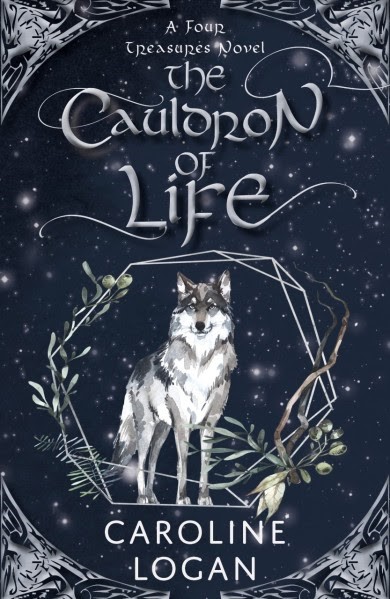
I love coming up with plots and characters. I really don’t like the actual writing part that much but it’s just part of telling the story. I have a four book contract with Cranachan Publishing. The Cauldron of Life, the second in the series, was released in October. Meanwhile, I’ll be writing Book 3 which will be out in 2021.

I have a few side projects on the go, but I just don’t have the time for them right now. One is inspired by the Gorbals Vampire legend, another is a fairytale retelling of The Twelve Dancing Princesses set in Ancient Egypt, and the last is an adult Science Fiction Western that’s about a gang of female criminals on the hunt for treasure. Maybe when The Four Treasures Series is finished, I’ll be able to get on with those.

How will you be spending the winter season?

Playing with my dogs: Ranger and Scout. I know it’s a bit cringey, but they really are my babies. I’ll also be up to my eyes in school work. I’m a secondary biology teacher and I have a lot of senior classes this year. It’s been a challenge working through the pandemic but I’m so glad to see my students again. I don’t think I’ve laughed so much in months.

Writing prompt:

You explore a hidden cave and discover two portals. One will take you to a beautiful place with a terrifying secret. The other will take you to a dangerous place with a great treasure.

Write about which one you would choose and what you see when you step through the door.

We’d love to read what you come up with. Send your stories here: paperboundmagazine@outlook.com

We may even print it in a future issue!

Caroline is a YA fantasy author. Her debut novel, The Stone of Destiny, is the first in The Four Treasures series. Caroline is a high school biology teacher who lives in the Cairngorms National Park in Scotland, with her husband. Before moving there, she lived and worked in Spain, Tenerife, Sri Lanka and the West Coast of Scotland. She graduated from The University of Glasgow with a bachelor’s degree in Marine and Freshwater Biology. In her spare time she tries to ski and paddle board, though she is happiest with a good book, a cup of tea and her dogs.

You can keep up to date with Caroline by visiting her website, or by following her on Twitter and Instagram.

The Stone of Destiny and The Cauldron of Life are both available to purchase now!

Don’t forget you can catch up with the latest issues of PaperBound Magazine here – and they’re all completely free!