Blog, Blog series, Interview, Interviews, Writing craft

Interview: Children’s Author Emma Read on ‘The Housetrap’

Of course! The Housetrap is a spooky, Scooby Doo-esque adventure where four almost-friends find themselves trapped in a strange house in the woods. The house is set for an escape room style party but for some reason it doesn’t want to let the kids go … it has other plans for them. The team have to unravel multiple mysteries and at the same time attempt to solve the puzzles and riddles left by the architect of the house, in a desperate effort to escape. The only thing they have in their favour is that they are alone in there …  

Or are they? 

For readers 9+ who like mystery, puzzles, adventure, and the odd jump scare. 

In addition to the creepy words (by me) the illustrations on the cover and interior are by Coralie Muce.

The editing process on The Housetrap was something of a metaphor for the book, in that it was a twisty, turny puzzle that needed unlocking, disassembling, and slotting back into place the right way round! I couldn’t have done any of it without my brilliant agent, Lauren Gardner, and my editor at Chicken House, Kesia Lupo who both helped me make it make sense.  

I’m not a natural plotter, although I usually formulate a rough plan in advance (plot points, pinch points etc); when it comes to writing I love the discovery approach – it’s a bit like wandering through a maze—or a house—that keeps changing and revealing new secrets. No spoilers, but there is one item in the book that the kids need to find, and I only worked out where it was by writing all the way to the end! It’s a fun method that works for me, but it does mean edits are usually hard work!  

Places I’ve been, and seen, always find their way into my books, and The Housetrap is no exception. The idea for the house itself, and the entire story really, came from a beautiful but declining hotel in Rome. Haphazardly built, it had several mezzanine levels, rooms that were unexpectedly connected, and stairs that didn’t seem to go where you thought they should.

As I wrote, I augmented it with fictional houses and hotels (the Overlook won’t be a surprise, I’m sure!) But it was another, real-life, hotel which lent the finishing touches, including all the taxidermy animals and mounted deer heads. This was another, past-its-best building, hidden in the New Forest in Hampshire (a forest created for a king, like Badwell Woods in the novel.) 

The Housetrap is set in Suffolk, where I grew up, which is home to Thetford forest – a magnificently huge place, which, when I was a child, I truly believed a person could get lost in forever. 

Character-wise, I think the only one who is drawn from life is Deliah. There is a lot of me in her – like her I was embarrassed of being smart; I thought it made other people uncomfortable so I masked it … being clever wasn’t cool where I went to school! In Deliah I wanted to create a character who could work through those feelings and grow to be proud of her intelligence. 

In Milton the Mighty/Megastar, I was keen to show the characters as realistically as possible, their spidery movement, physiology and, as much as possible within the bounds of the story, their behaviour. In The Housetrap, there’s not a lot of science directly on the page, but I still examine all my scenes to make sure they are logical, within the rules of whatever supernatural power is in play.

More generally, I find a wealth of story inspiration in science, from pure sci-fi ideas, to cli-fi, to the natural world and way beyond: the first story I ever had published was inspired by a conversation about ghosts on The Infinite Monkey Cage (a science comedy podcast with Professor Brian Cox) which makes it feel like I’ve come full circle! 

It might seem anathema to some to consider writing a competitive sport, but as an aspiring writer, I entered every comp going! My first win was a Twitter micro fiction competition (back in the days of 140 characters!) and I kept going until I hit the amazing heights of the BCNA shortlist. Writing competitions aren’t for everyone – the odds are not ever in your favour and the likelihood is you will fail. And if you do list, or even win, there are no guarantees of success.

But … if you can stomach with that, competitions provide interesting benefits (besides the chance to walk away with a prize). They are great motivators, providing hard deadlines of the sort you might get from a publisher; they force you to scrutinise your work, helping you become a better editor; and they acclimatise you to having professionals read your work and, if you’re lucky, critique it.  

If you’re going to enter competitions, my advice is to try and enter with friends; turn it into a team sport, where successes can be vicarious, and failure can be shared and contextualised. Also, be clear on why you’re entering and manage your expectations. What do you hope to accomplish? Achieving a listing, or a notable mention is a fantastic addition to your query letter, and getting used to rejection will set you in good stead for any writing journey. 

When it comes to The Housetrap, my main desire is for readers to have fun. I wanted to write a thrilling adventure, something that makes you gasp and squeal, with delight and just a little bit of terror – like riding your bike super fast downhill. But there are some messages to take away too – I’ve already mentioned Deliah’s smarts, but also I want readers (perhaps especially girls) to see that maths has value. I volunteer at my local primary school, helping out with maths and I see too many girls in KS2 with self-imposed barriers to the subject. I hope the book speaks to them, just a little. 

More broadly, appropriately scary books can be beneficial to children’s emotional development. There are a lot of studies across this subject but in a nutshell, readers can experience fear, almost practice it, in a safe environment and learn to recognise their own personal tolerance for risk. One of my favourite pieces of feedback for the book has been from readers wondering what they would do in the same situation. How would they respond, how would they escape? Allowing readers a ‘run-through’ like this, of their feelings, allows them to be challenged and grow emotionally, in a safe environment. 

As much as I’d love to scare the living daylights out of Deliah and the gang again, in all likelihood it’s probably not going to happen. If there were to be a sequel, I do have a seed of an idea as to what that might look like, so never say never – it might turn up as a short story or a freebie on my Substack!  

Emma Read is the author of The Housetrap, and the Milton series (Chicken House), including Milton the Mighty, one of The Times Best Children’s Books of 2019 and shortlisted for the Bath Children’s Novel Award.
She loves all things spooky (and spidery!) and can often be found walking through her local graveyard … but only in daylight. Like Mark Gatiss, she doesn’t believe in ghosts, but is scared of them. Connect with Emma at @emmydee73 (Twitter), @ediereadie (Instagram), subscribe at emmaread.substack.com/ for exclusive content, and get in touch at emmareadauthor.com   
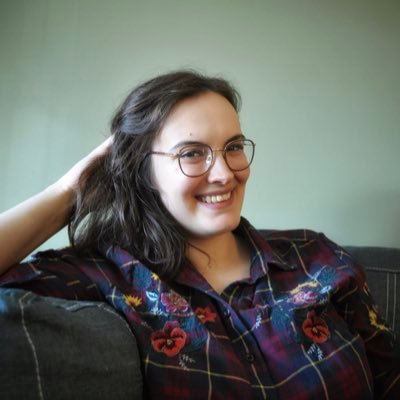
Like his career, Steve’s writing is filled with tech and engineering, although his speculative thrillers tend to have higher stakes and fewer meetings. Before he found himself advising companies on digital transformation, Steve was a copywriter, a magazine editor, a communications director, a product designer and a webcaster, though not at the same time. Home is South London, where he lives with his wife and teenage daughters. They wish he’d stop saying, ‘What if…’

Stay tuned for Steve’s review of The Housetrap in our autumn/winter issue, coming soon!

PaperBound Magazine is an online magazine for the young, and the young at heart. We are dedicated to showcasing authors and illustrators for children’s and young adult fiction and we strive to deliver inspiring content, uplifting stories, and top tips for young and aspiring writers yet to burst on to the literary scene.

All our issues are completely free and run by volunteers, however if you would like to support PaperBound and the work we do, you can help us out by buying us a virtual book. We appreciate any support you can give us!

Don’t forget you can read with the latest issues of PaperBound Magazine – completely free – here.

Blog, Interview, Interviews

Interview: Millie Florence on being a Teenage Published Author, Navigating Negativity, and Middle Grade Book Deals

PaperBound Magazine are thrilled to feature a blog Q&A with author Millie Florence.

This interview has been composed and written by freelance writer Cailey Tin.

Q&A with Millie Florence

You published your debut book, Honey Butter, at age thirteen. What was the process of writing and publishing it like for you? Were there any resources or help you got at the start?

I may not have finished Honey Butter without NaNoWriMo. NaNoWriMo stands for National Novel Writing Month, which is every November. It’s the challenge to write the entire first draft of a novel in thirty days. Their official website provides you with tools to track your word count goal, advice, and inspirational pep talks to keep you motivated. The program was definitely what pushed me to write the first draft of Honey Butter. 
I’ve been obsessed with writing and storytelling for as long as I can remember, but always struggled to finish anything longer than a short story. My goal in writing Honey Butter was to write something a step up from a short story. Something simple and short and sweet, but something I could write with excellence. Something I could be proud of. Although all my projects before this had been epic fantasy and sci-fi novels, for this I purposefully kept myself to a limit of 30k words and a contemporary story set in an ordinary suburban neighborhood. 
I have a video on my YouTube channel about the process of writing Honey Butter, which I highly recommend. I explain everything more eloquently and in depth there, with some advice for young writers who are experiencing the same struggles I did! 
So far, yes, I have read my book reviews, but that’s mostly because there aren’t very many of them. Due to having a smaller number of reviews, there also aren’t many hateful ones. I anticipate receiving a lot more reviews once my traditionally published books are released, because those companies have a built-in audience that I don’t, and it has been on my mind lately, how I should approach reviews once I start getting large numbers of them. 
Abbie Emmons, an author and YouTuber I follow, mentioned getting in a very bad mental place with reviews when her first novel came out. She read every single review for a while, and whether she had a good day or a bad day depended on the reviews she got. Obviously, that’s not healthy. 
I think it’s a balance. You need to be able to take feedback and hear what your readers are saying, but you can’t let it consume your life. It comes down to having confidence in your story. You have to be able to see through both flattery and hate to recognize your story for what is truly is. 
It’s been a really interesting experience, and I love both! I love the control of self-publishing and the fact that I get to be intimately a part of how the book is produced. Still, traditional publishing has a wonderful collaborative nature to it, and it’s amazing to work with such talented and hard-working individuals. The process and experience with traditional publishing can also really change depending on what company you work with. 
In the future, I’ll choose a route depending on what I think each book needs. 
My favorite part of writing is when the characters come to life. If you develop characters well, they’ll sort of start talking and acting on their own, or, to put it in less whimsical terms, you know exactly what they would do or say in any situation. Thus, all you have to do is create the right situations, put your characters in them, sit back, and type as fast as you can. It’s like building a marble run and then experiencing the satisfaction of watching your marble zoom through it exactly as you intended. Those are my favorite scenes to write, with characters bouncing off each other and their environment until they land exactly where they need to be to further the plot. 
Of course, sometimes it’s not that easy. Sometimes you’ve miscalculated the placement of a few pieces in your marble run, and when you put the marble in it falls out off the track, or goes in a different direction entirely. That’s when adjustments need to be made.
I always write my first draft as quickly as possible, which takes one to three months, depending on the length of the draft. I have to strike while the iron is hot, so to speak, and take advantage of that initial burst of inspiration. The drafts after that vary, they can less or more time than the first draft, it all depends on what changes I decide to make. I alternate between receiving feedback from beta readers and author friends, and implementing the changes until I feel that the story is the best it can possibly be! It usually takes me four or five drafts to get there. 
When I’m writing a first draft I spend anywhere from one to five hours a day writing. That’s the most intensive part of the process. Once I get to later drafts progress it a bit more difficult to measure. I’ll often go days or weeks without writing in drafts two and three, but I never stop brainstorming and thinking through the best way to improve the storyline. That way, when I do sit down to write, I don’t spend too much time staring at my blinking cursor. Half the battle is sorting out what I’m going to write. After that, it comes pretty easily to me. 
I always knew I wanted to publish my books someday, so I would say it felt a lot more exciting than intimidating. There was definitely a lot to learn, but I loved every minute of the learning process. I started out by researching publishing in-depth and eventually settled on using Ingramspark for my self-publishing distributor. Later, when I wanted to explore traditional publishing, I did a lot of research on how to query and the different pieces that went into that avenue. 
Getting distracted. Our modern world is full of distractions, and writing, by nature, requires you to be bored enough to come up with your own imaginative entertainment. When social media is always at my fingertips, that can be very difficult. Those distractions have always been a struggle for me, but I learn and grow every day! 
I follow my inspiration, and so far all the story ideas I’ve come up with have been middle-grade! If I get an idea in the future that better lends itself to YA, then yes, I’ll write a YA book, but otherwise, I don’t have any plans to. I do have plans to write more picture books in the future! Picture books are a very special medium to me–they’re like an art gallery and a short story rolled into one. I can’t draw, but I love working with people who can, and I love the challenge that comes with telling a story in such a short format. 
A stage actor. 
I’ve been acting in community theater since I was very young, and I absolutely love it. The collaboration with the cast and crew and the opportunity to bring a character to life is a very special experience. I love working with fellow creative people, and I love putting on a show. There’s something beautiful about hearing your audience’s reaction in real-time, and for a few hours, in one room, a group of strangers are all fully immersed in a story together.
Yes! I’m a big fan of middle-grade, and I always will be. Two books that were influential to me at a young age were Anne of Green Gables by L. M. Montgomery and A Little Princess by Frances Hodgson Burnett. I listened to those two audiobooks over and over and over again when I was little, and they definitely instilled in me a sense of wonder for everyday life, and the importance of imagination and hope. 
One of my favorite quotes about storytelling is “The two most engaging powers of an author are to make new things familiar, and familiar things new.” Anne of Green Gables and A Little Princess are in the category of making familiar things new. 
In the category of making new things familiar, I also grew up reading Harry Potter, The Lord of the Rings, and The Chronicles of Narnia
My favorite book of all time is The Mysterious Benedict Society by Trenton Lee Stewart. It checks all the boxes of everything I love in a middle-grade novel and executes them to near perfection. Mystery and adventure, lively characters, subtly quirky narration, impossible odds, and yet everlasting hope. It’s an adventure that is fun and fantastic, while simultaneously holding great depth and wisdom that leaves a lingering warmth in your chest when you finish. It’s the sort of book I want to write!
Quite honestly, I would say “Don’t worry so much.” 
I’m very passionate and motivated when it comes to my writing, but there is a dark side to that when doubts start to creep in. What if I don’t make it? What if my writing isn’t good? What if it is good but it doesn’t matter because it gets lost on the internet and no one ever reads it? What if I do everything right, but I just wasn’t lucky enough? What if I’m still here in fifteen years? 
But worrying about those questions doesn’t answer them. Doubting if a dream will come true doesn’t make it any more likely to do so. Worrying doesn’t make a difference in the outcome, but it does make a difference in our mood, and not in a good way. What does make a difference in the outcome is excitement and creativity and passion for the stories we write, and you’ll live a happier life along the way. 

Millie Florence

Millie Florence is an adventurous homeschooler who published her first book, ‘Honey Butter’, at age 13, and another middle grade book at age 15. Currently, she has two books on the way. She loves sushi, zip lines, and just about all things yellow. 

Connect with Millie on Instagram: @millieflorenceauthor.

Cailey Tin

Cailey Tin is an interview editor of Paper Crane Journal. She is an Asia-based staff writer and podcast co-host at The Incandescent Review, a columnist in Incognito Press and Spiritus Mundi Review, and her work has been published in Fairfield Scribes, Alien Magazine, Cathartic Lit, and more.
Her work is forthcoming in the Eunoia Review and Dragon Bone Publishing. Visit her Instagram @itscaileynotkylie.

PaperBound Magazine is an online magazine for the young, and the young at heart. We are dedicated to showcasing authors and illustrators for children’s and young adult fiction and we strive to deliver inspiring content, uplifting stories, and top tips for young and aspiring writers yet to burst on to the literary scene.

All our issues are completely free and run by volunteers, however if you would like to support PaperBound and the work we do, you can help us out by buying us a virtual book. We appreciate any support you can give us!

Don’t forget you can read with the latest issues of PaperBound Magazine – completely free – here.

Blog, Interview, Interviews

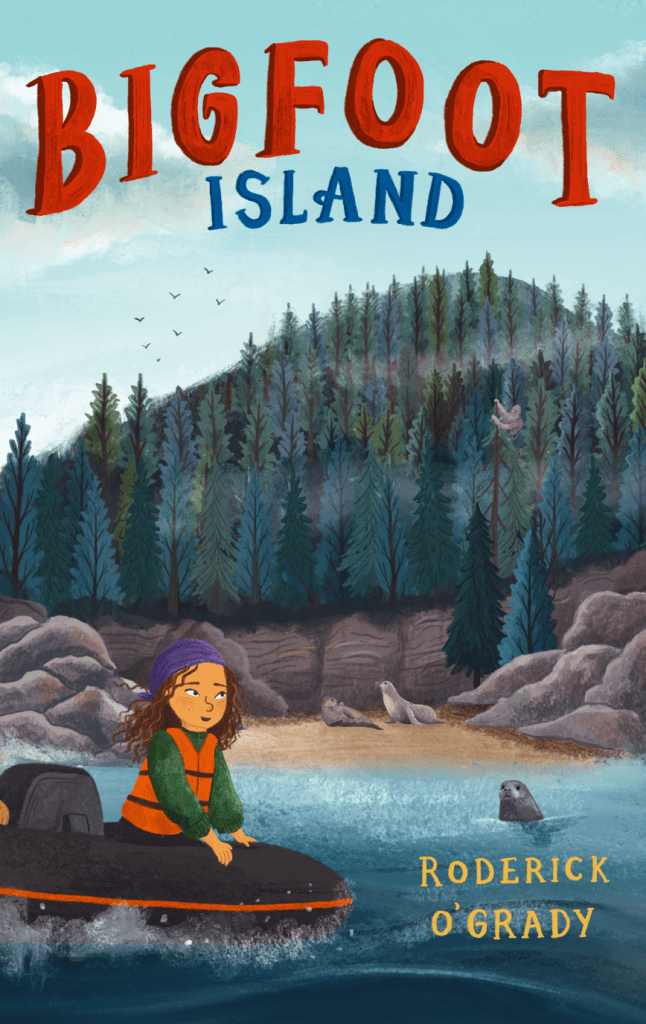
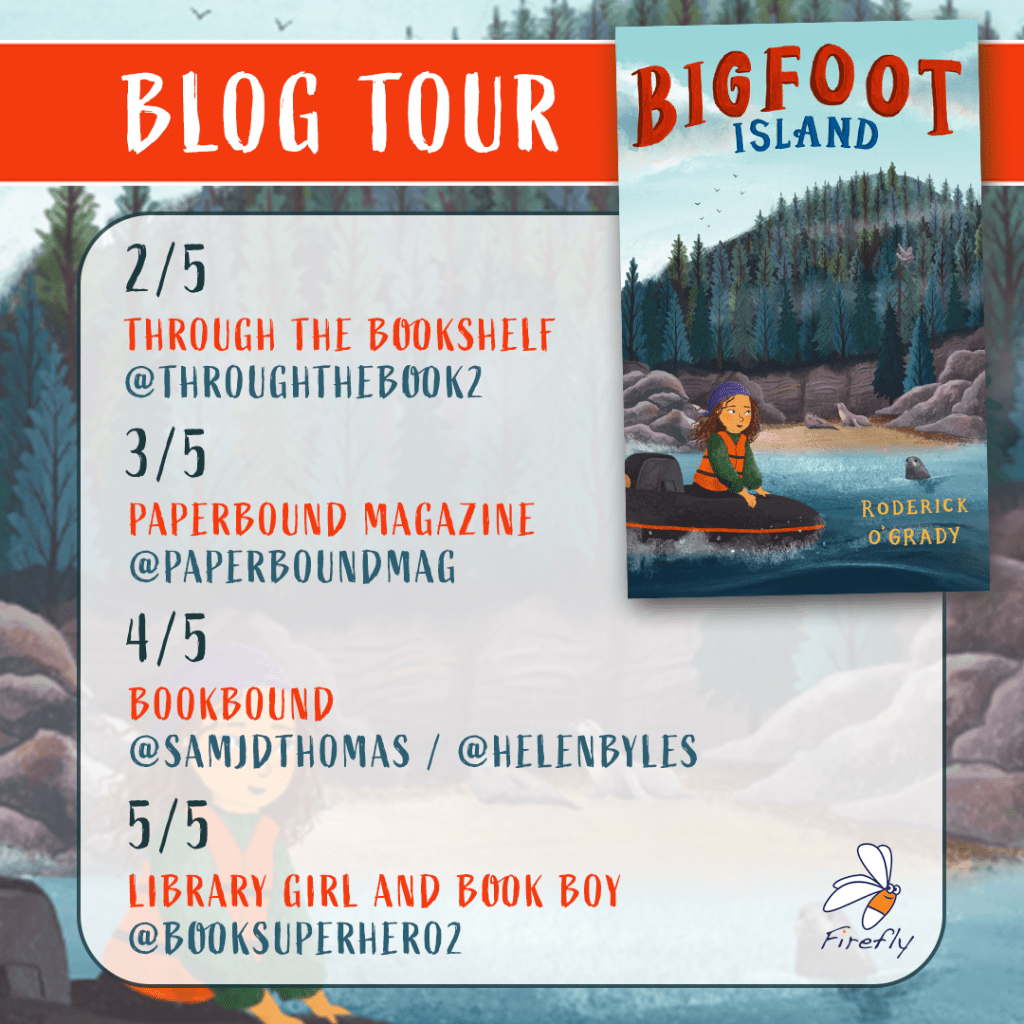
Blog Tour: Bigfoot Island by Roderick O’Grady

PaperBound Magazine are thrilled to be part of the Blog Tour for Bigfoot Island.

We were lucky enough to interview Rod all about the inspiration behind his books!

Q&A with Roderick O’Grady

Can you tell us a little bit about your new book Bigfoot Island (and Bigfoot Mountain for those who haven’t read it yet – no spoilers!) and the inspiration behind it?

Let’s start with what inspired me to write BFM. I had never written a book before and the only subject at the time that really intrigued me was that of Bigfoots also known as Sasquatches, also known as Sabe (Saa-bay). In fact, every Native American tribe has a word in their language for the big hairy forest people that, according to them, have always lived on the American continent. I had happily fallen down the rabbit-hole of ‘Bigfoot Research’. In Bigfoot Mountain we meet the four humans living in the Pacific North West in cabins near the sea at the foot of a mountain – Minnie, her step dad Dan, their neighbour Connie and her young son Billy.
We also meet eleven Bigfoots who are looking for a new forest home as wild fires forced them to leave their caves in the mountains to the east. Minnie and the young Bigfoot Kaayii (who is nearly seven foot tall) don’t become friends, but they do help each other. In Bigfoot Island, a family comes to stay in one of the cabins who go hunting on the mountain. Minnie is worried that their paths will cross with Kaayii. The young Bigfoot has problems of his own when an angry rogue Bigfoot arrives on the mountain and starts wandering close to the humans. Kaayii needs help and, again, Minnie is able to provide it.

What made you decide to write about Sasquatches?

The evidence for their actual existence has been increasing in recent years. I’ve read the DNA report which says they are an unknown relic hominid, not yet recognised by science. If they do indeed exist then I think the way I describe their way of life might be quite accurate. They live in family groups, are self-appointed stewards of the forest, and can communicate telepathically.

Did you have to do a lot of research to write your books? If so, what was the most interesting thing you discovered?

I did a ton of research and am still learning. I wanted to set the story in a temperate rainforest where animals thrive as it has high rainfall and therefore plenty to eat. So, I researched the area of Western Canada in British Colombia so that the descriptions of the flora and fauna are accurate. I’ve never been there, though I hope to visit one day. The most interesting thing I discovered is that many eye witness accounts of seeing Bigfoots in the woods describe how they seem to be able to make themselves go invisible, possibly by raising their vibration. And the footprints they leave in mud and snow can suddenly stop, like they just disappeared in to another dimension!

What do you hope readers will take from these books?

I believe that the more children understand about nature, the more they will want to protect it. I hope I have described the forest, the sea shore, the islands vividly enough that they will want to go out in to nature and explore our wonderful natural world.

What do you enjoy most about being an author?

I really enjoy meeting children in schools, and inspiring them to think about maybe writing a story one day.

If you could give one writing tip to an aspiring author, what would it be?

Just start writing. Your first idea might not be the one that will end up being a great story but the process of writing will pull from your subconscious mind incredible ideas, charming characters, fun dialogue and extraordinary places ­- if you just let it.

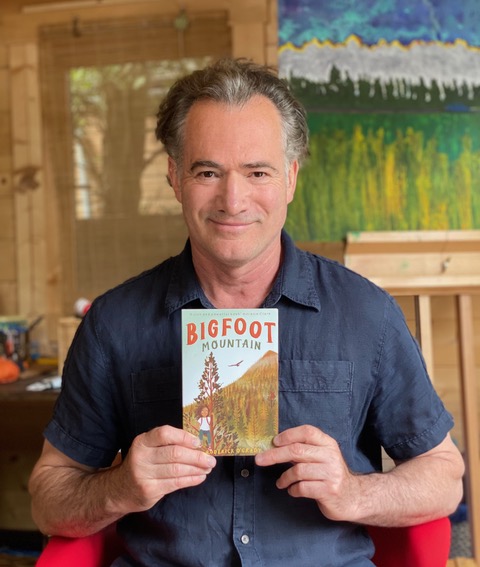
Roderick O’Grady is an actor who has worked in London and New York. His stage play, ‘A Foolish Fancy – How not to Get Ahead in the Theatre’ was a Time Out critic’s choice on the London Fringe. He has voiced the audiobook for Bigfoot Mountain, his first children’s book.

Bigfoot Island

When Minnie spots a white boat bringing strangers to the cove below her cabin, she fears the hard-won peace of her tiny community at the foot of Bigfoot Mountain will be shattered.
Kaayii too has to deal with an intruder on the mountain and, injured, needs to reach his family across the water. The two inhabit separate worlds but must find a way to work together to avoid disaster and protect the people and places they hold dear.

Bigfoot Mountain and Bigfoot Island are out now and published by Firefly Press

We have loved being a part of the Bigfoot Island Blog Tour!
Don’t forget to check out the other great blogs this week, for lots more from the world of Bigfoot Mountain!
Blog, Interview, Interviews

Interview: Meg Grehan in conversation with Siobhán Parkinson

To celebrate today’s release of middle grade title The Lonely Book, we are excited to share an interview of author Meg Grehan in conversation with Siobhán Parkinson. This is a loving story about gender identity, family, and the magic of books.

Annie’s family is made of love.

When her moms open up their bookshop in the mornings, there is always a mysterious pile of books on the counter. By evening, every book has found its ideal reader. But one day there is a book on gender identity that doesn’t get bought. Who can its reader be, and why don’t they come?

 Days pass, and the book with no owner gets lonelier and lonelier. The bookshop is unhappy, its magic starts to go awry, and the moms are worried that the shop isn’t making enough money. Meanwhile, Annie’s sibling has become withdrawn.

Annie has a plan to save the shop, but is this all that’s worrying her sibling?

Meg, I was thinking about what a lovely – and intriguing – title ‘The Lonely Book’ is. And of course this new verse novel is not just about a book — it’s actually set in a bookshop. Which reminds me that the main character in your first book, The Space Between, worked in a bookshop. So it seems that you are drawn to the idea of bookshops, not just as places to visit as a customer, but as rather enchanting places to work in. Have you ever worked in a bookshop, or is it just a dream?

I love bookshops. When I found it harder to leave my house they were real sanctuaries to me, little homes away from my real home. If I could get home I was OK, and if I could get to a bookshop I was OK. I think bookshops are so special, so unlike anywhere else.

I did work in a bookshop! I was a bookseller and I did most of the ordering. It was very fun but a lot more stressful than I expected! I loved getting to talk to people about books, help them with their most specific and niche requests. I need a book about a sloth, I need a book about the high seas, I need a book about … I loved that! Getting to know people has always been easiest for me when it’s through books. I feel confident that I know and understand the world of books and it’s where I feel safest, so working in a bookshop was very special to me.

And of course in this story, the bookshop has a very special kind of magic. It is the bookshop itself that chooses certain books and makes sure that they find their ideal readers. Later in the story, when this one unattached book, the lonely book, doesn’t find its person for some time, the bookshop gets very agitated. How did you come up with such an extraordinary device?

When I worked in the bookshop I had a little desk down the back where I would unbox all the new books I’d ordered, put them on the system and get them ready for the shelves. There were a couple of instances when someone would come up and say, ‘Oh, I heard about this book, it’s about …’ and I would have that very book sitting right in front of me! They always reacted like it was magic, and I always kind of felt like it was. That’s what gave me the idea for a bookshop that works with its people, helps with some of the bookselling – though they still have to find the right readers, of course.

The idea of a magic bookshop works very well in a story that centres on such a young character. I mean Annie, who is about eight or nine? She is not exactly the main character (that is probably Annie’s older sibling, Charlie); but Annie is a main character in another sense, because the story is told from her point of view. That was an interesting decision. It is Charlie’s story, but it is told from Annie’s perspective. What made you think of telling it that way?

I agree that Charlie is really the main character, but for what I wanted to achieve with this book Annie made sense as the character whose point of view we follow. In my last book for children, The Deepest Breath, we followed Stevie as she discovered that she liked girls. It made sense to follow Stevie on that journey, as she was starting from the complete beginning. It’s the same with Annie: she doesn’t know anything about gender at the start of the story and it makes her the perfect character to learn and grow with.

Charlie is a little older, a teenager, and a book about them would be a YA (young adult) story. But I felt that this book needed to be middle-grade – for younger readers. Just like with The Deepest Breath, I wanted to introduce concepts gently and carefully and in a positive way, and following Annie allowed me to do that. It is also very much Charlie’s story, though, I love them so much and I do think we see a lot that goes on with them through Annie’s eyes.

Yes, I see what you mean. The central issue, which clarifies as the story opens up, is that Charlie is starting to realise that they are non-binary. That is a big idea to mediate through the thoughts and worries of a much younger child, but it works really well, doesn’t it? I suppose Annie’s openness to new ideas is something that comes naturally to her, as a child – when you are small, everything is new, and you maybe haven’t acquired too many prejudices. So that makes her an ideal narrator, would you agree?

I do agree! It’s what’s so amazing about children, isn’t it? They learn and learn and learn every day, they are so open and ready for new things and so, so brave.

I wrote The Deepest Breath and The Lonely Book for younger readers because they both deal with topics I don’t think are written about enough for children. Queer stories are for everyone, and I wanted to share some!

Annie might be very young and very open, but she does also suffer from anxiety. Her worries are a kind of subplot – she knows there is something bothering Charlotte; she knows her mothers are worried about something completely different – whether the bookshop is financially secure. And one reaction she has to these anxieties is that she finds very often she can’t speak. Can you tell us a bit about selective mutism and why you chose to explore it in this story?

Selective mutism is a type of anxiety disorder that means that sometimes you just can’t speak. I decided to write about it because I have it. In times of extreme stress I lose the ability to speak. For instance, during the height of the pandemic I couldn’t speak at all for almost a year. My speech slowly came back but it was quite scary. Generally it just manifests in little ways: like, in an argument, sometimes words just vanish for me. It feels like quite a betrayal because I have always considered words friends. Writing about it, however minor a subplot it may be, was really nice for me. It reminded me that words take many forms and I am never truly without them.

Using sign language to overcome mutism is a creative as well as a very loving response, and the whole family becomes involved. Can you tell us a bit about that?

Again, that comes from personal experience. For those months when I couldn’t speak my girlfriend and I learned sign language. We learned together and it was a very beautiful thing. It was her idea. We had tried a text-to-speech app but I didn’t like that, and we tried me writing things out, but it was such a slow process. Sign was the perfect answer. We loved learning it, we loved using it and I loved it so much that she learned it with me; and that made me feel so loved and respected and valued. And so that is why I wrote that into the story of The Lonely Book. It just seemed right.

The love that Annie and Charlie share with their two mothers is very strong, very warm, very sustaining. And emotionally very satisfying to read about. It is the core of the book, really. But I like how you don’t allow the fact that this family is united in love and togetherness to be an easy solution to their various anxieties. It’s important that they have each other, but it’s not enough to make all their worries disappear. Can you tell us a bit more about your thinking on this?

I am very lucky to be in a relationship for almost twelve years now with a warm, funny, kind and caring person. I am loved and cared for and supported beyond what I ever thought possible. But I still have my anxieties, my troubles, my worries and struggles. The love I receive and the love I give can soothe these worries, they can lessen the load, they can calm me when things get too much. But they cannot take them away.

It isn’t fair to expect a person, no matter who they are, to fix your problems or take away your struggles with just the power of love and togetherness. But it is OK to expect respect and love and tenderness, I think. That’s what this family do: they love and respect and care for each other because they are a family and this is what comes naturally to them. They don’t expect each other to fix everything for them, or expect themselves to be able to fix everything for the others.

This is what Annie is learning, you can’t fix everything for a person, even if you wish you could. But you can love them and support them and be there for them, and that can be just as powerful.

The Deepest Breath, which is also written for quite a young readership, is realistic, as was your first book, The Space Between, which is more for a YA audience. Then, with Baby Teeth, definitely YA, you plunged right into fantasy (almost horror), and that went down very well!

Do you think Baby Teeth opened up the way for the kind of magic realism we find in The Lonely Book? Maybe in the same way that centring the story on a younger child in The Deepest Breath might have inspired you to write The Lonely Book also for a young audience?

Maybe! I’ve never had any interest in categorising myself when it comes to writing. I am not a person who has a lot of ideas, I am not at all brimming with them and I rarely have to choose between them to decide what to write. Usually I have one idea and I sit with it for as long as it takes to form and grow and develop. Then I write it.

Same for me!

Beth (the main character in The Space Between) came to me first, then Stevie (The Deepest Breath), then Immy (Baby Teeth) and now Annie. Immy was the most self-indulgent for me (though it may seem to be Beth from The Space Between!) because I love horror, I love paranormal stories, I love the innate drama of vampires and the idea of many lives lived.

I also love not holding back when I write, letting myself be as over-the-top or dramatic or even maybe pretentious as I want to be and Immy let me do that. I very much wrote that book for myself and the fact that other people liked it too definitely made me much braver moving forward, which, yes, could have played a part in inspiring me to write about a magic bookshop.

All your books, Meg, are verse novels. Do you find that verse comes to you more naturally than prose? And do you find that audiences respond especially well to the poetic form?

It definitely comes more naturally to me. I have always, always loved poetry. My nana wrote poetry and she wrote a poem about me when I was little. I still have the book that it’s published in on my bookcase. I like to think she wrote me into the world of poetry.

What a gift!

Wasn’t it just?

I was also a drama kid. I performed poetry I loved and wrote and performed my own poetry. I’ve always read it, always written it, and always loved it. So when I learned that books could be poetry too, that I could write a whole story in a poetic form, a new world opened up to me. It just comes naturally to me, it makes me happy, it makes me feel free and brave and inspired.

I love verse a lot, and I do think people respond well to it, even if they don’t quite know what it is. I try quite hard to make my verse accessible and make it flow nicely so it isn’t too taxing to read and I think, or I hope rather, that readers feel that. I think people are often surprised by how much they like verse, it kind of delights me!

Yes, I see what you mean about how naturally it comes to you, but I’m still wondering if it was a conscious decision to use verse as a form and magic realism as a storytelling style in order to tackle a subject that some readers might find more difficult to think about if they encountered them in a realistic novel or one in prose?

Honestly, no, not really. I trust readers, I trust young readers. I think they can handle bigger ideas and concepts than we give them credit for.

I totally agree, Meg. I think that respect for young readers is what marks the best writers for children and young people.

So, the reason I chose verse is that that is what I love and how I write best, and I wanted to give this story it’s best chance at being good. And I chose magical realism or fabulism because it allowed me to tell the story I wanted to tell and because the idea excited me. I think it just worked out well that these choices helped me in telling the story as clearly and accessibly as I could.

And it all worked out pretty well perfectly! Thank you, Meg, for talking to me, and thank you for this wonderful book.

You can catch this interview in the back of The Lonely Book upon its paperback release from Little Island Books. We want to thank Little Island for giving us permission to publish this interview on our blog to celebrate this fantastic release!

PaperBound Magazine is an online magazine for the young, and the young at heart. We are dedicated to showcasing authors and illustrators for children’s and young adult fiction and we strive to deliver inspiring content, uplifting stories, and top tips for young and aspiring writers yet to burst on to the literary scene.

All our issues are completely free and run by volunteers, however if you would like to support PaperBound and the work we do, you can help us out by buying us a virtual book. We appreciate any support you can give us!

Don’t forget you can catch up with the latest issues of PaperBound Magazine here.
Blog, Interview, Interviews

Interview with children’s author AF Harrold

We teamed up with Emma Stanford who reviewed The Worlds We Leave Behind by A.F. Harrold (and beautifully illustrated by Levi Pinfold) in a previous PaperBound issue and put together a few questions for the author. Read the interview below, or in the latest issue of PaperBound here.

The Worlds We Leave Behind by A.F. Harrold

Could you tell us a little about The Worlds We Leave Behind, and the inspiration behind the story and illustrations? Did it start with a setting, a character or something else?

The Worlds We Leave Behind is a strange, slightly dark, slightly creepy, slightly odd story about a boy, Hex (short for Hector), who gets in some trouble down the woods, meets an old lady and her dog in a cottage that shouldn’t exist and gets offered a bargain that could change his life. I think that’s probably all I could say about the story without saying too much. 

The inspiration for it came from the previous book Levi and I made together, The Song from Somewhere Else. That was a story that I wrote and which the publisher (Bloomsbury) went out and found an illustrator for (which was Levi, obviously). And what Levi did with that story, and what the designer (Andrea Kearney) made of the book-as-object, was utterly delicious, dark and moody and beautiful. Naturally people asked if we were going to do anything else together… 

And, a few books later, the thought came of taking one of the minor characters from that book and letting them have a go. And so Frank (the main character in The Song…) had a little brother, Hector. What if, I thought, time had moved on five or six years, so that he was now the age Frank had been when she had her adventure (10-11)? And how might he react put through some of the same sorts of difficulties she was? 

The previous books, The Imaginary and The Afterwards (both with Emily Gravett), and The Song…, all have some sort of bargain at their heart. In the two books with Emily the ‘villains’ of the books have made supernatural bargains to allow them something they shouldn’t have, and in the first book with Levi, a boy called Nick’s dad has made a bargain with a secret agent to bend the rules… This time, I felt, I could look at one of these bargains being made, with an outer entity. 

And so the thought of someone offering Hex the chance to get his own back, to have his revenge on someone who’d hurt him, who’d wronged him… that seemed a good starting point. And the story grew and changed and spread and got pruned and eventually sort of fitted in and around that original thought, and ended up how it looks today. (Thanks to plenty of work with my editor Zöe Griffiths, who asked the important questions and made me stretch for the answers.) 

What is the process of working with an illustrator like? When did you start collaborating? Were the illustrations created after the story was complete, or did they develop along with the story itself? 

Since Levi lives in Australia and I’m in the UK, we’ve only met, in person, a few times. But when we have met we’ve got on well, and although he’s a decade younger than me, we have enough childhood loves and experiences in common (me growing up in the pre-internet ‘70s/’80s, he in the pre-internet ‘80s/’90s) that we have a shared understanding of the sort of story we’re making, and the atmosphere we want to give. Although the story is ‘modern’, in that there are mobile phones and computers, it’s still very much rooted in our shared ‘80s memory, I think. 

And so, where The Song from Somewhere Else was written without knowing who would be illustrating it, this new book I wrote specifically with Levi in mind. So, although it isn’t a collaboration in the sense of ‘coming up with the story together’, it is very much a collaboration in that I was thinking, ‘What do I want to see Levi draw?’ as I went along, knowing the visual language and atmosphere of the previous book. It was as if he was sat on my shoulder as I wrote and tinkered. 

And then, a few weeks before the first lockdown, Levi happened to be in the UK, and he had a spare afternoon so he came over to Reading, where I live, and we had a cup of tea, and we sat in my shed and I told him the story, face to face, and that was a really lovely moment I’ve not had with anyone else. 

And so, then he gets the ‘finished’ manuscript and goes away and makes his art. And I get to see it at various points and simply be amazed, moved and feel immensely, intensely lucky to know such a man with such a talent! 

Time is used in a very unique way in this book. Did this bring up any issues with structuring the story at all? If so, how did you overcome them? 

Because of how The Song from Somewhere Else had been structured (days instead of chapters), this book was obviously going be the same, which meant you’ve only got four days for the story (Monday to Thursday, plus evenings/nights), so it’s actually very linear. Things happen in the order in which they happen, and so that’s quite simple. 

Although there are some wrinkles (trying to be spoiler free, one might allude to alternative timelines), there is no back and forth time travel or paradoxes to be negotiated (I think of something like Gareth P. Jones’ No True Echo (which I read after seeing it mentioned in a review for The Worlds…), where it’s proper mind-bending timelines folding in around themselves, past and future and present in a big timey-wimey complex)… none of that. Just things happening one after another. 

What are your top three tips for aspiring young writers and illustrators? 

I think my two tips would be unsurprising ones. Firstly, read books. For one thing, reading books is a great way to fill your time and take yourself to all sorts of places and times and viewpoints you’d not otherwise get to visit (or to see places, people and times that you do know, but with fresh eyes), and secondly, if you want to be a writer, by seeing how other people do it you’ll get a feel for how to do it, or how not to do it… 

And my second tip is, if you don’t feel like writing, don’t, and don’t beat yourself up about it. You don’t have to write every day. Sometimes you’ll write loads, and sometimes you won’t  Sometimes ideas will pour out of you, and sometimes they won’t. Don’t worry, don’t panic, don’t beat yourself up. You’re allowed to not write. 

My third tip is have a bath whenever you can. It’s a good place to read, and it’s a good place to think. 

Photo by by Alex Genn-Bash

A.F. Harrold is a poet, performer and children’s author who has written funny and spooky books for all ages and gotten to make art with some of the finest illustrators of the age, including Chris Riddell (Things You Find in a Poet’s Beard), Emily Gravett (The Imaginary), Joe Todd-Stanton (Greta Zargo and the Death Robots from Outer Space), Mini Grey (The Book of Not Entirely Useful Advice) and Sarah Horne (the Fizzlebert Stump series).

His two books with Levi Pinfold, The Song from Somewhere Else (winner of the Amnesty International/CILIP Honour, 2018) and The Worlds We Leave Behind are good things. 

Don’t forget you can catch up with the latest issues of PaperBound Magazine here. All our issues are completely free and run by volunteers, however if you would like to support PaperBound and help keep us running you can buy us a virtual book.

Blog, Interview, Interviews

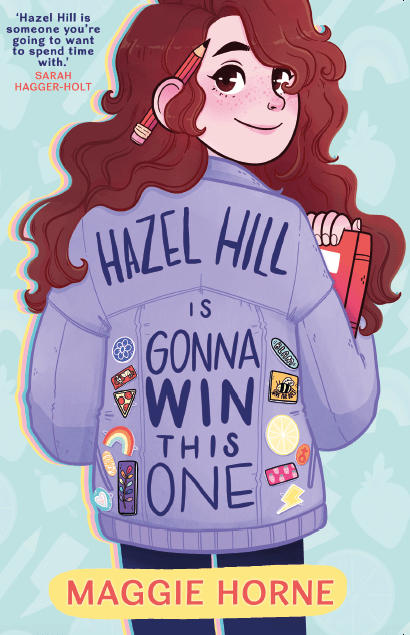
Interview with children’s author Maggie Horne

Author of middle grade book, Hazel Hill is Gonna Win This One, Maggie Horne chatted to us about the inspiration behind her debut novel and what’s coming next! Read on below to discover more about Maggie …

Could you tell us a bit about Hazel Hill is Gonna Win This One? 

Hazel Hill is Gonna Win This One is about 12-year-old Hazel, who begins the book completely focused on one goal: to win her school’s annual speech competition after a humiliating defeat last year at the hands of her nemesis, popular girl Ella Quinn. But when she learns that Ella’s being sexually harassed online by a boy in their class, the two girls team up to try and take him down, and Hazel has to choose between winning and doing what she knows is right.  

Hazel is such a brilliant character. Where did the inspiration for her come from?  

Thank you! Hazel was largely inspired by my own experience growing up and dealing with sexual harassment at school from a young age. I have a lot of memories from around that time (good and bad!) and tried to really tap into them to make Hazel as authentic as possible. 

Do you have any tips for writing memorable characters?  

I think that in middle grade especially people can be tempted to over-explain things or to make sure that each character is specifically teaching the reader a lesson, but I think that creating characters that way can be condescending to the reader. Writing 12 year olds who are fully fleshed out people in the own right is what makes them memorable! 

Friendship is a strong theme throughout the book. Was this always something you wanted to write about?  

Definitely! I always think we should have more friendship stories out in the world, and being able to explore the theme through Hazel, who begins the book almost afraid to even try to have friends and ends it in an entirely different place, was really fun.  

You also include themes and issues that aren’t always talked about in middle grade fiction, but you do it in such a sensitive and engaging way for the reader. Do you think there are more themes and issues that could be featured in fiction for young people? 

Thank you! Definitely. I think that the middle grade years are often when the differences between you and the people around you start to become something that gets talked about a lot more (for better and for worse), so writing about those differences, first of all, is hugely important. I’d love to see more queer middle grade, and especially middle grade with queer BIPOC protagonists. Beyond that, I think that there was a period of time where writing about things like sexual harassment for young people was seen as more taboo because the topics weren’t seen as “appropriate” for them. But, like Hazel mentions in the book, of course it’s not appropriate! That’s why it needs to be recognised and stopped, and writing about it is a first step to that.  

What books/ stories/ authors have been an inspiration to you, and your writing? 

My absolute favourite book when I was Hazel’s age was Olive’s Ocean by Kevin Henkes. I’ve always loved how thoughtful and precise his language is, and I try to emulate that where I can.  

When I re-discovered middle grade in adulthood, I was so excited to see how many authors were bringing diversity to the category! Authors like Claribel Ortega, Ashley Herring Blake, and Mark Oshiro (to name a few!) are doing so much for middle grade.  

We’d love to know what’s up next for you. Are you writing anything new, or any other exciting news?  

I’m VERY excited about my next middle grade book, Noah Frye Gets Crushed, which will be out in 2024. It’s about 12-year-old Noah, who, after noticing that her best friends seem to be suddenly boy-obsessed, decides she can teach herself how to have a crush on a boy to fit in. Noah’s story is almost the opposite of Hazel’s – where Hazel’s lack of close friends has forced her to have a very strong, independent sense of self, Noah’s grown up with an extremely tight-knit circle of friends, and she doesn’t quite know who she is without them.  

I’ll also be debuting a YA book in 2024, Stay Here With Me! It tells the story of two best friends who’ve just broken up, because one of them was outed as a lesbian, finding themselves developing feelings for the same girl.

Maggie Horne is a writer and editor who grew up near Toronto, Canada. She studied at Oxford Brookes University, where she obtained both a BA in Publishing Media and a wife, which was a pretty good deal. She now lives outside of Ottawa with her family. Her first novel, Hazel Hill is Gonna Win This One, was an Indies Introduce Summer/Fall 2022 Selection, an Indie Next pick, and a Junior Library Guild Gold Standard Selection.

Her second middle grade novel, Noah Frye Gets Crushed, will be released winter 2024, and her young adult debut, Stay Here With Me, is out autumn 2024 with Feiwel + Friends. 

Hazel Hill is Gonna Win This One is out now. You can find out more about Maggie by visiting her official website, or by following her on Twitter and Instagram.

Don’t forget you can catch up with the latest issues of PaperBound Magazine here. All our issues are completely free and run by volunteers, however if you would like to support PaperBound and help keep us running you can buy us a virtual book.

Blog, Bookshelf

Our winter 2022/23 bookshelf

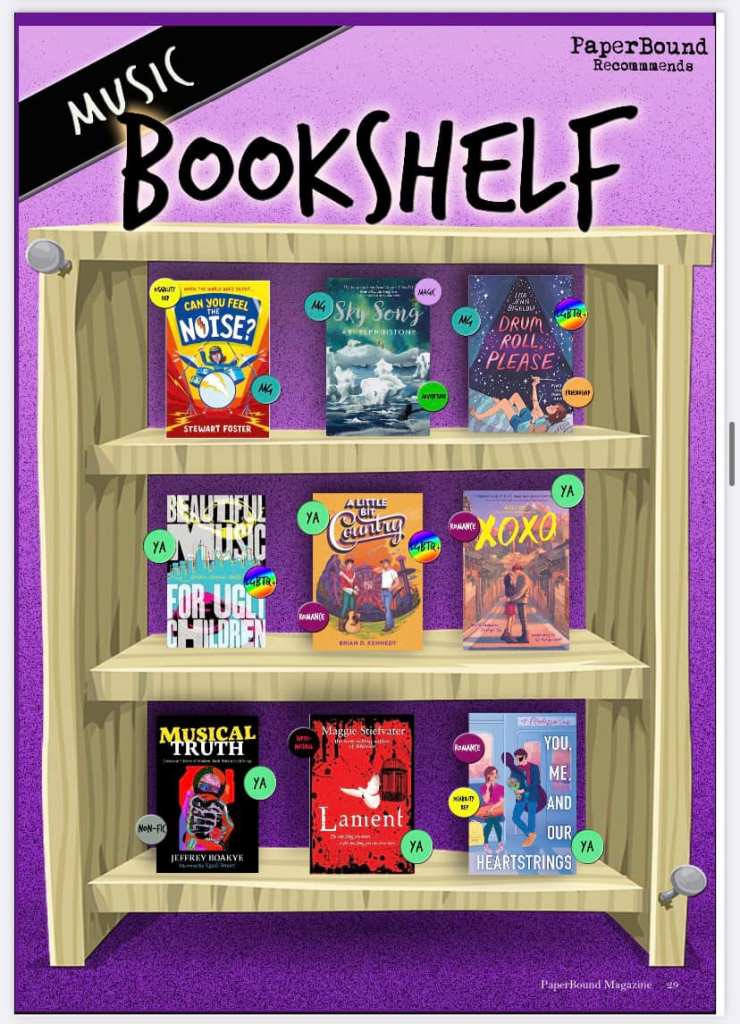
Take a look at our music themed bookshelf, as featured in our winter 2022/23 issue, which has all kinds of books perfect for spreading the love of music. You can read even more wonderful stories, author interviews and more in our latest issue by clicking here. 

All our issues are completely free and run by volunteers, however if you would like to support PaperBound and the work we do, you can help us out by buying us a virtual book. 

Here at PaperBound, we love stories. Want to be a part of ours? Find out more.

© PaperBound Magazine

Blog, Covers

Our winter 2022/23 issue is out now!

Did you know the winter 2022/23 issue of PaperBound Magazine is out now?

This issue’s theme is based on ‘MUSIC’, filled with lots of new captivating writing and gorgeous illustrations, plus all kinds of fantastic author interviews, writing prompts, book recommendations, and more.

You can read the latest issue of PaperBound completely free here. Just scroll down until you see our WINTER 2022/23 issue.

We hope you enjoy it!

Blog, Interview, Interviews

Interview with children’s author Lauren Wolk

We caught up with children’s author Lauren Wolk in the latest issue of PaperBound Magazine, who told us all about her new novel My Own Lightning. Read on to discover more.

Could you tell us a little about your book, My Own Lightning, and the inspiration behind it? 

My Own Lightning is a sequel to Wolf Hollow, something I never expected to write. It’s a product of the pandemic, a time of such turmoil and uncertainty (both because of COVID and the political situation in the U.S.) that I longed for the safety and security I had always felt on the family farm that inspired Wolf Hollow. But I was also intrigued by how I was being influenced by the chaos around me, and I wanted to explore how Annabelle would react to a similar shock. How it would make her see the world differently. How it would teach her to look past the obvious to hidden truths … about herself and others. Since I’ve always been fascinated with the untapped potential of the hidden brain – and how some of its mysteries are revealed by lightning strikes and other traumatic events – I decided that Annabelle’s ‘shock’ should be literal. So I sent her out into a summer storm and then watched what happened next. 

My Own Lightning takes place in the 1940s and has some beautiful locations, such as the farm and Wolf Hollow. What draws you to this time period? And are any of the settings based on real locations? 

I grew up listening to my mother’s stories about her childhood in the 1940s on the family farm in Pennsylvania, and I spent quite a lot of time on that farm myself. Wolf Hollow and My Own Lightning are my way of paying tribute to that time, that place, my family, and the natural world. I owe a great deal to my mother, especially, for sharing the memories that inspired my work. But I am indebted to my grandparents and my uncles as well, all of whom devoted so much of their lives to the land. 

Annabelle is struck by lightning at the beginning of the novel and gets heightened senses and the ability to understand dogs. What powers would you want if you were struck by lightning?  

What a great question! Honestly, I’d like a whole boatload of powers – including being able to sing beautifully and fly (of course) – but those are far-fetched. I simply haven’t got the mechanics for such things. But people have gained some really extraordinary abilities from lightning strikes and traumatic brain injuries – like being able to compose music and play the piano … or do complex math … or speak foreign languages. I’d be delighted to speak another language well. Especially the language of dogs and other creatures. Trees? I’d be over the moon. 

My Own Lightning is a sequel. What was it like to take the characters from Wolf Hollow on a whole new adventure?  

Because I write without a map, I’m always surprised by what I encounter as I write a novel. Of course, I have some influence on the route I take, but I trust my characters enough to follow where they lead. And I trust Annabelle to my bones. She’s a very able guide. As I wrote My Own Lightning, however, I was so baffled by the state of the world in general and the U.S. in particular that I allowed a fair bit of that confusion to muck up the works. Annabelle and I got lost a couple of times, following subplots down rabbit holes, running in circles, and falling down a lot. It was only after a couple of drafts that I managed (with the help of my editor) to shut out the noise around me and listen to what mattered most to Annabelle and her story. In the end, it was a simple one that focused on giving people second chances and doing the hard work it takes to be fair in a world that seldom is. 

Dogs play a big role in My Own Lightning. How hard was it writing them in danger?  

It was difficult to put my beloved dog characters in harm’s way. But I had made a decision early in the book that I would not allow any of them to die. I rarely make hard and fast decisions about a book, but in this case I did. I was therefore able to put them as risk without losing too much sleep. It was hard to see them get hurt, but it was very satisfying to see them survive. 

You have been called a ‘successor to Harper Lee’ by The Times. How did that feel? 

It’s wonderful to be compared to such an icon. Truly. But it’s also a bit scary, first because I always want my work to be mine, not an echo of someone else’s … and, second, because Harper Lee has very big shoes I can’t possibly hope to fill. I honestly didn’t see any parallels between my work and hers, largely because I was so inspired by my own family history and legacy, and I was therefore shocked when people started to point out plot and character similarities between Wolf Hollow and To Kill a Mockingbird. Then I reminded myself that all of art and literature are filled with echoes. They’re inevitable. But I do work hard to make sure they’re not deliberate. 

Is My Own Lightning the last we’ll see of Annabelle and her friends and family? Or is there more to come for Wolf Hollow?  

I’d love to write a third Wolf Hollow book at some point. And I’m excited about writing a sequel to each of my other books as well; Beyond the Bright Sea and Echo Mountain. (I can’t tell you how many school children have asked for such things … and plotted them all out for me!) But I’ve nearly finished a brand new novel with different characters, and I have another one I plan to rewrite after that. So it may be a while before I meet up with Annabelle again (or Crow or Ellie). 

Lauren Wolk is a poet and artist best known for her novels, especially the New York Times bestselling and Newbery Honor-winning Wolf Hollow (2016), its sequel, My Own Lightning (2022), the Scott O’Dell Award-winning Beyond the Bright Sea (2017), and Echo Mountain (2020). 

My Own Lightning is out now. You can find out more about Lauren by visiting her official website, or by following her on Twitter and Instagram.

Don’t forget you can catch up with the latest issues of PaperBound Magazine here. All our issues are completely free and run by volunteers, however if you would like to support PaperBound and help keep us running you can buy us a virtual book.

Blog, Interview

Interview with author & former Wales children’s laureate Eloise Williams

Author of Gaslight, Eloise Williams, spoke to us about writing and her new novel, Honesty and Lies, in the latest issue of PaperBound. Read on to discover more below.

Could you tell us a bit about your new book, Honesty and Lies? 

Set in the winter of 1601 and centred around Greenwich Palace, it’s the story of two girls and their friendship. Honesty, a Welsh girl seeking fame and fortune, befriends Alice, a maid to Queen Elizabeth 1. But while Honesty looks for attention and praise, to make a better life for herself, Alice must stay invisible, hiding a terrible secret. Can they trust each other?  

It’s a tale of intrigue, scheming and plots set in the spellbinding world of the Elizabethan court. A thrilling adventure where nothing is as it seems. 

Where did the inspiration for this story come from?  

Inspiration is always difficult to pinpoint. I adore London and have done since I was very young. I love the history of it and the way it changes, the size and variety it brings, its scruffiness and its grandeur. Taking a boat from Greenwich to Southwark seems to chime as an important moment in thinking of this story. As does walking along the South Bank of the Thames.  

I hadn’t written anything historical since Gaslight so it seemed like a challenge and I like to challenge myself creatively. I also wanted to write something about appearance and reality, and this seemed the perfect setting for those comparisons. The splendour of the palace, life as a maid, Christmas and Twelfth Night, theatre – both in the real sense with the Globe and in the way that people perform their roles.   

Could you share a little bit about how you research when writing a novel? Is this something that you do before you start writing, or as you go? 

I start by doing a bit of very easy research into the period. This could be through reading books and listening to podcasts, watching films, visiting museums and historic buildings. It helps me to get a basic understanding of what life was like for young people at that time. However, I’m always in danger of falling into a research rabbit hole as I get overly interested in everything, so I have to stop myself after a while. I then write the first couple of chapters which gives me a better idea of the areas I need to concentrate on a bit more specifically. I’m not a historian – though I think it would be fascinating – so I like to give a flavour of the time but only so that it serves the story.  

What top tip would you give to an aspiring writer who would like to try writing historical fiction? 

History is just the backdrop and should help to paint the picture, not detract from the story. It’s tempting to drop facts in just because you’ve learned them. You can include some of the weird and extraordinary things you discover – there are lots of things which seem unusual to us now – but only when they illuminate something about the characters, their personalities, journey, or their lives. It’s not a history lesson, tempting as it is to make it one sometimes. If you want to put a fact in, try to make it part of the rich tapestry which supports the action.     

You’ve written so many brilliant books for young people, as well as being the Children’s Laureate of Wales, and recently creating and editing The Mab alongside Matt Brown. What has been the best/ most memorable moment in your writing journey so far? 

Firstly, thank you. It’s very hard to think of your own books as brilliant! It’s much easier to see what you perceive as the flaws. Stories tend to have a mind of their own and rarely turn out to be the things you had intended them to be.  

I’ve had so many wonderful moments. Every time I see one of my books in a bookshop or library it seems like a small miracle. Discussing stories with young readers is always a highlight. They can be very frank with their questions and opinions so it’s always good to have a sense of humour!  

Collaborating with Matt Brown and the other brilliant authors and illustrator was such a fantastic experience, and we are very proud of The Mab

I think, though, if I were to choose the most memorable moment, it would be when a young person threw one of my books out of their bedroom in disgust and shut the door on it. Her mother told me that she did it because she was so angry on behalf of the main protagonist. She fetched it again later and loved the story, so it was all okay in the end, but it made me realise how passionately young people believe in the stories they are reading, and I think of it often. It helps to keep me focused on writing the best story I can.   

You live close to the coast in West Wales and must feel inspired by the landscape there. Does much of that inspiration find itself in your books? 

Absolutely! It’s impossible not to be inspired by the landscape here. Sometimes it presents itself directly in my work – The Tide Singer, Seaglass and Elen’s Island are all set by the sea and inspired by the coast of Pembrokeshire. Other times, the love of nature and wildlife I’ve fostered here comes through in my writing. I talk about birds a lot in Wilde, that’s a love I’ve found over the last ten years, and I can’t seem to stop mentioning the moon.  

What other writers and books have inspired you (past and present)? 

There are so many! Far too many to mention them all. I’m always impressed by anyone committing to writing a book and finishing it. I read widely and find inspiration of some kind in almost every story.  

Could you let us know what you’re working on next?  

Well, I do have some exciting story news coming up soon but I’m not sure if I’m allowed to talk about it yet!  

I’m also at the dabbling stage with another new story. This is probably the part of writing I love most and fear most. There’s every possibility of it being the story you want it to be, and the empty pages are enticing and exciting. It also feels somewhere between improbable and impossible that you’ll ever manage it and as if there is a colossal mountain ahead. This story is one which has been bouncing around in my head for a while now and it won’t let go. It’s based in my own family’s history, and it’s a story of hope, but I don’t want to give too much away in case the mountain proves too steep!  

Eloise Williams grew up opposite a library in Llantrisant, Rhondda Cynon Taf, where she spent much of her time reading in the ruins of a castle. Her middle grade novels have won the Wales Arts Review Young People’s Book of the Year, the Wolverhampton Children’s Book Award, the YBB Book Award, and have been shortlisted for the Tir na nOg, the NE Book Awards and Wales Book of the Year. 

She has an MA in Creative Writing with distinction from Swansea University and was the inaugural Children’s Laureate Wales 2019-2021. Eloise now lives in West Wales, very close to the sea, where she wild swims, collects sea glass and ghost stories, and walks on the beach with her cairn terrier, Watson Jones. 

Her book, Honesty and Lies, is out now and published by Firefly Press. You can follow Eloise on Twitter and Instagram.

Don’t forget you can catch up with the latest issues of PaperBound Magazine here. All our issues are completely free and run by volunteers, however if you would like to support PaperBound and help keep us running you can buy us a virtual book.