Blog, Interviews

Interview with children’s author Joanna Nadin

We were thrilled to catch up with children’s author Joanna Nadin in the latest issue of PaperBound. Join us as we chat to her about her latest novel, No Man’s Land, and discover more about her books, characters, and writing tips.

You can read our interview with Joanna here, or in the latest issue of PaperBound Magazine on our issues page.

Can you tell us about your new novel, No Man’s Land, and a little about what inspired it? 

No Man’s Land tells the story of a new version of England – Albion, run by a far right-wing government – and two boys, ten-year-old Alan and five-year-old Sam, who, a matter of weeks away from World War 3, are secretly evacuated from Bristol (now Brigstowe) to a women’s commune on the Tamar estuary between Devon and Cornwall – the eponymous No Man’s Land. What follows is Alan’s narrative as he tries at first to get used to a wilder life, then, when his Dad doesn’t show up, resolves to escape to rescue him, Sam in tow. It was written in a state of rage on the back of Donald Trump’s increasing abuse of power, and the UK’s vote to leave the EU. Trump has, thankfully, gone. But our world still feels apocalyptian at times.  

No Man’s Land mimics our own current political climate and doesn’t shy away from a future Britain changed for the worse, not the better. It’s easy to empathise with Alan’s frustration of adults not telling him what was happening. Do you think we don’t give kids enough credit for how much they observe the world around them?  

They hear and see so much – more, sometimes, than we do – and of course they realise what’s happening. That’s why we need to talk about it – to reassure them that despite the mess of the world, there is always hope.  

There are so many interesting characters in No Man’s Land. One of our favourite characters is Dad. Do you have a favourite supporting character, and if so, why? 

Dad is a favourite of mine as well. He’s modelled on the actor Joe Gilgun (I cast all my novels, so I can see the characters move and hear them speak better), whom I’ve always found mesmerising on screen – funny and moving too. My top favourite though Ahmed, who’s only in it for a short time, but who is bold and caring, and a great friend to Alan.  

The book ends in a way that people might not expect. Did you plan for it to end this way (without spoilers)?  

I did. I don’t start writing a book without knowing exactly where it will end up, so I’d plotted out the final chapter before I’d started the first. I knew I wanted it to be realistic, as opposed to a classic happy ending, but offer hope as well.  

How do you hope readers will respond to No Man’s Land? 

I hope readers will recognise some of what’s going on in the world around us at the moment, and where we could end up if we don’t make some changes. Most importantly, I hope they’ll find some courage within themselves to realise they can help make that change. No one hero or heroine is ever going to save the world – too many books tell us that. In No Man’s Land, as in real life, only by working together can we change things.  

Can you sum up your book in three words?  

Funny. Scary. Moving.  

Along with being an author, you also teach creative writing. Do you feel your writing has improved/ developed through teaching? What would be your biggest tip for any aspiring young writers out there? 

Of course. I learn so much from working with other, often hugely talented, writers, many of whom have gone on to be published. In fact, No Man’s Land was partially inspired after a class working on voice in middle-grade novels. My biggest tip is: read. If you read enough, you begin to absorb how story works. You’d be amazed at how many students think they can get away with not reading. It’s like a violinist imagining they can learn to play without ever listening to anyone else. On which note, practise as well. Writing is no different to violin here either, or sport. The more you do it, the better you get at it, so write every day, even if it’s a diary, even if it’s only a paragraph. Slowly it will become more of a muscle memory and you’ll find the right words leaping to your fingertips all of a sudden.  

 Joanna Nadin is the author of more than eighty books for children, teenagers and adults, including the bestselling Flying Fergus series with Sir Chris Hoy, the award-winning Worst Class in the World series, and the acclaimed YA novel Joe All Alone, which is now a BAFTA-winning BBC drama. She lives in Bath, and teaches at University of Bristol. You can keep up to date with her on Twitter and Instagram.

No Man’s Land is published by UCLan, available NOW!

Don’t forget you can catch up with the latest issues of PaperBound Magazine here. All our issues are completely free and run by volunteers, however if you would like to support PaperBound and the work we do, you can help us out by buying us a virtual book. 

Blog, Short stories

Winner: Young Writers Competition – The Dig by Daisy Whittington

This year, we put together our FIRST EVER competition dedicated to young writers. After many fantastic entries, it was a difficult decision trying to narrow it down to a final shortlist before a winner was chosen by YA fantasy author Caroline Logan. She picked Daisy Whittington, aged 14, as our winner, who wrote The Dig, a rolleroaster tale with unexpected twists and turns.

Read on below to read The Dig by Daisy Whittington.

Tina’s dad is an archaeologist and ever since Tina was able to walk, he would always make an effort to involve her with his work. He would bring home special artifacts for Tina that would intrigue her greatly. Tina was always most intrigued by the bones. It could be any sort of bone: a rabbit bone, a deer bone. And it could be a bone of any shape: a tooth or perhaps a femur. Tina didn’t care, she just loved bones.

It didn’t take long for her to start collecting them. Every evening, she would eagerly wait for her dad to get back from work and she would jump with joy when he’d unveil a new bone from behind his back to add to her collection. She couldn’t get enough! Her collection grew and grew, however she still had not reached the level of fulfilment she felt compelled to reach. Tina soon came to the conclusion that her dad was not the best source of bone income. She needed to get her own bones.

Tina crept out the house. She found herself in a graveyard. A bone jackpot! She waited until no one was around, and then she began to dig into a grave. Tina dug fast. Excitement overcame her. She knew the skeletal remains were close by, she knew they were waiting for her to take them home. Tina dug deeper and deeper until….

“TINA!! You stop that right now!” It was Tina’s dad. He’d caught her. ‘You are a DISGRACE. I am taking you straight home, you bad, bad dog.”

We hope you enjoyed reading The Dig just as much as we did! You can read all the shortlisted stories – and Caroline Logan’s feedback on each one – by clicking here and scroll down to read our Summer 2021 issue – completely FREE!

Interviews

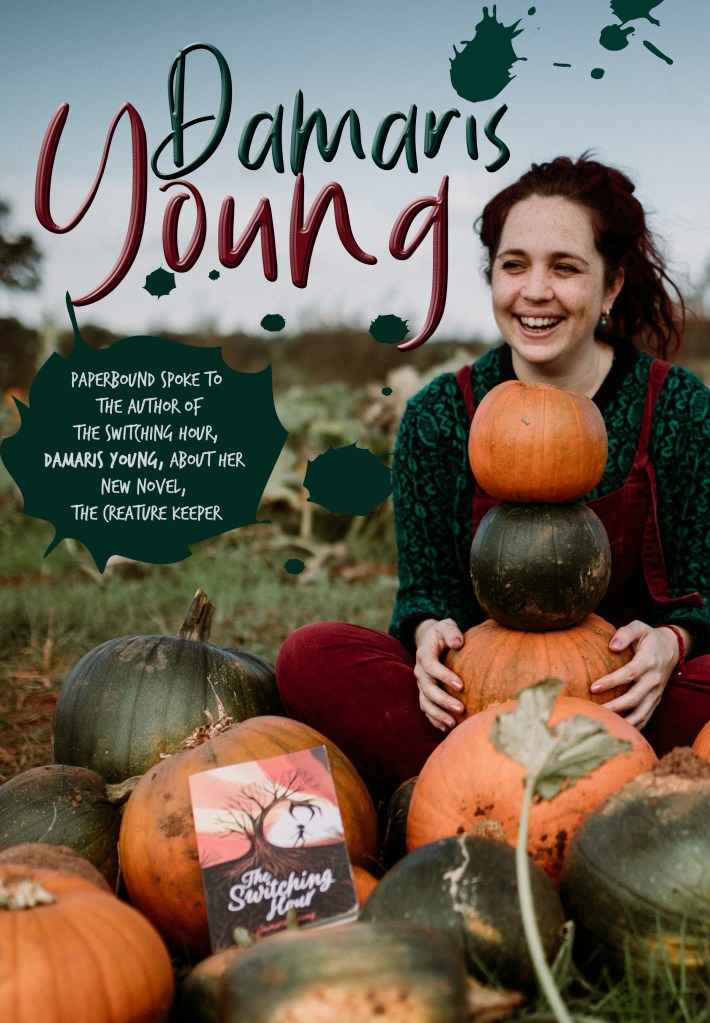
Interview with author Damaris Young

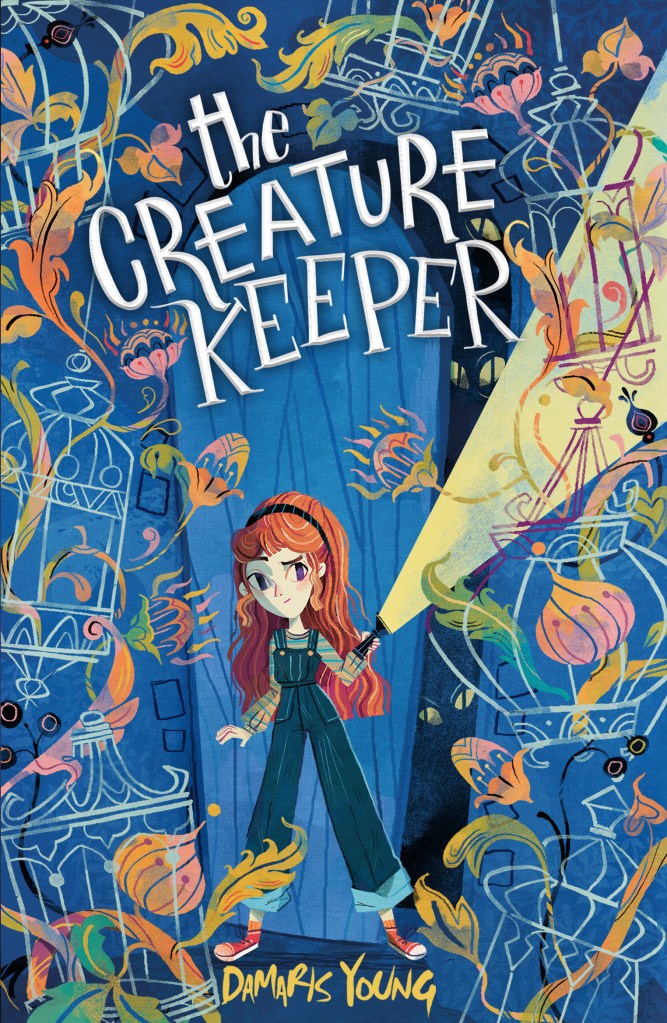
We spoke to author Damaris Young about her new novel The Creature Keeper in our Winter 2020 issue. Read on to discover more, or head over to our issues page to read the interview inside PaperBound Magazine itself.

Tell us a little about your new book The Creature Keeper. What made you decide to write it?

When animal lover Cora learns that Direspire’s mysterious owner is looking for a new Creature Keeper, she realises this might just be the chance she’s looking for to save her parents’ farm. But Direspire Hall is a spooky place, and the strange creatures who live there are nothing like Cora is expecting. As Cora settles into her new life, it soon becomes clear that Direspire has its secrets, and that somebody will do whatever it takes to keep them…

Growing up, I was always more comfortable around animals, and sometimes I struggled to talk to people. I wanted to write a story about a young girl who, just like me, feels a connection to animals, and send her on a journey of self-discovery and adventure, where she learns to find her voice.

What does your typical writing day look like?

The first thing I do is take my two dogs for a long walk near the river, which helps wake my brain up. When I get home, I’ll make breakfast, toast and a cup of coffee, and take it up to my home office. I usually write for a few hours, before finishing off the day by catching up on admin. I send out author letters to schools, sign bookplates, write articles for blog posts, and prepare for virtual workshops. I love connecting with schools and readers, it is one of the best parts of the job.

Your book The Creature Keeper has been described as having a ‘creepy gothic setting’. How important is setting to your writing?

The setting is incredibly important to my writing and I will treat it as a character, with its own quirks, personality and different moods. In The Switching Hour, the setting of the drought-stricken land became the antagonist that thwarted Amaya on her mission to save her brother. In The Creature Keeper, Direspire Hall is found near the coast and ‘The sea, the one that bordered our part of the world, wasn’t like any other. It had a mind of its own. Ma said it had eyes and ears and even teeth, and that it would gobble you up if you weren’t careful.’ The setting is wild and unpredictable, not unlike the creatures Cora discovers in Direspire hall.

What other middle grade novels do you love? What is it about them that you enjoyed?

I’m currently reading When Life Gives You Mangoes by Kereen Getten, set on a small Caribbean island. I love the strong sense of place, and the clever, and perceptive protagonist, Clara. I’m also a huge fan of the author Kirsty Applebaum, and her new story Troofriend is excellent! It follows a robot manufactured to be a child’s companion, and the curious and clever robot stole my heart from the very first page.

You’ve completed a writing course; how valuable was it to have people to share your writing with?

Being able to share your work with other writers and critique each other’s stories is invaluable. Writing a book is tough, and it is easy to lose motivation. Having other writers who support and encourage you is essential, as is being able to celebrate each other’s successes!

What other things do you enjoy when you’re not writing books?

I’ve recently started to learn cross-stitch, and it’s a great way to relax your mind! This year has been particularly challenging for lots of people’s mental health and being able to do something creative and relatively simple, like cross-stitch, has helped me.

If you could share one piece of writing advice with our readers, what would it be?

Don’t compare yourself and your writing to anyone else. When I started on my writing journey I often felt like a chameleon as I tried to emulate the writers I admired. I wasn’t allowing myself to find my voice as a writer, and I caused myself no end of frustration when I couldn’t get it ‘right’.

Once I stopped comparing myself to others (although full disclosure, I do still sometimes find myself slipping into those bad habits) I began to celebrate what made my writing unique.

Writing prompt:

In my new book The Creature Keeper, Cora looks after extraordinary creatures that are extremely rare. When writing your story, imagine your character comes across a rare or endangered creature. What is it? Write an adventure, helping the creature get back to its natural habitat.

We’d love to read what you come up with. Send your stories here: paperboundmagazine@outlook.com

We may even print it in a future issue!

Damaris studied on the Writing for Young People MA at Bath Spa University, where she wrote her debut novel, The Switching Hour. She is passionate about inspiring and empowering young readers with knowledge and action about climate change, as well as encouraging a love of the natural world with her stories. You can catch up with Damaris on Twitter, Instagram and Facebook.

The Switching Hour and The Creature Keeper are published by Scholastic UK and both books are available now!