Aphrodite by Bryony Pearce book cover. Bright pink background against a single yellow eye with long lashes
article, Blog, Blog series, Bookshelf, Interview, Interviews, on writing, Writing craft

Interview: Aphrodite by Bryony Pearce

Aphrodite is a retelling of the life of the Greek goddess of love and beauty, a story that contains themes of power, love, betrayal and family.  

I have always loved myths from around the world and characters from mythology have appeared in many of my other novels: Angels Fury contains Nephilim; The Weight of Souls, Anubis; in Savage Island Carmen is a modern day Maenad; Hannah Messenger and the Gods of Hockwold contains many of the Greek gods.  

I have a particular fascination with Greek mythology and have been wanting to construct a complete Greek myth retelling for some time. Aphrodite struck me as the perfect vehicle for a modern rewrite, with the confusion about her birth, the possibilities of her power and the way she is a catalyst in so many stories.

I am so glad you saw the power in Aphrodite, as I was keen to give her that strength. In many ways she represents womanhood as a whole, and her story highlights the dangers for powerful women when they threaten the status quo.  

I loved writing the scenes where her power emerges, where she literally battles for her life. I also loved writing the scenes where she uses her cunning, hidden behind the mask of her pretty face.

What I found most difficult was remembering to make sure that she retained her innocence and didn’t have more knowledge than she should. It is easy to allow authorial voice to creep in, for example, in naming plants, animals and so on, so I had to keep checking myself – does she know this yet? How would she react to this thing that is so strange to her? What would she do here? How would she learn? Who will teach her?

I am one of the strictest plotters you’ll ever meet. I do character work, world-building research (I researched an awful lot about Ancient Greece from food to clothes to geography, politics, marriage customs and religious observations). Then I plan every beat of the story in advance. Following this, I write a chapter outline. And only then do I start to write.  

Some writers feel that writing like this removes the freshness from their work and cannot bring themselves to do it, but I feel that it allows me to focus on the language rather than worrying about what is going to happen next, to construct beautiful scenes, to ensure that everything fits together, that every action has consequences, that every scene moves the story on and every word has a role to play, and I can seed, early on, themes and elements that will be important much later.

I have always been a fan of world mythology. From a pre-teen I I had books about various myths, Egyptian tombs, the lives of the Mayans and Aztecs and explorations of religions and how they developed.  

My favourite stories have always been folklore and myths, from Havelock the Dane to King Arthur. Pantheons and heroes fascinate me and have so much to say about the values of a culture and how, ultimately, we are all so similar.

This is the thirteenth full length novel I have had published (and I’m hoping it isn’t unlucky number thirteen). I started to write in 2004, with the aim of seeing if it was possible for me to write a novel. I had no intention of trying for publication. However, once it was ‘finished’, I realised that I had a lot of love for it, and approached agents, who sent me to Cornerstones Literary Consultancy for feedback. After a rewrite following their advice, I entered the SCBWI Undiscovered Voices Competition 2008 and was one of the winners. From there I got my first agent and, in 2009, my first book deal.  

I also write short stories for adults which have appeared in various anthologies and magazines.  

In terms of tips for other writers, I would recommend that you read widely within your genre, and that once you have taken your first draft as far as you can alone, seek constructive feedback before approaching agents, whether that be through paid support such as literary consultancies, or through writing groups, mentors, or critique centres such as Wattpad.

I also recommend entering competitions, which are usually run by industry professionals, who might remember you and which often have great prizes from free feedback to book deals. Be polite, persistent, resilient and keep your love of writing – that is the most important thing, that you keep loving what you do

I am hoping to see my third adult thriller on the shelves, which is doing the rounds with publishers at the moment. This is set in London, and involves a woman who ends up entangled in a children’s game, gone terribly wrong. The current title is Simon Says.  

I am hoping also to write a sequel to Aphrodite, which goes into her role in the Trojan War (which in my version she starts deliberately, as a gift to her lover, Ares).  

I will be able to write the sequel if Aphrodite does well, so … hint, hint …

Imagine that you wake, full grown, in a strange world, naked and alone, with no memory and no skills. Where are you? Why and how did you end up there? Do you have the ability to survive, or are you helpless? What are your priorities (shelter, clothing, food, exploration, weapons etc.)? Do you receive help and support from the locals, or are you in great danger? What do you find when you explore? What do you become?

Bryony Pearce is a multi-award-winning novelist and short story writer. She has written a mixture of thrillers, paranormal adventures, science fiction and horror, for Mid-grade, Young Adult and Adult readers. Her most recent novels are based on Greek mythology: Hannah Messenger and the Gods of Hockwold, for readers aged 9-12, and Aphrodite, for young adults.

In addition to writing her own novels, Bryony teaches creative writing at City University (London) and works as a consultant and mentor, in order to help aspiring authors achieve their dreams.

She lives in Gloucestershire and has two teenagers. Consequently she spends a lot of time at the side of sports fields, listening to concerts and being creative in car-parks.

PaperBound Magazine is an online magazine for the young, and the young at heart. We are dedicated to showcasing authors and illustrators for children’s and young adult fiction and we strive to deliver inspiring content, uplifting stories, and top tips for young and aspiring writers yet to burst on to the literary scene.

All our issues are completely free and run by volunteers, however if you would like to support PaperBound and the work we do, you can help us out by buying us a virtual book. We appreciate any support you can give us!

Don’t forget you can read with the latest issues of PaperBound Magazine – completely free – here.

article, Blog, Blog series, Bookshelf, Interview, Interviews, on writing, Writing craft

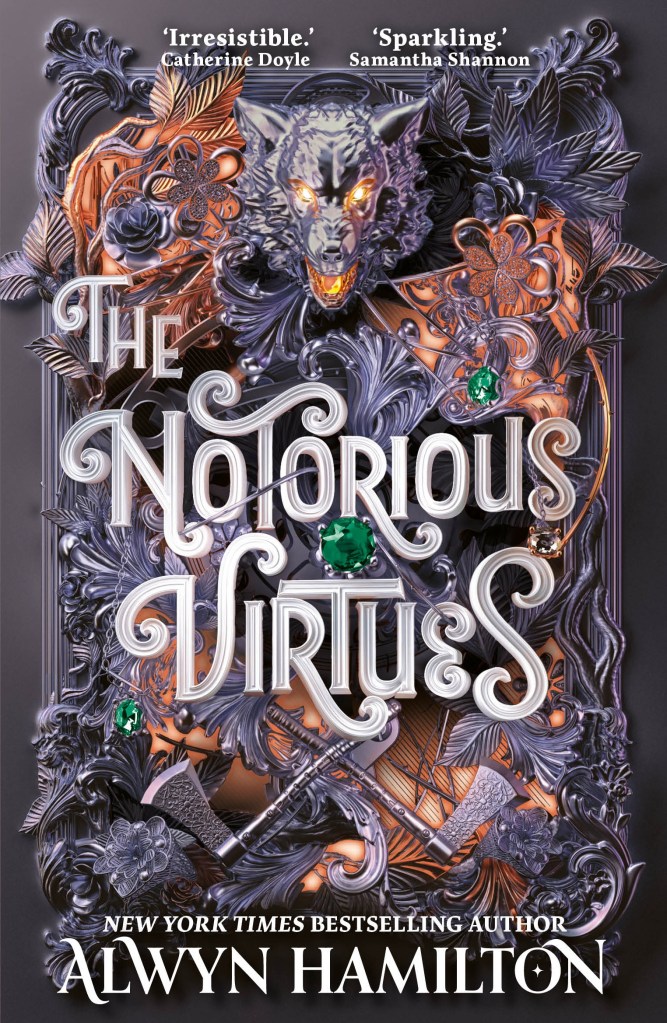
Interview: The Notorious Virtues by Alwyn Hamilton

The Notorious Virtues is 1920’s New York meets Grimm Fairytales. A group of heiresses compete to win their family’s money and magic in a tournament of virtues.

There are so many pieces that came together to make this story. It’s partly inspired by all the folktales of “The King had 3 sons and he sent them on a quest for a McGuffin to decide the heir”.

It’s also inspired by my friend who is a social worker and once pointed out that there is a recurring narrative in fantasy of glorifying a young person’s lost birth parent at the expense of the adoptive parents. It’s very you were raised by peasants but secretly you’re royalty, which is a terrible narrative for adoptive kids or kids in the foster system. She wished that fantasy would include more positive adoption stories. Apparently what I heard was write a story that subverts the narrative of the glorious perfect birth family that makes you special.

Well since you bring up world, one of the number one mistakes I see aspiring fantasy writers make is feeling like they need to have the whole world built before they start writing the story. Yes, of course you need to know some things, but the world will grow as you write it. No matter how prepared you are, you will inevitably hit something you have to invent on the fly. Don’t let building the world stop you from telling the story. Most of the time it’s an excuse.

This book was a built over such a long period of time that I would struggle to tell you what originally was in there and what came in the writing. The character of August is probably the biggest component that came in after I had pitched it. I realized quickly that Nora needed someone to talk to and be her mystery investigator sidekick (August would say she is the sidekick). And I think with him the mystery became a more active part of the book.

A lot of the charms were born from necessity in the world. I think it got cut in editing, but there was a charm that kept high heels from sinking into the grass at garden parties. I have been to enough outdoor weddings that I would gladly take a charmed shoe!

Authors aren’t supposed to have favourites… but my favourite is Nora, also known as Honora Holtzfall, the once heiress apparent trying to win back her place in the family, while also solving her mother’s murder. Nora is such a mix of brains, sass and reckless self-confidence. Writing her, and especially her banter with August, was the most fun.

I’ve heard the saying that you never learn to write a book, you only learn how to write the book you’re currently writing (and the next one is a whole new beast). I think that’s true to an extent, but I have always written better in a café than in my house, so I try to have a rhythm of leaving the house.

I feel like if I reveal anything about book 2 a sniper will appear pointed at my head. I am currently writing it, the fairy tale aspect is way bigger than in book 1, lots of fun creatures to see. And after that I have an idea I am so so so excited by. But we’ll just have to wait to see if I sell it!

New York Times bestselling author Alwyn Hamilton was born in Toronto and spent her early years bouncing between Europe and Canada until her parents settled in France. She moved to the UK when she was 18 and has been here ever since as an author/bookseller. Her first novel Rebel of the Sands was sold in 14 territories and won the Goodreads Choice Award for best debut. Her fourth book The Notorious Virtues will release in 2025. Follow @alwynhamilton on TikTok.

https://www.alwynhamilton.com/

PaperBound Magazine is an online magazine for the young, and the young at heart. We are dedicated to showcasing authors and illustrators for children’s and young adult fiction and we strive to deliver inspiring content, uplifting stories, and top tips for young and aspiring writers yet to burst on to the literary scene.

All our issues are completely free and run by volunteers, however if you would like to support PaperBound and the work we do, you can help us out by buying us a virtual book. We appreciate any support you can give us!

Don’t forget you can read with the latest issues of PaperBound Magazine – completely free – here.

Island of Influencers by Monique Turner
article, Blog, Blog series, Bookshelf, Interview, Interviews, on writing, Writing craft

Interview: Island of Influencers by Monique Turner

I’m a curious person by nature, and the concept of influence is something I’ve studied in depth. What makes this person’s message so hard to ignore? Why have the masses flocked to this ideology? I can’t rest until I find an answer, and this research is what led me to helping create informative videos on YouTube. The realms of social media are the perfect place to observe human behaviour, especially in regards to influence.

I started working behind the scenes of YouTube channels as both a personal assistant and a scriptwriter, and I was lucky enough to witness influence from inside the fishbowl. Suddenly, I had access to the private aspects of human behaviour through direct messages and emails, and it was fascinating to learn how many people wanted to live the influencer lifestyle and, in contrast, how many people had absolute disdain for anyone who did.

I began writing Island of Influencers as a way of responding to the desires of the masses on the outside looking in, and to process everything I was part of. Harper, my protagonist, is a reflection of all the people wanting to be inside the influencer world – yearning, desperate and naive. Belle, her famous cousin, is the antithesis of that fairytale – she’s the harsh reality that Harper refuses to see until it’s too late for both of them.

Island of Influencers is the result of years of social media observation and study of human behaviour, broken down into a fun, bite-sized concept that can be consumed by anyone who is remotely interested in internet culture.

Thank you! I had so much fun creating my characters, including their usernames, Tubeify channel niches, and even their channel logos.

Readathorien is my personal favourite! Obviously, I’m a huge book nerd, and I often consume booktube, booktok, and bookstagram content, so her username had to reflect her online niche. The username Readathorien is based off the viral fantasy series A Thorien of Witchers (a fictional book I created for my world), and her channel on Tubeify was started based around this series, so her fanbase is the same fanbase for the book series. Her username was birthed from the concept that art breeds more art, and I live for art that transcends its original format, when the work takes on a life of its own and the fans create new space for it all over the web to theorise about and build upon the lore.

Sssiguard has a reactions channel on Tubeify. His username is based off the Scandinavian name Sigurd, derived from the Old Norse name Sigurðr which means “victory” and “guardian”. From the get-go, Sssiguard sees himself as the victor, even before the competition has begun, and the triple ‘S’ comes from the sound made by a snake. Sssiguard’s actions in the book can be very sssnake-like. I changed ‘gurd’ to ‘guard’ because I wanted to emphasis that he sees himself as the guardian of his internet niche. In his eyes, reactions are his territory (proven in the Cancelled Club challenge).

Unlike Readathorien’s username, which is based off her niche, I wanted Sssiguard’s to be based off his personality.

Kottage Kay’s username is interesting, because how lucky is it that she has a name (Kay) that, when paired with a slightly altered spelling of cottage, so perfectly fits with her cottagecore channel niche! It’s almost like it was given to her by the gods, manufactured in some way, like she’s an industry plant destined to succeed in whatever she does. Who knows!

Absolutely! The Hunger Games is a series that captivated me when it was first released. I couldn’t help but compare it to my own world. I can see the parallels even clearer now as I grow older, and for me, the internet is a very dystopian place, so merging the two concepts together just worked.

Obviously, my main inspiration was YouTube, specifically large-scale competition games with huge stakes and disgusting sums of money to be won. That’s the foundation of the novel.

But this book was also inspired by George Orwell’s Nineteen-Eighty-Four, Joseph Heller’s Catch-22, and Ray Bradbury’s Fahrenheit 451. All of these books deal with censorship, how easy it is to influence a society, control through media, getting stuck in systems that benefit only the rich and powerful, and how certain tools and technologies can be used to distract the masses from the realities of the world.

Music has also inspired many of the stories I’ve written, Island of Influencers included. This one is hard to explain, but sometimes I just stumble upon a song and something about the musical composition or the lyrics just invokes this whirlwind of activity in my brain. In the duration of that three minute song, I can create an entire world and storyline based on the vibe, and then magic just happens.

While writing the beginning of Island, I listened to loads of songs where the lyrics focused heavily on success, status and money, but I then switched to cinematic, epic instrumental pieces as I transitioned into act three, which really helped to unfurl the humour of the novel and reveal the darkness hidden beneath.

It’s already changing, without a doubt! Technology has advanced so rapidly within the span of my own lifetime, and today the changes are almost daily. Trends come and go quicker than you can jump on the bandwagon, the algorithms switch-up before you can even figure them out, and the days of old-Hollywood celebrity have been replaced by overnight successes who fade from relevance just as quickly as they appeared on our screens.

The internet has become an uncontrollable beast and people are tired. We’re overwhelmed with content now and it’s getting harder to discern what is genuine, relatable content, and what is actually marketing and promotion disguised as genuine, relatable content. There’s been a radical change in how people engage online, there’s less connection between creator and consumer and we’re seeing a rise in passive lurking and low conversion rates from views to shares, comments and likes on all forms of content.

People looking to become content creators or influencers are trying to go too big too soon these days, everyone wants their first video/ book/ song/ post to be a viral hit, and to gain millions of followers and subscribers overnight. That isn’t sustainable, and we’ve seen evidence of that through those who have gone viral overnight and then fallen short because they have no catalogue behind them to be able to keep the momentum going.

Personally, I think we need to go back to the drawing board and remember what made the early days of social media so great. The audience doesn’t want to be mindlessly sold to, they don’t want to feel like a number on a page, or like they’re the product of a strangers empire. People want to feel seen and valued by the creators they follow. There’s no better feeling than watching your favourite content creator rise from nothing into the stratosphere, to feel like you’re part of something that others on the outside don’t understand. 

My best advice to anyone who wants to become a content creator is this: don’t aim to grow a fanbase, aim to create a community of like-minded people. That might mean that you start with two of your mates engaging with your stuff, and then a third and fourth person might find you organically, and then soon you’ll have ten people engaging with your content, and then fifty. It’s the snowball effect. It’s slow and frustrating, and the outer shell might flake away and change, but the core is solid.

I’m looking forward to the days of social media where creators are focusing on community again, and not just spewing out content for the sake of making a profit.  

The ending was my favourite part to write, simply because I knew it would throw people for a loop. To me, the whole novel is obscure, but the darkness in the first three-quarters is blanketed by humour and absurdity which puts the reader at ease, and when that blanket is lifted toward the end, it’s unsettling. It comes across as quite jarring, but the darkness was always there.

I mentioned in a previous answer that I was inspired by Joseph Heller’s Catch-22. I love how Heller used satire to draw attention to and criticise certain aspects of society and human behaviour. It’s the same tactic a magician uses, a slight-of-hand trick. 

In Island of Influencers, I said, “Look over here at this ridiculous, entertaining thing while I do something underhand in the shadows,” and then by the time the reader and the characters notice, it’s already too late. The seeds were sown from the first page and, in the end, we all must reap what we sow. 

Funnily enough, this is also a tactic used by those in power in our real world. What’s the best way to assert control over the masses without anyone noticing or putting up a fight? Distract the people elsewhere.

And as for Harper, does she regret becoming an influencer in the end? I think that’s open for interpretation. She got everything she ever wanted, her dream came true after years of trying to make it happen, but it came at a cost. Only the one who pays the price can decide whether it was worth it.

Personally, I would never want for myself what she now has. 

Some readers might feel cheated by the end, because of how obscure it is. But my intention was never to make the reader feel comfortable, but to show how easy it is to be deceived, even when you have all the clues laid out before you.  

I have just handed in book two of the Influencer series to my editor, and I’m super excited to dive into edits for this one. It follows different characters in the same world, trying to navigate social media in the days following book one. We do also get to see what happens to some of the characters from Island of Influencers, and you may be surprised by where they’ve ended up.

For now, that’s all I can say, but I will leave you with this little snippet that I think captures the vibe of book two perfectly: “Are you entertained yet?”

Monique was born and raised in the cold north of England on a diet of strong brews and thick gravy. Whilst growing up, she struggled to find her place in the world, so she vowed to create stories where those who don’t fit in can finally feel like they belong. When T.M. Turner isn’t writing, she can be found roaming the southern coast.

PaperBound Magazine is an online magazine for the young, and the young at heart. We are dedicated to showcasing authors and illustrators for children’s and young adult fiction and we strive to deliver inspiring content, uplifting stories, and top tips for young and aspiring writers yet to burst on to the literary scene.

All our issues are completely free and run by volunteers, however if you would like to support PaperBound and the work we do, you can help us out by buying us a virtual book. We appreciate any support you can give us!

Don’t forget you can read with the latest issues of PaperBound Magazine – completely free – here.

article, Blog, Blog series, Bookshelf, on writing, Writing craft

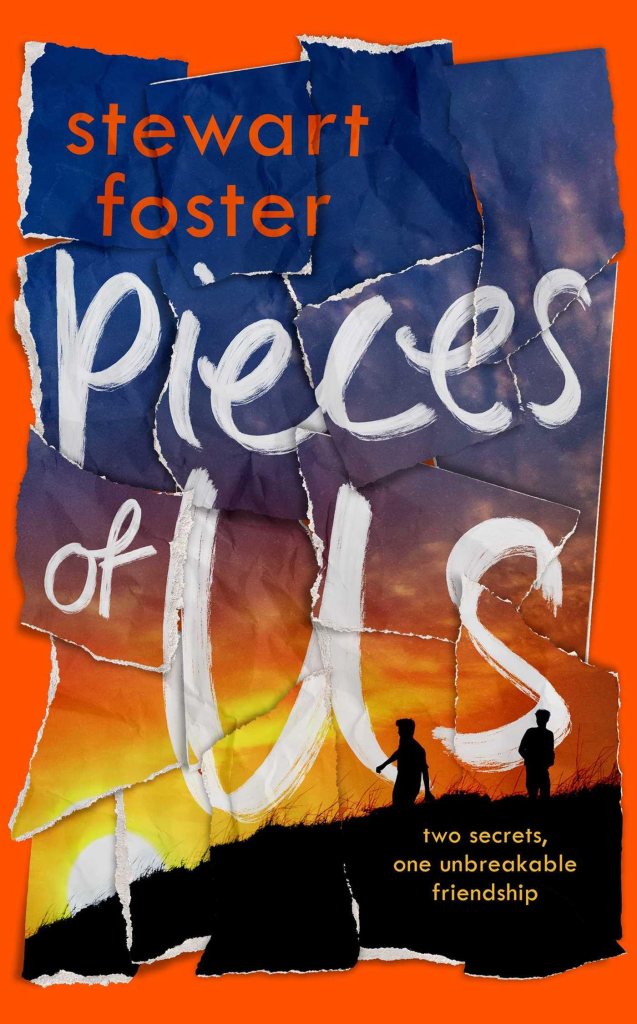
Guest post from author of YA novel ‘Pieces of Us’, Stewart Foster: Don’t Hide Behind the Songs

My character, seventeen-year-old Jonas, felt the same way. In the first chapter, he says to his best friend: ‘Louis, if ever I thought anyone would actually read this, I’m not sure I would write the first line.’ And I sat back from the screen and thought, ‘God, that is so true for me too.’

I kept writing, still with those worries in my head, not just about the bulimia but also the closeness of Jonas’s relationship with Louis. Later in the book, there’s a poem called The Cormorant. I wrote it one Sunday evening after watching a nature programme on TV showing a cormorant regurgitating food for its young. It repulsed me; an instant picture of what I was doing to myself in the bathroom. That poem went under my bed with thousands of other pieces of poetry I’d written since the age of ten.

I eventually showed it to my best friend two years later as we put songs together to record. He had no idea what The Cormorant was about, until late one night, I explained it – that it wasn’t about an ugly seabird, it was me. Like others, like my whole family, he had no idea of my secret, just thought I’d lost weight as I’d got taller. The next evening as we recorded it onto tape, he stopped midway through and said, ‘Stew, you could have told me, you didn’t have to hide it in a song.’

Looking back, I realise I wasn’t hiding behind the songs – showing him was my way of telling him, in the same way that you might write a diary and secretly hope someone might read it.

In a secondary school visit recently, I was reminded of how I used to feel at school, even later at university, because I believe this can be what mostly holds us back, like the Year Seven student I met recently who told me he found it hard to write.

‘Why?’ I asked him.

‘Because I always end up on my Xbox.’

‘No, why?’

‘Because I want to talk to my friends.’

‘No, why?’

‘Because I don’t have confidence, and I’m scared what my friends will think.’

‘There you go!’

The giggling in the room didn’t hide that that’s what the majority of classmates were thinking too: confidence, trust, peer pressure, what will my friends think?

Students are in the middle of the most confusing years of their lives, often feeling isolated in class, often (at university) hundreds of miles from home. Whether through song, poem, short story, third person, first person, or writing about dreams, it’s OK to put your feelings and emotions in them. In my case, a novel. And in that novel, what it took for me to write it – to block out those worries, block out those I thought would cast doubt – was to come up with this plan.

When my friendship ended with the person I’d first shown The Cormorant to, I was guilty of pushing those poems back under the bed until years later, whilst at university, I met someone who resurrected those feelings of close friendship and trust. They backed me with my writing – from emails to Facebook messages full of poetry, lines, thoughts, and chapters. They joined me in dreams of huge contracts and winning The Booker Prize.

And on those nights where doubts crept in, when Jonas’s actions became explicit and his secret eating disorder came out (along with it mine), I would hesitate over paragraphs, lines, words, and then I’d gather myself and say, ‘If I can say this to my friend, then I can write it in this book.’

It’s hard to put our feelings out there.

In poetry.

In songs.

In books. But for me, it became harder to say nothing at all.

Two secrets, an unbreakable bond … and a powerful and heartbreaking love letter to a life-changing friendship, from award-winning author, Stewart Foster.

As the summer before college begins, Jonas is hiding a secret. He suffers with bulimia, but no one knows. Not even he knows how bad it really is. Until he meets Louis, a confident dreamer who believes in a better future for Jonas and together they enjoy a sun-kissed summer filled with music, memories and life-changing moments.
But when tragedy strikes, Jonas must decide if he has the strength to face things alone ….

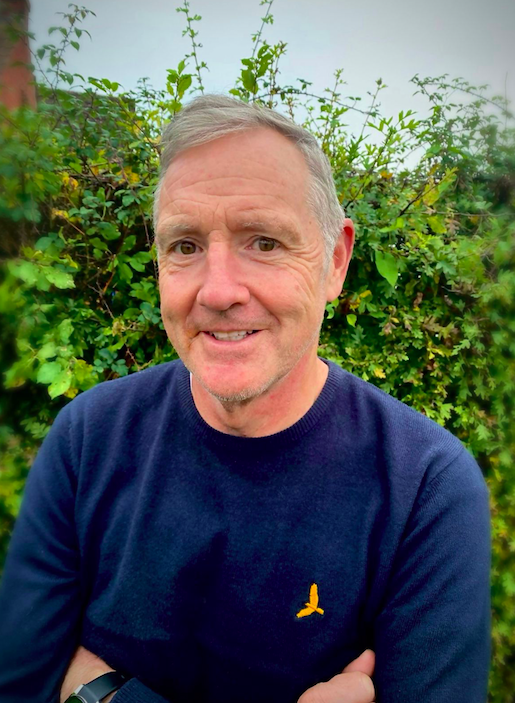
Stewart Foster is an adult and children’s novelist, born in Bath. His books have won multiple school and library awards and are recommended by Empathy Lab and Reading Well.
His first children’s book, The Bubble Boy, was published in 2016, winning Sainsbury’s Children’s Book Award in 2016 and many schools and libraries awards, as well as being nominated for The Carnegie Book Award.
Since then, Stewart has written four more children’s books: All the Things That Could Go Wrong, Checkmates, The Perfect Parent Project and Can You Feel the Noise?

PaperBound Magazine is an online magazine for the young, and the young at heart. We are dedicated to showcasing authors and illustrators for children’s and young adult fiction and we strive to deliver inspiring content, uplifting stories, and top tips for young and aspiring writers yet to burst on to the literary scene.

All our issues are completely free and run by volunteers, however if you would like to support PaperBound and the work we do, you can help us out by buying us a virtual book. We appreciate any support you can give us!

Don’t forget you can read with the latest issues of PaperBound Magazine – completely free – here.

article, Blog, Blog series, Bookshelf, Interview, Interviews, on writing, Writing craft

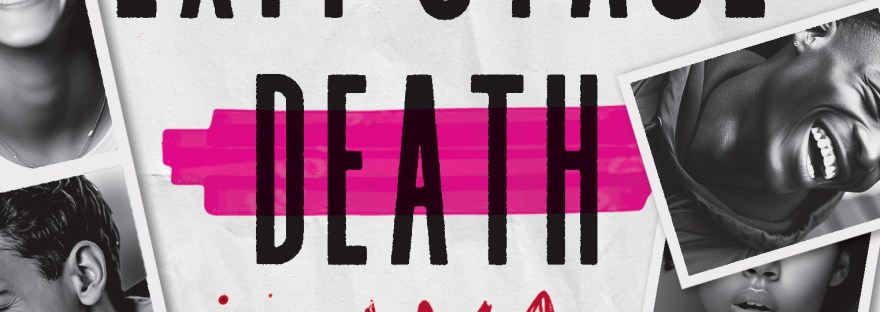
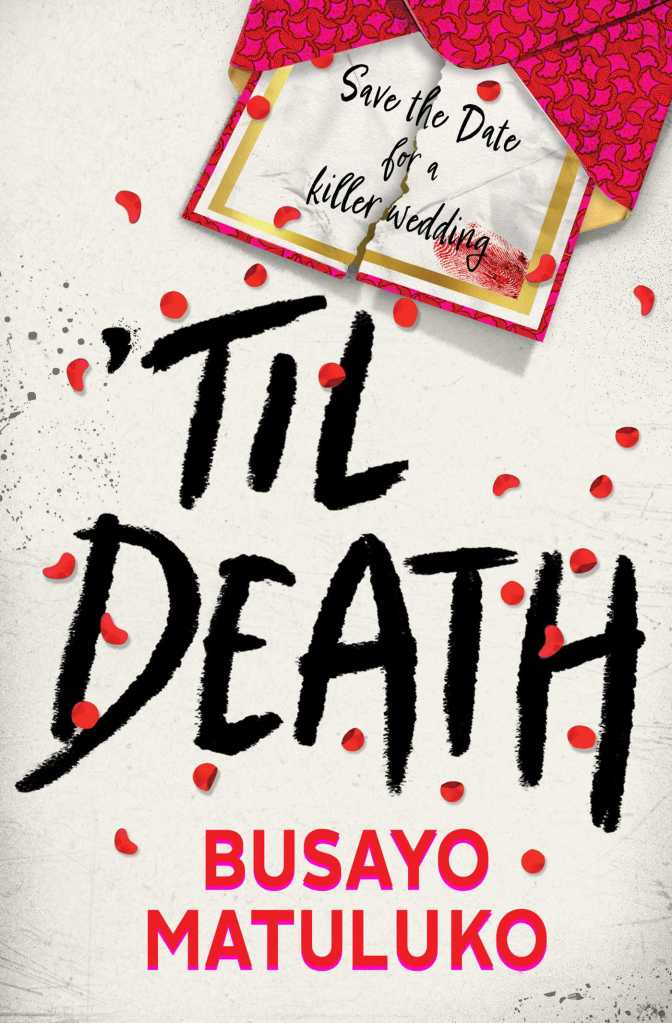
Interview: ’Til Death by Busayo Matuluko

’Til Death is a cosy-until-it’s-not mystery about a bride who is poisoned on her wedding day. After receiving threats telling her to cancel her wedding for over six months, her super sleuth cousin, Lara – who has a true passion for mysteries – decides to take it upon herself to solve the mystery of who is sending the notes and who has poisoned her cousin.

’Til Death came about after watching YouTube videos of Nigerian traditional weddings during the pandemic. I had a very morbid thought and said, “Wouldn’t it be crazy if she just died right now?” Now, that’s not a normal thought for a person to have, and I was like, “Busayo, that’s horrible… but as a mystery? Genius!” However, if I was going to write it, I had to know who did it, so I went to the worst-case scenario possible, and the story was born.

I wish I could say that I had a very intricate system and my own murder board like Lara, but unfortunately, it was a lot of back and forth editorially, trying to make sure everything fit in its place perfectly – especially because it was in such a short timeline. I had to make sure it was even possible to do this much in so few days. I will definitely be taking notes for my next book on how to keep a better system, I’ll just say that!

But to be honest, it was very easy to keep track of the characters because they lived in my head so naturally, and I very easily knew what one would say versus another. I also planted red herrings while I was writing, and a lot of them stuck, thankfully, through the editorial process. So, it’s nice to know that I at least did something right.

I think with weddings it would be hard not to include family dynamics and a huge cast of characters. When I set out to write ’Til Death, I knew that I wanted to introduce readers to not only Nigerian culture but Nigerian wedding culture, so the fusion of these was something I took much delight in.

Weddings already bring so much drama, but I feel like it is heightened when it’s a Nigerian wedding. You’ve got caterers arguing with mothers of the bride, and you’ve got guests moaning because they didn’t get enough party bags. All of these tidbits I definitely wanted to feature – I could write a whole book about weddings if you let me.

My favourite character to write, apart from Lara, would be Joseph. He’s just so annoying in the best way. I really loved finding pieces of dialogue that were extremely irritating but made a very good point. I also loved writing Seni and Derin’s feud as the wedding went on because I understood both sides equally. I see a lot of myself in Derin, in that I can be too trusting, but I understood some of Seni’s motives also – I can be just as petty, haha.

I think my interests with Lara align in the fact that we both love mystery novels. While I do like some aspects of true crime, I’m definitely not a buff like she is. I need to have a surge of energy to want to sit through a true crime documentary. But, of course, I feel as though if I were ever in the predicament, I could do it better than the criminals in the documentary.

It is funny that I say this because, at one point in my life, I did think I was going to be a forensic psychologist… but that dream was short-lived. Like Lara, my mum thought it wasn’t the best fit for me, but unlike Lara, she was right, haha.

Well, firstly, I hope they leave the book with a better understanding of sickle cell, but I also hope readers gain a new or better understanding and recognise the validity of invisible illnesses. These conditions can seem covert, even if it looks like someone’s life is fully under control and, in my character’s case, quite glamorous – but sometimes, there are factors they can’t control. I really hope it helps start up conversations about stigma.

So, I was writing before I became a BookTokker, but I used BookTok as an outlet to talk about my works in progress and get people excited about them. I can talk for days and will if you let me, so even when I didn’t think these books were going anywhere, I was still telling a lot of people about them –strangers, though, not my friends, because I felt embarrassed.

When I would post about my book, it made me want to continue writing because people were eager to read it based on just the basic premise. BookTok also helped me be introduced to my current agent, so in a way, I really have it to thank for helping me meet my agent, and then her to thank for everything after. It’s such a special little community.

  1. Put. The.  Words. Down. On. The. Page.
  2. Find what works for you and stick to it. You don’t need to listen to outside voices about their processes if it’s not going to work for you.
  3. There is someone out there that wants to read your story, and there is someone’s representation you will be fulfilling with your story.

I don’t think I am, but just for you guys!

My next novel is Desperate Housewives meets Devious Maids x Greenleaf.

If you are older (or just love nostalgic TV shows), it is based on the episode of Desperate Housewives where the wives have a dinner party at each other’s houses. Renee starts with drinks and appetisers, and Gabrielle ends with desserts… but when they get to Gabi’s house, there’s a dead body.

Set in Nigeria again, it will follow three housewives and their maids, with one character aiming to find out what they did with the dead body.

I think that’s all I can say.

Well, that and a familiar character will be coming back… and maybe going undercover.

GIVEAWAY

Like the sound of this novel? We’ve teamed up with Simon and Schuster to giveaway 3 copies of ’Til Death. Check out the details on our socials: Twitter/X (@paperboundmag) and Instagram (@paperboundmagazine). Giveaway ends 23:59 10/2/25. UK Only.

BUSAYO MATULUKO is a Black British-Nigerian nurse, YA/Crossover mystery and romance writer, and an extremely opinionated, award-nominated BookToker. As someone who grew up reading many books without the representation she desired, she started writing to fulfil that need. Her books are filled with vibrant Nigerian leads that talk too much, and she will always find a way to wriggle in two Black people falling in love. When she’s not writing, you can find her on Twitter at three a.m. tweeting her most random thoughts or binge-watching TV shows she’s already watched about a thousand times.

PaperBound Magazine is an online magazine for the young, and the young at heart. We are dedicated to showcasing authors and illustrators for children’s and young adult fiction and we strive to deliver inspiring content, uplifting stories, and top tips for young and aspiring writers yet to burst on to the literary scene.

All our issues are completely free and run by volunteers, however if you would like to support PaperBound and the work we do, you can help us out by buying us a virtual book. We appreciate any support you can give us!

Don’t forget you can read with the latest issues of PaperBound Magazine – completely free – here.

article, Blog, Blog series, Bookshelf, Interview, Interviews, on writing, Writing craft

Interview: The Vulpine by Polly Crosby

The Vulpine is a dystopian novel set in a world where disability and chronic illness have been outlawed. Children born with any sign of illness are labelled as ‘Imperfect’ and sent to the ‘Hospital for the Imperfect’. If parents refuse to give them up, then they risk them being snatched away by The Vulpine – hooded, cloaked monsters who live underground and feast on Imperfect children!

Ora is fifteen years old, and as far as she knows, she is perfectly healthy. But then one day she learns that her parents have been secretly giving her black-market medication, and that she too is Imperfect. Forced to confront a very different and frightening future, Ora sets out to confront the Vulpine, and in doing so, begins to unravel a web of dangerous secrets.

I love the freedom of writing dystopian fairytales, and the world building it allows, which is very different to writing my historical novels. I wrote This Tale during the Covid pandemic, when I was classed as extremely clinically vulnerable, and it was a wonderful world to escape to when my own world had shrunk to the size of my house.

I find writing for teens more challenging than writing for adults, because I remember the books I read as a teenager, and they meant so much to me. They helped shape who I am, and I feel I have a duty to be honest with and mindful of my readers – but this only means writing YA is even more rewarding!

I didn’t realise quite how much I was writing about my own chronic illness until I was deep into writing this story. In past years, I have shied away from writing about my own health, but the pandemic really made me analyse just what it’s like to be seen as different.

I hope The Vulpine will make readers a little more aware of diversity and difference in our own world, because every person has much to give to society, in spite of their differences – and quite often, because of them.

I have always loved folklore and fairy stories, and even in my earlier books for adults I use magical realism to heighten the feeling of ethereality in my novels. I really enjoy the play between reality and fantasy – the thought of a ghostly world that we can’t quite see. To me, it feels so much more enticing than full on horror (oh, and also, I’m a wimp!)

As someone who sits alone for hours writing, I crave time with other people to balance out those times alone. Life is never black and white, is it? No one person is all good or all evil, and I like the idea that we can be fearful and anxious but still have hope and love. 

“Crikey, that’s hard!” – is that good enough?! OK, umm … 

Fear…hope…and claws! 

Never give up. It took me twenty years – and four complete manuscripts – to finally get published. But writing is not just a job. It’s a passion. To me, it’s like breathing – it’s something I have to do. My top tip is to write every day. Set aside half an hour. Use your phone to make notes, write snippets of dialogue, ideas, settings. A successful story for me comes from the amalgamation of three different things.

With The Vulpine, those were a world where disability is banned, a monster hidden beneath the ground, and a girl who thinks she is healthy, and whose world is turned upside down when she finds out she is not.

I often find dialogue really helps me get into what a character’s like. It’s not until they start talking to people – arguing, joking, crying, laughing, that I realise exactly who they’re going to be. Also, writing in first person is great because it gives you a real idea of a person’s internal thoughts.

As to which character inspires me the most, I would have loved to have read Ora’s story when I was a teen, as she is far more fearless than me – I’m not sure I’d set out underground in search of monsters that crunch children’s bones! 

I’ve just finished writing a new novel for adults, a witchy, folkloric book set 250 years ago. YA-wise, I’m currently planning my next teen novel. I can’t say too much about it at the moment, but it’s going to have a huge, sweeping romance, and I’ll be doing some strange things with time… 

Polly Crosby grew up on the Suffolk coast, and now lives with her husband and son in the heart of Norfolk.

Polly writes dystopian fairytales for teens and gothic historical mysteries for adults, her latest of which, The House of Fever, came out last August. 

Huge thanks to Laura Jones for preparing the interview questions. Laura is one of our regular contributors and her reviews feature in issues of PaperBound Magazine. Read her review of The Vulpine in our forthcoming spring/summer issue, out later this year.

Laura Jones is a secondary school teacher in Cornwall. She teaches English and Media and recently completed an MA in Publishing. Laura is part of a local writing group and hopes to eventually complete one of the many book ideas she has saved on her laptop, some of which are inspired by the Cornish landscape.

PaperBound Magazine is an online magazine for the young, and the young at heart. We are dedicated to showcasing authors and illustrators for children’s and young adult fiction and we strive to deliver inspiring content, uplifting stories, and top tips for young and aspiring writers yet to burst on to the literary scene.

All our issues are completely free and run by volunteers, however if you would like to support PaperBound and the work we do, you can help us out by buying us a virtual book. We appreciate any support you can give us!

Don’t forget you can read with the latest issues of PaperBound Magazine – completely free – here.

article, Blog, Blog series, Bookshelf, on writing, Writing craft

Author of ‘Honeysuckle and Bone’, Trisha Tobias, on why we need Messy Protagonists

Young adult fiction is constantly changing. Part of that change can include making large leaps away from what’s old. But those leaps can create their own problems, like overcorrection. And while YA fiction has come a long way in depicting marginalized protagonists, allowing those same characters to embrace their imperfections on the page is the next step in crafting memorable heroes with relatable, meaningful stories. And I think we’re ready for it.

In my debut novel, Honeysuckle and Bone, eighteen-year-old Carina accepts an au pair job with a wealthy political family in Jamaica. But Carina isn’t just in Jamaica to pad her bank account. She’s got a history, one that fills her with so much shame that she runs away to escape the guilt—and the consequences of her actions. Except Carina soon learns that no matter how far she runs, she can’t escape what haunts her.

Carina is a Black teen who does her best, but “her best” tends to be a bit off. Honestly, it takes Carina a while to figure out how to properly deal with her issues. And in the meantime? She does almost everything…kind of wrong. At times, she’s more focused on self-preservation than “doing the right thing.” Which could make Carina frustrating to root for as a protagonist. But it also makes her very real.

Today, underrepresented YA protagonists are most at risk of being sanitized. In an extreme attempt to counterbalance decades of poor portrayals, these characters can sometimes find themselves flattened, no longer emulating how real teens think or behave. Instead, they present something more aspirational. They know what they shouldn’t do, and they’re rarely tempted to do those things anyway. They’re minimally judgmental or biased. They’re largely “unproblematic.”

It’s a strong swing of the storytelling pendulum, but it’s understandable. In the not-so-distant past, young adult fiction presented its marginalized teen protagonists (the few that existed, anyway) in…interesting ways. As a kid, it seemed to me that many books with characters who resembled me were either reductive reflections on American slavery or stories about troubled, “urban” Black teens. If not this, then my archetypal characters were sidekicks or “magical” helpers, probably with too much sass and a roll of the neck. It wasn’t great.

Cue the big push toward better depictions of characters with underrepresented identities. That shift towards positivity and away from stereotype was needed. Organizations like We Need Diverse Books have been instrumental in their vision, messaging, and education on this, and there’s still more work to do.

But where do we go from here?

We let the flawed marginalized main characters loose.

Of course, readers shouldn’t expect fake people to act in completely “real” ways all the time. After all, protagonists are meant to be bigger than life, and oftentimes, the audience feels they should be better than us common folks. But all of us, at some point, make decisions that stem from recklessness, selfishness, or prejudice. It’s not who we are at our best, but it is honest. We need to see some of that honesty in our protagonists.

Imperfect protagonists aren’t just fun—and challenging—to read about. They serve an important function for the audience. They act as models of personal growth and positive change. They reveal the complexity that comes with being a human in an ever-changing world. And these messy protagonists offer less-represented readers permission to be normal people rather than feeling like they must live up to an impossibly high standard of living—a standard that is often forced upon them.

Because the truth is this: we are all fallible. Yes, we should aspire to our ideals. But we will make mistakes. Luckily, fiction shows us that we can acknowledge our faults and choose to be better. Messy protagonists reveal that redemption is available to all who accept it, and change is possible, no matter where on the path someone starts.

Carina is deeply flawed—and that’s okay. She joins the growing ranks of marginalized teen protagonists who remind the rest of us that perfection isn’t the goal. Trying our best is. And all the missteps and mistakes? They’re unavoidable. In fact, they’re the whole point.

A deliciously dark YA contemporary gothic ghost story where even paradise is haunted, from debut author Trisha Tobias.
After a tragedy rips her life apart, Carina Marshall is looking to reinvent herself in her mother’s homeland of Jamaica. With her new gig as the au pair for the wealthy and powerful Hall family at Blackbead House, Carina wants nothing more than to disappear into their world of mango trees, tropical breezes and glamorous parties.
At first, Blackbead House seems like the perfect escape, but new beginnings don’t come easy. Because Carina isn’t who she says she is, and Blackbead House already knows…

Trisha Tobias grew up listening to her mother’s hushed ghost stories, tales of towering spirit wolves and the warning scent of honeysuckle because a duppy might be nearby. She isn’t sure if the myths are true, but they fuelled her imagination and her love for stories that are often only told in whispers. She is a 2019–2021 Highlights Foundation Diversity Fellow and a 2018 Walter Dean Myers Grant recipient. She is currently an associate developmental editor at Dovetail Fiction.

PaperBound Magazine is an online magazine for the young, and the young at heart. We are dedicated to showcasing authors and illustrators for children’s and young adult fiction and we strive to deliver inspiring content, uplifting stories, and top tips for young and aspiring writers yet to burst on to the literary scene.

All our issues are completely free and run by volunteers, however if you would like to support PaperBound and the work we do, you can help us out by buying us a virtual book. We appreciate any support you can give us!

Don’t forget you can read with the latest issues of PaperBound Magazine – completely free – here.

Blog, Blog series, Bookshelf, Interview, Interviews, on writing, Writing craft

Interview: YA author Cynthia So on their new release ‘This Feast of a Life’

This Feast of a Life centres on the lives of two teenagers, Auden and Valerie. Auden is learning how to cook from their parents, and they start a food blog where they can record their family’s recipes along with the stories that come with them. It’s also a space for them to use their new name, Auden, which they just picked for themself and don’t feel comfortable using anywhere else yet. 

Valerie’s mum, who loved cooking, passed away over a year ago – and the kitchen’s been left unused because Valerie and her dad both don’t know how to cook. But when Valerie discovers Auden’s food blog, it sparks a curiosity about food and cooking – as well as about the writer of the blog. Soon Auden and Valerie are meeting up and reviewing restaurants together, but will they figure out what it is that they’re truly hungry for in their lives? 

The initial idea for the book came from thinking about food blogs and how everyone always complains about the long preamble you have to scroll through before you get to the recipe. But sometimes I actually find the preamble kind of charming! So I thought: what if you fell in love with someone through reading their recipe preambles? It’s not quite what happens in the book in the end, but that’s the nugget of an idea that I started with.

I always knew that it had to be dual narrative based on the story I was trying to tell, which boiled down to this: the love story of two chaotic bisexuals who are deeply terrified of committing to a relationship for very different reasons. (Or at least Auden thinks of themself as bisexual in the beginning of the book, although their understanding of their sexuality evolves.) 

It’s crucial to the book that Auden and Valerie have extremely contrasting approaches to romance and dating, and I wanted to give them both equal space to explore their feelings.

I’ve never written a food blog, but I was a book blogger for a while. That and my experiences in fandom as well showed me what it was like to connect with someone online through a shared interest, and how absolutely vital some of those connections can feel. 

I’m very inspired by a lot of food blogs I come across! I especially love the Woks of Life, written by a family of four Chinese American cooks who also share stories from their travels. I love the warm vibe of this blog and the fact that there’s a whole family working on it together.  

Similarly, Made with Lau is a blog created by the son of a Chinese chef, to share his father’s recipes with the world, and the recipes are so wonderful because they’re also accompanied by videos of his father making them.

Yes, absolutely. As mentioned above, part of the joy of writing a dual narrative book is contrast, and it was fun to flesh out what makes Auden and Valerie so different. I loved writing a bigger, bustling family and exploring the pros and cons of being the baby of that family. It was nice to alternate between that and the quiet stillness of Valerie’s life – and I took care to show how important chosen family is, and how Valerie spends a lot of her time with her best friend and her best friend’s older sister. They’re family to her. But there’s still so much emptiness, especially when she goes home. I wanted to contrast that against Auden’s home life to really emphasise what’s missing from Valerie’s. 

However, both Auden and Valerie are in fact quite lonely characters, even if Auden has a much bigger family. I wanted readers to understand that it doesn’t matter how many people you have around you – loneliness comes from not being seen, and neither Auden nor Valerie feel very seen at the beginning of the book.

I’d love to say I have a writing routine, but I sadly don’t. Writing my first book and writing my second book felt like such different experiences, and I expect it will be the same every time I write a book – I will have to find a new way to write it. 

I’ve been writing stories ever since I can remember, but I stopped dreaming about publication somewhere along the way. Being selected as a New Voice for Proud, the 2019 LGBTQ+ YA anthology published by Little Tiger, changed my life. It helped me see a path towards writing as a career, and I started working hard on my first novel after that. My first book, If You Still Recognise Me, came out in June 2022, and it was wonderful to be shortlisted for the Waterstones Children’s Book Prize and the YA Book Prize in 2023. I love getting messages from readers who tell me that If You Still Recognise Me made them feel less alone, and I hope that This Feast of a Life will reach people in the same way. .

Know why you want to write for young adults, that’s the first thing. For me, it’s because I know how formative books were when I was that age, and how life-saving the right book could be. I felt a lot of things as a teenager that I really relied on books to help me navigate. 

The second thing is to have a very clear understanding of why you want to write this particular story, and what is most important to you about it. Writing a book takes a long time, and sometimes it’s easy to lose sight of why you’re doing it, and the overall shape of the story you want to tell, when you’re in the middle of wrangling plot points and herding characters. So make sure you know the heart of it: what about this story makes you feel alive writing it? Never forget that part. 

I’m always, always fond of writing moments of realisation in romance – when characters realise they want each other, and when characters give into that want.

Valerie’s journey with her grief felt very meaningful to me, and I loved giving her the space to express that grief in a variety of ways. 

I’m always, always fond of writing moments of realisation in romance – when characters realise they want each other, and when characters give into that want. This book was no exception! It’s like a roller coaster for me, the ones with the long, slow climb towards the top that feels almost torturous, and then the exhilarating rush of descent at the end. 

And of course, the food! I never tire of writing descriptions of food, honestly.

Cynthia So

Cynthia So is the author of If You Still Recognise Me, which was shortlisted for the Waterstones Children’s Book Prize and the YA Book Prize in 2023. They were one of the new voices in Proud, an anthology of LGBTQ+ YA stories, poems, and art by LGBTQ+ creators, published in 2019. Their short fiction and poetry have also appeared in Uncanny Magazine, Strange Horizons, and Anathema, among others. Cynthia was born in Hong Kong and lives in London with their wife.

PaperBound Magazine is an online magazine for the young, and the young at heart. We are dedicated to showcasing authors and illustrators for children’s and young adult fiction and we strive to deliver inspiring content, uplifting stories, and top tips for young and aspiring writers yet to burst on to the literary scene.

All our issues are completely free and run by volunteers, however if you would like to support PaperBound and the work we do, you can help us out by buying us a virtual book. We appreciate any support you can give us!

Don’t forget you can read with the latest issues of PaperBound Magazine – completely free – here.

Blog, Blog series, Bookshelf, Interview, Interviews, on writing, Writing craft

Halloween Special: ‘The Dark Within Us’ by Jess Popplewell

Of course! The Dark Within Us follows Jenny, a 16-year-old girl who is having a rough time. She’s fallen out with her mum and is therefore sleeping on her auntie’s sofa, which is clearly unsustainable. She’s fallen out with her best friend and been dumped by her first boyfriend – so when she meets a boy at a party who claims she doesn’t have a soul, this makes a weird sort of sense. Maybe if she can get her soul back, she can fix everything else as well. So, she decides to go with Luc – who it transpires, is a demon – into Hell in search of her soul. It’s inspired by a lot of things – not only did I leave home quite young, I also used to host for a youth homelessness charity so the idea of teenagers surviving via sofa-surfing is something I feel very strongly about. The book’s set sort of roughly in 2006, which is when I was a teenager, so I’ve also taken inspiration from TV, books and music of that era, most notably the TV show Skins.

Yes! When I was a teenager, I was a massive Goth and obsessed with religious and mythological perceptions of the afterlife. Some people get into horses and dolphins, I was slightly more morbid. I was always specifically interested in the way that rituals and beliefs around death evolve across cultures and over time – so I liked the idea of a modern teenager confronting centuries’ old beliefs and conceptions of the afterlife, especially ones like Inferno that have had such an influence on popular ideas of it even today (particularly in the West).

That’s a lovely thing to say, thank you! I have been known to say that Jenny is a cooler version of me as a teenager, but that’s not the whole truth. She was conceived more as someone I might have been friends with – I imagined her with my group of friends, and her personality was influenced by that. Also, as I mentioned earlier, I have some experience of working with young people, and I genuinely think teenagers are the most interesting people on the planet, mostly because they’re doing a lot of work all the time in figuring out how to navigate the complicated stuff life chucks at us. I wanted to show that through how Jenny navigates… some seriously complicated stuff.

In some ways no, because I do love all the characters in this book (well, maybe not Amber), but in terms of fun, probably Chloe-Lee and Joey. They’re such cryptic little weirdos, and cryptic little weirdos are almost always my favourite characters in any media. I’ve written so much backstory for them that had no place in the book, they still pop up in my head all the time.

Sure, how long do we have? The very first iteration of this book came about when I was 16. Over the years, characters have come and gone, plotlines have shifted, the relationship between Jenny and Luc has been wildly different, but the things that have always been the same are that Jenny starts out homeless, she goes to Hell because of Luc, and it’s heavily influenced by Dante’s Inferno and mythological references. I’ve written other things as well, but when the 2022 Chicken House Prize came around I knew this was the story to submit. For one thing, they ask for a full manuscript and this one was somewhat finished. I was in Reykjavik with a friend when I discovered I’d won, and Icelandic people seem to love ice cream an appropriate amount so we went out after the phone call and I had a mint choc chip in celebration. I met my agent through the prize as well, since she was one of the judges, and the whole process was incredibly positive. I’m so grateful the judges got what I was trying to do.

One: find a way to make time, whatever that means for you. For a long time I was working multiple jobs, or studying and working at the same time, and that’s the main reason it took me so long to write the book, because I just didn’t have the headspace for writing unless I was forced to by doing a writing course or my Creative Writing MA. It’s easier now because I know I’ve done it once and can do it again, but when you’re at that early stage it’s important to think about what you can do to make it happen.

Two: at the same time, don’t make yourself ill with the pressure. If you have lots of other responsibilities (parents, I don’t know how you do it!!), writing is often the thing that goes on the backburner, and that’s OK. Don’t beat yourself up over it. Remember that daydreaming the next scene you want to write before you get chance to write it… counts as writing!

Three: to help with the above, explore different ways of writing. Personally I use the notes app on my phone to jot down random dialogue snippets or an especially productive daydream. I like it because I can email it all to myself in one go when I’m next at my PC. I’ve also played a bit with speech to text dictation – I’m not great at the punctuation yet but it’s a great way to get quite a lot of work done in a short space of time, even if it all needs editing later on. You can’t edit an empty page, so something is better than nothing!

You can’t edit an empty page, so something is better than nothing!

I usually have 7 or 8 projects on the go at any given time – some of them are just for fun, like a 5-book series planned out in a cyberpunk dystopia (I call those projects my palate cleansers), but I’m also working on a couple of more serious projects. I do have ideas for more stories set in the world of The Dark Within Us; I’d love to write a follow up inspired by the themes in Purgatorio, but we’ll have to see if that pans out!

Photo by João Daniel Pereira

Jess Popplewell

Jess Popplewell is the author of The Dark Within Us, winner of the Times/Chicken House Chairman’s Prize 2022. She’s also a careers advisor in Higher Education, and has a series of free Careers Advice for Writers videos on TikTok (@jesspopps) and her website (jesspopplewell.com).

PaperBound Magazine is an online magazine for the young, and the young at heart. We are dedicated to showcasing authors and illustrators for children’s and young adult fiction and we strive to deliver inspiring content, uplifting stories, and top tips for young and aspiring writers yet to burst on to the literary scene.

All our issues are completely free and run by volunteers, however if you would like to support PaperBound and the work we do, you can help us out by buying us a virtual book. We appreciate any support you can give us!

Don’t forget you can read with the latest issues of PaperBound Magazine – completely free – here.

Blog, Blog series, Bookshelf, Interview, Interviews, on writing, Writing craft

Halloween Special: ‘Let’s Split Up’ by Bill Wood

Let’s Split Up follows a group of teenagers who investigate the murders of the IT couple at their school. Their search takes them to the supposedly haunted Carrington Manor. This book is my ode to Scooby-Doo, as well as 90s/2000s horror movies!

Honestly, anything Scooby-Doo. I had so many old VHS tapes that I watched over and over. Power Rangers was also a big one for me, but that didn’t exactly inspire this book. Then, as I got a bit older, and dipped my toes into horror, the late-90s films were my obsession for a while.

Definitely! My favourite thing about those 90s/2000s themed stories is the aspect of teen friendship. So, when I set out to write a ‘scarier Scooby-Doo novel,’ channelling this era was a no-brainer. It just felt so right.

Other than my dog, Macey, who is in the book (I had to!), the rest of the characters are not inspired by anyone. I did try and subvert a lot of cliché characters from horror movies though. Cam, for example, is the jock of the group but he’s not completely useless like a lot of depictions. He’s got a heart and has a lot more to him than you might expect.

For sure! I guess you can say there’s an element of the final girl trope in Let’s Split Up, but that’s also something I’ve tried to play with as well. Another big one is obvious from the title. Splitting up… But again, when the characters do have to split up, I tried to make a very good reason for it so you’re not screaming at the pages!

I started writing this at university, so it was all really fresh in my mind. I’m unsure if Let’s Split Up would be so inspired by film if I hadn’t started writing it when I did. But screenwriting is so helpful when it comes to writing dialogue because scripts are ninety-percent dialogue. I’ve found studying that for three years has really strengthened how believable my characters are.

TikTok is such a great social media because it connects you with people who enjoy the exact same things as you do, so you’re finding the ‘perfect audience,’ …

There’s pros and cons to it, of course, but it’s really helped with promoting the book. That’s a given. TikTok is such a great social media because it connects you with people who enjoy the exact same things as you do, so you’re finding the ‘perfect audience,’ if you will. TikTok also demystifies the author, if that makes sense. When I grew up, I never met any authors, so they seemed like these faceless people. Social media has definitely changed that.

I have a new YA mystery horror releasing autumn 2025. Like Let’s Split Up, it follows a group of teenagers. But this time around, we find ourselves in the Scottish Highlands…

Bill Wood

Bill Wood was born and raised in Birmingham, England. He has always had a love for all kinds of media and graduated from Birmingham City University in 2023 with a degree in Film & Screenwriting. When not writing, he is often found with a book and an iced coffee in hand, or filming ‘bookish’ social media content for his TikTok channel billreads, where he has amassed a following of over 124K. He currently lives with his family and Staffordshire Bull Terrier, Macey.

His debut novel Let’s Split Up (Scholastic, 2024) has become an instant bestseller and is a nail-biting and perfectly formed thriller for the YA BookTok generation – think Scooby Doo meets Pretty Little Liars.

PaperBound Magazine is an online magazine for the young, and the young at heart. We are dedicated to showcasing authors and illustrators for children’s and young adult fiction and we strive to deliver inspiring content, uplifting stories, and top tips for young and aspiring writers yet to burst on to the literary scene.

All our issues are completely free and run by volunteers, however if you would like to support PaperBound and the work we do, you can help us out by buying us a virtual book. We appreciate any support you can give us!

Don’t forget you can read with the latest issues of PaperBound Magazine – completely free – here.