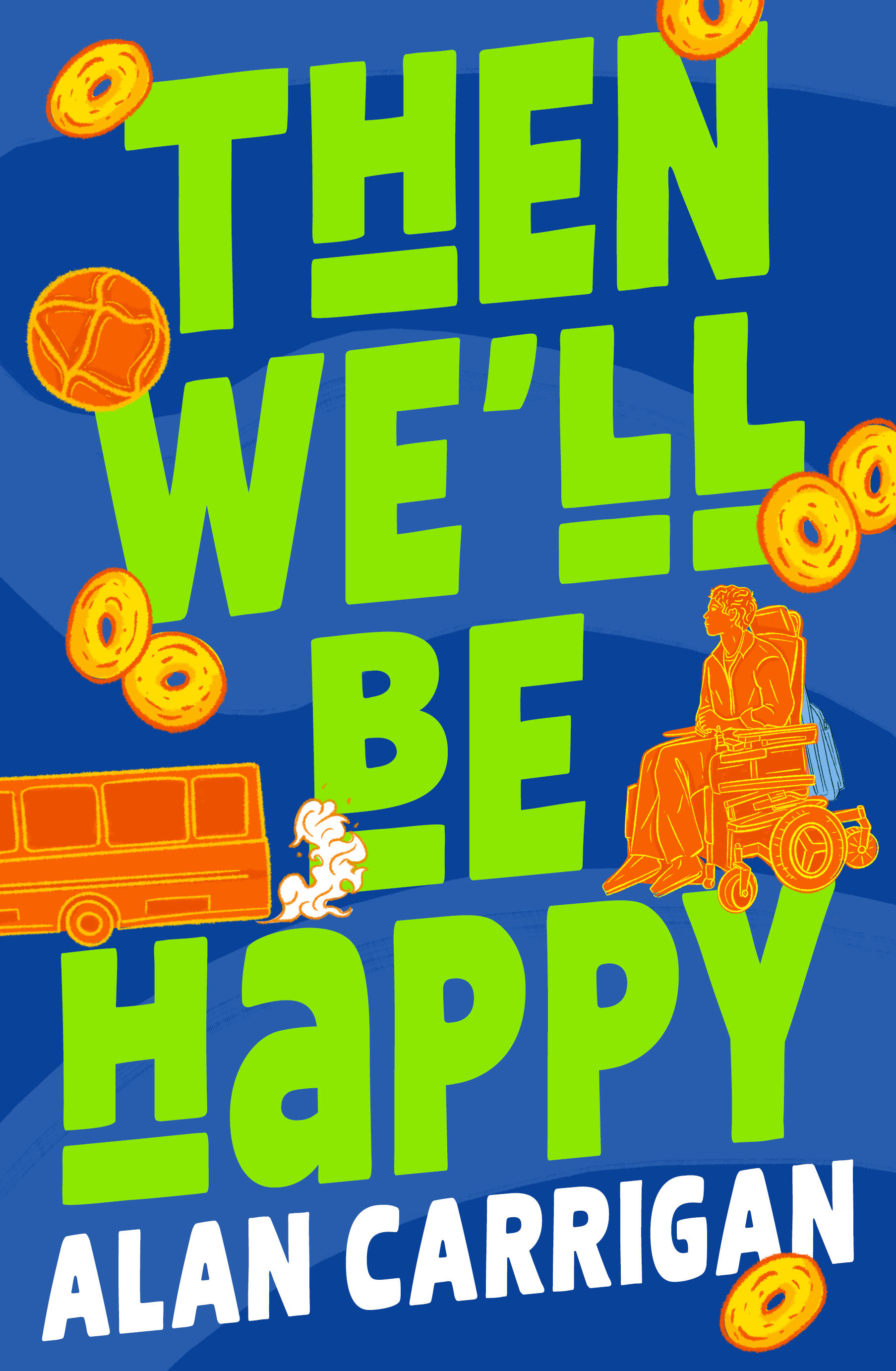
We are thrilled to welcome screenwriter and debut novelist Alan Carrigan to the PaperBound blog, where he chats to us about his YA debut Then We’ll Be Happy and what it means to have his book out there on the shelves for readers.
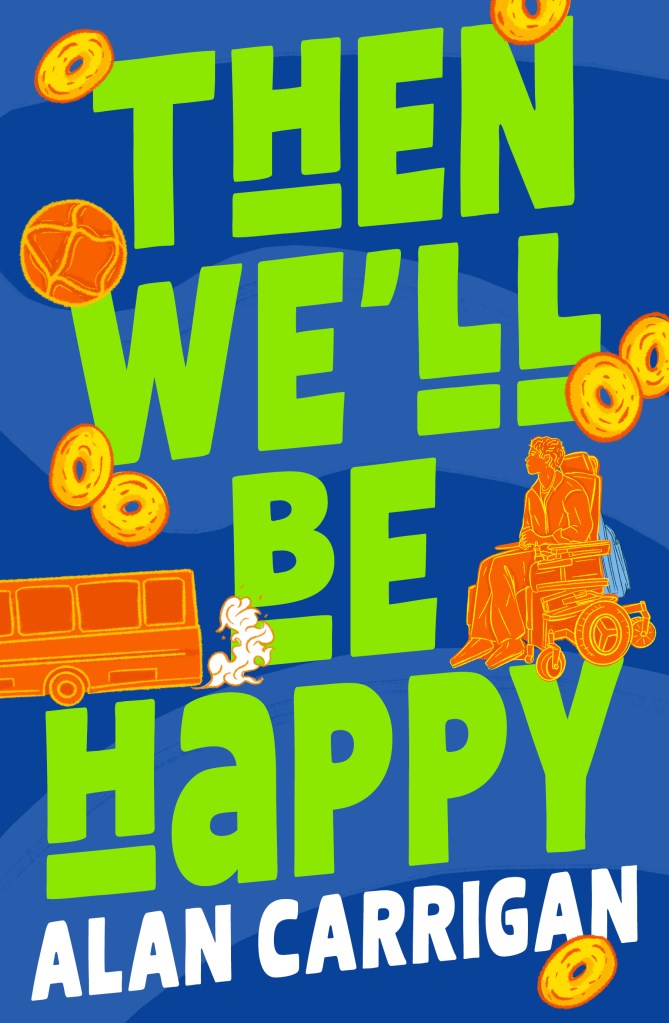
Could you tell us a little about your debut YA novel, Then We’ll Be Happy?
Sure! The novel follows seventeen-year-old Sam, who has cerebral palsy. When he is excluded from yet another school tour, he has to spend the day with Patrick, somebody who previously bullied him but is now himself also in a wheelchair. This drives Sam to create a campaign for an accessible bus but in doing so Sam gets more than he bargained for.
At its heart, it’s a story about finding your team in many senses of the word. But to find out what I mean by that, you’ll have to read the book.
Have you always wanted to write, and did you always know you wanted to write for a young audience?
I would say I have always been creative, but writing has been a fairly new development for me. I was the only wheelchair user in my school growing up, and I used to always talk to my friends about the lack of disability representation, so when I got out of the school system and had a bit more free time on my hands, I decided to write.
Truthfully, I’m more of a theatre person than a book person, but I didn’t know anybody in the theatre industry, and although getting a novel onto the shelf of bookstores takes a village, the initial writing phase is just you, the author, so it seemed like a good place to start.
… although getting a novel onto the shelf of bookstores takes a village, the initial writing phase is just you, the author, so it seemed like a good place to start.
You have a very active role in increasing positive representation when it comes to living with disability and sharing what that’s like, from public speaking to your own writing. What does it mean for you to have your book out there for young people to read, particularly those who also have disabilities?
That’s very kind of you to say. I am a person who is very grateful to have been given the opportunities that I have. When I was growing up, the representation of disability in media were often depressed, medical stereotypes, so I wanted to write something more grounded. The point of this novel is not to increase positive representation but to increase nuanced disability representation.
Just like any character, disabled characters can have a full range of emotions: happy, sad, or sometimes not knowing what to feel. The fact that the people of Chicken House saw what I was trying to do with this book and helped me turn it into reality means the world. And while it is impossible to know what readers may take from it, I know that teenage Alan would’ve loved this type of story when he was in school!
What is your favourite thing about your protagonist, Sam, and why? Did you have a favourite scene you wrote for this novel?
I think my favourite thing about Sam is his imperfections. He doesn’t have everything figured out, but he keeps going. For this reason, the pub scene was very interesting to write, but that’s all I can say without spoilers!
What do you hope readers – of any age – will take from this novel?
I don’t think it’s for me to say what readers get out of stories, but I hope readers can use this book as a springboard for starting conversation. I know the plot focuses a lot around finding community, but I think that is something that story in general is also good for. Conversation and maybe a few laughs along the way.
… over time I learned publishers, for the most part, aren’t looking for perfection, they’re looking for a good story, so don’t let your tools get in the way!
What are your top three book recommendations for young people right now, and what did you enjoy reading as a child?
I think Elle McNicoll is just fantastic in both her YA and adult novels, the latter of which is one of my current reads.
Nathanael Lessore is genuinely laugh out loud funny, anytime I listen to one of his stories on audiobook. I know it’s going to be a good time.
There are also lots of great Irish writers: Allison Weatherby, Stephen Daly, Jenny Ireland, Sue Divin, and Dave Rudden, to name but a few – all phenomenal writers and lovely people as well.
My favourite author, when I was a teenager, was John Green; he has a new book coming out later this year, which is an adult book, and I’m very excited to read it. I know he is quite well-known. But if you haven’t read John Green’s YA books, I would highly recommend them.
Do you have any writing advice for our readers, particularly young writers who are just starting out on their journey?
Writing doesn’t actually have to mean physically writing.
If that is a barrier for you, you can create stories in another way that is more accessible to your needs. Technically, when I write, I dictate; most computers or writing software now have some way of speaking to the computer. You can even do it on a mobile device.
Now I will say that you will need to go back and correct it manually, as in my experience it only picks up part of what you say. Dictation does eliminate the fear of the blank page, and in a way, for every draft you’re writing, you’re actually writing two because when you go back and correct it, you might start to add things, but the important thing is that you’ve got started!
When my novel was picked up to be published my grammar wasn’t the best, but over time I learned publishers, for the most part, aren’t looking for perfection, they’re looking for a good story, so don’t let your tools get in the way!
Can you tell us about anything else you’re working on right now?
I’ve got nothing contracted as of me writing this, but I do have lots of ideas, so hopefully I’ll get to publish another book at some point. My ideas range from contemporary to fantastical, so I’m not sure which direction I’m going next, but I’m excited to find out!
Then We’ll Be Happy by Alan Carrigan is out 30 July 2026, published by Chicken House.
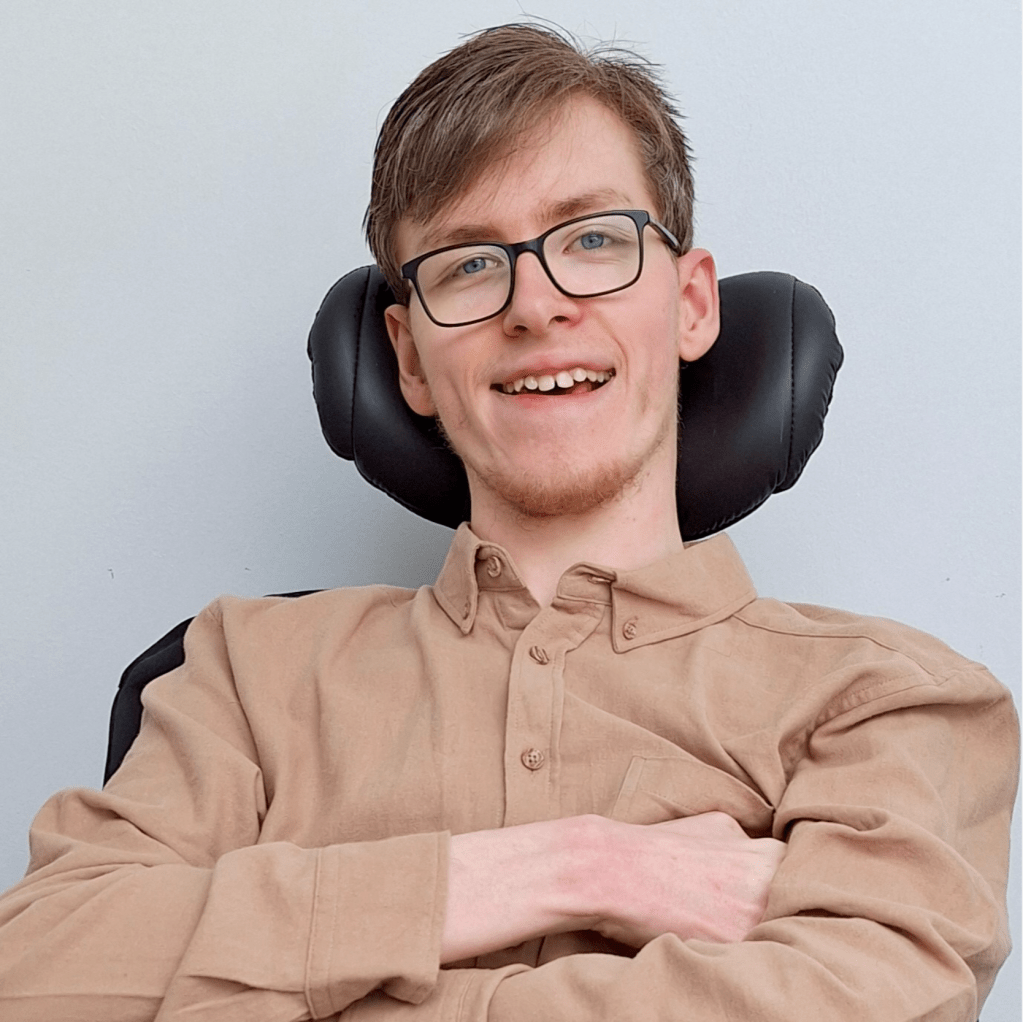
Alan Carrigan
Alan Carrigan is an Irish novelist and screenwriter with quadriplegic cerebral palsy who has worked as a script editor for Ink and Light Films and D11 Stories, and was one of the writers selected for Screen Stories 2025 with Tilting the Lens and Screen Ireland.
His own work focuses on character-driven, witty, and nuanced stories, most of which feature the types of authentically disabled characters he needed but rarely saw growing up.
While his words can be found on the page, his eyes are often glued to a stage, as he is a big fan of musical theatre.