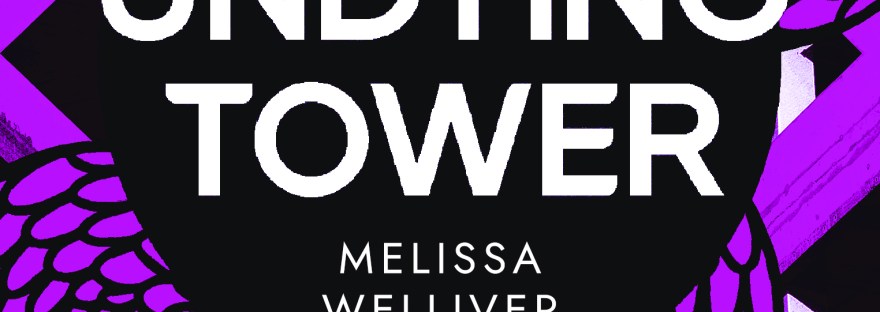
We are so pleased to share another wonderful article on writing, this time from Melissa Welliver whose books are already firm favourites with the PaperBound team. Here, join Melissa as she explores writing alternate histories when it comes to creating her own fiction.
What does studying the past tell us about the future?
A lot of people don’t know this but I did a joint-honours degree, and my final year was weighted one quarter towards English Literature, and the other three quarters towards History. That meant I ended up doing my dissertation on the Tudor period, which led me to the works of my favourite Tudor: Sir Thomas More. If you don’t know Thomas More and you love dystopia, well, listen up, because he invented it. Or at least, he coined the entire usage of Utopia in the first place, letting future writers subvert it for their own nefarious needs (read: writing a really cool story).
Thomas More’s Utopia – a falsified account of his journey to a seemingly perfect country named, you guessed it, Utopia – was arguably about an imagined, perhaps hoped for, future about how Tudor England and the world could run if we looked to a fairer, brighter future. The clue is in the title, but the people of Utopia were happy, balanced, had no need for money, and well cared for. So is it any wonder that when we as writers look into these topics, we end up imagining the worst possible scenario instead, to really show a mirror to the world we live in and discover what we truly see as Utopia?
So what does all this have to do with alternate histories? Well, just as Thomas More wrote about an alternate past, we do much the same when worldbuilding our dystopian futures. Most dystopias take route in a big change, something familiar to our own world but knocked off its axis with a cataclysmic event. This can be a change in our own pasts, such as in The Man in the High Castle, which imagines a world in which the Nazis won. The Fallout TV series and games are set in an alternate future where the timeline changes drastically after World War Two, to include vacuum tube electronics as opposed to circuit boards. Despite the diverges in these timelines happening in the past, Dystopias often seek to reflect what many decades of human endeavour past these points looks like in the future – and more importantly to the reader, whether we can stop them coming into being.
In The Undying Tower, I was most interested in exploring overpopulation and its effect on climate change. Because I knew how important these themes were up front, I was able to find SFF ways to incorporate them into the book during the early planning process. My lovely friend Caroline passed away from cancer (Glioblastoma Multiforme) during the writing process, and that made me really quite angry. All I could think about was what it would be like to live in a world where people don’t get sick, cancer was gone, and people lived forever. Caroline was a big believer in the planet we lived on, and I know she too was worried about the effects of overpopulation on climate change. And thus, the central idea of the book was formed. A small sect of society, known as the Undying, that could survive illness and never die from old age – and therefore inadvertently create an even bigger population boom.
… I even went on a trip to Chernobyl to fully understand the effects of nuclear power, especially on the environment when things go wrong (TLDR; the environment will eventually grow back, but the human outlook? Not great).
I knew I wanted to explore the accelerated effects of climate change after such a catalyst as the discovery of the Undying, so I knew I had to craft an alternate timeline where my book could take place. So despite being set in the future, I wanted it to take place decades into an overpopulation crisis, and see how that affected the world we live in now, to create my future one. I looked up flood maps for melted ice caps and food storage facilities in the UK. I even went on a trip to Chernobyl to fully understand the effects of nuclear power, especially on the environment when things go wrong (TLDR; the environment will eventually grow back, but the human outlook? Not great).
In essence, I truly believe that everything we learn about our history can help shape our futures. And writing alternate history can help writers explore broader themes in an evolved future, plus help readers to see the similarities in the world we live in. Writing alternate histories isn’t just for fiction – I hope it will help in reality, too.
Melissa Welliver
Melissa Welliver is a shortlisted author specialising in YA fiction. In the genre, she has produced two dystopian rom-coms, My Love Life and the Apocalypse and Soulmates and Other Ways toDie.
The Undying Tower is her first book in a trilogy.Melissa writes speculative fiction about how the end of the world is never really the end of the world. After studying Creative Writing at the University of Manchester, she went on to complete Curtis Brown’s Creative Writing for Children course. Her work has listed in Bath Novel Award, Mslexia, the Hachette Children’s Novel Award and the Wells Book for Children Competition.
The Undying Tower is published by UCLan and out now.
PaperBound Magazine is an online magazine for the young, and the young at heart. We are dedicated to showcasing authors and illustrators for children’s and young adult fiction and we strive to deliver inspiring content, uplifting stories, and top tips for young and aspiring writers yet to burst on to the literary scene.
All our issues are completely free and run by volunteers, however if you would like to support PaperBound and the work we do, you can help us out by buying us a virtual book. We appreciate any support you can give us!
Don’t forget you can read with the latest issues of PaperBound Magazine – completely free – here.
We are excited to bring you another fascinating article on writing, this time from the unique perspective of Branford Boase Award judge Christine Pillainayagam, who shares her thoughts on the judging process, and her thoughts on why writing for children is so important.
Brandford Boase Award 2024
Founded in 2000, the Branford Boase Award was set up in memory of award-winning author Henrietta Branford and her editor Wendy Boase of Walker Books, who both died in 1999, and is unique in honouring author as well as editor.
When I wrote my debut novel Ellie Pillai Is Brown, I wrote it for me. Or more accurately, for 15 year old me. A girl who’d never seen herself – a brown, second generation, Catholic, Tamil immigrant – reflected in the world around her. Not in books or magazines or films or music. The places she looked to for comfort and guidance, never showed her a version of who she could be. Growing up, that feeling of invisibility, of not belonging, sticks. Like glue on the inside of a book spine, it forms a fundamental part of your structure.
Decades later, I sat down at my computer and a book began to pour out of me. I remember vividly the feeling of typing the first words onto a blank page – My name is Ellie. Ellie Pillai – and so my hero was born. Both me, and so much more than me, Ellie is a 15 year old brown girl caught between two cultures – a traditional Tamil upbringing with her family at home, and the life of a classic British teenager at school.
This story, loosely based on some of my own experiences as a music obsessed teenager growing up in a predominantly white area, is what the book industry describes as ‘own voice’ – meaning exactly that. A book written by an author with intimate knowledge and understanding of the material, because it is lived first hand.
As a debut author, taking an ‘own voice’ story into the world can be frightening. It can feel as if not simply your writing is being judged, but yourself and the validity and relevance of your experiences. I was told time and time again, by agents and publishers alike, that my story wasn’t really a story. That there wasn’t a ‘hook’ or a sense of jeopardy, yet to me, I felt the transformation of this shy 15 year old from someone determined to be invisible out of fear of racism, to someone with the courage to stand up and stand out, was a story needed by so many children today. Luckily, my brilliant agent and publisher agreed – and so did the judges of the Branford Boase Award who made me the winner of the prize in 2023.
Winning the BBA has had a profound impact on how I now view children’s stories and their importance in the world. The foundation they build in young people’s lives. The glue we create in their book spines. This year as a judge for the prize, I was delighted to see more ‘own voice’ stories being promoted by publishers. Books that speak to the reality of children’s lives and represent every version of who they are and who they could be.
With a longlist of 25 incredible books, my fellow judges and I had some spirited discussions about who would make the shortlist, but in the end, the word that comes to mind for all 6 shortlisted novels is ‘powerful’. Each one, through a mix of humour, joy, love, pain, fear, compassion, representation, felt powerful. Stories that stick with you long after you turn the final page.
… that feeling of invisibility, of not belonging, sticks. Like glue on the inside of a book spine, it forms a fundamental part of your structure.
Like the amazing You Think You Know Me by Ayaan Mohamud, which gripped the judges with its use of pace and tension as a terrible incident unfolds, and deals sensitively and beautifully with themes of racism, Islamophobia and microaggressions. Or the hilarious The Swifts by Beth Lincoln, a classic whodunnit full of twists and turns that has such a distinctive voice and is so cleverly layered with themes of identity and family that it becomes a celebration of individuality. The Jhalak Prize winning Safiyyah’s War by Hiba Noor Khan, a compassionate story full of heart, which taught us something we didn’t know, then made us want to learn more about it. The brilliant The First Move by Jenny Ireland, a YA love story with depth, that speaks openly and authentically about disability and covers themes from LGBTQIA+, to mental health and housing security. The outstanding The Final Move by Matt Goodfellow, a verse novel that draws you into a world so often unrepresented in children’s books – a hopeful, playful masterpiece.
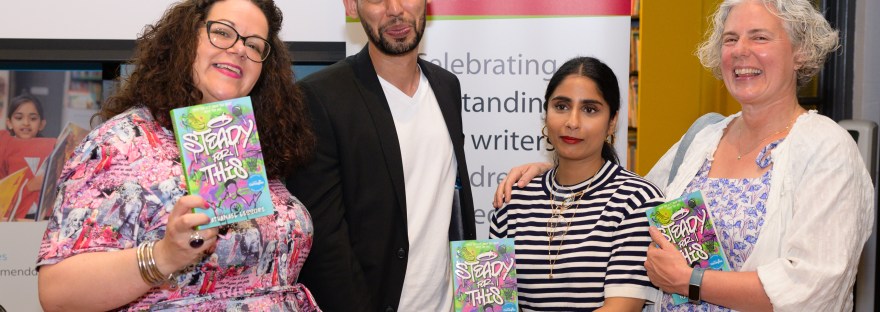
And of course, our wonderful 2024 Branford Boase Award winner Steady For This by Nathanael Lessore, a book of joy, emotion, light and shade. A story that confronts heavy subject matter in a life affirming and generous way. We wanted to push this brilliantly funny book into the hands of as many children as we could.
Each of these powerful novels represents the future of children’s books. One that is filled with hope and safety, whoever you are.
The complete list of titles on the 2024 shortlist are:
The Final Year Matt Goodfellow, illustrated by Joe Todd-Stanton, edited by Charlotte Hacking (Otter-Barry Books)
The First Move by Jenny Ireland, edited by Ruth Knowles with Sara Jafari (Penguin)
Safiyyah’s War by Hiba Noor Khan, edited by Eloise Wilson (Andersen Press)
Steady for This by Nathanael Lessore, edited by Ella Whiddett and Ruth Bennett (Hot Key Books)
The Swifts by Beth Lincoln, illustrated by Claire Powell, edited by Ben Horslen and Julie Strauss-Gabel (Puffin)
You Think You Know Me by Ayaan Mohamud, edited by Sarah Stewart (Usborne)
Christine Pillainayagam was born in Norwich, grew up in Sheringham and attended school in Holt and Norwich. She now lives in Faversham in Kent. She is a writer and retail strategist. A mild obsession with The Beatles and the desire to write a story that reflected her own experiences growing up as a first-generation immigrant led her to put that love of music and words into a book. Ellie Pillai is Brown features songs written by the protagonist, Ellie, and they are available to listen to via QR codes in the book. Ellie Pillai is Brown was shortlisted for the Waterstones Children’s Book Award and the Jhalak Children’s and YA Prize and won the 2023 Branford Boase Award.
Ellie Pillai is Brown, Ellie Pillai is (almost) in Love and Ellie Pillai is Not Done Yet are out now.
PaperBound Magazine is an online magazine for the young, and the young at heart. We are dedicated to showcasing authors and illustrators for children’s and young adult fiction and we strive to deliver inspiring content, uplifting stories, and top tips for young and aspiring writers yet to burst on to the literary scene.
All our issues are completely free and run by volunteers, however if you would like to support PaperBound and the work we do, you can help us out by buying us a virtual book. We appreciate any support you can give us!
Don’t forget you can read with the latest issues of PaperBound Magazine – completely free – here.
We spoke to the author of The Eternal Return of Clara Hart, Louise Finch, about her new novel – Iris Green, Unseen – a YA novel with a speculative twist.
Tell us a little bit about Iris Green, Unseen.
Sure! Iris Green, Unseen is about a talented, but shy street photographer who, on the day she discovers her boyfriend is cheating on her with her best friend, starts turning invisible. As she tries to put herself and her life back together, Iris has to work out some difficult truths about herself and the people around her as well as trying not to fade away entirely.
It’s a novel about self-discovery, self-confidence and allowing yourself to be really seen.
The novel cleverly weaves art and photography throughout. Where did this idea come from? Is it also something you are interested in?
First of all, I have to confess that I’m actually married to a photographer! So that was not only immensely helpful when it came to some of the technical questions, but also certainly contributed to the inspiration behind Iris’s art.
Also, although I’m not a particularly good photographer myself, I have always been interested in art and studied History of Art at uni. One artist whose work and story really inspires me is Vivian Maier, and she features quite prominently in the novel. Maier was an amazing and prolific street photographer who was entirely unknown in her lifetime, but her posthumous discovery has brought not only acclaim and recognition for her work, but also a lot of interest and speculation about her life. Her story raises so many interesting questions about why we make art and the exposure that comes with sharing it, which are certainly things Iris grapples with.
I also dabbled with a little darkroom photography once upon a time too and remain fascinated by the process. That moment when the picture begins to develop really is special and reminds me of how ideas arrive for novels – emerging on the blank page seemingly out of nowhere, but actually with a lot of hidden work and time to get to that stage.
What comes first for you when coming up with an idea for a book: the character, the concept, a setting, something else? Do you tend to plot or pants your way through writing a book?
I am a pantser to my core, unfortunately, writing my first drafts in a sometimes quite fragmented and chaotic way before going back through and attempting to impose order through edits. I’d love to be able to piece together a plot without writing the whole thing down scene by scene, but that doesn’t seem to be how my brain works.
Similarly, my ideas can start from anywhere and aren’t usually something I sit down and try to make happen. With Iris, the concept arrived first, but it brought the character along with it, because I knew immediately the kind of girl who would be manifesting her own invisibility.
Iris Green, Unseen deals with different types of relationships such as friendships, family and romantic relationships, whilst also looking inwards at loneliness, self-confidence and personal identity, among other things. What was most important to you when writing this book? How much of this did you know when you started writing it? Did anything appear and surprise you during the process?
What felt important to me was to focus on the interaction between all those relationships and how Iris feels about herself. From the start this was always about being seen and known by yourself and others, why that matters and how much it hurts when people get it wrong. While I had a sense of that when starting to write, I did end up going off on tangents during the writing that were less relevant and eventually had to be cut, which I think is inevitable when you’re not a plotter.
One thing that emerged during drafting which I enjoyed exploring was all the contradictions in Iris’s character and her relationships. For example, she’s someone who feels unworthy and doesn’t want to ask for anything from anyone, but ends up needing people to be there for her quite a bit. She’s hyper observant when it come to small slights, or the detail of a street scene, but fails to see Baker’s genuine interest in her.
I’m always mindful that, while my characters aren’t real people, my readers are.
This book covers emotions and feelings that we and many other people will be able to relate to, and it does so with such sensitivity and skill. Do you have any advice for writers who would like to write about similar topics, especially for young readers?
My main advice is to be as honest as possible while also offering hope and empathy. I’m always mindful that, while my characters aren’t real people, my readers are. I believe that when writing about emotional real-world issues, writers have a responsibility to leave readers feeling safe and with a sense of optimism, even if things aren’t perfect in character’s lives by the final page.
Other than that, it’s always a good idea to ask trusted readers for feedback, because none of us can never see all angles of our own work. I’d be nowhere without my brilliant writer friends!
Both The Eternal Return of Clara Hart and Iris Green, Unseen deal with very realistic topics, but with a speculative twist. Do you have any other ideas like this up your sleeve? Can you tell us about anything else you’re working on?
I do! I’m currently working on a horror novel, which is a slight change of direction, but not a total departure as it weaves together some real-world horrors with their supernatural counterparts.
Louise Finch
Louise Finch is an autistic author who lives on the Surrey/Hampshire border with her partner and two dogs surrounded by vintage furniture and too many houseplants. The Eternal Return of Clara Hart, Louise Finch’s YA debut, was published by Little Island Books in 2022. It was shortlisted for the Yoto Carnegie Medal for Writing, the Branford Boase Award, the Great Reads Award, and the Bookseller YA Book Prize.
Iris Green, Unseen is published by Scholastic and is out now.
PaperBound Magazine is an online magazine for the young, and the young at heart. We are dedicated to showcasing authors and illustrators for children’s and young adult fiction and we strive to deliver inspiring content, uplifting stories, and top tips for young and aspiring writers yet to burst on to the literary scene.
All our issues are completely free and run by volunteers, however if you would like to support PaperBound and the work we do, you can help us out by buying us a virtual book. We appreciate any support you can give us!
Don’t forget you can read with the latest issues of PaperBound Magazine – completely free – here.
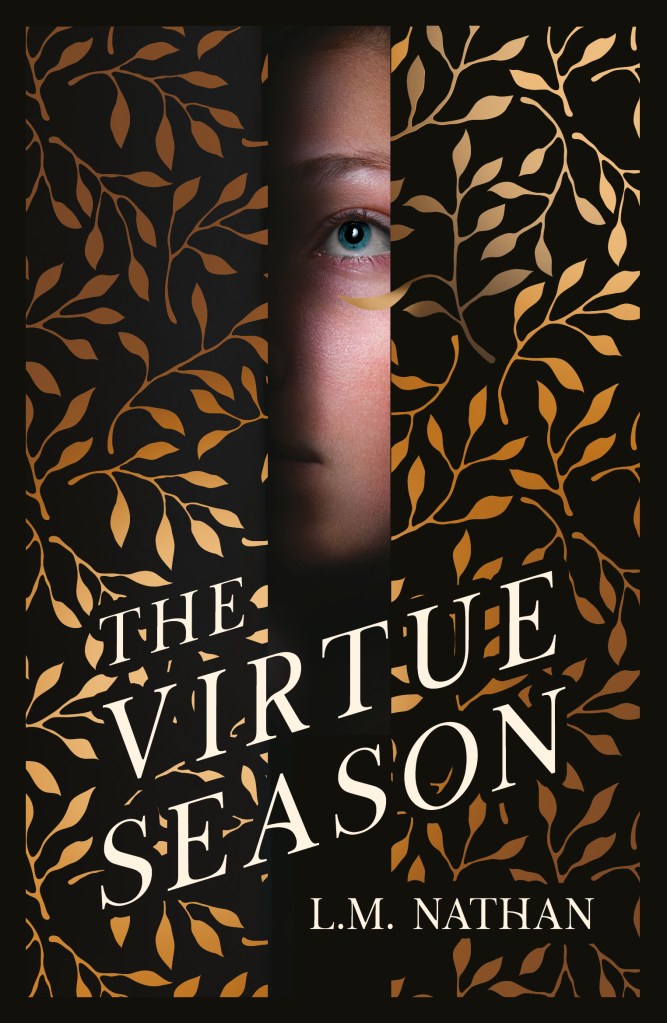
L.M. Nathan chats about her debut YA The Virtue Season, a dystopian novel which combines elements of Bridgerton, The Hunger Games and The Handmaid’s Tale.
Could you introduce us to your novel, The Virtue Season?
The Virtue Season is the story of Manon – a debutant who wants nothing more than love, but love is also the thing that terrifies her the most. Now that she is eighteen, and about to attend the virtue season balls, it is tantalisingly close. At the end of the season, she could have found the one – if her match is sanctioned by the council. But she lives in a world that holds some very spurious beliefs as truth, a world where genetic flaws are feared, and it is believed that bloodlines must be pure. And Manon is hiding a secret about her family that would be viewed as a defect. If it is discovered, Manon will be decommissioned. She will not be allowed to marry, or to have children, and will live as an outcast with her future decided by the oppressive council… just like her best friend Agatha.
The novel deals with a lot of important (and difficult) themes and topics, including women’s rights and inclusivity among others. Where did the inspiration come from for this story?
Growing up I never really felt I fit anywhere. It took me a long time to realise that’s how most people feel – regardless of how confident they seem or how much they appear to be winning at life. When I was teaching, I saw it all the time, that feeling of being different, of being wrong in a world full of rights and I wanted to write something that was a clarion call to young people to shout: you do not define me, and, hopefully, to believe it too.
Like Manon, I felt from a young age my tendency for interiority and reflection might become something more insidious later in life, and I have had my struggles with anxiety but, also like Manon, I am strong and resilient and never give up. So it’s fair to say, she was inspired by own experiences.
I didn’t realise it when I was writing, but I was also weaving my dad’s experience into the story through the decoms. I would describe my dad as extremely able-bodied, if that is a thing. He was the kind of dad who threw you over one shoulder and carried you around giggling or launched you across the swimming pool, further than anyone else’s dad could. But then he was struck with illness and left disabled and though it didn’t change him – or his spirit – one bit, I saw how it changed the way society viewed him.
… I like the way the story reveals itself to me through writing. There’s a magic to it. The story becomes a living, breathing thing and it takes me with it.
The worldbuilding in this novel is brilliant! Did you plot this beforehand, or did the world reveal itself as you wrote? The setting is also so vivid. Is it based on any real places?
I’m not a plotter. I tend to have a general gist of where the story will go and some sense of the main beats within it, but I like the way the story reveals itself to me through writing. There’s a magic to it. The story becomes a living, breathing thing and it takes me with it.
Calde Valley was inspired by the Ribble Valley, which is every bit as majestic as it appears in the story. Shortly after I moved there, it flooded and I found myself standing at the top of Clitheroe Castle, on a very windy, rainswept day, staring out at Pendle Hill and wondering…what if? Most people who are inspired by Pendle Hill tell stories about witches, but I managed to turn it into an apocalyptic dystopia.
Manon and Agatha are such brilliant characters and their friendship goes through such a journey. What tips do you have for aspiring writers creating their own characters?
My experience of finding Manon and Agatha verges on the supernatural. Once I had the setting of Calde Valley, they seemed to wander onto the hillside, take a bow and introduce themselves. I’m not a fan of character development exercises – what’s in their handbag and so on – but I know lots of writers swear by them. Because this was my first book, and I was finding my way, I did do this for Manon but very little of it was used. I think the only thing I kept from those types of questionnaires was her most treasured possession, which was her grandmother’s recipe book, which gifted me her cooking ability. So, I suppose it was worth doing but I prefer to tease out character through writing exercises. I might write a scene from a different character’s point of view and watch as Manon or Agatha reveal themselves through observation. I wrote lots from the perspective of Councillor Torrent and some from Wick’s as well. It allowed me to watch the two girls rather than being in their head all the time. Another great exercise is to put your character in a scene ‘outside’ the story – perhaps as a child or reflecting later in life, or in a location they don’t visit as part of the story. That’s always revealing, and no writing is ever wasted, even if it doesn’t make it into the book.
This is your debut YA. Have you learnt anything you wish you’d known beforehand? What has been the most enjoyable part of the process (and, conversely, what has been the least enjoyable)?
Looking back, I wish I’d understood how much of the ‘writing’ happens after the first draft is finished. I wouldn’t have procrastinated over that draft for so long if so, but it felt like the stakes were high and I put it off for a lot of years.
Without a doubt, the most enjoyable part of this process has been meeting other people going through the same thing, discussing plot and character and motivation and all things bookish. It might seem strange, but the moment of publication has been the least enjoyable part. Sharing this story, which has been such an important part of my life, is scary and vulnerable and surreal. I have to hold fast to my own belief that the story is good.
This is a world we’d love to revisit, and it definitely feels like there is more to come for these characters. Are you planning any more novels in this world?
I could go on writing about these characters forever. There is so much more for Manon and Agatha to accomplish. Real change happens slowly and, without giving away any spoilers, it didn’t feel right to gift them utopia at the end of this book and so, there is unfinished business, I think. There are also characters whose backstories I’d love to explore – Torrent, Drewis and Trent, Gillam and Cayte. And there are the stories that represent Calde Valley’s future too. Agatha’s sister Wren pleads her case often. Even Bertie, who I think is brave and dear and understated. They have so much life yet to live in my head.
L.M. Nathan
L.M. Nathan grew up in the East Midlands, moving from there to Bristol where she studied English and Drama and then to Malta where she completed an MA in Literature. She also has an MA in Journalism which she studied for in Manchester. She now lives in rural Lancashire, in the shadow of Pendle Hill, and teaches English.
Her first novel, The Virtue Season, was inspired by the wild landscape of home and completed when she was selected to be part of the Curtis Brown Creative novel course.
The Virtue Season is published by Scholastic and is out now.
PaperBound Magazine is an online magazine for the young, and the young at heart. We are dedicated to showcasing authors and illustrators for children’s and young adult fiction and we strive to deliver inspiring content, uplifting stories, and top tips for young and aspiring writers yet to burst on to the literary scene.
All our issues are completely free and run by volunteers, however if you would like to support PaperBound and the work we do, you can help us out by buying us a virtual book. We appreciate any support you can give us!
Don’t forget you can read with the latest issues of PaperBound Magazine – completely free – here.
Poet and author Clare Pollard chats to our contributor, Caitlyn Ould, about her middle grade fantasy The Untameables, inspired by Arthurian legend, in the latest interview on the PaperBound Blog.
Cover illustration by Reena Makwana
Can you tell us a bit about your book, The Untameables?
I’ve always absolutely loved Arthurian myth, from the sword in stone to the lady of the lake, faeries to questing beasts. But reading the tales to my children I was suddenly very conscious both that the legend of the ‘round table’ has been used historically to defend the idea of a ‘ruling class’, and that the stories are very violent. I suddenly had a very clear vision of Rowan and Elva, two children who live below-stairs, setting off on a quest to get to the holy grail before the knights do. And I knew they had to get the grail with kindness, not force.
What made you want to set your book in Camelot?
Tales of Camelot are often considered part of the ‘Matter of Britain’. In many ways, Camelot has always been an idealised version of England and Englishness. I began writing this around the time of Brexit, and I wanted to explore what it is to be born under a ruler you don’t agree with. And, historically, England has of course done lots of very bad things. What if your nation are ‘the bad guys’? How can we embrace the best things about our history and culture, whilst resisting the narratives of those in power?
What if your nation are ‘the bad guys’? How can we embrace the best things about our history and culture, whilst resisting the narratives of those in power?
You have created some brilliant characters. Who were your favourite characters to write in this story?
Elva is my favourite, I think. She just came to me fully formed, with all her righteous fury! Quests are all about overcoming obstacles, and young people who have disabilities or are in pain have a whole extra set of obstacles they have to overcome every day. She is a total heroine.
You must have had so much inspiration at your fingertips writing a book based on Arthurian legend. Was there any particular inspiration you had when it came to creating your version of this world and its characters?
I love T.H. White’s Sword in the Stone. It actually has a dog-boy in it, which I think I must have half-remembered when I invented Rowan. I’m also a poet, so I was very inspired by poetry – Simon Armitage’s translation of Sir Gawain and the Green Knight, Tennyson’s The Lady of Shalott, Browning’s Childe Roland to the Dark Tower Came, as well as medieval riddle poems. I’ve been enjoying going into schools and getting children to write their own.
As a writer, are there any other fantasy worlds that you would want to breathe life into?
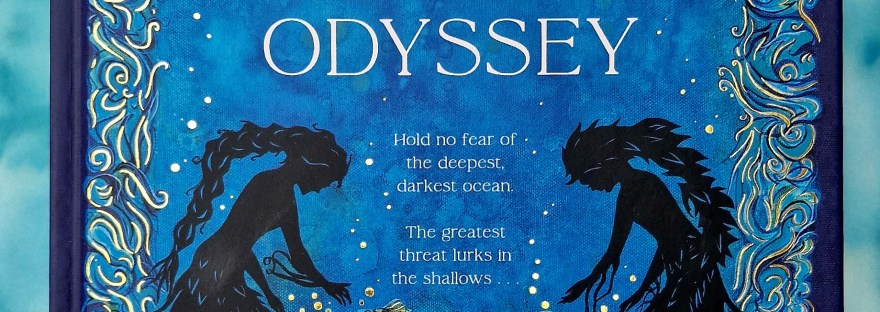
I am currently working on another children’s book about the voyage of the Argonauts. I am crazy about Greek myth, so am having a lot of fun with this. There’s a little girl who wants to be the Oracle of Delphi when she’s older who has joined the crew. Also a six-year-old siren with a really horrible singing voice!
Here at PaperBound, we love behind-the-scenes stuff when it comes to authors’ writing journeys. What has your route to publication been like?
I actually found it very hard to get The Untameables published. It was rejected by a lot of publishers. I think the children’s book world can be naturally quite conservative and the fact it has political parallels – that the round table is a sort of Bullingdon club – put them off. I also got asked if I could rewrite it so Rowan wants to be a knight! Little boys are supposed to be ‘knights-in-training’. So I think the fact this book is anti-knight worried editors. It was in a drawer for a couple of years before I saw that The Emma Press, who I knew as a wonderful poetry publisher, had a call-out for children’s chapter books and I submitted. I think as a small press they’re more open to radical texts, and I also knew they would make a very beautiful book. I am so happy they asked Reena Makwana to illustrate it – she is a total joy to work with.
Are you working on anything new at the moment?
I’m promoting my adult novel The Modern Fairies, and have a poetry book coming out next year. But yes, I have started another children’s book – my children are 8 and 11, just the right age, and there’s nothing like the pleasure of reading them a new chapter every night. It makes me feel very lucky.
Clare Pollard
Clare Pollard has published five collections of poetry, most recently Incarnation (Bloodaxe). Her play The Weather (Faber) was performed at The Royal Court Theatre. Her translations include Ovid’s Heroines, which she toured as a one-woman show. She has also written a non-fiction title, Fierce Bad Rabbits: The Tales Behind Children’s Picture Books (Fig Tree), her first children’s novel, The Untameables (The Emma Press), and two adult novels, DelphiandThe Modern Fairies (Fig Tree).
With thanks to Sophie Davidson for this image.
The Untameables is published by The Emma Press and is out now.
PaperBound Magazine is an online magazine for the young, and the young at heart. We are dedicated to showcasing authors and illustrators for children’s and young adult fiction and we strive to deliver inspiring content, uplifting stories, and top tips for young and aspiring writers yet to burst on to the literary scene.
All our issues are completely free and run by volunteers, however if you would like to support PaperBound and the work we do, you can help us out by buying us a virtual book. We appreciate any support you can give us!
Don’t forget you can read with the latest issues of PaperBound Magazine – completely free – here.
We’re excited to feature a guest blog post from Joanna Nadin, author of over 90 books for children and young adults, as she shares her tips on writing dual timelines in novels.
Her brand new YA novel My Teeth in Your Heart is out now.
Every time I write a novel with more than one narrator or timeline – the YA novel Eden; my adult novels The Talk of Pram Town and The Double Life of Daisy Hemmings – I make myself promise never to do it again. Crafting one narrative arc is hard enough – piecing the scenes together to make a story breathless and compelling. Creating two (or, in the case of the above, three or even four) and then dovetailing them together is, some might say, a form of madness, like trying to do four jigsaws at once, but all on the same tray. And yet, there are some stories that cannot be told in anything less, either because the nuances of one timeline can only be revealed in a second, or because competing character viewpoints enrich the story and enlighten the reader in a way that a single narrator might not.
When I was approached to write my latest YA novel, My Teeth in Your Heart, which deals with the Turkish invasion of Cyprus in 1974, I knew instantly that one non-negotiable would be that it would need to be dual timeline. Partly because, while the conflict lasted weeks, its after-effects are still reverberating today. And partly because I wanted readers who tend towards contemporary in their taste to have a ‘way in’ to a historical narrative. Thus, the novel follows two seventeen-year-old girls: Anna, who falls in love with a Greek-Cypriot boy in a bookshop in Varosha in 1974 and finds herself pregnant, and Billy, her granddaughter, who, upon Anna’s death in 2024, goes back to Cyprus to trace her real grandfather.
The timeline switches chapter to chapter between the two protagonists, as they both negotiate difficult mothers, problematic best friends, and falling in love at the worst possible time. As such, it was essential for me to find two very different ways of telling their stories, two unique voices that ring true for their background and, crucially, 1974 and 2024 in turn.
Usually, finding a voice comes after several aborted attempts as I switch between past and present tense, and first person (I), third person (he/she/they) and sometimes even second person (you). Here, though, both voices came to me almost immediately, suiting, I felt, both their character and time. Anna, thus, is told in third-person past. Her story happened five decades ago; she is a more reserved character, slightly more distanced from her own emotions, tending to hold her cards close to her chest.
Billy’s story, on the other hand, is unfolding as the reader comes to the novel, and she’s very much an oversharer, happy to talk about ‘me, me, me’. Anna rarely uses contractions; Billy always does. Anna never swears; Billy uses expletives like commas. Anna’s sentences tend to be measured, lengthy; Billy’s speech is scattergun, staccato.
The harder part was how to meld the narratives so that the novel as a whole retained pace, crucial turning points were met almost simultaneously, and impact in 1974 could be felt at its fullest in the now. Previously I have written timelines separately and then retrofitted chapters where I think they will work, hoping that, somehow, the markers will align. I do not recommend it – my anxiety was always high. This time, I had learned a lesson. I wrote chapter by chapter, relishing the switch between Anna and Billy, between historical periods, between place as well. I believe it worked, bringing together two unique young women whose voices and stories will keep readers compelled to turn the page.
My Teeth in Your Heart is OUT NOW and published by UCLan Publishing
Joanna Nadin
A former broadcast journalist and special adviser to the Prime Minister (not this one), since leaving politics Joanna Nadin has written more than 90 books for children and adults, including the UK bestselling The Worst Class in the World series, the Flying Fergus series with Sir Chris Hoy, and the Carnegie-nominated Joe All Alone, No Man’s Land and Calamity of Mannerings.
She has been a World Book Day author, a Blue Peter book of the month and Radio 4 and the i magazine Book of the Year, won the Fantastic Book Award and the Highland Book Prize, and been shortlisted for the Roald Dahl Funny Prize, Queen of Teen and the Big Book Awards among many others, and is published across multiple territories. She has a PhD in Creative Writing and is a Senior Lecturer in the subject at University of Bristol, as well as teaching for the Arvon Foundation.
PaperBound Magazine is an online magazine for the young, and the young at heart. We are dedicated to showcasing authors and illustrators for children’s and young adult fiction and we strive to deliver inspiring content, uplifting stories, and top tips for young and aspiring writers yet to burst on to the literary scene.
All our issues are completely free and run by volunteers, however if you would like to support PaperBound and the work we do, you can help us out by buying us a virtual book. We appreciate any support you can give us!
Don’t forget you can read with the latest issues of PaperBound Magazine – completely free – here.
Sofiia Marchenko was 18 years old when she arrived from Ukraine to stay with Malcolm Duffy and his family. Over the year that Sofiia and her mother and grandmother lived there, Sofiia became the inspiration for Malcolm’s story, Seven Million Sunflowers, providing insight into the experiences of a teenage refugee. We were lucky enough to chat to both Malcolm and Sofiia.
Interview with Malcolm Duffy
Could you tell us a little about your book, Seven Million Sunflowers?
This is a book I wish I didn’t have to write.
When Russia invaded Ukraine in February, 2022, it affected so many lives across the world. Including our own. Having joined the Homes for Ukraine scheme, and inviting the Marchenko family into our home, I discovered the strength, resilience and humility of the Ukrainian people. I learnt what it was like to have to flee a conflict, and adapt to a new country, new language, new culture.
This was the inspiration for my story, Seven Million Sunflowers.
Writing is like making a meal – all the ingredients are important. But I think there was one key ingredient – acceptance.
This novel has many themes, from resilience and acceptance of different cultures to coping with post-traumatic stress disorder and the changing dynamics of a family, to name a few. Were any themes most important for you to include as the writer?
Writing is like making a meal – all the ingredients are important. But I think there was one key ingredient – acceptance. To what extent can you accept strangers in your home, accept the views of others, accept different cultures? This applies to both the hosts and the guests.
The opening paragraph and description of the attack on Kateryno’s building is so vivid – the burst pipes, flames and fire grounds you in the present. What kind of research did you do to help write the book?
I wanted to start the book in as dramatic a way as possible. The story doesn’t reflect Sofiia’s escape from Ukraine, but it does reflect the experience of many Ukrainians, especially those living near the front line, like those in Kharkiv.
The idea for the chapter came from a real event where a Russian missile struck an apartment block in Dnipro, Ukraine. A young woman, Anastasia Shvets, was on the 5th floor of the building. 236 apartments were destroyed and many people were killed, including her parents, but she somehow survived. A photographer captured her, clinging to a small green teddy, as she sat in the rubble far above the city.
The topics you’ve written about must have been very sensitive to discuss with Sofiia. How did you both feel talking about what happened?
For me it’s important to remember that this is fiction, based on fact. It’s not Sofiia’s story or that of her family. I spoke to many Ukrainians when writing the story, as well as reading books and articles on the conflict. The characters are an amalgam of different people I’ve met, and stories I’ve heard.
Sofiia helped me understand the feelings of Ukrainians, the anger and sadness at having been forced from their homeland.
It’s interesting how you describe both external and internal conflicts: the war in Ukraine and Georgia and Marko’s relationship under the same roof. What were some of the challenges you faced as a father inviting a family into your home?
The Marchenkos were a delightful family to have in our home. They kept themselves to themselves, were respectful of us and our home, and helped us when they could. The drama in the book came from stories I’d heard from various sources about problems between host families and their Ukrainian guests. Sometimes the host family were at fault, sometimes the Ukrainians. I wanted to reflect this in Seven Million Sunflowers.
Although this is a work of fiction, you’ve based the book on your personal experience. Do any of the characters in the book resemble you in any way?
I don’t think any of the characters in the book resemble me. Having said that I like to include elements of human nature that mean a lot to me – humour, empathy, kindness, understanding.
Are you working on anything new at the moment?
Yes, I’m working on a new YA book at the moment, but I don’t want to jinx it by talking about it!
Interview withSofiia Marchenko
The opening to this novel is very powerful. The description of everyday things such as the guitar, desk etc. all upside down amid the fear and the deafness is so vivid. I was almost choking from the smoke. How much of this was true to your story?
I was fortunate enough not to live too close to Russia unlike the heroine of Malcolm’s story. I am fortunate enough that my flat is still not damaged. But I think the early morning of 24th February was frightening for everyone. I woke up from the explosions. Although we all knew war was coming – I didn’t expect to feel it myself in central Ukraine so soon. My town is of an average size – it has 250,000 people. But even this small town experienced some damage during the ongoing Russian invasion. First missiles, then a few months later drones etc.
I was very frightened although I tried not to show it to my friends and family. On the day of the 24th, the first thing I did was go to the local corner shop and buy champagne and my favourite chocolate. This has always amused me but now I understand I probably was thinking they might be my last days on this earth so I’m gonna celebrate my life. After having those for breakfast I didn’t eat anything at all for the next 3-4 days.
On the day of the 24th, the first thing I did was go to the local corner shop and buy champagne and my favourite chocolate.
Kat defends and protects her mother by not translating certain negative conversations. Did you ever have this experience?
We definitely didn’t have a negative experience with our host family. Malcolm and his wife and children are super sweet and supportive. But there definitely were some moments outside of our host family’s house (like dealing with the search for work and accommodation) that were stressful and I didn’t always translate everything to my mum for the sake of her wellbeing. I know she likes to solve problems and support me but with her not being able to speak English, it really left her feeling helpless and I didn’t want to add to that.
Malcolm and Sofiia
Was it difficult adapting to rules in someone else’s home?
As I mentioned earlier – our host family were super sweet and understanding. It wasn’t difficult to adapt to their rules, we are really lucky we met them. We are still friends and love babysitting for their lovely dog Layla sometimes.
What was hard for me was the lack of personal space which I always had growing up. I am an only child and my parents were working a lot, so I had a lot of moments being alone in the house. I am not used to having many people around, so this was hard. I always had some anxiety, even back in Ukraine when we had some guests visiting, so even though our host family were the loveliest and the most understanding people ever, I did miss being alone sometimes – this is an environment where I regain my strength and resources to carry on in difficult times.
How did it feel being in the UK, while people you knew and cared about were still in your homeland?
Definitely a lot of guilt. Feeling you are the lucky one who got away and survived and can carry on having a normal life.
The book is excellent at describing the emotions of a person having to deal with all the mixed feelings of living in two different worlds…
What do you think of the final book, Seven Million Sunflowers?
I have read it and I do love it! I think it is amazing of Malcolm to address this issue through a powerful story like this, and it’s definitely a compelling and moving story. It describes all the difficulties a young Ukrainian teenager faces when escaping the war and having to live a ‘normal’ life while having loved ones in danger every day.
The book is excellent at describing the emotions of a person having to deal with all the mixed feelings of living in two different worlds on the same continent where one is full of chaos and death and other one is peaceful and carefree.
Do you still live in the UK? If so, what are you doing? What plans have you got for the future?
I still live in the UK. We are renting a flat with my mum in a nice area. Currently I am teaching piano classes, mostly to kids, and finishing my Communications degree online. For now, I just want to take time to think about what I actually want and what I am going to do next. To be honest, I didn’t have much time to think about that before.
Seven Million Sunflowers is OUT NOW and published by Zephyr
Refugee Week runs from June 17th to 23rd 2024. Read more about it here.
Malcolm Duffy
Malcolm was born and bred in Newcastle upon Tyne and now lives in Surrey. After a typical Geordie childhood, his parents moved south and deposited him in South East England. Having acquired a Law degree at Warwick University he worked his way through a host of London advertising agencies, picking up numerous awards for copy, press, TV and radio.
Having left ad-land he worked as Creative Director of Comic Relief, creating campaigns for Red Nose Day and Sport Relief. It was at Comic Relief that he was inspired to swap copywriting for writing and wrote his first novel, Me Mam. Me Dad. Me. His books have all been issue based, with much of the information gleaned from his work for different charities – Comic Relief (domestic violence), Shelter (homelessness), Nessy (dyslexia) and Combat Stress (PTSD).
He’s supported in his efforts by his New Zealand wife Jann, and daughters Tallulah and Tabitha, who, under the threat of withholding pocket money, seem to like what he writes.
Find out more at malcolmduffy.com and follow him @malcolmduffyUK
Huge thanks to Jayne Leadbetter for preparing the interview questions. Jayne has also reviewed Seven Million Sunflowers in our Spring/Summer 2024 issue, which you can download for FREE here.
Jayne Leadbetter
Jayne Leadbetter emigrated to Australia from the UK and is a high school teacher at a multicultural high school in Sydney, where she lives on the land of the Gadigal and Bidjigal people. She’s currently studying for a master’s degree in creative writing at university and is in the process of writing two novels, while enjoying the nature and the beaches of Australia with her huge dog Clifford.
PaperBound Magazine is an online magazine for the young, and the young at heart. We are dedicated to showcasing authors and illustrators for children’s and young adult fiction and we strive to deliver inspiring content, uplifting stories, and top tips for young and aspiring writers yet to burst on to the literary scene.
All our issues are completely free and run by volunteers, however if you would like to support PaperBound and the work we do, you can help us out by buying us a virtual book. We appreciate any support you can give us!
Don’t forget you can read with the latest issues of PaperBound Magazine – completely free – here.
YA author C.G. Moore shares his tips on writing in verse and what inspired him to write his new novel, Trigger. Plus, keep reading to see an opening extract of the book below.
*Trigger warning: sexual assault
Writing in a form where – for me – every word on the page has to matter and contribute to something that’s incredibly personal is always a challenge. Taking the smaller moments of my experience with sexual assault and being able to magnify them so that each poem – each piece of the puzzle – comes together to give the reader an insight into some of the difficult issues faced by those affected was crucial. Free verse allows me to play with language, typography and placement on the page to create something that’s not only impactful but will hopefully stay with the reader long after they’ve finished it.
I think there’s a common misconception about verse novels that because the word count is significantly less than that of a prose novel, that it is somehow easier to write and takes less time. This isn’t the case and, in fact, I’ve found I write prose novels more quickly than I write verse novels. While there are so many fantastic benefits of verse form, it is not without its challenges.
I need to know the story I’m trying to tell and how much of it is inspired by my own experiences so that I’m not muddying the waters of what I’m trying to get readers to take away from the story. My new book – Trigger – is inspired by my own personal experiences of sexual assault but they differ greatly to those of my protagonist, Jay. It’s important to recognise the boundary between inspiration and fiction. I need to channel Jay’s narrative voice while ensuring that my own experiences don’t override my character’s.
Every word on the page matters so completing the novel is the first step in a chain of several. It’s ensuring every individual poem is doing what it needs to and that every word on the page is necessary. It’s understanding what’s working well and re-writing certain sections to strengthen the story so it can have maximum impact. It’s giving the reader smaller moments to breathe between some of the more dramatic scenes. It’s a balancing act and I’m not sure Trigger would have been the book it is today without the guidance of my dear friend, Jake Hope, or indeed the wonderful team at Little Island Books.
For anyone that wants to write in verse, I’d say to enjoy the process, kick the editorial devil on your shoulder to the side and let the words fly. First drafts will never be perfect but take joy in the creative process or you’ll find the challenges that much greater. It can take a while to find your narrative voice in verse but don’t let the challenge outweigh the creative freedom that the form has and most of all, trust and enjoy the process.
See below an extract of the opening of Trigger:
HOLLOW I don’t remember Anything from that night.
I don’t remember How I got The bruises down my thighs.
I don’t remember How I woke up there, Wet grass splayed around me.
I don’t remember When they scooped out All of me From this hollow husk Of a body.
THE PARK Head heavy, Lifeless limbs, Muddled mind – Every sound Slices through my being, A waterfall of sensations Drowning me.
I feel for my phone, Fingertips grazing the cracks. Hold down the power button.
Nothing.
A golf ball Whizzes overhead. I get to my feet, Stumble into tree cover, Face drenched in sweat, Dried blood and Fresh tears.
C. G. (or Chris) Moore is the published author of three books. His second book – Gut Feelings – explored his own experiences living with chronic illness and was nominated for the Yoto Carnegie Medal and won the KPMG Children’s Books Ireland Book of the Year Award 2022. His new book – Trigger – is inspired by his own experiences of sexual assault and looks at consent.
Chris has also contributed a poem to Our Rights – an anthology endorsed by Amnesty International. He also works as a Campaign Officer for The Reading Agency where he leads on digital events and supports libraries and schools across the UK.
PaperBound Magazine is an online magazine for the young, and the young at heart. We are dedicated to showcasing authors and illustrators for children’s and young adult fiction and we strive to deliver inspiring content, uplifting stories, and top tips for young and aspiring writers yet to burst on to the literary scene.
All our issues are completely free and run by volunteers, however if you would like to support PaperBound and the work we do, you can help us out by buying us a virtual book. We appreciate any support you can give us!
Don’t forget you can read with the latest issues of PaperBound Magazine – completely free – here.
Author of the Mina and the Undead trilogy, Amy McCaw, writes about her journey from reader to blogger to author!
Being a blogger definitely gave me an advantage when it came to getting my first book deal. The contacts, publishing knowledge and events I went to all played a part in becoming an author.
I became a blogger after attending a workshop at the Young Adult Literary Convention (YALC) about starting your own blog. I’d wanted to create a blog for ages, but I lacked the confidence to take the plunge. The workshop was run by several bloggers, including the brilliant Chelley Toy and Andrew (Pewter Wolf). Doing the workshop walked me through the technical side of blogging and offered lots of practical tips. I’m so glad I started my blog, as this was the moment I really joined the book community. I’ve made lots of friends and had so many lovely experiences since then!
As a blogger, I was invited to various book events. This gave me a really good insight into the publishing industry through conversing with authors and publishing staff. It also gave me lots of contacts, which were useful when it came to reaching out to authors for blurbs and reviewers to read my book.
I was also asked to participate in lots of online book marketing. This was really helpful for when I became an author, because I’d been involved in lots of successful campaigns, and it gave me good ideas for my own.
The next big landmark in my publication journey was getting a place on the Write Mentorsummer mentoring program. I learned about it on social media and was so excited to be paired with an author mentor, Marisa Noelle. There was an agent showcase at the end of the process, and I found it a great opportunity to polish my book and get my work seen by agents. Write Mentor are still doing amazing work for aspiring authors, and I highly recommend checking out what they offer.
While I was on the summer mentoring program, I attended the Young Adult Literature Convention (YALC). This was probably one of the most important decisions I made on my journey to become an author. There are lots of workshops about the publishing industry and opportunities to meet authors and publishers. This particular year, they were also running agent 1:1 pitching sessions. I pitched to several agents, but Sandra Sawicka really loved my idea and asked to read the book. She soon offered representation, which was another massive milestone.
After editing my book with Sandra, we went out on submission to publishers. Being a blogger had given me realistic expectations about how long this would take and what it would feel like to get rejections, so I felt really prepared for the process.
I’d been on submission for a few weeks when the next YALC came around. This time, I got talking to Hazel from UCLan Publishing. She asked Sandra to submit my book to her, and they offered to publish Mina and the Undead a few weeks later. Once again, being a blogger and attending YALC gave me a brilliant advantage.
Being part of the book community was so useful at every stage of the publication process and it has definitely helped me to navigate the often very challenging waters of publishing!
Mina and the Undead, Mina and the Slayers, and the most recent addition to the series, Mina and the Cult, are all OUT NOW and published by UCLan Publishing.
Amy McCaw
Amy McCaw is a YA author and YouTuber. She’s the author of the Mina and the Undead series, YA murder mysteries set in 1995 New Orleans. She also co-curated the A Taste of Darkness horror anthology with Maria Kuzniar. Her main interests are books, movies and the macabre, and her novels have elements of all of these. Unsurprisingly, she’s a huge Buffy the Vampire Slayer fan and has gone to conventions to meet James Marsters more times than she cares to admit.
If you want to talk with Amy about books or 90s movies, you can find her on Twitter, Instagram, Tiktok and YouTube.
PaperBound Magazine is an online magazine for the young, and the young at heart. We are dedicated to showcasing authors and illustrators for children’s and young adult fiction and we strive to deliver inspiring content, uplifting stories, and top tips for young and aspiring writers yet to burst on to the literary scene.
All our issues are completely free and run by volunteers, however if you would like to support PaperBound and the work we do, you can help us out by buying us a virtual book. We appreciate any support you can give us!
Don’t forget you can read with the latest issues of PaperBound Magazine – completely free – here.
Is there anything better than reading a much-loved classic from our childhood? Join us on the PaperBound Blog as we chat with fantasy author Robin Jarvis all about the return of his tantalisingly dark-edged series, The Deptford Mice, starting with Book One: The Dark Portal.
Your book, The Dark Portal, is the first in a series that captivated many readers’ imaginations over the years, and is now back with an updated text and brand new illustrations. Can you tell us a little more about it, and why you decided to give a new lease of life to this series?
Daniel Seton, editor at Pushkin Children’s Books contacted me and said he’d love to reissue the series, as he was a fan of the mice back in the day. It’s also the 35th anniversary too, so it was absolutely the right time and it’s given me the chance to cram as many new illustrations in there as possible.
You are returning to this series after working on other things for a number of years. Are you excited about inspiring a new generation of readers? What are you looking forward to most?
I was actually a bit nervous at first, as it’s been a while since I last ventured into those Deptford sewers, but the characters have never been far from my thoughts. They really have continued to live out their lives in my head, so I know what they’ve been up to. I hope new readers will be able to dive into that world and be excited and a bit scared by it. I’ve had brilliant feedback already from the original fans who now have children of their own, and it’s been such a pleasure to hear that the stories have stayed with them all this time.
The best stories are those with fright and menace in them.From a young age I watched anything with a monster in and enjoyed escaping into other worlds.
What do you think readers gain from your books, and do you think elements of fear in stories for younger readers can be a good thing?
Oh absolutely. The best stories are those with fright and menace in them. The original versions of fairy tales contained some really gruesome aspects, such as the stepsisters hacking off their toes and heels to squeeze their feet into the slipper, or the wicked queen in Snow White being made to wear red hot iron shoes and dance until she dropped dead. When I was young (a very long time ago) I was mad about monsters – still am. The scares in my books are safe scares. The threats are fantastical, the sort you’d never encounter in real life. I like to think of my books as white knuckle reads.
Is there anything you had to change when coming back to this book as you thought about it for a new audience?
Yes, apart from giving the writing a good old dusting, there were certain things that I wasn’t comfortable with, such as the Raddle sisters, two elderly mice who I originally described as ‘old maids’. Deary me, that had to go. The biggest change was Madame Akkikuyu, over recent years I’ve noticed she’s attracted criticism because some people thought there was a racial element and bolted human concerns onto her. She was a black rat, as in her fur was black, just as Piccadilly’s fur is grey and Oswald’s is white, but they all have pink skin. In fact, if Akkikuyu’s skin wasn’t pink, the tattoo on her ear wouldn’t stand out and that’s the big plot point of The Crystal Prison. Still, I don’t want anyone to get the wrong idea about her, so her fur is now a rich brown instead and the bone with which she stirred her potions has become a key from a tin of corned beef – which is a much better image anyway.
Your writing has been described as Brian Jacques’ Redwall meets Kieran Larwood’s Podkin One-Ear books. What other stories, writers or media have you been influenced by in your own writing?
From a young age I watched anything with a monster in and enjoyed escaping into other worlds. The Green Knowe series was a favourite, as was Tolkien.
You’ve had such a creative career so far. Do you have any tips for readers wanting to write or do something creative with their future?
Just read and absorb everything, until you decide what stories/styles/themes/characters you enjoy the most and that should give you an idea of what you want to do.
The Dark Portal by Robin Jarvis is published by Pushkin Children’s Books and out now. The next two books in the series,The Crystal Prison and The Final Reckoning, will be released in June and autumn of this year.
Robin Jarvis
When Robin isn’t writing, he’s probably making something, usually a creature from one of his books to take with him to events and signings. It’s something he’s always done.
Before he started writing, he was a model maker and he gets grumpy if he can’t make something. It’s so much easier now he has a resin printer, no more mess on the kitchen table for weeks on end. At the moment he’s making Madame Akkikuyu, which brings him full circle, as he first made a wearable version of her all the way back at the beginning, 35 years ago.
PaperBound Magazine is an online magazine for the young, and the young at heart. We are dedicated to showcasing authors and illustrators for children’s and young adult fiction and we strive to deliver inspiring content, uplifting stories, and top tips for young and aspiring writers yet to burst on to the literary scene.
All our issues are completely free and run by volunteers, however if you would like to support PaperBound and the work we do, you can help us out by buying us a virtual book. We appreciate any support you can give us!
Don’t forget you can read with the latest issues of PaperBound Magazine – completely free – here.