Blog

article, Blog, Blog series, Bookshelf, Interview, Interviews, on writing, Writing craft

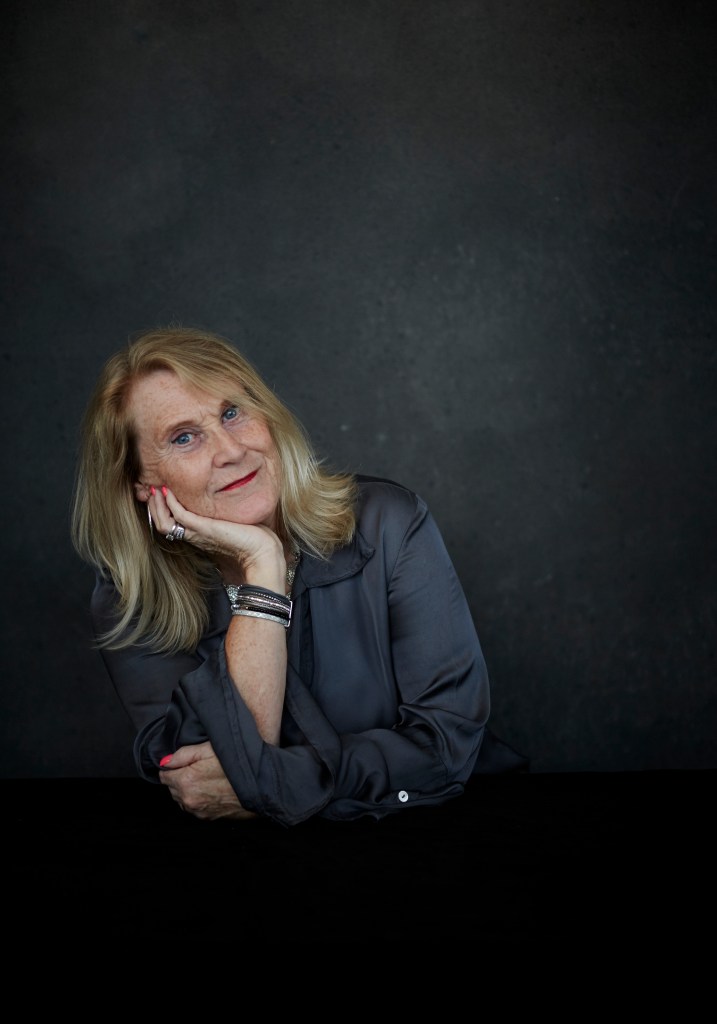
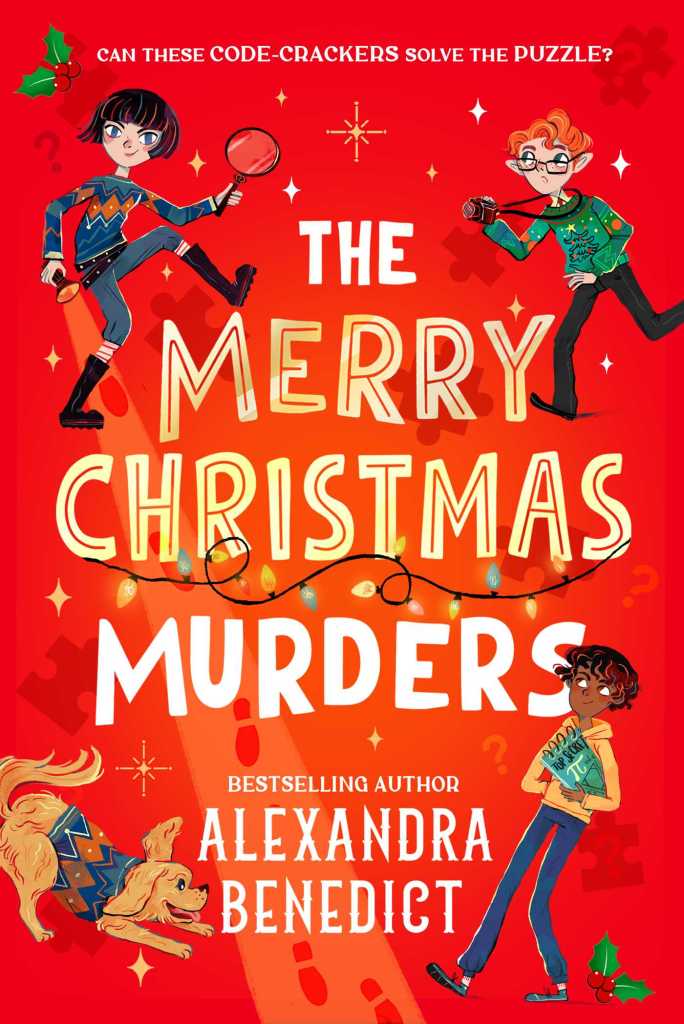
Alexandra Benedict on middle grade debut The Merry Christmas Murders

Brooke Parkin not expecting it to be a very merry Christmas. She is an anxious autistic ADHDer whose only friend is her loyal support dog, Buoy, and the headmaster of her new school has died in mysterious circumstances.

And then she meets the other members of the Neurokind Club, an after-school group for neurodivergent kids. Together, Brooke and the rest of the club must embrace their strengths and their growing friendship to solve the murders and make Christmas merry after all.

I was really surprised that, for me, the process of writing for kids was really similar to that of for adults, aside from getting the tone right for middle grade (not too dark, not too light) and making motives for the murders age appropriate.

I loved the spooky atmospheres, the plots, and how they all used different skills to solve the mystery, something I hope also appears in The Merry Christmas Murders. Most of all, I absolutely adored George – she was so strong and clever.

I was really inspired by how she rejected expectations of what it is to be female. And who didn’t love Timmy the dog? Buoy, Brooke’s support animal, is directly inspired by Timmy.

I am really driven by writing fully rounded neurodivergent characters. Looking back, all of my main characters have been ND, even if at the time I didn’t know it! I love Brooke’s bravery – she is so anxious, all of the time, and it takes her real courage to not hide it. She inspires me to get outside when I otherwise would stay in for days.

In the run up to Christmas, I revel in festive activities such as Christmas markets, wreath making, going on the Polar Express, seeing friends, making decorations, etc. From Christmas Eve on, I relish being at home with my little family, eating lots, watching lots, playing lots and laughing even more. I love Christmas SO MUCH!

Fun, kind, inclusive.

The Neurokind Club will be back next year in The Jingle Bell Murders! I’m writing it at the moment, alongside my next adult Christmas mystery, The Advent of Death.

Read and write as much as you can, in different genres and styles! A classic piece of advice in creative writing circles is to ‘write what you know’, but I advise writing about what you’d like to know.

What fascinates you? What story has gripped you so much that you have to tell it?

Finding purpose in your writing is really important as it’s a very difficult industry to get into, and even harder to stay in, so believing in yourself and your words is essential. I’d also advise finding other writer friends to celebrate with when you have success and commiserate with at all other times!

Alexandra Benedict is a USA Today bestselling and award-winning writer for children and adults. Her novels, including the Gold Dagger shortlisted The Christmas Murder Game and Little Red Death are published in twenty territories.

Huge thanks to Laura Jones for preparing the interview questions. Laura is one of our regular contributors and her reviews feature in issues of PaperBound Magazine. Read her review of The Merry Christmas Murders in our autumn/winter issue by checking out our issues page.

Laura Jones is a secondary school teacher in Cornwall. She teaches English and Media and recently completed an MA in Publishing. Laura is part of a local writing group and hopes to eventually complete one of the many book ideas she has saved on her laptop, some of which are inspired by the Cornish landscape.

PaperBound Magazine is an online magazine for the young, and the young at heart. We are dedicated to showcasing authors and illustrators for children’s and young adult fiction and we strive to deliver inspiring content, uplifting stories, and top tips for young and aspiring writers yet to burst on to the literary scene.

All our issues are completely free and run by volunteers, however if you would like to support PaperBound and the work we do, you can help us out by buying us a virtual book. We appreciate any support you can give us!

Don’t forget you can read with the latest issues of PaperBound Magazine – completely free – here.

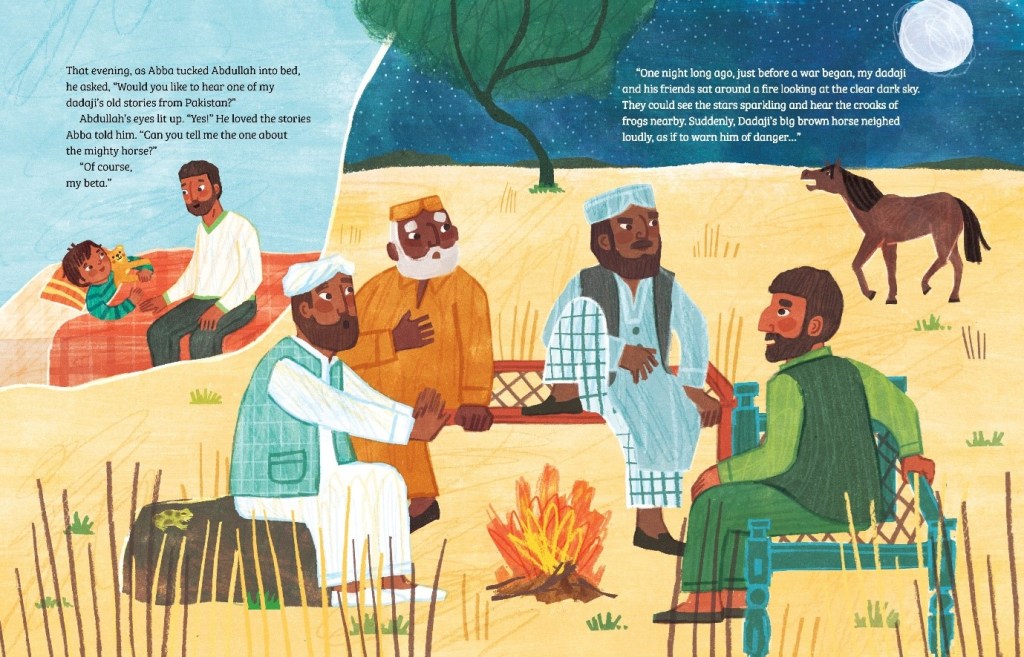
Abdullah's Bear Needs A Name! Illustration 1 by Sophie Benmouyal
article, Blog, Blog series, Bookshelf, Interview, Interviews, on writing, Writing craft

Guest post: Shirley-Anne Brightman and Yasmin Hanif on The Power of Storytelling and Using Your Own Name

By Shirley-Anne Brightman and Yasmin Hanif

© Floris

Storytelling has long been a tradition in many cultures around the world. In older generations in South Asian Pakistani culture, oral storytelling is often the only way stories were shared and passed down.

When I began working with a charming, little school in Glasgow on their ‘We Can Be Heroes’ project helping primary school children to see themselves in the stories they read, I had no idea how central the story of how the project began would be to the project itself, and indeed my unwritten book at that point. In fact, my few years with the schools, saw an ocean of stories; from fiction, non-fiction, memoir to something in between fill the school.

Shirley-Anne Brightman, the pioneer of the project and the Principal Teacher explains how our collaboration came about…

Shirley-Anne’s Story

When I was on playground duty, some of the older pupils came up to me asking for help: “Mrs Brightman, we don’t know enough names, can you help us?” Totally confused, I asked them to explain. They were preparing a Guess the Name of the Teddy fundraising activity and needed 30 names to be chosen by players; so far they had James, Emily and Belinda.

“I don’t understand, what about your name, Zainab? Or yours, Anum? There’s Eesa over there, Mohammed, Zeenat … we have 300 children in the school, what’s wrong with their names?” I asked with slight concern. I feared I knew what their reasons might be.

“You can’t call a teddy those names!” they said in complete sincerity.

“Why not?” I replied, matching their tone as nearly as I could.

It wasn’t the first time we had observed a disregard in our pupils for their own identity. We had seen primary 1 children drawing self-portraits showing themselves with white skin when their own was brown.

Some of the ways we were trying to address the representation was in the reading schemes and class library books we were buying but the books we wanted to buy were hard to find, if not non-existent.

I went to our Headteacher. “We have to do something!” I told her. “It’s not right.”

So, we did.

We worked with the Scottish Black People, People of Colour Writers Network (SBPOC) to find writers who would work with our pupils to write our own stories. That’s when we met Yasmin.

Yasmin’s experience

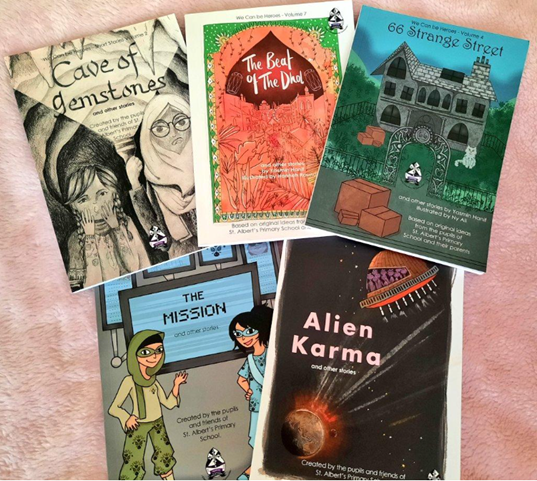
During phase 1 of the project the children came up with various ideas such as superheroes and secret laboratories (‘The Zedriz’), a shipwreck and being stranded on a remote island (‘Home is Where the Heart Is’) to two sisters being trapped in a cave (‘Cave of Gemstones’). By this stage in our project, the stories the children came up with still reflected what they read themselves or watched on TV or YouTube.

It was during phase 3 of the project that I felt the storytelling and imagination of both the school and the community were really captured.

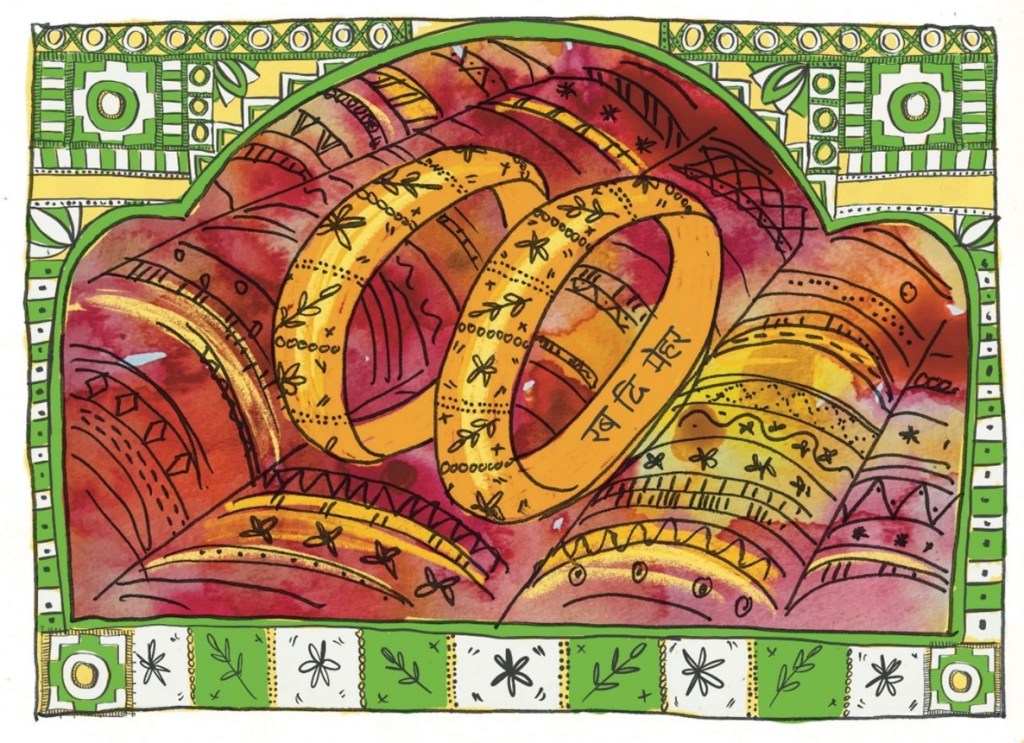
One of the parents of the pupils I was working with told me a real-life story based on her grandparents falling in love in India, and a golden bangle that had been passed down through the generations. She still wore those bangles to this day. This became one of the published stories from the project.

Beat of the Dhol, ‘We Can Be Heroes’, St Albert’s.
Illustration by Hannah Rounding.

I found that storytelling leaves a legacy, not just a physical one like those bangles but a legacy of confidence, and of empowerment for those pupils that I worked with at the school, and they would be taking that legacy with them into later life.

In the same way, Abdullah gets a teddy bear passed down through the generations from his Abba (or dad) in my debut picture book, Abdullah’s Bear Needs A Name! which was inspired by events from the school. Just the like kids at the school, Abdullah struggles to name his bear, until he hears an old story from his heritage.

The message on both accounts is a powerful one; that your name matters, that your stories matter, that you matter.

© Floris

Yasmin is a Scottish writer and educator. She was shortlisted for the Kavya Arts Prize in 2023 for her story which became her debut picture book, Abdullah’s Bear Needs A Name! (Floris, 2025). She was a writer in residence at a primary school and worked on their project to promote diversity and inclusion within children’s writing and publishing, which won the SAMEE Aspiring Writers Award and the Scottish Education Curriculum Innovation Award 2022.

Shirley-Anne Brightman studied languages at the University of Cambridge and holds an MSc in Social Policy from London School of Economics. She has taught in primary schools and English as a Second Language contexts in four countries. She is currently a Leader of Learning at Glasgow City Council’s Improvement Challenge which aims to close the poverty-related attainment gap.

PaperBound Magazine is an online magazine and blog for the young, and the young at heart. We are dedicated to showcasing authors and illustrators for children’s and young adult fiction and we strive to deliver inspiring content, uplifting stories, and top tips for young and aspiring writers yet to burst on to the literary scene.

All our issues are completely free and run by volunteers, however if you would like to support PaperBound and the work we do, you can help us out by buying us a virtual book. We appreciate any support you can give us!

Don’t forget you can read with the latest issues of PaperBound Magazine – completely free – here.

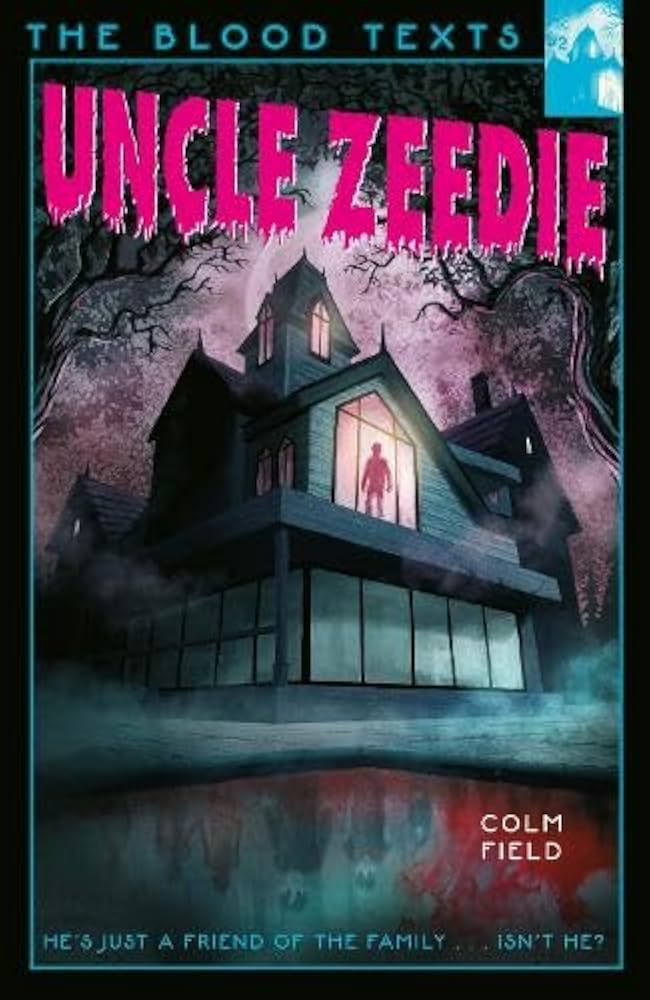
Uncle Zeedie - The Blood Texts
article, Blog, Blog series, Bookshelf, on writing, Writing craft

Halloween guest post: 3 Horror Writing Tips by Colm Field

Of course, those things aren’t objective really. What scares one person won’t scare another, and my fears might well bore you. You might have many goals in your writing, might even bristle at my philistine summation.

Yet while you’re probably right, and a writer should never over-codify their process lest their work lose its soul, I promise that the following 3 tips can help your next devilish inspiration find a page to torment.

Like all writing ‘rules’, they should be read then shoved back to the same part of your mind that remembers to brush teeth and brake at red lights. I hope they’re of use.

Yep, I’m still being simplistic. But if you’ve had a great idea for a horror, only to find that it’s not getting any further in your head, you could do a lot worse than studying these three aspects of your story; the Monster, the Scares, and the Cares. The Monster is the thing we are frightened of, the Scares are the moments we, um, get scared, and the Cares are the characters we really don’t want to see hurt. I promise you – your story has them all, somewhere.

And not necessarily in equal measure. Come up with an exciting, memorable Monster, for example, and you might decide to inflict it on characters so tropey that their terror is immediately recognised, without all that effort spent getting into their psyche. Good for you – don’t worry about judgement here, we’re horror fans, we’re past all that.

But if you’re story still falls flat, then perhaps we do need more on the Cares … or maybe just more Scares. As Howard Hawks almost said, ‘A good horror is seven terrifying moments… and no boring ones.’

Or, you might have put all your effort into writing a complex and compelling love story, with characters rich in pathos and a drip drip drip of intangible dread. Wondering why your reader drifted off halfway through? Perhaps the threat to those characters is too wispy.

Develop your Monster a little more, give them some teeth to go with all that talk. Because if you exclude one part of this unholy trinity entirely, it will be missed.

You know this already, of course. The thing that goes bump in the night can be a very human bully, a voracious plant, your protagonist’s own id. They may turn out to be not a monster at all, but horribly misunderstood. It’s common knowledge, so why am I telling you about it here?

Well, for me, it’s the question itself that is of interest. Who is scaring us here? Why are they scary? What does our fear of them say about us?

Sometimes the answers are straightforward. I just don’t want to be eaten! If your Monster is a straight up heinous villain, then don’t worry, there’s nothing wrong with that.

Indeed, adding layers of sympathy can run the risk of excusing their crimes. I’m sorry about your parents’ divorce, Billy, but you just cut off my arms with a plasterboard saw.

But if the answers run deep? Then asking these questions can make your story truly profound. In T. Kingfisher’s book What Moves The Dead, an organism that causes a sinister change to its victims is reflected in other transformations taking place; through war, crumbling inheritance, and cold science.

Indeed, the one constant in the book is that of the protagonist’s gender fluidity; a fact, nothing more nor less, a source of comfort and familiarity while all our other assumptions are wrecked.

I won’t give anything away, but my first thought upon finishing the book was, Was that about a monster? I couldn’t decide. I still can’t.

In my own Uncle Zeedie (plug alert!) the teenaged protagonists are scared that their family friend may be a serial killer. The story poses similar questions: If somebody is weird, does that make them dangerous, or you narrow-minded?

If you choose to ignore a red flag, are you foolish or simply trusting? The answers aren’t simple, but I loved writing the debate.

It’s a dark, dark night, in a dark, dark wood. You know your monster, you know your characters, you know their end. What Scare will you choose?

If writing is craft, then Horror can be Lego, provided you learn your blocks right. Jump scares, atmospheric scares, paranormal activity (the activity, not the film), repulsion… there are so many different tools at your disposal, provided you use them correctly.

Is this midnight nature walk early in the story? Then why not a terrifying mirror reveal, or even just a simple jump scare? Something leapt from the bush and… end of chapter. Yeah, it’s a cheap cliffhanger… but it’s only cheap if you do it again, and remember: we’re horror fans! We like a bit of tacky now and then!

Ooh, but later? After we learned the myth of the beast, the foul curse, the soul-sucking spectre? After the best friend has died horribly?! Right then, a jump scare might be as welcome as a fart joke at a funeral.

Now it’s time to bring in the power tools instead, bring in some repulsive body horror, or a bad trip-inducing surrealism, or maybe throw in the Monster’s POV…

I could go on, and you could probably think of more that I would miss. Scares are tools, don’t be afraid to treat them as such.

With these tips, please don’t think I’m reducing the joy of writing into an AI prompt. Horror is not an objective science – it is an ethereal art form that revels in the uncertain, and loses its potency when stripped to bare and cynical mechanics.

But the scary books that have gripped me of late – say, Boys In The Valley by Philip Fracassi, or Deadstream by Mar-Romasco Moore – they featured these recognisable elements, delivered with a new and terrifying gusto.

Should you be struggling with this wicked masterpiece, and these bare and cynical mechanics can offer you a way through that struggle, then please, know this. You are writing for horror fans. If anybody won’t judge, it’s us.

Uncle Zeedie is weird, but at least he’s rich and his house is amazing.
That’s what George and Lacey tell themselves when they arrive at his isolated mansion in the Welsh woods. Only, something here is worse than weird.
Uncle Zeedie seems unhinged, serving them rotten food, and skulking around at night. The house is decaying, blood stained, and stinks of sour milk. And George is seeing kids that aren’t there. They’re dead, these kids.
And if the rumours are right, Uncle Zeedie is the one who’s killing them.
The players are in place. The stage is set. Curtain up.

Who is Colm Field? Well, he was born in the witching hour, beneath a blood-red moon, and under a bad sign.
His first words were not fit to print. Now he scratches stories with yellowed fingernails, across the mouldering walls of the abandoned nuclear power station he calls home.
If you like what you read, we’ll dare you to find out more . . . 

PaperBound Magazine is an online magazine for the young, and the young at heart. We are dedicated to showcasing authors and illustrators for children’s and young adult fiction and we strive to deliver inspiring content, uplifting stories, and top tips for young and aspiring writers yet to burst on to the literary scene.

All our issues are completely free and run by volunteers, however if you would like to support PaperBound and the work we do, you can help us out by buying us a virtual book. We appreciate any support you can give us!

Don’t forget you can read with the latest issues of PaperBound Magazine – completely free – here.

article, Blog, Blog series, Bookshelf, Interview, Interviews, on writing, Writing craft

Interview: A Grave Inheritance by Felicity Epps

A Grave Inheritance is a gothic murder mystery, delving into seances and spiritualism in Victorian London. My main character Dolores Rain is grieving the loss of her parents and older sister, but when ghostly occurrences point to dark secrets within her house, she teams up with her friends to unveil the truth…and solve a murder!

I had so much fun writing this novel, because I was able to indulge all my favourite themes, from spirits and haunted houses to mysterious apothecaries and mourning fashion. It is very much a reflection of the kind of novels that I like to read, so the inspiration for the novel came from cosy nights reading ghost stories!

Dolores appeared as a fully-fledged character from the start – I think because I indulged her quirks and worries, it all seemed to come naturally! The first scene in the novel was also the first vision that I had for the story: Dolores anxiously declaring that she must be on her “deathbed”, while also mourning how many novels she still has to read.

It felt like such an engaging start for a murder mystery, because Dolores is not set up to be a particularly good investigator – she is overly fearful and really just wants to retreat to her bed. As the novel progresses though, I really enjoyed having her confidence grow, especially once she learns to trust her friends and realises that she can confront the things that frighten her.

The theme of power was always such a key element, because women in the Victorian era lacked independence and the freedom to govern a lot of their own decisions. Dolores finds herself in a unique position being granted her family’s inheritance, but it still comes with the expectations of London society, as she is pressured to get married.

This theme of power then evolved for me, as I quickly realised that ghosts were not the only danger in the novel – from Dolores’ nerves being dismissed as hysteria to the looming threat of being sent to an asylum, Dolores and her friends, Ada and Violet, struggle to be taken seriously. Eventually, the girls form The Society of Free Spirits, hoping that by embracing seances and spiritualism, they will finally be able to make their voices heard.

A symptom of Dolores’ grief is that it has made her world feel claustrophobic. This element definitely strengthened the supernatural aspect of the novel, allowing the haunted house to feel restrictive as well.

I think Dolores would have struggled to overcome her fears if she hadn’t had the outside encouragement of the other characters – Ada does an amazing job of dragging Dolores into society and helping her rediscover the pleasures of life that have been lost in her grief. Meanwhile, the spiritual medium, Violet, helps Dolores find her voice, asking questions that have been ignored by many of the male characters in the book.

I do like to imagine that Dolores always had this resilience within her; she just had to remember it! In the novel, she often feels overwhelmed in social situations, but then finds her strength again in quiet moments. Through all her ghostly experiences, she doesn’t want to give up – and this desire to look for answers pushes her through, even when she wants to shut her front door and ignore the outside world!

When I used to imagine being published, I’d fantasise about finding my novel on a shelf in a bookshop. So now, to have A Grave Inheritance popping up in Waterstones windows has been absolutely beyond my hopes as a debut author!

I have loved seeing the apothecary bottles, candles and skulls that have appeared in such creative displays across the stores. I’m so grateful to all the amazing booksellers that have championed the novel, and I like to think that A Grave Inheritance has ushered in spooky season early this year!

I’m currently working on a sequel to A Grave Inheritance, which will be Book 2 in The Society of Free Spirits series. I’m so excited to share more about Dolores, Ada and Violet, as they embark on further ghostly investigations!

While Dolores’ house can feel gloomy and oppressive, I’m keen to delve more into the world of her friend Ada – exploring the glittering ballrooms of Victorian high society, where dark secrets are kept closely hidden.

My main advice would be to finish a first draft without worrying about it being perfect. When I first started writing, I wanted each chapter to be just right, before moving onto the next. But now, I focus on letting the characters lead me to the end of the novel and save worrying about plot holes for future revisions.

I find this gives me a better perspective on the project overall, and it’s such an uplifting feeling to have a manuscript in your hands – even a messy first draft!

Felicity Epps studied a degree in English Literature before completing a Masters in Eighteenth-Century Studies, where her research focused on female murderers in true crime writing! Felicity finds inspiration in history; researching strange and spooky subjects. She enjoys exploring cemeteries, collecting old books and hunting for ghostly Victorian photographs in antique shops.

Felicity currently lives in Broadstairs, Kent, UK, with her partner, Josh, and their baby daughter, Madeline. When she isn’t writing, Felicity loves going to the beach, knitting colourful jumpers and drinking far too many cups of hot chocolate. A Grave Inheritance is her debut novel.

PaperBound Magazine is an online magazine and blog for the young, and the young at heart. We are dedicated to showcasing authors and illustrators for children’s and young adult fiction and we strive to deliver inspiring content, uplifting stories, and top tips for young and aspiring writers yet to burst on to the literary scene.

All our issues are completely free and run by volunteers, however if you would like to support PaperBound and the work we do, you can help us out by buying us a virtual book. We appreciate any support you can give us!

Don’t forget you can read with the latest issues of PaperBound Magazine – completely free – here.

Blog, Blog series, Bookshelf, Interview, Interviews, on writing, Writing craft

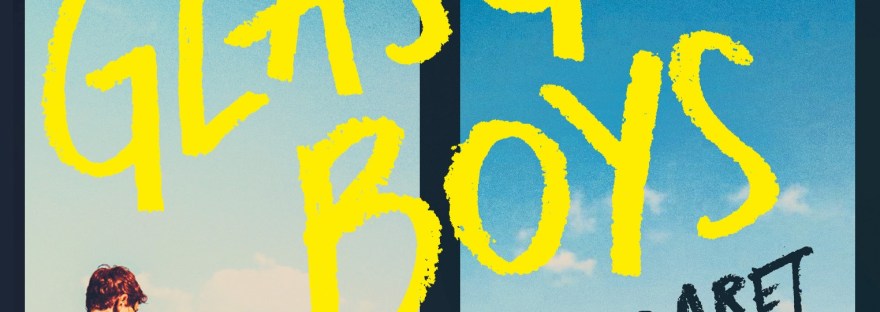
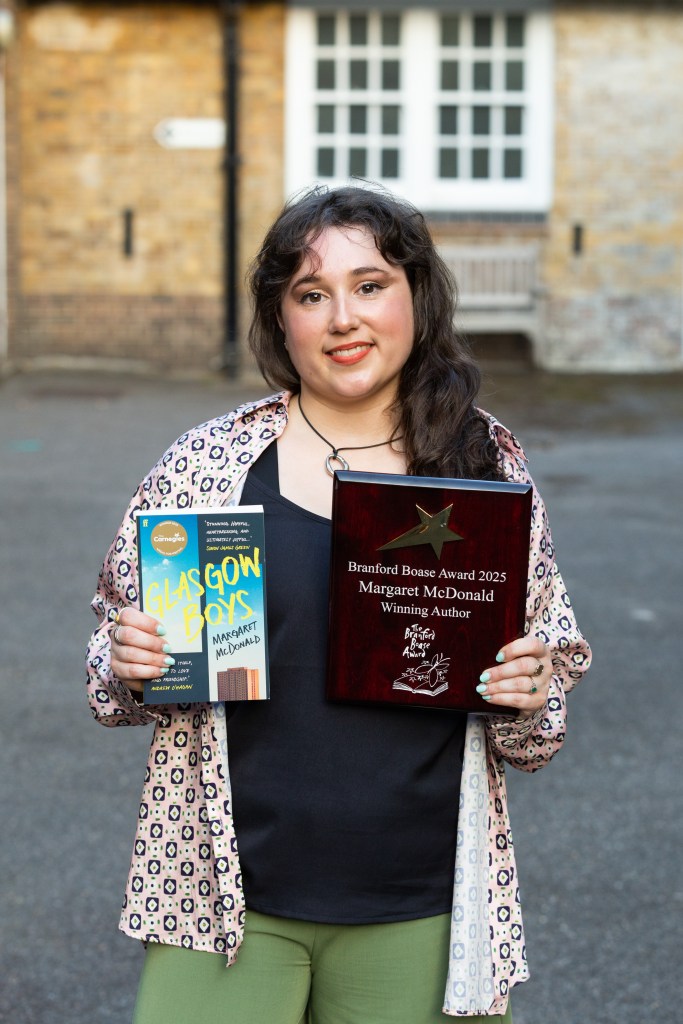
Branford Boase Award 2025: Faber & Faber editor Alice Swan on Glasgow Boys

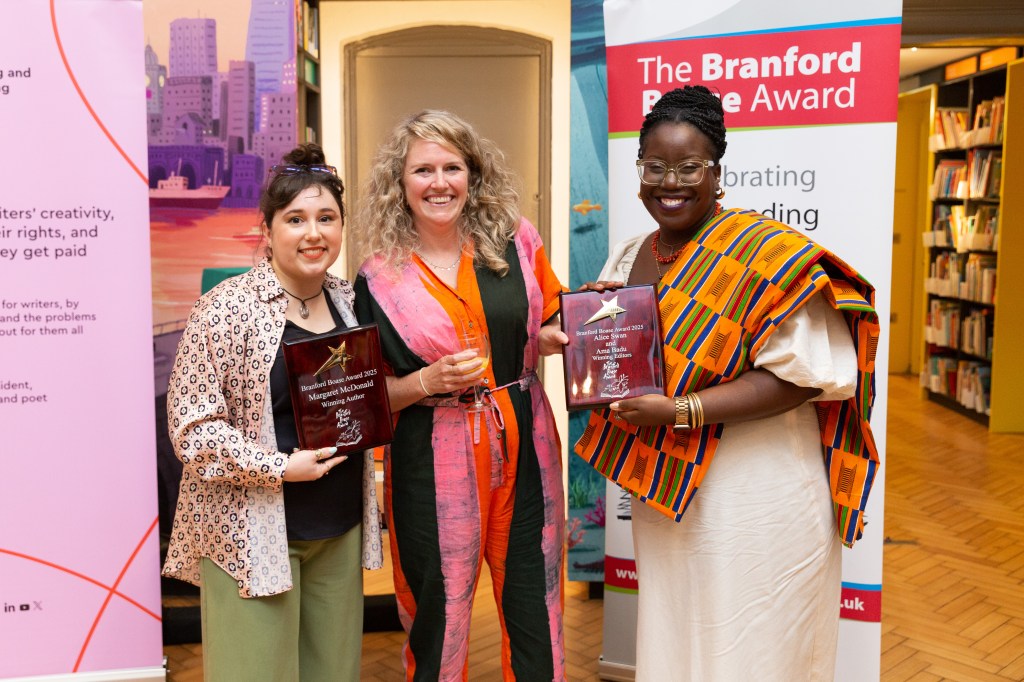
Author Margaret McDonald with Faber & Faber editors Alice Swan and Ama Badu

Working on Margaret McDonald’s Glasgow Boys was – joyfully – one of my favourite sort of edits. Often an edit can feel like a puzzle that you’re trying to put together and the desire is to have every piece in place at the end. However, the starting point for each book isn’t always the same. Sometimes it feels like the pieces are out of shape, or that half of them are hiding down the back of the sofa and there’s a question mark over whether they will all be found!

However, with Glasgow Boys, the starting point felt full of hope: looking down on the first draft, all the puzzle pieces were face up and on the table – the perfect story was there for the taking, we just had to rearrange the pieces into the right order. 

To step away from the metaphor for a moment, what I mean is that Margaret’s writing was exquisite, and her characters, Banjo and Finlay, felt fully formed from the first read. Working with my colleague, Ama Badu, our editorial mission was to ensure that the reading experience felt like a real ride – that the tension and the suspense built up to those moments of release.

I hate to say it, but we wanted to make readers cry!

We wanted to take them on an emotional journey, leaving them full of hope and love at the end. Luckily, that’s very much what Margaret wanted too, so we worked comfortably and carefully alongside her to help her shape her story into the best version of itself. 

Every edit is different, but the conditions for a good edit remain the same. It’s our job to be able to look down on the story from above, to see that puzzle and to think about what each book needs. The main thing an edit needs is time. It simply isn’t a job that can be done alongside checking emails or attending meetings.

Faber & Faber editor, Alice Swan

In order to really see a story as a whole, editing can take one, two, three or even more consecutive days of solid, uninterrupted concentration. For me, I need to be offline and in an entirely separate room to my laptop in order to harness the level of deep thinking required.

Editing is a skill I have honed over many years, and with experience comes further clarity about just what a story might need. It’s a skill that needs to be taught, cherished and protected, and above all given the luxury of time. 

Author Margaret McDonald

At the end of the Glasgow Boys edit, which took five months in the end, it really did feel like every piece was where it should be. It felt like a real mic-drop moment – it was done. There wasn’t a single word out of place. And that, for an editor, is a rare and extraordinary feeling.  

Check out guest post with Faber & Faber editor Ama Badu here.

Faber & Faber editor, Ama Badu

.

Set up in memory of author Henrietta Branford and her editor Wendy Boase, the Branford Boase Award is the only award to recognise the editor as well as the author. Find out more about this year’s award on the website.

PaperBound Magazine is an online magazine for the young, and the young at heart. We are dedicated to showcasing authors and illustrators for children’s and young adult fiction and we strive to deliver inspiring content, uplifting stories, and top tips for young and aspiring writers yet to burst on to the literary scene.

All our issues are completely free and run by volunteers, however if you would like to support PaperBound and the work we do, you can help us out by buying us a virtual book. We appreciate any support you can give us!

Don’t forget you can read with the latest issues of PaperBound Magazine – completely free – here.

Blog, Blog series, Bookshelf, Interview, Interviews, on writing, Writing craft

Branford Boase Award 2025: Ama Badu on editing award-winning novel, Glasgow Boys

By the time it comes to the very first edit of any story, I’ve already read the manuscript a number of times. I’ve been on a journey with the characters and their world. For me, those first reads are the most precious because I learn something new about them every time. It’s a little like meeting a soon-to-be friend for the first time, and then again, and then again. You see something different on every encounter and they become dearer to you.

What I also observe with each read are my own emotions. How do I feel in this chapter and is this the way the author intends for me to feel? In a book like Glasgow Boys, this is especially important. The emotional experience is a core part of the reading experience and so I’d note down the moments that made my heart stop or tears build up. These observations followed me throughout the editing process.  

I enjoyed working collaboratively with Alice on Glasgow Boys. Editing can be a solitary process. It requires concentrated time and deep thought. Once those thoughts are in place, it then requires conversation. Usually, this is with the author, but in this case, Alice and I had each other to bounce ideas from.

We’d discuss every detail together, the moments that lingered with us the most, which chapters had the most punch, how the structure could be reworked to deliver more of the needed emotional pull. Many questions came out of those meetings. How do we get Banjo and Finlay from this point to that? Is this section working as strongly as it could here, or would it be more impactful there? Do we need to see this or that on the page more?

Raising these questions between ourselves first was such a useful exercise. In those conversations, we could see the parts of the story that resonated with each of us personally and where they differed. There is such an alchemy to editing and when two combine ideas, such magic happens. Alice and I often talk about this process as placing puzzle pieces together. We could see from the very start what image we were working on, we then had to figure out where each piece would fit. We passed ideas back and forth to each other and in doing so, we clarified our vision. 

Faber & Faber editor, Alice Swan

As a junior editor at the time, working alongside Alice and her wealth of experience taught me a great deal. There is much to be said about the training newer editors receive. Editing is a skill, one that is best harnessed through practice. Seeing other experienced editors at work is such a crucial part of the process and cannot be overlooked. There’s a proverb that talks about iron sharpening iron, just as one person sharpens another. Those editorial conversations and observing Alice at work certainly sharpened my skills and made me a more confident editor. 

Once we had our thoughts together, we then shared them with (the author) Margaret. This requires such trust, as it does with every author. Their manuscripts are a labour of love and as editors, our role is to polish them, to make them as strong as they can be for the readers.

Once again, a beautiful alchemy happened here with Margaret. We were working from such a rich tapestry and the three of us had a clear understanding of who Banjo and Finlay were and how they would develop from when we first met them to the last page of the novel. And so we worked, turned over every detail and questioned every word on the page. It was such a harmonious process.

Author Margaret McDonald

A book like Glasgow Boys emphasised the place of grace and care at every point. Not just because of the experiences of our beloved characters but also because of our responsibility to our readers. We had them in mind at every point, being sure to leave them the hope that we all desperately need to see. It was such a joy to see Margaret at work here too. With every draft I marvelled at how far she pushed her story.

The glowing reception Glasgow Boys has received is a testament to that.

Faber & Faber editor, Ama Badu

Guest post with Faber & Faber editor Alice Swan to follow.

.

Set up in memory of author Henrietta Branford and her editor Wendy Boase, the Branford Boase Award is the only award to recognise the editor as well as the author. Find out more about this year’s award on the website.

PaperBound Magazine is an online magazine for the young, and the young at heart. We are dedicated to showcasing authors and illustrators for children’s and young adult fiction and we strive to deliver inspiring content, uplifting stories, and top tips for young and aspiring writers yet to burst on to the literary scene.

All our issues are completely free and run by volunteers, however if you would like to support PaperBound and the work we do, you can help us out by buying us a virtual book. We appreciate any support you can give us!

Don’t forget you can read with the latest issues of PaperBound Magazine – completely free – here.

article, Blog, Blog series, Bookshelf, Interview, Interviews, on writing, Writing craft

Interview: SF Said on The Children’s Bookshow

As a children’s author, I visit schools up and down the country every week, talking to children about reading and writing and books.  The Children’s Bookshow organises brilliant large-scale events, where children from many schools come together in a fantastic venue to see an author, and then we do follow-up workshops in their classrooms.  Last year, I did this in Coventry, and it was one of the most exciting and rewarding events I’ve ever done, so this year, I’m delighted to be doing it again in Peterborough!

The Children’s Bookshow gives every single child who participates a free copy of a book written by the author they’re seeing.  I think this is beyond wonderful!  Normally when you do events, some kids get a book and some don’t.  But with The Children’s Bookshow, access to books is equal for everyone.  For some children, this will be the first book they’ve ever owned.  And we know from the research that reading for pleasure has the biggest positive impact of any factor on children’s life chances, so you can’t put a price on that – it really is life-changing!

I write the books that I want to read myself!  My first book, Varjak Paw, was about a cat who dreams of being a great warrior, and learns a secret martial art known only to cats.  My newest book, Tyger, is about a boy, a girl and a tyger who change the world.  With each book I write, I want it to be the very best book it can be, so I do everything I can to make it as good as I can.  That takes me many years, and many drafts.  The thing I enjoy most is hearing responses from readers – it makes all the hard work of writing feel more than worthwhile! 

I was very lucky, because everyone in my family loves books and stories, so I grew up surrounded by them.  Reading always seemed like fun to me, and I think that’s the best tip I can give you: never make reading seem like hard work, or a punishment!  Let it be fun.  Give children access to the widest possible range of books, let them choose freely for themselves, and then let them read for pure pleasure, with no strings attached.  If you do this, even the most reluctant readers might just surprise you – I’ve seen it happen many times!

There are several great ways to get involved with The Children’s Bookshow this year. Firstly, I’d encourage everyone to check the website to see if the 2025 tour is coming to a venue near you. If it is, why not tell your teacher or school librarian? They might be able to organise a school trip.

Even if you can’t make it to a live event, you can still be part of the experience by exploring The Children’s Bookshow website. There are fantastic photos and write-ups of all the events, so you can see what happens at the shows and discover new books and authors.

The website is also packed with great resources and activities around the featured books – for example, there are some Tyger resources on there now. At the end of the tour there will be a creative competition that is open to everyone to enter too. Last year’s winner got to meet Michael Rosen!

Like all writers, I’m really just a reader who took one more step.  I wanted to pass on the excitement I felt when I read my favourite books, like Watership Down, or saw my favourite films, like Star Wars.  My current project is very much connected to Tyger.  It’s not a sequel, or a prequel – it’s a parallel story set in another alternate world.  I feel sure it’s going to be my best book yet when it’s done, but it’s not there yet – it takes as long as it takes to make a book as good as you can make it!

First, forget about writing! Just think of yourself as a reader, and ask yourself, as a reader, if you could have any story to read, what would it be?  Whatever the answer (and there are no wrong answers), I think you should then write that story yourself.  And finally, keep working on it, draft after draft, until it’s as good as you’d want a story to be, as a reader.  That’s really all I do, as a writer – and young readers can do it too, at any age!

SF Said’s first book, Varjak Paw, won the Nestlé Smarties Prize for Children’s Literature, and was listed by BookTrust as one of the 100 best children’s books of the past 100 years.  The Outlaw Varjak Paw won the BBC Blue Peter Book Of The Year; Phoenix represented the UK on the IBBY International Honour Book List; while his most recent book Tyger won Children’s Book Of The Year at the British Book Awards, Children’s Book Of The Year at The Week Junior Book Awards, and the Foyles Children’s Book Of The Year.

Keep up to date with SF Said on his website.

PaperBound Magazine is an online magazine and blog for the young, and the young at heart. We are dedicated to showcasing authors and illustrators for children’s and young adult fiction and we strive to deliver inspiring content, uplifting stories, and top tips for young and aspiring writers yet to burst on to the literary scene.

All our issues are completely free and run by volunteers, however if you would like to support PaperBound and the work we do, you can help us out by buying us a virtual book. We appreciate any support you can give us!

Don’t forget you can read with the latest issues of PaperBound Magazine – completely free – here.

Blog, Blog series, Bookshelf, Interview, Interviews, on writing, Writing craft

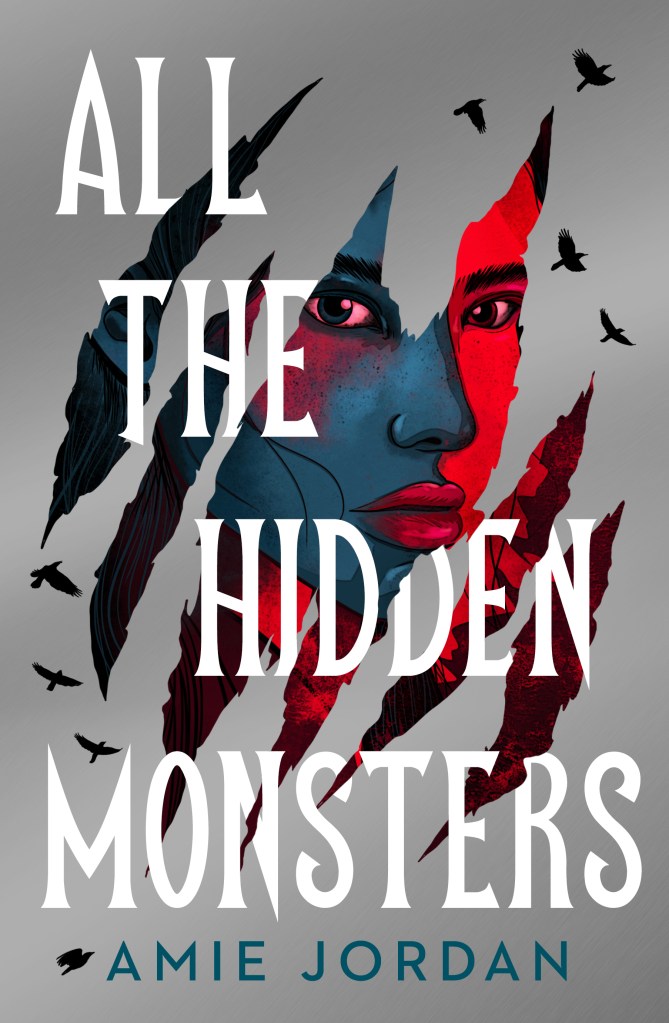
Branford Boase Award 2025: Amie Jordan on working with Chicken House editor Rachel Leyshon for shortlisted novel, All the Hidden Monsters

I met my characters Sage, Oren and P. And the rest, as they say, was history.

But the rest, as I say, would not have been possible without Rachel Leyshon, my editor at Chicken House.

Chicken House editor, Rachel Leyshon

See, my biggest problem is that I can’t stop talking. I consider it quite a fun fact (my mother less so) that every school report I ever received from nursery to college said ‘Amie talks too much and distracts others’ – my recent diagnosis of ADHD explains a lot – and this very clearly translates into my writing. My ability to stick to a wordcount in a first draft is truly laughable.

Then if we add my OCD into the mix (I know, almost a whole neurodivergent set!) know that I’m constantly compelled to over explain in obsessive and totally unnecessary detail. And if this is a blogpost about honesty I might as well also note that I don’t plot or write in numerical chapter order either. That’s because my OCD thrives off lists, and plotting chapters out is simply tantamount to writing down a big ol’ list, right? And once a list is written it’s set in stone.

The OCD really struggles to change it up. Naturally, this can make the editing process later on pretty tricky to deal with! So anyway, I just find that if I’m not writing in a chapter linear/list order, it somehow all feels easier to move around later. If anyone is interested to know, the first scene I wrote in ATHM eventually settled in as part of chapter thirty-six.

Does any of that writing process make sense?

No, it doesn’t.

But the point I’m trying to make is that despite all that, despite the fact I know it’s not ideal but can’t help it anyway, Rachel didn’t instantly balk. Between all the initial chaos she was still able to see the vision, sift through and highlight what worked, what was unnecessary over complication, and work to understand exactly what I was trying to achieve, guiding me there in the parts I wasn’t quite pulling it off.

I’m totally aware that some days it would’ve been so much easier to just tell me what to do, but she never did. She has the patience of a saint and is such an inspiration and an encouragement to someone like me specifically, knowing the traits I’ve always let overwhelm and hold me back have not mattered. Proof that people like me can make it with the right editor at the helm.

So my advice to any aspiring writers, but especially to those that see themselves reflected in me, would be this: it’s actually fine not to be perfect right away. It’s fine to be flawed. And for God’s sake, don’t torture yourself over it. If working with Rachel has taught me anything, it’s that if you truly have that spark of magic to begin with then it’s always going to be in there somewhere, and the right people will be able to see it. The very best of them will make you thrive.

I wasted so many years not having the self-belief or the confidence in my own work, knowing that I was too chaotic to ever be the shiny, impossibly perfect writer I thought I had to be from the start if I ever wanted to succeed in this childhood dream of being an author. I wish I’d been braver sooner.

.

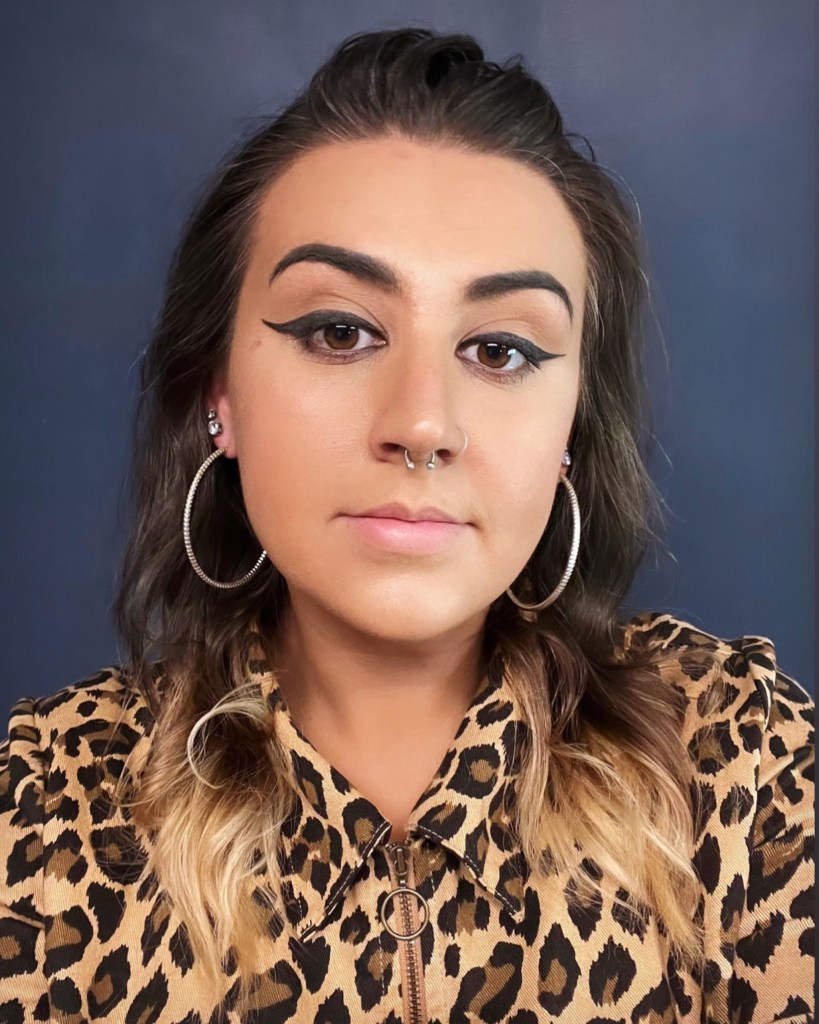
Amie Jordan is from Salford and studied Film and Media at Manchester Metropolitan University. When she isn’t writing she spends her time knitting, having provided bespoke pieces for the costume departments of film, TV and theatre. All the Lost Souls, the sequel to All the Hidden Monsters, is out now!

Set up in memory of author Henrietta Branford and her editor Wendy Boase, the Branford Boase Award is the only award to recognise the editor as well as the author. Find out more about this year’s shortlisted books on the website. The winner will be announced on Wednesday 9 July.

PaperBound Magazine is an online magazine for the young, and the young at heart. We are dedicated to showcasing authors and illustrators for children’s and young adult fiction and we strive to deliver inspiring content, uplifting stories, and top tips for young and aspiring writers yet to burst on to the literary scene.

All our issues are completely free and run by volunteers, however if you would like to support PaperBound and the work we do, you can help us out by buying us a virtual book. We appreciate any support you can give us!

Don’t forget you can read with the latest issues of PaperBound Magazine – completely free – here.

article, Blog, Blog series, Bookshelf, on writing, Writing craft

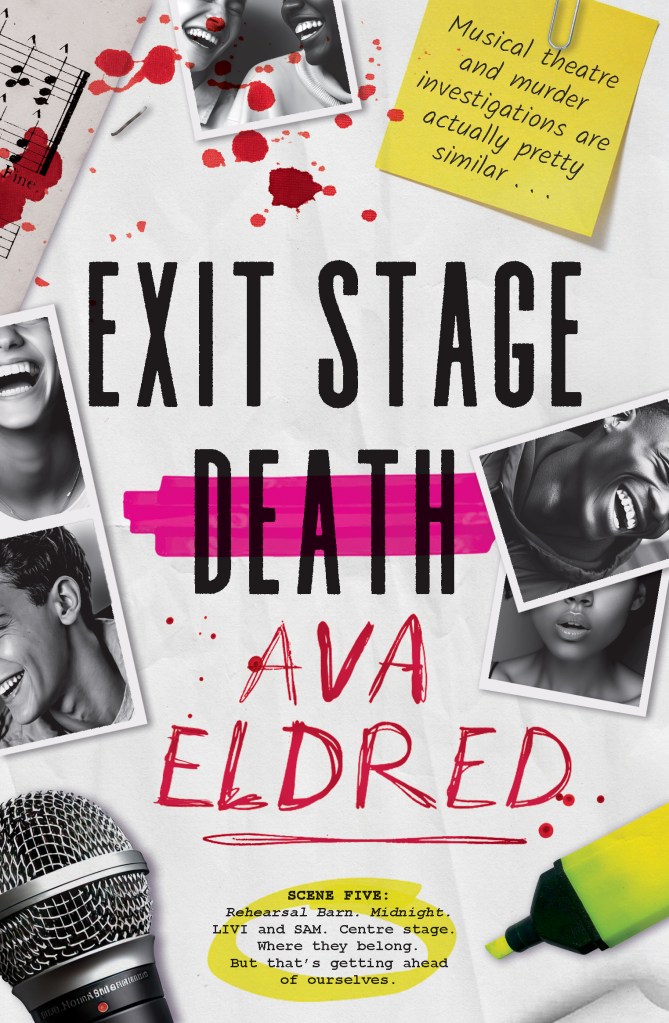
Guest post: Ava Eldred on new YA murder mystery novel ‘Exit Stage Death’

I won’t share her justification here (you’ll have to read it!) but I realised in the writing of the book that while our reasoning is different, I mostly agree with her, and that those similarities are one of the reasons it was the most fun I’ve ever had with a writing project.

I’ve worked in theatre myself for over 15 years, so in some senses bringing that world in to my YA novels was inevitable, but since I write murder mysteries, it wasn’t immediately obvious how the two might intersect.

When I thought about it a little more deeply, though, I realised that quite a lot of the things that can be taken from enjoying musicals can also be applied to mystery novels. Both allow a level of escape that feels safer, somehow, than other art forms tackling the same subjects might allow.

That is not to say that either musical theatre or YA murder mysteries sanitise things – more that, in adding the heightened layers that bring a little unreality to proceedings – the singing and dancing that we’d probably never come across in real life, the way YA protagonists have of becoming the default investigator that is unlikely outside of novels, we give the audience a way of processing things at a slight remove.

Fear is allowed to give way to thrills. Looking at it like that was part of the inspiration for Exit Stage Death – murder aside, the book tackles the complexities of coming of age, and finding a sense of belonging, which are things that all teenagers will come up against. The idea to set those growing up moments at a musical theatre summer camp, where a fellow camper is found dead on the third day, followed very quickly.

When it comes to theatre, and particularly my own creative work within it, I’ve always been more interested in work that holds a mirror up to the real world than going in for pure escapism. There is absolutely a place for both, but when I think about my favourite contemporary shows, there’s always a layer of something real that elevates them from good pieces of theatre to my all time greats.

The way that Next to Normal explores complex mental health conditions through song and dance, and even how less obviously dark shows like Wicked delve in to the complexities of female friendship and fitting in, make them a really enjoyable way of approaching and untangling scenarios that we may one day be faced with in our day to day lives.

I feel very similar about YA murder mysteries, both the ones I’ve written and many that I’ve read – YA authors are so brilliant at cutting right to the heart of the matter, and teenage audiences are so open to emotion in a way that adult readers sometimes resist, which makes them the perfect readers to explore things that are objectively terrifying, like murder, through a lens that usually isn’t. It’s facing the scary thing, whether that’s emotional or physical, and finding a way to unpack it.

I’m also always keen to make sure the protagonists in my novels have agency and, even when they’re afraid, find a way to use it. Teenage girls are so smart, and in a society that often tries to gaslight us in to thinking that isn’t the case, I think it’s our job as writers to push back against that every chance we get. That intelligence, too, is a reason murder mysteries are so appealing to this audience – when done well, they allow the reader to feel clever, give them something to push up against, and something to solve.

I’ve never met a teenage girl who didn’t like solving puzzles, whether that’s who the rogue arm in their friends Instagram photo belongs to, or who the killer is in their favourite book.

When I think of myself as a teenager, so many of the things that were most important to me weren’t things I saw represented in TV, or film, or other forms of culture. My platonic friendships were my most important love stories, and having interests like theatre and reading to throw myself into made so many things a whole lot more enjoyable.

My teenage self would have loved Exit Stage Death, if I do say so myself – there are plenty of platonic love stories, a touch of romance, questions to be answered, and a whole lot of songs to be sung along the way.

My biggest hope for this book is that the teenagers of 2025 who feel the same find it, and perhaps feel like someone understands.

Livi Campbell’s summer to-do list is simple:
1. Have the best final summer at Camp Chance.
2. Prove to her parents that acting is an acceptable career choice.
3. Smash all her rehearsals and get the lead in the senior showcase.
But when a fellow camper shows up dead under mysterious circumstances and Livi finds a note suggesting all is not as it seems, she must team up with her campmates to catch the culprit before they kill again.
Enter Juliet, the social media influencer with everything to prove; Aaron, the nepo baby who isn’t sure he wants to be in Hollywood at all; Daisy, the inexperienced newbie trying to find her place; and Sam, the leading man who broke Livi’s heart last summer.
The players are in place. The stage is set. Curtain up.

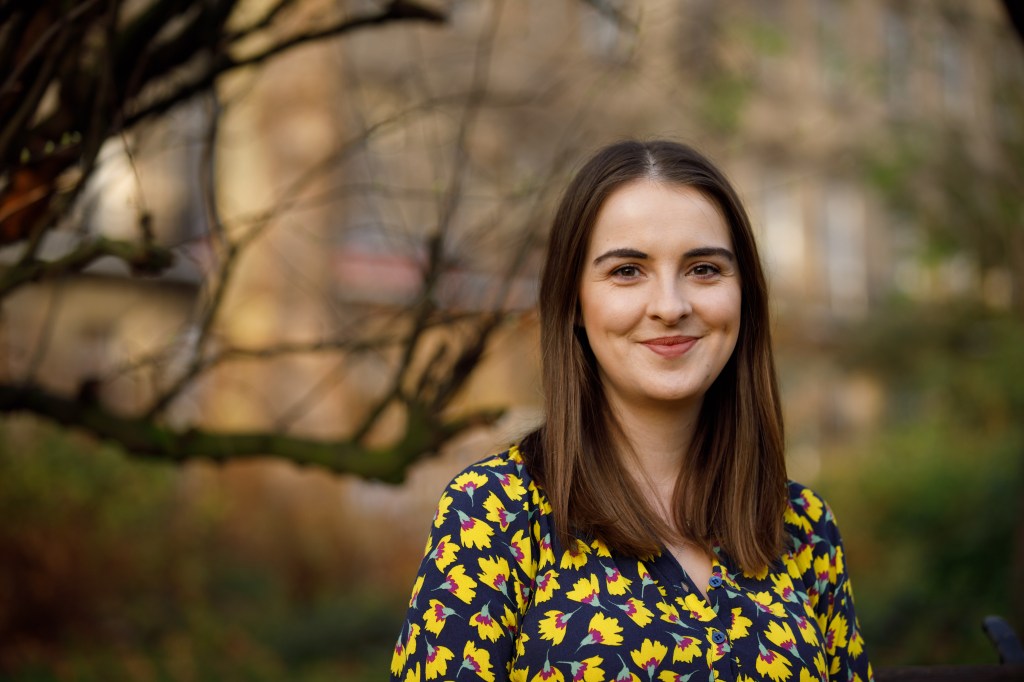
Ava Eldred was born in London, and has spent much of the last decade writing and developing stage musicals, as well as producing large scale theatrical concerts.
Her work has been performed both in London and internationally. She is a recent alumnus of Faber Academy’s Writing a Novel course.
Her debut novel, The Boyband Murder Mystery, was published by Penguin Random House in 2021.

PaperBound Magazine is an online magazine for the young, and the young at heart. We are dedicated to showcasing authors and illustrators for children’s and young adult fiction and we strive to deliver inspiring content, uplifting stories, and top tips for young and aspiring writers yet to burst on to the literary scene.

All our issues are completely free and run by volunteers, however if you would like to support PaperBound and the work we do, you can help us out by buying us a virtual book. We appreciate any support you can give us!

Don’t forget you can read with the latest issues of PaperBound Magazine – completely free – here.

article, Blog, Blog series, Bookshelf, Interview, Interviews, on writing, Writing craft

Interview: Best of All Worlds by Kenneth Oppel

It’s a survival thriller in which Xavier, my teenaged hero, wakes one morning to find that his family’s lakeside cottage has been moved somewhere completely different. When he, his father, and heavily pregnant stepmother go to explore, they find themselves on a farm – hens, two Nubian goats, thriving crops! When they wander further, they realize they’re trapped inside a dome.

I wondered how people would react to finding themselves in an inexplicable situation – what kind of story you’d need to tell yourself to make sense of it, what your plan of action would be. I also wrote the novel because I was fed up with conspiracy theorists, science deniers (especially deniers of climate change), and people who mangled the concept of freedom to justify hate, racism, and blatant self-interest. The world is hard enough for adults to navigate; for kids it must be even more bewildering, being deluged with misinformation.

Oh yes! I learned a lot about sustainable farming, the best kind of milk goats to get (also how to breed, castrate and butcher them). I read about the best time to plant certain crops and harvest them. I went down way to manner research rabbit holes. I also, sadly, had to research various conspiracy theories and the people who perpetrated them.

I am a big plotter and planner, and spend a lot of time “daydreaming” the world of the story before I start chapter one. But during the writing there are always delightful surprises. The biggest was probably the decision to introduce another family into the dome, one that had vastly different values than the first.

Usually the concept or setting. Best of All Worlds was definitely concept; books like Airborn and The Boundless were the settings.

Don’t expect it to be perfect the first time. If you get stuck somewhere in the story, jump to another place. Get as much feedback as possible from trusted readers.

Having a book in outer space. Airborn went to the ISS for six months with Canadian astronaut Robert Thirsk, and I got to meet him afterwards, and see my space book – though sadly they didn’t let me keep it!

I have a couple novels vying for attention at the moment. One involves U-Boats, the other a young rock band behaving badly.

Kenneth Oppel is the bestselling author of many books, including Airborn, which won the Governor General’s Award for children’s literature and a Michael L Printz Honor Book Award, and the Silverwing trilogy, which has sold over a million copies worldwide. Some of his other books include Ghostlight, The Boundless, Every Hidden Thing, and Inkling. The Nest and Half Brother both won the Canadian Library Association’s Book of the Year for Children Award. Kenneth lives in Toronto with his family.

PaperBound Magazine is an online magazine and blog for the young, and the young at heart. We are dedicated to showcasing authors and illustrators for children’s and young adult fiction and we strive to deliver inspiring content, uplifting stories, and top tips for young and aspiring writers yet to burst on to the literary scene.

All our issues are completely free and run by volunteers, however if you would like to support PaperBound and the work we do, you can help us out by buying us a virtual book. We appreciate any support you can give us!

Don’t forget you can read with the latest issues of PaperBound Magazine – completely free – here.

Aphrodite by Bryony Pearce book cover. Bright pink background against a single yellow eye with long lashes
article, Blog, Blog series, Bookshelf, Interview, Interviews, on writing, Writing craft

Interview: Aphrodite by Bryony Pearce

Aphrodite is a retelling of the life of the Greek goddess of love and beauty, a story that contains themes of power, love, betrayal and family.  

I have always loved myths from around the world and characters from mythology have appeared in many of my other novels: Angels Fury contains Nephilim; The Weight of Souls, Anubis; in Savage Island Carmen is a modern day Maenad; Hannah Messenger and the Gods of Hockwold contains many of the Greek gods.  

I have a particular fascination with Greek mythology and have been wanting to construct a complete Greek myth retelling for some time. Aphrodite struck me as the perfect vehicle for a modern rewrite, with the confusion about her birth, the possibilities of her power and the way she is a catalyst in so many stories.

I am so glad you saw the power in Aphrodite, as I was keen to give her that strength. In many ways she represents womanhood as a whole, and her story highlights the dangers for powerful women when they threaten the status quo.  

I loved writing the scenes where her power emerges, where she literally battles for her life. I also loved writing the scenes where she uses her cunning, hidden behind the mask of her pretty face.

What I found most difficult was remembering to make sure that she retained her innocence and didn’t have more knowledge than she should. It is easy to allow authorial voice to creep in, for example, in naming plants, animals and so on, so I had to keep checking myself – does she know this yet? How would she react to this thing that is so strange to her? What would she do here? How would she learn? Who will teach her?

I am one of the strictest plotters you’ll ever meet. I do character work, world-building research (I researched an awful lot about Ancient Greece from food to clothes to geography, politics, marriage customs and religious observations). Then I plan every beat of the story in advance. Following this, I write a chapter outline. And only then do I start to write.  

Some writers feel that writing like this removes the freshness from their work and cannot bring themselves to do it, but I feel that it allows me to focus on the language rather than worrying about what is going to happen next, to construct beautiful scenes, to ensure that everything fits together, that every action has consequences, that every scene moves the story on and every word has a role to play, and I can seed, early on, themes and elements that will be important much later.

I have always been a fan of world mythology. From a pre-teen I I had books about various myths, Egyptian tombs, the lives of the Mayans and Aztecs and explorations of religions and how they developed.  

My favourite stories have always been folklore and myths, from Havelock the Dane to King Arthur. Pantheons and heroes fascinate me and have so much to say about the values of a culture and how, ultimately, we are all so similar.

This is the thirteenth full length novel I have had published (and I’m hoping it isn’t unlucky number thirteen). I started to write in 2004, with the aim of seeing if it was possible for me to write a novel. I had no intention of trying for publication. However, once it was ‘finished’, I realised that I had a lot of love for it, and approached agents, who sent me to Cornerstones Literary Consultancy for feedback. After a rewrite following their advice, I entered the SCBWI Undiscovered Voices Competition 2008 and was one of the winners. From there I got my first agent and, in 2009, my first book deal.  

I also write short stories for adults which have appeared in various anthologies and magazines.  

In terms of tips for other writers, I would recommend that you read widely within your genre, and that once you have taken your first draft as far as you can alone, seek constructive feedback before approaching agents, whether that be through paid support such as literary consultancies, or through writing groups, mentors, or critique centres such as Wattpad.

I also recommend entering competitions, which are usually run by industry professionals, who might remember you and which often have great prizes from free feedback to book deals. Be polite, persistent, resilient and keep your love of writing – that is the most important thing, that you keep loving what you do

I am hoping to see my third adult thriller on the shelves, which is doing the rounds with publishers at the moment. This is set in London, and involves a woman who ends up entangled in a children’s game, gone terribly wrong. The current title is Simon Says.  

I am hoping also to write a sequel to Aphrodite, which goes into her role in the Trojan War (which in my version she starts deliberately, as a gift to her lover, Ares).  

I will be able to write the sequel if Aphrodite does well, so … hint, hint …

Imagine that you wake, full grown, in a strange world, naked and alone, with no memory and no skills. Where are you? Why and how did you end up there? Do you have the ability to survive, or are you helpless? What are your priorities (shelter, clothing, food, exploration, weapons etc.)? Do you receive help and support from the locals, or are you in great danger? What do you find when you explore? What do you become?

Bryony Pearce is a multi-award-winning novelist and short story writer. She has written a mixture of thrillers, paranormal adventures, science fiction and horror, for Mid-grade, Young Adult and Adult readers. Her most recent novels are based on Greek mythology: Hannah Messenger and the Gods of Hockwold, for readers aged 9-12, and Aphrodite, for young adults.

In addition to writing her own novels, Bryony teaches creative writing at City University (London) and works as a consultant and mentor, in order to help aspiring authors achieve their dreams.

She lives in Gloucestershire and has two teenagers. Consequently she spends a lot of time at the side of sports fields, listening to concerts and being creative in car-parks.

PaperBound Magazine is an online magazine for the young, and the young at heart. We are dedicated to showcasing authors and illustrators for children’s and young adult fiction and we strive to deliver inspiring content, uplifting stories, and top tips for young and aspiring writers yet to burst on to the literary scene.

All our issues are completely free and run by volunteers, however if you would like to support PaperBound and the work we do, you can help us out by buying us a virtual book. We appreciate any support you can give us!

Don’t forget you can read with the latest issues of PaperBound Magazine – completely free – here.

article, Blog, Blog series, Bookshelf, Interview, Interviews, on writing, Writing craft

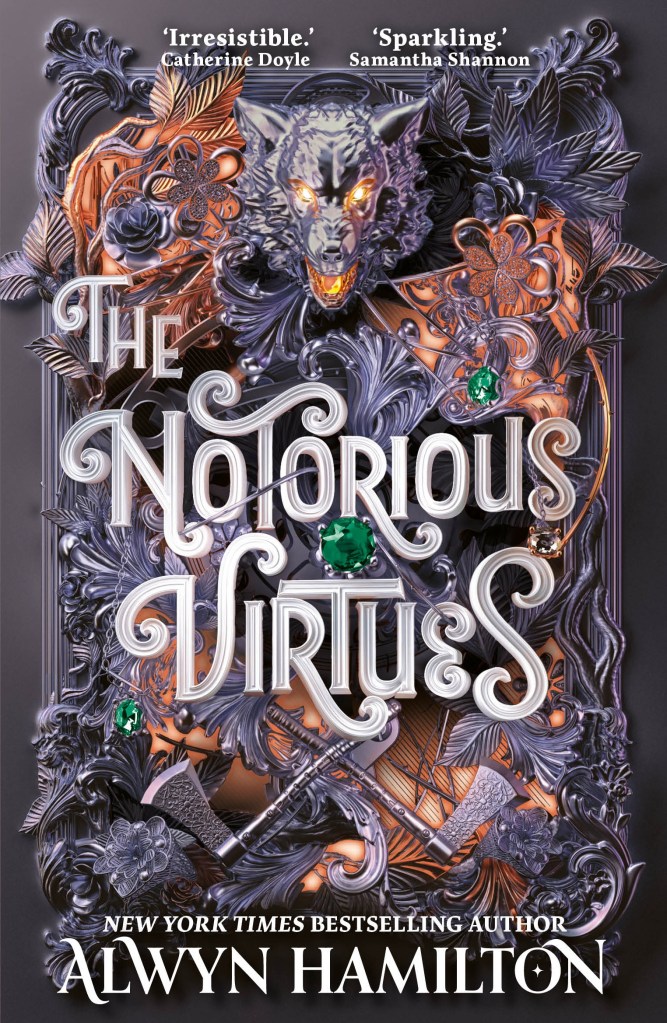
Interview: The Notorious Virtues by Alwyn Hamilton

The Notorious Virtues is 1920’s New York meets Grimm Fairytales. A group of heiresses compete to win their family’s money and magic in a tournament of virtues.

There are so many pieces that came together to make this story. It’s partly inspired by all the folktales of “The King had 3 sons and he sent them on a quest for a McGuffin to decide the heir”.

It’s also inspired by my friend who is a social worker and once pointed out that there is a recurring narrative in fantasy of glorifying a young person’s lost birth parent at the expense of the adoptive parents. It’s very you were raised by peasants but secretly you’re royalty, which is a terrible narrative for adoptive kids or kids in the foster system. She wished that fantasy would include more positive adoption stories. Apparently what I heard was write a story that subverts the narrative of the glorious perfect birth family that makes you special.

Well since you bring up world, one of the number one mistakes I see aspiring fantasy writers make is feeling like they need to have the whole world built before they start writing the story. Yes, of course you need to know some things, but the world will grow as you write it. No matter how prepared you are, you will inevitably hit something you have to invent on the fly. Don’t let building the world stop you from telling the story. Most of the time it’s an excuse.

This book was a built over such a long period of time that I would struggle to tell you what originally was in there and what came in the writing. The character of August is probably the biggest component that came in after I had pitched it. I realized quickly that Nora needed someone to talk to and be her mystery investigator sidekick (August would say she is the sidekick). And I think with him the mystery became a more active part of the book.

A lot of the charms were born from necessity in the world. I think it got cut in editing, but there was a charm that kept high heels from sinking into the grass at garden parties. I have been to enough outdoor weddings that I would gladly take a charmed shoe!

Authors aren’t supposed to have favourites… but my favourite is Nora, also known as Honora Holtzfall, the once heiress apparent trying to win back her place in the family, while also solving her mother’s murder. Nora is such a mix of brains, sass and reckless self-confidence. Writing her, and especially her banter with August, was the most fun.

I’ve heard the saying that you never learn to write a book, you only learn how to write the book you’re currently writing (and the next one is a whole new beast). I think that’s true to an extent, but I have always written better in a café than in my house, so I try to have a rhythm of leaving the house.

I feel like if I reveal anything about book 2 a sniper will appear pointed at my head. I am currently writing it, the fairy tale aspect is way bigger than in book 1, lots of fun creatures to see. And after that I have an idea I am so so so excited by. But we’ll just have to wait to see if I sell it!

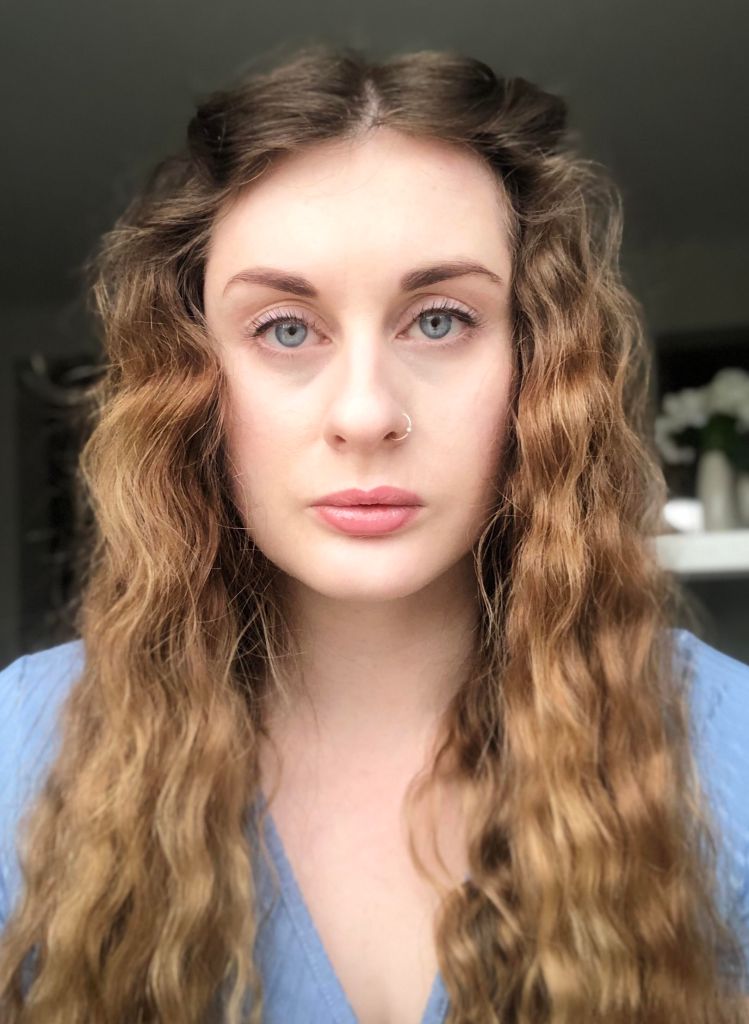
New York Times bestselling author Alwyn Hamilton was born in Toronto and spent her early years bouncing between Europe and Canada until her parents settled in France. She moved to the UK when she was 18 and has been here ever since as an author/bookseller. Her first novel Rebel of the Sands was sold in 14 territories and won the Goodreads Choice Award for best debut. Her fourth book The Notorious Virtues will release in 2025. Follow @alwynhamilton on TikTok.

https://www.alwynhamilton.com/

PaperBound Magazine is an online magazine for the young, and the young at heart. We are dedicated to showcasing authors and illustrators for children’s and young adult fiction and we strive to deliver inspiring content, uplifting stories, and top tips for young and aspiring writers yet to burst on to the literary scene.

All our issues are completely free and run by volunteers, however if you would like to support PaperBound and the work we do, you can help us out by buying us a virtual book. We appreciate any support you can give us!

Don’t forget you can read with the latest issues of PaperBound Magazine – completely free – here.

Island of Influencers by Monique Turner
article, Blog, Blog series, Bookshelf, Interview, Interviews, on writing, Writing craft

Interview: Island of Influencers by Monique Turner

I’m a curious person by nature, and the concept of influence is something I’ve studied in depth. What makes this person’s message so hard to ignore? Why have the masses flocked to this ideology? I can’t rest until I find an answer, and this research is what led me to helping create informative videos on YouTube. The realms of social media are the perfect place to observe human behaviour, especially in regards to influence.

I started working behind the scenes of YouTube channels as both a personal assistant and a scriptwriter, and I was lucky enough to witness influence from inside the fishbowl. Suddenly, I had access to the private aspects of human behaviour through direct messages and emails, and it was fascinating to learn how many people wanted to live the influencer lifestyle and, in contrast, how many people had absolute disdain for anyone who did.

I began writing Island of Influencers as a way of responding to the desires of the masses on the outside looking in, and to process everything I was part of. Harper, my protagonist, is a reflection of all the people wanting to be inside the influencer world – yearning, desperate and naive. Belle, her famous cousin, is the antithesis of that fairytale – she’s the harsh reality that Harper refuses to see until it’s too late for both of them.

Island of Influencers is the result of years of social media observation and study of human behaviour, broken down into a fun, bite-sized concept that can be consumed by anyone who is remotely interested in internet culture.

Thank you! I had so much fun creating my characters, including their usernames, Tubeify channel niches, and even their channel logos.

Readathorien is my personal favourite! Obviously, I’m a huge book nerd, and I often consume booktube, booktok, and bookstagram content, so her username had to reflect her online niche. The username Readathorien is based off the viral fantasy series A Thorien of Witchers (a fictional book I created for my world), and her channel on Tubeify was started based around this series, so her fanbase is the same fanbase for the book series. Her username was birthed from the concept that art breeds more art, and I live for art that transcends its original format, when the work takes on a life of its own and the fans create new space for it all over the web to theorise about and build upon the lore.

Sssiguard has a reactions channel on Tubeify. His username is based off the Scandinavian name Sigurd, derived from the Old Norse name Sigurðr which means “victory” and “guardian”. From the get-go, Sssiguard sees himself as the victor, even before the competition has begun, and the triple ‘S’ comes from the sound made by a snake. Sssiguard’s actions in the book can be very sssnake-like. I changed ‘gurd’ to ‘guard’ because I wanted to emphasis that he sees himself as the guardian of his internet niche. In his eyes, reactions are his territory (proven in the Cancelled Club challenge).

Unlike Readathorien’s username, which is based off her niche, I wanted Sssiguard’s to be based off his personality.

Kottage Kay’s username is interesting, because how lucky is it that she has a name (Kay) that, when paired with a slightly altered spelling of cottage, so perfectly fits with her cottagecore channel niche! It’s almost like it was given to her by the gods, manufactured in some way, like she’s an industry plant destined to succeed in whatever she does. Who knows!

Absolutely! The Hunger Games is a series that captivated me when it was first released. I couldn’t help but compare it to my own world. I can see the parallels even clearer now as I grow older, and for me, the internet is a very dystopian place, so merging the two concepts together just worked.

Obviously, my main inspiration was YouTube, specifically large-scale competition games with huge stakes and disgusting sums of money to be won. That’s the foundation of the novel.

But this book was also inspired by George Orwell’s Nineteen-Eighty-Four, Joseph Heller’s Catch-22, and Ray Bradbury’s Fahrenheit 451. All of these books deal with censorship, how easy it is to influence a society, control through media, getting stuck in systems that benefit only the rich and powerful, and how certain tools and technologies can be used to distract the masses from the realities of the world.

Music has also inspired many of the stories I’ve written, Island of Influencers included. This one is hard to explain, but sometimes I just stumble upon a song and something about the musical composition or the lyrics just invokes this whirlwind of activity in my brain. In the duration of that three minute song, I can create an entire world and storyline based on the vibe, and then magic just happens.

While writing the beginning of Island, I listened to loads of songs where the lyrics focused heavily on success, status and money, but I then switched to cinematic, epic instrumental pieces as I transitioned into act three, which really helped to unfurl the humour of the novel and reveal the darkness hidden beneath.

It’s already changing, without a doubt! Technology has advanced so rapidly within the span of my own lifetime, and today the changes are almost daily. Trends come and go quicker than you can jump on the bandwagon, the algorithms switch-up before you can even figure them out, and the days of old-Hollywood celebrity have been replaced by overnight successes who fade from relevance just as quickly as they appeared on our screens.

The internet has become an uncontrollable beast and people are tired. We’re overwhelmed with content now and it’s getting harder to discern what is genuine, relatable content, and what is actually marketing and promotion disguised as genuine, relatable content. There’s been a radical change in how people engage online, there’s less connection between creator and consumer and we’re seeing a rise in passive lurking and low conversion rates from views to shares, comments and likes on all forms of content.

People looking to become content creators or influencers are trying to go too big too soon these days, everyone wants their first video/ book/ song/ post to be a viral hit, and to gain millions of followers and subscribers overnight. That isn’t sustainable, and we’ve seen evidence of that through those who have gone viral overnight and then fallen short because they have no catalogue behind them to be able to keep the momentum going.

Personally, I think we need to go back to the drawing board and remember what made the early days of social media so great. The audience doesn’t want to be mindlessly sold to, they don’t want to feel like a number on a page, or like they’re the product of a strangers empire. People want to feel seen and valued by the creators they follow. There’s no better feeling than watching your favourite content creator rise from nothing into the stratosphere, to feel like you’re part of something that others on the outside don’t understand. 

My best advice to anyone who wants to become a content creator is this: don’t aim to grow a fanbase, aim to create a community of like-minded people. That might mean that you start with two of your mates engaging with your stuff, and then a third and fourth person might find you organically, and then soon you’ll have ten people engaging with your content, and then fifty. It’s the snowball effect. It’s slow and frustrating, and the outer shell might flake away and change, but the core is solid.

I’m looking forward to the days of social media where creators are focusing on community again, and not just spewing out content for the sake of making a profit.  

The ending was my favourite part to write, simply because I knew it would throw people for a loop. To me, the whole novel is obscure, but the darkness in the first three-quarters is blanketed by humour and absurdity which puts the reader at ease, and when that blanket is lifted toward the end, it’s unsettling. It comes across as quite jarring, but the darkness was always there.

I mentioned in a previous answer that I was inspired by Joseph Heller’s Catch-22. I love how Heller used satire to draw attention to and criticise certain aspects of society and human behaviour. It’s the same tactic a magician uses, a slight-of-hand trick. 

In Island of Influencers, I said, “Look over here at this ridiculous, entertaining thing while I do something underhand in the shadows,” and then by the time the reader and the characters notice, it’s already too late. The seeds were sown from the first page and, in the end, we all must reap what we sow. 

Funnily enough, this is also a tactic used by those in power in our real world. What’s the best way to assert control over the masses without anyone noticing or putting up a fight? Distract the people elsewhere.

And as for Harper, does she regret becoming an influencer in the end? I think that’s open for interpretation. She got everything she ever wanted, her dream came true after years of trying to make it happen, but it came at a cost. Only the one who pays the price can decide whether it was worth it.

Personally, I would never want for myself what she now has. 

Some readers might feel cheated by the end, because of how obscure it is. But my intention was never to make the reader feel comfortable, but to show how easy it is to be deceived, even when you have all the clues laid out before you.  

I have just handed in book two of the Influencer series to my editor, and I’m super excited to dive into edits for this one. It follows different characters in the same world, trying to navigate social media in the days following book one. We do also get to see what happens to some of the characters from Island of Influencers, and you may be surprised by where they’ve ended up.

For now, that’s all I can say, but I will leave you with this little snippet that I think captures the vibe of book two perfectly: “Are you entertained yet?”

Monique was born and raised in the cold north of England on a diet of strong brews and thick gravy. Whilst growing up, she struggled to find her place in the world, so she vowed to create stories where those who don’t fit in can finally feel like they belong. When T.M. Turner isn’t writing, she can be found roaming the southern coast.

PaperBound Magazine is an online magazine for the young, and the young at heart. We are dedicated to showcasing authors and illustrators for children’s and young adult fiction and we strive to deliver inspiring content, uplifting stories, and top tips for young and aspiring writers yet to burst on to the literary scene.

All our issues are completely free and run by volunteers, however if you would like to support PaperBound and the work we do, you can help us out by buying us a virtual book. We appreciate any support you can give us!

Don’t forget you can read with the latest issues of PaperBound Magazine – completely free – here.

article, Blog, Blog series, Bookshelf, on writing, Writing craft

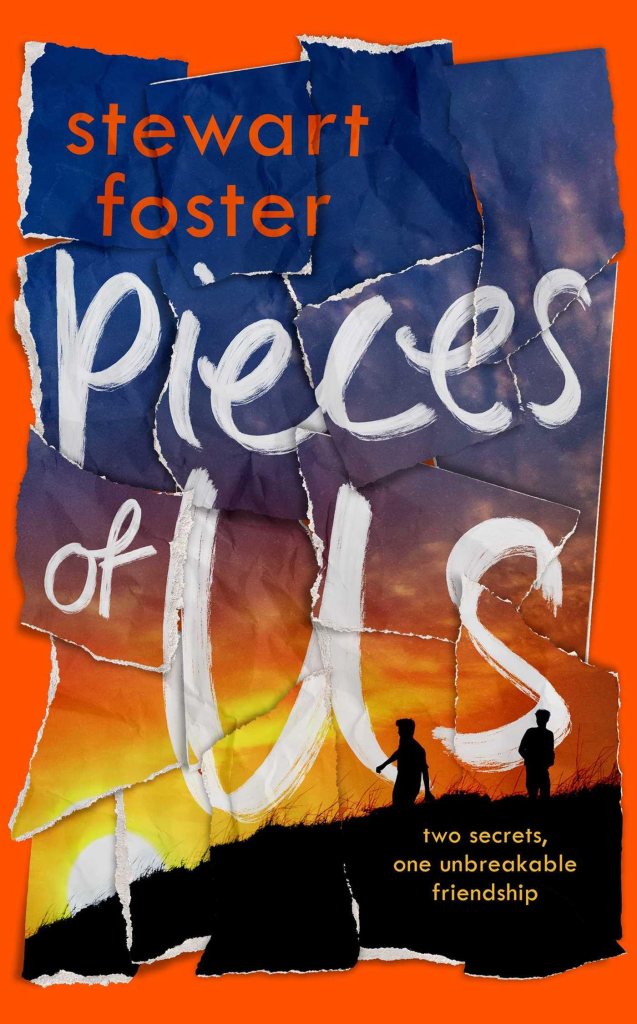
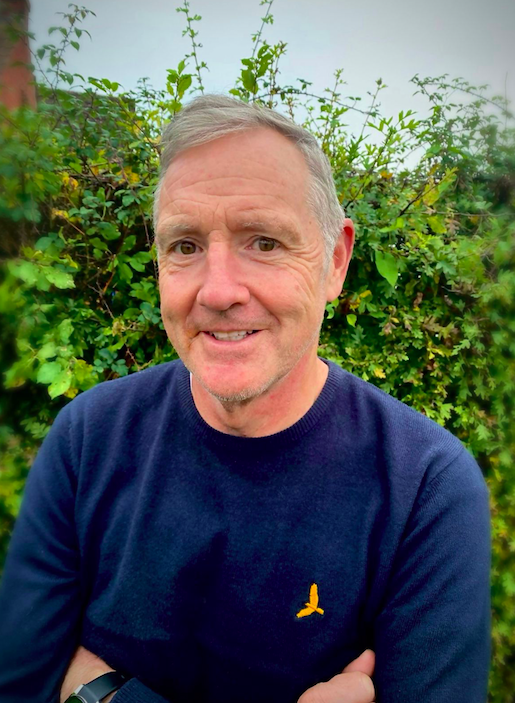
Guest post from author of YA novel ‘Pieces of Us’, Stewart Foster: Don’t Hide Behind the Songs

My character, seventeen-year-old Jonas, felt the same way. In the first chapter, he says to his best friend: ‘Louis, if ever I thought anyone would actually read this, I’m not sure I would write the first line.’ And I sat back from the screen and thought, ‘God, that is so true for me too.’

I kept writing, still with those worries in my head, not just about the bulimia but also the closeness of Jonas’s relationship with Louis. Later in the book, there’s a poem called The Cormorant. I wrote it one Sunday evening after watching a nature programme on TV showing a cormorant regurgitating food for its young. It repulsed me; an instant picture of what I was doing to myself in the bathroom. That poem went under my bed with thousands of other pieces of poetry I’d written since the age of ten.

I eventually showed it to my best friend two years later as we put songs together to record. He had no idea what The Cormorant was about, until late one night, I explained it – that it wasn’t about an ugly seabird, it was me. Like others, like my whole family, he had no idea of my secret, just thought I’d lost weight as I’d got taller. The next evening as we recorded it onto tape, he stopped midway through and said, ‘Stew, you could have told me, you didn’t have to hide it in a song.’

Looking back, I realise I wasn’t hiding behind the songs – showing him was my way of telling him, in the same way that you might write a diary and secretly hope someone might read it.

In a secondary school visit recently, I was reminded of how I used to feel at school, even later at university, because I believe this can be what mostly holds us back, like the Year Seven student I met recently who told me he found it hard to write.

‘Why?’ I asked him.

‘Because I always end up on my Xbox.’

‘No, why?’

‘Because I want to talk to my friends.’

‘No, why?’

‘Because I don’t have confidence, and I’m scared what my friends will think.’

‘There you go!’

The giggling in the room didn’t hide that that’s what the majority of classmates were thinking too: confidence, trust, peer pressure, what will my friends think?

Students are in the middle of the most confusing years of their lives, often feeling isolated in class, often (at university) hundreds of miles from home. Whether through song, poem, short story, third person, first person, or writing about dreams, it’s OK to put your feelings and emotions in them. In my case, a novel. And in that novel, what it took for me to write it – to block out those worries, block out those I thought would cast doubt – was to come up with this plan.

When my friendship ended with the person I’d first shown The Cormorant to, I was guilty of pushing those poems back under the bed until years later, whilst at university, I met someone who resurrected those feelings of close friendship and trust. They backed me with my writing – from emails to Facebook messages full of poetry, lines, thoughts, and chapters. They joined me in dreams of huge contracts and winning The Booker Prize.

And on those nights where doubts crept in, when Jonas’s actions became explicit and his secret eating disorder came out (along with it mine), I would hesitate over paragraphs, lines, words, and then I’d gather myself and say, ‘If I can say this to my friend, then I can write it in this book.’

It’s hard to put our feelings out there.

In poetry.

In songs.

In books. But for me, it became harder to say nothing at all.

Two secrets, an unbreakable bond … and a powerful and heartbreaking love letter to a life-changing friendship, from award-winning author, Stewart Foster.

As the summer before college begins, Jonas is hiding a secret. He suffers with bulimia, but no one knows. Not even he knows how bad it really is. Until he meets Louis, a confident dreamer who believes in a better future for Jonas and together they enjoy a sun-kissed summer filled with music, memories and life-changing moments.
But when tragedy strikes, Jonas must decide if he has the strength to face things alone ….

Stewart Foster is an adult and children’s novelist, born in Bath. His books have won multiple school and library awards and are recommended by Empathy Lab and Reading Well.
His first children’s book, The Bubble Boy, was published in 2016, winning Sainsbury’s Children’s Book Award in 2016 and many schools and libraries awards, as well as being nominated for The Carnegie Book Award.
Since then, Stewart has written four more children’s books: All the Things That Could Go Wrong, Checkmates, The Perfect Parent Project and Can You Feel the Noise?

PaperBound Magazine is an online magazine for the young, and the young at heart. We are dedicated to showcasing authors and illustrators for children’s and young adult fiction and we strive to deliver inspiring content, uplifting stories, and top tips for young and aspiring writers yet to burst on to the literary scene.

All our issues are completely free and run by volunteers, however if you would like to support PaperBound and the work we do, you can help us out by buying us a virtual book. We appreciate any support you can give us!

Don’t forget you can read with the latest issues of PaperBound Magazine – completely free – here.

article, Blog, Blog series, Bookshelf, Interview, Interviews, on writing, Writing craft

Interview: ’Til Death by Busayo Matuluko

’Til Death is a cosy-until-it’s-not mystery about a bride who is poisoned on her wedding day. After receiving threats telling her to cancel her wedding for over six months, her super sleuth cousin, Lara – who has a true passion for mysteries – decides to take it upon herself to solve the mystery of who is sending the notes and who has poisoned her cousin.

’Til Death came about after watching YouTube videos of Nigerian traditional weddings during the pandemic. I had a very morbid thought and said, “Wouldn’t it be crazy if she just died right now?” Now, that’s not a normal thought for a person to have, and I was like, “Busayo, that’s horrible… but as a mystery? Genius!” However, if I was going to write it, I had to know who did it, so I went to the worst-case scenario possible, and the story was born.

I wish I could say that I had a very intricate system and my own murder board like Lara, but unfortunately, it was a lot of back and forth editorially, trying to make sure everything fit in its place perfectly – especially because it was in such a short timeline. I had to make sure it was even possible to do this much in so few days. I will definitely be taking notes for my next book on how to keep a better system, I’ll just say that!

But to be honest, it was very easy to keep track of the characters because they lived in my head so naturally, and I very easily knew what one would say versus another. I also planted red herrings while I was writing, and a lot of them stuck, thankfully, through the editorial process. So, it’s nice to know that I at least did something right.

I think with weddings it would be hard not to include family dynamics and a huge cast of characters. When I set out to write ’Til Death, I knew that I wanted to introduce readers to not only Nigerian culture but Nigerian wedding culture, so the fusion of these was something I took much delight in.

Weddings already bring so much drama, but I feel like it is heightened when it’s a Nigerian wedding. You’ve got caterers arguing with mothers of the bride, and you’ve got guests moaning because they didn’t get enough party bags. All of these tidbits I definitely wanted to feature – I could write a whole book about weddings if you let me.

My favourite character to write, apart from Lara, would be Joseph. He’s just so annoying in the best way. I really loved finding pieces of dialogue that were extremely irritating but made a very good point. I also loved writing Seni and Derin’s feud as the wedding went on because I understood both sides equally. I see a lot of myself in Derin, in that I can be too trusting, but I understood some of Seni’s motives also – I can be just as petty, haha.

I think my interests with Lara align in the fact that we both love mystery novels. While I do like some aspects of true crime, I’m definitely not a buff like she is. I need to have a surge of energy to want to sit through a true crime documentary. But, of course, I feel as though if I were ever in the predicament, I could do it better than the criminals in the documentary.

It is funny that I say this because, at one point in my life, I did think I was going to be a forensic psychologist… but that dream was short-lived. Like Lara, my mum thought it wasn’t the best fit for me, but unlike Lara, she was right, haha.

Well, firstly, I hope they leave the book with a better understanding of sickle cell, but I also hope readers gain a new or better understanding and recognise the validity of invisible illnesses. These conditions can seem covert, even if it looks like someone’s life is fully under control and, in my character’s case, quite glamorous – but sometimes, there are factors they can’t control. I really hope it helps start up conversations about stigma.

So, I was writing before I became a BookTokker, but I used BookTok as an outlet to talk about my works in progress and get people excited about them. I can talk for days and will if you let me, so even when I didn’t think these books were going anywhere, I was still telling a lot of people about them –strangers, though, not my friends, because I felt embarrassed.

When I would post about my book, it made me want to continue writing because people were eager to read it based on just the basic premise. BookTok also helped me be introduced to my current agent, so in a way, I really have it to thank for helping me meet my agent, and then her to thank for everything after. It’s such a special little community.

  1. Put. The.  Words. Down. On. The. Page.
  2. Find what works for you and stick to it. You don’t need to listen to outside voices about their processes if it’s not going to work for you.
  3. There is someone out there that wants to read your story, and there is someone’s representation you will be fulfilling with your story.

I don’t think I am, but just for you guys!

My next novel is Desperate Housewives meets Devious Maids x Greenleaf.

If you are older (or just love nostalgic TV shows), it is based on the episode of Desperate Housewives where the wives have a dinner party at each other’s houses. Renee starts with drinks and appetisers, and Gabrielle ends with desserts… but when they get to Gabi’s house, there’s a dead body.

Set in Nigeria again, it will follow three housewives and their maids, with one character aiming to find out what they did with the dead body.

I think that’s all I can say.

Well, that and a familiar character will be coming back… and maybe going undercover.

GIVEAWAY

Like the sound of this novel? We’ve teamed up with Simon and Schuster to giveaway 3 copies of ’Til Death. Check out the details on our socials: Twitter/X (@paperboundmag) and Instagram (@paperboundmagazine). Giveaway ends 23:59 10/2/25. UK Only.

BUSAYO MATULUKO is a Black British-Nigerian nurse, YA/Crossover mystery and romance writer, and an extremely opinionated, award-nominated BookToker. As someone who grew up reading many books without the representation she desired, she started writing to fulfil that need. Her books are filled with vibrant Nigerian leads that talk too much, and she will always find a way to wriggle in two Black people falling in love. When she’s not writing, you can find her on Twitter at three a.m. tweeting her most random thoughts or binge-watching TV shows she’s already watched about a thousand times.

PaperBound Magazine is an online magazine for the young, and the young at heart. We are dedicated to showcasing authors and illustrators for children’s and young adult fiction and we strive to deliver inspiring content, uplifting stories, and top tips for young and aspiring writers yet to burst on to the literary scene.

All our issues are completely free and run by volunteers, however if you would like to support PaperBound and the work we do, you can help us out by buying us a virtual book. We appreciate any support you can give us!

Don’t forget you can read with the latest issues of PaperBound Magazine – completely free – here.

article, Blog, Blog series, Bookshelf, Interview, Interviews, on writing, Writing craft

Interview: The Vulpine by Polly Crosby

The Vulpine is a dystopian novel set in a world where disability and chronic illness have been outlawed. Children born with any sign of illness are labelled as ‘Imperfect’ and sent to the ‘Hospital for the Imperfect’. If parents refuse to give them up, then they risk them being snatched away by The Vulpine – hooded, cloaked monsters who live underground and feast on Imperfect children!

Ora is fifteen years old, and as far as she knows, she is perfectly healthy. But then one day she learns that her parents have been secretly giving her black-market medication, and that she too is Imperfect. Forced to confront a very different and frightening future, Ora sets out to confront the Vulpine, and in doing so, begins to unravel a web of dangerous secrets.

I love the freedom of writing dystopian fairytales, and the world building it allows, which is very different to writing my historical novels. I wrote This Tale during the Covid pandemic, when I was classed as extremely clinically vulnerable, and it was a wonderful world to escape to when my own world had shrunk to the size of my house.

I find writing for teens more challenging than writing for adults, because I remember the books I read as a teenager, and they meant so much to me. They helped shape who I am, and I feel I have a duty to be honest with and mindful of my readers – but this only means writing YA is even more rewarding!

I didn’t realise quite how much I was writing about my own chronic illness until I was deep into writing this story. In past years, I have shied away from writing about my own health, but the pandemic really made me analyse just what it’s like to be seen as different.

I hope The Vulpine will make readers a little more aware of diversity and difference in our own world, because every person has much to give to society, in spite of their differences – and quite often, because of them.

I have always loved folklore and fairy stories, and even in my earlier books for adults I use magical realism to heighten the feeling of ethereality in my novels. I really enjoy the play between reality and fantasy – the thought of a ghostly world that we can’t quite see. To me, it feels so much more enticing than full on horror (oh, and also, I’m a wimp!)

As someone who sits alone for hours writing, I crave time with other people to balance out those times alone. Life is never black and white, is it? No one person is all good or all evil, and I like the idea that we can be fearful and anxious but still have hope and love. 

“Crikey, that’s hard!” – is that good enough?! OK, umm … 

Fear…hope…and claws! 

Never give up. It took me twenty years – and four complete manuscripts – to finally get published. But writing is not just a job. It’s a passion. To me, it’s like breathing – it’s something I have to do. My top tip is to write every day. Set aside half an hour. Use your phone to make notes, write snippets of dialogue, ideas, settings. A successful story for me comes from the amalgamation of three different things.

With The Vulpine, those were a world where disability is banned, a monster hidden beneath the ground, and a girl who thinks she is healthy, and whose world is turned upside down when she finds out she is not.

I often find dialogue really helps me get into what a character’s like. It’s not until they start talking to people – arguing, joking, crying, laughing, that I realise exactly who they’re going to be. Also, writing in first person is great because it gives you a real idea of a person’s internal thoughts.

As to which character inspires me the most, I would have loved to have read Ora’s story when I was a teen, as she is far more fearless than me – I’m not sure I’d set out underground in search of monsters that crunch children’s bones! 

I’ve just finished writing a new novel for adults, a witchy, folkloric book set 250 years ago. YA-wise, I’m currently planning my next teen novel. I can’t say too much about it at the moment, but it’s going to have a huge, sweeping romance, and I’ll be doing some strange things with time… 

Polly Crosby grew up on the Suffolk coast, and now lives with her husband and son in the heart of Norfolk.

Polly writes dystopian fairytales for teens and gothic historical mysteries for adults, her latest of which, The House of Fever, came out last August. 
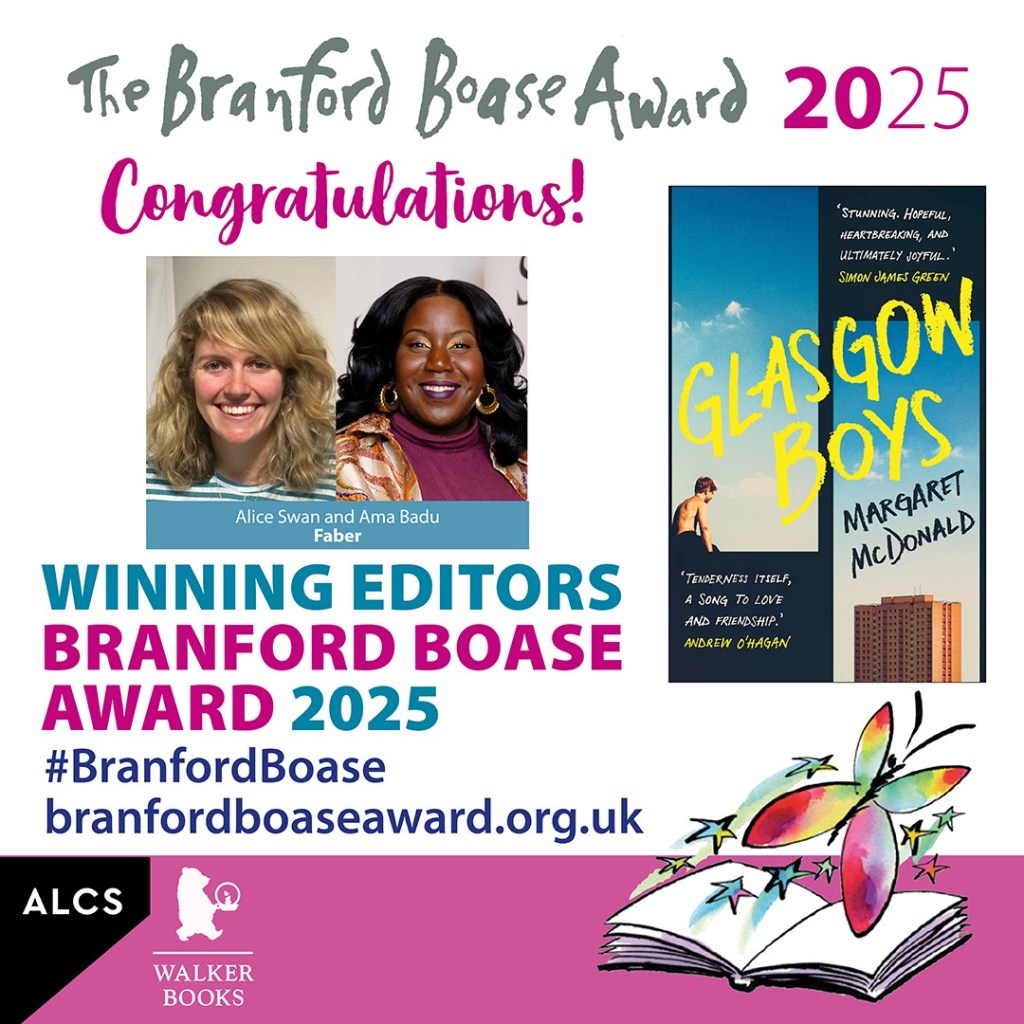
Huge thanks to Laura Jones for preparing the interview questions. Laura is one of our regular contributors and her reviews feature in issues of PaperBound Magazine. Read her review of The Vulpine in our forthcoming spring/summer issue, out later this year.

Laura Jones is a secondary school teacher in Cornwall. She teaches English and Media and recently completed an MA in Publishing. Laura is part of a local writing group and hopes to eventually complete one of the many book ideas she has saved on her laptop, some of which are inspired by the Cornish landscape.

PaperBound Magazine is an online magazine for the young, and the young at heart. We are dedicated to showcasing authors and illustrators for children’s and young adult fiction and we strive to deliver inspiring content, uplifting stories, and top tips for young and aspiring writers yet to burst on to the literary scene.

All our issues are completely free and run by volunteers, however if you would like to support PaperBound and the work we do, you can help us out by buying us a virtual book. We appreciate any support you can give us!

Don’t forget you can read with the latest issues of PaperBound Magazine – completely free – here.

article, Blog, Blog series, Bookshelf, on writing, Writing craft

Author of ‘Honeysuckle and Bone’, Trisha Tobias, on why we need Messy Protagonists

Young adult fiction is constantly changing. Part of that change can include making large leaps away from what’s old. But those leaps can create their own problems, like overcorrection. And while YA fiction has come a long way in depicting marginalized protagonists, allowing those same characters to embrace their imperfections on the page is the next step in crafting memorable heroes with relatable, meaningful stories. And I think we’re ready for it.

In my debut novel, Honeysuckle and Bone, eighteen-year-old Carina accepts an au pair job with a wealthy political family in Jamaica. But Carina isn’t just in Jamaica to pad her bank account. She’s got a history, one that fills her with so much shame that she runs away to escape the guilt—and the consequences of her actions. Except Carina soon learns that no matter how far she runs, she can’t escape what haunts her.

Carina is a Black teen who does her best, but “her best” tends to be a bit off. Honestly, it takes Carina a while to figure out how to properly deal with her issues. And in the meantime? She does almost everything…kind of wrong. At times, she’s more focused on self-preservation than “doing the right thing.” Which could make Carina frustrating to root for as a protagonist. But it also makes her very real.

Today, underrepresented YA protagonists are most at risk of being sanitized. In an extreme attempt to counterbalance decades of poor portrayals, these characters can sometimes find themselves flattened, no longer emulating how real teens think or behave. Instead, they present something more aspirational. They know what they shouldn’t do, and they’re rarely tempted to do those things anyway. They’re minimally judgmental or biased. They’re largely “unproblematic.”

It’s a strong swing of the storytelling pendulum, but it’s understandable. In the not-so-distant past, young adult fiction presented its marginalized teen protagonists (the few that existed, anyway) in…interesting ways. As a kid, it seemed to me that many books with characters who resembled me were either reductive reflections on American slavery or stories about troubled, “urban” Black teens. If not this, then my archetypal characters were sidekicks or “magical” helpers, probably with too much sass and a roll of the neck. It wasn’t great.

Cue the big push toward better depictions of characters with underrepresented identities. That shift towards positivity and away from stereotype was needed. Organizations like We Need Diverse Books have been instrumental in their vision, messaging, and education on this, and there’s still more work to do.

But where do we go from here?

We let the flawed marginalized main characters loose.

Of course, readers shouldn’t expect fake people to act in completely “real” ways all the time. After all, protagonists are meant to be bigger than life, and oftentimes, the audience feels they should be better than us common folks. But all of us, at some point, make decisions that stem from recklessness, selfishness, or prejudice. It’s not who we are at our best, but it is honest. We need to see some of that honesty in our protagonists.

Imperfect protagonists aren’t just fun—and challenging—to read about. They serve an important function for the audience. They act as models of personal growth and positive change. They reveal the complexity that comes with being a human in an ever-changing world. And these messy protagonists offer less-represented readers permission to be normal people rather than feeling like they must live up to an impossibly high standard of living—a standard that is often forced upon them.

Because the truth is this: we are all fallible. Yes, we should aspire to our ideals. But we will make mistakes. Luckily, fiction shows us that we can acknowledge our faults and choose to be better. Messy protagonists reveal that redemption is available to all who accept it, and change is possible, no matter where on the path someone starts.

Carina is deeply flawed—and that’s okay. She joins the growing ranks of marginalized teen protagonists who remind the rest of us that perfection isn’t the goal. Trying our best is. And all the missteps and mistakes? They’re unavoidable. In fact, they’re the whole point.

A deliciously dark YA contemporary gothic ghost story where even paradise is haunted, from debut author Trisha Tobias.
After a tragedy rips her life apart, Carina Marshall is looking to reinvent herself in her mother’s homeland of Jamaica. With her new gig as the au pair for the wealthy and powerful Hall family at Blackbead House, Carina wants nothing more than to disappear into their world of mango trees, tropical breezes and glamorous parties.
At first, Blackbead House seems like the perfect escape, but new beginnings don’t come easy. Because Carina isn’t who she says she is, and Blackbead House already knows…

Trisha Tobias grew up listening to her mother’s hushed ghost stories, tales of towering spirit wolves and the warning scent of honeysuckle because a duppy might be nearby. She isn’t sure if the myths are true, but they fuelled her imagination and her love for stories that are often only told in whispers. She is a 2019–2021 Highlights Foundation Diversity Fellow and a 2018 Walter Dean Myers Grant recipient. She is currently an associate developmental editor at Dovetail Fiction.

PaperBound Magazine is an online magazine for the young, and the young at heart. We are dedicated to showcasing authors and illustrators for children’s and young adult fiction and we strive to deliver inspiring content, uplifting stories, and top tips for young and aspiring writers yet to burst on to the literary scene.

All our issues are completely free and run by volunteers, however if you would like to support PaperBound and the work we do, you can help us out by buying us a virtual book. We appreciate any support you can give us!

Don’t forget you can read with the latest issues of PaperBound Magazine – completely free – here.

Blog, Blog series, Bookshelf, Interview, Interviews, on writing, Writing craft

Interview: YA author Cynthia So on their new release ‘This Feast of a Life’

This Feast of a Life centres on the lives of two teenagers, Auden and Valerie. Auden is learning how to cook from their parents, and they start a food blog where they can record their family’s recipes along with the stories that come with them. It’s also a space for them to use their new name, Auden, which they just picked for themself and don’t feel comfortable using anywhere else yet. 

Valerie’s mum, who loved cooking, passed away over a year ago – and the kitchen’s been left unused because Valerie and her dad both don’t know how to cook. But when Valerie discovers Auden’s food blog, it sparks a curiosity about food and cooking – as well as about the writer of the blog. Soon Auden and Valerie are meeting up and reviewing restaurants together, but will they figure out what it is that they’re truly hungry for in their lives? 

The initial idea for the book came from thinking about food blogs and how everyone always complains about the long preamble you have to scroll through before you get to the recipe. But sometimes I actually find the preamble kind of charming! So I thought: what if you fell in love with someone through reading their recipe preambles? It’s not quite what happens in the book in the end, but that’s the nugget of an idea that I started with.

I always knew that it had to be dual narrative based on the story I was trying to tell, which boiled down to this: the love story of two chaotic bisexuals who are deeply terrified of committing to a relationship for very different reasons. (Or at least Auden thinks of themself as bisexual in the beginning of the book, although their understanding of their sexuality evolves.) 

It’s crucial to the book that Auden and Valerie have extremely contrasting approaches to romance and dating, and I wanted to give them both equal space to explore their feelings.

I’ve never written a food blog, but I was a book blogger for a while. That and my experiences in fandom as well showed me what it was like to connect with someone online through a shared interest, and how absolutely vital some of those connections can feel. 

I’m very inspired by a lot of food blogs I come across! I especially love the Woks of Life, written by a family of four Chinese American cooks who also share stories from their travels. I love the warm vibe of this blog and the fact that there’s a whole family working on it together.  

Similarly, Made with Lau is a blog created by the son of a Chinese chef, to share his father’s recipes with the world, and the recipes are so wonderful because they’re also accompanied by videos of his father making them.

Yes, absolutely. As mentioned above, part of the joy of writing a dual narrative book is contrast, and it was fun to flesh out what makes Auden and Valerie so different. I loved writing a bigger, bustling family and exploring the pros and cons of being the baby of that family. It was nice to alternate between that and the quiet stillness of Valerie’s life – and I took care to show how important chosen family is, and how Valerie spends a lot of her time with her best friend and her best friend’s older sister. They’re family to her. But there’s still so much emptiness, especially when she goes home. I wanted to contrast that against Auden’s home life to really emphasise what’s missing from Valerie’s. 

However, both Auden and Valerie are in fact quite lonely characters, even if Auden has a much bigger family. I wanted readers to understand that it doesn’t matter how many people you have around you – loneliness comes from not being seen, and neither Auden nor Valerie feel very seen at the beginning of the book.

I’d love to say I have a writing routine, but I sadly don’t. Writing my first book and writing my second book felt like such different experiences, and I expect it will be the same every time I write a book – I will have to find a new way to write it. 

I’ve been writing stories ever since I can remember, but I stopped dreaming about publication somewhere along the way. Being selected as a New Voice for Proud, the 2019 LGBTQ+ YA anthology published by Little Tiger, changed my life. It helped me see a path towards writing as a career, and I started working hard on my first novel after that. My first book, If You Still Recognise Me, came out in June 2022, and it was wonderful to be shortlisted for the Waterstones Children’s Book Prize and the YA Book Prize in 2023. I love getting messages from readers who tell me that If You Still Recognise Me made them feel less alone, and I hope that This Feast of a Life will reach people in the same way. .

Know why you want to write for young adults, that’s the first thing. For me, it’s because I know how formative books were when I was that age, and how life-saving the right book could be. I felt a lot of things as a teenager that I really relied on books to help me navigate. 

The second thing is to have a very clear understanding of why you want to write this particular story, and what is most important to you about it. Writing a book takes a long time, and sometimes it’s easy to lose sight of why you’re doing it, and the overall shape of the story you want to tell, when you’re in the middle of wrangling plot points and herding characters. So make sure you know the heart of it: what about this story makes you feel alive writing it? Never forget that part. 

I’m always, always fond of writing moments of realisation in romance – when characters realise they want each other, and when characters give into that want.

Valerie’s journey with her grief felt very meaningful to me, and I loved giving her the space to express that grief in a variety of ways. 

I’m always, always fond of writing moments of realisation in romance – when characters realise they want each other, and when characters give into that want. This book was no exception! It’s like a roller coaster for me, the ones with the long, slow climb towards the top that feels almost torturous, and then the exhilarating rush of descent at the end. 

And of course, the food! I never tire of writing descriptions of food, honestly.

Cynthia So

Cynthia So is the author of If You Still Recognise Me, which was shortlisted for the Waterstones Children’s Book Prize and the YA Book Prize in 2023. They were one of the new voices in Proud, an anthology of LGBTQ+ YA stories, poems, and art by LGBTQ+ creators, published in 2019. Their short fiction and poetry have also appeared in Uncanny Magazine, Strange Horizons, and Anathema, among others. Cynthia was born in Hong Kong and lives in London with their wife.

PaperBound Magazine is an online magazine for the young, and the young at heart. We are dedicated to showcasing authors and illustrators for children’s and young adult fiction and we strive to deliver inspiring content, uplifting stories, and top tips for young and aspiring writers yet to burst on to the literary scene.

All our issues are completely free and run by volunteers, however if you would like to support PaperBound and the work we do, you can help us out by buying us a virtual book. We appreciate any support you can give us!

Don’t forget you can read with the latest issues of PaperBound Magazine – completely free – here.

Blog, Blog series, Bookshelf, Interview, Interviews, on writing, Writing craft

Halloween Special: ‘The Dark Within Us’ by Jess Popplewell

Of course! The Dark Within Us follows Jenny, a 16-year-old girl who is having a rough time. She’s fallen out with her mum and is therefore sleeping on her auntie’s sofa, which is clearly unsustainable. She’s fallen out with her best friend and been dumped by her first boyfriend – so when she meets a boy at a party who claims she doesn’t have a soul, this makes a weird sort of sense. Maybe if she can get her soul back, she can fix everything else as well. So, she decides to go with Luc – who it transpires, is a demon – into Hell in search of her soul. It’s inspired by a lot of things – not only did I leave home quite young, I also used to host for a youth homelessness charity so the idea of teenagers surviving via sofa-surfing is something I feel very strongly about. The book’s set sort of roughly in 2006, which is when I was a teenager, so I’ve also taken inspiration from TV, books and music of that era, most notably the TV show Skins.

Yes! When I was a teenager, I was a massive Goth and obsessed with religious and mythological perceptions of the afterlife. Some people get into horses and dolphins, I was slightly more morbid. I was always specifically interested in the way that rituals and beliefs around death evolve across cultures and over time – so I liked the idea of a modern teenager confronting centuries’ old beliefs and conceptions of the afterlife, especially ones like Inferno that have had such an influence on popular ideas of it even today (particularly in the West).

That’s a lovely thing to say, thank you! I have been known to say that Jenny is a cooler version of me as a teenager, but that’s not the whole truth. She was conceived more as someone I might have been friends with – I imagined her with my group of friends, and her personality was influenced by that. Also, as I mentioned earlier, I have some experience of working with young people, and I genuinely think teenagers are the most interesting people on the planet, mostly because they’re doing a lot of work all the time in figuring out how to navigate the complicated stuff life chucks at us. I wanted to show that through how Jenny navigates… some seriously complicated stuff.

In some ways no, because I do love all the characters in this book (well, maybe not Amber), but in terms of fun, probably Chloe-Lee and Joey. They’re such cryptic little weirdos, and cryptic little weirdos are almost always my favourite characters in any media. I’ve written so much backstory for them that had no place in the book, they still pop up in my head all the time.

Sure, how long do we have? The very first iteration of this book came about when I was 16. Over the years, characters have come and gone, plotlines have shifted, the relationship between Jenny and Luc has been wildly different, but the things that have always been the same are that Jenny starts out homeless, she goes to Hell because of Luc, and it’s heavily influenced by Dante’s Inferno and mythological references. I’ve written other things as well, but when the 2022 Chicken House Prize came around I knew this was the story to submit. For one thing, they ask for a full manuscript and this one was somewhat finished. I was in Reykjavik with a friend when I discovered I’d won, and Icelandic people seem to love ice cream an appropriate amount so we went out after the phone call and I had a mint choc chip in celebration. I met my agent through the prize as well, since she was one of the judges, and the whole process was incredibly positive. I’m so grateful the judges got what I was trying to do.

One: find a way to make time, whatever that means for you. For a long time I was working multiple jobs, or studying and working at the same time, and that’s the main reason it took me so long to write the book, because I just didn’t have the headspace for writing unless I was forced to by doing a writing course or my Creative Writing MA. It’s easier now because I know I’ve done it once and can do it again, but when you’re at that early stage it’s important to think about what you can do to make it happen.

Two: at the same time, don’t make yourself ill with the pressure. If you have lots of other responsibilities (parents, I don’t know how you do it!!), writing is often the thing that goes on the backburner, and that’s OK. Don’t beat yourself up over it. Remember that daydreaming the next scene you want to write before you get chance to write it… counts as writing!

Three: to help with the above, explore different ways of writing. Personally I use the notes app on my phone to jot down random dialogue snippets or an especially productive daydream. I like it because I can email it all to myself in one go when I’m next at my PC. I’ve also played a bit with speech to text dictation – I’m not great at the punctuation yet but it’s a great way to get quite a lot of work done in a short space of time, even if it all needs editing later on. You can’t edit an empty page, so something is better than nothing!

You can’t edit an empty page, so something is better than nothing!

I usually have 7 or 8 projects on the go at any given time – some of them are just for fun, like a 5-book series planned out in a cyberpunk dystopia (I call those projects my palate cleansers), but I’m also working on a couple of more serious projects. I do have ideas for more stories set in the world of The Dark Within Us; I’d love to write a follow up inspired by the themes in Purgatorio, but we’ll have to see if that pans out!

Photo by João Daniel Pereira

Jess Popplewell

Jess Popplewell is the author of The Dark Within Us, winner of the Times/Chicken House Chairman’s Prize 2022. She’s also a careers advisor in Higher Education, and has a series of free Careers Advice for Writers videos on TikTok (@jesspopps) and her website (jesspopplewell.com).

PaperBound Magazine is an online magazine for the young, and the young at heart. We are dedicated to showcasing authors and illustrators for children’s and young adult fiction and we strive to deliver inspiring content, uplifting stories, and top tips for young and aspiring writers yet to burst on to the literary scene.

All our issues are completely free and run by volunteers, however if you would like to support PaperBound and the work we do, you can help us out by buying us a virtual book. We appreciate any support you can give us!

Don’t forget you can read with the latest issues of PaperBound Magazine – completely free – here.

Blog, Blog series, Bookshelf, Interview, Interviews, on writing, Writing craft

Halloween Special: ‘Let’s Split Up’ by Bill Wood

Let’s Split Up follows a group of teenagers who investigate the murders of the IT couple at their school. Their search takes them to the supposedly haunted Carrington Manor. This book is my ode to Scooby-Doo, as well as 90s/2000s horror movies!

Honestly, anything Scooby-Doo. I had so many old VHS tapes that I watched over and over. Power Rangers was also a big one for me, but that didn’t exactly inspire this book. Then, as I got a bit older, and dipped my toes into horror, the late-90s films were my obsession for a while.

Definitely! My favourite thing about those 90s/2000s themed stories is the aspect of teen friendship. So, when I set out to write a ‘scarier Scooby-Doo novel,’ channelling this era was a no-brainer. It just felt so right.

Other than my dog, Macey, who is in the book (I had to!), the rest of the characters are not inspired by anyone. I did try and subvert a lot of cliché characters from horror movies though. Cam, for example, is the jock of the group but he’s not completely useless like a lot of depictions. He’s got a heart and has a lot more to him than you might expect.

For sure! I guess you can say there’s an element of the final girl trope in Let’s Split Up, but that’s also something I’ve tried to play with as well. Another big one is obvious from the title. Splitting up… But again, when the characters do have to split up, I tried to make a very good reason for it so you’re not screaming at the pages!

I started writing this at university, so it was all really fresh in my mind. I’m unsure if Let’s Split Up would be so inspired by film if I hadn’t started writing it when I did. But screenwriting is so helpful when it comes to writing dialogue because scripts are ninety-percent dialogue. I’ve found studying that for three years has really strengthened how believable my characters are.

TikTok is such a great social media because it connects you with people who enjoy the exact same things as you do, so you’re finding the ‘perfect audience,’ …

There’s pros and cons to it, of course, but it’s really helped with promoting the book. That’s a given. TikTok is such a great social media because it connects you with people who enjoy the exact same things as you do, so you’re finding the ‘perfect audience,’ if you will. TikTok also demystifies the author, if that makes sense. When I grew up, I never met any authors, so they seemed like these faceless people. Social media has definitely changed that.

I have a new YA mystery horror releasing autumn 2025. Like Let’s Split Up, it follows a group of teenagers. But this time around, we find ourselves in the Scottish Highlands…

Bill Wood

Bill Wood was born and raised in Birmingham, England. He has always had a love for all kinds of media and graduated from Birmingham City University in 2023 with a degree in Film & Screenwriting. When not writing, he is often found with a book and an iced coffee in hand, or filming ‘bookish’ social media content for his TikTok channel billreads, where he has amassed a following of over 124K. He currently lives with his family and Staffordshire Bull Terrier, Macey.

His debut novel Let’s Split Up (Scholastic, 2024) has become an instant bestseller and is a nail-biting and perfectly formed thriller for the YA BookTok generation – think Scooby Doo meets Pretty Little Liars.

PaperBound Magazine is an online magazine for the young, and the young at heart. We are dedicated to showcasing authors and illustrators for children’s and young adult fiction and we strive to deliver inspiring content, uplifting stories, and top tips for young and aspiring writers yet to burst on to the literary scene.

All our issues are completely free and run by volunteers, however if you would like to support PaperBound and the work we do, you can help us out by buying us a virtual book. We appreciate any support you can give us!

Don’t forget you can read with the latest issues of PaperBound Magazine – completely free – here.

Blog, Blog series, Bookshelf, Interview, Interviews, on writing, Writing craft

Interview: John Hearne chats about his speculative sci-fi novel ‘Someone’s Been Messing With Reality’ for middle grade readers

So here’s my tagline – ‘When Martin Ryan sees a video of his father flying unaided through the air, he realises that everything he has assumed about his life up to this point has been a lie’.

The whole novel arose out of the following proposition: ‘What if you were an alien, but didn’t know it?’ The moment Martin discovers the truth is also the moment that his parents disappear. He and his friends Tina and Enda realise that their disappearance is part of a larger conspiracy which they must unravel and thwart.

What inspired me to write it? I liked that proposition. Like a lot of writers, I log all the different story ideas that occur to me. Most of these ideas will never go anywhere, but if I hit one that’s sufficiently intriguing and exciting, I’ll start sketching out where I might go with it. What kind of characters could carry this kind of plotline? Where could I set it? Where will the intrigue come from? Once the ball gets rolling, it takes on a life of its own.

I’m a plotter and a planner. I like to work out where I’m going to go before I get there – but things always surprise you during the writing phase. I like to think of my outline as a map. I’m going to use it to get to where I’m going, but if I spot something interesting that doesn’t lie along the planned route, I’ll go explore it. The writing process tends to generate fresh ideas, and I think you’ve got to be open to evaluating them rather than sticking rigidly to the original plan.

Also, I often find as I write that that clever little plot detail or character quirk that I thought would work actually doesn’t, so I often stop midstream and rethink things. I find too that once you’ve established how a character acts, you’ve often got to give them more freedom that the original plot allowed. In Someone’s Been Messing with Reality, Martin’s friend Tina caused both him and me a lot of grief through her impulsivity – I had to keep readjusting things when I realised that ‘Hmmm, Tina would never do that…’

The process was similar, though it did have a lot more steps. I spent a lot of time figuring out exactly what would happen with Indigo before I dived into draft 1, but because this was my first attempt at anything like this, draft 1 was pretty much like the first chair that a trainee carpenter might make. The back was crooked and all the legs were different lengths. It went through several redrafts before I arrived at something that I would willingly show anyone – and the finished product didn’t bear much resemblance to the first draft. It’s true that most books aren’t written, they’re rewritten.

The Very Dangerous Sisters of Indigo McCloud had a fictitious setting – the absurdly miserable town of Blunt, and was choc-full of outlandish characters. I wanted to set Someone’s Been Messing with Reality in the real world, and make the characters a little more human. This is sci-fi – yes – but the relationships and problems and characters themselves are all real, or as real as I could make them.

Enda is one of the three friends at the centre of the book. He’s recovering from a brain injury. The emotional arc of the story rests on the different ways in which his two friends deal with this. I’ve always had an interest in brain injury. I made a radio documentary for RTE Radio 1 a few years ago about someone who was recovering from a very serious head injury. The weird thing is that after I had started work on this book, and after I had written Enda into it, I fell and hit my head. I gave myself what would be termed a ‘mild brain injury’. It may not have been life threatening, but it was very debilitating.

To cut a very long story short, I suffered from prolonged bouts of fatigue and could do very little work of any kind for a long time. Thankfully I’m fully recovered now, but the process took a couple of years. I couldn’t use a computer for much of that recovery. I had damaged the visual cortex at the back of the head, and my brain simply couldn’t deal with the kind of light that emanated from the screen. So much of this book was actually written longhand.

It has been lengthy! Much rejection, much rethinking, rewriting, repositioning. Getting published is hard and getting harder. This book – my second – was a little easier than the first, because I had a good relationship with the publisher, and they were happy to read what I wrote, but it had to reach a higher standard to get through. Rising costs have made it more difficult for independent publishers to take a chance on something, so they’ve got to love it before they’ll agree to put scarce resources on the line.

Since my book is science fiction, I’ll stick to that. My favourite in the genre is When You Reach Me by Rebecca Stead. A wonderful book, with a plot that rumbles slowly under the surface – you don’t quite realise that it’s sci-fi until close to the end. I also really like Ender’s Game by Orson Scott Card, the Dune books and The Iron Giant. My kids also love Hilo: The boy who crashed to earth by Judd Winick.

Much of the standard advice is correct. I think you need to do three things – read in the genre you’re writing in, develop your craft by reading about writing or taking classes, and finally, get feedback on your work. The third one is the one that most of us struggle with, but if you’re ambitious for your writing, you need to show it to people – and not just any people – I’m talking about people who understand the market and know what good writing looks like.

The other thing I’d say is that if your sole ambition is to get published, you are probably letting yourself in for a great deal of misery. Unless you’re exceptionally talented and blindingly lucky, the chances of getting published early in the game are low.

I write because I want to get published, yes, but I also write because I love to write. If you don’t love it for its own sake, I would chuck it in. You only get so much time on earth, so you’ve got to get something out of the journey. Without a love of the process, the time will feel wasted, and the destination – even if you do reach it – will not live up to expectations.

I’m working on something alright, but as we speak it’s an unholy mess. I’ll let you know if and when something readable emerges from it …

Photo courtesy of David Ruffles

John Hearne was born in Wexford, Ireland in 1970. He worked as an economist in Dublin before changing direction and becoming a freelance writer. He has ghostwritten and edited a range of bestselling books, while his journalism has appeared in numerous national and international newspapers and magazines.

His first middle grade novel, The Very Dangerous Sisters of Indigo McCloud was published to critical acclaim by Little Island in 2021. His second book Someone’s Been Messing with Reality is out now. You can find him on Instagram @johnhearneauthor.

www.johnhearneauthor.com

PaperBound Magazine is an online magazine for the young, and the young at heart. We are dedicated to showcasing authors and illustrators for children’s and young adult fiction and we strive to deliver inspiring content, uplifting stories, and top tips for young and aspiring writers yet to burst on to the literary scene.

All our issues are completely free and run by volunteers, however if you would like to support PaperBound and the work we do, you can help us out by buying us a virtual book. We appreciate any support you can give us!

Don’t forget you can read with the latest issues of PaperBound Magazine – completely free – here.

Blog, Blog series, Bookshelf, Interview, Interviews, Writing craft

Guest Blog Post: Berlie Doherty and Tamsin Rosewell on the writing and illustration process for The Seamaiden’s Odyssey

Berlie Doherty is the author of the best-selling novel, Street Child, and over 60 more books for children, teenagers and adults, and has written many plays for radio, theatre and television. She has been translated into over twenty languages and has won many awards, including the Carnegie medal for both Granny Was a Buffer Girl and Dear Nobody, and the Writers’ Guild Award for both Daughter of the Sea and the theatre version of Dear Nobody. She has three children and seven grandchildren, and lives in the Derbyshire Peak District.

Tamsin Rosewell is an artist, historian and broadcaster with a background in politics. She was a bookseller for 15 years, with a specialist knowledge in children’s and picture books before moving to illustration. She is also known for her painted window displays. Tamsin is a regular panel speaker and Festival event chair, as well as being a judge of the Stratford Salariya Picture Book Prize. She is based at 55-year-old independent bookshop, Kenilworth Books, but divides her time between London, Oxford and Warwickshire.

PaperBound Magazine is an online magazine for the young, and the young at heart. We are dedicated to showcasing authors and illustrators for children’s and young adult fiction and we strive to deliver inspiring content, uplifting stories, and top tips for young and aspiring writers yet to burst on to the literary scene.

All our issues are completely free and run by volunteers, however if you would like to support PaperBound and the work we do, you can help us out by buying us a virtual book. We appreciate any support you can give us!

Don’t forget you can read with the latest issues of PaperBound Magazine – completely free – here.

article, Blog, Blog series, on writing, Writing craft

Guest Blog Post: Author of YA Dystopian novel ‘The Undying Tower’ Melissa Welliver shares her thoughts on Writing Alternate Histories

A lot of people don’t know this but I did a joint-honours degree, and my final year was weighted one quarter towards English Literature, and the other three quarters towards History. That meant I ended up doing my dissertation on the Tudor period, which led me to the works of my favourite Tudor: Sir Thomas More. If you don’t know Thomas More and you love dystopia, well, listen up, because he invented it. Or at least, he coined the entire usage of Utopia in the first place, letting future writers subvert it for their own nefarious needs (read: writing a really cool story).

Thomas More’s Utopia – a falsified account of his journey to a seemingly perfect country named, you guessed it, Utopia – was arguably about an imagined, perhaps hoped for, future about how Tudor England and the world could run if we looked to a fairer, brighter future. The clue is in the title, but the people of Utopia were happy, balanced, had no need for money, and well cared for. So is it any wonder that when we as writers look into these topics, we end up imagining the worst possible scenario instead, to really show a mirror to the world we live in and discover what we truly see as Utopia?

So what does all this have to do with alternate histories? Well, just as Thomas More wrote about an alternate past, we do much the same when worldbuilding our dystopian futures. Most dystopias take route in a big change, something familiar to our own world but knocked off its axis with a cataclysmic event. This can be a change in our own pasts, such as in The Man in the High Castle, which imagines a world in which the Nazis won. The Fallout TV series and games are set in an alternate future where the timeline changes drastically after World War Two, to include vacuum tube electronics as opposed to circuit boards. Despite the diverges in these timelines happening in the past, Dystopias often seek to reflect what many decades of human endeavour past these points looks like in the future – and more importantly to the reader, whether we can stop them coming into being.

In The Undying Tower, I was most interested in exploring overpopulation and its effect on climate change. Because I knew how important these themes were up front, I was able to find SFF ways to incorporate them into the book during the early planning process. My lovely friend Caroline passed away from cancer (Glioblastoma Multiforme) during the writing process, and that made me really quite angry. All I could think about was what it would be like to live in a world where people don’t get sick, cancer was gone, and people lived forever. Caroline was a big believer in the planet we lived on, and I know she too was worried about the effects of overpopulation on climate change. And thus, the central idea of the book was formed. A small sect of society, known as the Undying, that could survive illness and never die from old age – and therefore inadvertently create an even bigger population boom.

I knew I wanted to explore the accelerated effects of climate change after such a catalyst as the discovery of the Undying, so I knew I had to craft an alternate timeline where my book could take place. So despite being set in the future, I wanted it to take place decades into an overpopulation crisis, and see how that affected the world we live in now, to create my future one. I looked up flood maps for melted ice caps and food storage facilities in the UK. I even went on a trip to Chernobyl to fully understand the effects of nuclear power, especially on the environment when things go wrong (TLDR; the environment will eventually grow back, but the human outlook? Not great).

In essence, I truly believe that everything we learn about our history can help shape our futures. And writing alternate history can help writers explore broader themes in an evolved future, plus help readers to see the similarities in the world we live in. Writing alternate histories isn’t just for fiction – I hope it will help in reality, too.

Melissa Welliver is a shortlisted author specialising in YA fiction. In the genre, she has produced two dystopian rom-coms, My Love Life and the Apocalypse and Soulmates and Other Ways toDie.

The Undying Tower is her first book in a trilogy.Melissa writes speculative fiction about how the end of the world is never really the end of the world. After studying Creative Writing at the University of Manchester, she went on to complete Curtis Brown’s Creative Writing for Children course. Her work has listed in Bath Novel Award, Mslexia, the Hachette Children’s Novel Award and the Wells Book for Children Competition.

PaperBound Magazine is an online magazine for the young, and the young at heart. We are dedicated to showcasing authors and illustrators for children’s and young adult fiction and we strive to deliver inspiring content, uplifting stories, and top tips for young and aspiring writers yet to burst on to the literary scene.

All our issues are completely free and run by volunteers, however if you would like to support PaperBound and the work we do, you can help us out by buying us a virtual book. We appreciate any support you can give us!

Don’t forget you can read with the latest issues of PaperBound Magazine – completely free – here.

Blog, Blog series, Competition, on writing, Writing craft

Guest Blog Post: Branford Boase Award Judge, Christine Pillainayagam, on the 2024 shortlist

Brandford Boase Award 2024

When I wrote my debut novel Ellie Pillai Is Brown, I wrote it for me. Or more accurately, for 15 year old me. A girl who’d never seen herself – a brown, second generation, Catholic, Tamil immigrant – reflected in the world around her. Not in books or magazines or films or music. The places she looked to for comfort and guidance, never showed her a version of who she could be. Growing up, that feeling of invisibility, of not belonging, sticks. Like glue on the inside of a book spine, it forms a fundamental part of your structure.

Decades later, I sat down at my computer and a book began to pour out of me. I remember vividly the feeling of typing the first words onto a blank page – My name is Ellie. Ellie Pillai – and so my hero was born. Both me, and so much more than me, Ellie is a 15 year old brown girl caught between two cultures – a traditional Tamil upbringing with her family at home, and the life of a classic British teenager at school.

This story, loosely based on some of my own experiences as a music obsessed teenager growing up in a predominantly white area, is what the book industry describes as ‘own voice’ – meaning exactly that. A book written by an author with intimate knowledge and understanding of the material, because it is lived first hand.

As a debut author, taking an ‘own voice’ story into the world can be frightening. It can feel as if not simply your writing is being judged, but yourself and the validity and relevance of your experiences. I was told time and time again, by agents and publishers alike, that my story wasn’t really a story. That there wasn’t a ‘hook’ or a sense of jeopardy, yet to me, I felt the transformation of this shy 15 year old from someone determined to be invisible out of fear of racism, to someone with the courage to stand up and stand out, was a story needed by so many children today. Luckily, my brilliant agent and publisher agreed – and so did the judges of the Branford Boase Award who made me the winner of the prize in 2023.

Winning the BBA has had a profound impact on how I now view children’s stories and their importance in the world. The foundation they build in young people’s lives. The glue we create in their book spines. This year as a judge for the prize, I was delighted to see more ‘own voice’ stories being promoted by publishers. Books that speak to the reality of children’s lives and represent every version of who they are and who they could be.

With a longlist of 25 incredible books, my fellow judges and I had some spirited discussions about who would make the shortlist, but in the end, the word that comes to mind for all 6 shortlisted novels is ‘powerful’. Each one, through a mix of humour, joy, love, pain, fear, compassion, representation, felt powerful. Stories that stick with you long after you turn the final page.

Like the amazing You Think You Know Me by Ayaan Mohamud, which gripped the judges with its use of pace and tension as a terrible incident unfolds, and deals sensitively and beautifully with themes of racism, Islamophobia and microaggressions. Or the hilarious The Swifts by Beth Lincoln, a classic whodunnit full of twists and turns that has such a distinctive voice and is so cleverly layered with themes of identity and family that it becomes a celebration of individuality. The Jhalak Prize winning Safiyyah’s War by Hiba Noor Khan, a compassionate story full of heart, which taught us something we didn’t know, then made us want to learn more about it. The brilliant The First Move by Jenny Ireland, a YA love story with depth, that speaks openly and authentically about disability and covers themes from LGBTQIA+, to mental health and housing security. The outstanding The Final Move by Matt Goodfellow, a verse novel that draws you into a world so often unrepresented in children’s books – a hopeful, playful masterpiece.

And of course, our wonderful 2024 Branford Boase Award winner Steady For This by Nathanael Lessore, a book of joy, emotion, light and shade. A story that confronts heavy subject matter in a life affirming and generous way. We wanted to push this brilliantly funny book into the hands of as many children as we could.

Each of these powerful novels represents the future of children’s books. One that is filled with hope and safety, whoever you are.

The Final Year Matt Goodfellow, illustrated by Joe Todd-Stanton, edited by Charlotte Hacking (Otter-Barry Books)

The First Move by Jenny Ireland, edited by Ruth Knowles with Sara Jafari (Penguin)

Safiyyah’s War by Hiba Noor Khan, edited by Eloise Wilson (Andersen Press)

Steady for This by Nathanael Lessore, edited by Ella Whiddett and Ruth Bennett (Hot Key Books)

The Swifts by Beth Lincoln, illustrated by Claire Powell, edited by Ben Horslen and Julie Strauss-Gabel (Puffin)

You Think You Know Me by Ayaan Mohamud, edited by Sarah Stewart (Usborne)

Brandford Boase Award 2024
Christine Pillainayagam was born in Norwich, grew up in Sheringham and attended school in Holt and Norwich. She now lives in Faversham in Kent.  She is a writer and retail strategist. A mild obsession with The Beatles and the desire to write a story that reflected her own experiences growing up as a first-generation immigrant led her to put that love of music and words into a book. Ellie Pillai is Brown features songs written by the protagonist, Ellie, and they are available to listen to via QR codes in the book. Ellie Pillai is Brown was shortlisted for the Waterstones Children’s Book Award and the Jhalak Children’s and YA Prize and won the 2023 Branford Boase Award.

PaperBound Magazine is an online magazine for the young, and the young at heart. We are dedicated to showcasing authors and illustrators for children’s and young adult fiction and we strive to deliver inspiring content, uplifting stories, and top tips for young and aspiring writers yet to burst on to the literary scene.

All our issues are completely free and run by volunteers, however if you would like to support PaperBound and the work we do, you can help us out by buying us a virtual book. We appreciate any support you can give us!

Don’t forget you can read with the latest issues of PaperBound Magazine – completely free – here.

Blog, Blog series, Bookshelf, Interview, Interviews, on writing, Writing craft

Interview: Louise Finch chats about her brand-new YA novel ‘Iris Green, Unseen’

Sure! Iris Green, Unseen is about a talented, but shy street photographer who, on the day she discovers her boyfriend is cheating on her with her best friend, starts turning invisible. As she tries to put herself and her life back together, Iris has to work out some difficult truths about herself and the people around her as well as trying not to fade away entirely.

It’s a novel about self-discovery, self-confidence and allowing yourself to be really seen.

First of all, I have to confess that I’m actually married to a photographer! So that was not only immensely helpful when it came to some of the technical questions, but also certainly contributed to the inspiration behind Iris’s art.

Also, although I’m not a particularly good photographer myself, I have always been interested in art and studied History of Art at uni. One artist whose work and story really inspires me is Vivian Maier, and she features quite prominently in the novel. Maier was an amazing and prolific street photographer who was entirely unknown in her lifetime, but her posthumous discovery has brought not only acclaim and recognition for her work, but also a lot of interest and speculation about her life. Her story raises so many interesting questions about why we make art and the exposure that comes with sharing it, which are certainly things Iris grapples with.

I also dabbled with a little darkroom photography once upon a time too and remain fascinated by the process. That moment when the picture begins to develop really is special and reminds me of how ideas arrive for novels – emerging on the blank page seemingly out of nowhere, but actually with a lot of hidden work and time to get to that stage.

I am a pantser to my core, unfortunately, writing my first drafts in a sometimes quite fragmented and chaotic way before going back through and attempting to impose order through edits. I’d love to be able to piece together a plot without writing the whole thing down scene by scene, but that doesn’t seem to be how my brain works.

Similarly, my ideas can start from anywhere and aren’t usually something I sit down and try to make happen. With Iris, the concept arrived first, but it brought the character along with it, because I knew immediately the kind of girl who would be manifesting her own invisibility.

What felt important to me was to focus on the interaction between all those relationships and how Iris feels about herself. From the start this was always about being seen and known by yourself and others, why that matters and how much it hurts when people get it wrong. While I had a sense of that when starting to write, I did end up going off on tangents during the writing that were less relevant and eventually had to be cut, which I think is inevitable when you’re not a plotter.

One thing that emerged during drafting which I enjoyed exploring was all the contradictions in Iris’s character and her relationships. For example, she’s someone who feels unworthy and doesn’t want to ask for anything from anyone, but ends up needing people to be there for her quite a bit. She’s hyper observant when it come to small slights, or the detail of a street scene, but fails to see Baker’s genuine interest in her.

My main advice is to be as honest as possible while also offering hope and empathy. I’m always mindful that, while my characters aren’t real people, my readers are. I believe that when writing about emotional real-world issues, writers have a responsibility to leave readers feeling safe and with a sense of optimism, even if things aren’t perfect in character’s lives by the final page.

Other than that, it’s always a good idea to ask trusted readers for feedback, because none of us can never see all angles of our own work. I’d be nowhere without my brilliant writer friends!

I do! I’m currently working on a horror novel, which is a slight change of direction, but not a total departure as it weaves together some real-world horrors with their supernatural counterparts.

Louise Finch is an autistic author who lives on the Surrey/Hampshire border with her partner and two dogs surrounded by vintage furniture and too many houseplants. The Eternal Return of Clara Hart, Louise Finch’s YA debut, was published by Little Island Books in 2022. It was shortlisted for the Yoto Carnegie Medal for Writing, the Branford Boase Award, the Great Reads Award, and the Bookseller YA Book Prize.

http://www.louisefinch.co.uk

PaperBound Magazine is an online magazine for the young, and the young at heart. We are dedicated to showcasing authors and illustrators for children’s and young adult fiction and we strive to deliver inspiring content, uplifting stories, and top tips for young and aspiring writers yet to burst on to the literary scene.

All our issues are completely free and run by volunteers, however if you would like to support PaperBound and the work we do, you can help us out by buying us a virtual book. We appreciate any support you can give us!

Don’t forget you can read with the latest issues of PaperBound Magazine – completely free – here.

Blog, Blog series, Bookshelf, Interview, Interviews, on writing, Writing craft

Interview: L.M. Nathan speaks to PaperBound about her new YA dystopian novel ‘The Virtue Season’

The Virtue Season is the story of Manon – a debutant who wants nothing more than love, but love is also the thing that terrifies her the most. Now that she is eighteen, and about to attend the virtue season balls, it is tantalisingly close. At the end of the season, she could have found the one – if her match is sanctioned by the council. But she lives in a world that holds some very spurious beliefs as truth, a world where genetic flaws are feared, and it is believed that bloodlines must be pure. And Manon is hiding a secret about her family that would be viewed as a defect. If it is discovered, Manon will be decommissioned. She will not be allowed to marry, or to have children, and will live as an outcast with her future decided by the oppressive council… just like her best friend Agatha.

Growing up I never really felt I fit anywhere. It took me a long time to realise that’s how most people feel – regardless of how confident they seem or how much they appear to be winning at life. When I was teaching, I saw it all the time, that feeling of being different, of being wrong in a world full of rights and I wanted to write something that was a clarion call to young people to shout: you do not define me, and, hopefully, to believe it too.

Like Manon, I felt from a young age my tendency for interiority and reflection might become something more insidious later in life, and I have had my struggles with anxiety but, also like Manon, I am strong and resilient and never give up. So it’s fair to say, she was inspired by own experiences.

I didn’t realise it when I was writing, but I was also weaving my dad’s experience into the story through the decoms. I would describe my dad as extremely able-bodied, if that is a thing. He was the kind of dad who threw you over one shoulder and carried you around giggling or launched you across the swimming pool, further than anyone else’s dad could. But then he was struck with illness and left disabled and though it didn’t change him – or his spirit – one bit, I saw how it changed the way society viewed him.   

I’m not a plotter. I tend to have a general gist of where the story will go and some sense of the main beats within it, but I like the way the story reveals itself to me through writing. There’s a magic to it. The story becomes a living, breathing thing and it takes me with it.

Calde Valley was inspired by the Ribble Valley, which is every bit as majestic as it appears in the story. Shortly after I moved there, it flooded and I found myself standing at the top of Clitheroe Castle, on a very windy, rainswept day, staring out at Pendle Hill and wondering…what if? Most people who are inspired by Pendle Hill tell stories about witches, but I managed to turn it into an apocalyptic dystopia.

My experience of finding Manon and Agatha verges on the supernatural. Once I had the setting of Calde Valley, they seemed to wander onto the hillside, take a bow and introduce themselves. I’m not a fan of character development exercises – what’s in their handbag and so on – but I know lots of writers swear by them. Because this was my first book, and I was finding my way, I did do this for Manon but very little of it was used. I think the only thing I kept from those types of questionnaires was her most treasured possession, which was her grandmother’s recipe book, which gifted me her cooking ability. So, I suppose it was worth doing but I prefer to tease out character through writing exercises. I might write a scene from a different character’s point of view and watch as Manon or Agatha reveal themselves through observation. I wrote lots from the perspective of Councillor Torrent and some from Wick’s as well. It allowed me to watch the two girls rather than being in their head all the time. Another great exercise is to put your character in a scene ‘outside’ the story – perhaps as a child or reflecting later in life, or in a location they don’t visit as part of the story. That’s always revealing, and no writing is ever wasted, even if it doesn’t make it into the book. 

Looking back, I wish I’d understood how much of the ‘writing’ happens after the first draft is finished. I wouldn’t have procrastinated over that draft for so long if so, but it felt like the stakes were high and I put it off for a lot of years.

Without a doubt, the most enjoyable part of this process has been meeting other people going through the same thing, discussing plot and character and motivation and all things bookish. It might seem strange, but the moment of publication has been the least enjoyable part. Sharing this story, which has been such an important part of my life, is scary and vulnerable and surreal. I have to hold fast to my own belief that the story is good.

I could go on writing about these characters forever. There is so much more for Manon and Agatha to accomplish. Real change happens slowly and, without giving away any spoilers, it didn’t feel right to gift them utopia at the end of this book and so, there is unfinished business, I think. There are also characters whose backstories I’d love to explore – Torrent, Drewis and Trent, Gillam and Cayte. And there are the stories that represent Calde Valley’s future too. Agatha’s sister Wren pleads her case often. Even Bertie, who I think is brave and dear and understated. They have so much life yet to live in my head. 

L.M. Nathan grew up in the East Midlands, moving from there to Bristol where she studied English and Drama and then to Malta where she completed an MA in Literature. She also has an MA in Journalism which she studied for in Manchester. She now lives in rural Lancashire, in the shadow of Pendle Hill, and teaches English.

Her first novel, The Virtue Season, was inspired by the wild landscape of home and completed when she was selected to be part of the Curtis Brown Creative novel course.

PaperBound Magazine is an online magazine for the young, and the young at heart. We are dedicated to showcasing authors and illustrators for children’s and young adult fiction and we strive to deliver inspiring content, uplifting stories, and top tips for young and aspiring writers yet to burst on to the literary scene.

All our issues are completely free and run by volunteers, however if you would like to support PaperBound and the work we do, you can help us out by buying us a virtual book. We appreciate any support you can give us!

Don’t forget you can read with the latest issues of PaperBound Magazine – completely free – here.

Blog, Blog series, Bookshelf, Interview, Interviews, Writing craft

Interview: Clare Pollard chats about her new middle grade fantasy ‘The Untameables’

Cover illustration by Reena Makwana

I’ve always absolutely loved Arthurian myth, from the sword in stone to the lady of the lake, faeries to questing beasts. But reading the tales to my children I was suddenly very conscious both that the legend of the ‘round table’ has been used historically to defend the idea of a ‘ruling class’, and that the stories are very violent. I suddenly had a very clear vision of Rowan and Elva, two children who live below-stairs, setting off on a quest to get to the holy grail before the knights do. And I knew they had to get the grail with kindness, not force.

Tales of Camelot are often considered part of the ‘Matter of Britain’. In many ways, Camelot has always been an idealised version of England and Englishness. I began writing this around the time of Brexit, and I wanted to explore what it is to be born under a ruler you don’t agree with. And, historically, England has of course done lots of very bad things. What if your nation are ‘the bad guys’? How can we embrace the best things about our history and culture, whilst resisting the narratives of those in power?

Elva is my favourite, I think. She just came to me fully formed, with all her righteous fury! Quests are all about overcoming obstacles, and young people who have disabilities or are in pain have a whole extra set of obstacles they have to overcome every day. She is a total heroine.

I love T.H. White’s Sword in the Stone. It actually has a dog-boy in it, which I think I must have half-remembered when I invented Rowan. I’m also a poet, so I was very inspired by poetry – Simon Armitage’s translation of Sir Gawain and the Green Knight, Tennyson’s The Lady of Shalott, Browning’s Childe Roland to the Dark Tower Came, as well as medieval riddle poems. I’ve been enjoying going into schools and getting children to write their own.

I am currently working on another children’s book about the voyage of the Argonauts. I am crazy about Greek myth, so am having a lot of fun with this. There’s a little girl who wants to be the Oracle of Delphi when she’s older who has joined the crew. Also a six-year-old siren with a really horrible singing voice!

I actually found it very hard to get The Untameables published. It was rejected by a lot of publishers. I think the children’s book world can be naturally quite conservative and the fact it has political parallels – that the round table is a sort of Bullingdon club – put them off. I also got asked if I could rewrite it so Rowan wants to be a knight! Little boys are supposed to be ‘knights-in-training’. So I think the fact this book is anti-knight worried editors. It was in a drawer for a couple of years before I saw that The Emma Press, who I knew as a wonderful poetry publisher, had a call-out for children’s chapter books and I submitted. I think as a small press they’re more open to radical texts, and I also knew they would make a very beautiful book. I am so happy they asked Reena Makwana to illustrate it – she is a total joy to work with.

I’m promoting my adult novel The Modern Fairies, and have a poetry book coming out next year. But yes, I have started another children’s book – my children are 8 and 11, just the right age, and there’s nothing like the pleasure of reading them a new chapter every night. It makes me feel very lucky.

Clare Pollard has published five collections of poetry, most recently Incarnation (Bloodaxe). Her play The Weather (Faber) was performed at The Royal Court Theatre. Her translations include Ovid’s Heroines, which she toured as a one-woman show. She has also written a non-fiction title, Fierce Bad Rabbits: The Tales Behind Children’s Picture Books (Fig Tree), her first children’s novel, The Untameables (The Emma Press), and two adult novels, Delphi and The Modern Fairies (Fig Tree).

With thanks to Sophie Davidson for this image.

PaperBound Magazine is an online magazine for the young, and the young at heart. We are dedicated to showcasing authors and illustrators for children’s and young adult fiction and we strive to deliver inspiring content, uplifting stories, and top tips for young and aspiring writers yet to burst on to the literary scene.

All our issues are completely free and run by volunteers, however if you would like to support PaperBound and the work we do, you can help us out by buying us a virtual book. We appreciate any support you can give us!

Don’t forget you can read with the latest issues of PaperBound Magazine – completely free – here.

article, Blog, Blog series, Bookshelf, on writing, Writing craft

Author of ‘My Teeth in Your Heart’, Joanna Nadin on Writing Dual Timelines

A former broadcast journalist and special adviser to the Prime Minister (not this one), since leaving politics Joanna Nadin has written more than 90 books for children and adults, including the UK bestselling The Worst Class in the World series, the Flying Fergus series with Sir Chris Hoy, and the Carnegie-nominated Joe All Alone, No Man’s Land and Calamity of Mannerings
She has been a World Book Day author, a Blue Peter book of the month and Radio 4 and the i magazine Book of the Year, won the Fantastic Book Award and the Highland Book Prize, and been shortlisted for the Roald Dahl Funny Prize, Queen of Teen and the Big Book Awards among many others, and is published across multiple territories. She has a PhD in Creative Writing and is a Senior Lecturer in the subject at University of Bristol, as well as teaching for the Arvon Foundation.

PaperBound Magazine is an online magazine for the young, and the young at heart. We are dedicated to showcasing authors and illustrators for children’s and young adult fiction and we strive to deliver inspiring content, uplifting stories, and top tips for young and aspiring writers yet to burst on to the literary scene.

All our issues are completely free and run by volunteers, however if you would like to support PaperBound and the work we do, you can help us out by buying us a virtual book. We appreciate any support you can give us!

Don’t forget you can read with the latest issues of PaperBound Magazine – completely free – here.

article, Blog, Blog series, Bookshelf, Interview, Interviews, on writing, Writing craft

Refugee Week 2024: Seven Million Sunflowers by Malcolm Duffy

Could you tell us a little about your book, Seven Million Sunflowers?

This is a book I wish I didn’t have to write.

When Russia invaded Ukraine in February, 2022, it affected so many lives across the world. Including our own. Having joined the Homes for Ukraine scheme, and inviting the Marchenko family into our home, I discovered the strength, resilience and humility of the Ukrainian people. I learnt what it was like to have to flee a conflict, and adapt to a new country, new language, new culture.

This was the inspiration for my story, Seven Million Sunflowers.

This novel has many themes, from resilience and acceptance of different cultures to coping with post-traumatic stress disorder and the changing dynamics of a family, to name a few. Were any themes most important for you to include as the writer?

Writing is like making a meal – all the ingredients are important. But I think there was one key ingredient – acceptance. To what extent can you accept strangers in your home, accept the views of others, accept different cultures? This applies to both the hosts and the guests. 

The opening paragraph and description of the attack on Kateryno’s building is so vivid – the burst pipes, flames and fire grounds you in the present. What kind of research did you do to help write the book?

I wanted to start the book in as dramatic a way as possible. The story doesn’t reflect Sofiia’s escape from Ukraine, but it does reflect the experience of many Ukrainians, especially those living near the front line, like those in Kharkiv.

The idea for the chapter came from a real event where a Russian missile struck an apartment block in Dnipro, Ukraine. A young woman, Anastasia Shvets, was on the 5th floor of the building. 236 apartments were destroyed and many people were killed, including her parents, but she somehow survived. A photographer captured her, clinging to a small green teddy, as she sat in the rubble far above the city.

The topics you’ve written about must have been very sensitive to discuss with Sofiia. How did you both feel talking about what happened?

For me it’s important to remember that this is fiction, based on fact. It’s not Sofiia’s story or that of her family. I spoke to many Ukrainians when writing the story, as well as reading books and articles on the conflict. The characters are an amalgam of different people I’ve met, and stories I’ve heard.

Sofiia helped me understand the feelings of Ukrainians, the anger and sadness at having been forced from their homeland. 

It’s interesting how you describe both external and internal conflicts: the war in Ukraine and Georgia and Marko’s relationship under the same roof. What were some of the challenges you faced as a father inviting a family into your home?

The Marchenkos were a delightful family to have in our home. They kept themselves to themselves, were respectful of us and our home, and helped us when they could. The drama in the book came from stories I’d heard from various sources about problems between host families and their Ukrainian guests. Sometimes the host family were at fault, sometimes the Ukrainians. I wanted to reflect this in Seven Million Sunflowers.

Although this is a work of fiction, you’ve based the book on your personal experience. Do any of the characters in the book resemble you in any way?

I don’t think any of the characters in the book resemble me. Having said that I like to include elements of human nature that mean a lot to me – humour, empathy, kindness, understanding.

Are you working on anything new at the moment?

Yes, I’m working on a new YA book at the moment, but I don’t want to jinx it by talking about it!

The opening to this novel is very powerful. The description of everyday things such as the guitar, desk etc. all upside down amid the fear and the deafness is so vivid. I was almost choking from the smoke. How much of this was true to your story?

I was fortunate enough not to live too close to Russia unlike the heroine of Malcolm’s story. I am fortunate enough that my flat is still not damaged. But I think the early morning of 24th February was frightening for everyone. I woke up from the explosions. Although we all knew war was coming – I didn’t expect to feel it myself in central Ukraine so soon. My town is of an average size – it has 250,000 people. But even this small town experienced some damage during the ongoing Russian invasion. First missiles, then a few months later drones etc.

I was very frightened although I tried not to show it to my friends and family. On the day of the 24th, the first thing I did was go to the local corner shop and buy champagne and my favourite chocolate. This has always amused me but now I understand I probably was thinking they might be my last days on this earth so I’m gonna celebrate my life. After having those for breakfast I didn’t eat anything at all for the next 3-4 days.

Kat defends and protects her mother by not translating certain negative conversations. Did you ever have this experience?

We definitely didn’t have a negative experience with our host family. Malcolm and his wife and children are super sweet and supportive. But there definitely were some moments outside of our host family’s house (like dealing with the search for work and accommodation) that were stressful and I didn’t always translate everything to my mum for the sake of her wellbeing. I know she likes to solve problems and support me but with her not being able to speak English, it really left her feeling helpless and I didn’t want to add to that.

Malcolm and Sofiia

Was it difficult adapting to rules in someone else’s home?

As I mentioned earlier – our host family were super sweet and understanding. It wasn’t difficult to adapt to their rules, we are really lucky we met them. We are still friends and love babysitting for their lovely dog Layla sometimes.

What was hard for me was the lack of personal space which I always had growing up. I am an only child and my parents were working a lot, so I had a lot of moments being alone in the house. I am not used to having many people around, so this was hard. I always had some anxiety, even back in Ukraine when we had some guests visiting, so even though our host family were the loveliest and the most understanding people ever, I did miss being alone sometimes – this is an environment where I regain my strength and resources to carry on in difficult times.

How did it feel being in the UK, while people you knew and cared about were still in your homeland?

Definitely a lot of guilt. Feeling you are the lucky one who got away and survived and can carry on having a normal life.

What do you think of the final book, Seven Million Sunflowers?

I have read it and I do love it! I think it is amazing of Malcolm to address this issue through a powerful story like this, and it’s definitely a compelling and moving story. It describes all the difficulties a young Ukrainian teenager faces when escaping the war and having to live a ‘normal’ life while having loved ones in danger every day.

The book is excellent at describing the emotions of a person having to deal with all the mixed feelings of living in two different worlds on the same continent where one is full of chaos and death and other one is peaceful and carefree.

Do you still live in the UK? If so, what are you doing? What plans have you got for the future?

I still live in the UK. We are renting a flat with my mum in a nice area. Currently I am teaching piano classes, mostly to kids, and finishing my Communications degree online. For now, I just want to take time to think about what I actually want and what I am going to do next. To be honest, I didn’t have much time to think about that before.

Refugee Week runs from June 17th to 23rd 2024. Read more about it here.

Malcolm was born and bred in Newcastle upon Tyne and now lives in Surrey. After a typical Geordie childhood, his parents moved south and deposited him in South East England. Having acquired a Law degree at Warwick University he worked his way through a host of London advertising agencies, picking up numerous awards for copy, press, TV and radio.
Having left ad-land he worked as Creative Director of Comic Relief, creating campaigns for Red Nose Day and Sport Relief. It was at Comic Relief that he was inspired to swap copywriting for writing and wrote his first novel, Me Mam. Me Dad. Me. His books have all been issue based, with much of the information gleaned from his work for different charities – Comic Relief (domestic violence), Shelter (homelessness), Nessy (dyslexia) and Combat Stress (PTSD).
He’s supported in his efforts by his New Zealand wife Jann, and daughters Tallulah and Tabitha, who, under the threat of withholding pocket money, seem to like what he writes.
Find out more at malcolmduffy.com and follow him @malcolmduffyUK

Huge thanks to Jayne Leadbetter for preparing the interview questions. Jayne has also reviewed Seven Million Sunflowers in our Spring/Summer 2024 issue, which you can download for FREE here.

Jayne Leadbetter emigrated to Australia from the UK and is a high school teacher at a multicultural high school in Sydney, where she lives on the land of the Gadigal and Bidjigal people. She’s currently studying for a master’s degree in creative writing at university and is in the process of writing two novels, while enjoying the nature and the beaches of Australia with her huge dog Clifford.

PaperBound Magazine is an online magazine for the young, and the young at heart. We are dedicated to showcasing authors and illustrators for children’s and young adult fiction and we strive to deliver inspiring content, uplifting stories, and top tips for young and aspiring writers yet to burst on to the literary scene.

All our issues are completely free and run by volunteers, however if you would like to support PaperBound and the work we do, you can help us out by buying us a virtual book. We appreciate any support you can give us!

Don’t forget you can read with the latest issues of PaperBound Magazine – completely free – here.

article, Blog, Blog series, Bookshelf, on writing, Writing craft

C.G. Moore on Writing in Verse: The Joys and Challenges, plus extract of new novel Trigger

*Trigger warning: sexual assault

See below an extract of the opening of Trigger:

C. G. (or Chris) Moore is the published author of three books. His second book – Gut Feelings – explored his own experiences living with chronic illness and was nominated for the Yoto Carnegie Medal and won the KPMG Children’s Books Ireland Book of the Year Award 2022. His new book – Trigger – is inspired by his own experiences of sexual assault and looks at consent. 
Chris has also contributed a poem to Our Rights – an anthology endorsed by Amnesty International. He also works as a Campaign Officer for The Reading Agency where he leads on digital events and supports libraries and schools across the UK. 

PaperBound Magazine is an online magazine for the young, and the young at heart. We are dedicated to showcasing authors and illustrators for children’s and young adult fiction and we strive to deliver inspiring content, uplifting stories, and top tips for young and aspiring writers yet to burst on to the literary scene.

All our issues are completely free and run by volunteers, however if you would like to support PaperBound and the work we do, you can help us out by buying us a virtual book. We appreciate any support you can give us!

Don’t forget you can read with the latest issues of PaperBound Magazine – completely free – here.

article, Blog, Blog series, Bookshelf, on writing, Writing craft

Journey from Blogger to Author by Amy McCaw

Amy McCaw is a YA author and YouTuber. She’s the author of the Mina and the Undead series, YA murder mysteries set in 1995 New Orleans. She also co-curated the A Taste of Darkness horror anthology with Maria Kuzniar. Her main interests are books, movies and the macabre, and her novels have elements of all of these. Unsurprisingly, she’s a huge Buffy the Vampire Slayer fan and has gone to conventions to meet James Marsters more times than she cares to admit.

If you want to talk with Amy about books or 90s movies, you can find her on Twitter, Instagram, Tiktok and YouTube.

PaperBound Magazine is an online magazine for the young, and the young at heart. We are dedicated to showcasing authors and illustrators for children’s and young adult fiction and we strive to deliver inspiring content, uplifting stories, and top tips for young and aspiring writers yet to burst on to the literary scene.

All our issues are completely free and run by volunteers, however if you would like to support PaperBound and the work we do, you can help us out by buying us a virtual book. We appreciate any support you can give us!

Don’t forget you can read with the latest issues of PaperBound Magazine – completely free – here.

Blog, Blog series, Bookshelf, Interview, Interviews, Writing craft

Interview: Robin Jarvis on the relaunch of his popular Deptford Mice series, starting with the release of Book One: ‘The Dark Portal’

Daniel Seton, editor at Pushkin Children’s Books contacted me and said he’d love to reissue the series, as he was a fan of the mice back in the day. It’s also the 35th anniversary too, so it was absolutely the right time and it’s given me the chance to cram as many new illustrations in there as possible.

I was actually a bit nervous at first, as it’s been a while since I last ventured into those Deptford sewers, but the characters have never been far from my thoughts. They really have continued to live out their lives in my head, so I know what they’ve been up to. I hope new readers will be able to dive into that world and be excited and a bit scared by it. I’ve had brilliant feedback already from the original fans who now have children of their own, and it’s been such a pleasure to hear that the stories have stayed with them all this time.

Oh absolutely. The best stories are those with fright and menace in them. The original versions of fairy tales contained some really gruesome aspects, such as the stepsisters hacking off their toes and heels to squeeze their feet into the slipper, or the wicked queen in Snow White being made to wear red hot iron shoes and dance until she dropped dead. When I was young (a very long time ago) I was mad about monsters – still am. The scares in my books are safe scares. The threats are fantastical, the sort you’d never encounter in real life. I like to think of my books as white knuckle reads.

Yes, apart from giving the writing a good old dusting, there were certain things that I wasn’t comfortable with, such as the Raddle sisters, two elderly mice who I originally described as ‘old maids’. Deary me, that had to go. The biggest change was Madame Akkikuyu, over recent years I’ve noticed she’s attracted criticism because some people thought there was a racial element and bolted human concerns onto her. She was a black rat, as in her fur was black, just as Piccadilly’s fur is grey and Oswald’s is white, but they all have pink skin. In fact, if Akkikuyu’s skin wasn’t pink, the tattoo on her ear wouldn’t stand out and that’s the big plot point of The Crystal Prison. Still, I don’t want anyone to get the wrong idea about her, so her fur is now a rich brown instead and the bone with which she stirred her potions has become a key from a tin of corned beef – which is a much better image anyway.

From a young age I watched anything with a monster in and enjoyed escaping into other worlds. The Green Knowe series was a favourite, as was Tolkien.

Just read and absorb everything, until you decide what stories/styles/themes/characters you enjoy the most and that should give you an idea of what you want to do. 

When Robin isn’t writing, he’s probably making something, usually a creature from one of his books to take with him to events and signings. It’s something he’s always done.

Before he started writing, he was a model maker and he gets grumpy if he can’t make something. It’s so much easier now he has a resin printer, no more mess on the kitchen table for weeks on end. At the moment he’s making Madame Akkikuyu, which brings him full circle, as he first made a wearable version of her all the way back at the beginning, 35 years ago. 

PaperBound Magazine is an online magazine for the young, and the young at heart. We are dedicated to showcasing authors and illustrators for children’s and young adult fiction and we strive to deliver inspiring content, uplifting stories, and top tips for young and aspiring writers yet to burst on to the literary scene.

All our issues are completely free and run by volunteers, however if you would like to support PaperBound and the work we do, you can help us out by buying us a virtual book. We appreciate any support you can give us!

Don’t forget you can read with the latest issues of PaperBound Magazine – completely free – here.

Blog, Blog series, Bookshelf, Interview, Interviews, Writing craft

Interview: Rebeka Shaid on her debut coming of age YA romance ‘Seven Days’

Seven Days is a diverse YA romance about two teenagers, sassy Noori and troubled Aamir, who are struggling to understand where they belong in this world after experiencing tragedy. It’s a story about finding yourself after losing yourself, but it’s also a story about finding love and hope in unlikely places.

I was inspired to write a contemporary YA novel that discusses topics many teenagers are confronted with: first love, family relationships, but also questions of identity. To me it was also about representation because Noori is of mixed heritage and Aamir’s parents are immigrants, which reflects my own upbringing. I can’t think of that many YA novels that look at what it’s like to grow up between different cultures so I wanted to write a story that my 16-year-old self would probably have enjoyed!

If truth be told, I never plan anything meticulously these days! But it was always clear to me that I wanted to write a relatively fast-paced story that takes place over seven days. I knew how the story would end and begin but everything else developed organically.

Writing about loss is something that is very natural to me. In fact, while I was drafting Seven Days I was still in the early stages of my grief journey so it was cathartic to write about two grieving teenagers because I could easily identify with their feelings and thoughts about loss. It was not that difficult for me to create these two characters, and their struggles certainly feel real to me.

I love both Noori and Aamir. They are almost complete opposites but still manage to find common ground and learn so much from each other. I had fun exploring their personalities and, admittedly, there is a bit of me in both of them. Noori is so bold while Aaamir tends to be more introspective, even if he doesn’t show it in conventional ways. I find it difficult to pick a favourite but if absolutely had to, I’d go for Noori because she might not always think things through but has such a big heart.

My almost five-month-old baby has thrown any routine out the window! But I tend to be someone who writes in the evenings because that’s the only time I can make space for writing without getting distracted.

My journey to publication was not straightforward. While I was lucky enough to find my incredible agent within weeks of querying literary agencies, it took years before Seven Days got published – and it’s also not the first novel I wrote! My advice to aspiring authors is: keep writing and don’t get disheartened by rejections – they are part of the process and are not a reflection of you or your abilities as a writer.

Trying to! It’s a bit tricky to find proper time for writing at the moment but I’m working on a rough outline for my next YA novel.

Rebeka was raised in a multicultural household, surrounded by piles of books, nosy siblings and lots of mythical trees that are known as the Black Forest. Growing up she wanted to be a snake charmer or ventriloquist, but that (luckily) didn’t pan out. Instead, she turned to words and writing. After doing sensible adult things like going to university, working as a business journalist, and becoming a mum, she decided to pen a YA novel.

In her writing, she likes to explore themes of identity, loss, and coming-of-age. Rebeka lives in Germany.

PaperBound Magazine is an online magazine for the young, and the young at heart. We are dedicated to showcasing authors and illustrators for children’s and young adult fiction and we strive to deliver inspiring content, uplifting stories, and top tips for young and aspiring writers yet to burst on to the literary scene.

All our issues are completely free and run by volunteers, however if you would like to support PaperBound and the work we do, you can help us out by buying us a virtual book. We appreciate any support you can give us!

Don’t forget you can read with the latest issues of PaperBound Magazine – completely free – here.

Blog, Blog series, Bookshelf, Interview, Interviews, Writing craft

Interview: YA author Melissa Welliver chats about her new dystopian romcom ‘Soulmates and Other Ways to Die’

Of course! My name is Melissa Welliver and I write speculative novels, most recently dystopian YA with a dash of romance and comedy. I live in the North of England with my dogs and I run a community online for kidlit writers called the WriteMentor hub. I am also a co-host of The Chosen Ones and Other Tropes, a podcast based around trending tropes in commercial fiction.

This story was actually born from playing online games in a team arena. One game I played had a rule where if one member of the team took damage, the whole team lost health points. And I thought, what a fun idea to bring into the real world! I love a dash of romance in everything I write, and I thought this specific idea would work really well in the exploration of the Soulmate trope. In Soulmates, if you feel pain, so does your significant other. And if they die… you die too.

For anyone who hasn’t read the book, there is an app mentioned that can match you to your soulmate. This is partly practical as it’s good to know who the other person is that could possibly, accidentally, kill you, but also it’s essentially a dating app – but with all the choices removed. Imagine that there is no swiping right or left – there’s one answer, and that’s who you are tied to forever. Nightmare! To be honest, many elements of the app were inspired by the NHS covid app that would register whether you were vaccinated and whether you had been in close contact with someone who had tested positive. I wanted to ask the question: is it a good thing to track ourselves so closely? Can there be good and bad elements to these sorts of closely tracked government apps?

As for my own apps, I’ve turned off all my notifications on my phone, so for my social media, I have to open the app to see if I’ve had any messages. I find this stops me checking my phone so much when I’m out and about in real life with friends! But my favourite app, as a bit of a prepper myself, is what.three.words. It’s an app that can pinpoint your location to a 3m by 3m area, no address needed, with three simple words. Very helpful in an emergency to let people know where you are – just because I’m paranoid, doesn’t mean I’m wrong!

So obviously, the correct answer is, of course not! But if Argo Duff, the eccentric billionaire app owner who bought a social media franchise and has some interesting dating habits, and is a little more than a bit controlling, reminds you of anyone… then that’s on you.

Ah, I love dogs too, they absolutely count! But aside from doggo pals – I’m very much someone who believes we make our own luck and destiny in life. A soulmate is whatever we make of it – in the book, I was keen to explore the concept of choice versus control, and whether having a soulmate thrust upon you – until death do you very literally part – are they truly your soulmate anyway? I also wanted to explore different types of love – platonic love, familial love, asexual love, romantic love – who says a soulmate has to be what dating apps tell us they are? There are many different kinds of love, and soulmate means something different to everyone. So are soulmates real? Maybe. Read the book to find out.

Honestly, I’m not as fit and prepared as Zoe in the novel, who is a world class doomsdayer, but I’d like to think I’d have a chance of not going out in the first wave of whatever it is taking us out! I carry around a rechargeable battery pack, plus some gadgets like trackers that I allow my family to follow so we would always know our last movements in an emergency. My Dad is from LA, so he also gave me an emergency earthquake kit when I went to uni (in deepest darkest Leeds. Earthquake central, of course) that consisted of a torch, matches, spare batteries, all sorts of stuff. So even though I might not be the classic bad-ass female cutting my way through the hordes of zombies, I think I could find a pretty good place to hide until it all blows over.

Sure! So it’s become a bit of a tradition now for me to write a novel in the month of January. I plot incessantly, so I use the more conventional NaNoWriMo (when a lot of writers write a novel in a month!) to plot each chapter of the book, and then have a break in December before coming back in January to write it. I write for 2 hours a day, between 10am-12pm, in concentrated writing sprints, and that usually nets me a chapter, or 3000 words. I’m not allowed to read back what I’ve written, or pause writing during the sprints, even if I’m getting stuck! It’s all about powering through to get that first draft down. And I usually write 25-30 chapters depending on the age range, so that gives me my month of writing quite neatly.

I have two books coming out this year, which is really exciting! Soulmates and Other Ways to Die is in March, and the re-release of my self-published book, The Undying Tower, is coming out with UCLan Publishing in August. While my Chicken House books all lean towards a slightly wacky take on the apocalypse, The Undying Tower is very much a dark dystopian in the same vein as The Hunger Games or Divergent, and is the first in a planned trilogy. I can’t wait to see what everyone thinks of the redesigned cover, and to reach new readers through re-printing this book baby of mine!

Don’t listen to advice! Just kidding – well, sort of. Follow your writing heart and don’t let trends get in your way. The books you see on shelves right now were written and negotiated years ago, so there’s no point jumping on a bandwagon if your heart isn’t in it, just because you think it will sell. Write what you love and it will come across in the writing, so readers will love it too. Also, don’t give up! It’s a long old road, publishing – you’ll get there. The only difference between a published author and an unpublished author is perseverance.

Melissa Welliver writes Young Adult Speculative novels. She works at WriteMentor and runs the Community Writing Hub for Children’s writers. She has two dystopian rom-coms, My Love Life and the Apocalypse and Soulmates and Other Ways to Die, published with Chicken House Books. The first in her dark dystopian trilogy, The Undying Tower, will be published by UCLan in August 2024.
She can be found across social media under @melliver, and on tiktok under @melissawelliver.

Like his career, Steve’s writing is filled with tech and engineering, although his speculative thrillers tend to have higher stakes and fewer meetings. Before working as a copywriter and editor, he was a consultant, a magazine editor, a communications director, a product designer and a webcaster, though not at the same time. Home is South London, where he lives with his wife and teenage daughters. They wish he’d stop saying, ‘What if…’

PaperBound Magazine is an online magazine for the young, and the young at heart. We are dedicated to showcasing authors and illustrators for children’s and young adult fiction and we strive to deliver inspiring content, uplifting stories, and top tips for young and aspiring writers yet to burst on to the literary scene.

All our issues are completely free and run by volunteers, however if you would like to support PaperBound and the work we do, you can help us out by buying us a virtual book. We appreciate any support you can give us!

Don’t forget you can read with the latest issues of PaperBound Magazine – completely free – here.

Blog, Blog series, Bookshelf, Interview, Interviews, Writing craft

Interview: A. J. Clack chats all about her debut YA thriller ‘Lie or Die’!

Lie or Die is a twisty, dark YA thriller set in a Reality TV game show. It follows 17-year-old Kass Kennedy who auditions for the show to help her fame obsessed best friend, Thea. Once in the game Kass soon realises that not everything is as it seems and, as the contestants start dying for real, Kass realises that they are trapped in a TV show set with someone who isn’t here to play. To survive Kass must figure out who the real killer is and find a way out.

Reality TV just got real!

I did! Lie or Die’s setting is inspired by my time as a Production Manager for Fountain Television Studios in Wembley, the biggest TV studio in Europe. It was my job to oversee the shows that came in, working closely with each production to make sure they had the crew, equipment, facilities, hospitality and celebrity care they required. I worked on a number of shows with a great deal of celebrities, directors and crew, giving me quite a thorough and unique insight into the world of TV and celebrity. My (now) husband worked on all the reality shows, from Big Brother, X Factor to I’m a Celeb so I had a real insight into reality TV from the inside. When I had the idea to make a Mafia type murder mystery game show, it seemed natural to place it in a reality TV setting.

I had great fun thinking them up! (I obviously need to get out more.) I read and watch a lot of psychological horror and thrillers and grew up reading the masters of horror, James Herbert and Stephen King, so I had a lot to fall back on. It was great to let my imagination run wild – as a TV show I had the freedom to do pretty much anything. There was one character in particular who I really didn’t want to kill, but realised I had no choice! Sorry – I can’t tell you which one **spoiler**.

Thrillers take a lot of planning, which is something I’m not very good at! I like to go with the flow and let the story evolve, but I think thrillers need more structure. Don’t forget to leave breadcrumbs, little clues for the reader to pick up along the way and of course red herrings, you can have lots of fun with them! I kept asking myself – what would the characters try to do next?  Then I would show the characters doing just that and failing, starting with the most obvious and then moving onto the next possibility. The reader will expect those questions to be answered.

Ahh like I mentioned above I am a natural born panster. I like to have a loose outline, a chapter ‘in’ point and an ‘out’ point and then have the freedom to get from A – B. It’s harder to do that with tightly plotted thrillers, and this one was quite complicated, being a game, set within a reality murder mystery game, set inside a television studio. I tend to get a first draft out quite quickly – it’s terrible but at least then I have something to go back over and work on. It’s like placing the foundations and the scaffold of the story. Later, when I feel secure enough, I take most of it away.

There have been some fantastic highlights such as being a finalist in the Undiscovered Voices 2022 Anthology. There have also been some difficult lows, including a novel going out on submission the first week of the Covid lockdown and disappearing into the pandemic ether, losing my agent and having to start all over again. But along the way I have won competitions and made many, many amazing writing friends and found representation with my new and fabulous agent, Saskia Leach. I would recommend to any new writer not to try to do this alone; it’s hard, you need a community of writers around you to support you and pick you up and also to help celebrate all those little wins along the way.

I am loving Mirror Me by Jan Dunning, a fairy tale retelling set in the fashion world and I have just started Fourth Wing by Rebecca Yarros.

A. J. Clack moved from a small village in Wales to London to pursue a career in television. She worked on a huge range of shows from Teletubbies to Friends, while also writing plays for the Edinburgh Fringe and development scripts/pilots for children’s television. She now lives in Essex with a handful of teenagers and can often be found freezing on the side of a football pitch.

PaperBound Magazine is an online magazine for the young, and the young at heart. We are dedicated to showcasing authors and illustrators for children’s and young adult fiction and we strive to deliver inspiring content, uplifting stories, and top tips for young and aspiring writers yet to burst on to the literary scene.

All our issues are completely free and run by volunteers, however if you would like to support PaperBound and the work we do, you can help us out by buying us a virtual book. We appreciate any support you can give us!

Don’t forget you can read with the latest issues of PaperBound Magazine – completely free – here.

Blog, Blog series, Bookshelf, Interview, Interviews, Writing craft

Interview: Costa-Award shortlisted author Nicholas Bowling talks about recent release: ‘The Undying of Obedience Wellrest’

It’s a fairly straightforward fantasy-tinged gothic-horror-comedy-semi-romance. It’s set in the early nineteenth century, and it’s about a young gravedigger (Ned) who crosses paths with an aristocratic teenage girl (Bede) who is trying to make progress as an amateur chemist and escape an arranged marriage. So, sort of Jane Austen meets Frankenstein. It’s told from both their points of view and sees them weaving in and out of danger and death and friendship and maybe (maybe?) love.

Sometimes a whole book, and a whole world, seems to arrive in my brain fully formed, but this one actually started from a much smaller seed. Originally it was all about Ned and Pa’s relationship. I had an image of a grandfather and grandson gravedigging team – I think originally they solved mysteries, or fought demons, or something. And I liked the idea of a parish churchyard as a little self-contained world. I was reading Shirley Jackson’s We Have Always Lived In The Castle at the time, and found the voice of Merricat very inspiring. I loved the idea of writing from the point of view of the weirdest, most isolated character in the story – the point of view of the “monster” really. So the protagonist is on the outside of acceptable society looking in, but, in their own mind, is actually on the inside looking out.

Originally it was set in the 21st century, but once there were body snatchers involved it made more sense to take place in the 19th century. And once it was set there and then, all the interesting stuff about early science and the Enlightenment and the links to Frankenstein started to make itself felt. And Bede emerged from that, as an intelligent, headstrong young woman ensnared in the mores of that era. It’s no coincidence that Bede is short for “Obedience”. It’s really, really fun writing a character who is much smarter and more furious than you are.

As pretentious and cliched as it sounds, I really do just listen and watch them and see what they do. I probably have a subconscious blueprint for each character somewhere in my brain – maybe an amalgam of certain people I’ve met, either in real life or in books – but it’s not like I draw up a spreadsheet of their traits and histories before I write about them. It really is just about following a feeling you have about them. And it’s nice to be surprised when they reveal something of their character or their past to you.

Obvious to say, but I loved both Ned and Bede. Ned because I think he’s the person I actually am (quiet, introspective, a bit odd) and Bede because she’s the person I often would like to be (smart, self-assuredl, a zinger for every occasion). Perhaps they really are two halves of my psyche.  They make a perfect unlikely pairing.

Mosca? I still feel like there’s so much mystery around him. I don’t even know what he’s thinking or feeling. Maybe I’ll write a companion piece to the main book that’s just his internal monologue, all in stream of consciousness fly-speak.

Thank you very much! I think I said this on Twitter (sorry, X). Those were literally the first words I wrote. The first words of the first chapter of the first draft, maybe four years ago. And that line stayed at the top of the Word document through all of the many, many drafts and edits. I think the only thing I had to change was Ned’s age. I knew when I first put the line down that it was a keeper. Sometimes things like that come to you and you can’t quite believe it and you give yourself the rest of the day off.

I don’t know if I have any tips or secrets about an opening line. I suppose a good opener is always really a question in disguise. A tiny, self-enclosed, one line mystery.

I think plotting is actually the thing I find hardest. I never plot in advance, at least not in any great detail, and always end up tying myself in knots. I never learn, but I also think the thing feels dead on the slab if every little nook and cranny of plot is already explored. But the really BIG twists, I do know about them in advance. Usually I have one prepped for about halfway, and one for the end, and if you’re aware of them then you can at least have some fun with red-herrings and easter eggs (pretty weird brunch recipe for you, there) as you’re writing.

Favourite bits – and I don’t think I’m alone here – are the very beginning and the very end. I still love the thrill of the blank page, of possibility, of creating something entirely new. And I love fine-tuning the prose at the very end, and putting in little nods and callbacks to the various twists and turns. Basically everything in between is all wailing and gnashing of teeth.

Structural edits in particular are like the worst, least fun, most labour-intensive game of Tetris you’ve ever played. 

I’m working up two ideas at the moment. One is an inverted Arthurian legend (can’t really say more than that, but it involves a young swineherd and a supremely unlikeable King Arthur). The other is a sort of ecological fable about a frozen giant. It’s like Ted Hughes’ The Iron Man, set in the Himalayas, reimagined by Studio Ghibli.

I also have a book for adults coming out in Jan 2025 under the name Nick Newman – but I really can’t tell you any more about that!

Nicholas Bowling is the critically acclaimed, Costa Award-shortlisted author of WitchbornIn the Shadow of Heroes and Song of the Far Isles. He grew up in Chester and studied English and Classics at Oxford University. As well as writing, Nick has been a classics teacher, has co-written, recorded and released an album and two EPs and is now a bookseller. He lives in London but gets out when he can to climb mountains or swim in very, very cold water. .

PaperBound Magazine is an online magazine for the young, and the young at heart. We are dedicated to showcasing authors and illustrators for children’s and young adult fiction and we strive to deliver inspiring content, uplifting stories, and top tips for young and aspiring writers yet to burst on to the literary scene.

All our issues are completely free and run by volunteers, however if you would like to support PaperBound and the work we do, you can help us out by buying us a virtual book. We appreciate any support you can give us!

Don’t forget you can read with the latest issues of PaperBound Magazine – completely free – here.

Blog, Blog series, Bookshelf, Interview, Interviews, Short stories, Writing craft

Interview: Shannon Gibney and Nicole Chung on groundbreaking YA anthology ‘When We Become Ours’

When We Become Ours is a young-adult fiction anthology by and for adoptees. In many ways, this is the book we wish we’d had when we were growing up. While adoption isn’t the central focus of every plot, every story is written by an adoptee author of colour and features a young adoptee as a protagonist. We don’t know of another book like it for teens, and hope it will be the first of many.

That the collection is so strong and wide-ranging is really a testament to our contributors’ talent and creativity. From the beginning, we knew we wanted to put together an anthology that represented as many different adoptee perspectives and experiences as possible. In the end, it wasn’t terribly difficult to ensure the breadth and diversity of narratives, because (as expected) we received so many wonderful original stories for consideration, and no two were alike! The hardest part of the process was probably narrowing down our selections, since we only had room for a small number of stories.

After the book was sold and announced, we put out a call for stories and read every submission as it came in. As mentioned, it wasn’t easy to make our selections from such a large number, but luckily we were aligned on the stories that most excited us. Next we did a round of developmental (or big picture) edits on each story, followed by a round or two of more detailed line edits, with our fantastic Harper Teen editor, Megan Ilnitzki, weighing in at each stage. The entire process was really a labour of love—all of us involved felt very strongly about the importance of this project. Our authors were truly a pleasure to work with, which made it a fun and collaborative experience from start to finish.
Despite the great and increasing diversity of YA literature by authors from marginalized backgrounds, adoptee-authored, adoptee-centered representation in literature for young people is still lacking. But, as we write in our Editors’ Note at the start of the book, we have always been here, and we know our imaginations and our stories are powerful. Our hope is that many readers will be able to see themselves, their feelings, their families, and their experiences reflected in these stories—an experience that is far too rare for young adoptees. At the same time, we think this is a book for everyone. We know that stories can entertain, teach, transform, and challenge us all, and we believe this anthology is one that anyone of any age can pick up and love.

Nicole Chung is the bestselling author of All You Can Ever Know (2018) and A Living Remedy (2023) and the co-editor of several anthologies, including When We Become Ours. Born and adopted in Seattle, raised in Oregon, she now lives in the Washington, DC area. @nicolesjchung on Instagram + Twitter | nicolechung.net

Shannon Gibney lives and writes in Minneapolis. Her work spans multiple genres, and she is the author of Dream Country (2018) and See No Color (2015), YA novels that won Minnesota Book Awards. Her newest novel is The Girl I Am, Was, and Never Will Be: A Speculative Memoir of Transracial Adoption (Dutton, 2023). @shannonelainegibney on Instagram | shannongibney.com

PaperBound Magazine is an online magazine for the young, and the young at heart. We are dedicated to showcasing authors and illustrators for children’s and young adult fiction and we strive to deliver inspiring content, uplifting stories, and top tips for young and aspiring writers yet to burst on to the literary scene.

All our issues are completely free and run by volunteers, however if you would like to support PaperBound and the work we do, you can help us out by buying us a virtual book. We appreciate any support you can give us!

Don’t forget you can read with the latest issues of PaperBound Magazine – completely free – here.

Blog, Blog series, Writing craft

Guest Blog Post: Emily-Jane Clark on Writing Comedy, author of The Beasts of Knobbly Bottom series

“Can you write a joke about this building that looks like Donald Trump?” This was just one of random things I worked on when I was a TV comedy writer!

Before I was a children’s author, I wrote for television shows such as The Mash Report, Mock the Week and The Jonathan Ross Show, where I learnt a lot about joke-writing and how to use comedy to engage an audience, both of which were really useful when I started working on my funny series for children – The Beasts of Knobbly Bottom!

Writing jokes about feminism, politics, pop culture and parenting, may be very different to the humour in my The Beasts of Knobbly Bottom books but actually the process I use to come up with funny ideas is the same!

One of my favourite ways to come up with a comical situation is by using my ‘Wouldn’t it be funny if?’ technique. I will take an ordinary everyday occurrence or current issue and think of a way to make it silly, fun, or sometimes absurd! For instance, what if … toilets came alive and were really cross that people were weeing on them! Or, what if the King accidentally did a massive burp during his Christmas Day speech or even, as I put in my first book, wouldn’t it be funny if sheep turned into mean gangster vampires?

While it was a lot of fun creating comedy for grown ups, I find you can be even more bonkers when writing for children, which is one of the reasons I wanted to write a kid’s novel. That, and the fact I love a good bum joke, which tend to go down much better with under elevens…

Another form of humour I love to write is observational comedy – I did a lot of this for The Mash Report and the Daily Mash, so I really wanted to incorporate it into my books! As a mum of two young daughters, I realised that some of our discussions (OK, arguments!) are pretty funny. Children often try to find a loophole in their parents’ rules, think very literally or just be plain cheeky, and this can be hilarious. Therefore, I tried to include this in the relationship between my Knobbly Bottom mum character, Lucy, and her two daughters, Maggie, and Lily. It was important to me that their interactions were realistic and relatable and make parents laugh along with their children.

I love writing comedy for adults, but as a mother on a permanent quest to make her children laugh, and a massive kid at heart, creating Knobbly Bottom and all its weird and wonderful characters really has been a dream come true.

Emily-Jane Clark is a TV comedy writer, author and part-time drama teacher whose passion for stories and making children laugh inspired her to turn her hand to funny children’s fiction. She has written two books for children aged 8 – 11  THE BEASTS OF KNOBBLY BOTTOM: ATTACK OF THE VAMPIRE SHEEP and THE BEASTS OF KNOBBLY BOTTOM: RISE OF THE ZOMBIE PIGS (out on the 4th January).

PaperBound Magazine is an online magazine for the young, and the young at heart. We are dedicated to showcasing authors and illustrators for children’s and young adult fiction and we strive to deliver inspiring content, uplifting stories, and top tips for young and aspiring writers yet to burst on to the literary scene.

All our issues are completely free and run by volunteers, however if you would like to support PaperBound and the work we do, you can help us out by buying us a virtual book. We appreciate any support you can give us!

Don’t forget you can read with the latest issues of PaperBound Magazine – completely free – here.

Blog, Blog series, Interview, Interviews, Writing craft

Interview: Author and WriteMentor creator Stuart White on new middle grade book ‘Astra FireStar and the Ripples of Time’

I’m a secondary school biology teacher who escapes from a busy job and family life by escaping into my small office and writing about fantastical worlds and characters! I’ve been writing seriously for about 13 years or so, and have now published 3 books under my own imprint, Penobi Press. I have two kids, E and X, who are 8 and 3, and quite honestly, way too much for me to handle!

Yes! It’s perfect for fans of Dr Who and I pitch it like this:

When new girl and time-fugitive Astra crashes a space-octopus into twelve-year-old Sam’s school, he swaps his unhappy home life for a timeless adventure to the stars. On the run from the time-police, they travel to far-off planets, in space and time, meeting new and unexpected friends, as well as many enemies, and growing a closer friendship than Sam could possibly ever have imagined. But when given a chance to resurrect his dead brother in exchange for Astra’s freedom, he must decide – change his past or forge a new future.  

But at its heart, it’s about loss and grief, and accepting the past and learning to move forward with your life.  

The key to me doing all this is simple: I am not very good at any of it! Seriously, I’m lucky to enjoy and be reasonably competent at a number of things, which I also love, so that Venn diagram intersects nicely across teaching/writing/community building, so I use many of the same skills across each, which make it easier to manage.

In all honesty, I might not still be writing if I hadn’t met lots of like-minded writers back in the early 2010s on Twitter, and so much of what I do is to help others see there’s hope and a wide community of writers there, all in it together, trying to achieve the same goal, and there’s a lot of strength and joy that comes from being a small part of that.

Honestly, I could write a book on this (maybe one day I will!) but the secret is keeping it simple. There’s SO MUCH information out there and so many ways to do it, that it’s best to try, initially, to drown out the noise and do the basics well.

Get a great editor and cover illustrator/designer, talk lots about it (remember you’re just as deserving, if not more so, of shouting about your book than someone who is traditionally published – after all, you’re doing about 3 or 4 times the work they are, so don’t be shy!), and focus on connecting with readers and the gatekeepers to those readers (i.e. school teachers, librarians, parents, grandparents, etc.) to get your books noticed by them. Everything else, and there’s a LOT of everything else, can be worked on later. 

I hope readers have fun and enjoy the adventure. Escapism is something that saved me from the harsh realities of my life when I was younger, and I hope this book can provide that for young people who are finding life hard or don’t have the perfect home situation. I don’t like to bang readers over the head with the theme, but there’s also an important lesson on letting go of your past and forging a new, exciting future for yourself. So many children from underprivileged backgrounds don’t think they can change their stars, and they have to follow the path of those around them and before them. I want Sam and Astra to show them they can do, and go, wherever they want.

We’ve just announced a partnership with Bonnier Books UK for our awards, and they’re keen to be involved in other things we do, too. They share a similar vision that we do, in that we want to provide opportunities for new voices to share their stories and give children a chance to read those great new voices. But we really do have a lot of pots in the fire, gently warming, and we’ll be continuing to put writers first, and organise things which will best help them to achieve their publishing goals, whatever they are. 

For me personally, I’ve got a Kickstarter coming next year for the next 3 Eva Knight books in the series, with Jen Jamieson, my brilliant cover illustrator, already agreeing to draw those. I’m also working on the sequel to The Nameless, my YA debut, and have an MG diabetic superhero story and YA serial killer thriller set on the moon that I think I will submit to agents in 2024. I’ve also outlined a Scottish Mythology MG which I want to write, but I might not get to that until 2025 (or maybe it will be a secret project that I can work on late at night when no-one is looking!). 

Great question! I always dreamed of being an explorer as a kid, but so much of Earth was already explored and discovered. So I’d maybe go back 200 years or so and set on a mission to one of the poles, or to climb one of the big mountains. Or go the other way, and fast forward into the future and be an astronaut who explores new worlds both within and outwith our Solar System. That would be fun! 

Stuart is an award-winning author and secondary school teacher. He has a Masters Degree in Creative Writing and founded, and now runs, WriteMentor. In 2020 and 2022 he was placed on the SCWBI Undiscovered Voices longlist and named as an Hononary Mention for his novels Ghosts of Mars and Astra FireStar and the Ripples of Time.
In 2023, he won the WriteBlend award for his middle grade debut, Ghosts of Mars. Stuart was included in The Bookseller’s 2021 list of Rising Stars in the publishing industry. He can be found at @StuartWhiteWM on most social media platforms.
Like his career, Steve’s writing is filled with tech and engineering, although his speculative thrillers tend to have higher stakes and fewer meetings. Before he found himself advising companies on digital transformation, Steve was a copywriter, a magazine editor, a communications director, a product designer and a webcaster, though not at the same time. Home is South London, where he lives with his wife and teenage daughters. They wish he’d stop saying, ‘What if…’

PaperBound Magazine is an online magazine for the young, and the young at heart. We are dedicated to showcasing authors and illustrators for children’s and young adult fiction and we strive to deliver inspiring content, uplifting stories, and top tips for young and aspiring writers yet to burst on to the literary scene.

All our issues are completely free and run by volunteers, however if you would like to support PaperBound and the work we do, you can help us out by buying us a virtual book. We appreciate any support you can give us!

Don’t forget you can read with the latest issues of PaperBound Magazine – completely free – here.

Blog, Blog series, Interview, Interviews, Writing craft

Interview: Maya MacGregor on YA book ‘The Evolving Truth of Ever-Stronger Will’.

This book was a lot like The Many Half-Lived Lives of Sam Sylvester, in that it was a way for me to tell a story like a roadmap for my younger self. There’s a lot of found family, a lot of self-discovery, and some spooky happenings that tie the narrative together.

The Evolving Truth of Ever-Stronger Will is a love letter to every kid who has been made to feel monstrous. While that takes place through a lens of a kid who’s neurodivergent and agender, I hope Will’s journey will resonate with teens who may not share those traits too. It took me a long time to learn the lessons Will learns—that an abuser’s projected image of them is not their truth—and I hope that Will’s perseverance, tenacity, and self-preservation will help model a way forwards for anyone in a similar boat.

It was the only way I could get across a very specific message that acts as a framing device for the story on several levels. I wasn’t sure I could get away with it, but it felt true to the story I wanted to tell. That feels a bit insufferable to write out, ha. But ultimately, I choose points of view to reflect emotional proximity to the characters. Which isn’t to say that third person can’t be emotionally resonant—it absolutely can—but first and second person each invite the reader much closer in a way that feels more intimate to me. Others may disagree, of course!

One of the things I’ve mentioned at a few in-person events is that a certain plot point that happens right at the end of, I think, chapter three or four had an absolutely eerie reflection in my own personal life. I paused writing just after that, a paragraph or so into the next chapter (which was smack in the heart of the emotion still) and put the book aside for a filmmaking project and a choir trip to Austria, and in the time I was away, I discovered via Ancestry.com DNA that my biological father was someone entirely different to who I thought he was. If you read the book to that point, you can probably understand how when I went back and read into my progress to get my bearings, I had to go take a few minutes to collect myself.

Will is very much like me on many levels—agender, an undiagnosed autistic teen (I was a teen once!), the product of a lot of upheaval and poverty—and the emotion of having written a different (but just as emotionally impactful) revelation bare months before I experienced my own welded this book to my heart in a way I don’t think anything else could have. My estranged biological mother is not Francis and was not physically abusive like that, but she did keep some whoppers from me, and over the past few years, like Will, I’ve been sorting through all that. I’ve also been privileged to meet and form a very loving relationship with my biological dad, and we’ve been making up for thirty-four years of lost time.

Without a doubt, Will, Raz, and Julian. I love Matt and Hannah as well, of course, but gosh, I adore Julian and Raz so much. We all need people who see us for who we are without us having to offer a university-level course in how to relate to us, and it was very important for me to model that with those characters. I also want Raz and Junius Sylvester to be best pals!

Absolutely. As a wee anecdote, we’d actually trunked both of my YA books because they bounced off editorial boards for the use of they/them pronouns (and non-stereotypical autistic phenotypes, to boot) in 2017-2018 when I wrote the books. My first ever agent, Jes Negrón, had since gone into editing at BMK (now Astra Books for Young Readers), and when she started acquiring YA, she came straight to me and my new agent Sara Megibow, knowing I’d a trunked manuscript. If she hadn’t been so keen to work with me again, I don’t know that these books would exist.

I cannot count the number of messages I’ve received from readers saying that they have never seen themselves represented in fiction before now. That’s heartbreaking in a lot of ways, but in others, it’s such a relief for me to hear. I had to write the books for them to exist, as did so many of my contemporaries who are doing just that these days. Now there are many more chances for this moment to happen at younger ages! Things are changing for the better, albeit slowly and not without a lot of pushback.

Alas, I don’t think I’m allowed to say much, but I will say there’s a Gaelic-heavy YA fantasy in the works, set in my beloved Argyll in the Gàidhealtachd. It’s a story about belonging, magic, the sìthichean, and intergenerational language transmission. Gaelic music and culture informs my entire life; I use the language every day, and our cultural practices are the foundation of my entire sense of home. I hope to bring some of that to the wider world from the perspective of someone who lives and breathes within that sphere.

Plus, the book also has an agender autistic protagonist—and a genderfluid shapeshifting sidhe prince for a love interest, so what’s not to love? 😉

The book is done, and I truly hope to have news about a publisher and publication timeline soon! I’m absolutely itching for folk to meet Cam and Ezra.

Maya MacGregor is an author, singer, and artist based in Glasgow, Scotland. A fluent Gaelic speaker, Maya is active in many community activities in Gaelic music as well as writing contemporary YA and adult fiction (as Emmie Mears and M Evan MacGriogair). Maya has a degree in history and is passionate about writing the stories for teens they wish had existed when they were younger and fills them with the type of people who have always populated their world.
Their pronouns are they/them.
The Many Half-Lived Lives of Sam Sylvester was Maya’s first YA novel and was a finalist for the Andre Norton Nebula award and the Walden Award. The Evolving Truth of Ever-Stronger Will, Maya’s second YA, came out Halloween 2023.

Caitlyn is a young reader from Cornwall who is a proud member of the LGBTQIA+ community. They enjoy reading stories about young people like them, as well as fantasy novels. They surround themselves with media that includes the LGBTQIA+ community, so this book fit right in with their bookshelf.

PaperBound Magazine is an online magazine for the young, and the young at heart. We are dedicated to showcasing authors and illustrators for children’s and young adult fiction and we strive to deliver inspiring content, uplifting stories, and top tips for young and aspiring writers yet to burst on to the literary scene.

All our issues are completely free and run by volunteers, however if you would like to support PaperBound and the work we do, you can help us out by buying us a virtual book. We appreciate any support you can give us!

Don’t forget you can read with the latest issues of PaperBound Magazine – completely free – here.

Blog, Blog series, Interview, Interviews, Writing craft

Interview: Jennifer Burkinshaw on her new YA book ‘Happiness Seeker’.

Happiness Seeker tells the story of just one week’s sixth form field trip to the beautiful but lethal Morecambe Bay. On her very first afternoon, Allie meets a mysterious lad on the shore which changes the lives of everyone involved. One reviewer has described Happiness Seeker as a ‘thriller-mystery-love story’ which does sum it up its genres neatly; I’d add in ‘tragedy’, as the prologue tells you someone is lost in the vast, dark seas of Morecambe Bay.

Places seem to be what spark a story in me, both in my debut Igloo and Happiness Seeker. Visiting my parents in Grange-over-Sands on Morecambe Bay so often; learning about the history of the Bay and seeing people, every day, still walking out onto the treacherous sands despite all the warning signs. Before my parents even moved there, though, I once took a Drama group to a hostel near Grange to rehearse, which is pretty close to the set up in the novel; however, none of my group broke every rule in the book and we all went home safely.

At the heart of the story is what could be described as a political issue which particularly concerns me, so I recruited the advice of the charity Unseen during my writing process.

Map and plan of the novel’s setting by Douglas McCleery, architecture student

I first started to feel an irresistible pull to write about twenty years ago and knew I had to start to learn the craft, an endless journey, of course. Since I still feel seventeen in my head, writing for young adults was a natural move to me; I love the intensity of feeling you need to create in YA fiction; the need to be immediate and and pacy, as well as reflective; I love how so much of YA fiction deals with first and life-changing experiences for its characters. So, I did an MA in Creative Writing for Children at Manchester Met; after that I joined the Golden Egg Academy and was mentored by Imogen Cooper. I count myself as extremely fortunate that then Debbie McGowan, my genuinely brilliant editor and publisher at Beaten Track, offered to publish my debut, Igloo, and now Happiness Seeker.

As a former Drama teacher, I couldn’t resist creating a group who, having to script a piece for their A Level, choose to write it about Morecambe Bay and the many who have drowned there over the centuries. These past tragedies soon bleed into the present of the story. I also include some reference to Arthur Miller’s A View from the Bridge which Allie is reading that fateful week; Miller is my favourite playwright but, also, the action of his tragedy has some echoes in the story happening ‘now’ in Happiness Seeker.

Map and plan of the novel’s setting by Douglas McCleery, architecture student

What was really tricky was to work out what Mareno would reveal to Allie and when – especially since he has such compelling reasons not to tell her his whole truth. I spent ages thinking what he would least mind Allie knowing and what he’d try to keep from her at all costs. I hope he intrigues the reader; I tried so hard to see him through Allie’s eyes – what draws her to him even as she finds him such a ‘dark horse’.

Allie has a painful rivalry with Courtney, a girl in her drama group who has bullied her since Allie joined the school late in Year 9. To some extent, I am like Allie – quieter, on the fringe of groups and I do remember girls at my single-sex school who could be cutting like Courtney. Allie’s best friend is Finn but unfortunately, he falls for Courtney which causes Allie a lot of heartache. I haven’t experienced having a boy as a best friend but I relished creating their deep friendship which is at the heart of the story just as much as Allie’s new relationships in Grange.

I need to get back to ‘Going West’, a story told from the POV of a member of each of three generations in a family who move from Essex back to the mum’s childhood home in Wales. I’m toying whether to tell some of it in verse …

Jennifer’s debut book is Igloo, a winter coming-of-age story of first love set in the French Alps and Lancashire, where she grew up. Happiness Seeker is her second book.
Now, she’s a bit of a nomad – loves spending time by the sea as much as in the mountains and with her growing family.
You can visit her website here.

PaperBound Magazine is an online magazine for the young, and the young at heart. We are dedicated to showcasing authors and illustrators for children’s and young adult fiction and we strive to deliver inspiring content, uplifting stories, and top tips for young and aspiring writers yet to burst on to the literary scene.

All our issues are completely free and run by volunteers, however if you would like to support PaperBound and the work we do, you can help us out by buying us a virtual book. We appreciate any support you can give us!

Don’t forget you can read with the latest issues of PaperBound Magazine – completely free – here.

Blog, Blog series, Interview, Interviews, Writing craft

Interview: Author Jennifer Claessen chats about her new book ‘The November Witches’.

The November Witches picks up Clemmie’s story immediately after all of the things she did – and feels bad about! – in October. She’s expecting a magic-free month and all of the witches are mostly miserable about it but, of course, magical mayhem is about to ensue. It’s up to Clemmie to learn to speak up for herself and the young hags though, as it’s only together that they can fight back against the fires and knights plaguing them.

Thank you so much! And yes, I was already thinking about Bonfire Night and marshmallows and a strange knight knocking on the door even as I wrote The October Witches! November doesn’t always get the festive love that October and December get but it’s an amazing month for forest walks. I moved house just before writing this book and now live on the edge of an incredible, ever-changing forest which definitely inspired the story.

My family is costume-obsessed so we usually dress up at least three times for Halloween, always cute, never creepy! This year one of our fancy dress outfits was the ‘soot sprites’ from My Neighbour Totoro which was pure chaos and so fun. Toasting marshmallows outdoors is a must of course. Like the Merlyns, I have mixed feelings about fireworks but I love a bonfire. Oh, and Pie Night, like Aunt Connie creates, is essential too! Autumn clothes are the best too – the season begins for me when I put on a scarf and a big pair of boots, or for Clemmie and her coven, a binbag.

In The October Witches, Clemmie wrestles with coming into her power but now, in a magicless November, she’s struggling with using her voice. I write generally knowing the ending as I love a big, busy, bustly finale where the covens get together and finally sort out their problems! I think this is officially a spoiler but, just between us, there’s a dragon in The November Witches, too hot to even touch, and she was a surprise!

I love everything magical! I’m currently reading The Thief of Farrowfell Hall by Ravena Guron which has a really cool magical system as the magic is edible. I love the world which is believable and compelling and the magic itself, though it often sounds disgusting to eat!

I’m always super happy digging deep into some magical research! For the whole ‘A Month of Magic’ trilogy I did lots of reading about the old, wise, male Merlin (versus my young, self-conscious and female Merlyns!) and what happened to him. I’d never even heard of ‘Avalon’ where some Arthurian scholars believe the Once and Future King will still rise again from but became pretty fascinated by it. For The November Witches I went to the Fitzwilliam Museum in Cambridge to be completely surrounded by armour and imagine what it was like to be a knight – mostly pretty uncomfortable it turns out!

Well, now we’re this deep into autumn, we have to finish the trilogy! The December Witches comes out in 2024 and I’ve just had a sneak peek of early cover designs and it is looking gorgeously sparkly and snowy! Writing-wise, I’m working on new myth-inspired tales, this time set in Ancient Greece – and in a summer holiday!

Photo by Jack Barnes

Jennifer was born in Reading and grew up a book worm. She studied literature and theatre at the University of Sheffield, the Chinese University of Hong Kong, Canterbury Christchurch University and Central School of Speech and Drama. A teacher and theatre-maker, Jennifer loves stories, especially for children, whether on stage or page. Jennifer currently works in the West End, taking children to the theatre and lives in the East End with her partner, a Dutch toymaker, and their baby daughter. She loves reading, travel and ice cream. You can find her on her yellow bike or in a red velvet seat in the stalls, applauding.

PaperBound Magazine is an online magazine for the young, and the young at heart. We are dedicated to showcasing authors and illustrators for children’s and young adult fiction and we strive to deliver inspiring content, uplifting stories, and top tips for young and aspiring writers yet to burst on to the literary scene.

All our issues are completely free and run by volunteers, however if you would like to support PaperBound and the work we do, you can help us out by buying us a virtual book. We appreciate any support you can give us!

Don’t forget you can read with the latest issues of PaperBound Magazine – completely free – here.

Blog, Blog series, Interview, Interviews, Writing craft

Interview: Rebecca Barrow on YA Thriller ‘And Don’t Look Back’

Thanks for having me! And Don’t Look Back is a twisty thriller that centres on Harlow, a girl who has spent her entire life on the run. When her mother is killed in a car accident, Harlow is left to unravel the secrets of her life and her family all alone.. 

I really love writing about mothers and daughters, and I thought it would be interesting to explore generational trauma—how a girl like Harlow is shaped by her mother’s experiences, and how she deals with that while at the same time struggling to figure out who she is in the same way all teenagers do. I really enjoy writing older YA because that time in life is so interesting—you’re on the precipice on adulthood but still a kid, at the same time. And like Harlow, a lot of teenagers are dealing with really heavy things like the loss of a parent or mental health struggles or a million other things, and I think it’s important to acknowledge those things.

It took a while to come together but once the planning was done, the writing came quite easily. I usually don’t like to plan too much because I like discovering things through the writing, but often writing a mystery means you need to plan, so it’s about finding the right balance for me. Some of the plot aspects had been in my head for years just waiting for the right story so it really was a mix of long term planning and figuring some things out as I went!

Yes, I actually really do! I don’t think I will ever run out of ideas, but I do find they sometimes take a while to come to me. I’m definitely not one of those authors who have so many ideas that the main struggle is choosing which one to work on, but I think needing to let things develop in the back of my mind can also be really beneficial. I don’t see myself ever not writing. 

I write in twenty-minute blocks and use a program called Freedom to block the internet while I write, otherwise I would never get anything done. I usually have a word count goal so I just keep writing in those twenty minute slices with breaks in between until I have the words! I like to use different playlists for different books, to help me get in the right headspace, and that’s about it! 

I have mostly always wanted to be a writer but I did entertain the idea of several other careers—nurse, fashion designer, and choreographer were the big three! But it was mostly always writer for me.

Rebecca Barrow is the critically acclaimed author of And Don’t Look Back, Bad Things Happen Here, and several others.
She is a lover of sunshine, Old Hollywood icons, and all things high femme. She lives and writes in England.

PaperBound Magazine is an online magazine for the young, and the young at heart. We are dedicated to showcasing authors and illustrators for children’s and young adult fiction and we strive to deliver inspiring content, uplifting stories, and top tips for young and aspiring writers yet to burst on to the literary scene.

All our issues are completely free and run by volunteers, however if you would like to support PaperBound and the work we do, you can help us out by buying us a virtual book. We appreciate any support you can give us!

Don’t forget you can read with the latest issues of PaperBound Magazine – completely free – here.

Blog, Blog series, Interview, Interviews, Writing craft

Interview: YA author Shelby Mahurin chats about ‘The Scarlet Veil’

Of course! The Scarlet Veil is the first in a new duology set in the same universe as Serpent & Dove. It follows Célie Tremblay, the first woman initiated into the brotherhood of Chasseurs, as she investigates a string of murders in Cesarine—all the victims of magical origin, all their bodies drained of blood. Her investigation leads her straight to the heart of a vampire lair, where she captures the attention of its cruel yet beautiful king. He has plans of his own for Célie, who refuses to acknowledge the whispers from her past that still haunt her.
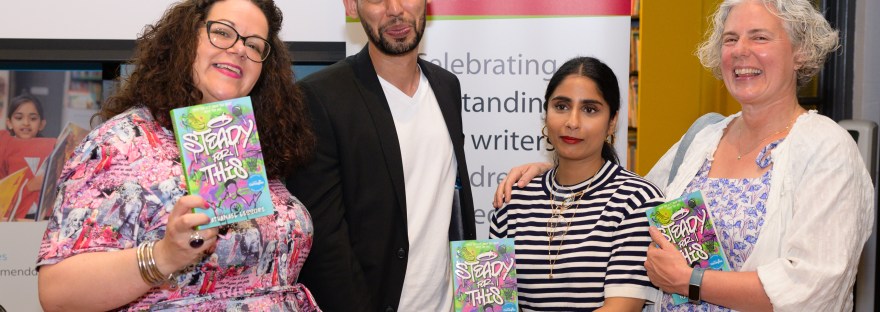
Interestingly enough, no—I didn’t plan to tell Célie’s story at all. In the thick of deadline with Gods & Monsters, I even swore I’d never return to the world of Serpent & Dove again. I wanted to tell new stories with new characters; I’d even sold another duology about Greek sirens! With a little time and distance, however, I realized I wasn’t quite ready to let the world go. When I called my critique partner on the way home from my local indie the day before Gods & Monsters published, crying, she told me it didn’t necessarily need to be over—and then she asked about Célie. We both agreed her story hadn’t reached its conclusion, and I’d always wanted to write a vampire book. Their inclusion felt like a natural extension to this world. Within ten minutes, we’d plotted out a rough outline of The Scarlet Veil, and the rest is history.

Yes! I always knew The Scarlet Veil would end the way it did, and I knew I didn’t want to write another trilogy so soon after Serpent & Dove. Thus, a duology was the perfect fit!

It seems like the trickiest part for me to write is always the part I’m currently writing. Ha! In all seriousness, though, Célie is an extremely emotional and vulnerable character—a complete foil to Lou and Reid, who both avoid their emotions at all costs. I personally err more on their side of emotional avoidance, so it took a lot for me to sit with Célie and her feelings. Other scenes that are always difficult to write are action sequences; I know literally nothing about self-defence, so whenever Célie or Michal needed to physically fight someone, it meant a lot of time on the internet looking up choreography and trying to describe such technical movements in a natural way.

The easiest scenes for me to write involve romance—banter, sexual tension, a lingering look. Those are always my favorite.

I’ve always loved vampires—Twilight, The Vampire Diaries, Underworld, and True Blood were pillars of my adolescence. There’s something inherently seductive about a vampire, especially after Bram Stoker brought a refined façade to their savagery with Dracula. Maybe it’s because vampires are so powerful with their predatory speed and strength, or maybe it’s because they’re immortal. They never grow old. They live forever young, forever attractive, yet they’ve seen things we haven’t. They know things we don’t. It’s the ultimate fantasy, isn’t it? For such an all-powerful creature to fall in love with a human? And then there’s the whole business of their drinking our blood—it makes everything all the more dangerous, and don’t we all crave a little danger? I know Célie does.

It’s so interesting that you mention worldbuilding specifically because—to be completely transparent—I’ve never loved worldbuilding. Or at least, I’ve always loved it less than character work and romance. In fact, I would argue that most of the worldbuilding in The Scarlet Veil came along as a means to cram every single trope I love into this story. The vampires’ casket company, for example, was an answer to the question, “How can I realistically get Michal and Célie into one casket together?” It needed to make sense. It needed to feel like a natural progression of both the plot and world. And so, I started brainstorming, and one thing led to another, and of course vampires have always needed a way to sneak into Cesarine, right? Lou and Reid would’ve known about them in the original trilogy otherwise. And Célie needed to face her fear of caskets after what happened with Filippa in Blood & Honey. And thus, Requiem, Ltd. was born. I could think of a dozen more examples of this sort of jigsaw puzzle worldbuilding, but you get the idea.

My advice to aspiring authors would be to lean into what you love—find a way to use it, to leverage it throughout your story, and the pieces will fall into place.

Good romance requires tension. Lots of tension. For me, that means I need both an internal and external reason to keep the lovers apart. Otherwise, why wouldn’t they get together as soon as they feel that first spark of attraction? Again, those reasons also need to make logical sense; nothing infuriates me more as a reader than a flimsy excuse for two people who want to be together not being together. The reasons also need to involve personal stakes—what will happen if they do get together? It needs to have a real consequence.

I’m still drafting The Scarlet Veil’s sequel now, but afterward, I’ll be returning my attention to the Greek siren duology I mentioned earlier. I actually sold those books back in 2020 and 2021, so I’m extremely eager to get back to them!

Shelby Mahurin is theNew York Times bestselling author of the Serpent & Dove trilogy. She grew up on a small farm in rural Indiana, where sticks became wants and cows became dragons. Her rampant imagination didn’t fade with age, so she continues to play make-believe every day—with words now instead of cows. When not writing, Shelby watches The Office and reads voraciously. She still lives near that childhood farm with her very tall husband and semi feral children.

PaperBound Magazine is an online magazine for the young, and the young at heart. We are dedicated to showcasing authors and illustrators for children’s and young adult fiction and we strive to deliver inspiring content, uplifting stories, and top tips for young and aspiring writers yet to burst on to the literary scene.

All our issues are completely free and run by volunteers, however if you would like to support PaperBound and the work we do, you can help us out by buying us a virtual book. We appreciate any support you can give us!

Don’t forget you can read with the latest issues of PaperBound Magazine – completely free – here.

Blog, Blog series, Interview, Interviews, Writing craft

Interview: Michael Thomas Ford chats about his new novel ‘Every Star That Falls’

Every Star That Falls begins the day after Suicide Notes ends. Jeff returns home and goes back to his old life, but he’s no longer the old Jeff. He has to figure out what that means in terms of his relationships with his family, his friends, and his larger community. He also wants to explore what it means being an out member of the LGBTQ community, which involves finding a support group. The people he meets there change his life even more, in ways he could never have imagined a couple of months ago. 

It’s definitely surprising to me how Suicide Notes continues to find new readers. It’s also a testament to the power of social media, which wasn’t really a thing when the book first came out. Now, readers are sharing their experiences of the book on places like TikTok and Instagram, and that’s allowing it to connect with even more readers. One of the things I love most about the world right now is that the voices of readers are so strong and so powerful. They’re not waiting for anyone to tell them what to read and what they should like, they’re deciding for themselves and then spreading the word. It’s fantastic to watch this happen.

The most powerful tool for creating change is empathy. When we learn to really listen to people – particularly to people with whom we might not think we have anything in common – and hear about their experiences and what they feel, we learn to see the world in a different way. That’s how change happens. When we create barriers between us, we only see things from one perspective and it’s easier for other points of view to feel threatening. There’s much more that connects us than divides us, and learning to focus on those things while allowing for differing perspectives is what creates forward movement.

Jeff is essentially me, and I have always approached difficult situations by looking for the humour in them. I think that if you can find a way to laugh, even in the darkest moments, it creates a spark of light that grows brighter and shows you the way through. I realize not everyone appreciates this approach, because we’re all different, but for me the most effective way to deal with life when it gets hard or seems hopeless is to find the moments of joy that remind me that the darker times don’t last forever. 

In general, I don’t enjoy sequels because no matter what happens, someone is disappointed. Once someone falls in love with a character, they developed expectations of what they want for them. With Suicide Notes I wanted readers to imagine what happens to Jeff when he leaves the hospital he’s in for the whole book. But as time went on, I thought of more things I wanted to say about certain topics, and continuing Jeff’s story was the best way to do that. Also, there were some characters and events from Suicide Notes that I found readers asking about over and over again, and writing a sequel gave me the opportunity to answer those questions. 

I write for a number of different audiences, including adults and younger readers, so there’s always something happening. I’m currently finishing up a ghost-themed novel for middle grade readers, which is a lot of creepy fun. That will be out next year. And there just might be another part to the story about Jeff and his new friends coming. Readers can always find the latest news on my website: www.michaelthomasford.com.

Michael Thomas Ford is the author of numerous works for both adults and young readers, including Suicide Notes as well as some of the earliest books about the HIV/AIDS crisis and several books about the LGBTQ community. A five-time winner of the Lambda Literary Award, he has also been a finalist for the Shirley Jackson Award, the Bram Stoker Award, the Firecracker Alternative Book Award, and the Ignyte Award. He lives in rural Appalachia with his husband and dogs.

PaperBound Magazine is an online magazine for the young, and the young at heart. We are dedicated to showcasing authors and illustrators for children’s and young adult fiction and we strive to deliver inspiring content, uplifting stories, and top tips for young and aspiring writers yet to burst on to the literary scene.

All our issues are completely free and run by volunteers, however if you would like to support PaperBound and the work we do, you can help us out by buying us a virtual book. We appreciate any support you can give us!

Don’t forget you can read with the latest issues of PaperBound Magazine – completely free – here.

Blog, Blog series, Interview, Interviews, Writing craft

Interview: Children’s Author Fiona Spence-Arnold on debut book ‘Rhamni Finds Her Wings’

It’s an illustrated chapter book for 8 -10s about a butterfly and moth’s adventure in The National Forest.  

When Rhamni, a Brimstone butterfly pupates on Midsummer’s Eve, she finds herself alone, no brothers or sisters to be found. Thinking they’ve gone in search of the elusive Ghost Orchid, she teams up with new-found friend, Max, a timid Mint moth and the pair set off on a perilous adventure following messages on bramble leaves through the forest. 

When I found out Honey Craft, an independent publishers based in Leicester, were seeking a children’s writer with a connection to The National Forest, I jumped at the opportunity. Living nearby, and with a love of forests and nature, I applied and was excited to win the commission to write a short book for children as part of their MiniBEAST series.

I didn’t know that much about butterflies or moths before starting, but I certainly know more now! The research was fascinating. The characteristics of the insects and their habitats inspired the story and the characters themselves. I was fortunate to be guided by Entomologist, Graham Smith, who was also working on the project. He told us about a group of butterflies who used to be known as the Aristocratic butterflies. These include the Red Admiral and Purple Emperor. It inspired me to imagine a hierarchy in the forest led by the antagonist, Emperor Ethelbert, a Purple emperor butterfly who tries to wield power over all the butterflies and moths.

Graham also told us about the tiny Golden Pygmy moth whose caterpillars eat ‘patterns’ in bramble leaves before they pupate into moths. It inspired me to wonder, what if these caterpillars were trying to send messages through the forest on the leaves? Could they undermine the aristocratic butterflies? What could their messages lead to? It needed to be something scarce and precious. When I read about the rare Ghost Orchid flower, it seemed a perfect fit. Coupled with Rhamni’s worry about her family of Brimstone butterflies, my main character’s quest was set.

Reading a book like mine, where the characters are all minibeasts having an adventure can be a great way to encourage empathy for species other than our own, so seek out books that encourage children to think of insects and animals as integral to the eco-system and important characters in their own right. They’re more likely to want to protect them. Research has also found that when we engage with nature in a positive way, we boost our sense of wellbeing and happiness. 

Of course, you don’t have to live in the countryside to engage children with nature, especially minibeasts, they’re found everywhere! Keep an eye out under rocks, between paving stones and in quiet places in your house.  

In the summer months you’re more likely to see butterflies and moths. You can attract them by growing brightly coloured flowers in gardens or containers. Purple flowers will attract them the most as they see different colour temperatures than we do, including UV, and the colour purple stands out the best for them. Once you’ve found your bugs, you can use books or the internet to identify them. That’s where you start finding out about their characteristics and where the creative ideas can start to take root. Have fun thinking up different situations for them and make them your main characters, that way you really get to see life from their point of view. 

In my book, Rhamni and Max follow the messages on bramble leaves. These patterns on leaves are easily spotted during Autumn and winter and would make a great treasure hunt activity with children. 

We held the book launch at the Timber Festival in July and we also ran guided butterfly and moth walks, and craft activities for children. The Timber Festival is a great way of engaging children with nature as it’s held in the heart of the National Forest and has brilliant sessions and activities on different aspects of nature aimed at both children and adults. 

It was exciting working with Keith Turner, the wonderful illustrator of Rhamni Finds Her Wings, seeing how he interacted with and interpreted my story and characters. We had several meetings to share ideas, and to ask questions of the Entomologist, about characteristics and behaviours of butterflies and moths. Once I’d shared the first draft of the story with him, he started to develop his ideas about what the characters looked like.

As I redrafted, Keith asked me to think about a key feature or accessory for each character. Running this by my editor, Jess Green, I thought of big stompy boots for the intrepid explorer, Rhamni the Brimstone butterfly and a backpack for sensible Max, the Mint moth. The top hat and monocle for the villain, Emperor Ethelbert, were Keith’s ideas and made me laugh when I saw them in the final illustrations. I didn’t give an accessory to Tig, the Golden Pygmy moth caterpillar, but Keith brilliantly had him painting a ‘Mona Lisa’ with a leaf. Keith uses collage in his illustrations, and he told me if you look closely at the moon in one of the pictures, it’s actually an image of grated cheese!  

I would say tip No. 1 is read children’s books. Lots and lots of them, then some more! I read books for children of all ages, first as a reader, then as a writer, making notes, studying style, characterisation, use of voice, pacing – everything. When I was first writing for children, I would pick a book and use it as a mentor text, to really hone in on what the author was doing, how they were doing it and how I could learn from it. I’d make copious notes in the book and copy sections out to ‘feel’ and hear how it worked.

Tip no. 2  – write! You won’t get a book written if you don’t sit down and write. I often say to myself, I’ll just make twenty minutes to write, and when I’ve sat down to do that, I invariably write for longer. It’s amazing how quickly a story will emerge.

Tip No. 3 – have fun. Experiment – this is particularly good if you’re stuck with an idea. Try out new forms, styles, tenses, voice. Plus, if you’re enjoying writing your reader is more likely to enjoy reading it and when you experiment your ideas will flow.

Lastly, find your writing buddies and hold them close. They get it, they’ll be your readers, your champions, your support and you will be theirs. The more you read each other’s work and give constructive criticism, the more you learn about the craft and what kind of writer you are. 

Fiona Spence-Arnold lives in deepest, darkest Leicestershire with her family and bouncy dog.  She writes funny chapter books and exciting adventures for children. When she’s not writing stories, she works on education projects for an award-winning charity and tutors creative writing. Fiona can often be spotted catching story ideas whilst walking in the woods with her dog. She’s thrilled that her debut book, an exciting adventure in the forest, Rhamni Finds her Wings, is published by Honey Craft and is out now. 

From 14th October, it will be available to buy from independent bookshop Fox Books, Leicester. It will also be available in the gallery at DeMontfort University and through libraries in The National Forest soon.

PaperBound Magazine is an online magazine for the young, and the young at heart. We are dedicated to showcasing authors and illustrators for children’s and young adult fiction and we strive to deliver inspiring content, uplifting stories, and top tips for young and aspiring writers yet to burst on to the literary scene.

All our issues are completely free and run by volunteers, however if you would like to support PaperBound and the work we do, you can help us out by buying us a virtual book. We appreciate any support you can give us!

Don’t forget you can read with the latest issues of PaperBound Magazine – completely free – here.

Blog, Blog series, Interview, Interviews, Writing craft

Interview: Children’s Author Emma Read on ‘The Housetrap’

Of course! The Housetrap is a spooky, Scooby Doo-esque adventure where four almost-friends find themselves trapped in a strange house in the woods. The house is set for an escape room style party but for some reason it doesn’t want to let the kids go … it has other plans for them. The team have to unravel multiple mysteries and at the same time attempt to solve the puzzles and riddles left by the architect of the house, in a desperate effort to escape. The only thing they have in their favour is that they are alone in there …  

Or are they? 

For readers 9+ who like mystery, puzzles, adventure, and the odd jump scare. 

In addition to the creepy words (by me) the illustrations on the cover and interior are by Coralie Muce.

The editing process on The Housetrap was something of a metaphor for the book, in that it was a twisty, turny puzzle that needed unlocking, disassembling, and slotting back into place the right way round! I couldn’t have done any of it without my brilliant agent, Lauren Gardner, and my editor at Chicken House, Kesia Lupo who both helped me make it make sense.  

I’m not a natural plotter, although I usually formulate a rough plan in advance (plot points, pinch points etc); when it comes to writing I love the discovery approach – it’s a bit like wandering through a maze—or a house—that keeps changing and revealing new secrets. No spoilers, but there is one item in the book that the kids need to find, and I only worked out where it was by writing all the way to the end! It’s a fun method that works for me, but it does mean edits are usually hard work!  

Places I’ve been, and seen, always find their way into my books, and The Housetrap is no exception. The idea for the house itself, and the entire story really, came from a beautiful but declining hotel in Rome. Haphazardly built, it had several mezzanine levels, rooms that were unexpectedly connected, and stairs that didn’t seem to go where you thought they should.

As I wrote, I augmented it with fictional houses and hotels (the Overlook won’t be a surprise, I’m sure!) But it was another, real-life, hotel which lent the finishing touches, including all the taxidermy animals and mounted deer heads. This was another, past-its-best building, hidden in the New Forest in Hampshire (a forest created for a king, like Badwell Woods in the novel.) 

The Housetrap is set in Suffolk, where I grew up, which is home to Thetford forest – a magnificently huge place, which, when I was a child, I truly believed a person could get lost in forever. 

Character-wise, I think the only one who is drawn from life is Deliah. There is a lot of me in her – like her I was embarrassed of being smart; I thought it made other people uncomfortable so I masked it … being clever wasn’t cool where I went to school! In Deliah I wanted to create a character who could work through those feelings and grow to be proud of her intelligence. 

In Milton the Mighty/Megastar, I was keen to show the characters as realistically as possible, their spidery movement, physiology and, as much as possible within the bounds of the story, their behaviour. In The Housetrap, there’s not a lot of science directly on the page, but I still examine all my scenes to make sure they are logical, within the rules of whatever supernatural power is in play.

More generally, I find a wealth of story inspiration in science, from pure sci-fi ideas, to cli-fi, to the natural world and way beyond: the first story I ever had published was inspired by a conversation about ghosts on The Infinite Monkey Cage (a science comedy podcast with Professor Brian Cox) which makes it feel like I’ve come full circle! 

It might seem anathema to some to consider writing a competitive sport, but as an aspiring writer, I entered every comp going! My first win was a Twitter micro fiction competition (back in the days of 140 characters!) and I kept going until I hit the amazing heights of the BCNA shortlist. Writing competitions aren’t for everyone – the odds are not ever in your favour and the likelihood is you will fail. And if you do list, or even win, there are no guarantees of success.

But … if you can stomach with that, competitions provide interesting benefits (besides the chance to walk away with a prize). They are great motivators, providing hard deadlines of the sort you might get from a publisher; they force you to scrutinise your work, helping you become a better editor; and they acclimatise you to having professionals read your work and, if you’re lucky, critique it.  

If you’re going to enter competitions, my advice is to try and enter with friends; turn it into a team sport, where successes can be vicarious, and failure can be shared and contextualised. Also, be clear on why you’re entering and manage your expectations. What do you hope to accomplish? Achieving a listing, or a notable mention is a fantastic addition to your query letter, and getting used to rejection will set you in good stead for any writing journey. 

When it comes to The Housetrap, my main desire is for readers to have fun. I wanted to write a thrilling adventure, something that makes you gasp and squeal, with delight and just a little bit of terror – like riding your bike super fast downhill. But there are some messages to take away too – I’ve already mentioned Deliah’s smarts, but also I want readers (perhaps especially girls) to see that maths has value. I volunteer at my local primary school, helping out with maths and I see too many girls in KS2 with self-imposed barriers to the subject. I hope the book speaks to them, just a little. 

More broadly, appropriately scary books can be beneficial to children’s emotional development. There are a lot of studies across this subject but in a nutshell, readers can experience fear, almost practice it, in a safe environment and learn to recognise their own personal tolerance for risk. One of my favourite pieces of feedback for the book has been from readers wondering what they would do in the same situation. How would they respond, how would they escape? Allowing readers a ‘run-through’ like this, of their feelings, allows them to be challenged and grow emotionally, in a safe environment. 

As much as I’d love to scare the living daylights out of Deliah and the gang again, in all likelihood it’s probably not going to happen. If there were to be a sequel, I do have a seed of an idea as to what that might look like, so never say never – it might turn up as a short story or a freebie on my Substack!  

Emma Read is the author of The Housetrap, and the Milton series (Chicken House), including Milton the Mighty, one of The Times Best Children’s Books of 2019 and shortlisted for the Bath Children’s Novel Award.
She loves all things spooky (and spidery!) and can often be found walking through her local graveyard … but only in daylight. Like Mark Gatiss, she doesn’t believe in ghosts, but is scared of them. Connect with Emma at @emmydee73 (Twitter), @ediereadie (Instagram), subscribe at emmaread.substack.com/ for exclusive content, and get in touch at emmareadauthor.com   
Like his career, Steve’s writing is filled with tech and engineering, although his speculative thrillers tend to have higher stakes and fewer meetings. Before he found himself advising companies on digital transformation, Steve was a copywriter, a magazine editor, a communications director, a product designer and a webcaster, though not at the same time. Home is South London, where he lives with his wife and teenage daughters. They wish he’d stop saying, ‘What if…’

Stay tuned for Steve’s review of The Housetrap in our autumn/winter issue, coming soon!

PaperBound Magazine is an online magazine for the young, and the young at heart. We are dedicated to showcasing authors and illustrators for children’s and young adult fiction and we strive to deliver inspiring content, uplifting stories, and top tips for young and aspiring writers yet to burst on to the literary scene.

All our issues are completely free and run by volunteers, however if you would like to support PaperBound and the work we do, you can help us out by buying us a virtual book. We appreciate any support you can give us!

Don’t forget you can read with the latest issues of PaperBound Magazine – completely free – here.

Blog, Interview, Interviews

Interview: Millie Florence on being a Teenage Published Author, Navigating Negativity, and Middle Grade Book Deals

PaperBound Magazine are thrilled to feature a blog Q&A with author Millie Florence.

This interview has been composed and written by freelance writer Cailey Tin.

Q&A with Millie Florence

You published your debut book, Honey Butter, at age thirteen. What was the process of writing and publishing it like for you? Were there any resources or help you got at the start?

I may not have finished Honey Butter without NaNoWriMo. NaNoWriMo stands for National Novel Writing Month, which is every November. It’s the challenge to write the entire first draft of a novel in thirty days. Their official website provides you with tools to track your word count goal, advice, and inspirational pep talks to keep you motivated. The program was definitely what pushed me to write the first draft of Honey Butter. 
I’ve been obsessed with writing and storytelling for as long as I can remember, but always struggled to finish anything longer than a short story. My goal in writing Honey Butter was to write something a step up from a short story. Something simple and short and sweet, but something I could write with excellence. Something I could be proud of. Although all my projects before this had been epic fantasy and sci-fi novels, for this I purposefully kept myself to a limit of 30k words and a contemporary story set in an ordinary suburban neighborhood. 
I have a video on my YouTube channel about the process of writing Honey Butter, which I highly recommend. I explain everything more eloquently and in depth there, with some advice for young writers who are experiencing the same struggles I did! 
So far, yes, I have read my book reviews, but that’s mostly because there aren’t very many of them. Due to having a smaller number of reviews, there also aren’t many hateful ones. I anticipate receiving a lot more reviews once my traditionally published books are released, because those companies have a built-in audience that I don’t, and it has been on my mind lately, how I should approach reviews once I start getting large numbers of them. 
Abbie Emmons, an author and YouTuber I follow, mentioned getting in a very bad mental place with reviews when her first novel came out. She read every single review for a while, and whether she had a good day or a bad day depended on the reviews she got. Obviously, that’s not healthy. 
I think it’s a balance. You need to be able to take feedback and hear what your readers are saying, but you can’t let it consume your life. It comes down to having confidence in your story. You have to be able to see through both flattery and hate to recognize your story for what is truly is. 
It’s been a really interesting experience, and I love both! I love the control of self-publishing and the fact that I get to be intimately a part of how the book is produced. Still, traditional publishing has a wonderful collaborative nature to it, and it’s amazing to work with such talented and hard-working individuals. The process and experience with traditional publishing can also really change depending on what company you work with. 
In the future, I’ll choose a route depending on what I think each book needs. 
My favorite part of writing is when the characters come to life. If you develop characters well, they’ll sort of start talking and acting on their own, or, to put it in less whimsical terms, you know exactly what they would do or say in any situation. Thus, all you have to do is create the right situations, put your characters in them, sit back, and type as fast as you can. It’s like building a marble run and then experiencing the satisfaction of watching your marble zoom through it exactly as you intended. Those are my favorite scenes to write, with characters bouncing off each other and their environment until they land exactly where they need to be to further the plot. 
Of course, sometimes it’s not that easy. Sometimes you’ve miscalculated the placement of a few pieces in your marble run, and when you put the marble in it falls out off the track, or goes in a different direction entirely. That’s when adjustments need to be made.
I always write my first draft as quickly as possible, which takes one to three months, depending on the length of the draft. I have to strike while the iron is hot, so to speak, and take advantage of that initial burst of inspiration. The drafts after that vary, they can less or more time than the first draft, it all depends on what changes I decide to make. I alternate between receiving feedback from beta readers and author friends, and implementing the changes until I feel that the story is the best it can possibly be! It usually takes me four or five drafts to get there. 
When I’m writing a first draft I spend anywhere from one to five hours a day writing. That’s the most intensive part of the process. Once I get to later drafts progress it a bit more difficult to measure. I’ll often go days or weeks without writing in drafts two and three, but I never stop brainstorming and thinking through the best way to improve the storyline. That way, when I do sit down to write, I don’t spend too much time staring at my blinking cursor. Half the battle is sorting out what I’m going to write. After that, it comes pretty easily to me. 
I always knew I wanted to publish my books someday, so I would say it felt a lot more exciting than intimidating. There was definitely a lot to learn, but I loved every minute of the learning process. I started out by researching publishing in-depth and eventually settled on using Ingramspark for my self-publishing distributor. Later, when I wanted to explore traditional publishing, I did a lot of research on how to query and the different pieces that went into that avenue. 
Getting distracted. Our modern world is full of distractions, and writing, by nature, requires you to be bored enough to come up with your own imaginative entertainment. When social media is always at my fingertips, that can be very difficult. Those distractions have always been a struggle for me, but I learn and grow every day! 
I follow my inspiration, and so far all the story ideas I’ve come up with have been middle-grade! If I get an idea in the future that better lends itself to YA, then yes, I’ll write a YA book, but otherwise, I don’t have any plans to. I do have plans to write more picture books in the future! Picture books are a very special medium to me–they’re like an art gallery and a short story rolled into one. I can’t draw, but I love working with people who can, and I love the challenge that comes with telling a story in such a short format. 
A stage actor. 
I’ve been acting in community theater since I was very young, and I absolutely love it. The collaboration with the cast and crew and the opportunity to bring a character to life is a very special experience. I love working with fellow creative people, and I love putting on a show. There’s something beautiful about hearing your audience’s reaction in real-time, and for a few hours, in one room, a group of strangers are all fully immersed in a story together.
Yes! I’m a big fan of middle-grade, and I always will be. Two books that were influential to me at a young age were Anne of Green Gables by L. M. Montgomery and A Little Princess by Frances Hodgson Burnett. I listened to those two audiobooks over and over and over again when I was little, and they definitely instilled in me a sense of wonder for everyday life, and the importance of imagination and hope. 
One of my favorite quotes about storytelling is “The two most engaging powers of an author are to make new things familiar, and familiar things new.” Anne of Green Gables and A Little Princess are in the category of making familiar things new. 
In the category of making new things familiar, I also grew up reading Harry Potter, The Lord of the Rings, and The Chronicles of Narnia
My favorite book of all time is The Mysterious Benedict Society by Trenton Lee Stewart. It checks all the boxes of everything I love in a middle-grade novel and executes them to near perfection. Mystery and adventure, lively characters, subtly quirky narration, impossible odds, and yet everlasting hope. It’s an adventure that is fun and fantastic, while simultaneously holding great depth and wisdom that leaves a lingering warmth in your chest when you finish. It’s the sort of book I want to write!
Quite honestly, I would say “Don’t worry so much.” 
I’m very passionate and motivated when it comes to my writing, but there is a dark side to that when doubts start to creep in. What if I don’t make it? What if my writing isn’t good? What if it is good but it doesn’t matter because it gets lost on the internet and no one ever reads it? What if I do everything right, but I just wasn’t lucky enough? What if I’m still here in fifteen years? 
But worrying about those questions doesn’t answer them. Doubting if a dream will come true doesn’t make it any more likely to do so. Worrying doesn’t make a difference in the outcome, but it does make a difference in our mood, and not in a good way. What does make a difference in the outcome is excitement and creativity and passion for the stories we write, and you’ll live a happier life along the way. 

Millie Florence

Millie Florence is an adventurous homeschooler who published her first book, ‘Honey Butter’, at age 13, and another middle grade book at age 15. Currently, she has two books on the way. She loves sushi, zip lines, and just about all things yellow. 

Connect with Millie on Instagram: @millieflorenceauthor.

Cailey Tin

Cailey Tin is an interview editor of Paper Crane Journal. She is an Asia-based staff writer and podcast co-host at The Incandescent Review, a columnist in Incognito Press and Spiritus Mundi Review, and her work has been published in Fairfield Scribes, Alien Magazine, Cathartic Lit, and more.
Her work is forthcoming in the Eunoia Review and Dragon Bone Publishing. Visit her Instagram @itscaileynotkylie.

PaperBound Magazine is an online magazine for the young, and the young at heart. We are dedicated to showcasing authors and illustrators for children’s and young adult fiction and we strive to deliver inspiring content, uplifting stories, and top tips for young and aspiring writers yet to burst on to the literary scene.

All our issues are completely free and run by volunteers, however if you would like to support PaperBound and the work we do, you can help us out by buying us a virtual book. We appreciate any support you can give us!

Don’t forget you can read with the latest issues of PaperBound Magazine – completely free – here.

Blog, Blog series, Writing craft

Guest Blog Post: Exploring Teen Issues Through Fiction

Contemporary YA fiction has a bit of a reputation, for better or worse, as a place where authors go to write about social issues which affect young people. I’d be lying if I said that I don’t sometimes think ‘I want to write a book about [insert social issue du jour]’ but it’s never the only thought I have when I’m thinking about fiction, and it’s rarely the first. Those thoughts are far more weird. I’ll give you an example. The very first thought I had when I started thinking of the book which became Grapefruit Moon was ‘What if there was a boy from Northern Ireland and he had, for some reason, to go and live in Granada in Spain for a time? And what if, while he was there, he went off exploring in one of those wee houses that are built into the caves in the side of the hills? And what if, when he was exploring, he ran into the ghost of Federico Garcia Lorca, the Spanish poet who was assassinated during the Spanish civil war? What if he kissed the ghost of Lorca? What if it changed his whole life?’

That scene, where the boy meets Lorca’s ghost in a cave in Granada, and they kiss, is not in the final version of Grapefruit Moon, but it stayed in for a long time. In the end it was clear that it didn’t fit with the rest of what the novel became, so I removed it, like the shin bone in the ‘vegetable’ soup that my mother used to make when we were kids. The ‘soup’ retains the flavour, but the story grew into something else as I learned about the characters and started asking them what their concerns were. And I think that’s where their ‘issues’ came in. My characters told me that they were worried about their exams, their futures, their friends. One of them told me she was freaking out because she was really good at ‘fitting in’ but she hated it, because she wanted to try being something else. One of them told me that he couldn’t pretend to be someone he wasn’t, and that he knew it was going to mess up his future. I introduced them to one another and after a while they got talking. It didn’t quite solve their problems but it did enable them to face them.

These are difficult times for young people in Northern Ireland. We’ve had the pandemic and its physical and mental knock-on effects, and we have a massive crisis in mental health provision. Even before Covid things were bad. Now they’re worse. When you ask teenagers how they’re doing they often say they’re tired. They’re stressed about exams and school. Social media can sometimes increase anxiety but it’s also where they find solidarity and release. Despite all of this, they’re more articulate than I was when I was a teenager. They are more socially engaged, better able to demand their rights, more creative. I want to try to reflect all of this as a writer for young people. I want to be as real as possible, and that, I think, includes the far-reaching parameters of hope.

So, I can write about the things that young people talk about; sexual assault, death, anxiety, sexism, homophobia… and much has been said about where the limits of YA are when it comes to authors choosing ‘gritty’ subject matters… but I think, for me, a more interesting discussion is about where stories are pointing the reader after the book ends. I won’t finish writing a YA story without a signpost, a window that’s open (even just a crack), a hand outstretched. Because, to me, hope is a live issue as well, for young people, but also for all of us; things continue to change (and there is hope in this), those left behind after someone dies continue to live (is there hope here too, as well as the pain?), we feel alone but we are alone-together. Maybe this speaks more to my own needs than it does to my readers’ perceived needs, but I am limited by my own psychology in that way, and I don’t mind indulging myself to assume that we all need some reassurance.

So I work with my characters, letting them explore the areas of their own concern, their issues, messing things up and trying to make things right again, and what I learn as the author is to step back as much as possible while still being there if they reach out for help. But they help me too. They show me myself and my own limitations, my own true beliefs and feelings, and I think they offer me back some hope as well.

Shirley-Anne McMillan is a writer from Northern Ireland. She has worked as a teacher, an Online Writer in Residence for the Irish Writers Centre, a youth worker with LGBTQ young people and a creative writing tutor. She lives in Co. Down with her family and in her free time she loves playing the guitar and knitting.

Stay tuned for a review of Grapefruit Moon in our autumn/winter issue, coming soon!

PaperBound Magazine is an online magazine for the young, and the young at heart. We are dedicated to showcasing authors and illustrators for children’s and young adult fiction and we strive to deliver inspiring content, uplifting stories, and top tips for young and aspiring writers yet to burst on to the literary scene.

All our issues are completely free and run by volunteers, however if you would like to support PaperBound and the work we do, you can help us out by buying us a virtual book. We appreciate any support you can give us!

Don’t forget you can read with the latest issues of PaperBound Magazine – completely free – here.

Blog, Blog series, Writing craft

Guest blog post: Patricia Forde on Returning to Speculative Fiction

PaperBound Magazine are thrilled to feature our first ever guest blog post in a series on the craft of writing from established authors.

Take a look to see award-winning author Patricia Forde’s take on writing speculative fiction.

Her new book The Girl Who Fell to Earth is out now.

Patricia Forde: Return to Speculative Fiction

I have always loved speculative fiction. I cut my teeth on Margaret Atwood’s fantastic books and swiftly moved on to writers like Philip Pullman and his amazing Northern Lights series.  

There are many definitions of speculative fiction as a genre, but I see it as all fiction that is not based in the real world. That includes science fiction, fantasy and tales of magic realism.  

In these types of books, writers speculate about other worlds. In my first novel, The Wordsmith, I was looking at a post-apocalyptic world. This was a future version of Earth, showing Ark – a world that was much kinder to the environment, producing energy in natural ways and leaving a very mild footprint on the planet.  

But Ark had its own problems. It was a harsh place for the human spirit. Music was banned, art was banned, and the language of Ark was List – a list of five hundred words. The people in power used the list to suppress free speech and to exercise total control over its people. 

Writing post-apocalyptic fiction is very similar in my head to writing historical fiction. In historical fiction you are writing about a world that was, building on some facts and imagining the rest, and with the other you are writing about a time that might happen in the future. Both demand a certain amount of inventiveness!  

When I was writing The Wordsmith duology, I took some advice from an article I read by Margaret Atwood. Amongst other things, she said that her speculative novels borrowed a lot from history. So, I turned to Irish history and was reminded of the time when the Irish language was being suppressed by the British.  

During Penal times tally sticks were introduced to suppress language.  A stick was hung around a child’s neck, and each time the child spoke Irish at school, a notch was put on the stick and the child received a slap for each notch at the end of the day.  

I took that idea and applied it to the citizens of Ark. Punishment using forbidden words involved the sinner being thrown into the woods to be eaten by wolves!  

In the second book of that duology Mother Tongue, I used the ancient Irish hedge schools as a model for the rebels in Ark to teach language. Some readers might have noticed that the rebels borrowed quite a bit from Michael Collins in their political structure – using small independent cells so that no one group held all the information! 

In my new novel The Girl Who Fell To Earth I returned to the realm of what-if and looked at what might happen if someone from a far more advanced Planet came to Earth.  

Terros is a planet run by scientists, where the environment is protected, and people live forever. Aria, the protagonist, has been brought up to despise humans who are well on the way to destroying their own planet.  When she is sent to Earth on a mission to destroy human life, she finds that, for all their faults, humans have some excellent qualities, and she sets about saving them and herself. 

In this book as in The Wordsmith I want children to get a glimpse of other possibilities, other ways of living, and other ways of co-existing with fellow creatures on their planet. I don’t believe in Utopias and these worlds that I create are far from perfect, but I think all of us, and maybe young people in particular, should be encouraged through literature to explore possibilities, and see that other models of living are possible.  

Some of those models are there to sound a warning; others to encourage a better way of living. 

For me, I don’t think I’ll ever stop wondering what-if and hopefully those musings will inspire me to write more speculative books!

Photo credited to Julien Behal

Patricia Forde

Patricia Forde lives in Galway, in the west of Ireland. She has published many books for children, in Irish and in English, as well as plays, soap operas and television drama series.
In another life, she was a primary school teacher and the artistic director of Galway Arts Festival. Two of her novels with Little Island, Bumpfizzle the Best on Planet Earth and The Wordsmith, a Library Association of America Notable Book for Children (published in the USA by SourceBooks as The List), were awarded White Raven awards by the International Youth Library.
Her picture book To the Island was co-published by Little Island and Galway 2020 European City of Culture. She is the seventh Laureate na nÓg, Ireland’s Children’s Literature Laureate. 

The Girl Who Fell to Earth is out now and published by Little Island.

PaperBound Magazine is an online magazine for the young, and the young at heart. We are dedicated to showcasing authors and illustrators for children’s and young adult fiction and we strive to deliver inspiring content, uplifting stories, and top tips for young and aspiring writers yet to burst on to the literary scene.

All our issues are completely free and run by volunteers, however if you would like to support PaperBound and the work we do, you can help us out by buying us a virtual book. We appreciate any support you can give us!

Don’t forget you can read with the latest issues of PaperBound Magazine – completely free – here.